Aller au contenu
Davidhorn
  • Solutions

    Par secteur d’activité

    • Police
    • La défense
    • Immigration et douanes
    • Interviews d’enfants et de témoins
    • Autorités locales
    • Enquêtes sur les entreprises
    • Soins de santé

    Par cas d’utilisation

    • Entretien avec un témoin vulnérable
    • Entretien avec le suspect
    • Entretiens sur le terrain
  • Produits

    Enregistreurs

    • Capture App
    • Enregistreur portable
    • Mini enregistreur
    • Enregistreur fixe
    • Enregistreur de logiciels
    • Enregistreurs secrets

    Gestion des Interviews

    • Gestion des Interviews dans l’Ark

    Intégrations

    • Intégrations et configuration
    Graphique promotionnel pour un webinaire gratuit intitulé "How to Use Davidhorn's Investigative Interviews Solution", animé par Magnus Green. Elle comporte une bulle de dialogue bleue avec le texte "Free webinar" et l'image floue d'une personne à l'intérieur d'un cercle bleu.
  • Clients
  • Centre de ressources

    Centre de ressources

    • Blog
    • Fiches techniques
    • Livres électroniques et livres blancs
    • Evénements
    • Podcasts
    • Webinaires
    • Cours
  • Partenaires

    Partenaires

    • Aperçu des partenaires
    • Devenez partenaire
  • Entreprise

    Entreprise

    • A propos de
    • CarrièreEmplois à Davidhorn
    • Contact
    • Clients
Mon compte
Aide
Réserver une démo
Davidhorn
Compte
  • Solutions
    • Par secteur d’activité
      • Police
      • La défense
      • Immigration et douanes
      • Barnahus
      • Autorités locales
      • Enquêtes sur les entreprises
    • Par cas d’utilisation
      • Entretien avec un témoin vulnérable
      • Entretien avec le suspect
      • Entretiens sur le terrain
  • Produits
    • Gestion des Interviews dans l’Ark
    • Enregistreur mobile
    • Enregistreur portable
    • Mini enregistreur
    • Enregistreur fixe
    • Enregistreur de logiciels
    • Enregistreurs secrets
    • Administration et intégrations API
  • Clients
  • Centre de ressources
    • Blog
    • Fiche technique
    • Livres électroniques
    • Evénements
    • Podcasts
    • Webinaires
  • Partenaires
    • Aperçu des partenaires
    • Devenez partenaire
  • Entreprise
    • A propos de
    • Carrière
    • Actualités
    • Contact
Soutien
Démonstration de livres
  • Davidhorn
  • Laurence Alison sur le modèle d’orbite – ep.13

    Laurence Alison sur le modèle d’orbite – ep.13

    The Long Game Series

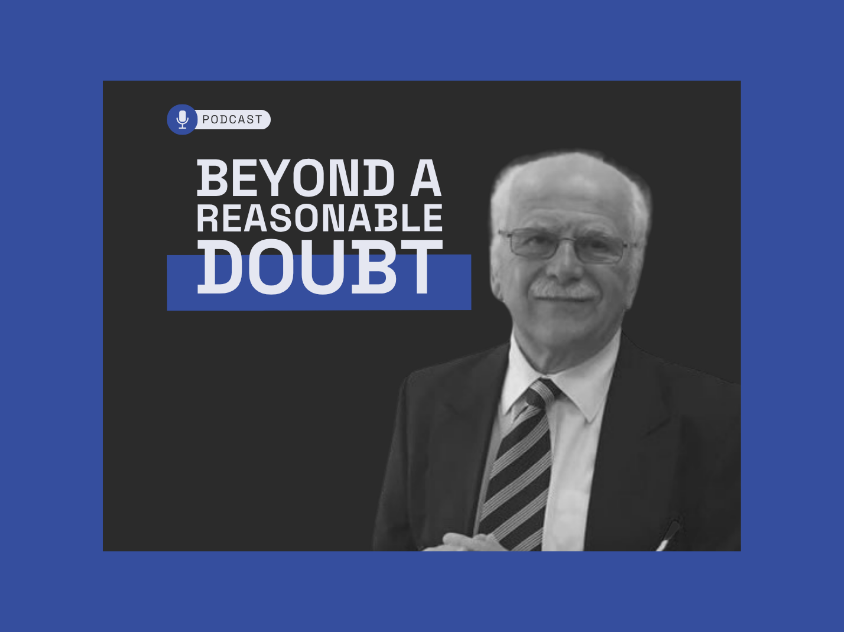
    Episode 17. Interview Recording, Technology, Top Management and Good Intentions

    Denmark was an early mover on investigative interview recording reform — its national standard arrived in 2015. Yet in 2021, for the first time in almost 100 years, two Danish police officers were convicted of attempting to coerce a confession.

    Thomas Skou Roer, one of the architects of that standard, joins Dr. Ivar Fahsing to examine what implementation really requires, and why getting policy right is only the beginning.

    In this candid and thought-provoking episode of Beyond a Reasonable Doubt, host Ivar Fahsing speaks with Thomas Skou Roer, associate professor at University College Copenhagen and former Danish criminal detective with 18 years of service, about the complex realities of implementing investigative interviewing standards in Denmark – and why having good standards doesn’t guarantee good practice. 

    Mr Roer opens with a powerful articulation of investigative interviewing’s ethos: « Do no harm, but get the job done. » This dual mandate – balancing safeguards with efficiency – reflects the tension inherent in modern policing. He traces how this balance has shifted over generations, with the « safeguard edge » becoming heavier than the « efficiency edge, » though both remain essential. The conversation then explores whether this represents genuine progress or simply a reframing of age-old police practices. 

    The episode reveals Denmark’s investigative interviewing journey in frank detail. In 2015, Denmark implemented a national standard for investigative interviewing, eliminating district-by-district variations and establishing unified training programs. This followed groundbreaking research by Kristina Kepinski-Jakobsen on witness and suspect interviewing. Thomas was part of the working group that developed these standards, leading one of the key projects. 

    Yet in 2021 – six years after implementation – two Danish police officers were convicted of attempting to coerce a confession, marking the first such convictions in nearly 100 years. Another officer was charged (though acquitted) in 2024. These cases starkly illustrate the gap between implementing standards and changing practice, revealing that Denmark « still has some way to travel » despite its progressive standards. 

    Mr Roer contrasts the Danish police’s implementation struggles with the Danish Immigration Services’ success story. Immigration Services fully adopted investigative interviewing principles, mandating onboarding training for all personnel with no exceptions – offering a model for what effective implementation can look like when organisational commitment is genuine. 

    The conversation explores why implementation fails even when standards exist. Our guest emphasises that investigative interviewing isn’t merely a technique – it’s a fundamental mindset change requiring professional critical thinking skills and metacognition. The traditional guilt-perspective, confirmatory approach is deeply human, not just a police failing, making change difficult without active intervention. 

    A central theme is the structural and managerial barriers to implementation. Mr Roer argues the problem isn’t officers on the ground, who genuinely want to do quality work, but rather management systems, performance measurement frameworks, and political pressures. He critiques Denmark’s « new public management » approach, which measures police efficiency through arbitrary timelines rather than actual public safety outcomes. True change requires « critical mass » at the top management and political levels – not just within police forces but throughout the justice system. 

    Our guest offers a compelling vision for the future: AI-powered decision support tools that flag interesting interview moments (« the interviewee said this was a boring kiss – what does that mean? »), identify weak hypotheses requiring more investigation, and help officers manage the massive data flows in modern investigations. He acknowledges the danger of creating « checklist policing » but argues that officers need technological support given the cognitive demands and volume of information they face. 

    In a powerful comparison, Dr Fahsing likens police to military forces – both responsible for keeping citizens safe, both requiring massive technological investments to equip personnel properly. Norway and Denmark invest billions in F-35 fighters and frigates for armed forces, yet similar thinking about technological investment in policing lags behind. Thomas agrees, noting that military conflicts create awareness driving investment, while policing needs similar critical mass for change. 


    Episode Length: Approximately 36 minutes

    Production: Davidhorn – Beyond a Reasonable Doubt Podcast

    Host: Dr Ivar Fahsing


    Equipped For Justice – Supporting ethical, human rights-compliant investigations worldwide

    About the guest

    Thomas Skou Roer

    is an associate professor at University College Copenhagen, where he teaches criminology. He trains various organizations in investigative interviewing and investigative practice. Thomas is part of the ImpleMendez group, where he leads the Training Curriculum Network, establishing a global standard for training materials in investigative interviewing. 

    Thomas is a trained criminal detective in the Danish police, where he served for 18 years. He was part of the working group that created the current standard for interviewing in the Danish police, implemented in 2015. He is also a trained forensic psychologist from the University of Liverpool. His work focuses on the practical implementation challenges of evidence-based investigative practices and the structural changes required for sustainable reform in criminal justice systems. 

    Watch and listen wherever you get your podcasts.

    Produits apparentés

    • Enregistreur fixe d’entretiens policiers HD

      Enregistreur HD fixe pour les salles d’interrogatoire de haute sécurité.

    • Enregistreur portable d’entretiens policiers

      Enregistreur d’entretien léger, conforme à la norme PACE, pour tout type d’environnement.

    • Capture – Enregistrement d’entretiens mobiles

      Enregistreur d’application mobile pour capturer des preuves en déplacement.

    • Logiciel Ark – Gestion d’entretiens policiers et preuves numériques

      Recevoir, contrôler et conserver les preuves tout au long de leur durée de vie.

    Transcription

    Guest: Thomas Skou Roer

    Host: Dr. Ivar Fahsing

    Recorded: 26 November 2025


    Dr. Ivar Fahsing (Host)

    I would like to invite you, Thomas Skou Roer from Denmark, to this episode of Beyond a Reasonable Doubt, Season 3. As you know, Thomas, the topic of this year’s season is the implementation of investigative interviewing. Although you no longer work for the Danish police authority, you worked for them for quite some time and you are deeply engaged in investigative practice in Denmark still. It is an honour to have you here today. Welcome.  00:00

    Thomas Skou Roer (Guest)

    Thank you very much, Ivar. Thank you for inviting me. It is a big honour for me and I am looking forward to a good conversation.  00:38

    Dr. Ivar Fahsing (Host)

    Fantastic, Thomas. You and I go quite far back, so some of these questions I am fairly sure we share opinions on — which makes it all the more interesting to discuss them over the next 40 minutes. Let me begin by inviting you to share with me and our listeners: what do you think is the ethos of investigative interviewing?  00:45

    Thomas Skou Roer (Guest)

    Well, the ethos — at least from my perspective — is, I think, ‘do no harm’. But I also think there is another side to it: it has to get the job done as well. So it is ‘do no harm, but get the job done’. By saying that, I mean that we need safeguards, but we also need efficiency in our investigative interviewing practice — so that we obtain the information we need while taking care of the people we need to safeguard. It is a double-edged sword, you might say, although it is of course heavier on the safeguard side.  01:12

    Dr. Ivar Fahsing (Host)

    That is a really good answer. If you try to reflect critically — don’t you think our colleagues from a generation before us would say that they did exactly the same?  01:50

    Thomas Skou Roer (Guest)

    Probably, yes. I think it is also about philosophy — about how much weight should be placed on each edge of that double-edged sword. I think there are still two edges, but the safeguard edge is becoming slightly heavier these days than the efficiency part. Whereas earlier, I would say it was probably more efficiency over safeguards. The balance has shifted.  01:59

    Dr. Ivar Fahsing (Host)

    Definitely. It is, as you say, about having your sword sharp — but about how to wield it in a safer way.  02:38

    Thomas Skou Roer (Guest)

    Yes. And maybe it is not about the sword itself, but about the wielding of it. Yes, I think that is a very good analogy.  02:47

    Dr. Ivar Fahsing (Host)

    So if you take us into a Danish context, Thomas — what is the situation in Denmark today? And looking back over the years you have been involved in strategic development there, why is this development important for Denmark?  02:56

    Thomas Skou Roer (Guest)

    Well, if we start with a brief historical perspective — around 2010, we had a very good researcher, one you know as well, Kristina Kæpinski-Jakobsen, who did some very interesting research on the interviewing of suspects. Before that, she had also done research on general witness interviewing — very important work. There were efforts to build on that and expand upon it, to change the landscape of investigative interviewing. But it remained fragmented. There was no national standard for how investigative interviewing should be conducted in Denmark. Different districts still had different approaches, although broadly there was probably reasonable agreement. But there was no standard.  03:15

    I was part of a working group and had the pleasure of leading one of the projects on developing the new standard for investigative interviewing in the Danish police, which was implemented in 2015. With that, we had a new national standard — there could no longer be different perspectives. It was one perspective. At least, that was the idea. And in practice, of course, challenges remain. But that was the intent.

    This also meant that from 2015, training in investigative interviewing began to be implemented on a much larger scale than we had been used to. Not large enough, but bigger. There were a number of basic programmes — perhaps one to three days — just to create an appetite, if you will. And then further courses for volume crime, and of course a course for video interviewing of child witnesses. That is essentially where we remain today, ten years later.

    Some local initiatives have attempted to expand the training regime, with mixed results. There have been efforts on trauma-informed interviewing for sexual assault victims, so things are still being done. But what is really interesting is this: we implemented the standard in 2015, and yet in 2021, for the first time in almost 100 years, two police officers were convicted of attempting to coerce a confession. Which was quite surprising — we had this new standard, and it had been implemented, but apparently not well enough. And in 2024, another officer was charged with the same offence, though acquitted. That too speaks to where Denmark stands right now.

    The status is that we have implemented investigative interviewing and developed the Danish model of interviewing, but implementation-wise we still have some way to travel. We are not there yet — in the Danish police at least. I say it that way because I also train the Danish Immigration Service, and they have fully adopted investigative interviewing as their standard. Everyone is onboarded using this method, and there are two courses — basic and advanced — as well as a child interviewing course. So the police is not alone in this. There are a number of actors employing the principles of investigative interviewing in Denmark, as is the case globally.

    Dr. Ivar Fahsing (Host)

    When we talk about the ethos of investigative interviewing — in my world, Thomas, it is probably not about interviewing at all. It is about how you think about an investigation, and what your job is. As you know, we often talk about what I call the change of mindset — the mindset that is traditionally more guilt-presumptive and confirmatory, which is not only something that comes from being a police officer. It is 100% human: to be suspicious, and to confirm that suspicion, especially if your job is to investigate. If you do not actively address that, the mindset will not change.  08:13

    Thomas Skou Roer (Guest)

    That is very true, Ivar. I absolutely agree. It is very much a mindset change. Investigative interviewing and investigative practice very much rely on professional critical thinking skills — and mostly, I would say, metacognition. Asking questions of your own thinking: why am I thinking this? What am I basing this on? That is one of the most difficult aspects of this.  08:59

    And it is very often trained as an appendix — ‘Could you do a bit on bias? A bit on System 1 and System 2 thinking?’ But mostly, people want something about techniques. In some ways, you should perhaps switch that around: put the emphasis on the mindset, with techniques as a smaller component.

    Dr. Ivar Fahsing (Host)

    That is so interesting. And of course very difficult to do. I remember, Thomas, many years ago — when I was approaching this task in Norway together with my good friend and colleague Asbjørn Rachlew — I was called up by the director of the National Criminal Investigation Service in Norway, Kripos. His name was Arne Husse. He was quite a well-known figure in Norway at the time. He called me when I was still a very young officer at the homicide unit — on a temporary placement, not yet in a permanent position. They wanted to observe and evaluate you before offering a permanent role, given the travel and teamwork involved.  10:18

    He said he had heard I wanted to do a master’s in forensic and investigative psychology in England, and asked me why. My head of the homicide department joined that meeting — and he was clearly not a fan of me going to England. He was one of the older gurus of confession-based interviewing in Norway. He saw it as a threat to the way things were done. He could not say no to the director outright, but he made clear he did not approve: ‘You should send one of the older officers.’

    The director challenged him in front of me: ‘Listen — what this young man is asking for is not support to spend two years on a beach in Thailand. He is asking for support to sit exams and work hard at a university in England. Do you understand that?’ And then, to my boss: ‘Help him do it. Get out of here.’ On the way out, the director stopped me, took my arm, and said: ‘Ivar, if you have any more problems with this man, come straight to me.’

    That is the kind of leadership you need from senior officers — the courage it takes to embrace change in a national police culture. Thinking about that, Thomas, and relating it to the top management of the Danish police — have you seen similar change cultures or similar agendas?

    Thomas Skou Roer (Guest)

    Interesting question, Ivar. I have to say — no. Not directly like that. The closest we had was a period when Denmark had a bachelor’s degree in policing — during that time, top management were involved in supporting officers to pursue master’s degrees, partly to secure the required accreditation. But even then, it was more practical than visionary. It was not driven by a sense of direction towards evidence-based policing. The idea of evidence-based policing has been attempted multiple times in Denmark and is still being pursued, but senior management have called for it without necessarily understanding what it fully entails. Which makes implementation very difficult.  13:19

    My own story about doing a master’s is almost the complete opposite of yours. When I was accepted at a British university, I wrote to everyone in the Danish police — from the National Police Commissioner to my own district leaders — telling them I had this opportunity and asking for their support. And they all responded, in effect: ‘What a wonderful opportunity for you — have fun doing it on your own, because we will not support you.’ To be fair, my local managers supported me with time, for which I was very grateful. But at the top level, the response was not visionary. Practical, at best.

    Dr. Ivar Fahsing (Host)

    Exactly. From a Norwegian perspective — and we are not saying right or wrong here, Thomas, only history will tell — when I look back to when I started as a detective in Oslo in the early 1990s, Copenhagen was always very close. We had close cooperation and learned a great deal from each other — perhaps more accurately, we learned a great deal from the Danish. I trained at Politigården for months and learned a lot. Denmark was in many ways more modern in its general policing approach. But when it comes to this particular topic, I feel Denmark has been absent from the international stage in a way that is surprising. Norway has advanced considerably. And it is genuinely interesting — because you would expect Denmark, as a country that leads on human rights and modern liberal democracy, to be at the forefront.  16:07

    Thomas Skou Roer (Guest)

    Yes, absolutely. The Danish police is a very closed organisation — as I imagine most police forces are. There is a very small research community looking into police practice, and access is very difficult because the police is protective of itself. That means knowledge within the organisation is largely tacit. And you cannot easily develop tacit knowledge. I think that is the biggest problem in Denmark: a great deal of hard-earned experience exists, but it is all tacit — there is no development.  17:41

    And when development does occur, it tends to be practically oriented: a new piece of software, a new piece of equipment — as opposed to a new methodology. Interestingly, there has been significant development on the operational side of policing — riot control, for instance. The dialogue concept for public order situations has evolved considerably, and new tactics were developed following a major incident in 1993. So within that part of the police, there has been meaningful change. But within investigative practice, we are not there yet. We miss people like your director. We miss people who will stand up and say: we will no longer do it this way. We will do it this way.

    Dr. Ivar Fahsing (Host)

    Absolutely. And as you will know, the Attorney General of Norway has since made it very clear — in writing, through national circulars — that there is no other way. That brings me to our next topic, Thomas. Thank you for being so open and frank about this. I do not enjoy speaking about Denmark in difficult terms — it is one of my favourite countries, and the Danish are among my favourite people. So thank you for being honest and scrutinising this uncomfortable subject.  20:36

    Thomas Skou Roer (Guest)

    You are welcome.  21:18

    Dr. Ivar Fahsing (Host)

    Does the Danish police record their interviews today?  21:19

    Thomas Skou Roer (Guest)

    They record some of their interviews. All child interviews are recorded. And there is a pilot scheme, running for a couple of years now, allowing sexual assault victims to be interviewed on video for use in court. But it has had mixed results. Not everyone chooses to do it, and defence attorneys are not always supportive. It turns out that some defence attorneys refrain from asking critical questions during the recorded interview, reserving them for court — because even though victims are recorded, they may still be required to attend court to answer additional questions that arise during the investigation. Victims have reported feeling that they end up going through another interview, which is the opposite of the intended effect.  21:31

    As for other serious cases — homicides or similar offences — some districts have implemented recording and may choose to do so, but they are not obligated. That is a significant difference. They can, but they are not required to. And I do not know how many actually choose to record. Transparency on that is essentially non-existent.

    Dr. Ivar Fahsing (Host)

    Yes.  23:16

    Thomas Skou Roer (Guest)

    And I feel I need to add: I was part of the police for 18 years, and I want to be clear that there are many very committed, very talented investigators and leaders in the Danish police. It is not all bad. But there is some structure around them that needs to change for them to do better work.  23:35

    Dr. Ivar Fahsing (Host)

    Sometimes I think about this as a systemic change, Thomas. You cannot blame the individuals inside the organisations. It is a systemic change, and linking it to individuals would not be fruitful. I completely agree.  24:15

    The reason I am interested in recording is this: from a Norwegian perspective, it was what I believe was the tipping point for many leading Norwegian detectives. When we agreed to pursue a national implementation of recording equipment — already in 1998 — officers felt extremely insecure about pressing that red button and recording themselves. And that feeling made them think: I need training, backed by science. There is a very interesting link between recording and professional development.

    Thomas Skou Roer (Guest)

    Yes, I agree. If officers were obligated to record all their interviews, and those recordings were subject to scrutiny — by an external authority, or at least internally, not every interview but a sample — I think that would make a huge difference to both implementation and quality.  25:28

    Dr. Ivar Fahsing (Host)

    It is like the old saying from Lord Kelvin: if you cannot measure it, you cannot improve it.  25:56

    Thomas Skou Roer (Guest)

    Yes. Yes, exactly.  26:02

    Dr. Ivar Fahsing (Host)

    A last question, Thomas, and then we will wrap up. Looking ahead — from a Danish perspective, and also more broadly, given that you work internationally and are heading to the Caribbean next week to lecture on these topics — what innovations, technologies, or policy changes do you think we need to effectively support positive change in investigation quality and interview quality? What do you hope for, or see coming?  26:04

    Thomas Skou Roer (Guest)

    That is a big question, Ivar. Globally, every officer feels under pressure resource-wise — they feel they do not have enough time to do quality work. My hope for the future is that we find suitable technologies to help officers manage an investigation and to think. I know that last part may sound controversial — of course we want officers to think for themselves. But they have been doing that for 500 years, and too many errors occur. We need decision support.  26:37

    In this era of AI, it should be possible to develop tools that can flag things during or after an interview: ‘The interviewee said something interesting here — explore that further.’ Or for the investigation more broadly: ‘This hypothesis looks weak — the leads in this direction need to be strengthened.’ Or: ‘This line is strong — can we make it even stronger?’ Something that helps officers analyse the vast amounts of data that flow into an investigation today. The sheer volume — from digital and physical forensics to interviews and many other sources — is massive. Managing that information to know which directions to pursue is a significant challenge.

    So the hope is technological support for decision-making. Of course, that is also risky — if the system says ‘go’, people just go. So we still need to train officers in critical thinking. Technology should support, not replace, that.

    On policy — that is more difficult. In Denmark, I hope we are approaching a critical mass for change. We have many gifted and talented officers, but some structures that need to change. One specific hope: moving away from New Public Management principles as a way of steering the police, and towards measuring what actually matters — are you creating a safer, higher-quality society for your citizens? Rather than: ‘In a violence case, you must complete step one within five days and step two within ten.’ That is a skewed way of measuring police efficiency. A significant policy change is needed, and I hope we are getting closer to the critical mass that would enable that discussion — how to create and maintain an efficient and legitimate police force in Denmark.

    Dr. Ivar Fahsing (Host)

    Thank you, Thomas. That is a really interesting answer. It makes me think that what we sometimes call investigative interviewing becomes in many ways a denominator for something more fundamental — for what police work should really be about. And I think your answer reflects that. This is about something bigger. It is not just a technique.  31:49

    Thomas Skou Roer (Guest)

    No, definitely not just a technique. And Ivar, we could talk about this at length — and we have, many times. There has to be awareness at upper management level to drive this change. I honestly do not think the problem lies with the people on the ground. They want to do good work. But they need their managers to help them do quality work. And those managers need support from their managers, and so on up the chain. So when we talk about top management, we also need to talk about the political level — how political leadership needs to be on board with changing the system around the police. I do not think it is enough to have police managers on board, because those managers have managers in the Justice Department, and so on. Ultimately, this requires political will.  32:21

    Dr. Ivar Fahsing (Host)

    That is an interesting discussion, Thomas — because if you compare the two great forces in a country supposed to keep the people safe: the police, from an internal perspective, and the military, from an external one. What you are saying about equipping officers for the job expected of them requires big investments in technology and people. And that becomes even clearer when you compare policing with the armed forces. Norway and Denmark, like most Northern European countries, are now buying F-35s — an enormous investment to give pilots the technology they need. Norway is buying new frigates — major investments so our naval officers can operate effectively in the North Atlantic with equipment that is not outdated. And I think what you are saying is that the same mindset is necessary when it comes to policing, all the way from the top down.  33:51

    Thomas Skou Roer (Guest)

    Yes, absolutely. And I think the difference right now between the armed forces and the police is that there is a great deal of public and political awareness driving military investment — the war in Ukraine, the conflict in Gaza, wars around the globe. That is pushing the agenda. What I am talking about with critical mass is that we need similar awareness when it comes to policing. That is the hope.  35:24

    Dr. Ivar Fahsing (Host)

    Thomas, I would like to close with this. A wise man once said: if you are the smartest person in the room, you are in the wrong room. Today, I was in the right room. Thank you so much for a really engaging and thoughtful conversation.  36:03

    Thomas Skou Roer (Guest)

    Thank you, Ivar. And I feel exactly the same — what an honour.  36:27


    END OF TRANSCRIPT

    © 2025 Davidhorn. All rights reserved.

    En savoir plus

    30 mars 2026
  • Laurence Alison sur le modèle d’orbite – ep.13

    Laurence Alison sur le modèle d’orbite – ep.13

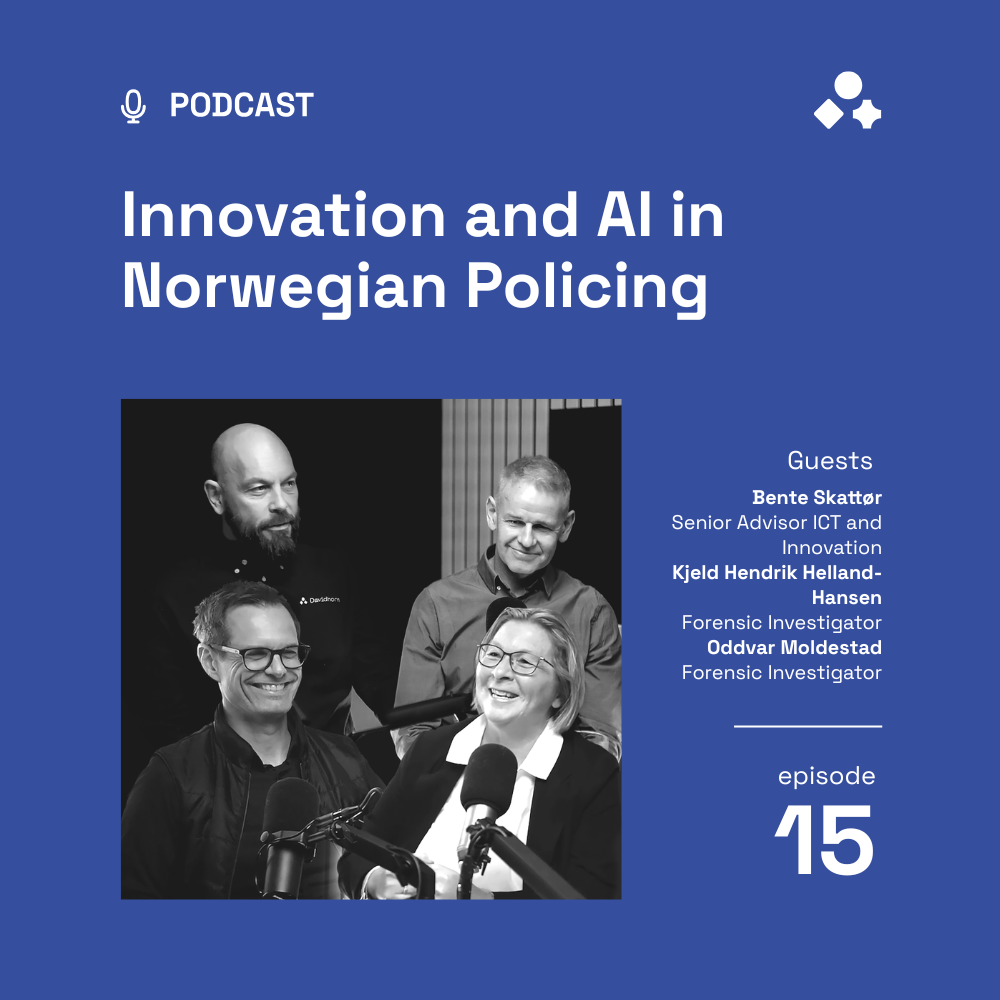
    Episode 15. Innovation and the role of AI in Police Work with Norwegian Police

    Discover how Norwegian police are transforming investigative work through innovation and artificial intelligence.

    This episode examines the integration of AI in police work and investigative interviewing, advances in crime scene investigations, and the critical importance of accountability when deploying AI tools.

    The speakers discuss challenges in keeping pace with criminal innovation, the necessity for operational efficiency, and how international collaboration strengthens policing practices. They also address the cultural shift required within police organisations to embrace the innovation of AI in police work while navigating bureaucratic complexities. Join host Børge Hansen in conversation with three experts from Norway’s law enforcement community: Kjeld Hendrik Helland-Hansen and Oddvar Moldestad (Forensic Investigators, Western Police District) and Bente Skattør (Senior Advisor ICT and Innovation, Norwegian Police).

    When Police Innovation Meets Reality: Inside Norway’s AI Revolution

    At a recent crisis exercise with the Norwegian Navy, a forensic investigator walked through a simulated bomb scene speaking into a headset. No notebook. No frantic typing. Just his voice, capturing every detail as he moved through the chaos.

    Twenty minutes later, he had a complete report.

    « If I should have done this in the traditional manner, » he said, « I’d use at least two days, perhaps more. »

    This is innovation in policing – not in some distant future, but happening right now in Norway’s Western Police District.

    The Trust Question

    Bente Skattør, Senior Advisor for ICT and Innovation at the Norwegian Police, is leading the charge to integrate AI into investigative work. She’s acutely aware of what’s at stake.

    « If we don’t move faster, I think we might lose trust; if we are lagging behind the criminals, that will immediately hit the trust for the police. »

    Bente Skattør

    The numbers are staggering. Norwegian police conduct 150,000 investigative interviews each year – every one traditionally typed manually. Meanwhile, criminals have embraced AI for deepfake voices and sophisticated scams. In Norway, AI-enabled fraud has now surpassed drug trafficking as a criminal enterprise.

    Small Steps, Big Impact of AI in Police Work

    What makes the Norwegian approach different is the philosophy: small, fast experiments with real officers in real situations. Not waiting for perfect systems.

    The results? AI interview transcription in 90 seconds. Crime scene documentation cut from days to minutes. But most importantly, the technology is designed with officers, not for them.

    Forensic investigators Kjeld Henrik Helland-Hansen and Oddvar Moldestad have tested voice-to-text systems in actual crime scenes, refined the templates, and brought colleagues along for the journey.

    « The ones that will benefit the most from it are the guys typing with one finger on their keyboards. They will really see the benefits. »

    Kjeld Henrik Helland-Hansen

    Accountability Built In

    For all the talk of AI, accountability remains central. Every transcription is verified. Every AI output is reviewed. The technology accelerates documentation, but humans maintain control.

    The real test comes in crisis exercises – four major exercises so far – where the team deploys their tools in realistic, high-pressure scenarios. They’ve proven that the technology works when it matters most, in what they call « the golden hour of investigation. »

    Beyond Borders

    The team has shared their work across Europe through Europol, in Brazil at international conferences, and with law enforcement agencies worldwide. They’ve earned a Europol Innovation Award and global recognition.

    But the awards aren’t the point. Criminals don’t respect borders, so innovation can’t either.

    « I think it’s counterproductive to sit in every country doing the same kind of innovation with just a small variance, » Kjeld Henrik explains. The Norwegian team operates without financial commitments that would restrict knowledge sharing – because when one police force becomes more effective, it raises the bar for criminal operations everywhere.

    The Revolution

    Innovation in policing isn’t a future promise. It’s happening now in police districts across Norway, driven by investigators who understand both the technology and the work it must serve.

    The analog investigator who completed his crime scene report in 20 minutes didn’t become a tech expert overnight. He simply had tools that finally matched the way humans naturally work: by observing, speaking, and moving freely without being tethered to keyboards.

    That’s the revolution – making technology fit the investigation, not forcing investigators to fit the technology.

    « Innovation is a muscle that you have to train, » Bente says. In Norway, that training is already well underway.

    Listen to the full conversation in Episode 15 of Beyond a Reasonable Doubt, where Børge Hansen talks with Bente Skattør, Kjeld Henrik Helland-Hansen, and Oddvar Moldestad about the real work of innovation in modern policing.


    Episode Length: Approximately 59 minutes

    Production: Davidhorn – Beyond a Reasonable Doubt Podcast

    Host: Børge Hansen, CEO, Davidhorn


    Equipped For Justice – Supporting ethical, human rights-compliant investigations worldwide

    About the guests

    Dr. Bente Skattør

    Senior Advisor for ICT and Innovation at the Norwegian Police and project lead for AI in investigative interviews. She drives innovation initiatives processing over 150,000 police interviews annually, integrating artificial intelligence into investigative work while maintaining rigorous human oversight. Her work has earned a Europol Innovation Award, a National Digitisation Award nomination, and a Global Innovation Prize in Brazil. With extensive experience in project management across Nordic and global contexts, Bente specialises in the intersection of AI, big data, and law enforcement – focusing on investigative interviews, cybercrime, and creating innovation cultures in complex, high-risk environments.

    Oddvar Moldestad

    Police Superintendent with over 20 years of experience as a forensic investigator in the Western Police District of Norway. Over the past two and a half years, he has been actively involved in the AI4Interviews project, working to modernise and streamline forensic workflows through the use of smart technology and artificial intelligence.

    Kjeld Hendrik Helland-Hansen

    Police Superintendent working as a crime scene investigator with the Norwegian Police, specialising in forensic documentation and crime-scene methodology. He has a background in archaeology from NTNU and has worked for several years at the forensic unit in the Western Police District of Norway.

    Kjeld has represented Norwegian policing internationally through the European Network of Forensic Science Institutes, as a delegate to EMFA under the ENFSI Scene of Crime Working Group. He has also served as the former head of the Norwegian Criminalistics Forum, an organisation for Norwegian crime scene investigators.

    In recent years, his work has focused on innovation at the intersection of policing, technology, and research. He is a contributor to the AI4Interviews project, exploring how hands-free technology, speech-to-text, and artificial intelligence can improve documentation, situational awareness, and evidence quality in crime scene investigations.

    Watch and listen also on YouTube and Apple Podcasts

    Produits apparentés

    • Enregistreur fixe d’entretiens policiers HD

      Enregistreur HD fixe pour les salles d’interrogatoire de haute sécurité.

    • Enregistreur portable d’entretiens policiers

      Enregistreur d’entretien léger, conforme à la norme PACE, pour tout type d’environnement.

    • Capture – Enregistrement d’entretiens mobiles

      Enregistreur d’application mobile pour capturer des preuves en déplacement.

    • Logiciel Ark – Gestion d’entretiens policiers et preuves numériques

      Recevoir, contrôler et conserver les preuves tout au long de leur durée de vie.

    Transcription

    Host: Børge Hansen, CEO, Davidhorn
    Guests: Kjeld Hendrik Helland-Hansen and Oddvar Moldestad (Forensic Investigators, Western Police District) and Bente Skattør (Senior Advisor ICT and Innovation, Norwegian Police).


    BØRGE HANSEN: Today, we’re talking about innovation in policing and what it actually looks like. Criminals are already playing with AI tools. We see deepfake voices used to trick people, AI-written scams that feel uncomfortably personal. And at the same time, the amount of evidence is exploding. Every case means hours of video and audio, phone data, documents, and chat logs. The police aren’t just under pressure from offenders; they’re also buried under information. And still, many investigators are typing crime-scene notes by hand, replaying interviews over and over, and working in systems that don’t really talk to each other. So the question is, how do we keep up and how do we get ahead?

    The good news is that innovation is already happening inside policing. And the team around this table has been recognised for that work with a Europol Innovation Award, a National Digitisation Award nomination, and a Global Innovation Prize in Brazil. I’m very happy to have you here. Bente Skattør, project lead and innovation lead for AI for interviews at the Oslo Police. Kjeld Henrik Helland-Hansen, forensic investigator in the West Police District and the wildcard. And Oddvar Moldestad, also a forensic investigator and a longtime CSI innovator in the West. In this conversation, we’ll look at what’s actually changing at the crime scene, in the interview room and in the courtroom. What works, what’s hard and what it looks like when innovation comes from within the police.

    So let’s start there. Bente, you’re leading AI for interviews. When people ask you what is actually changing in policing right now, where do you begin?

    BENTE SKATTØR: I begin with the police officers, the CSI folks, the team, because that is where you actually start. But first of all, thank you very much for having us here. We are really thrilled to be here to talk about what we actually burn for, and that is innovation in the police. As you so clearly mentioned, Børge, the criminals have already embraced AI.

    And that is also where we are. We are really trying to embrace the technology, but of course, we have to do it in a responsible way. So what we’re doing now in the AI for interviews is actually trying to build upon the speech-to-text technology, AI analysis. So we are working with the police workers strongly and tightly because they have to take and use the tools.

    So that is essential, I think. So what we are working on is actually, as you said, we are working with investigation, and AI for interviews is actually about—we started with investigative interviews. So that is where we have the starting point. But we have seen the huge potential of using speech-to-text in many areas. That’s why we are also here for the CSI crime scene investigation, the courtroom, and putting TVC on the streets from the patrols. So we have huge potential.

    BØRGE HANSEN: What did you start with in investigative interviewing? I know Norway is really on the forefront there. Why is that and how does it work for you guys that you started out with something that the Norwegian police think they’re really good at already?

    BENTE SKATTØR: Yeah, it was not a coincidence. Because I’m really proud also that Norway has a good methodology of the way we are doing investigative interviews. So we have sort of stolen with pride from the PEACE in the UK, but we have also cultivated our own methodology. But the point is that they are writing the investigative interviews manually.

    And we saw also the potential for using Norwegian language models so they can focus on rather doing the summary or understanding what is in the interview instead of taking notes while they are doing the interview. And of course they are taking many. So in Norway, I know Norway is a small country, but anyhow we have approximately 150,000 each year interviews, whether they are inside or outside—150,000 interviews with victims, suspects or similar from the police.

    So we have a huge and very exciting potential and we have come that far that I hope people can see or hear that we are on the right way.

    BØRGE HANSEN: So what’s the impact that you’re seeking in AI for interviews? Obviously, you talk about the 150,000 interviews all across Norway. What’s the impact that you want to get out of those 150,000?

    BENTE SKATTØR: As you said in the start, Børge, we are having so much data within investigation and we need to help the investigators to do their job so they can focus on what really matters within investigation. So we can remove the boring job. It’s very important to have a good summary, of course, that they still have to do. And they also still have to control what is coming out of these language models when we do the transcription. But the potential of letting them focus more on the core case—that is investigation. And the data is not going to stop. It’s going to flood more. It’s growing each day and I have no belief that it will be less, it will be much more.

    BØRGE HANSEN: But you also work closely with, in Norway, we call PPS or police officers in the field, working in the field at the crime scene. How does that innovation work that you’re doing now? How does that impact the PPS situation?

    BENTE SKATTØR: We are in a position now where we actually can ask them and they have answered a questionnaire, but they’re also doing interviews about what they feel. But today it’s going very fast from when you take the interview in the street until it’s transcribed. It takes approximately one and a half to two minutes.

    BØRGE HANSEN: So from the interview performed to the transcription ready, a couple of minutes?

    BENTE SKATTØR: Yes, absolutely. And also the data will be valid inside the police. But we can also enable that for the court, for operation central and the core team if we have a huge case going on. So they can see the data also, what’s coming from the street immediately. So we also built that inside.

    BØRGE HANSEN: In our talks earlier, you often talk about innovation as a muscle that the organisation has to train. What does that look like in practice?

    BENTE SKATTØR: Yes, we have big muscles. I always say that innovation is a muscle that you have to train in order to keep up the speed with the AI revolution which is ongoing. So you have to exercise on the turn of the technology. So that means we also have to train on different arenas. We have to do smaller proof of concept, very fast, fail fast, but also going in the right direction.

    And then you have to work strategically. So when it comes to the smaller proofs of concept, doing the things to explore—then we have a really good example here, is about the crime scene investigation team. I’m really proud to have Oddvar and Kjeld Henrik on our team.

    BØRGE HANSEN: Before we move on to the CSI team, we also said that police work and innovation have to go hand in hand. And what does that look like on a good day?

    BENTE SKATTØR: When police officers say we are on the right way, this is good, it can be better. But when they say this is working and we are on the right—that’s giving me thrill. And I’ve lately been so lucky to hear that. And I also have seen that that makes us even stronger for striving for more innovation.

    BØRGE HANSEN: If criminals innovate faster than the police, why should the public still trust the police to keep up?

    BENTE SKATTØR: I think that is a huge question. First of all, if we don’t move faster, I think we might lose trust. Because if we are coming more and more or lacking behind the criminals, that will immediately hit the trust for the police. That’s kind of natural. And the police force is founded on trust. So if we don’t have the trust, it will be much harder to keep on going.

    BØRGE HANSEN: So, Bente, one of the challenges we’ve spoken about earlier is that we feel that people challenge us that we need to know everything about everything before we can start using these systems. But your approach is much more sandboxing and point-to-point solutions.

    BENTE SKATTØR: Yeah, and that is a huge… we can philosophise a lot and discuss whether we should have a general base model that can serve and suit everyone’s need, or you should go on point-to-point to actually deliver value. And when you are in that discussion, you can easily become paralysed. That is not a good thing because innovation has to happen fast. You have to respond to the needs and also to testing it out very fast on what works. So if you are going, and this is also what I’ve seen in several technology development in Norway, we sometimes think too much before we actually do something. So we have to look ahead, we have to do smaller point-to-point solutions, and if these smaller point-to-point solutions works, you can take the same piece of technology on the next thing, and then next thing. And that’s also the way we actually evolve the data.

    BØRGE HANSEN: So working in police, one could imagine that you’re not only working with supportive people. There’s a lot of cynicism in police work because—well, the reality of living with crime and criminals every day. How do you take that cynicism and turn it into something progressive or positive?

    BENTE SKATTØR: I think by meeting the police workers, I really do. Because when I speak about AI, the immediate question is, will the robot take my job? Of course we—I cannot, that is a question that is fair and you have to address it. So that is what you do. But that is also then why it’s so important to involve the police officers strongly and early. Because they see and hear what, because it’s hard to say, to think about what you need or what could help you. But once you see a proof of concept and you hear it in your own language, then you immediately see the help of how this will lighten your job. So that is by involving them, I think. And also admitting that, this is a sandbox, meaning that this is where we will test the new technology. But it doesn’t mean that everything will be working.

    BØRGE HANSEN: As many people listening, working in investigative work or courts or prosecution knows, policing is a profession that’s caught between extremes. There’s a lot of rules and regulations and bureaucracy that stops work. At the same time, there’s an urge to do things in the right proper way because lives are at stake. How do you navigate that as innovators in a very traditional setting?

    BENTE SKATTØR: Yeah, so this is actually what I’m burning for because I have worked now in 20 years or more within the police in ICT department, not operational. But I know that it is always saying that, no this is not allowed, or we cannot do that, or we have to check and so on. And I don’t say that we shouldn’t do that of course, we have to obey the law. But it is a huge difference saying what is possible under the law instead of saying, can we have the allowance? And I think that is a huge culture thing that we have to embrace in police as well. That we…

    Of course, within the law, but what is the playground? So to have that change, you need the leaders that have that same value and will give you allowance to test things and that also okay to fail.

    BØRGE HANSEN: For those of us who haven’t been to a crime scene, we have a lot of impressions from TV series. What is the job of working on a crime scene in 2024 or ’25?

    ODDVAR MOLDESTAD: If I may say so, crime scene investigation as a profession is all about documenting. What you observe, you observe traces, you observe persons, you observe objects, whatever. And that is quite boring work in many ways because you have to be very thorough, you have to be structured. And with the Sandwich Project we now are part of, we see how we can do these tasks in a better way. What we want to spend our time on is that is very important for crime solving. But at the same time, we can let technology do the boring part, I mean the documentation part of it. So we can use more time with other observations.

    BØRGE HANSEN: So can you just take us through a crime scene? We’re looking at a traditional crime scene, there’s been a breaking and entering, a house burglary. How does an investigator or a technical investigator work in that scene traditionally and how do they work now with technology that you guys have been working on?

    ODDVAR MOLDESTAD: Just briefly, first of all we establish what has happened and what do we need to do to start our crime scene investigation. And that is actually looking around. And then you start doing your thorough investigation where we use, could be photography, all kind of methods to describe the scene. And you are very accurate, you make drawings, you measure, measure every object.

    So we can try to recreate at a later point of time when you also done the whole investigation, make kind of recreation of what has happened. And yeah, that is a quite boring aspect of CSI work. So you have to be structured and write everything down and basically this is what we want technology to do for us because we see that could be a lot easier if you can have tools that can make this work easier, not only for us but of course also for the patrol officers. They have—they are first on the scene. They also need to do the same things we do, but of course they have other tasks as well. And yeah, we want to make this easier in many ways.

    BØRGE HANSEN: Traditional CSI work is what? Pen and paper, dictaphone…

    ODDVAR MOLDESTAD: Yeah, basically pen and paper. I think the last years we’ve had the ability to type into our tablets, but still you’re in this crime scene, you wear these gloves, you don’t want to contaminate anything, still you are forced to take up your phone or your computer or whatever and you have to type this in. So you don’t want to—if you find a suspected trace, you don’t want to take off your gloves and put on the gloves and do, redo this many times. So we saw quite early that voice-to-text could be the solution here. So that is what we started to do a couple of years ago when we started this project.

    BØRGE HANSEN: So these days you are working in a crime scene with voice-to-text. What does it look like to you? What is your working situation like?

    ODDVAR MOLDESTAD: I think you are perhaps more out in the field, and especially on this and testing this out in the—on the field. So perhaps you can elaborate more on that?

    KJELD HENRIK HELLAND-HANSEN: Yeah, so initially when we saw the possibilities in this, I thought it would be revolutionary just to have something that can transcribe my voice into text. So I don’t have to stand there in the dark with gloves and having to write this. So that was just fabulous. And then when you also realise that this transcription actually systemises, from the voice to text, and systemises according to a template that we work with. So what we call people and what we call objects and what we call traces, it puts everything in a system. So basically we can go through the crime scene, describe everything we see and then get out a finished report and that is just fabulous.

    I did some exercise with the Western police, and that was with a colleague who was also a CSI technician and also the patrol police. And one of my fellow colleagues, I would describe him as one of the more analog crime investigators in our office, but that’s fine, we’re different. He was using the headsets and just logging everything. It was counter-stabbing, it was an exercise with the Norwegian Navy where they had gone off two bombs and there were dead and wounded people—that was the scenario. And when we got to the place of the incident, then he started to log, describing everything and going along. And then this was transcribed and systemised. And we asked afterwards, so what do you think of this? And he just answered, yeah, honestly, I did this, I got this report now in 20 minutes.

    And if I should have done this in the traditional manner, I’d use at least two days, perhaps more. So that was a very satisfying answer for us at least because we are tech nerds, I admit it. So we like to move ahead, we like to be in the front and testing things, but this has to have an impact on the whole level, not only as tech-savvy guys, but I think in this case, the ones that will benefit the most from it are the guys typing with one finger on their keyboards. They will really see the benefits of this.

    BØRGE HANSEN: Crisis exercises, you guys said earlier that it gives you much more realistic data than synthetic test data. And as you describe, you can see the technology being used in practice with your own eyes. What’s the biggest surprises from these exercises? Good and bad.

    BENTE SKATTØR: I might answer that because to having allowance to test out early technology is quite cumbersome. Sometimes you have to plan very thoroughly or maybe you have to work with synthetic data, but these kind of arenas is really fantastic to explore technology. And so we jumped very fast into the exercise because we had short notice—that’s also very cool. That was a level of, parts running again. But you can actually, because now we have a toolkit of tools that works pretty well. And we also gather data. So we are in the golden hour of investigation. So we use also the interview solution and also the CSI. But the most important was actually it not that it worked, but it was a good stage of exploring technology much better than I hoped for. So now next year we are actually planning to do more so we can expose and test our solution to the end users. And then we can build on something that is already working, but also have add-ons to explore because there’s no danger to having mistakes in such exercises. That’s what we are aiming for, to learn, build.

    So I’m really thrilled about that. And one of the key questions that we have—we’ve also been participating in four exercises now. So we have data collected from these exercises. So when we have more power or GPUs or machine power in the police, it’s going to be really, really fun to run also AI analytics of this data. So yes, I’m really thrilled. And also what is… The people who work with this technology can be on stage to see how Kjeld Henrik and the bomb squad is using the technology. That’s essential also.

    BØRGE HANSEN: Let’s zoom out a little bit internationally. These challenges aren’t unique to Norway. You’re watching and working with others around the world who are wrestling with the same problems. Who’s inspiring you internationally and what are they learning from your work and the Nordic approach?

    KJELD HENRIK HELLAND-HANSEN: But I would also like to point out that we don’t have any financial commitment in many ways to this kind of thing. So we are eager to share. Now, criminals don’t care about borders. They don’t care if you’re in Norway or Denmark, or if you sit in one part of the world doing crimes in another part of the world. And I think it’s so important to share this kind of knowledge with our colleagues in law enforcement in other countries as well. Because I really believe that if we share this kind of knowledge, we will get something back. And I think it’s counterproductive to sit in every country doing the same kind of innovation with just a small variance. So that’s why I believe that Europol, for instance, here in Europe, is an essential hub for sharing.

    And our collaboration with different countries, it’s great because we see the same needs in every country, perhaps with small differences, but still—and recently when we were in Brazil, same thing. I think this is universal and we need to, since we are, I think I agree with you, Oddvar, we are in this particular area, we are quite in the front.

    And I think it’s our obligation to share this with our colleagues because what we do care about is helping people. That’s why we became police officers in the first place anyway. So this is our main task to help people. And if we can do that by sharing to help other colleagues doing the same thing, yeah, I cannot say it’s important enough.

    BØRGE HANSEN: Very good.

    BENTE SKATTØR: I would like to add also, because getting inspired by people which are much better than you, come on with it. Give us all, because that’s essential. And why shouldn’t we also be inspired by the criminals? Because they embrace the technology and they are really innovative. So of course we shouldn’t commit crime, but we should turn it around to combat crime.

    Getting the inspiration of being, having the possibility to embrace—because I strongly believe if we embrace the technology, we can see the possibilities. We can break up and see the possibilities and believe me, we will anyhow handle within the rule of law. But this is instead of taking what is possible within the law, it’s a complete different thing.

    BØRGE HANSEN: Do you think the criminals are eating elephants and running like that?

    BENTE SKATTØR: They are running. And then they suddenly also get innovative in a strategic matter. Then it’s becoming organised crime. And they are really innovative also to get hold of money and also of course doing really bad things hurting people. But they are really innovative in that they actually—when they have a possibility, they’re actually going for the low-hanging fruits, and then they organise it very fast. So they’re doing business. And also, as many probably already know, in Norway, committing fraud using AI and technology is a bigger business compared to selling drugs in Norway now, at the time being.

    BØRGE HANSEN: So let’s finish by looking forward and keeping it practical. If all this works, everyday investigative life and the quality of justice should improve. If you could change one thing in global policing tomorrow, one thing that would actually make investigators’ lives better and justice more reliable, what would it be and why? Cooperation?

    BENTE SKATTØR: Cooperation across borders. Yes, together with academia, police, public sector and also industry across borders because the crime is borderless and we have to meet on the same, what you call, football stage as them. More cooperation.

    BØRGE HANSEN: Cross-border cooperation.

    KJELD HENRIK HELLAND-HANSEN: I agree quite much on that one. I mentioned the importance of sharing and exchanging ideas and seeing the possibilities to get that wider view to see what you can do. And also that you have leaders that see the importance of this, see, yeah, give you the space to try your wings, to try to be a bit more innovative, not just doing your day-to-day thing, but actually looking forward and see, have that vision. I think it’s important.

    BØRGE HANSEN: It’s out of the proverbial box thinking. How about you, Oddvar? One thing you would want to improve.

    ODDVAR MOLDESTAD: So learning more faster.

    BØRGE HANSEN: So we’ve covered a lot, tech, practice, culture, law. But what I hear, it’s ultimately about people and how they work. Innovation in policing isn’t a future dream, it’s already here. And tonight, you’ve given us a glimpse of how it looks from the inside. Thank you for joining me.

    ALL: Thank you.


    END OF TRANSCRIPT

    © 2025 Davidhorn. All rights reserved.

    En savoir plus

    16 mars 2026
  • Laurence Alison sur le modèle d’orbite – ep.13

    Laurence Alison sur le modèle d’orbite – ep.13

    Episode 15. Innovation and the role of AI in Police Work with Norwegian Police

    Discover how Norwegian police are transforming investigative work through innovation and artificial intelligence.

    This episode examines the integration of AI in police work and investigative interviewing, advances in crime scene investigations, and the critical importance of accountability when deploying AI tools.

    The speakers discuss challenges in keeping pace with criminal innovation, the necessity for operational efficiency, and how international collaboration strengthens policing practices. They also address the cultural shift required within police organisations to embrace the innovation of AI in police work while navigating bureaucratic complexities. Join host Børge Hansen in conversation with three experts from Norway’s law enforcement community: Kjeld Hendrik Helland-Hansen and Oddvar Moldestad (Forensic Investigators, Western Police District) and Bente Skattør (Senior Advisor ICT and Innovation, Norwegian Police).

    When Police Innovation Meets Reality: Inside Norway’s AI Revolution

    At a recent crisis exercise with the Norwegian Navy, a forensic investigator walked through a simulated bomb scene speaking into a headset. No notebook. No frantic typing. Just his voice, capturing every detail as he moved through the chaos.

    Twenty minutes later, he had a complete report.

    « If I should have done this in the traditional manner, » he said, « I’d use at least two days, perhaps more. »

    This is innovation in policing – not in some distant future, but happening right now in Norway’s Western Police District.

    The Trust Question

    Bente Skattør, Senior Advisor for ICT and Innovation at the Norwegian Police, is leading the charge to integrate AI into investigative work. She’s acutely aware of what’s at stake.

    « If we don’t move faster, I think we might lose trust; if we are lagging behind the criminals, that will immediately hit the trust for the police. »

    Bente Skattør

    The numbers are staggering. Norwegian police conduct 150,000 investigative interviews each year – every one traditionally typed manually. Meanwhile, criminals have embraced AI for deepfake voices and sophisticated scams. In Norway, AI-enabled fraud has now surpassed drug trafficking as a criminal enterprise.

    Small Steps, Big Impact of AI in Police Work

    What makes the Norwegian approach different is the philosophy: small, fast experiments with real officers in real situations. Not waiting for perfect systems.

    The results? AI interview transcription in 90 seconds. Crime scene documentation cut from days to minutes. But most importantly, the technology is designed with officers, not for them.

    Forensic investigators Kjeld Henrik Helland-Hansen and Oddvar Moldestad have tested voice-to-text systems in actual crime scenes, refined the templates, and brought colleagues along for the journey.

    « The ones that will benefit the most from it are the guys typing with one finger on their keyboards. They will really see the benefits. »

    Kjeld Henrik Helland-Hansen

    Accountability Built In

    For all the talk of AI, accountability remains central. Every transcription is verified. Every AI output is reviewed. The technology accelerates documentation, but humans maintain control.

    The real test comes in crisis exercises – four major exercises so far – where the team deploys their tools in realistic, high-pressure scenarios. They’ve proven that the technology works when it matters most, in what they call « the golden hour of investigation. »

    Beyond Borders

    The team has shared their work across Europe through Europol, in Brazil at international conferences, and with law enforcement agencies worldwide. They’ve earned a Europol Innovation Award and global recognition.

    But the awards aren’t the point. Criminals don’t respect borders, so innovation can’t either.

    « I think it’s counterproductive to sit in every country doing the same kind of innovation with just a small variance, » Kjeld Henrik explains. The Norwegian team operates without financial commitments that would restrict knowledge sharing – because when one police force becomes more effective, it raises the bar for criminal operations everywhere.

    The Revolution

    Innovation in policing isn’t a future promise. It’s happening now in police districts across Norway, driven by investigators who understand both the technology and the work it must serve.

    The analog investigator who completed his crime scene report in 20 minutes didn’t become a tech expert overnight. He simply had tools that finally matched the way humans naturally work: by observing, speaking, and moving freely without being tethered to keyboards.

    That’s the revolution – making technology fit the investigation, not forcing investigators to fit the technology.

    « Innovation is a muscle that you have to train, » Bente says. In Norway, that training is already well underway.

    Listen to the full conversation in Episode 15 of Beyond a Reasonable Doubt, where Børge Hansen talks with Bente Skattør, Kjeld Henrik Helland-Hansen, and Oddvar Moldestad about the real work of innovation in modern policing.


    Episode Length: Approximately 59 minutes

    Production: Davidhorn – Beyond a Reasonable Doubt Podcast

    Host: Børge Hansen, CEO, Davidhorn


    Equipped For Justice – Supporting ethical, human rights-compliant investigations worldwide

    About the guests

    Dr. Bente Skattør

    Senior Advisor for ICT and Innovation at the Norwegian Police and project lead for AI in investigative interviews. She drives innovation initiatives processing over 150,000 police interviews annually, integrating artificial intelligence into investigative work while maintaining rigorous human oversight. Her work has earned a Europol Innovation Award, a National Digitisation Award nomination, and a Global Innovation Prize in Brazil. With extensive experience in project management across Nordic and global contexts, Bente specialises in the intersection of AI, big data, and law enforcement – focusing on investigative interviews, cybercrime, and creating innovation cultures in complex, high-risk environments.

    Oddvar Moldestad

    Police Superintendent with over 20 years of experience as a forensic investigator in the Western Police District of Norway. Over the past two and a half years, he has been actively involved in the AI4Interviews project, working to modernise and streamline forensic workflows through the use of smart technology and artificial intelligence.

    Kjeld Hendrik Helland-Hansen

    Police Superintendent working as a crime scene investigator with the Norwegian Police, specialising in forensic documentation and crime-scene methodology. He has a background in archaeology from NTNU and has worked for several years at the forensic unit in the Western Police District of Norway.

    Kjeld has represented Norwegian policing internationally through the European Network of Forensic Science Institutes, as a delegate to EMFA under the ENFSI Scene of Crime Working Group. He has also served as the former head of the Norwegian Criminalistics Forum, an organisation for Norwegian crime scene investigators.

    In recent years, his work has focused on innovation at the intersection of policing, technology, and research. He is a contributor to the AI4Interviews project, exploring how hands-free technology, speech-to-text, and artificial intelligence can improve documentation, situational awareness, and evidence quality in crime scene investigations.

    Watch and listen also on YouTube and Apple Podcasts

    Produits apparentés

    • Enregistreur fixe d’entretiens policiers HD

      Enregistreur HD fixe pour les salles d’interrogatoire de haute sécurité.

    • Enregistreur portable d’entretiens policiers

      Enregistreur d’entretien léger, conforme à la norme PACE, pour tout type d’environnement.

    • Capture – Enregistrement d’entretiens mobiles

      Enregistreur d’application mobile pour capturer des preuves en déplacement.

    • Logiciel Ark – Gestion d’entretiens policiers et preuves numériques

      Recevoir, contrôler et conserver les preuves tout au long de leur durée de vie.

    Transcription

    Host: Børge Hansen, CEO, Davidhorn
    Guests: Kjeld Hendrik Helland-Hansen and Oddvar Moldestad (Forensic Investigators, Western Police District) and Bente Skattør (Senior Advisor ICT and Innovation, Norwegian Police).


    BØRGE HANSEN: Today, we’re talking about innovation in policing and what it actually looks like. Criminals are already playing with AI tools. We see deepfake voices used to trick people, AI-written scams that feel uncomfortably personal. And at the same time, the amount of evidence is exploding. Every case means hours of video and audio, phone data, documents, and chat logs. The police aren’t just under pressure from offenders; they’re also buried under information. And still, many investigators are typing crime-scene notes by hand, replaying interviews over and over, and working in systems that don’t really talk to each other. So the question is, how do we keep up and how do we get ahead?

    The good news is that innovation is already happening inside policing. And the team around this table has been recognised for that work with a Europol Innovation Award, a National Digitisation Award nomination, and a Global Innovation Prize in Brazil. I’m very happy to have you here. Bente Skattør, project lead and innovation lead for AI for interviews at the Oslo Police. Kjeld Henrik Helland-Hansen, forensic investigator in the West Police District and the wildcard. And Oddvar Moldestad, also a forensic investigator and a longtime CSI innovator in the West. In this conversation, we’ll look at what’s actually changing at the crime scene, in the interview room and in the courtroom. What works, what’s hard and what it looks like when innovation comes from within the police.

    So let’s start there. Bente, you’re leading AI for interviews. When people ask you what is actually changing in policing right now, where do you begin?

    BENTE SKATTØR: I begin with the police officers, the CSI folks, the team, because that is where you actually start. But first of all, thank you very much for having us here. We are really thrilled to be here to talk about what we actually burn for, and that is innovation in the police. As you so clearly mentioned, Børge, the criminals have already embraced AI.

    And that is also where we are. We are really trying to embrace the technology, but of course, we have to do it in a responsible way. So what we’re doing now in the AI for interviews is actually trying to build upon the speech-to-text technology, AI analysis. So we are working with the police workers strongly and tightly because they have to take and use the tools.

    So that is essential, I think. So what we are working on is actually, as you said, we are working with investigation, and AI for interviews is actually about—we started with investigative interviews. So that is where we have the starting point. But we have seen the huge potential of using speech-to-text in many areas. That’s why we are also here for the CSI crime scene investigation, the courtroom, and putting TVC on the streets from the patrols. So we have huge potential.

    BØRGE HANSEN: What did you start with in investigative interviewing? I know Norway is really on the forefront there. Why is that and how does it work for you guys that you started out with something that the Norwegian police think they’re really good at already?

    BENTE SKATTØR: Yeah, it was not a coincidence. Because I’m really proud also that Norway has a good methodology of the way we are doing investigative interviews. So we have sort of stolen with pride from the PEACE in the UK, but we have also cultivated our own methodology. But the point is that they are writing the investigative interviews manually.

    And we saw also the potential for using Norwegian language models so they can focus on rather doing the summary or understanding what is in the interview instead of taking notes while they are doing the interview. And of course they are taking many. So in Norway, I know Norway is a small country, but anyhow we have approximately 150,000 each year interviews, whether they are inside or outside—150,000 interviews with victims, suspects or similar from the police.

    So we have a huge and very exciting potential and we have come that far that I hope people can see or hear that we are on the right way.

    BØRGE HANSEN: So what’s the impact that you’re seeking in AI for interviews? Obviously, you talk about the 150,000 interviews all across Norway. What’s the impact that you want to get out of those 150,000?

    BENTE SKATTØR: As you said in the start, Børge, we are having so much data within investigation and we need to help the investigators to do their job so they can focus on what really matters within investigation. So we can remove the boring job. It’s very important to have a good summary, of course, that they still have to do. And they also still have to control what is coming out of these language models when we do the transcription. But the potential of letting them focus more on the core case—that is investigation. And the data is not going to stop. It’s going to flood more. It’s growing each day and I have no belief that it will be less, it will be much more.

    BØRGE HANSEN: But you also work closely with, in Norway, we call PPS or police officers in the field, working in the field at the crime scene. How does that innovation work that you’re doing now? How does that impact the PPS situation?

    BENTE SKATTØR: We are in a position now where we actually can ask them and they have answered a questionnaire, but they’re also doing interviews about what they feel. But today it’s going very fast from when you take the interview in the street until it’s transcribed. It takes approximately one and a half to two minutes.

    BØRGE HANSEN: So from the interview performed to the transcription ready, a couple of minutes?

    BENTE SKATTØR: Yes, absolutely. And also the data will be valid inside the police. But we can also enable that for the court, for operation central and the core team if we have a huge case going on. So they can see the data also, what’s coming from the street immediately. So we also built that inside.

    BØRGE HANSEN: In our talks earlier, you often talk about innovation as a muscle that the organisation has to train. What does that look like in practice?

    BENTE SKATTØR: Yes, we have big muscles. I always say that innovation is a muscle that you have to train in order to keep up the speed with the AI revolution which is ongoing. So you have to exercise on the turn of the technology. So that means we also have to train on different arenas. We have to do smaller proof of concept, very fast, fail fast, but also going in the right direction.

    And then you have to work strategically. So when it comes to the smaller proofs of concept, doing the things to explore—then we have a really good example here, is about the crime scene investigation team. I’m really proud to have Oddvar and Kjeld Henrik on our team.

    BØRGE HANSEN: Before we move on to the CSI team, we also said that police work and innovation have to go hand in hand. And what does that look like on a good day?

    BENTE SKATTØR: When police officers say we are on the right way, this is good, it can be better. But when they say this is working and we are on the right—that’s giving me thrill. And I’ve lately been so lucky to hear that. And I also have seen that that makes us even stronger for striving for more innovation.

    BØRGE HANSEN: If criminals innovate faster than the police, why should the public still trust the police to keep up?

    BENTE SKATTØR: I think that is a huge question. First of all, if we don’t move faster, I think we might lose trust. Because if we are coming more and more or lacking behind the criminals, that will immediately hit the trust for the police. That’s kind of natural. And the police force is founded on trust. So if we don’t have the trust, it will be much harder to keep on going.

    BØRGE HANSEN: So, Bente, one of the challenges we’ve spoken about earlier is that we feel that people challenge us that we need to know everything about everything before we can start using these systems. But your approach is much more sandboxing and point-to-point solutions.

    BENTE SKATTØR: Yeah, and that is a huge… we can philosophise a lot and discuss whether we should have a general base model that can serve and suit everyone’s need, or you should go on point-to-point to actually deliver value. And when you are in that discussion, you can easily become paralysed. That is not a good thing because innovation has to happen fast. You have to respond to the needs and also to testing it out very fast on what works. So if you are going, and this is also what I’ve seen in several technology development in Norway, we sometimes think too much before we actually do something. So we have to look ahead, we have to do smaller point-to-point solutions, and if these smaller point-to-point solutions works, you can take the same piece of technology on the next thing, and then next thing. And that’s also the way we actually evolve the data.

    BØRGE HANSEN: So working in police, one could imagine that you’re not only working with supportive people. There’s a lot of cynicism in police work because—well, the reality of living with crime and criminals every day. How do you take that cynicism and turn it into something progressive or positive?

    BENTE SKATTØR: I think by meeting the police workers, I really do. Because when I speak about AI, the immediate question is, will the robot take my job? Of course we—I cannot, that is a question that is fair and you have to address it. So that is what you do. But that is also then why it’s so important to involve the police officers strongly and early. Because they see and hear what, because it’s hard to say, to think about what you need or what could help you. But once you see a proof of concept and you hear it in your own language, then you immediately see the help of how this will lighten your job. So that is by involving them, I think. And also admitting that, this is a sandbox, meaning that this is where we will test the new technology. But it doesn’t mean that everything will be working.

    BØRGE HANSEN: As many people listening, working in investigative work or courts or prosecution knows, policing is a profession that’s caught between extremes. There’s a lot of rules and regulations and bureaucracy that stops work. At the same time, there’s an urge to do things in the right proper way because lives are at stake. How do you navigate that as innovators in a very traditional setting?

    BENTE SKATTØR: Yeah, so this is actually what I’m burning for because I have worked now in 20 years or more within the police in ICT department, not operational. But I know that it is always saying that, no this is not allowed, or we cannot do that, or we have to check and so on. And I don’t say that we shouldn’t do that of course, we have to obey the law. But it is a huge difference saying what is possible under the law instead of saying, can we have the allowance? And I think that is a huge culture thing that we have to embrace in police as well. That we…

    Of course, within the law, but what is the playground? So to have that change, you need the leaders that have that same value and will give you allowance to test things and that also okay to fail.

    BØRGE HANSEN: For those of us who haven’t been to a crime scene, we have a lot of impressions from TV series. What is the job of working on a crime scene in 2024 or ’25?

    ODDVAR MOLDESTAD: If I may say so, crime scene investigation as a profession is all about documenting. What you observe, you observe traces, you observe persons, you observe objects, whatever. And that is quite boring work in many ways because you have to be very thorough, you have to be structured. And with the Sandwich Project we now are part of, we see how we can do these tasks in a better way. What we want to spend our time on is that is very important for crime solving. But at the same time, we can let technology do the boring part, I mean the documentation part of it. So we can use more time with other observations.

    BØRGE HANSEN: So can you just take us through a crime scene? We’re looking at a traditional crime scene, there’s been a breaking and entering, a house burglary. How does an investigator or a technical investigator work in that scene traditionally and how do they work now with technology that you guys have been working on?

    ODDVAR MOLDESTAD: Just briefly, first of all we establish what has happened and what do we need to do to start our crime scene investigation. And that is actually looking around. And then you start doing your thorough investigation where we use, could be photography, all kind of methods to describe the scene. And you are very accurate, you make drawings, you measure, measure every object.

    So we can try to recreate at a later point of time when you also done the whole investigation, make kind of recreation of what has happened. And yeah, that is a quite boring aspect of CSI work. So you have to be structured and write everything down and basically this is what we want technology to do for us because we see that could be a lot easier if you can have tools that can make this work easier, not only for us but of course also for the patrol officers. They have—they are first on the scene. They also need to do the same things we do, but of course they have other tasks as well. And yeah, we want to make this easier in many ways.

    BØRGE HANSEN: Traditional CSI work is what? Pen and paper, dictaphone…

    ODDVAR MOLDESTAD: Yeah, basically pen and paper. I think the last years we’ve had the ability to type into our tablets, but still you’re in this crime scene, you wear these gloves, you don’t want to contaminate anything, still you are forced to take up your phone or your computer or whatever and you have to type this in. So you don’t want to—if you find a suspected trace, you don’t want to take off your gloves and put on the gloves and do, redo this many times. So we saw quite early that voice-to-text could be the solution here. So that is what we started to do a couple of years ago when we started this project.

    BØRGE HANSEN: So these days you are working in a crime scene with voice-to-text. What does it look like to you? What is your working situation like?

    ODDVAR MOLDESTAD: I think you are perhaps more out in the field, and especially on this and testing this out in the—on the field. So perhaps you can elaborate more on that?

    KJELD HENRIK HELLAND-HANSEN: Yeah, so initially when we saw the possibilities in this, I thought it would be revolutionary just to have something that can transcribe my voice into text. So I don’t have to stand there in the dark with gloves and having to write this. So that was just fabulous. And then when you also realise that this transcription actually systemises, from the voice to text, and systemises according to a template that we work with. So what we call people and what we call objects and what we call traces, it puts everything in a system. So basically we can go through the crime scene, describe everything we see and then get out a finished report and that is just fabulous.

    I did some exercise with the Western police, and that was with a colleague who was also a CSI technician and also the patrol police. And one of my fellow colleagues, I would describe him as one of the more analog crime investigators in our office, but that’s fine, we’re different. He was using the headsets and just logging everything. It was counter-stabbing, it was an exercise with the Norwegian Navy where they had gone off two bombs and there were dead and wounded people—that was the scenario. And when we got to the place of the incident, then he started to log, describing everything and going along. And then this was transcribed and systemised. And we asked afterwards, so what do you think of this? And he just answered, yeah, honestly, I did this, I got this report now in 20 minutes.

    And if I should have done this in the traditional manner, I’d use at least two days, perhaps more. So that was a very satisfying answer for us at least because we are tech nerds, I admit it. So we like to move ahead, we like to be in the front and testing things, but this has to have an impact on the whole level, not only as tech-savvy guys, but I think in this case, the ones that will benefit the most from it are the guys typing with one finger on their keyboards. They will really see the benefits of this.

    BØRGE HANSEN: Crisis exercises, you guys said earlier that it gives you much more realistic data than synthetic test data. And as you describe, you can see the technology being used in practice with your own eyes. What’s the biggest surprises from these exercises? Good and bad.

    BENTE SKATTØR: I might answer that because to having allowance to test out early technology is quite cumbersome. Sometimes you have to plan very thoroughly or maybe you have to work with synthetic data, but these kind of arenas is really fantastic to explore technology. And so we jumped very fast into the exercise because we had short notice—that’s also very cool. That was a level of, parts running again. But you can actually, because now we have a toolkit of tools that works pretty well. And we also gather data. So we are in the golden hour of investigation. So we use also the interview solution and also the CSI. But the most important was actually it not that it worked, but it was a good stage of exploring technology much better than I hoped for. So now next year we are actually planning to do more so we can expose and test our solution to the end users. And then we can build on something that is already working, but also have add-ons to explore because there’s no danger to having mistakes in such exercises. That’s what we are aiming for, to learn, build.

    So I’m really thrilled about that. And one of the key questions that we have—we’ve also been participating in four exercises now. So we have data collected from these exercises. So when we have more power or GPUs or machine power in the police, it’s going to be really, really fun to run also AI analytics of this data. So yes, I’m really thrilled. And also what is… The people who work with this technology can be on stage to see how Kjeld Henrik and the bomb squad is using the technology. That’s essential also.

    BØRGE HANSEN: Let’s zoom out a little bit internationally. These challenges aren’t unique to Norway. You’re watching and working with others around the world who are wrestling with the same problems. Who’s inspiring you internationally and what are they learning from your work and the Nordic approach?

    KJELD HENRIK HELLAND-HANSEN: But I would also like to point out that we don’t have any financial commitment in many ways to this kind of thing. So we are eager to share. Now, criminals don’t care about borders. They don’t care if you’re in Norway or Denmark, or if you sit in one part of the world doing crimes in another part of the world. And I think it’s so important to share this kind of knowledge with our colleagues in law enforcement in other countries as well. Because I really believe that if we share this kind of knowledge, we will get something back. And I think it’s counterproductive to sit in every country doing the same kind of innovation with just a small variance. So that’s why I believe that Europol, for instance, here in Europe, is an essential hub for sharing.

    And our collaboration with different countries, it’s great because we see the same needs in every country, perhaps with small differences, but still—and recently when we were in Brazil, same thing. I think this is universal and we need to, since we are, I think I agree with you, Oddvar, we are in this particular area, we are quite in the front.

    And I think it’s our obligation to share this with our colleagues because what we do care about is helping people. That’s why we became police officers in the first place anyway. So this is our main task to help people. And if we can do that by sharing to help other colleagues doing the same thing, yeah, I cannot say it’s important enough.

    BØRGE HANSEN: Very good.

    BENTE SKATTØR: I would like to add also, because getting inspired by people which are much better than you, come on with it. Give us all, because that’s essential. And why shouldn’t we also be inspired by the criminals? Because they embrace the technology and they are really innovative. So of course we shouldn’t commit crime, but we should turn it around to combat crime.

    Getting the inspiration of being, having the possibility to embrace—because I strongly believe if we embrace the technology, we can see the possibilities. We can break up and see the possibilities and believe me, we will anyhow handle within the rule of law. But this is instead of taking what is possible within the law, it’s a complete different thing.

    BØRGE HANSEN: Do you think the criminals are eating elephants and running like that?

    BENTE SKATTØR: They are running. And then they suddenly also get innovative in a strategic matter. Then it’s becoming organised crime. And they are really innovative also to get hold of money and also of course doing really bad things hurting people. But they are really innovative in that they actually—when they have a possibility, they’re actually going for the low-hanging fruits, and then they organise it very fast. So they’re doing business. And also, as many probably already know, in Norway, committing fraud using AI and technology is a bigger business compared to selling drugs in Norway now, at the time being.

    BØRGE HANSEN: So let’s finish by looking forward and keeping it practical. If all this works, everyday investigative life and the quality of justice should improve. If you could change one thing in global policing tomorrow, one thing that would actually make investigators’ lives better and justice more reliable, what would it be and why? Cooperation?

    BENTE SKATTØR: Cooperation across borders. Yes, together with academia, police, public sector and also industry across borders because the crime is borderless and we have to meet on the same, what you call, football stage as them. More cooperation.

    BØRGE HANSEN: Cross-border cooperation.

    KJELD HENRIK HELLAND-HANSEN: I agree quite much on that one. I mentioned the importance of sharing and exchanging ideas and seeing the possibilities to get that wider view to see what you can do. And also that you have leaders that see the importance of this, see, yeah, give you the space to try your wings, to try to be a bit more innovative, not just doing your day-to-day thing, but actually looking forward and see, have that vision. I think it’s important.

    BØRGE HANSEN: It’s out of the proverbial box thinking. How about you, Oddvar? One thing you would want to improve.

    ODDVAR MOLDESTAD: So learning more faster.

    BØRGE HANSEN: So we’ve covered a lot, tech, practice, culture, law. But what I hear, it’s ultimately about people and how they work. Innovation in policing isn’t a future dream, it’s already here. And tonight, you’ve given us a glimpse of how it looks from the inside. Thank you for joining me.

    ALL: Thank you.


    END OF TRANSCRIPT

    © 2025 Davidhorn. All rights reserved.

    En savoir plus

    4 mars 2026
  • Child Interviewing with Triangle – ep.14

    Child Interviewing with Triangle – ep.14

    Episode 14. The Art and Science of Child Interviewing with Triangle

    In this episode, we speak with Carly McAuley and Maxime Cole from Triangle, a UK-based organisation specialising in investigative interviewing of children and vulnerable adults.

    Founded in 1997, Triangle has become a leading authority in forensic questioning techniques and vulnerable witness interviewing, training police forces across the UK and internationally while conducting interviews for criminal and family court cases.

    Triangle provides comprehensive services, including:

    • Investigative interviews for children and vulnerable adults (ages 2-60)
    • Forensic Questioning of Children (FQC) training for police forces
    • Intermediary services to facilitate communication
    • Expert witness testimony
    • Therapeutic support and advocacy
    • Transcription services that capture non-verbal communication
    • Consultation for school staff and first responders

    Carly McAuley and Maxime Cole shared with us Triangle’s approach to child and vulnerable witness interviewing. The conversation explores how very young children – even two and three-year-olds – can provide reliable, court-admissible evidence when interviewed using appropriate techniques. Triangle’s expertise challenges long-held assumptions about children’s capabilities and demonstrates that the quality of evidence obtained depends entirely on the adult interviewer’s communication skills, not the child’s inherent abilities.

    The discussion reveals the critical importance of language adaptation in child interviews. Simple changes like asking « what made him do that? » instead of « why did he do that? » can transform a child’s ability to respond. Carly and Maxine explain the « no guessing rule » – a fundamental technique that teaches children that interviewers genuinely don’t know what happened because they weren’t there. This role reversal is essential for obtaining accurate accounts, as children naturally assume adults know everything.

    A significant portion of the conversation addresses the problem of « muddled » accounts created when well-meaning adults – teachers, social workers, foster carers, and family members – repeatedly question children before formal interviews take place. Triangle often conducts « unmuddying interviews » to separate what the child originally experienced from what others have added along the way. The guests emphasise that professionals need training on how to safely listen to children’s concerns without contaminating their accounts.

    Notable Quotes:

    "If we get it right with the youngest children with the most complex needs, then it helps our communication with everyone."
    "You can't get a good answer by asking a bad question."
    "Children's communicative competence is really reliant on the adults' communicative competence."

    Resources Mentioned:

    • Triangle’s « Two-Way Street » and « Three-Way Street » films
    • ORBIT training model
    • Forensic Questioning of Children (FQC) course
    • Davidhorn Police Interview Summit 2025

    Looking Ahead:

    Triangle will be presenting at the Davidhorn Police Interview Summit 2026, offering training opportunities for international practitioners interested in advanced child interviewing techniques.

    Connect with Triangle: Learn more about their training programmes and services for law enforcement, social services, and educational professionals.


    Episode Length: Approximately 59 minutes

    Production: Davidhorn – Beyond a Reasonable Doubt Podcast

    Host: Sigrun Rodrigues, former Chief Marketing Officer, Davidhorn


    Equipped For Justice – Supporting ethical, human rights-compliant investigations worldwide

    Watch and listen also on YouTube and Apple Podcasts

    Produits apparentés

    • Enregistreur fixe d’entretiens policiers HD

      Enregistreur HD fixe pour les salles d’interrogatoire de haute sécurité.

    • Enregistreur portable d’entretiens policiers

      Enregistreur d’entretien léger, conforme à la norme PACE, pour tout type d’environnement.

    • Capture – Enregistrement d’entretiens mobiles

      Enregistreur d’application mobile pour capturer des preuves en déplacement.

    • Logiciel Ark – Gestion d’entretiens policiers et preuves numériques

      Recevoir, contrôler et conserver les preuves tout au long de leur durée de vie.

    Transcription

    Host: Sigrun Rodrigues, former Chief Marketing Officer, Davidhorn
    Guests: Carly McAuley and Maxime Cole, Directors at Triangle


    Sigrun Rodrigues: Hello and welcome to this podcast. I’m Sigrun Rodrigues, Chief Marketing Officer at Davidhorn, and I’m very excited to have you here today. Would you like to introduce yourselves?

    Carly McAuley: Thank you very much for having us. My name is Carly McAuley. I’m one of the directors at Triangle.

    Maxime Cole: Hi, I’m Maxime Cole, and I’m also a director at Triangle.

    SR: Tell me a little bit about Triangle. What is Triangle?

    CM: Triangle was created in 1997, and we currently provide specialist support to children, consultancy, and training. We also provide expert opinion, intermediaries, and therapeutic services. Everything we do is very bespoke, depending on what’s needed for the children and young people. Many of the children and young people we provide services to have had abusive starts to their lives, and we’re trying to help them come to terms with that. We provide advocacy services and investigative interviewing, which is what we’re here to talk about today.

    MC: Our investigative interviewing services are really growing every year. We’re doing more and more, and it’s what we mainly do now, along with a lot of training.

    SR: So, specifically, children’s interviewing?

    MC: Well, our specialism is with children and young people, but we actually work with people up to the age of 60. We’re asked to do investigative interviews if an adult has additional needs or communication difficulties that make it harder for someone else to interview them. We use the same skills that we use to interview children and young people for everybody anyway.

    CM: That’s a real fundamental Triangle belief, isn’t it? If we get it right with the youngest children with the most complex needs, then it helps our communication with everyone.

    MC: Absolutely.

    The Scope of Triangle’s Investigative Work

    SR: Is this related to police investigations? What type of investigations do you do specifically?

    MC: It’s quite a range. Some of the interviews we do are directly referred to us by the police. It might be because the child’s very young – we interview lots of two and three-year-olds for the police. Or it might be that the child has very complex needs. Quite often, we find that children have been taught to hate the police and told that they mustn’t speak to the police, so there’s already this barrier there. Coming in as an independent organisation can make it much easier for the child to communicate with us.

    The variety of investigations could be anything, but primarily, it’s sexual and physical abuse investigations that we’re involved in. Then some of our work comes from the family court. We’re asked to interview children so that the court can make decisions going forward.

    CM: But it’s not quite as simple as that, is it? Sometimes we’ll interview a child for family court, but what they end up saying makes that interview go back to the criminal court and back through a police investigation.

    SR: You’re discovering things in the process that nobody was aware of.

    CM: Exactly. It’s quite fluid.

    The Challenge of Initial Police Visits

    MC: The police are in a difficult situation with some children. In the UK, if a child says something potentially concerning to a teacher, for example, the police have to go out to visit that child with a social worker and try to get the child to repeat what they’ve said to the teacher before they’ll proceed to a visually recorded interview.

    For some children, it might have taken them four years to build enough rapport with that teacher to feel comfortable enough to tell them. Then they don’t know that social worker or that police officer, and they’re expected to repeat what they said straight away without having built any rapport. Often, that doesn’t work, so they don’t go on to be interviewed. Ultimately, it ends up in family court, and then we interview. So, actually, that child has said something potentially concerning before, but it never went to a police interview because they didn’t repeat what they’d said in that initial visit.

    CM: We’re becoming more aware the more police we’re training of the systems and the way they work. Recently, in one of the courses where we trained a local police force, they talked about having « no further action. » That isn’t necessarily to do with what the child said – it’s not having enough evidence or not having the standard of evidence that would go to court. Whereas we specialise in knowing what questions to ask, how to ask them, and what’s needed for further action to take place.

    SR: So you’re trained and have the specialist competence to dig into the hard questions to get that evidence right.

    CM: Yes. And some of the things are really quite simple. We’re training the police to ask questions in a different way. For example, if you ask a child « why » something happened, they find that really difficult to answer. But if you use a simple rephrase – « what made him do that » instead of « why did he do that » – they’re then able to answer the question.

    MC: And we spend a lot of time explaining to children that we don’t know what happened because we weren’t there. Children assume that adults know everything, and then they don’t see the need to provide the information they’re being asked for because they’re thinking, « Well, you already know. Why am I going through this with you? » So we do a lot of that: « We don’t know because we weren’t there. »

    Training Police Forces

    SR: From what I understand, you train police forces?

    MC: Yes, we’ve trained a lot of different police forces now. Some police forces come to us – we’re based in Brighton – and others we train in force, so we go to them and train at their headquarters.

    SR: What does this training consist of?

    MC: It’s called FQC – Forensic Questioning of Children. When we initially started training, it was a four or five-day course and involved police officers taking an exam, so it was a pass-fail course. Then COVID hit. After speaking to many forces, we realised that having them out for four or five days was really difficult for police forces, making commissioners reluctant to do that. We’ve managed to compact it into a three-day course, which is where we’re at now.

    It doesn’t have a pass-fail examination, but the last day is spent with police practising what we’ve learned over two days so that we can observe. If we did have any major concerns, which have happened but very rarely, then we would follow that up.

    CM: And we offer support to the police after the course as well. They can contact us by phone or email, and they do. They might say, « I’ve got this three-year-old that says this – should we go and talk to them or should we go straight to the interview? » It’s nice to be able to be there afterwards and advise.

    MC: We had a query last week about a child who’s now three and a half, but they were two and a half when the incident happened. The police were messaging us to say, « Is it still viable to interview? Should we still interview? » It’s a real range of questions. Sometimes it’s supporting them with live cases, and other times it’s helping them decide whether an interview should take place – whether it’s in the child’s best interests or not.

    SR: Is it a one-off training or do you do repeat training?

    MC: We also do a one-day refresher course. That’s really important because sometimes you can forget, or you can unlearn elements of it and perhaps not use the techniques to their full potential.

    What the FQC Training Covers

    CM: In the course, we cover a lot of the basics about what language to use with children, how to adapt and simplify your communication to make it easier for children to understand. We cover a lot of rapport building because that’s absolutely essential, and we teach them how we build rapport with children.

    We cover a lot about attention and arousal – keeping an eye on the child and where they’re at within their window of tolerance. Are they able to communicate, or do we need to help them by doing something calming or something lively to get them back to a place where they’re able to communicate?

    We do a lot of troubleshooting – teaching what you would do if a child did this – and a lot of focus on separating out events with children.

    The Problem of « Muddling » Through Repeated Questioning

    MC: We get called in to do what we call « unmuddying interviews. » This happens a lot. Children are asked repeatedly. They might have told their teacher something, and then the safeguarding lead asks them about it. Then they get a visit from the social worker and the police, and they ask them about it. Perhaps they get police-protected and move into foster care, and then the foster carers ask them about it. Then they get a social worker who asks them. The next month, they get a new social worker, and that social worker asks them about it. By the time they get to the interview, it’s so muddled because they’ve been asked again and again.

    CM: We often get family members recording them, doing their own interviews on their phones.

    MC: It’s all so muddled by the time it gets to us. We teach the police about that as well – how to tell which parts have come from the child and which parts have been added by well-meaning adults along the way.

    We often say to children: « We need to find out what you saw with your own eyes, heard with your own ears, and felt with your own body. » It’s all anchored back to that, so we can separate things out. We’ll acknowledge, « We know you’ve told lots of people, we know you’ve spoken to lots of different people. » If we can, we’ll list those people and say, « Our job is to really think about everything that we’ve heard and that you’ve said and to get it really right. »

    SR: I’m from Norway, and we’ve had a few cases where whole villages have been in a bad state because the interviews weren’t done correctly. Teachers and lots of different people have been accused of doing things, and it’s turned out that the interviews weren’t done correctly. There have been some really bad miscarriages of justice following that.

    CM: People are trying to be helpful. It’s not – I mean, obviously, sometimes you get cases where people are trying to change a story or change what’s happened. But in our experience, the majority of the time, it’s because people are trying to help children, but actually, it’s not helping.

    Training School Staff

    MC: We also know – I don’t know about in Norway, but in England – the training that’s given to school staff, particularly because we know that’s a place where a lot of children do talk about things, is very negative. Don’t do this, don’t do that, don’t do this, don’t do that – but not what to do.

    Another thing we started a couple of years ago, post-COVID, was these workshops for school staff. We know there are huge funding issues, so they’re up to two hours long, where we talk about things that you can do rather than things you can’t, because it’s all very negative guidance out there currently.

    CM: It scares professionals off – the guidance that a lot of people are given in their safeguarding training is « don’t ask any questions, don’t do this, don’t do that. »

    MC: Professionals need to be taught how to safely listen to children’s concerns so that by the time children are interviewed about things, hopefully it’s only the second time they’ve talked about it, not the 22nd time.

    SR: And of course, in Norway, we have these Barnahus centres where children are brought in to be interviewed properly. Why do you work mainly within the UK?

    CM: Yes, we do. We have done some international work. In 2018, a colleague and I flew to India, and we trained the High Court judges in Delhi. We then flew to southern India and trained a whole lot of different professionals down there in the FQC training – how to communicate with children.

    We do a lot nationally. We train police nationally, as mentioned, and also social workers in schools and frontline workers. We try to link a lot of our training to serious case reviews because out of those come lots of learning points for us as a culture and a country.

    We’ve developed resources with the NSPCC, and we’ve also done some work with MOPAC, which is the Mayor’s Office for Policing and Crime. They look at the Met Police and make sure that everything they’re doing is efficient. We’ve helped them think about scripts for young people and vulnerable people who come into custody and need to understand processes a bit more.

    Working with Non-Verbal Communication

    MC: We do interview children who have very limited speech and who use other ways to communicate – symbols, picture books. Years ago, we interviewed someone using an eye gaze machine to communicate.

    CM: It’s more about them understanding us, I suppose, as well as them communicating.

    MC: There’s a film we made called « Two-Way Street, » which is all about communication being two-way and not just putting it on the child. It’s the adults’ responsibility as well. As a person, if you’re talking to someone and they’re not interested in you, you’re not going to tell them very much. Whereas if you’ve got a person that is interested and engaged and giving you the right non-verbal cues and signals, you’re going to engage a lot more. This is the case for children.

    Children are brought up in a society where, in the past, a lot has been done to them by adults. To suddenly put them in a position where the adult is asking them to talk about something that they have the knowledge of – children are a bit like, « Well, this isn’t usual. » Kids go to school, and the teachers know everything. Kids are at home, and the parents are completely in control of what’s happening.

    It’s really trying to get those children and young people to realise that they’re the experts and that we’re part of a two-way process with them to help them tell us their expertise because we don’t know.

    The « No Guessing Rule »

    CM: As I mentioned earlier, we spend quite a lot of time in rapport building, reassuring children of that. There’s a rule called the « no guessing rule » that we practise with children a lot. At school, children are taught to guess all the time. For us to then have them come and see us and say, « In this room, we don’t do guessing. What colour’s my car? » And they’re like, « Red. » « We’re not doing guessing. You’ve seen my car. Do you know what colour my car is? »

    I think for us, a key point in the training is to help the police and other adults understand that you have to spend time helping children understand this switch of roles.

    MC: It’s such a different process. With you talking about it being that two-way street as well, everyone that we train, we try to really outline that children’s communicative competence is really reliant on the adults’ communicative competence. You can’t get a good answer by asking a bad question. It’s not going to work. The adults really need to develop their questioning skills to enable children to give their best evidence.

    Challenging Assumptions About Children’s Capabilities

    CM: Certainly, in the UK, there’s a saying – I don’t know if you have it in Norway – « never work with children or animals. » Children are being blamed for their lack of competence all the time. We’ve heard people say, « If someone asked me to interview a three-year-old, I’d run a mile. » It’s almost as if the child isn’t good enough at communicating. But actually, it’s us. It’s breaking the barriers.

    MC: You’ll get police saying, « Oh well, they can’t even sit still, so how can you interview them? » It’s like, well, do you have to sit still to interview them? Can you do it while you’re moving on the floor? It’s looking at breaking those adults’ expectations of how children should behave, and thinking, « Actually, it’s about me. »

    CM: Another bit to add is that « Two-Way Street » film we made in the ’90s, and then we followed it up years later with « Three-Way Street » because we realised that a lot of these children’s interactions weren’t just with one adult – there were normally two adults. If you think about that dynamic, that’s children being put in a room with two adults. That’s almost making it harder for the children because they’ve got two adults who they think know everything.

    MC: Carly and I do a lot of that when we’re interviewing, where we’re talking with each other. I’ll say, « Well, Carly, I don’t know because I wasn’t there. Do you know? » « No, I haven’t seen that either. » We do a lot of that, and then they understand together. Suddenly, the penny drops. « I’ve never been to Johnny’s school. I don’t know what his teachers are like. I haven’t met his mum or his family. » « No, me neither. » « So I don’t know. » Then suddenly Johnny will pipe up, « But I know. I know! » because he then realises why we’re asking the questions.

    CM: We teach the police a lot about that as well, because children are baffled sometimes: « Why on earth are you asking me that? »

    MC: Because adults know everything.

    The Evolution of Child Interviewing in the UK

    SR: You talk about PEACE interviewing, which is very relevant to us on the technology side. You’ve got these frameworks that were implemented early on in the UK, and I’m sure this has developed the cultural side of interviewing – the mindset that police go into the interviewing situation with. You’re teaching them that mindset to speak to children and have a different approach when they go into those conversations. You’ve been following this since the ’90s. Have you seen any change over time? Has it eroded? Has it gotten better? How would you describe this development since back then?

    CM: I think it has evolved. There are some positives and some negatives as well. One thing that is key for us at Triangle is that we know statistically that children with communication difficulties and disabilities are far more likely to be abused. Yet we are still not supporting those people in everyday life to have communication systems to enable them to communicate. That’s linked to education, but also ideas of what disabled people and people with communication difficulties are able to do. That hasn’t changed very much. We still see that as a big barrier.

    But what has changed a lot is the realisation that children can give evidence regardless of their age. It used to be extremely rare that children under five would be interviewed, and now it’s much more common. But we’re still not all the way there. There are still very young children who just aren’t seen as reliable just because of their age, so their evidence isn’t being gathered.

    MC: Sometimes we’re asked to interview four out of a five-sibling group, and we’re thinking, « Why are we not seeing the youngest one? » It’s maybe because they’re two and a half. But actually, two-and-a-half-year-olds can give really great evidence if they’re interviewed in the right way.

    SR: That’s changed a lot since the ’90s, though, right?

    MC: It has changed a lot. We were involved many years ago in one of the first cases with a two-year-old who was a witness to murder. He was the sole witness. Initially, the police were very reluctant because he was so young, but we were able to support the two-year-old to communicate. They didn’t need to know what happened because they knew it was a murder. They didn’t need to know where because they knew where. They didn’t need to know when because they had a time scope. All they needed to know was who.

    Everyone who’s met a two-year-old knows that they can identify people, and this child knew the person. We did that through a mixture of speech and using photos and supporting the young person. That actually did end up going to trial. I think that was quite a first for England, believing that actually that could happen.

    Even now, in our police training, when we mention that, everyone’s like, « What? Two? How did you do that? » It’s just focusing on what information is crucial. As Carly said earlier, if you’re asking children about timelines when they’ve been living in an abusive situation all their lives, and you’re thinking about how long this has been happening, time is a huge, difficult concept for children anyway. It depends on what the questions are and what information you need to gather.

    Working with Children with Limited Verbal Communication

    CM: The same with children and young people who communicate using yes and no – it’s really important if you’re interviewing them that you’re getting a balance of yes answers and no answers. If you’re asking a young person questions and all they’re communicating is « yes, yes, yes, yes, yes, » it’s not really credible. Whereas if you’re really clever with your questioning and you’re getting « yes, no, yes, yes, no » – there’s not a pattern – it’s much more effective and much more evidentially safe.

    The Problematic Push for Efficiency

    MC: The other thing, thinking about since the ’90s and what’s changed and hasn’t changed – at the moment, interviews go to the CPS, the Crown Prosecution Service. They review the interview and decide whether charges can be brought as a result. But they are asking police forces to keep their interviews to 20 to 30 minutes maximum because it’s more efficient that way for them to review the interview.

    But that doesn’t work for children. It really, really doesn’t work for children. We might spend 20 minutes of an interview talking about Play-Doh, and that is needed for that child because that’s resettling them. That’s letting them know that we’re attending to what they’re saying and that we’re interested in them. We would never be able to limit ourselves to time like that. I think that is a negative change. It’s trying to be streamlined for efficiency, but it just really doesn’t work for children.

    CM: We’ve found that a lot of children who come in to talk to us won’t really respond to « what have you come to talk to us about today » type questions. We need quite a lot of warm-up. We’re not talking to them about their hobbies – it’s an interview at that stage – but we might be asking questions like, « Tell us all about what it was like living with your mum and dad. » You might get lots and lots of details that aren’t evidentially relevant, but you might get really relevant stuff because we’re starting to build a picture and an understanding of that child’s lived experience. They might say a few things in there that we can then ask about later, and that’s when we get that evidence. We can’t do that in 20 minutes.

    MC: Absolutely. We know that children living with trauma, which a lot of the children we meet are, are within their window of tolerance. They can dip in and out of that. As Carly said, you’ll be there for hours sometimes, but the number of questions you’re asking would only add up to maybe 40 minutes or something because you’re doing so much to support them and not re-traumatise them. You’re enabling them to communicate safely for them and evidentially safely. It’s a balancing act.

    The Critical Importance of Visual Recording

    SR: I guess this is where recording comes in as relevant. Do you record your interviews with these children?

    MC: Yes, we record all of our interviews. We have an interviewing suite here at Triangle in Brighton, and then we have our portable camera from Davidhorn as well. When we’re travelling around the country, sometimes we use police interview suites and sometimes we use our portable camera, but we’re always recording interviews. It means that it can be used as the evidence in chief at court if it’s visually recorded.

    Also, we have so many children who communicate non-verbally. I think it’s not just us – children communicate non-verbally a lot. They show a lot. A good quality recording is absolutely crucial for that.

    We interviewed a seven-year-old here who, although she was completely verbal and a competent communicator, wasn’t able to verbally tell us what had happened to her. Almost the whole interview from her perspective was silent. She was able to draw what had happened, and then she was able to produce paper figures as representations of the people in her family. We could check using the paper figures who were in the picture. She was able to show, using those paper figures – actually manipulating them – to show us what had happened. Then she was able to indicate on sticky notes. We gave her written choices – « one time » on one note and « more than one time » on another note. She pointed to which one in response, or we had « yes, » « no, » or « don’t know. » She was able to answer more questions about what had happened.

    The visual recording of that is crucial beyond crucial. It absolutely needs to be shown.

    CM: It needs to be a video recording.

    MC: Otherwise, they would be listening to just us talking.

    Body Language Contradicts Verbal Statements

    CM: We’ve also had an interview with a teenager where, unfortunately, the circumstances within her home were that dad had to leave the family home, and the family couldn’t afford to live in two homes. Just before the interview, she’d been told by mum, « Just say it was an accident. Say it wasn’t meant to happen because we can’t afford to live like this. We can’t afford for your dad to be the breadwinner in another home, running another home with more bills. »

    She came to interview, and I can’t remember whether she said at the beginning or the end that mum had said this to her. But when we were asking her questions, she was verbally saying, « Oh no, it didn’t happen. » But her body – what she was doing with her hands – she was digging in her nails and she was covering her genital area, which was showing so much.

    For that interview, when we wrote our report at the end of it, we said that the transcript had to be read whilst watching the video so that you could see that although she was saying « no, no, that definitely didn’t happen, » what she was showing in her body was very different.

    MC: If we hadn’t recorded that, you would have just got the transcript of her saying, « No, that didn’t happen. »

    SR: When you’re also saying you’re asked to do a 20 to 30-minute interview, potentially with a recording that is the same length, there is a lot of pressure on police and on the whole system to cut costs. This is what we’re seeing, and I think this is widely known. There’s definitely a balance between quality and cost in this case, specifically.

    Specialised Transcription Services

    CM: Absolutely. We offer a transcribing service as well after our interviews because we have learned over the years that other transcribing services out there don’t transcribe the non-verbal communication – they just transcribe the verbal communication. Whereas we have trained transcribers here who look out for all communication. That’s another service that we offer quite regularly after we’ve interviewed.

    MC: There are so many children who show what’s happened rather than tell.

    CM: Adults do as well. I’m realising here that I’m doing this with my hands all over the place!

    SR: That’s what we hear very often – that the best interviewers, independent of the case, are the interviewers who interview children because they are very concrete, really good at building rapport. There’s something there that if you put a child interviewer in front of a suspect, they can do a really, really good job as well, which is really interesting.

    MC: We were talking about that, actually, a couple of weeks ago, when training one of the police forces. They interview a lot of suspects and interview a lot of children, and they said, « Oh, I’m so going to use some of these techniques with interviewing suspects, » especially commenting on non-verbal communications. They get so many no-comment interviews, but they say, « Oh, you’re nodding. » That’s then in the transcript.

    CM: They can get those responses by verbalising the non-verbal communication, which is so often missed because that’s what we do with children. We say, « Oh, you’re nodding, » and they’ll say, « Yeah, because that really did happen. » They’ll add information if we notice and verbalise their non-verbal communication.

    Another one might be, « Oh, you’re looking at the door. » « Yeah, because is he going to come? Is he coming here? » There are these tiny, tiny little things.

    The Challenge of Inappropriate Vocabulary

    MC: The other one I wanted to add that Carly touched on – a lot of these children don’t have words to talk about what’s happened to them because they shouldn’t have words to know these things. Actually, these adults are putting them in a situation, asking them to talk about something that they shouldn’t really have access to at their age, especially regarding sexual abuse. Often, they would have been told by the abuser that « this is our little secret » or « this is because you’re special. » For that child to communicate is really hard.

    Having drawings and all these other resources, and showing and having that on camera, is just key.

    SR: Absolutely. There’s a lot of talk about AI. There is a lot of potential in saving time and cost through the use of AI. I just saw recent transcription research that highlighted what you said – that the transcribers being used are not necessarily trained in anything related to police work or interviewing. They very often just decide for themselves what to put in that transcript.

    It’s interesting to hear small techniques like you say – put words to what is going on and put little comments. There are ways to work around that to make sure this is highlighted. I think that is something that will probably come with more use of technology.

    Technology and AI in Child Interviewing

    CM: Absolutely, and of course, it has to include the non-verbal, which requires a video or visual recording.

    SR: Do you see that these types of technologies can help you in your work in the future? Are you reluctant?

    MC: I don’t think we’re reluctant at all. Absolutely, we would be interested in exploring technologies that could help us. It’s just difficult at the moment to really know in what ways, because the AI that we’ve experimented with – it’s not there yet. It’s just not that advanced. It needs to learn more, and it will learn more.

    I think it’d be really interesting. I mean, we have used it to help us create resources to explain things to children. I don’t see it as a threat. Some people see it as a threat, but AI obviously needs somebody who has those skills and knowledge to tell it what you want. It’s a two-way process to an extent.

    CM: Sorry, that’s a bit of a muddled answer, isn’t it? I think there are pros and cons. We do see it. We are beginning to look at it and explore. But obviously, you’ve got the huge area of GDPR and confidentiality and all of that, so it’s always going to be limited in our work for that reason.

    MC: Because we can’t feed it lots of confidential information and ask it to write us an interview plan.

    SR: No, exactly. Currently, you can’t. But hopefully, in the future, you can have a safe AI.

    CM: If you’re standing up in court to be cross-examined, you want to be sure that you’ve read that bundle of however many pages yourself rather than depend on a computer reading it and maybe missing out a bit that they didn’t think was essential.

    MC: That’s the thing. That’s what I mean by needing to learn more because there are so many nuances. The meaning of a sentence can be changed by a single word, and AI is not there yet to notice all of those. At the moment, everything’s still very manual.

    CM: As well, sometimes when we’re interviewing a child, they might say something that wasn’t necessarily in our questioning initially. But if you’ve read the bundle and you’ve got that background, you might see that as an important link to something that AI wouldn’t necessarily pick up.

    MC: Yeah, absolutely.

    Innovations Needed in the Justice System

    SR: Are there any other technologies or innovations or policy changes that you see can support children’s legal status and conditions in the justice system?

    CM: One of the things that we’ve been talking about a lot is that we’d really like to train first response officers – in the police and the ambulance service – to be able to communicate with children. We would love, for example, to help the ambulance service to write a script for their telephone operators that they can press a button that says « I’m talking to a child » and their prompts change, because early information about reported incidents can be really crucial later on in an investigation.

    Currently, children aren’t necessarily being asked questions that they can process or understand. We’d really like to get involved in that from an innovation point of view.

    MC: First response officers are rarely given any training in talking to children. I think we’re missing potentially some really important bits of evidence from children almost at the scene of a crime or immediately afterwards, when a child might be more likely to be able to tell or give that initial bit of information, because the thing has just happened and they know and they understand what they’re being asked about because it’s in the context.

    CM: Because it’s in the context, exactly. That’s another thing – children don’t always know why they’re there. Training for first response officers could really change a lot for children.

    We’ve already been talking with some of the police that we trained recently, about when they arrive on a scene, and they have their body-worn cameras, and they do an initial Q&A. We’re already talking to them about using that as part of the rapport building.

    SR: These police officers rarely have any interview training, so to have specialist training like that is not happening, right? To actually empower them or enable them to ask the right questions is really, really crucial. I think also that is the moment when the child contacts the police – they’re in an urgent situation. You get the unfiltered truth, right?

    MC: Absolutely. It’s the unfiltered truth, and it’s also potentially that child’s first experience of the police. If that can be a positive one, then that child can be better protected throughout the rest of their lives.

    Prevention Through Education

    CM: One of our founder members of Triangle, Ruth Marchant, who sadly died a few years ago, had a mission statement: to change the world at Triangle. We can go out there and change the world. Something that we feel very strongly about at Triangle is children and young people being given safe education about their body and private parts and safety. That’s not to say it’s putting the onus on the children to keep themselves safe, because obviously it isn’t. But what it is to say is that if children are taught safely and in a fun way in nursery schools – we’re using really good resources about what safe touch and unsafe touch is, and the same as secrets, safe secrets and unsafe secrets – Triangle has designed our own resources, but there’s a lot else out there. I think that’s the key to children and young people saying things earlier.

    There was a young person we interviewed a few years ago who was about 14, and she’d been very sheltered. She’d been brought up with a very abusive father, lots of domestic violence, as well as sexual violence. One thing that will never leave me, I think, is her saying at the end of the interview – we always ask, « Is there anything else you want the judge to know? » – and she said, « Why did no one tell me about this? Why wasn’t I taught that this wasn’t right? »

    Her experience had been that at age 14, she was finally allowed to go for a sleepover at a friend’s house. While getting ready for bed, she said to her friend, « Well, when’s your dad coming in? » The friend said, « What do you mean? » She said, « Well, at my house, my dad comes in and this is what happens. » This was how this case came to light, because the friend told her parents, and then obviously they contacted the police.

    To me, that question of « Why wasn’t I educated? Why wasn’t I told about this? » – she’s not the only young person. We interviewed another young person who did learn at school, but it wasn’t until she was in secondary school, in a personal, social health lesson, that she learned that it wasn’t okay for adults to do those things to you. This had been going on for years.

    MC: She was 11 or 12 at school when she was taught that.

    CM: We need to be teaching children much, much younger because if it’s always happened to you and you don’t know any different, why would you tell someone?

    MC: That’s definitely a societal change.

    Managing Secondary Trauma and Officer Wellbeing

    SR: There’s one more thing I would really like to ask you, because I know that there are a lot of police officers in the UK and everywhere who are going through a lot of trauma in their own work. I think you guys are working with such heartbreaking themes. How do you deal with these issues in your work? How do you manage to stay clear in your minds and mentally healthy?

    MC: Yeah, it’s a good question. I think it’s quite different for us than for the police, but we can talk about both. For us, we debrief after every interview, so we spend time together talking about how it went, but also how that made us feel. We’ve got peer support in that. Also, we barely work alone. We’ll always be working together, so we’ll always hear the same things. Whether one of us is in the recording room or in the interview room, we’ll still be open to the same information.

    Sometimes a child will say one thing that maybe I will go, « Oh, I found that a bit much, » or Carly might say, « Oh, I found that a bit much, » and I won’t. It’s interesting how different children in different situations maybe press different buttons for us. But having that debrief is key.

    We also have another colleague who will critically read reports and sometimes be involved in the planning. She’ll often check in with one of us or we’ll ask her opinion. We have access to a psychotherapist for supervision. We have regular supervision, and we also have access to a 24-hour counselling line that’s completely confidential.

    CM: Our interviewing team – we either interview together or with another colleague – so there’s always someone around for us to talk to.

    But with the police, I think it’s a really different story. They have very little protection against that sort of secondary trauma. A lot of the police forces that we’ve talked to say that they get a wellbeing questionnaire once a year, but then they don’t have that same opportunity that we do of debriefing after every interview. Not at all.

    At the last training that we did here with the police, we had quite a long conversation about how just in their role as a police officer, it’s assumed that you should deal with things like this. There’s an assumption that, well, you signed up for that job, you want to do it. So why are you moaning that you’ve just seen this or that?

    There was one case where the officer was saying, « Well, I knew it affected me, but I felt like I couldn’t go to anyone because it’s part of my job. But why did this one affect me but the other 20 didn’t? I didn’t want them to be going, ‘Well, maybe you should be moved to a different area,’ because I love my job. I just needed a bit more help with this. »

    MC: We know that as humans, we’ve all had different backgrounds, we’ve all had different upbringings, and there’d be different triggers. Sometimes it won’t even be something that’s said. It might be a smell or a sight. Being able to identify that ourselves is key, and being able to open up about that and acknowledge that yes, you signed up to be a police officer, but still hearing this can be really difficult.

    I gave an example of certain friends that I will talk more to than others. I know sometimes if I’m with a certain group of friends, everyone will go around the table and say, « How was your day? How was your day? » And they’ll completely bypass me because they don’t want to know how my day is, because they don’t want to know that this really happens and that this is a world that we live in.

    CM: It’s a real conversation killer at parties, isn’t it? « What do you do? » « I interview children that have been abused. »

    MC: We do have quite a sense of humour as well. I’d say that’s another coping mechanism for us. You have to see a lighter side to life. Carly and I both enjoy walking a lot as well, so having those outdoor things. We both have pets. You have gardening. It’s having that free time, that balance of nurture for yourself and your families, other than your work, which I suppose is the same for all jobs, but particularly where you’re working with trauma.

    SR: Do you see that bringing any of those support systems could be beneficial for the police – having a 24/7 line where you can call?

    CM: There was one police force that did have something similar. But what they said was that often there wasn’t time before you’re on your next case. You don’t have time to ring up and process. It kind of links to the secondary trauma – you’re just adding on, aren’t you?

    MC: I mean, there are services in the UK for blue light workers that they can access – text services and phone services. But I don’t think it’s – I think the issue is often the time not being available.

    CM: I think it’s the time and the expectation of the role. When we train them here, we very much say, « You are humans. You’re going to have your own triggers. What you’re going to be hearing is horrendous, and you need to be able to have people within your organisation that you can go to and say, ‘That was really hard,’ and have them acknowledge that and not go, ‘Oh well, that’s your job, get on with it. Don’t come moaning to me.’ »

    It’s that openness, I suppose, really, that we are all humans and that it would be wrong – you shouldn’t be in this job if nothing affected you.

    MC: And investing in support services would reduce burnout. So yes, you need to spend money allowing people that time, but it saves you money in the long run.

    CM: Also in England for the police, a lot of police careers are only 30 years, and that’s due to the stress and the nature of the job.

    MC: That’s changing now.

    CM: It is changing, but my point with that is that it also adds pressure for some officers.

    Child Suspects and Fair Treatment

    SR: We’re coming to the end of this conversation, but I was just wondering about one thing. There’s been a series on Netflix called « The Accused. » I don’t know if you’ve watched that one. It’s about a boy who’s a suspect of a murder, and that has brought a lot of discussion around social media here in Norway about interviewing of children and suspect interviewing of children, children suspects. Do you work with child suspects at all? Are you called in by the police to do that type of work?

    MC: No, but we would love to be. We aren’t really asked to do that kind of work as interviewers, but our intermediary teams do provide intermediaries for suspect interviews. They’ll go in – intermediaries are people who specialise in communication and they facilitate the communication between the child or young person or adult and the police or the court, whoever’s trying to communicate with that person. They’re the middle person, making sure that the police are asking questions that the child can understand and that the child is understanding the questions that they’re being asked.

    A lot of the time there’s a real breakdown where adults don’t even realise that the child’s misunderstood the question. It happens so much. We see it loads. So we do that for suspect interviews, but I don’t think it’s a right for child suspects yet to have an intermediary as standard under a certain age, which is worrying.

    CM: I think a lot of child suspects have additional needs, especially those who are involved in child exploitation cases, organised crime, because that’s part of why they have become a target. They have these additional needs and communication needs as a result, and I think that the support really needs to be there.

    I’ve never really understood why – so in the UK our justice system is centred around innocent until proven guilty – but why don’t we treat suspects the same as witnesses then? Because maybe they are actually also a witness.

    MC: Exactly. Having good quality, clear, coherent, accurate evidence, which is what you achieve by using an intermediary or by using specialist interviewers – that benefits everybody. It makes it more likely that justice will be achieved.

    CM: We would love to be more involved, and hopefully that’s a real growing area. I think our only experience of suspect interviewing is where there’s been family cases where there’s been abuse within the family, within siblings. We interview all of the siblings, and one of them has accused another one of them of a crime. So indirectly, but not – well, it has been a couple of cases. We were asked to interview a boy about rape, and then later we were asked to interview his siblings, one of whom was the accused. That was the reason we were called in in the first place – the rape accusation. But yes, our interview process was the same for witness and suspect.

    MC: It’s something that we feel – a lot of these young people are just as vulnerable and they need the same support. We need to come in with an open mind and a fair approach.

    Looking Ahead to the 2026 Summit

    SR: We saw each other at the conference in March where you also went through the ORBIT training, which was very interesting. We have another conference coming up in 2026, and we’re hoping that you will be there to run some training for those who would like to learn from you.

    MC: Absolutely. Very excited about that.

    CM: Hopefully we can also bring some international practitioners who would like to learn from you as well.

    MC: Yeah, definitely. That’s great.

    SR: Thank you so much for sharing all of your knowledge with us. We could probably talk for a lot longer, but thank you so much.

    CM: Thank you for having us.

    MC: Thank you.


    About the Guests

    Carly McAuley and Maxime Cole are Directors at Triangle, a UK-based organisation founded in 1997 that specialises in investigative interviewing of children and vulnerable adults. Triangle provides training, intermediary services, expert witness testimony, and therapeutic support to help children who have experienced abuse navigate the justice system.

    About Triangle

    Triangle operates from Brighton, UK, and works nationally across England with police forces, family courts, social services, and educational institutions. Their Forensic Questioning of Children (FQC) training has become a cornerstone programme for law enforcement professionals working with child witnesses and victims. The organisation’s founder, Ruth Marchant, envisioned Triangle as a vehicle for changing how society communicates with and protects its most vulnerable members.

    En savoir plus

    19 décembre 2025
  • Police islandaise

    Police islandaise

    L’impact des systèmes de Davidhorn sur les opérations de la police islandaise.

    Le département informatique de la police centrale d’Islande entre 2000 et 2003, a orchestré une transition qui a changé la donne en acquérant et en mettant en œuvre un système appelé LOKE. À l’aube de 2005, LOKE est devenu pleinement opérationnel, fusionnant de manière transparente sept systèmes distincts en un seul et introduisant une série de nouvelles fonctionnalités très attendues.

    Résumé

    • Mise en œuvre et intégration : La police centrale islandaise a mis en œuvre le système LOKE, fusionnant sept systèmes distincts en un seul en 2005. En 2013, ils ont intégré la solution d’enregistrement d’interviews de Davidhorn dans LOKE, rationalisant ainsi l’enregistrement et le partage des entretiens d’enquête.
    • Impact et reconnaissance : Cette avancée technologique a fait de l’Islande un modèle pour d’autres pays et a suscité une attention mondiale, notamment de la part de Microsoft. Árni E. Albertsson a présenté son travail innovant lors du Forum stratégique de la police 2017 à Oxfordshire.
    • Efficacité et sécurité : L’adoption de la solution Davidhorn a permis d’améliorer l’efficacité, la sécurité et la convivialité dans le traitement des enregistrements d’entretiens d’enquête, en passant des CD à un système numérique centralisé avec un contrôle d’accès renforcé et un enregistrement vidéo obligatoire pour les affaires graves.
    En savoir plus

    En 2013, les forces de police ont acquis et mis en œuvre la solution d’enregistrement d’entretiens de Davidhorn qui a été intégrée à LOKE UI. Grâce à cette approche avant-gardiste, les forces de l’ordre islandaises ont pu rationaliser leurs opérations d’enregistrement et de partage des entretiens d’enquête, ce qui en fait un modèle à suivre pour d’autres pays.

    Reconnu pour ses réalisations innovantes, l’un des membres de l’équipe – Árni E. Albertsson – a été récompensé pour son travail. Árni E. Albertssona été invité au 2017 Forum stratégique de la police à Oxfordshire pour présenter le travail de la police islandaise avec Davidhorn. Le dévouement de l’équipe à faire progresser la technologie dans le domaine de l’application de la loi a eu un impact durable, ouvrant la voie à des services de police plus efficaces et efficients.

    Recherche d’un mode de fonctionnement plus sûr et plus efficace

    Avant d’adopter la solution de Davidhorn, la police islandaise rencontrait d’importants obstacles dans la gestion des enregistrements d’entretiens. Le partage de ces entretiens entre les services ou les districts nécessitait l’utilisation de CD, qui non seulement généraient des coûts élevés, mais étaient également susceptibles d’être endommagés ou perdus. Les districts de police, désireux d’économiser de l’argent et d’améliorer la sécurité et l’efficacité, recherchaient une solution qui leur permettrait de partager les enregistrements d’une manière plus sûre et plus efficace, en fournissant un accès et une distribution faciles à ceux qui en avaient besoin.

    La solution a été introduite pour la première fois en 2015, et en 2018-2019, la police islandaise a fait des progrès significatifs dans la combinaison de ses différents systèmes. L’évolution de l’infrastructure informatique de la police islandaise est passée de 27 districts de police distincts fonctionnant comme des îles indépendantes à un système centralisé.

    Approche simplifiée

    Cette approche rationalisée de la gestion et du partage des entretiens a permis d’améliorer le contrôle d’accès et les fonctions de journalisation, ce qui a permis aux administrateurs de contrôler plus facilement qui avait accès à des enregistrements spécifiques. Davidhorn a aidé l’équipe à se former tout au long du processus de mise en œuvre. Davidhorn a organisé des conférences en Islande, formant 30 personnes en 2016. Ce soutien pédagogique a permis à la police islandaise de tirer le meilleur parti de la technologie.

    Technologie d’enregistrement des entretiens est devenu un outil essentiel pour la police islandaise, et le parquet général l’exige désormais pour les affaires graves. Selon cette réglementation, tous les entretiens avec les témoins et les suspects dans les affaires importantes doivent être enregistrés par vidéo, ce qui souligne le rôle essentiel de la technologie dans l’application de la loi moderne.

    Attention globale

    L’approche innovante de la police islandaise a attiré l’attention d’autres pays et même de grandes entreprises technologiques comme Microsoft. L’entreprise de Seattle s’est rendue en Islande pour en savoir plus sur ses solutions et sur la manière dont elle utilisait les produits Microsoft. Elle a également participé au développement d’une application mobile pour les voitures de police islandaises.

    Grâce à la solution de Davidhorn, la police islandaise a considérablement amélioré la façon dont elle gère l’enregistrement des entretiens d’enquête, rendant ses opérations plus efficaces, plus sûres et plus conviviales.

    Écrit par : Marta Hopfer-Gilles

    (Chat GPT a été utilisé lors de la création de ce blog)

    Produits apparentés

    • Logiciel Ark – Gestion d’entretiens policiers et preuves numériques

      Recevoir, contrôler et conserver les preuves tout au long de leur durée de vie.

    • Capture – Enregistrement d’entretiens mobiles

      Enregistreur d’application mobile pour capturer des preuves en déplacement.

    • Enregistreur portable d’entretiens policiers

      Enregistreur d’entretien léger, conforme à la norme PACE, pour tout type d’environnement.

    18 juin 2024
  • Police du Schleswig-Holstein

    Police du Schleswig-Holstein

    Police du Schleswig-Holstein :
    redéfinir l’entretien avec la victime

    Avec un dévouement palpable pour les victimes, l’équipe du Schleswig-Holstein s’est lancée dans une mission.

    Résumé

    • Découvrez comment la police du Schleswig-Holstein a transformé l’aide aux victimes de crimes sexuels :
    • Soutien innovant aux entretiens avec les victimes: Pour se transformer, l’équipe travaillant avec les victimes de violences sexuelles mettait l’accent sur les flux de travail centrés sur la victime, mettait en œuvre des entretiens audiovisuels enregistrés pour minimiser les traumatismes, et était à l’origine d’une formation spécialisée pour les officiers traitant des crimes sexuels.
    • Transformation technologique et juridique: Un élément clé de la transformation a été la mise en œuvre d’outils d’entretien à l’épreuve des tribunaux, l’alignement sur les changements juridiques tels que le §58a StPO, et la vision future pour la gestion centralisée des données afin de garantir des procédures judiciaires plus efficaces et plus équitables.
    • Un exemple à suivre pour l’Allemagne: La combinaison de fonctionnaires dévoués, de technologies innovantes et de conformité légale du Schleswig-Holstein constitue une référence en matière de protection des victimes et peut influencer d’autres régions dans l’aide apportée aux victimes d’infractions sexuelles.

    Leur objectif premier ?

    Veiller à ce que l’ensemble du processus, depuis l’intervention initiale de la police jusqu’à la décision finale du juge, reste centré sur les victimes. Ils ont cherché à améliorer la collecte des preuves, à rationaliser le processus et à éliminer les défis technologiques.

    Ce qu’ils ont réalisé dans le Schleswig-Holstein n’est rien moins que révolutionnaire. Tout a commencé il y a plus de 25 ans avec l’entretien d’investigation documenté. Aujourd’hui, de tels entretiens sont enregistrés de manière audiovisuelle partout. Ils ont conçu une approche fondée sur les meilleures pratiques internationales, qui protège les victimes et améliore la collecte de preuves grâce à la méthodologie de l’entretien. Cette approche a fait ses preuves et peut servir d’exemple aux autres forces de police de la République fédérale d’Allemagne pour améliorer la prise en charge des victimes au cours du processus d’interrogatoire.


    « La première étape d’un bon entretien est de l’enregistrer. Nous cherchions une entreprise qui pourrait nous aider dans ce domaine. Un contact nous a recommandé Davidhorn (anciennement Indico Systems) en 2012 et cela s’est avéré être un excellent choix pour nous. Nous avons réussi à faire passer nos opérations d’enquête à un autre niveau. Nous travaillons avec eux depuis lors. »
    Uwe Keller
    Ancienne Police du Schleswig-Holstein

    Au cœur de cette nouvelle approche se trouve un changement majeur dans les techniques d’interrogatoire. L’enregistrement des entretiens et l’utilisation de méthodologies d’enquête ont changé la donne, en réduisant le nombre de fois où les victimes doivent raconter leur traumatisme.

    Leur recherche de solutions technologiques a conduit la police du Schleswig-Holstein à Davidhorn en 2010. Le défi à relever ? Trouver un moyen technique de documenter les interrogatoires à l’épreuve des tribunaux afin d’éviter que la police ne procède à de multiples interrogatoires.

    Cette transformation n’a pas été déclenchée par un changement de loi ou de directive officielle. Elle est plutôt le résultat d’individus au sein des forces de police, animés par la passion, la détermination et le désir de donner la priorité au point de vue de la victime. Inspirés par la police danoise et ses pratiques, ils ont voulu appliquer les mêmes normes au Schleswig-Holstein, en particulier dans le traitement des crimes sexuels. L’objectif ? Modifier les flux de travail pour que les enquêtes démarrent le plus efficacement possible. Un bon entretien initial est la clé des enquêtes et des mesures ultérieures.

    La collaboration avec Davidhorn a commencé avec seulement trois jeux d’enregistrement test. Ce nombre a augmenté au fil des ans et est désormais disponible pour toutes les équipes chargées des crimes sexuels dans les 26 départements de police criminelle du Schleswig-Holstein.

    Un changement juridique en 2019, concernant les protocoles d’interrogatoire pour les mineurs suspectés et les suspects dans les affaires d’homicide, a conduit à l’expansion du système et à l’acquisition de plus de kits d’interrogatoire. Aujourd’hui, le Schleswig-Holstein dispose d’une soixantaine de ces outils. Pour l’équipe qui travaille principalement sur les crimes sexuels, les solutions portables se sont révélées inestimables.

    Cependant, la police du Schleswig-Holstein envisage l’avenir avec une solution de serveur centralisé qui pourrait éliminer la nécessité d’envoyer des CD d’entretien à travers le pays – un processus qui prend du temps et qui est sujet à des erreurs. Ces solutions technologiques pourraient permettre de gagner du temps et d’économiser des ressources humaines à l’avenir en offrant une fonction de transcription automatique « Speech to Text » et des résumés d’entretiens assistés par l’IA.

    Façonner un nouveau paradigme : des flux de travail centrés sur la victime

    La nouvelle approche s’appuie sur une première étape cruciale : la réalisation d’un entretien bien documenté. L’objectif ? Mettre un entretien vidéo à la disposition des personnes impliquées dans le processus, ce qui évite à la victime d’être à nouveau interrogée au tribunal et de revivre le traumatisme. Une pratique qui, depuis 2019, est une obligation légale en Allemagne.

    La pratique a prouvé qu’un tel entretien, qui évite une audition principale, a du sens à la fin des mesures policières, lorsque tous les faits sont déterminés et établis. Les premiers entretiens de police enregistrés continuent donc d’être menés.

    À cet égard, le Schleswig-Holstein se distingue. Avec environ 1 200 entretiens réalisés chaque année, il est en avance par rapport à d’autres régions.

    En plus de modifier ses pratiques d’entretien, l’équipe du Schleswig-Holstein a également rédigé un manuel des meilleures pratiques pour les entretiens d’enquête impliquant des victimes de crimes sexuels. Cette ressource constitue un outil précieux pour tous les collègues de la région qui travaillent sur ce type d’affaires.

    Ce manuel est devenu une sorte de « loi interne » au sein des forces de police, et son influence s’étend au-delà du Schleswig-Holstein. Par le passé, il a été partagé avec les polices de Slovénie, de Hambourg, de Berlin/Brandebourg et de Basse-Saxe, entre autres.

    Le groupe de travail à l’origine de ces meilleures pratiques en matière de traitement des victimes de crimes sexuels se compose de sept personnes seulement : un officier de l’académie de police, deux femmes procureurs, trois femmes enquêtrices et une attachée de presse qui a déjà travaillé sur des affaires de crimes sexuels. Elles sont les « gardiennes » de ces normes dans tout le Schleswig-Holstein.

    Le traitement conscient et sensible des victimes est au cœur de leur mission, soulignant l’importance d’enregistrer les entretiens le plus tôt possible dans le processus. Cette action rapide, lorsqu’une personne se présente à la police pour signaler un crime sexuel, minimise la nécessité pour la victime de revivre à plusieurs reprises son traumatisme en racontant à nouveau son expérience.

    Cette transformation est le résultat d’individus au sein des forces de police animés par la passion, la détermination et le désir de donner la priorité au point de vue de la victime.

    Façonner le nouveau paradigme : les pratiques pionnières en matière de victimes: L’approche progressive du Schleswig-Holstein

    Le Schleswig-Holstein a été un véritable pionnier dans l’adoption de ce nouvel état d’esprit. Ce qui a changé la donne, c’est la planification d’un effort coordonné avec toutes les parties au litige en vue d’introduire des entretiens enregistrés dans les procès. Sans leur consentement, cette initiative n’aurait eu aucune chance. Nous avons travaillé main dans la main avec les avocats, les procureurs et les juges, en favorisant un environnement dans lequel ils ont également perçu les avantages de cette approche plus compatissante.

    Dans le domaine des crimes sexuels en particulier, la région emploie des agents spécialement formés. Sur les 26 départements du Schleswig-Holstein, environ 85 agents ont reçu une formation spécialisée en matière de crimes sexuels. La majorité de ces agents se consacrent exclusivement à ces affaires.

    Avant même 2019, les juges du Schleswig-Holstein ont commencé à intégrer des entretiens enregistrés dans leurs procédures, même s’il n’y avait pas d’obligation légale de le faire. Cependant, depuis 2019, c’est devenu une obligation légale.

    L’ouverture de la première « Maison de l’enfance » à Flensburg (en allemand uniquement) s’inscrit dans le prolongement des efforts déployés pour protéger les victimes et les témoins vulnérables du Schleswig-Holstein. Cette institution, inspirée de l’institution suédoise « Barnahus » suédois, sert de référence pour le reste du pays. Des plans ambitieux sont en cours pour étendre et introduire d’autres centres de ce type à Itzehoe, Lübeck et Kiel.

    Envisager le changement : vers une souveraineté des données unifiée et sécurisée

    Le système judiciaire allemand, composé de la police, des procureurs, des avocats et des tribunaux, fonctionne un peu différemment des autres pays. Un facteur important est la question de savoir qui reste propriétaire des documents relatifs à l’affaire. Uwe Keller, un ancien officier du Schleswig-Holstein qui a travaillé à la mise en œuvre de ces systèmes, considère qu’une solution de serveur – où les données sont stockées localement dans la zone de responsabilité du bureau du procureur – répond bien à leurs besoins. Il souligne que cette solution garantit une souveraineté totale des données, tant pour les entretiens que pour les métadonnées.

    En Allemagne, il existe un cadre juridique appelé « Code de procédure pénale ». Code de procédure pénale » (StPO), qui régit la manière dont la police, les procureurs, les avocats et les juges doivent travailler ensemble. Un nouveau paragraphe, le §58a StPO, traite spécifiquement de l’enregistrement des entretiens d’enquête. Les solutions de Davidhorn respectent pleinement ces exigences légales et fournissent des outils faciles à utiliser qui garantissent une représentation exacte des événements.

    Il y a environ 15 à 20 ans, la mise en œuvre de ces changements n’était pas une tâche facile. Mais aujourd’hui, grâce aux précieux enseignements tirés des efforts précédents, le rythme du changement s’accélère. La simplification de la gestion des données rendra le flux de travail plus simple et plus sûr, tant pour les institutions que pour les victimes.

    Davidhorn : un allié précieux pour révolutionner le travail de la police

    Du point de vue d’une victime, la police du Schleswig-Holstein s’est efforcée d’obtenir de meilleures preuves et de mettre au point une procédure plus efficace. Les obstacles technologiques faisaient bien sûr partie de l’équation, mais ils ont été gérés avec brio par les parties concernées. Avec Davidhorn, ils ont dû réfléchir aux exigences spécifiques à respecter et à la manière dont les meilleurs outils pouvaient être utilisés pour répondre à ces exigences.

    Davidhorn a été un partenaire clé dans ce processus. La collaboration a commencé avec seulement trois ensembles de tests et s’est étendue au fil du temps pour inclure toutes les équipes chargées des crimes sexuels dans le Schleswig-Holstein. Leurs solutions contribuent à garantir que les victimes d’infractions sexuelles sont traitées de manière appropriée et avec soin.

    Cependant, il est essentiel de se rappeler que même la technologie la plus avancée ne peut jouer qu’un rôle de soutien dans les entretiens d’investigation. La clé réside dans l’adoption d’un état d’esprit, d’un processus et de procédures appropriés. Heureusement, Davidhorn fournit également les solutions appropriées à cet égard. Les policiers sont le premier point de contact, mais s’ils ne savent pas comment réagir, aucun progrès n’est possible. Ils doivent savoir comment réagir de manière efficace et appropriée – un autre domaine dans lequel l’expertise de Davidhorn entre en jeu.

    La combinaison de fonctionnaires dévoués, de procureurs et d’avocats spécialisés, de juges coopératifs et de solutions technologiques novatrices a permis d’améliorer la qualité de vie des citoyens. Solutions technologiques innovantes a certainement placé le Schleswig-Holstein à l’avant-garde de la protection des victimes en Allemagne. Cette approche progressiste pourrait être adaptée et développée dans toute l’Allemagne afin d’améliorer le soutien aux victimes d’infractions sexuelles et de rendre le système judiciaire plus transparent et plus équitable dans l’ensemble.

    Écrit par : Marta Hopfer-Gilles

    (Chat GPT a été utilisé lors de la création de ce blog)

    Produits apparentés

    • Enregistreur fixe d’entretiens policiers HD

      Enregistreur HD fixe pour les salles d’interrogatoire de haute sécurité.

    • Capture – Enregistrement d’entretiens mobiles

      Enregistreur d’application mobile pour capturer des preuves en déplacement.

    • Enregistreur portable d’entretiens policiers

      Enregistreur d’entretien léger, conforme à la norme PACE, pour tout type d’environnement.

    13 juin 2024
  • Dave Walsh sur les principes de Mendez – ep.10

    Dave Walsh sur les principes de Mendez – ep.10

    Épisode 10.
    Remodeler les pratiques d’investigation pour le meilleur – conversation. Dave Walsh sur les principes de Mendez

    Rejoignez-nous pour que le professeur Dave Walsh et le docteur Ivar Fahsing examinent comment la mise en œuvre des principes de Mendez façonne l’avenir de l’interrogatoire policier et promeut la justice et les droits de l’homme à travers les frontières.

    Cet effort mondial crée une opportunité de collaboration et soutient l’établissement de nouvelles normes pour les pratiques d’enquête et d’interrogatoire dans le monde entier.

    Dans cette conversation, Professeur Dave Walsh et le Ivar Fahsing discutent du projet ImpleMendez qui vise à mettre en œuvre les principes de Mendez dans les pratiques d’Interviews d’investigation au niveau mondial. Il souligne l’importance de la collaboration entre les différentes disciplines, l’évolution des techniques d’Interviews et l’importance de la pratique réflexive et de la formation continue. La conversation aborde également les considérations culturelles dans les Interviews et l’avenir des Interviews d’investigation, soulignant la nécessité d’une approche standardisée pour améliorer les résultats dans le système de justice pénale.

    Principaux enseignements de la conversation sur les principes de Mendez :

    1. ImpleMendez est un réseau qui facilite la collaboration entre les disciplines.
    2. Les principes de Mendez fournissent un cadre pour des entretiens efficaces.
    3. La collaboration entre les universitaires et les praticiens est essentielle pour réussir.
    4. La pratique réflexive est essentielle à l’amélioration continue de l’entretien.
    5. Une formation au modèle PEACE ou à un modèle similaire permet d’obtenir de meilleurs résultats lors des entretiens.
    6. La planification est un élément clé d’un entretien d’investigation efficace.
    7. Il est essentiel d’établir et de maintenir des relations pendant les entretiens.
    8. Les considérations culturelles doivent être prises en compte dans les techniques d’entretien.
    9. La formation continue et la simulation peuvent améliorer les compétences en matière d’enquête.
    10. Une approche standardisée des entretiens pourrait améliorer les pratiques mondiales.

    A propos de l’invité

    Prof. Dave Walsh

    Spécialisé dans l’enseignement et la recherche dans le domaine des enquêtes criminelles et en particulier dans l’interrogatoire des victimes, des témoins et des suspects dans le monde entier.

    Le professeur Walsh est l’un des membres fondateurs de l’International Investigative Interviewing Research group (voir : www.iiirg.org) et a publié de nombreux articles dans ces domaines. Parmi ses nombreux projets actuels, il est président d’action d’un projet international : ImpleMendez, qui vise à permettre une mise en œuvre plus large des « principes de Mendez » pour des entretiens efficaces, en mettant fin aux pratiques cruelles et inhumaines qui ont affecté tant de vies par le biais d’interrogatoires contraires à l’éthique : https://www.cost.eu/actions/CA22128/.

    Écoutez aussi sur Youtube et Apple Podcasts

    Produits apparentés

    • Enregistreur fixe d’entretiens policiers HD

      Enregistreur HD fixe pour les salles d’interrogatoire de haute sécurité.

    • Enregistreur portable d’entretiens policiers

      Enregistreur d’entretien léger, conforme à la norme PACE, pour tout type d’environnement.

    • Capture – Enregistrement d’entretiens mobiles

      Enregistreur d’application mobile pour capturer des preuves en déplacement.

    • Logiciel Ark – Gestion d’entretiens policiers et preuves numériques

      Recevoir, contrôler et conserver les preuves tout au long de leur durée de vie.

    Transcription

    Ivar Fahsing :

    Bienvenue dans l’émission « Au-delà du doute raisonnable », animée aujourd’hui par Ivar Fahsing. Notre invité est le professeur Dave Walsh. Dave, merci beaucoup d’être venu.

    Dave Walsh :

    C’est un plaisir. C’est un réel plaisir d’être ici.

    Ivar Fahsing :

    Dave, nous pourrions parler de beaucoup de choses dans ce podcast, mais aujourd’hui, je vous invite vraiment à expliquer à nos auditeurs ce qu’est Implemendez.

    Dave Walsh :

    Oui, je peux vous donner l’histoire récente de la façon dont nous en sommes arrivés là. Cela a commencé, encore une fois, relativement récemment, par une idée de livre de suivi que le professeur Ray Bull, qui, je crois, a déjà été votre invité, et moi-même avons fait germer au tout début de l’année 2022, lorsque nous avons échangé un coup de téléphone, changé d’idées et dit que nous nous recontacterions. Nous nous adressons à des personnes qui, jusqu’à présent, dans les pays, n’avaient pas été autant exposées à la littérature de leur pays et aux pratiques de leur pays. Nous nous appuyons sur un livre précédent, publié en 2015, qui présentait également des pays qui n’étaient pas très bien connus à l’époque, mais aussi les suspects habituels que sont le Royaume-Uni, les pays d’Europe occidentale et même les États-Unis, l’Australie, etc. Cette fois-ci, nous avons décidé d’inclure uniquement les pays qui avaient à peine été mentionnés dans la littérature, qui avaient été couverts dans la littérature, qui avaient été exposés dans la littérature. Je savais que Ray, grâce à ses nombreux voyages, et moi, grâce aux contacts que j’avais établis au fil des ans, aurions eu ou pu avoir accès à un grand nombre de ces personnes dans ces pays. À notre grande surprise, une quarantaine de personnes nous ont dit qu’elles aimeraient bien écrire un chapitre sur leur pays. Une fois que nous avons obtenu ce type d’engagement, qui est vraiment, vraiment, il s’est transformé en, vous savez, un livre récemment publié intitulé « International Handbook of Investigative Interviewing and Interrogation », couvrant, disons, 40 pays. Nous en sommes très satisfaits. Lorsque nous avons eu l’idée de la couverture, Ray m’a dit que nous ne devrions pas nous contenter de leur demander de parler de leur pays, mais aussi de la manière dont ils ont réagi, le cas échéant, aux principes de Mendez. C’était une bonne idée. Je me suis dit que je ne voulais pas que ce livre soit uniquement un audit, bien qu’il soit excellent en tant que tel, mais qu’il reprenait également l’idée de Ray et la développait en disant : « Vous savez, où est la stratégie de mise en œuvre ? Et on m’a dit qu’il n’y en avait pas particulièrement. J’ai donc contacté un certain nombre de personnes, dont vous-même, si vous vous en souvenez, et je leur ai demandé si elles voulaient participer à un projet de mise en œuvre des principes de Mendes, qui commencerait à créer un mouvement, à créer un mouvement supplémentaire dans certains pays, mais certainement dans d’autres, un mouvement initial vers la mise en œuvre, sans être naïf sur le fait que cela serait dépassé dans n’importe quel pays, un projet de deux ou trois ans ne verrait probablement pas autant de mouvement. Mais il essayait vraiment de faire avancer les choses.

    Nous en sommes arrivés à un point où nous avons de nouveau tendu la main aux gens en leur demandant s’ils voulaient participer à ce projet. Trente-six personnes de toute l’Europe nous ont répondu. Et nous avons eu la chance d’obtenir le financement. C’était en mai 2023. À la fin du projet, qui a débuté en octobre, l’une des choses que nous avons dû faire lorsque l’argent était là, c’était de trouver un nom pour le projet. Et c’est la présidente de l’action, la vice-présidente de l’action, le professeur Yvonne Daley, qui est très douée pour ce genre de choses, qui a eu l’idée du nom, dont je pense que tout le monde est assez satisfait, d’Implemendez.

    En ce moment même, à la mi-septembre 2024, nous avons près de 250 membres qui ont soumis avec succès leur candidature pour nous rejoindre. Il s’agit d’un réseau. Implemendez est un réseau qui facilite la collaboration, qui facilite le partenariat à la fois dans l’arène universitaire, avec des universitaires et des praticiens, des universitaires et des praticiens et des décideurs politiques et ainsi de suite, principalement à travers l’Europe mais aussi ailleurs. Le Brésil, les États-Unis, l’Australie, la Malaisie, l’Indonésie, le Japon sont également impliqués. L’Afrique du Sud en est un autre. Oui, c’est vrai.

    Nous avons donc été très satisfaits et impressionnés par l’enthousiasme de la majorité des membres qui souhaitent s’impliquer. Et comme nous ne les rémunérons pas pour leur travail, nous ne payons que leurs frais de déplacement et d’hébergement. Vous savez, c’est immense, c’est merveilleux de voir cette quantité d’énergie, d’idées et d’engagement pour la cause de l’amélioration des interviews d’investigation à l’échelle mondiale et de voir qu’ils veulent faire quelque chose dans leur pays ou dans d’autres pays où nous sommes implantés. Et c’est merveilleux de voir, vous savez, que cela fait maintenant 11 mois que le projet a commencé, c’était en octobre de l’année dernière et c’est, oui, un travail difficile, c’est beaucoup de travail, mais c’est formidable et cela en vaut la peine et Implemendez vous n’avez peut-être qu’une courte durée de vie en termes de financement, mais bien sûr nous construisons une stratégie et nous avons construit une stratégie qui garantit que quelque chose se produira par la suite. Il y aura quelque chose : des partenariats, des équipes de collaboration se formeront à partir de cela et, en effet, nous avons déjà commencé à le voir parce que nous avons demandé des projets et que 16 d’entre eux ont été retenus, cela est soutenu et c’est une question de personnes, l’expérience la plus gratifiante pour moi a été de voir des personnes qui ne s’étaient pas rencontrées avant le mois d’octobre de l’année dernière, collaborer et former des groupes de projet et des idées de projet. C’est merveilleux. C’est le symbole de l’énergie qui se dégage de l’ensemble du projet. C’est vraiment, vraiment une bonne chose, très gratifiante.

    Ivar Fahsing :

    Nous parlons de Mendez, pour que ce soit bien clair pour nos auditeurs. Allons-nous parler des principes efficaces d’enquête et de collecte d’informations ? Ce document a été rédigé sous la direction du professeur Juan Mendes et publié en juin 2021. Il s’agit probablement du tout premier document mondial de type « soft law » qui traite de l’interaction et de la manière d’y parvenir, tant sur le plan stratégique que méthodologique, et qui va probablement un peu plus loin que l’interrogatoire en tant que tel. Nous disposons également d’un document sur la manière de traiter les suspects, la supervision médicale, les garanties. Voilà ce dont nous parlons. Implemendez.

    Dave Walsh :

    Mise en œuvre du principe de Mendez.

    Ivar Fahsing :

    Merci beaucoup. Je pense qu’il est fascinant de voir à quel point il y a de l’énergie autour de ces choses, ce qui est également intéressant en soi. C’est probablement, peut-être, je ne sais pas, une indication qu’il y a ici un mécanisme qui libère quelque chose qui était en train de couver.

    Dave Walsh :

    Oui, c’est habituel. Implemendez semble avoir été ce foyer, si vous voulez, pour les personnes qui ont voulu venir et améliorer la politique de la pratique, les systèmes juridiques, les meilleurs résultats de la justice. Et il est important de dire, bien sûr, que le nombre que je vous ai dit qui est actuellement en place, est composé de plusieurs disciplines. Il s’agit de reconnaître que ce n’est pas seulement pour les enquêteurs, mais aussi pour les professionnels de la justice.

    Ivar Fahsing :

    Les juges.

    Et les juges. Il est tout aussi important d’obtenir l’adhésion de ces personnes et de leur faire comprendre les principes de Mandez que de faire en sorte que les officiers qui passent des entretiens les comprennent également. Je pense donc que c’est une très bonne chose. Et bien sûr, c’est un plaisir de voir des avocats travailler avec des psychologues. C’est toujours gratifiant. Et c’est aussi ce que nous obtenons des interprètes.

    Une autre communauté, les linguistes, vous savez, vous avez beaucoup de criminologues, de sociologues, de spécialistes de la justice pénale, oui, un véritable éventail de compétences académiques et professionnelles au sein de l’équipe.

    Ivar Fahsing :

    Oui, je pense que pour les personnes comme vous et moi qui travaillent dans le domaine de l’entretien d’investigation, si l’on peut dire, depuis quelques années, il n’y a pas de secret : la psychologie a probablement dominé en tant que science et il n’y a rien de mal à cela. Il est probablement temps, comme vous le disiez, de voir si nous pouvons activer et impliquer toutes les autres professions qui peuvent apporter un plus.

    Dave Walsh :

    Je suis tout à fait d’accord. Ils ont beaucoup à offrir. Ce genre d’idées, ce qui fonctionne et ce qui… Qu’est-ce que le droit au silence ? Et les questions relatives aux droits de l’homme qui en découlent sont vraiment la clé de la critique des principes de Mendez. Les psychologues doivent comprendre cela. Je pense que, oui, il y a eu une domination des psychologues et vous pouvez comprendre pourquoi, et dans une certaine mesure, ils se sont très bien débrouillés. Mais je pense que c’est tellement mieux lorsque vous avez des gens de différentes disciplines qui voient le monde sous des perspectives différentes. Et c’est une bonne chose.

    Ivar Fahsing :

    Et comme vous l’avez dit, la vice-présidente de ce projet, le professeur Daley, est en effet professeur de droit.

    Dave Walsh :

    Elle l’est en effet. Et encore une fois, vous savez, elle fait une très bonne remarque, cette professeure Daley, sur le fait qu’il y a dix ans dans son pays, ou il y a cinq ans dans le sien, probablement avec autant de précision, les gens ne se parlaient pas entre spécialistes de différentes disciplines. Et en effet, vous savez, elle faisait remarquer que la Garda Síochána, la police irlandaise, était également réticente à s’engager avec les universitaires. Je pense donc qu’il est formidable de voir ces collaborations de toutes les couleurs.

    Ivar Fahsing :

    Nous appelons cela, ce que nous appelons typiquement des silos, des silos de connaissances. Et c’est ce que je pense.

    Dave Walsh :

    Mais bien sûr, la réalité est que dans le monde réel, le monde réel n’agit pas en silos. Il est influencé, il est associé à l’iconocube, mais vous voulez une totalité des connaissances, une plus grande couverture des connaissances, de la compréhension du droit. Je pense que l’un de nos collègues a effectué un travail, très intéressant, sur l’expérience de la détention par la police. Un travail très intéressant. Vous savez, nous, les psychologues, avons tendance à regarder ce qui se passe dans la salle d’interrogatoire, mais l’expérience de l’arrestation et de la détention pourrait, nous ne le savons pas, avoir un effet sur le niveau de coopération ou de résistance lors de l’interrogatoire, si l’expérience a été assez épouvantable.

    Je pense donc qu’il est important de combiner ces expériences pour voir s’il y a quelque chose. Nous pourrions également accorder une plus grande attention, une attention plus large, simplement à ce qui se passe lors de l’entretien.

    Ivar Fahsing :

    Absolument, c’est très intéressant.

    Dave Walsh :

    Oui, oui, je suis d’accord.

    Ivar Fahsing :

    Nous reviendrons plus en détail sur les activités et sur la direction qu’elles prennent selon vous. Mais tout d’abord, chers auditeurs, qui est Dave Walsh ? Et comment vous êtes-vous retrouvé impliqué dans cette affaire ? Où ? L’arrière-plan ?

    Dave Walsh :

    Oui, d’accord, je me souviens d’avoir atteint un grade d’officier exécutif dans la fonction publique, la fonction publique britannique, et d’avoir été formateur de personnel. J’ai donc appris à travailler et j’ai aimé travailler. Mais ce poste n’a pas duré longtemps. Et je me souviens que l’un des directeurs m’a demandé si vous vouliez travailler sur des enquêtes de fraude au détriment des deniers publics, pour ainsi dire.

    Et oui, je le ferai pendant quelques années, ai-je dit, vous savez, puis je chercherai ailleurs. Eh bien, ces deux années auraient dû se terminer, vous savez, vous savez, et nous voilà. C’est fini. Près de 40 ans plus tard, ma première entrevue avec un suspect a eu lieu le 20 janvier 1986. La loi britannique sur la police et les preuves judiciaires venait d’entrer en vigueur. Elle est entrée en vigueur le 1er janvier de cette année-là. J’étais très nerveux, tout comme le suspect, qui était le moins criminel de tous les suspects que j’ai vus. Il était très nerveux. Il avait hâte d’en finir. Et Dieu merci, c’était avant l’enregistrement, nous devions écrire notre entretien, ce que l’on a appelé les notes contemporaines, ce que mon mentor faisait en arrière-plan pendant que je parlais à ce type. C’est un point intéressant parce que, bien sûr, pendant quelques années, j’ai perdu mes nerfs à un point tel que vous ressentez toujours un peu d’appréhension pendant que vous vous approchez et que vous agissez. Mais aussi, sans aucun doute, je pensais que je m’améliorais. Et j’ai obtenu des résultats pour l’organisation. Et ces entretiens n’étaient toujours pas enregistrés. J’obtenais des résultats. Et vous savez, cela m’a valu une réputation. Je suis un travailleur acharné, j’ai toujours eu pour habitude de travailler dur, de travailler dur et de ne jamais avoir une journée facile. Mais vous savez, j’obtenais ces résultats, et j’avais la réputation d’une personne qui obtenait des résultats assez rapidement. Mais je pensais que je faisais tout ce qui était blanc. Personne n’était vraiment un modèle pour gérer mes entretiens. Ils se contentaient de regarder les résultats et les rentrées d’argent.

    Regardez le nombre d’affaires qu’il résout ou le nombre d’admissions qu’il obtient, parce qu’il était, vous savez, il y avait, et je pensais que je faisais un excellent travail. Et l’organisation aussi. Cette idée que je m’améliorais, je l’ai vite apprise au milieu des années 1990, après avoir suivi un cours de formation qui parlait des leviers psychologiques et du moindre doute dans votre voix, la base de ce cours de 1995 était toujours que ces personnes étaient coupables. Vous ne devez pas montrer que vous doutez de cela. Un an plus tard, nous avons suivi un cours complètement différent. Et cela m’a changé. J’ai réalisé que ce que je faisais bien n’était pas ce que les gens devraient faire lors des interviews. Cela m’a profondément ébranlé.

    C’est ce qui s’est passé. Et j’ai compris que je devais changer de méthode. C’était une bonne chose parce que les résultats étaient si faciles à obtenir, parce que vous faisiez des choses très peu recommandables et que vous obteniez des résultats rapides. C’était une approche beaucoup plus habile que j’apprenais. À ce moment de ma carrière, il y a près de dix ans maintenant, je commençais à m’ennuyer. C’est pourquoi l’idée de faire un travail plus habile m’a donné l’impression d’être plus professionnelle.

    Ivar Fahsing :

    Aller au-delà de l’admission.

    Dave Walsh :

    Il s’agit de recueillir des informations, bien plus que cela, car nous examinons également d’autres crimes qui pourraient avoir été commis. C’était formidable. Et cela m’a donné envie d’en apprendre toujours plus sur cette approche plus habile. J’ai obtenu une maîtrise à Portsmouth. Et puis, en temps voulu, je suis devenu directeur d’enquête en même temps. J’avais suivi une formation d’enquêteur et de gestionnaire d’enquêteurs. C’est à cette époque que j’ai commencé à me faire une idée de l’entretien d’investigation. J’avais vraiment attiré l’attention et obtenu un certain succès académique, disons au niveau de la maîtrise. Cette thèse a été supervisée par un autre de vos conférenciers, le professeur Milne, puis j’ai eu la grande chance, et je l’ai toujours, d’être assigné au professeur Bull, Ray Bull, comme superviseur de mon doctorat. J’en étais arrivé au point où je me suis dit qu’il fallait que je comprenne vraiment ce qui se passe dans les entretiens. J’ai vraiment besoin d’une étude approfondie et c’est ainsi que je vais rester motivé en comprenant, au-delà du niveau superficiel, comment interviewer, quelle est la dynamique et quelles sont les clés de la réussite. Parce que vous demandez toujours à un enquêteur qu’ils vous donnent toutes sortes de raisons sur ce qui était le typique Je peux dire ce que quand les gens mentent des choses qui étaient évidentes. Les gens essayaient toujours d’adopter la vieille approche consistant à effrayer les gens pour qu’ils avouent leurs fautes d’un point de vue psychologique. C’était la gamme complète des entretiens éthiques, et d’autres qui étaient de bons entretiens éthiques. Deux ans après le début de mon doctorat, j’ai pensé que cela freinerait mes velléités académiques, juste pour faire un doctorat. Mais en fait, ce que cela a fait, c’est l’augmenter. Je me suis vraiment lancé et j’ai pensé que j’allais changer de carrière pour devenir universitaire. Plus tard, en 2010, j’ai défendu avec succès ma thèse, qui portait sur les entretiens avec des personnes soupçonnées de fraude. À ce moment-là, j’étais très impliqué dans ce sujet et j’appréciais vraiment le monde universitaire.

    Cela m’a vraiment donné de l’espace, que je n’avais jamais eu, et du temps pour la pensée, la réflexion, l’intellect. J’ai également été confronté au syndrome de l’imposteur. Je n’ai jamais su, même si Ray disait toujours que vous vous en sortiez bien, que c’était nouveau. Je ne pensais pas que c’était si bon que ça. Je ne le pense probablement toujours pas, pour être honnête, vous savez, c’était nouveau et ce qu’il y avait de nouveau, bien sûr, et c’est le manager en moi, je suppose, c’est que, vous savez, ce n’était pas juste assez pour… Eh bien, je pense que la psychologie était simplement heureuse de voir ce qui se passait dans les entretiens. J’avais besoin de savoir si ces entretiens, ce modèle particulier, dont j’étais à l’époque un fervent partisan, fonctionnait réellement en termes d’efficacité, c’est-à-dire de collecte d’informations. Et puis, c’était probablement le domaine clé, trouver quel était le résultat de ces entretiens, vous savez, il ne s’agissait pas seulement de faire ce qu’il fallait, mais aussi d’obtenir les bons résultats. Et vous savez, c’est ce que j’ai découvert dans ma thèse : l’établissement de rapports, l’application du modèle PEACE, tout cela, lorsqu’il est fait avec compétence, pas seulement lorsqu’il est fait, mais lorsqu’il est fait avec compétence, produit de meilleurs résultats. Dans le même temps, lorsqu’ils étaient réalisés de manière non compétente, ils ne permettaient pas d’obtenir le même nombre de résultats ou la même qualité de résultats. Il est donc clair qu’il existe un lien entre les bonnes choses qui sont faites comme prescrites, recommandées par le modèle PEACE et les résultats qu’il vise à obtenir, que la personne ait avoué ou non. S’il l’a fait, eh bien, vous savez, nous disons simplement cela, c’est encore plus intéressant, vous savez, mais la réalité est qu’ils ont obtenu des comptes complets, des comptes complets lorsqu’il a été fait le plus habilement. C’était vraiment une révélation.

    Ivar Fahsing :

    Et le modèle dont vous parlez maintenant est votre, nous le connaissons sous le nom de PEACE Pool ? Oui, en commençant par la planification. Si nous avions mieux planifié cet entretien, nous serions probablement assis ici avec un ascenseur, avec une alarme à l’extérieur de la fenêtre. Cela aurait pu gâcher l’enregistrement. C’est un bon exemple. Une mauvaise planification, n’est-ce pas ?

    Dave Walsh :

    C’est bien là le problème, n’est-ce pas ? Parce que nous n’avons pas reçu beaucoup de conseils. Je veux dire que le problème était, bien sûr, l’idée géniale de former tout le monde. Mais c’est habituel. Vous vous heurtez au coût de la formation et au coût de l’éloignement des personnes de la ligne de front et de la nécessité de les remplacer. Et ils ont reçu une formation médiocre. Et pour certains, pas pour tous, mais pour certains, ils avaient besoin d’un cours de formation sur les compétences de base en matière de communication. Et puis, en passant au modèle PEACE et en réfléchissant à la planification, qu’est-ce qu’une bonne planification ? Qu’est-ce que cela implique ? Et bien sûr, au fur et à mesure que les choses avançaient, je me suis rendu compte qu’on nous encourageait à planifier, à nous asseoir, à faire un plan d’entretien. Tout cela est très bien. Mais il m’est apparu, bien sûr, que la planification n’était pas seulement quelque chose que l’on faisait lorsque l’on savait que l’on avait quelque chose, lorsque l’on arrivait à un point où l’on devait interroger quelqu’un au sujet de soupçons. Ce sont les choses mêmes que vous faisiez qui ont immédiatement donné lieu à une enquête. Les hypothèses que vous avez formulées ou non, les pistes que vous avez suivies ou non, les conclusions que vous avez tirées des preuves reçues et la formulation d’autres hypothèses en fonction des informations reçues faisaient toutes partie de la planification et de la préparation de l’entretien, car si vous ne le faites pas, il est évident, lors de l’entretien, que vous n’avez pas pris ce genre de mesures de planification et de préparation. Nous partageons tous deux ce point de vue.

    Ivar Fahsing :

    Qu’en dites-vous ? Je pense que le terme d’ouverture d’esprit est parfois mal utilisé. Il s’agit d’une chose active, qui découle de tous les éléments que vous abordez ici.

    Dave Walsh :

    Je veux dire qu’il y a toujours une tendance à tirer des conclusions trop rapides et à les sauter. J’ai tendance à penser que si vous avez un enquêteur capable de réfléchir et d’évaluer ce qu’il fait et de penser à tout ce qui aurait pu se produire dans un cas particulier et, à partir de ces hypothèses, d’écarter celles qui ont fait l’objet d’une enquête et de dire qu’elles n’ont probablement pas eu lieu et qu’elles n’ont certainement pas eu lieu, alors vous commencez à réduire le champ de vos investigations et à devenir plus suspicieux. Plutôt que de se dire, cela s’est produit tellement de fois dans ma carrière, je sais ce qui s’est passé ici. Je ne fais pas ça à fond. Je pense donc que cette idée d’ouverture d’esprit n’est pas possible pour certaines personnes, mais qu’elle n’a pas besoin d’être importante si vous avez vraiment mené une enquête très approfondie, si vous n’avez pas tiré de conclusions trop rapides. Vous pouvez vraiment dire, écoutez, cela s’est probablement produit parce que j’ai écarté toutes les possibilités. Et vous pouvez en être fier. Oui, c’est vrai. Oui, vous savez, et je ne saurais dire combien de fois cela se produit. Malheureusement, je ne pense pas que les gens, vous savez, c’est un domaine dans lequel vous voudriez dire que vous êtes meilleur dans la prise de décision, le jugement, la réflexion, et vous voulez voir le domaine de la recherche s’étendre, qui a beaucoup plus à faire dans ce domaine, ce qui se passe pendant les enquêtes.

    C’est beaucoup plus coûteux, cela demande beaucoup plus de travail, mais c’est probablement ce dont nous avons besoin aujourd’hui parce que nous oublions, nous appelons cela l’entretien d’investigation, nous oublions la partie investigation et nous nous concentrons sur l’entretien comme étant la chose qui ouvre l’affaire et bien sûr, vous savez, c’est l’enquête qui, si elle est faite de manière approfondie, complète, efficace, est celle qui mène à la bonne conclusion dans l’affaire, je dirais. Mais nous oublions la partie enquête ou nous la sous-estimons et nous avons vraiment besoin, la communauté académique a besoin de s’y intéresser, je pense.

    Ivar Fahsing :

    Absolument, je pense, comme vous le savez, que c’est mon discours.

    Dave Walsh :

    Et je ne me contentais pas d’écouter l’audio, je suis donc un fervent défenseur de ce principe.

    Ivar Fahsing :

    Et à bien des égards, c’est probablement ce que nous avons découvert après avoir mis en œuvre l’entretien d’investigation en Norvège. Mon cher ami Asbjorn Rachlew et moi-même discutions de l’avenir de cette méthode. Et nous avons constaté, après une dizaine d’années de mise en œuvre, que cela n’avait pas seulement changé les entretiens, mais aussi toute notre façon de penser. Nous pouvons donc réformer bien plus que l’entretien lui-même. Et comme vous l’avez dit, il y a encore un grand potentiel et pas seulement, comme vous le savez probablement, en Norvège, nous avons un ministère public intégré. Ainsi, lorsque nous avons fait cela, nous avons également remis en question l’ensemble du système impliqué dans les entretiens ou dans les enquêtes et les poursuites en tant que telles.

    Dave Walsh :

    Un article récent a été publié dans une méta-analyse du domaine 3, qui n’était pas du tout dans le domaine médico-légal, mais l’idée de la méta-analyse était la suivante : les gens ont-ils une aversion pour l’effort mental qu’ils doivent fournir ? Et la conclusion de l’étude des études était que les gens s’éloignent généralement de l’effort mental. Mais s’il y a une culture…

    Ivar Fahsing :

    Mesures cognitives.

    Dave Walsh :

    Oui, en effet. Cela s’applique à lui, et je peux imaginer que cela s’applique à… Comment… Dans quelles circonstances, parce que ça n’arrive pas, enfin, à chaque fois, il y a des moments où cet effort mental fait partie de l’affaire. Vous savez, l’étude, l’idée des joueurs d’échecs, vous savez, ils, ils doivent s’engager dans l’effort mental parce qu’ils réalisent que cela ne peut pas être fait sans cet effort mental. Et je pense que c’est là que vous, vous savez, cela m’a frappé, vous n’avez jamais mentionné le domaine médico-légal. Je peux penser, oui, mais c’est, vous savez, c’est, c’est un domaine où nous devons montrer que l’effort mental, que la demande cognitive fait partie de l’affaire. Ce n’est pas un ajout, ce n’est pas un luxe, un bonus si on l’utilise. Cela doit faire partie des compétences de l’intervieweur, l’application de l’effort mental. Les maux de tête sont donc garantis, si vous voulez, comme une partie nécessaire du travail. Les hypothèses générationnelles et leur vérification, dont nous avons parlé récemment, requièrent un effort mental.

    Ivar Fahsing :

    Absolument. Vous savez que la façon dont nous procédons en Norvège n’est pas fondée sur une théorie issue d’une enquête policière, mais sur un doctorat en Suède, sur la façon dont les juges réfléchissent lorsqu’ils sont acquittés par la Cour suprême suédoise. Et c’est exactement de là que vient cette idée d’hypothèse. Ce qui ne peut être exclu comme explication possible de cette preuve ou de cet incident. Ce qui n’a pas fait l’objet d’une enquête active et n’a pas été raisonnablement exclu.

    Dave Walsh :

    Oui, en effet.

    Ivar Fahsing :

    Eh bien, le suspect et l’accusé devraient être acquittés. C’est probablement ce que nous appellerions aujourd’hui la qualité de l’enquête.

    Dave Walsh :

    Oui, absolument.

    Ivar Fahsing :

    Cela doit se refléter non seulement dans l’enquête, dans l’entretien, mais aussi dans tous les domaines à partir desquels nous établissons des preuves.

    Dave Walsh :

    C’est ce que doit faire un enquêteur professionnel.

    Ivar Fahsing :

    Les bons détectives et enquêteurs l’ont probablement fait. Bien sûr, à quelques reprises, mais peut-être sans être conscient de ce que je fais quand je suis bon, et quand je ne le suis pas.

    Dave Walsh :

    Que dois-je faire ? Oui, je sais que c’est important. Et la création d’un tribunal, vous savez, si vous, c’est la voie à suivre, je dirais pour les enquêteurs, est de capturer cela et de le célébrer.

    Ivar Fahsing :

    Oui, c’est vrai. Il est intéressant que vous disiez cela, en tant que spécialiste reconnu dans ce domaine, parce que moi-même, lorsque je donne des formations à l’étranger, je n’appelle plus cela des entretiens d’investigation. Je parle d’enquête et d’entretien pour bien montrer qu’il s’agit d’un processus à multiples facettes et pas seulement d’un entretien avec des personnes.

    Dave Walsh :

    Oui, je comprends pourquoi. J’ai pensé que vous pourriez dire que l’on parle simplement d’enquête parce que l’interrogatoire n’est qu’une partie de toute une série de compétences que vous mettez en œuvre au cours d’une enquête criminelle bien menée dans ce contexte.

    Ivar Fahsing :

    C’est une façon de jouer avec les mots, car l’entretien d’investigation encourage en effet ce type d’ouverture d’esprit active, je pense. Mais vous me disiez en quelque sorte que cela encourageait, que cela impliquait bien plus que l’entretien lui-même. C’est un point très important. Mais Dave, si je peux revenir à votre propre recherche, parce que ce que vous dites, c’est que vous vouliez vraiment voir si cela fonctionne vraiment ?

    Dave Walsh :

    Oui.

    Ivar Fahsing :

    Et qu’avez-vous trouvé ?

    Dave Walsh :

    J’ai trouvé qu’il y avait une association parce que c’est appliqué, c’est complètement appliqué, fait par des gens qui ont été formés au modèle PEACE et si j’ai raison de penser parce que j’étais à l’époque où j’ai commencé cette étude, je faisais partie de la section de formation. J’étais le formateur régional. J’avais donc accès aux dossiers de formation et je pouvais voir comment, quand ils avaient été formés. Je savais donc que, qu’ils connaissent la formation ou qu’ils aient été formés et qu’ils aient eu le temps d’intégrer cette formation dans la pratique, ce qui m’amène à un autre point auquel nous venons de penser, mais sur le papier pour intégrer ces nouvelles compétences nouvellement acquises dans la pratique et familières sur le papier, je sais que c’était le moment de le faire. Ainsi, vous savez, il était intéressant de voir que ceux qui avaient reçu la formation étaient, certains d’entre eux étaient meilleurs que leurs homologues qui n’avaient pas encore été formés. Mais en outre, lorsque ces interviewers compétents, et ils l’étaient, il y avait des moments où vous désespériez de l’interviewer, mais il y avait aussi des moments où ils étaient clairement habiles à parler et à converser avec, vous savez, ils conversaient avec des personnes qu’ils soupçonnaient raisonnablement d’avoir commis le crime ou qui avaient une affaire à régler si elles ne l’avaient pas commis, elles avaient des explications à donner, dont certaines, bien sûr, étaient probablement viables. Et il y avait ce lien, cette association, cette corrélation entre de bonnes compétences en matière d’Interviews et de bons résultats d’Interviews, les bons résultats, et la collecte d’un compte-rendu complet vous permettant d’être assez confiant pour que l’affaire, qu’elle soit portée devant les tribunaux ou qu’elle soit résolue d’une autre manière, soit le bon résultat. C’est ce qui s’est passé. Quant à la possibilité que la personne avoue par peur, de nombreux suspects n’avaient manifestement aucune idée du système de justice pénale. La formation a clairement porté ses fruits en permettant d’éviter ces mauvaises choses, ces mauvaises pratiques et ces mauvaises pratiques. Ils sont également très doués, lorsque cela fonctionne bien, pour obtenir des informations à partir de bonnes questions ouvertes. Vous avez pu constater qu’ils souhaitaient davantage de formation dans la manière dont ils planifiaient et élaboraient une stratégie. Il est intéressant de constater, lorsque nous formons à nouveau les enquêteurs, et nous l’avons fait de temps en temps, qu’ils avaient oublié l’élément de planification, alors que cette partie de l’élément de planification, qui concerne la manière dont nous allons introduire les preuves, la manière dont nous allons introduire les sujets, était plutôt, je ne vais pas dire que c’était le chaos, mais il est clair qu’il n’y avait pas eu beaucoup de réflexion sur la manière dont nous allions le faire. Pour ma part, je ne pense pas que l’on puisse maîtriser cet art en une seule semaine. Je pense que c’est à ce moment-là qu’il faut probablement revenir et suivre une formation de remise à niveau qui s’appuie sur ces compétences initiales, mais qui les étend également à ces tactiques très complexes et aux responsabilités de l’intervieweur. Je pense donc que c’est ce que j’aurais voulu voir dans une formation plus poussée, dans ces domaines vraiment plus difficiles que sont les bons sujets, la bonne stratégie de questionnement, la bonne stratégie de divulgation des preuves, l’établissement et le maintien de rapports. J’ai oublié à moitié le travail le plus cité, mais j’ai trouvé que l’on parlait trop de l’établissement d’un rapport. Et pour moi, ce que j’ai établi, c’est que le rapport était à son meilleur lorsqu’il n’était pas seulement, A, il pouvait être perdu. Même s’il avait été établi au départ, au fur et à mesure que l’Interviews progressait, il s’amenuisait. B, quand il n’a pas été perdu, il a été maintenu. Cela aussi illustre non seulement l’importance du rapport, mais aussi l’importance du modèle PEACE, car là encore, ses résultats, la quantité d’informations recueillies, ont augmenté en même temps que le rapport, non seulement la construction principale, son maintien, mais aussi l’utilisation habile de la construction et du maintien du rapport.

    Vous devez aborder des sujets assez difficiles pour les gens, qui peuvent avoir des conséquences importantes sur leur vie. Je suis donc devenu un fervent défenseur de l’importance du rapport, disons, de cette étude.

    Ivar Fahsing :

    Quand vous parlez de rapport, pour nous, c’est évident. Pouvez-vous nous donner un coup de pouce ? De quoi s’agit-il ?

    Dave Walsh :

    J’adore quand un psychologue se prend la tête parce qu’il a toutes ces explications différentes et qu’il y a le langage. Je pense que notre collègue Miet Vanderhallen résume bien l’idée d’une alliance de travail, d’une relation de travail, d’une chaleur, d’une bonne façon d’utiliser l’humour lorsque c’est nécessaire, sans en abuser ou l’utiliser à mauvais escient, mais en faisant preuve d’une sorte d’esprit qui peut faciliter les choses. Et en effet, il est tout à fait typique que lorsque les humains sont impliqués dans une conversation vraiment productive, ils utilisent, même dans les domaines les plus difficiles, l’humour. C’est donc à l’intervieweur de travailler au niveau, aux capacités de l’interviewé pour s’adapter, mais aussi de se mettre sur cette longueur d’onde, de se mettre en harmonie. Vous savez, je pense que c’est faisable, même avec les suspects les plus difficiles.

    Ivar Fahsing :

    Et probablement aussi la gestion des comportements difficiles.

    Dave Walsh :

    Oui, oui, oui. Je pense qu’ORBIT est un exemple classique qui montre qu’à certains moments de la carrière, les enquêteurs doivent retourner dans la salle de formation et prendre en charge, parce qu’ORBIT est, c’est assez complexe. C’est aussi absolument nécessaire, d’ailleurs. Le modèle est une chose avec laquelle je suis plus ou moins d’accord. Mais vous savez, une chose que j’ai trouvée dans le modèle PEACE, et j’ai demandé à plusieurs personnes pourquoi, c’est qu’au cours d’une semaine, ils devaient aussi leur enseigner quelque chose d’autre. Et les enquêteurs, par chance ou par action, apprennent, mais ils ne sont pas nécessairement des apprenants réfléchis. Et pourtant, bien sûr, vous savez, la croissance était certainement évidente dans mon histoire, mais je l’ai vue chez d’autres, c’est que la croissance, la compréhension de la nécessité de réfléchir, d’évaluer et d’apprécier avec précision ses propres performances et de réfléchir et d’apprécier ce qui apparaît ou, en fait, en tant que manager, d’enquêter sur les performances de manière juste, cohérente, cohérente par rapport aux normes et à l’accord sur les normes. L’évaluation, le deuxième jour du programme PEACE, ne concerne pas seulement l’évaluation du cas ou l’évaluation continue au fur et à mesure du déroulement de l’affaire, de l’entretien, mais aussi le développement personnel. Et la conversation, vous savez, j’ai dû dire, eh bien, c’est devenu trop difficile en l’espace d’une semaine. Et pourtant, c’est ce que nous savons. L’apprentissage des adultes, quel que soit le scénario dans lequel vous vous trouvez, médico-légal ou autre, l’apprentissage des adultes, quelle que soit la qualité de la formation, nous savons, d’après la compréhension de l’apprentissage des adultes, que si elle n’est pas renforcée par l’auto-évaluation, l’évaluation par les pairs, l’évaluation par le superviseur et un bon retour d’information en temps voulu, nous savons que les compétences se détériorent.

    Ivar Fahsing :

    Comme toute compétence.

    Dave Walsh :

    Comme toute autre compétence. Vous voudriez que cela soit intégré dans la pratique professionnelle. En Angleterre et au Pays de Galles, mais aussi dans d’autres pays. Qu’obtenons-nous ? Nous avons des preuves non contaminées de ce qui s’est passé dans l’enregistrement de l’enquêteur. Et je dis à mes enquêteurs : quand avez-vous regardé et écouté votre propre performance ? Et bien sûr, il s’agit ensuite de savoir comment le mesurer. Comment savons-nous que nous avons fait quoi ? Vous savez, quand nous pourrions nous améliorer. Ces questions doivent être examinées. Et il existe des modèles qui ne sont pas, que vous ne pouvez pas éviter. Nous savons que, lorsqu’ils s’auto-évaluent, les gens ont généralement tendance à maintenir leur estime de soi dans un domaine particulier, où il est important que les enquêteurs soient de bons intervieweurs. Mais, vous savez, il y a des endroits où vous ne pouvez pas vous cacher et certains outils où vous seriez délibérément, vous savez, eh bien, à quel moment avez-vous résumé ? Avez-vous fait un résumé ? Vous leur posez cette question, ils vous répondent, oui, oui, nous le faisons, nous le faisons. Et, vous savez, nous savons qu’ils ne le font pas, vous savez, ce n’est pas seulement parce qu’il se trouve que j’ai un échantillon de personnes qui ne résument pas. C’est, vous savez, je l’ai vu à maintes reprises en tant que responsable d’enquêtes, en tant que formateur en enquêtes et en tant qu’universitaire. L’absence de résumé, les résumés appropriés d’ailleurs, l’absence de rapport, le manque de réflexion sur la divulgation des preuves et les stratégies d’interrogation sont tous vraiment mis à nu. Et il existe des outils pour aider les gens à prendre conscience des domaines dans lesquels ils doivent s’améliorer.

    Ivar Fahsing :

    C’est comme si un entraîneur de football analysait le match. C’est la même chose.

    Dave Walsh :

    Oui, absolument. Et parce que j’ai obtenu ce résultat, qu’est-ce que j’aurais pu faire de mieux ? Et ce sera mieux. Et c’est vraiment ce qui vous caractérise. Vous voulez qu’on vous appelle des professionnels de l’investigation, et j’ai tendance à penser que les gens veulent qu’on les appelle ainsi. L’une des caractéristiques du professionnalisme est qu’il faut se soumettre à ces diverses formes d’évaluation. C’est l’une d’entre elles, vous savez, mais elle est essentielle. Comment savoir si je fais bien ? Comment savoir si je suis un bon professionnel ? Vous savez, mettez-vous à l’épreuve et c’est difficile parce que certaines choses, vous savez, vous savez, le premier pas en arrière est très en arrière, mais vous savez, c’est ainsi que nous avançons.

    Ivar Fahsing :

    Vous avez abordé la question de la paresse plus tôt dans cette conversation et cela me rappelle les bons footballeurs. J’ai déjà entendu dire que des gens comme David Beckham, comme Cristiano Ronaldo, leurs coéquipiers ont tendance à les trouver déjà sur le terrain d’entraînement lorsqu’ils arrivent, ils sont déjà là. Ils étaient déjà les meilleurs joueurs, mais ils étaient les premiers arrivés et les derniers partis. C’est donc ce genre de culture qu’il faut instaurer si l’on veut se démarquer, et je pense qu’il est vraiment encourageant d’entendre qu’au moins vous y êtes parvenu, car il n’y a pas beaucoup de recherches sur ce que j’ai à dire, à savoir que l’entraînement est très gratifiant.

    Dave Walsh :

    Absolument.

    Ivar Fahsing :

    Cela ne devrait pas vous choquer, mais il est vraiment intéressant d’entendre que c’est l’une des choses les plus intéressantes que vous avez trouvées dans votre recherche.

    Dave Walsh :

    Richard Leo, célèbre universitaire américain, a réalisé une étude intitulée Inside the Interrogation Room (Dans la salle d’interrogatoire). Je lui ai dit que je faisais une étude sur l’école à l’extérieur, ce qui est tout aussi important. Ils m’ont demandé comment faire. Je leur ai parlé de planification et d’évaluation. Ils m’ont dit, encore une fois, de m’intéresser à des domaines dans lesquels la recherche est à peine effleurée. Et il s’agit de deux domaines. Qu’est-ce qu’une bonne planification ? Qu’est-ce que cela implique ? Parlez-en. Encore une fois, cela implique également des compétences particulières en matière d’évaluation.

    Vous savez, apprendre à être un bon évaluateur. Je l’ai appris à mes dépens, car je n’étais pas un réflecteur naturel. J’étais quelqu’un qui faisait le travail. Ce n’est que lorsque vous vous rendez compte que vous devez vous améliorer, encore une fois, c’est difficile, mais cela en vaut la peine. Et je dirais que si je peux être considéré comme quelqu’un qui a réussi, qui a eu une carrière réussie, le moment où je me suis lancé dans ce que l’on pourrait raisonnablement appeler la réussite a été le moment où j’ai cessé d’être le héros de l’action et où je suis devenu un apprenant complet, ce qui inclut bien sûr de ne pas trop réfléchir, mais certainement de réfléchir et d’évaluer et de planifier l’action pour l’entretien suivant. Et cela devient, vous savez, une fois que vous maîtrisez l’art, parce que certaines personnes sont plus naturelles que nous, je ne l’étais pas comme je l’ai dit. Mais une fois que vous maîtrisez cet art, il fait partie de vous. Il y aura des moments où je repenserai à cet entretien, à chaque fois que je fais une présentation à un degré plus ou moins élevé, je pense à ce qui a marché, à ce qui n’a pas marché, à ce que j’aurais dû faire, à ce que j’aurais dû inclure et que j’ai probablement passé trop vite, et à toutes ces choses. Il ne s’agit pas de s’en prendre à soi-même parce qu’on regarde aussi les choses qui se sont bien passées parce qu’on veut les garder dans son ensemble de compétences ou pour la prochaine tâche, la fois où l’on fera cette tâche. Mais oui, vous savez, je dirais que de toutes les choses que j’ai faites en apprenant à réfléchir, cela m’a ouvert, enfin, cela m’a ouvert l’esprit, mais cela m’a aussi certainement ouvert des portes. Et j’adore ça. Et je pense que je veux vraiment que les gens n’aient pas peur de réfléchir et n’évitent pas la réflexion.

    Ivar Fahsing :

    Je suis tout à fait d’accord. Mais d’un autre côté, cela demande du temps et des efforts. J’allais vous poser une question sur ce que voit le professeur Walsh lorsqu’il regarde dans sa boule de cristal. Mais je vais probablement recadrer la question parce que vous m’avez fait penser, et c’est ce qui est intéressant dans les bonnes conversations, que vous soulevez le fait que la complexité ne se résume pas à une seule chose. Il s’agit d’un grand nombre de choses différentes qui doivent être gérées en même temps. Comme vous le savez, j’ai une formation militaire et avant de commencer à travailler dans la police, nous avions et nous avons toujours une tradition de simulation. Je me demandais s’il était temps que nous consacrions du temps et des ressources à la mise au point d’une suite complète de simulations ? Ou comme vous le disiez, où l’on peut entraîner toutes ces compétences en même temps ?

    Dave Walsh :

    Vous voyez, j’ai beaucoup apprécié la présentation de Jody Coss, ce domaine est vraiment embryonnaire. A-t-il des jambes ? J’aimerais le croire. L’une des raisons pour lesquelles j’aime beaucoup cette idée, c’est le concept de pouvoir, vous savez, ne pas nécessairement organiser d’énormes sessions de formation, mais avoir quelque chose qu’ils peuvent, vous savez, une demi-heure et avoir une nouvelle formation avec un avatar. Vous savez, je pense que cela devrait vraiment être exploré pour voir jusqu’où nous pouvons aller en construisant des modèles de résistance, en construisant, vous savez, tous les types de non-coopération, différentes formes et pour différentes raisons, le manque de coopération et la peur, vous savez, et tout cela.

    Je pense que si la technologie permet d’obtenir ces différents éléments, la simulation ne concerne que le fait qu’elle se déroule dans la salle de formation, avec un avatar plutôt qu’avec une personne réelle, mais la réalité de la situation, à part ces éléments, est celle que vous obtiendriez à l’extérieur. Je pense que c’est, et l’idée d’avoir très rapidement une personne à, sans aller sur une formation complète. Je pense qu’il s’agit d’une formation régulière. C’est un modèle intéressant à suivre. Et puis la formation est une chose continue. Vous aurez des scénarios. Vous savez, vous pourriez faire mieux dans ce domaine, mais apportons ce scénario. Créons un scénario dans lequel cette personne doit être formée, ce qui lui permettra de suivre une formation dans ce domaine particulier et d’améliorer ses compétences. Oui, vous savez, et encore une fois, vous savez, non seulement la réflexion fait partie des enquêtes quotidiennes, mais le développement, la croissance fait également partie de la culture. En permanence, en permanence, en permanence, plutôt que quelque chose que vous devez passer avant de pouvoir sortir dans la rue, pour ainsi dire. En fait, je devrais plutôt dire qu’il s’agit d’une formation permanente.

    Ivar Fahsing :

    L’une des questions que j’allais vous poser est la suivante : pensez-vous qu’à un moment donné, nous aurons une sorte de système d’accréditation normalisé pour les entretiens ? Est-ce que cela a du sens ?

    Dave Walsh :

    Je sais ce que vous dites. Sur le papier, cela semble tout à fait attrayant, tout à fait séduisant. J’ai eu la chance non seulement de travailler avec des personnes de différents pays, mais aussi de visiter certains de ces pays au cours des deux ou trois dernières années. Et il faut reconnaître qu’il y a des questions culturelles importantes dans ce pays sur la façon dont les choses sont arrivées et qui, vous le savez, auront la priorité sur toute formation, tout, pardon, tout modèle d’entretien. Et vous savez, pour moi, comme je l’ai dit à maintes reprises, l’un des domaines où la science doit se développer, je veux dire, nous parlons de la psychologie comme d’un sujet conçu presque à l’occidentale, est que la psychologie ou ces techniques d’entretien traversent-elles facilement les cultures ?

    Vous savez, le point devrait vraiment, mais vous savez, c’est peut-être là que la science a besoin d’être améliorée, c’est ce que nous devons faire pour adapter les principes sans les déformer. Ainsi, vous savez, c’est absolument crucial pour s’adapter à un pays particulier sans aller en fait c’est ce pays qui a besoin de changer un peu. Donc, oui, vous savez, mais vous savez, c’est peut-être la chose qu’il faut faire, vous savez, les gens me disent, le Canada est encore dépendant des confessions. Eh bien, c’est peut-être là que, vous savez, nous devons explorer les raisons. Plutôt que d’adapter le modèle où nous mettons les aveux, nous devons peut-être aller de l’avant. Et c’est là qu’il est important d’impliquer d’autres parties prenantes. Ils disent en fait, vous savez, qu’il est nécessaire de revenir à l’essentiel.

    Il s’agit donc d’une démarche à long terme, car ces projets de loi ne sont jamais des solutions rapides. Mais ce serait, c’est le genre de chose, vous devez juste dire, d’accord, adaptons-nous. Je veux dire, nous dirons que les confessions sont soudaines. Cela fait dix ans que je le dis, les confessions ne sont pas centrales. Et maintenant, je dis qu’elles le sont parce que je suis au Canada ou ailleurs. Je pense que nous devons nous approprier certains des principes, tous les principes pour rester cohérents, mais en même temps, reconnaître que dans certaines circonstances, l’adaptation, pas nécessairement la modification, l’adaptation sans distorsion est nécessaire. Et encore une fois, ce qui est passionnant, c’est de découvrir quelles sont ces adaptations, si vous passez à un système de justice pénale qui n’est pas accusatoire mais inquisitoire, est-ce que cela nécessite une approche différente ? À première vue, je ne pense pas que ce soit le cas, mais continuons à explorer cette question, car c’est un argument que les gens pourraient utiliser et que nous devons contrer.

    Ivar Fahsing :

    Mais lorsque vous dites cela, je pensais à une compétence plus élémentaire, c’est-à-dire vous comparer à la conduite d’une voiture. Il est évident aujourd’hui qu’il vous faut un permis de conduire. Il ne s’agit pas de faire de vous un pilote de Formule 1. Il s’agit de vous donner le minimum requis.

    Dave Walsh :

    Oui, ces éléments ne sont pas négociables.

    Ivar Fahsing :

    Etant donné que notre système de justice pénale est moins bon, il serait peut-être plus facile de commencer par la législation universelle. Il y a certaines choses qui existent déjà et que vous ne pouvez pas ignorer, comme les droits civils et politiques. Ce sont donc des choses minimales qui pourraient au moins constituer le début d’une accréditation mondiale sur laquelle nous pourrions probablement tous nous mettre d’accord.

    Dave Walsh :

    Et bien sûr, nous avons une grande opportunité, n’est-ce pas ? Nous avons maintenant les principes de Mendez. Les principes de Mendez fournissent le cadre et une grande partie des normes que vous ces normes communes, les normes universelles que nous devrions appliquer, vous ils sont là maintenant, vous savez, donc c’est un grand moment, vous savez, ce que nous avons appris au cours des 20 dernières années ou plus, mais pas beaucoup plus, je dois dire, c’est que, vous savez, nous avons appris que mal faire les choses, les mauvaises pratiques conduisent à de mauvais résultats. Nous avons appris que certaines choses que nous faisons, qui sont éthiques et habiles en tant qu’enquêteur, peuvent conduire à de bons résultats. Nous avons appris cela, nous avons construit la science. Nous avons donc tout cela, et nous savons qu’il n’y a pas de meilleur changement de signal lorsqu’ils sont tous tombés dans ce document, le principe de Mendez. Quel changement de signal que de dire que nous sommes maintenant à un point où nous pouvons déclarer en toute confiance, dans la langue de votre choix, ce qui fonctionne.

    Ivar Fahsing :

    C’est tout à fait exact. J’aimerais ajouter à cela que nous sommes probablement d’accord sur le fait que même si le modèle PEACE et ce que nous appelons les Interviews d’investigation sont une chose plus importante qui montre à l’ensemble de la région ce à quoi nous pensons et qui peut contribuer à de meilleures Interviews, c’est une diffusion, mais pas de la manière dont nous l’espérions. En particulier aux États-Unis, il ne s’épanouit pas de la même manière. Mais avez-vous l’impression que les principes de Mendez pourraient en fait jeter un pont entre certaines de ces communautés et certains de ces fossés ?

    Dave Walsh :

    Je pense qu’il faut faire davantage pour garantir une plus grande reconnaissance. En effet, il faut que les dirigeants des services de police et de l’État disent, écoutez, voici le document, nous avons cette expertise, nous sommes dans une position où nous pouvons dire en toute confiance ce qui ne fonctionne pas ou ce qui fonctionne. Nous n’avons plus besoin d’argumenter. Ce qu’il faut faire, c’est dire : « D’accord, passons à autre chose. Nous avons ce merveilleux document, mettons-le en œuvre. Et nous continuons à nous disputer sur ce qui fonctionne et ce qui ne fonctionne pas. Les preuves sont là, ce qui fonctionne et ce qui ne fonctionne pas. Et nous devons aller de l’avant. J’ai un excellent exemple dans le livre, dans le nouveau livre, où un pays dit qu’il introduit maintenant l’interview recording. Je dois dire que l’interview recording est à lui seul un grand pas en avant. C’est l’une des nombreuses mesures qui doivent être prises. Vous avez une exception qui est maintenant utilisée, beaucoup plus qu’elle n’aurait dû l’être, pour éviter l’enregistrement d’interviews dans ce pays.

    Cette exception est donc en train de devenir la norme. Et le fait même que les dirigeants et les cadres de la police, à tous les niveaux, ne se soucient manifestement pas de cette question, envoie un message erroné. Si les enquêteurs pensent que personne ne me dit de le faire, eh bien, eh bien… ». C’est donc là que les dirigeants de la police doivent se lever, prendre leurs responsabilités, pour ainsi dire, et dire, écoutez vous savez, on nous a dit qu’il n’y avait pas de retour en arrière possible. Cette nouvelle façon d’enregistrer les interrogatoires est la voie à suivre. C’est à vous de jouer.

    Ivar Fahsing :

    À ce propos, je tiens à vous remercier.

    Dave Walsh :

    Ce fut un réel plaisir.

    Ivar Fahsing :

    Je vous ai réchauffé.

    Dave Walsh :

    Parler avec passion d’un sujet passionnant.

    En savoir plus

    20 janvier 2025
  • Ray Bull : pionnier de la révolution des Interviews d’investigation

    Ray Bull : pionnier de la révolution des Interviews d’investigation

    Ray Bull : pionnier de la révolution des Interviews d’investigation

    Dans un monde où les tactiques et les méthodologies policières sont en constante évolution, les contributions du professeur Ray Bull se distinguent par leur impact profond sur les entretiens d’investigation. Son travail de pionnier, notamment avec l’introduction de la méthode PEACE au Royaume-Uni, a fondamentalement changé la façon dont la police mène les entretiens, en mettant l’accent sur des approches non coercitives et basées sur l’empathie.

    Résumé

    • Révolutionner les Interviews de police: Ray Bull a transformé les Interviews de la police en introduisant la méthode PEACE, passant de tactiques coercitives à des approches non coercitives basées sur l’empathie et fondées sur des principes psychologiques.
    • La méthode PEACE: En mettant l’accent sur des étapes telles que la préparation, l’engagement et l’évaluation, la méthode PEACE favorise le respect et les relations, améliorant ainsi la dignité des suspects et l’efficacité des enquêtes.
    • Une influence mondiale: Les travaux du professeur Bull ont incité les forces de police du monde entier à adopter des pratiques d’interrogatoire éthiques, prouvant ainsi que le respect des droits de l’homme peut améliorer les résultats des enquêtes.
    En savoir plus

    Le parcours du professeur Bull a commencé lorsque les interrogatoires « de bon sens » étaient considérés comme la seule façon de procéder, ce qui conduisait souvent à des pratiques d’interrogatoire dures et inefficaces. Reconnaissant les défauts de ces approches, le professeur Bull a plaidé en faveur d’une méthodologie fondée sur des principes psychologiques, visant à soutenir la communication et à générer des réponses plus honnêtes de la part des suspects. Il ne s’agissait pas seulement de changer les techniques, mais de transformer toute la compréhension culturelle de ce que peut être un entretien.

    La méthode PEACE, dans laquelle le professeur Bull s’est fortement impliqué, met l’accent sur la préparation et la planification, l’engagement et l’explication, le compte rendu, la clôture et l’évaluation – des étapes qui encouragent le respect, le rapport et la compréhension entre l’intervieweur et la personne interrogée. Cette approche remet en question le modèle traditionnel, en favorisant une interaction qui respecte la dignité de toutes les personnes impliquées, y compris les suspects qui pourraient autrement être soumis à la coercition.

    Cette transformation ne s’est pas produite de manière isolée. Elle a été soutenue par des changements plus larges dans la formation de la police, qui a commencé à inclure la sensibilisation culturelle et les compétences en matière de communication. Les évaluations du professeur Ray Bull et les recherches en cours ont continuellement démontré que les entretiens empathiques non seulement respectent la dignité de la personne interrogée, mais augmentent également l’efficacité des enquêtes policières.

    L’influence du professeur Ray Bull s’étend au-delà du Royaume-Uni, inspirant des changements dans les pratiques de maintien de l’ordre et d’interrogatoire dans le monde entier. Il nous rappelle que la voie à suivre en matière d’application de la loi et de justice implique un engagement en faveur de pratiques éthiques qui respectent les droits de l’homme. Son travail continue d’inspirer une nouvelle génération de professionnels de l’application de la loi et d’universitaires pour repenser la manière dont les entretiens doivent être menés au service de la justice.

    Écoutez la conversation entre le Dr Ivar Fahsing et le professeur Ray Bull pour en savoir plus sur la méthode PEACE et la façon dont elle rayonne encore à travers le monde.

    Produits apparentés

    • Enregistreur fixe d’entretiens policiers HD

      Enregistreur HD fixe pour les salles d’interrogatoire de haute sécurité.

    • Enregistreur portable d’entretiens policiers

      Enregistreur d’entretien léger, conforme à la norme PACE, pour tout type d’environnement.

    • Capture – Enregistrement d’entretiens mobiles

      Enregistreur d’application mobile pour capturer des preuves en déplacement.

    • Logiciel Ark – Gestion d’entretiens policiers et preuves numériques

      Recevoir, contrôler et conserver les preuves tout au long de leur durée de vie.

    30 décembre 2024
  • Davidhorn Police Interviews Summit 2025 – La boucle est bouclée

    Davidhorn Police Interviews Summit 2025 – La boucle est bouclée
    Logo du Sommet des Interviews de Police Davidhorn

    Quoi ?

    Première édition de
    Davidhorn Police Interviews Summit

    Pour qui ?

    Enquêteurs et professionnels de l’informatique de la police

    Quand ?

    5 – 6 mars 2025

    Où ?

    Best Western Plus
    Airport Hotel Copenhague

    Voir les présentations de l’événement

    Police Interviews Summit 2025 is now over

    Featured Speakers

    L'orateur du sommet sur les Interviews de police de Davidhorn
    Therese Maria Rytter – Directrice juridique, Institut danois contre la torture ; Vice-présidente, Comité européen pour la prévention de la torture
    Laurence Alison MBE est intervenu lors du Davidhorn Police Interviews Summit (sommet des interviews de police)
    Prof. Laurence Alison MBE – Créateur et formateur principal d’ORBIT
    Emily Alison conférencière au sommet Davidhorn sur les interviews de police
    Emily Alison – Créatrice d’ORBIT et formatrice principale
    L'orateur du sommet sur les Interviews de police de Davidhorn
    Xander Radpey – Police d’Oslo, Innovation, Investigation et Intelligence
    L'orateur du sommet sur les Interviews de police de Davidhorn
    Dr. Ivar Fahsing – Expert en droits de l’homme et enquêtes criminelles
    Børge Hansen – PDG Davidhorn

    Le tout premier sommet sur les interviews de policiers est désormais terminé

    Les 5 et 6 mars 2025, le Davidhorn Davidhorn sur les Interviews dans la police s’est tenu à Kastrup, près de Copenhague. Cet événement a rassemblé des professionnels des forces de l’ordre, des chercheurs, des enquêteurs et des spécialistes des technologies de l’information de toute l’Europe afin d’explorer les innovations en matière d’Interviews d’enquête et d’enregistrement d’interviews de police.

    Jour 1 a été marquée par des présentations de dirigeants de police et d’experts en entretien qui ont abordé les dernières mises à jour sur les tendances, les défis et les solutions en matière d’entretien avec la police.

    Le deuxième jour a consisté en un atelier d’introduction d’une journée sur la méthodologie ORBIT. L’atelier était animé par les chercheurs à l’origine de cette méthode scientifique et novatrice qui permet d’obtenir des données probantes de haute qualité à partir d’entretiens.

    Nous sommes fiers d’accueillir dans l’émission quelques-uns des plus grands noms de l’interview d’investigation, parmi lesquels Therese Maria Rytter sur l’importance de l’interview d’investigation, Emily et Laurence Alison sur l’établissement de rapports, Ivar Fahsing sur les normes mondiales émergentes et Xander Radpey sur la mise en œuvre de l’IA pour améliorer la productivité de la police norvégienne. D’autres intervenants seront annoncés ultérieurement.

    La première journée s’achèvera par l’enregistrement en direct de notre populaire podcast « Beyond a Reasonable Doubt«  et par une session de mise en réseau.

    En raison du succès de l’événement, nous annoncerons bientôt le prochain Davidhorn Police Interviews Summit. Restez à l’écoute des premières mises à jour en vous inscrivant à notre lettre d’information.

    Le Davidhorn Police Interviews Summit est l’occasion pour vous de :

    • Entrez en contact avec des pairs de toute l’Europe
    • Apprenez auprès d’experts de premier plan en matière d’entretiens d’investigation policière.
    • Obtenir des informations pratiques sur les stratégies de mise en œuvre
    • Interviews des dernières innovations technologiques dans le domaine de l’interview recording de la police


    Parfait pour les décideurs en matière d’application de la loi, les enquêteurs et les professionnels de l’informatique travaillant dans les organisations policières à travers l’Europe.

    Programme: Mercredi 05 mars

    Cliquez pour voir le programme
    08:00 – 09:00Inscription et café
    09:00 – 09:30Discours d’ouverture.
    Børge Hansen,
    PDG, Davidhorn
    09:30 – 10:15L’entretien d’investigation comme moyen de prévenir la torture et autres traitements inhumains.
    Therese Maria Rytter,
    Directrice juridique de DIGNITY ; Vice-présidente du Comité européen pour la prévention de la torture.
    10:15 – 10:30Pause café
    10:30 – 11:15Normes mondiales émergentes en matière d’entretiens d’investigation.
    Ivar Fahsing, expert en droits de l’homme et enquêtes criminelles à l’Université d’Oslo, Faculté de droit, Centre pour les droits de l’homme, département international.
    11:15 – 12:00L’IA au service de l’innovation dans la police : le cas de la Norvège.
    Xander Radpey, commissaire, police d’Oslo
    12:00 – 13:00Déjeuner
    13:00 – 14:00Démonstration de la solution d’Interviews d’investigation de Davidhorn et regard sur l’avenir.
    Magnus Green, directeur technique, Davidhorn
    14:00 – 14:15Questions et réponses sur les produits
    14:15 – 14:30 Pause café
    14:30 – 15:15Présentation : Mise en place de suites d’entretien pour l’enregistrement de preuves et ce qu’il faut garder à l’esprit.
    Jeff Horn, Directeur général Royaume-Uni, Davidhorn
    15:15 – 16:30Poursuivre : InnovationVoie : Enquête
    Atelier : Façonner l’avenir
    Atelier sur les produits pour façonner l’avenir de l’enregistreur de salle d’entretien
    Discours d’ouverture : Établir un rapport
    Laurence Alison, professeur de psychologie, Université de Liverpool
    16:30-17:00Pause
    17:00 – 18:00Podcast« Beyond a Reasonable Doubt« , en direct du Sommet des Interviews de Police :
    Prof. Laurence Alison et Dr. Ivar Fahsing
    18:00 – 21:00Réseaux sociaux, nourriture et boissons

    Programme: Jeudi 06 mars

    Cliquez pour consulter l’horaire
    08:00 – 08:30Café
    08:30 – 12:00Atelier ORBIT pt.1
    12:00 – 13:00Déjeuner
    13:00 – 17:00Atelier ORBIT pt.2


    Description de l’atelier ORBIT

    Ce séminaire abordera les problèmes liés à l’utilisation de méthodes d’interrogatoire/interview coercitives et les avantages de l’utilisation d’approches humanistes basées sur le rapport.
    Il décrira d’abord l’utilisation historique de méthodes d’interrogatoire sévères en Amérique du Nord et au Royaume-Uni, ainsi que le passage au Royaume-Uni de l’interrogatoire à l’interview d’investigation et l’adoption d’approches non coercitives.

    Il présentera ensuite une vue d’ensemble de ORBIT – le premier modèle complet d’entretien/interrogatoire d’enquête fondé sur des données empiriques. Laurence Alison et Emily Alison, dans le cadre desquels leur équipe a analysé le plus grand corpus mondial d’entretiens réels (plus de 2 000 heures) menés par la police et l’armée britanniques.
    Sa principale base de recherche est constituée par les entretiens menés par la police et l’armée avec des personnes soupçonnées de terrorisme. Il a également été validé dans le cadre d’entretiens menés par la police avec des enfants victimes d’infractions sexuelles et avec des victimes d’infractions sexuelles. Réunissant plus de 70 ans de recherche sur les approches thérapeutiques humanistes et les relations interpersonnelles, ORBIT fournit un modèle de communication basé sur le rapport, riche en théorie, pour les entretiens d’enquête et de renseignement.

    En tant que modèle internationalement reconnu, ORBIT a été utilisé au Royaume-Uni, aux États-Unis et dans d’autres environnements à l’étranger pour obtenir des renseignements vitaux. La formation a été dispensée à toute une série d’organisations, dont des équipes de police et des équipes militaires britanniques, américaines et néerlandaises, l’unité britannique chargée des crimes de guerre, les services de renseignement des forces frontalières britanniques, la police norvégienne chargée de la lutte contre le terrorisme et des organisations humanitaires internationales.

    5 décembre 2025
  • Ray Bull sur les interviews de policiers – ep.08

    Ray Bull sur les interviews de policiers – ep.08

    Épisode 08.
    S’éloigner de l’Interviews « de bon sens » – Prof. Ray Bull sur l’interview de la police

    Ray Bull n’est pas seulement un expert renommé ; c’est une voix fondatrice qui a ouvert la voie au passage de techniques d’entretien fondées sur l’intuition à des techniques d’entretien fondées sur des preuves au Royaume-Uni, qui se sont étendues à l’Europe continentale et à d’autres régions du monde.

    Cette conversation entre le Dr Ivar Fahsing et la légende des interviews de police et d’enquête, le professeur Ray Bull, explore l’évolution des techniques d’interview de la police. Le professeur Bull concentre son influence sur l’abandon de l’Interviews « de bon sens », la mise en œuvre de la méthode PEACE et son impact sur la formation de la police et la sensibilisation culturelle au Royaume-Uni et dans toute l’Europe.

    La discussion met en évidence l’importance de l’empathie cognitive, de l’établissement de rapports et des méthodes non coercitives pour obtenir des informations de la part des suspects et des témoins.

    Le professeur Bull réfléchit aux défis et à l’acceptation de ces techniques au sein de la police, à la nécessité d’une formation et d’une compréhension dans divers contextes culturels.

    Principaux enseignements de la conversation sur les Interviews de police :

    1. La méthode PEACE améliore la qualité des informations recueillies lors des entretiens.
    2. L’empathie cognitive est essentielle pour une communication efficace dans les situations à fort enjeu.
    3. La formation à la sensibilisation culturelle améliore les interactions de la police avec les diverses communautés.
    4. Les techniques d’interrogation non coercitives permettent d’obtenir de meilleurs résultats dans les enquêtes.
    5. Il est essentiel d’établir une relation pour réussir un entretien d’investigation.
    6. La formation des policiers aux techniques psychologiques peut modifier leur approche de l’entretien.
    7. La mise en œuvre de la méthode PEACE a été couronnée de succès dans plusieurs pays.
    8. Comprendre le point de vue de la personne interrogée peut faciliter une meilleure communication.
    9. Les questions ouvertes sont plus efficaces que les questions fermées dans les entretiens.
    10. L’acceptation de nouvelles techniques d’entretien nécessite un changement d’état d’esprit chez les policiers.

    A propos de l’invité

    Ray Bull

    est un psychologue britannique et professeur émérite de psychologie légale à l’université de Leicester. Il est également professeur invité à l’université de Portsmouth et professeur à temps partiel d’enquêtes criminelles à l’université de Derby. Depuis 2014, il est président de l’Association européenne de psychologie et de droit. Bull a une liste impressionnante de mérites, abordant une grande variété de sujets à l’intersection entre la psychologie et le droit :

    En 2022, le professeur Bull a été informé qu’il était devenu un « membre distingué » de l’American Psychology-Law Society pour sa « contribution inhabituelle et exceptionnelle à la psychologie et au droit ».

    En 2021, le professeur Ray Bull a accepté l’invitation de l’International Investigative Interviewing Research Group (iIIRG) à assumer le rôle nouvellement créé d’ »ambassadeur international ».

    En 2020, le professeur Bull a été chargé par l’organisation « Hedayah : Countering Violent Extremism » (lutte contre l’extrémisme violent) pour l’aider à rédiger un manuel complet sur la manière de parler avec les gens.

    En 2014, il a été élu (pour trois ans) « président » de l’Association européenne de psychologie et de droit et, de 2017 à 2020, « président sortant ».

    Il a notamment reçu les prix suivants

    • en 2012, le premier « Honorary Life-time Membership » du « International Investigative Interviewing Research Group » (qui compte plusieurs centaines de membres originaires de dizaines de pays) ;
    • en 2010, il a été « élu par acclamation » membre honor aire de la British Psychological Society « pour la contribution apportée à la discipline de la psychologie » (cet honneur est réservé à un maximum de 40 psychologues vivants) ;
    • a reçu en 2010 du comité scientifique de la quatrième conférence internationale sur l’interrogatoire d’investigation le « prix spécial » pour ses « contributions importantes à l’interrogatoire d’investigation » ;
    • En 2009, le conseil d’administration de l’Association des sciences psychologiques (anciennement Société américaine de psychologie) a élu le professeur Bull  » Fellow  » pour sa « contribution durable et exceptionnelle à la science psychologique » (FAPS) ;
    • en 2009, il a reçu de l’ »International Investigative Interviewing Research Group » le « Senior Academic Award » pour sa « contribution significative au cours de sa vie au domaine de l’interview d’investigation » ;
    • En 2008, l’Association européenne de psychologie et de droit lui a décerné un « Award for Life-time Contribution to Psychology and Law » et la British Psychological Society un « Award for Distinguished Contributions to Academic Knowledge in Forensic Psychology » ;
    • en 2005, la police métropolitaine de Londres lui a décerné une mention élogieuse pour son « innovation et son professionnalisme dans le cadre d’une enquête complexe sur un viol ».

    Source : https://www.raybullassociates.co.uk/

    Écoutez aussi sur Youtube et Apple Podcasts

    Produits apparentés

    • Enregistreur fixe d’entretiens policiers HD

      Enregistreur HD fixe pour les salles d’interrogatoire de haute sécurité.

    • Enregistreur portable d’entretiens policiers

      Enregistreur d’entretien léger, conforme à la norme PACE, pour tout type d’environnement.

    • Capture – Enregistrement d’entretiens mobiles

      Enregistreur d’application mobile pour capturer des preuves en déplacement.

    • Logiciel Ark – Gestion d’entretiens policiers et preuves numériques

      Recevoir, contrôler et conserver les preuves tout au long de leur durée de vie.

    Transcription

    Ivar Fahsing :

    Professeur Rey Bull, bienvenue dans ce podcast intitulé « Au-delà du doute raisonnable » sur l’interview d’investigation.
    Rey Bull :
    Je vous remercie.

    Ivar Fahsing :

    C’est un honneur de vous recevoir dans ce podcast car je dois dire que pour moi, Ivar Fahsing, en tant que jeune officier de police et jeune universitaire, vous avez probablement été la personne la plus influente pour m’aider, ainsi que mon bon ami, Asbjørn Rachlev, à mettre en place un programme national de formation à l’entretien d’investigation pour la police norvégienne, il y a environ 25 ans. Oui. C’est donc un honneur particulier de vous recevoir aujourd’hui. Et je dois aussi bien me comporter, car je dois maintenant vous montrer que je suis un bon intervieweur.

    Ray Bull :

    Bien sûr, oui.

    Ivar Fahsing :

    C’est donc le vrai test. Bienvenue à Ray.

    Ray Bull :

    Je vous remercie de votre attention.

    Ivar Fahsing :

    Ray, puisque vous l’avez fait, vous êtes probablement l’une des rares personnes à avoir suivi cette évolution depuis le début. Et cela a commencé en Angleterre, dans les années quatre-vingt. Oui. Pourriez-vous nous expliquer comment et pourquoi cela a commencé ?

    Ray Bull :

    Eh bien, ce qui s’est passé, c’est que dans mon pays, en Angleterre, comme dans de nombreux pays du monde, les personnes chargées de la tâche très difficile d’interroger les personnes soupçonnées de crimes n’ont reçu aucune formation, aucune aide, aucun conseil. Il y a de nombreuses années, les personnes chargées de la tâche très difficile d’interroger les personnes soupçonnées d’avoir commis un délit n’ont reçu aucune formation, aucune aide, aucun conseil de la part de qui que ce soit. Ils faisaient simplement de leur mieux. Ils faisaient ce que le bon sens leur suggérait. Et dans un petit nombre de cas, leur bon sens, qui est bien sûr qu’une personne coupable d’un crime, le bon sens veut qu’une personne coupable ne se confie jamais volontairement à la police. C’est le point de vue du sens commun. Nous reviendrons plus tard sur le fait qu’il s’agit en fait d’un point de vue erroné, mais aussi d’un point de vue de bon sens. Bien entendu, si vous n’avez aucune formation, vous êtes guidé par le bon sens.

    Dans mon pays, avant que les interviews ne soient enregistrées, il y a eu un petit nombre de cas où des personnes qui avaient été interviewées par la police, qu’elles soient en prison, qu’elles sortent de prison ou qu’elles ne soient pas emprisonnées, ont rapporté à leurs amis, qui ont rapporté aux médias, qu’à leur avis, elles avaient été traitées très durement par la police. Dans certains cas, ils ont affirmé avoir reçu des coups de poing ou des coups. Il n’a jamais été question de tortures terribles, comme l’électricité et d’autres choses horribles de ce genre. Il s’agissait plutôt d’une frustration de l’Interviews qui aurait donné un coup de tête au suspect et d’autres choses de ce genre. Les chefs de la police et le gouvernement en ont pris note, car lorsque vous avez la chance de vivre dans une démocratie comme la Norvège ou l’Angleterre, l’un des devoirs des médias est de dénoncer les mauvaises pratiques de toute organisation. La police avait donc mauvaise réputation parce que les médias étaient assez courageux pour rapporter ce qui s’était prétendument passé dans ces quelques cas, ce qui a conduit le gouvernement à prendre une décision très novatrice à l’époque : nous avons eu une législation datant de 1984, 1984, l’interview de suspects par la police devait légalement être enregistrée. Mais la police disposait de deux ans pour acheter l’équipement coûteux nécessaire et disposer de salles adéquates permettant un enregistrement de qualité.

    Au départ, la police s’y est opposée à juste titre parce qu’elle a dit au gouvernement : « Sommes-nous la seule profession qui doit enregistrer ce qu’elle fait dans le cadre de la législation ? Vous ne le faites pas pour les médecins, vous ne le faites pas pour les avocats, vous ne le faites pas pour… pourquoi sommes-nous les premiers à être choisis ? Mais en raison de la mauvaise publicité qui avait précédé, le gouvernement a insisté et, à la décharge de la police, en l’espace d’un petit nombre d’années, elle a fini par se rendre compte que c’était une bonne idée.

    L’enregistrement est donc devenu obligatoire en 1986. L’un des avantages de l’enregistrement est que vous, l’intervieweur ou votre ami ou quelqu’un d’autre peut écouter l’enregistrement pour vous donner des conseils sur ce que vous avez fait de bien, ce que vous n’avez pas fait de bien et ce que vous pourriez améliorer. Le gouvernement a donc commandé quatre études sur ces nouveaux enregistrements. Deux d’entre elles ont été réalisées par des officiers de police qui préparaient leur doctorat et deux autres par des chercheurs, et non par moi, au nom du gouvernement. Ces quatre personnes ont donc eu accès aux enregistrements et ont analysé différents enregistrements, mais les quatre études sont arrivées à la même conclusion, à savoir que les entretiens n’étaient pas très bons. Et lorsque les chefs de police ont dit, mon cher : pourquoi ne sont-ils pas très bons ?

    La réponse évidente était que les gens n’avaient reçu aucun conseil, aucune formation. Ils font simplement appel à leur bon sens. Le gouvernement des chefs de police s’est alors dit qu’il fallait faire quelque chose à ce sujet. Il a donc chargé 12 détectives expérimentés de former un comité chargé d’élaborer une sorte de formation. C’était la première fois qu’une formation était organisée et formalisée à l’échelle nationale en Angleterre et au Pays de Galles. Des pays relativement petits. Pendant que ce comité de 12 détectives masculins réfléchissait à ce qu’il devait conseiller, il disposait d’un an ou deux pour le faire. L’un des détectives qui avait réalisé l’une des premières études en écoutant les enregistrements avec ses deux superviseurs était en train de faire un doctorat. Il était diplômé en psychologie et s’appelait Tom Williamson. Il a donc eu l’idée que les 12 agents défectueux qui devaient mettre au point une sorte de formation auraient peut-être intérêt à connaître certains principes psychologiques sur la meilleure façon de communiquer avec les gens, etc. Tom Williamson a donc réuni un petit nombre de psychologues le dimanche et nous avons rassemblé tout ce qui avait une valeur scientifique dans n’importe quel domaine du comportement humain et qui pouvait aider à aider, de manière non coercitive, un suspect à décider volontairement de vous donner des informations pertinentes. Nous n’avions aucune idée de ce qu’ils feraient de ce livret d’informations psychologiques que nous avions produit collectivement et qui avait été remis au comité de 12 détectives masculins. Nous nous doutions qu’ils le mettraient probablement à la poubelle, car aucun de ces détectives n’était diplômé, aucun de ces détectives n’était psychologue en tant que tel.

    Mais à notre grande et merveilleuse surprise, un jour, un gros colis est arrivé au bureau de mon université, provenant de ce comité de 12 détectives. C’était un colis très lourd. Lorsque je l’ai ouvert, la lettre d’accompagnement disait : « Cher professeur, nous avons décidé d’incorporer dans tous nos documents et notre formation une bonne partie des éléments psychologiques qui nous ont été transmis, mais comme nous avons reçu l’instruction de tout écrire à partir d’un âge de lecture de 16 ans, les jeunes officiers de police de l’époque n’avaient pas beaucoup de qualifications scolaires, voire pas du tout. Nous avons donc dû rédiger ces informations psychologiques dans un langage très simple, et nous ne sommes pas sûrs d’avoir rendu justice à ces idées compliquées. Pourriez-vous donc relire ce que nous avons rédigé et nous dire où nous nous sommes trompés ?

    Je dois admettre qu’ils ont presque tout compris. Il n’y a pratiquement rien qu’ils n’aient pas compris. Et si je devais noter ce travail, ce que je fais souvent en tant que professeur d’université, je lui aurais donné la note maximale. C’était absolument impressionnant de voir comment ils avaient compris et intégré dans ce qu’ils proposaient toute une série d’éléments psychologiques.

    Ivar Fahsing :

    Fascinant. J’en déduis donc que vous faisiez partie du groupe de référence qui a fourni ce matériel. Pourriez-vous nous dire un peu comment vous en êtes arrivé là ? Quel était votre parcours ?

    Ray Bull :

    Oui, c’est une très bonne question. Lorsque j’ai obtenu ma licence, j’ai entamé un doctorat qui n’avait rien à voir avec la police. Mais la personne dont j’étais amoureux a obtenu une bourse universitaire pour faire un doctorat en psychologie à l’université où nous avions obtenu notre diplôme. Je ne l’ai pas obtenu, bien sûr, parce qu’elle était bien meilleure que moi. Mais j’ai obtenu une bourse de doctorat à Londres, à cinq heures de route de la personne dont j’étais amoureux.

    Nous avons décidé de nous marier et, par conséquent, je ne voulais pas être aussi loin d’elle. Je suis donc allé voir le professeur où nous avions obtenu notre diplôme, où elle préparait un doctorat. Je lui ai dit : « Je sais que vous n’avez pas d’argent, mais mes parents n’ont pas d’argent, mais nous survivrons tant bien que mal avec une bourse de doctorat. Puis-je donc faire un doctorat ici, dans le département que j’aime, avec la personne que j’aime ? Il m’a gentiment répondu : « Oui, nous pouvons vous demander d’aider un peu en classe, mais cela ne vous rapportera pas beaucoup d’argent ». Je suis donc gênée de partager avec le monde entier qu’au cours de ma première année de doctorat, tous mes amis ne m’auraient jamais laissé acheter un verre parce qu’ils savaient que je n’avais pas d’argent. Vers la fin de cette première année, le professeur principal qui m’avait permis de faire mon doctorat est venu me voir et m’a dit qu’il venait d’obtenir une bourse de recherche pour un an dans un domaine de la psychologie très différent de ce que je faisais. Il serait très heureux que j’accepte de travailler avec lui car je serais payé. J’ai répondu que oui, monsieur, j’étais très heureux. Il m’a alors demandé si je voulais savoir de quoi il s’agissait. J’ai répondu que je m’en fichais. Et il m’a dit que c’était à propos de la police. Et j’ai dit, oui, c’est bien. De quoi s’agit-il ? Il m’a répondu que lorsque les policiers partent en patrouille, avant de quitter le poste de police, ils reçoivent des informations pertinentes pour la journée. En anglais, cela s’appelle un daily operational briefing. Ce projet vise à aider la police à rendre ces informations plus mémorables. Il comporte donc de nombreux aspects psychologiques. Et je me suis dit, oui, je m’intéresse à la mémoire. C’est très bien. Nous avons donc lancé ce projet et j’ai dû rédiger des rapports tous les trois mois. Bien sûr, le professeur a amélioré les rapports pour le ministère de la police et le ministère a été très satisfait. Ils ont donc invité le professeur, et donc moi, à continuer pour une deuxième année dans ce domaine.

    Nous avons publié quelques articles et une partie du travail que j’avais effectué au cours de ma première année de doctorat, parce que j’avais un directeur de thèse brillant, a été publiée en grande partie. Les professeurs de mon département m’ont dit qu’ils pensaient que j’étais un bon psychologue. Vous avez publié pas mal de choses. Vous travaillez avec la police. Il est temps pour vous de commencer à postuler pour le niveau le plus bas du professorat, le professorat le plus junior.

    Je voulais retourner à Londres à l’époque, j’ai donc postulé pour des emplois à Londres et j’ai choisi un emploi en rapport avec le sujet de mon doctorat. Et, à mon insu, au même moment, ils cherchaient quelqu’un pour enseigner la mémoire, ce qui était le sujet de mon travail dans la police, mais nous n’avions pas publié grand-chose à ce sujet. Un autre moment heureux de ma vie a donc été qu’ils m’ont offert le poste pour lequel je n’avais pas postulé. Ils m’ont offert un poste de professeur de mémoire. J’ai donc commencé à travailler sur la mémoire et sur les travaux des psychologues. Je parle ici du milieu et de la fin des années soixante-dix. Il y avait beaucoup de recherches en psychologie sur ce qu’on appelle la mémoire des témoins oculaires. Comment aider les gens, lorsqu’on leur montre une série de photos, à ne pas choisir la mauvaise, mais à choisir la bonne. J’ai donc beaucoup travaillé sur ce sujet, ce qui m’a amené à travailler à nouveau avec la police. J’avais donc une formation en psychologie et en maintien de l’ordre, et c’est pourquoi Tom Williamson, l’officier de police, qui était également psychologue et qui a réuni le comité le dimanche, savait que je connaissais un peu le maintien de l’ordre et assez bien la psychologie. Il a donc pensé, à juste titre je pense, que je pourrais l’aider à produire ce document dont il espérait que les personnes chargées de la formation tiendraient compte, ce qui, comme je l’ai dit, a été le cas. C’est ainsi que je suis arrivé à ce stade.

    Ivar Fahsing :

    Ils sont donc venus, aidés par vous et d’autres scientifiques, avec le début des programmes PEACE. Pourriez-vous nous faire part de vos impressions sur la façon dont ce programme a été accueilli ?

    Ray Bull :

    Comme je l’ai dit, ces 12 détectives masculins avaient étonnamment la capacité d’écrire sur l’interrogatoire et la psychologie de la police d’une manière facilement compréhensible. Ainsi, la capacité des autres policiers à comprendre, même s’ils ne sont pas d’accord, a été réalisée par ces 12 détectives. Vers 1980, il y a eu des émeutes dans les villes d’Angleterre, en particulier à Londres, au cours desquelles de jeunes patrouilleurs en début de carrière, qui me ressemblaient pour la plupart, caucasiens, arrêtaient des gens qui ne leur ressemblaient pas, des adolescents afro-caribéens, dans certains quartiers de Londres, comme dans un quartier appelé Brixton. Dans l’histoire de Londres et de l’Angleterre, on parle donc des émeutes de Brixton. Une enquête officielle a été menée à ce sujet. L’enquête officielle a conclu que ces émeutes s’étaient produites parce que, d’une part, de jeunes policiers caucasiens ne pouvaient pas comprendre les personnes d’origine afro-caribéenne et, d’autre part, parce que les personnes d’origine afro-caribéenne ne pouvaient pas comprendre les autres. D’autre part, les Afro-Caraïbes ne comprenaient pas non plus les croyances caucasiennes, ce qui est compréhensible. Ce juge a donc rédigé un rapport indiquant que la formation des policiers en début de carrière devrait désormais inclure ce que l’on appelle la sensibilisation culturelle. Comme les principales émeutes ont eu lieu à Londres, c’est la police métropolitaine de Londres qui a piloté cette formation supplémentaire. Elle a donc décidé d’améliorer de 30 % le programme que recevaient les jeunes policiers. Dix pour cent supplémentaires ont été consacrés à la sensibilisation culturelle, dix pour cent aux compétences en matière de communication et dix pour cent à ce que l’on appelle la conscience de soi. Mieux vous vous comprenez, mieux vous comprenez les autres. La police métropolitaine a donc commencé cette formation vers 1981 et on m’a demandé d’évaluer les forces et les faiblesses de cette formation pendant un an. Un très bon chercheur, Peter Holcastle, travaillait avec moi. Chaque année, ce projet d’un an a été prolongé. À la fin des années 1980, en partie à la lumière du travail que nous avions réalisé avec le Met, le gouvernement national a décidé que tous les officiers de police devaient suivre cette formation. Ainsi, lorsque ces détectives ont proposé la méthode d’entretien, la méthode PEACE datant de 1992, des policiers en début de carrière avaient été formés par des policiers en milieu et en fin de carrière, parce que nous avions élaboré un programme d’études.

    Heureusement, les services de police, du moins en Angleterre et au Pays de Galles, étaient conscients que les méthodes psychologiques pouvaient leur être utiles. Ainsi, lorsque la méthode de la paix a été élaborée, certains policiers l’ont trouvée très logique, car c’est ce qu’ils avaient appris plus tôt dans leur carrière. Vous savez, pour obtenir le meilleur d’une personne, si vous êtes un agent de patrouille, vous devez la traiter avec un certain niveau d’humanité et de respect. Si vous voulez faire bouger cinq jeunes hommes arrogants et non coopératifs, vous ne les frappez pas de plein fouet avec votre matraque. Vous leur parlez avec respect et leur expliquez pourquoi il est dans l’intérêt de tous qu’ils cessent de bloquer la rue et laissent passer les gens. Je pense que c’est l’une des raisons pour lesquelles, dans mon pays, nous n’avons rencontré pratiquement aucune résistance à cette idée bizarre et merveilleuse que le détective avait appelée la méthode PEACE. C’était incroyable de voir à quel point

    Les notions ont été facilement acceptées, bien sûr, certaines des choses de la méthode sont assez difficiles à faire parce que, bien sûr, vous n’avez besoin d’une formation que si vous ne le faites pas déjà. Il n’était donc pas nécessaire de former les officiers de police à la respiration car ils savaient déjà comment respirer et, bien sûr, un certain nombre d’officiers ont certaines compétences qu’ils apportent à la police, mais ce que les détectives ont appris en psychologie et qui s’est avéré par la suite très important pour amener une personne coupable à décider volontairement de vous dire ce qu’elle a fait, c’est ce que l’on appelle poser des questions ouvertes. Dans la vie sociale, les hommes ne posent presque jamais de questions ouvertes. Les femmes, si. Mais les hommes, s’ils sont dans une société historiquement dominée par les hommes, n’ont pas tendance à vouloir que tout le monde leur donne des informations. Ils se sont déjà fait une idée. C’est le genre de préjugé sexiste qui existait autrefois et qui n’existe plus dans mon pays. Une autre chose qui s’est avérée importante pour de nombreuses personnes dans le monde, c’est que lorsque vous interrogez une personne, vous avez de bonnes raisons de croire qu’elle possède des connaissances pertinentes qui pourraient l’impliquer en tant que coupable. Il ne s’agit peut-être pas du braqueur de banque, mais simplement du conducteur. Vous essayez de le découvrir.

    La méthode PEACE préconise donc de mettre de côté son bon sens, même lorsque l’on pense qu’une personne a commis un crime horrible. Si j’interrogeais un homme dont j’ai de bonnes raisons de penser qu’il a abusé sexuellement d’un grand nombre d’enfants, je voudrais le frapper. Je voudrais être un policier à l’ancienne. Je veux le torturer pour les mauvaises choses que je pense qu’il a faites, mais je n’en suis pas encore sûr. C’est pour cela que j’interroge. Si je suis un bon interrogateur, il pourrait bien décider de me dire ce qu’il a fait. J’ai alors encore plus envie de le frapper parce qu’il me parle maintenant du premier enfant qu’il a maltraité. Mais ma formation PEACE me dit que je dois écouter. Je ne dois pas montrer le jugement que j’ai sur les choses négatives. Je dois continuer à avoir un rapport avec lui, ce qui signifie la capacité de continuer à converser. Selon des recherches plus récentes, je dois faire preuve de ce que l’on appelle en psychologie l’empathie cognitive. Cela signifie que je lui montre que je comprends à quel point il est difficile de me parler. Je sais, grâce à la planification de mes entretiens, qu’il a lui-même été victime de maltraitance et s’il commence à en parler, j’y réponds de manière constructive. Je n’excuse pas son comportement, mais je résiste à l’intention de mon désir humain de l’étrangler en continuant à parler avec lui et en le laissant parler avec moi et, lorsque cela devient un peu difficile, nous revenons à ce dont nous avons parlé au début, qui peut être le football ou une autre chose que je sais que lui et moi sommes intéressés. La méthode de la paix est donc en grande partie le contraire du bon sens et de ce que vous aimeriez faire à cette terrible personne que vous interrogez. Certains aspects de cette méthode sont donc très difficiles à mettre en œuvre, mais ils n’ont jamais suscité de réactions négatives.

    Pour autant que je sache, je suis évidemment partial, mais j’ai toujours cherché à savoir s’il y avait eu des réactions négatives. Je n’en suis pas conscient. Et lorsque nous discutons avec d’autres personnes, tant en Angleterre que dans d’autres pays, comme la Norvège et d’autres pays qui ont adopté cette même méthode humaine, il semble qu’une fois qu’un officier de police l’a comprise, il n’y est pas opposé. L’essentiel est de leur faire comprendre que vous obtiendrez plus d’informations de quelqu’un si vous ne le frappez pas.

    Ivar Fahsing :

    La formation a été généralement bien accueillie.

    Ray Bull :

    Oui, à la surprise générale, et en fait, il n’a pas fallu longtemps au service de police pour devenir un formateur à l’entretien, ce qui était considéré comme un travail d’élite. C’était considéré dans la même catégorie que d’autres réussites dans la police et ce n’était pas nécessairement une voie vers la promotion, mais c’était une voie pour être admiré par les autres parce que maintenant les choses sont enregistrées lorsque vous interrogez des suspects et que d’autres personnes écoutent votre enregistrement. Si vous êtes vraiment bon, ils peuvent vous le dire. Et certaines personnes peuvent devenir vraiment, même des hommes, vraiment, vraiment bons dans ce domaine. C’est ainsi que le métier est devenu relativement rapidement apprécié au sein des services de police.

    Ivar Fahsing :

    Je pense aussi, j’aimerais vous demander, vous avez été très touchée par cela. ce qui a été, si vous pensez, une chose est qu’ils l’ont reçu, vous voyez, et cela a aussi donné un certain statut pour être impliqué dans cela. Cela a-t-il entraîné des changements ?

    Ray Bull :

    Et bien, étonnamment, c’est le cas de deux ou trois façons. Comme nous l’avons dit, cette nouvelle méthode a été introduite en 1992 et à cette époque, l’Angleterre et le Pays de Galles comptaient 127 000 officiers de police. Il n’est donc pas possible de tous les former au cours de la première ou des deux premières années. Les chefs de police ont donc décidé de former les personnes chargées d’interroger les suspects dans les circonstances les plus difficiles. Il s’agit soit de crimes très anciens, soit de suspects souffrant de troubles de l’apprentissage, soit de personnes très agressives. Ainsi, les personnes qui mènent normalement ces entretiens, parce qu’il faut interroger ces personnes, ont été les premières à apprendre et à être formées à la méthode Peace. Le gouvernement m’a alors demandé d’analyser un très large échantillon d’entretiens menés par ces personnes qui ont été les premières à être formées. Elles ont peut-être été bien choisies pour être les premières à être formées, mais dans leurs entretiens, elles ont démontré la majorité des compétences de manière assez satisfaisante. Il est compréhensible qu’elles aient été faibles. Ils ont été incapables, en particulier les hommes, d’ouvrir la plupart de leurs questions. Si vous parlez à un suspect pendant deux ou trois heures avec des pauses appropriées, il est extrêmement difficile de continuer à poser des questions ouvertes plutôt que des questions suggestives ou ce que l’on appelle des questions orientées, ce que l’on fait souvent dans la vie ordinaire. De même, dans l’échantillon d’entretiens, certaines compétences requises étaient à la portée de presque tout le monde.

    Cela a donc permis de revoir la formation, car si tout le monde trouve quelque chose facile à faire, il n’est pas nécessaire de consacrer beaucoup de temps à la formation sur ce point, car vous savez que c’est assez facile à faire. En revanche, pour les choses importantes qui sont plus difficiles à faire, il faut consacrer plus de temps à la formation. C’est ainsi que l’accent a été mis sur la formation. C’était au milieu des années 1990. Il s’est ensuite écoulé quelques années en Angleterre avant que quiconque ait la volonté et la capacité d’accéder à ces entretiens enregistrés.

    Un enquêteur très expérimenté qui travaillait dans une agence gouvernementale chargée des enquêtes criminelles, un certain David ou Dave Walsh, m’a contacté un jour et m’a dit qu’il terminait sa carrière. Il avait la quarantaine, suffisamment d’années d’expérience pour prendre sa retraite avec une pension du gouvernement, mais il ne voulait pas rester à la maison à s’ennuyer et il voulait faire un doctorat. Lorsque je lui ai demandé pourquoi il voulait faire un doctorat, il m’a répondu qu’il voulait devenir professeur et, étant moi-même professeur, j’ai dit que vous deviez être fou, c’est un travail terrible. Dans les coulisses, les étudiants ne voient pas à quel point c’est un travail épouvantable. Dave m’a répondu que c’était d’accord.

    Et bien sûr, Dave, qui travaillait toujours à l’agence gouvernementale de lutte contre la criminalité, avait accès à des centaines et des centaines d’entretiens. Il a donc été le premier à décider d’analyser les entretiens pour deux choses cruciales. D’une part, la qualité de l’exécution de chacune des compétences enseignées. D’autre part, la quantité d’informations fournies par les suspects qui étaient incriminantes, ce que nous appelons des informations pertinentes pour l’enquête.

    Dans le cadre de son doctorat, Dave a réalisé une série d’études sur ces entretiens réels. Il a constaté que plus les entretiens ressemblaient à un entretien PEACE de bonne qualité, plus les suspects donnaient des informations, y compris dans une démocratie, le petit pourcentage de suspects qui sont véritablement innocents. Et il est essentiel non seulement d’obtenir des informations de la part des coupables, mais aussi d’obtenir des informations de la part des innocents qui démontrent qu’ils sont effectivement innocents. Dave a donc réalisé une série d’études et d’autres personnes ont commencé à adopter les méthodes PEACE. Certaines régions d’Australie, par exemple, ont suivi quelques années plus tard. Non, avant le doctorat de Dave, la Norvège avait déjà adopté la méthode PEACE. Mais je pense que Dave a été le premier à établir un lien entre la quantité de compétences et la quantité d’informations. Et un certain nombre d’autres personnes, si elles ont accès à des entretiens enregistrés, l’ont fait dans d’autres pays. Certains l’ont fait avec moi. Les interviews de Dave, en raison de l’agence pour laquelle il travaillait, ne concernaient donc pas des meurtriers et des violeurs, ce qui est compréhensible. Je me suis donc demandé dans quelle mesure les conclusions de Dave et d’autres s’appliqueraient à des entretiens plus difficiles avec des personnes soupçonnées de crimes sexuels ou de meurtres, car si elles disent la vérité, elles savent qu’elles iront en prison pour un long moment. C’est une question de bon sens. Pourquoi un meurtrier ou un agresseur d’enfants vous dirait-il volontairement la vérité en sachant pertinemment que, ce faisant, non seulement il ira en prison, mais que, s’il s’agit d’un agresseur d’enfants, ses amis et sa famille le renieront probablement. Et au Royaume-Uni, si vous allez en prison pour avoir abusé d’un enfant, les autres prisonniers essaient d’abuser de vous. C’est donc une situation à très haut risque. Après trois ans d’efforts avec une doctorante nommée Samantha, nous avons pu accéder à des entretiens enregistrés avec des meurtriers et des violeurs présumés.

    En fait, Samantha a constaté la même chose, cette chose étrange que l’on appelle le rapport, à savoir établir une conversation avec la personne au début sur la base de ses intérêts, puis passer habilement à la discussion sur le crime présumé et maintenir le rapport avec elle, comme je l’ai dit plus tôt, lorsqu’elle vous dit de mauvaises choses, ce qui est vraiment difficile à faire. Dans ces situations à enjeux élevés, Samantha a constaté la même chose que Dave, à savoir que plus l’entretien correspondait à la méthode PEACE, plus les personnes fournissaient d’informations. Il y a eu une série d’études et je terminerai par une très récente. Il s’agit d’un doctorat de la personne qui m’accompagne aujourd’hui, le Dr Bianca Baker. Bianca a toujours été très intéressée parce qu’elle a des compétences en psychothérapie sur le rôle de démontrer que vous comprenez le point de vue d’une autre personne. C’est ce qu’on appelle l’empathie cognitive. Ce que Bianca a fait, c’est que nous avons eu accès à des entretiens réels avec des meurtriers et des violeurs, un échantillon différent. Elle a évalué les entretiens en fonction d’un certain nombre d’éléments, en particulier la capacité de l’intervieweur à démontrer qu’il comprenait la situation dans laquelle il se trouvait. Il ne s’agit donc pas de sympathie émotionnelle. Il ne s’agit pas de s’énerver ou d’être agressif.

    Il s’agit de faire preuve de compréhension. Et ce que Bianca a retrouvé, c’est ce niveau hautement qualifié de l’entretien PEACE, que nous appelons le niveau trois de l’investissement spécialisé. Ce sont les seuls à être formés à l’empathie cognitive parce qu’ils sont les seuls à faire des entrevues dans les cas difficiles. Elle a retrouvé ce que Samantha a trouvé, ce que d’autres personnes ont trouvé, ce qu’elles ont trouvé, ce que d’autres personnes dans d’autres pays ont trouvé.

    Il est difficile de désapprendre aux gens qui pensent que pour obtenir des informations d’une personne coupable, il faut la menacer, la contraindre, la torturer, c’est le point de vue du sens commun. Il est très, très difficile de faire comprendre aux gens le contraire. Mais cela semble être efficace et il y a de plus en plus de pays, et bien sûr ici en Norvège depuis 20 ans, vous avez eu la sagesse de former les gens d’une manière qui, selon la science, est bien meilleure.

    Ivar Fahsing :

    Pour autant que je sache, cela a changé la donne en Norvège. Il a été un peu plus facile d’introduire la Norvège qu’ailleurs parce que nous avions déjà un baccalauréat pour la police, de sorte que le pont entre la science et la police existait déjà d’une certaine manière. Ce n’était pas nouveau d’être scientifique, mais nous manquions de domaines très pertinents. Je pense donc que cette formation est arrivée au bon moment, mais nous avions besoin de quelque chose qui était, vous savez, une grande partie de la théorie qui était un peu plus large, une grande partie de la technologie qui était, et qui n’était pas directement dans les rues. Mais je pense que c’était le cas, du moins ici en Norvège. Pourrais-je vous demander, Ray, encore une fois, en pensant à toutes les années où vous avez été impliqué dans ce domaine et dans tant de pays et de cultures différents. Avez-vous une idée de la question de savoir si ce modèle ou cette approche fonctionne partout ?

    Ray Bull :

    Oui, j’ai été surpris d’avoir la chance d’aller dans plusieurs pays qui, dans ma vie antérieure, n’étaient pas les miens. Je n’aurais jamais pensé avoir un jour la chance d’aller dans des pays où il y a eu beaucoup de torture et de coercition de la part de personnes qui n’ont pas reçu les connaissances qui ont été données aux gens ici en Norvège.

    Je ne commence donc pas par parler de la méthode PEACE dans certaines cultures. Je commence à parler d’autres situations significatives dans n’importe quelle culture où obtenir des informations d’une personne, l’amener à faire ce que vous souhaiteriez qu’elle fasse, relève essentiellement des mêmes compétences que les détectives de la méthode PEACE. Cette réponse peut sembler longue. J’ai donc essayé de faire en sorte que mon introduction ait un sens pour le public extérieur aux enquêtes criminelles et de lui faire comprendre pourquoi ce dont je vais parler au cours des deux prochains jours ne s’applique pas seulement à l’interrogatoire des suspects, des témoins ou des victimes, car certains témoins et victimes ne veulent pas tout vous dire non plus, mais que ce n’est pas la seule partie de la vie où les compétences de type PEACE sont importantes, ces compétences sont importantes dans beaucoup d’autres aspects de la vie également. En fonction de la culture, je commence donc par là.

    Ivar Fahsing :

    Je n’ai pas voyagé autant que vous, mais j’ai eu la chance de dispenser ce type de formation dans de nombreuses cultures différentes en Afrique, en Asie et en Amérique du Sud. Cela semble, vous savez, c’est, c’est saisissable et c’est naturel pour n’importe quelle culture, du moins ce que j’ai vu.

    Ray Bull :

    Oui, comme nous l’avons dit, c’est naturel et c’est un autre aspect de la vie des enquêteurs, ce qui nous aide à leur expliquer que cette compétence naturelle est également pertinente pour l’entretien avec les suspects. C’est le défi que vous et moi devons relever pour qu’ils comprennent qu’écouter, ne pas interrompre, sourire, s’assurer que lorsque vous posez une question, elle est en rapport avec ce que le suspect a dit, toutes ces choses qui sont importantes en dehors de la police le sont aussi dans la police.

    Mais tout le monde n’est pas doué pour cela. C’est là le problème.

    Ivar Fahsing :

    Il faut de la formation et c’est une compétence. En parlant de compétences et de mise en œuvre, vous savez, nous sommes en 2024.

    Ray Bull :

    Oui, cela a commencé il y a 40 ans, lorsque le gouvernement a annoncé que, dans deux ans, la police devrait enregistrer. Oui, c’est il y a 40 ans que s’est produite la première étape la plus importante, qui s’est produite dans mon pays.

    Ivar Fahsing :

    Si vous deviez donner des conseils à quelqu’un d’un pays qui s’est engagé dans PEACE, que pourrait-il faire pour susciter de l’intérêt ou pour commencer à le faire ?

    Ray Bull :

    Eh bien, la façon dont je procède habituellement est de dire. Prenons l’exemple de la saisie d’un suspect ou d’une victime d’un crime. Si vous ne le faites pas bien, d’une part, vous ne recueillez pas suffisamment d’informations pour permettre l’incarcération d’un véritable criminel. Et donc, si vous ne le faites pas bien, le vrai criminel est toujours en liberté.

    Et dans de nombreuses sociétés, d’une manière ou d’une autre, la santé et le bien-être des victimes ont un coût pour la société et parfois pour le gouvernement. L’une des façons dont j’aborde le sujet, en particulier avec les personnes âgées, est donc de dire que je peux faire économiser de l’argent à votre gouvernement. Et ils me regardent d’un air très perplexe. Il s’agit d’un professeur de psychologie qui va parler d’entretiens. Pourquoi commence-t-il par parler d’économies, parce que je sais que l’une des résistances à cette formation dans de nombreux pays est qu’elle ne peut pas être bon marché. Vous ne pouvez pas l’obtenir en quelques heures, alors avoir des formateurs et des policiers qui ne font pas leur travail, mais qui sont formés, ça coûte de l’argent, vous savez, comme le dit quelqu’un, les meilleures choses de la vie ne sont pas bon marché. Ils s’inquiètent donc des coûts initiaux. Mais je leur fais remarquer que plus ils parviennent à obtenir des informations des suspects, des témoins et des victimes, plus ils résolvent de crimes, plus le bon criminel est en prison, plus la personne qui a subi le crime se sent mieux parce qu’elle a été traitée et que la personne qui l’a maltraitée est maintenant en prison ; ils se sentent donc bien dans leur peau et ne demandent pas tant aux services de santé. C’est une façon de commencer en disant que je suis ici pour vous faire économiser de l’argent. Ils écoutent toujours.

    Ivar Fahsing :

    Professeur Ray Bull, merci beaucoup.

    Ray Bull :

    Nous vous remercions.

    Ivar Fahsing :

    Nous pourrions continuer pendant des jours. Je pense que c’était une très bonne fin. Je vous remercie.

    Ray Bull :

    Merci donc, Ivar.

    En savoir plus

    9 décembre 2024
Page précédente
1 … 5 6 7 8
Page suivante
Davidhorn

ROYAUME-UNI : +44 (0)1582 490300

Autres régions : +47 370 76 460

Ventes et technique :
sales@davidhorn.com

Support :
support@davidhorn.com

  • wpml-ls-flag
    • wpml-ls-flag
    • wpml-ls-flag
    • wpml-ls-flag
    • wpml-ls-flag
    • wpml-ls-flag

Autres pages

  • Contact
  • Aide
Un badge certifié Kiwa (ISO 19001, ISO 27001). Délivré par l'accréditation norvégienne MSYS 004.

Recevez les dernières nouvelles

Ce champ n’est utilisé qu’à des fins de validation et devrait rester inchangé.

Inscrivez-vous à notre lettre d’information et soyez les premiers à recevoir des offres intéressantes et les dernières nouvelles !


  • LinkedIn
  • Facebook
  • Instagram

Politique de confidentialité

Conditions

Cookies

©Davidhorn. Code et conception Aptum