“Whatever You Say Will Be Taken Down in Writing”: What Handwritten Records of Suspect Interviews Leave Out
(Webinar with Dr. Adrian Gates.)
Fill out the form to watch the webinar. Please fill in all required fields (*) before submitting your inquiry.
In this keynote, Dr. Adrian Gates presents findings from his doctoral research into a question most justice systems rarely ask: how accurately do handwritten records capture what’s being said during suspect interviews? Ireland makes the question testable, because suspect interviews there are both audio-visually recorded and written down. Dr. Gates compared 15 real-world recorded suspect interviews with the written statements produced from them. The results raise serious questions about the evidential weight given to handwritten statements. They also build an evidence-based case for putting the recording first.
What the webinar covers:
Lessons from miscarriages of justice: How cases in England and Ireland led to legislative reform
A unique real-world dataset: 15 suspect interviews covering offences from burglary and fraud to sexual assault and murder
The maths of the interview room and what goes missing: Suspects in custody speak at an estimated 150–200 words per minute, while interviewers write at around 30
Inverting the evidential hierarchy: The case for treating the audio-visual record as primary evidence, with handwritten notes serving only as a navigational aid.
About the guest:
Dr. Adrian Gates is a former detective and sergeant in An Garda Síochána, Ireland’s national police service, where he specialised in serious and complex crime. He led the development and implementation of investigative interview training and strategic interview policy in Ireland, and he introduced the Cognitive Interview to criminal investigations in the Republic. Dr. Gates completed his doctorate at the University of Portsmouth, researching the evidential consistency of written records from suspect interviews. He is a member of the International Investigative Interviewing Research Group (iIIRG) and the University of Portsmouth’s Centre of Forensic Interviewing. He is CEO of Mosney Unlimited Company and Managing Director of Insight Interviewing Ltd, which provides scientifically based, ethical investigative interviewing training and advice to the public and private sectors.
Innovation in Policing: AI, Crime Scene Technology and the Future of Investigative Work.
(Webinar with Dr. Bente Skattør, Kjeld Hendrik Helland-Hansen and Oddvar Moldestad.)
Fill out the form to watch the webinar. Please fill in all required fields (*) before submitting your inquiry.
This webinar brings together three of Norway’s leading voices on innovation in policing — working at the intersection of AI, crime scene investigation, and investigative interviewing. The conversation covers what’s actually changing on the ground: from voice-to-text in the interview room to hands-free documentation at the crime scene, and the cultural and organisational challenges of scaling innovation inside a large public institution.
What the webinar covers (bullet points for the page):
AI for investigative interviews — How Oslo Police District is deploying speech-to-text technology to reduce manual transcription across Norway’s 150,000 annual investigative interviews, and what that means for investigator focus and case quality
Crime scene documentation, reimagined — How West Police District’s CSI team is using smart headsets, voice-controlled logging and AI-assisted report generation to cut documentation time and free up capacity across the forensic workforce
From proof of concept to scale — The challenge of moving fast in a bureaucratic institution: why sandboxed, task-focused innovation works better than waiting for whole-platform solutions
Accountability and the human in the loop — Who is responsible when AI transcription gets something wrong, and how the team has built review and verification into their workflows from the start
Innovation under pressure — What a Norwegian Navy crisis exercise revealed about how these tools perform when stakes are high and time is short
International reach — How Norwegian innovation is now influencing police forces across Europe, including in Germany, the Netherlands, the UK, Switzerland and beyond, and why cross-border knowledge-sharing matters
"*" señala los campos obligatorios
Dr. Bente Skattør is Project Lead and Innovation Lead for AI for Interviews at Oslo Police District. She leads one of Norway’s most recognised police innovation programmes — recognised with a Europol Innovation Award, a National Digitalisation Award nomination, and a Global Innovation Prize in Brazil. Bente is a regular contributor to international discussions on responsible AI in law enforcement.
Kjeld Hendrik Helland-Hansen is a forensic investigator at West Police District with over 20 years of experience at crime scenes. He is co-lead on the CSI Innovation Project, which is developing hands-free documentation tools for crime scene investigation, and has presented the project to police forces across Europe.
Oddvar Moldestad is a forensic investigator and long-standing CSI innovator at West Police District. He has been central to field-testing and expanding the headset-based documentation system, including at the Norwegian Navy crisis exercise and at a climbing-site pilot with Swiss mountain police.
This conversation is a candid look at what innovation looks like from the inside — built by practitioners, tested in the field, and shaped by a belief that technology should serve investigators, not the other way around. It is essential viewing for anyone working at the intersection of law enforcement, technology and justice.
From DVDs to Digital: How Humberside Police Achieved 1,500 Interviews in Seven Weeks
When Humberside Police went live with Davidhorn’s Digital Police Interview Recording (DIR) solution on 18th August, they were stepping into new territory. Seven weeks later, the results speak for themselves: 1,700 interviews created, 1,500 cases progressed, and 100% end-to-end success from interview creation to final storage.
The Challenge
Humberside Police needed to modernise their interview infrastructure and move away from physical DVDs. The goal was to integrate all interviewing solutions – victims, witnesses, and suspects – into a single point within their digital evidence management system.
“We needed to bring it into the 21st century,” explains the project lead, Detective Sergeant – Scott McCreight. “We needed to bring it up to date and make sure that we were in a position to continue with the excellent work already being carried out by our investigators by supporting them.”
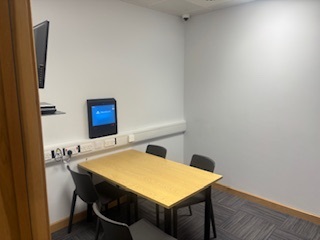
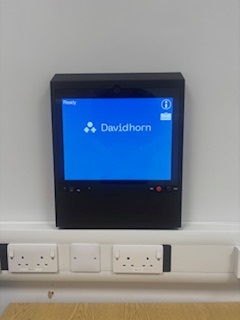
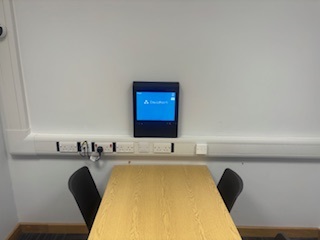
Image by: Humberside Police
Why Davidhorn?
The choice was built on an existing foundation of trust. “Davidhorn is a name that everybody in the force knows,” notes DS McCreight. The relationship was “based on trust, support, agility and the ability to be able to provide when it’s required.”
Darren Brown, Head of UK Sales & Operations at Davidhorn adds: “The Humberside DIR upgrade project was a great chance to continue our relationship with one of the front running forces for innovation in the UK.
Supplying the latest Davidhorn interview recorders and our Ark Interview management platform not only gives the officers a step up in their process but also enables investigations to move faster and more efficient.
As with any project there were learnings from both sides but seeing the numbers from Humberside and hearing how its helping victims of crime and officer wellbeing, is a moral and heartfelt step forwards in policing that we are hugely proud to be part of.”
Summary
When Humberside Police implemented Davidhorn’s Digital Interview Recording solution in August, results were immediate. In just seven weeks with minimal infrastructure – 12 fixed devices and 3 portable units – the force created 1,700 interviews, progressed 1,500 cases through the criminal justice system, and achieved 100% end-to-end success from interview to final storage with only 30 hours of downtime.
The transformation delivered critical benefits across the organisation. Officers no longer handle physical media after difficult interviews, with evidence automatically transferred and secured. Evidence is now available 24/7 for Crown Prosecution Service decision-making, eliminating previous barriers to charging decisions. SHA-256 digital fingerprinting ensures master copy integrity throughout the evidence lifecycle, while the system’s popularity among officers demonstrates genuine buy-in – they’re actively requesting DIR rooms over traditional methods.
“There’s a victim at the back of each one of those 1,500 interviews,” reflects Detective Sergeant Scott McCreight. “It’s given us confidence to use the system and our staff have bought into it.”
A Smart, Phased Approach to Digital Police Interview Recording Success
Rather than a force-wide rollout, Phase One deployed just 12 fixed devices and 3 portable units – less than 20% of total infrastructure. This included custody suites, vulnerable victim suites, and voluntary interview rooms.
The results were immediate. “The demand for it amongst our staff is huge. Actually, there is more demand than there was availability. They want it, they want to use it, they’re excited by it.”
The Impact
The numbers: In just seven weeks, with minimal infrastructure, the force achieved remarkable adoption rates with only 30 hours of downtime (due to a Microsoft upgrade, not the DIR system).
Officer wellbeing: “It’s good that our staff are able to do what they need to do during the interview, but in a relatively short period of time, they’re able to withdraw from that and take some time for themselves,” explains Detective Sergeant – Scott McCreight. No more handling physical media after difficult interviews – evidence is secure and automatically transferred.
Justice for victims: Previously, evidence piled up across multiple DVDs and documents. Now, “all of a sudden we’ve got all that information, that data readily to hand in a single place.” This means faster decisions and the ability to share evidence with the Crown Prosecution Service at any hour. “Two o’clock, 3 o’clock in the morning on a cold Tuesday night… we can actually share that information with a lawyer. We often heard: ‘I can’t make a decision on that because I can’t see it’ – well, actually now you can.”
Evidence integrity: SHA-256 digital fingerprinting ensures master copy integrity throughout the evidence lifecycle, eliminating risks of lost physical media and GDPR breaches. “I’ve always been taught that that interview is as important as that smoking gun, as that blooded axe,” reflects DS McCreight. “And we need to be in a position to treat those interviews in the same way.”
Humberside Police
is serving the coast, country and city areas across Hull, East Riding, North Lincolnshire and North East Lincolnshire in the UK, needed to modernise their interview recording infrastructure and move away from physical DVDs. The goal was to integrate all interviewing – victims, witnesses and suspects – into a single point within one digital evidence management system.
Lessons Learned
The project wasn’t without challenges. Early communication around security and VPN requirements needed improvement. “There was a breakdown in communications early in the project,” admits DS McCreight. “But as the project went on, there was a building of an understanding between both Humberside Police and Davidhorn.”
The key to success? Meticulous testing and focusing on ease of use. “Each device was tested by myself or one of my team as a standalone system. We checked every single piece of kit, we checked every recording, we checked the sound quality.”
When issues arose – like a flickering display screen – response was swift. “Straight away somebody jumped on board from product support… and that was done.”
Advice for Other Forces
The message from Humberside is clear: “Don’t rush it.”
“Set your stall out early. Make sure you understand what the solution offers, how it’s going to work within your own framework, and make sure that it fits and aligns with each part of that. If you can get the project to have simultaneous approaches across hardware and software installations, if you can make them aligned, it will speed up delivery.”
The Bottom Line
In seven weeks, Humberside Police progressed 1,500 cases through the criminal justice system using their new DIR solution.
“There’s a victim at the back of each one of those 1,500 interviews. That’s 1,500 cases that we’ve progressed in the criminal justice system,” reflects Detective Sergeant McCreight. “It’s given us confidence to use the system and our staff have bought into it and are using it.”
The best indicator of success? Officers are frustrated when DIR rooms aren’t available – because they prefer the new system to the old way of working.
Interested in learning how Davidhorn’s DIR solution could transform your force’s interview processes? Get in touch to discuss your requirements.
AI in Criminal Investigations: Better Decisions, Not Just Faster Ones
Article written by: Dr Ivar Fahsing Chief Scientific Advisor at Davidhorn
Artificial intelligence is assisting criminal investigations, helping officers manage vast quantities of evidence and identify information that might otherwise be overlooked. But without the right safeguards, it could also reinforce the very human biases that contribute to investigative failure.
Drawing on the themes explored in Davidhorn’s white paper, ‘Aim Carefully: Human Bias, Moral AI, and the Future of Investigation’, this article examines how law enforcement can harness AI to strengthen investigative practice without compromising fairness, transparency or accountability.
The challenge for policing is not simply how to use AI, but how to ensure it helps investigators challenge assumptions, consider alternative explanations and reach more reliable conclusions. Because while technology can support the search for truth, responsibility for the decisions being made must always remain human.
Criminal investigations have always involved making sense of incomplete and sometimes contradictory information. What has changed is the sheer volume of material that investigators must consider.
Digital communications, CCTV and other electronic records have created information overload, although this is not a new challenge. The investigation into the Yorkshire Ripper demonstrated how, even before today’s digital technologies, major enquiries could become overwhelmed by the volume of material being collected.
To illustrate the scale, a single terabyte of information, if represented as printed pages, could create a stack stretching for kilometres. For investigators tasked with identifying relevant information, the challenge is considerable.
Human beings are highly capable of recognising patterns, but our ability to consider multiple competing explanations simultaneously is limited. Under pressure, we naturally focus on information that appears most relevant, potentially overlooking evidence that challenges our initial assumptions.
This is where artificial intelligence offers significant potential. Its processing capacity could help investigators navigate large datasets, identify contradictions and examine alternative explanations.
However, introducing AI does not automatically make an investigation more objective or effective. Used incorrectly, it could reinforce existing assumptions, accelerate flawed reasoning and produce conclusions that have not been properly tested.
Responsible AI must be the starting point
Fairness, transparency and accountability provide essential foundations, but the real test is whether AI demonstrably improves investigative quality. The ambition must be better and fairer investigations, where technology strengthens professional judgement, challenges assumptions and reduces the risk of error.
Before implementing AI, police organisations must therefore be clear about the problem they are trying to solve. Introducing technology primarily as a cost-saving measure risks overlooking its impact on investigative quality.
Use AI to test hypotheses, rather than simply confirm them
One of the greatest risks in any investigation is confirmation bias: the tendency to favour information that supports an existing belief while giving less attention to contradictory evidence.
Investigators may begin with a reasonable suspicion, but as an enquiry progresses, the pressure to establish what happened can make it increasingly difficult to reconsider that initial theory.
The first challenge is to identify all reasonable explanations, including those consistent with a suspect’s innocence or the possibility that no crime has occurred. These explanations must then be systematically tested, with investigators actively seeking evidence that could exclude them.
Crucially, this must be a continuous process. As new information emerges, existing hypotheses may need to be reconsidered and alternative explanations explored.
AI could make this discipline more manageable. It could help to generate alternative hypotheses, highlight inconsistencies and identify evidence that challenges the prevailing explanation.
Investigators could ask what might disprove their theory. Which evidence contradicts the current thinking? What information might support the defence or establish that a suspect was not involved? This reflects the principle of falsification: actively attempting to rule out explanations.
However, AI-generated hypotheses must themselves be critically assessed, rather than assumed to represent every reasonable possibility.
AI must support reasoning, not simply generate more information
One of AI’s greatest potential benefits is its ability to help investigators manage information overload.
An AI system might rapidly generate summaries, identify connections and produce recommendations. But if those outputs simply create more material for investigators to assess, the technology may increase cognitive overload rather than reduce it.
The greater opportunity is to develop AI as cognitive infrastructure: technology that supports how investigators think, test evidence and make decisions.
AI could identify contradictions between witness accounts, highlight evidence that does not fit an existing hypothesis or draw attention to reasonable explanations that have not been adequately tested.
A system that processes thousands of documents in minutes may be technically impressive. But if it directs attention towards the wrong information or encourages premature conclusions, faster processing could simply accelerate investigative errors.
The importance of not confusing an AI-generated answer with an established fact
AI systems can produce outputs that appear authoritative, even when the underlying analysis is incomplete or incorrect. This creates particular risks in criminal investigations, where apparently objective recommendations may influence decisions with serious consequences.
Facial recognition technology, for example, has already been associated with cases of mistaken identification, demonstrating the potential consequences of relying too heavily on automated outputs.
A system might identify a pattern of behaviour or highlight a potential suspect. But those findings must be checked against the underlying evidence and assessed within the wider investigative context.
The critical questions remain: What evidence supports this finding? What might contradict it? What alternative explanations have been considered?
If investigators cannot answer these questions, the output should not become the basis for a consequential decision.
The relationship between AI and investigators offers a useful comparison with aviation. Modern aircraft rely on sophisticated automated systems, but pilots remain responsible for understanding how those systems operate, recognising when something is wrong and taking control when necessary. The same principle should apply to investigative AI.
Investigators must remain human-in-command
Investigators must retain the competence, authority and confidence to question the system, reject its recommendations and pursue alternative lines of enquiry.
There may also be a role for safeguards that alert users when they are relying too heavily on automated analysis or have not completed essential verification steps. However, these safeguards will only be effective if officers are properly trained.
As AI becomes more sophisticated, professional competence must include understanding its capabilities, recognising its limitations and knowing when not to use it.
AI should help investigators assess information more effectively. It must never become a shortcut around professional responsibility.
Preserve evidence integrity and make decisions open to scrutiny
Transparency is essential to a fair investigation. Investigators must be able to demonstrate how evidence was obtained, how it was assessed and why particular decisions were made.
AI should strengthen this accountability rather than make the investigative process harder to explain.
A fundamental requirement is preserving the integrity of original evidence. Source material must remain clearly distinguishable from AI-generated summaries, interpretations, hypotheses or recommendations. An AI-generated interpretation of a witness statement, for example, is not the statement itself.
If these distinctions become blurred, investigators risk treating automated interpretations as though they carry the same evidential weight as original material.
There must therefore be a reliable record of how AI was used, including the material analysed, questions asked, outputs generated and decisions subsequently taken by investigators. This information should be available for appropriate scrutiny.
Indeed, one potential benefit of AI is that it could make aspects of investigative reasoning more visible.
Traditionally, much of an investigator’s thinking takes place internally. Well-designed systems could help document the hypotheses considered, the evidence used to test them and the reasons particular explanations were retained or rejected.
This creates an opportunity to improve overall transparency and accountability, provided the technology is designed around established investigative methods and robust evidence-management principles.
Demonstrate improvements in investigative quality, not just efficiency
As police organisations consider adopting AI, considerable attention is being given to technical performance, efficiency and compliance.
A system may be accurate at extracting information, fast at processing documents and compliant with governance requirements, yet still fail to improve the decisions investigators make.
Responsible AI establishes the safeguards within which technology operates. Effective AI must demonstrate that its use produces better investigative outcomes.
Police organisations should examine whether AI-assisted investigations are more effective at identifying and testing alternative hypotheses, recognising contradictory evidence and avoiding premature conclusions.
They should also assess whether the technology reduces investigative errors, improves decision-making and helps investigators reach conclusions that are more reliable and defensible.
Evaluations should also consider unintended consequences. Does the system encourage overconfidence? Are investigators becoming less likely to challenge automated findings? Does it reduce cognitive overload or simply shift that burden elsewhere?
These questions matter because technology can change professional behaviour in ways that are not immediately apparent from performance statistics. The ultimate measure of success should not be the number of documents processed, hours saved or recommendations generated. It should be whether the technology contributes to better investigative decisions, fewer errors and fairer, more reliable justice outcomes.
A safer investigative future
The future of investigative AI should be a partnership between skilled professionals and technology designed to strengthen their reasoning and decision-making.
AI has the capacity to examine information at a scale that humans cannot. Investigators, meanwhile, bring contextual understanding, ethical judgement and accountability that technology cannot replace.
The opportunity lies in combining these strengths intelligently. That means using AI to help generate and test competing hypotheses, identify contradictions, challenge assumptions and manage cognitive overload. It also means maintaining meaningful human control, protecting original evidence and ensuring significant decisions remain open to scrutiny.
But these principles must be accompanied by evidence of effectiveness.
Responsible AI is essential, but responsibility alone is not enough. The ultimate measure of success must be whether AI helps investigators deliver more reliable outcomes.
Ultimately, the greatest risk is not simply that AI might produce an incorrect answer. It is that an investigator might accept that answer without adequately challenging it.
Responsible AI is where we must begin. Better, fairer and more reliable investigations are what we must achieve. Because a wrongful conviction is not an acceptable consequence of technological progress.
Davidhorn appoints Richard Kempshall -senior policing expert to lead global investigative interviewing practice
Richard Kempshall brings 25 years of frontline policing and specialist investigative interviewing experience to new role
David Horn was a driving force in transforming investigative interviewing in the United Kingdom and beyond, and his contributions have left a strong mark on the pursuit of justice.
He began his career in law enforcement, rising to the rank of Detective Inspector.
In the newly created role, Kempshall will provide a practitioner voice within Davidhorn and work with strategic partners to advance professional standards, practical capability and the adoption of effective investigative interviewing internationally. He will also provide specialist advice to the company’s product and wider teams, bringing an operational policing perspective to the development of technology, equipment and infrastructure designed to support investigators. He will work closely with Davidhorn’s Chief Scientific Adviser, bringing together frontline practitioner experience and scientific expertise.
Kempshall joins following a 25-year policing career spanning frontline operations, major investigations, specialist interviewing, training and international capacity building.
Beginning his career in uniform, he spent eight years undertaking roles including public order policing, specialist search and emergency response before transferring to The Metropolitan Police and becoming a detective. He subsequently spent a decade specialising in counter terrorism working in a number of roles in the metropolitan Police SO15 – counter terrorism command.
Investigative interviewing has been a particular focus throughout his detective career. As well as conducting interviews in rape, complex crime, terrorism, homicide and police discipline investigations, he has worked as an interview adviser, developing and coordinating interview strategies for complex cases. His expertise has also been called upon internationally, delivering training to help overseas law enforcement agencies.
More recently, Kempshall has been the force lead for investigative interviewing in the Metropolitan Police, heading up both training and practical delivery for suspect interviews.
Børge Hansen, CEO at Davidhorn, said: “We are delighted to welcome Richard to Davidhorn. His appointment reflects our commitment not only to developing the technology and infrastructure that supports investigative interviewing, but to contributing meaningfully to the advancement of professional practice and standards globally.
“His 25 years of operational policing experience, combined with his exceptional expertise in investigative interviewing, will bring an invaluable practitioner perspective to our organisation.
“Our ambition is to work alongside law enforcement agencies and strategic partners to help strengthen investigative interviewing capability around the world. Richard shares that ambition, which will make him an important addition to our team.”
Richard Kempshall added: “After 25 years in policing, this exciting role gives me an opportunity to take the experience and knowledge I have developed throughout my career and apply it on a much broader international stage.
“Investigative interviewing is something I care deeply about. Done well, it can improve the quality of investigations, strengthen officer capability and contribute to a more ethical and effective justice system.”
From Crisis to Hope: How Moldova Revolutionised Child Protection with Technology and Determination
How a small NGO in Eastern Europe transformed child protection services and became a beacon of hope for vulnerable children and Barnahus interview recording across the region.
A Vision Born from Urgency
In 1997, when Daniela Sîmboteanu founded the National Centre for Child Abuse Prevention (CNPAC) in Moldova, the initial plan was modest: conduct some prevention seminars in schools and wrap up the project within a few months. Twenty-seven years later, she sits as CEO of an organisation that has fundamentally transformed how Moldova protects its most vulnerable citizens – children who have experienced violence.
“We quickly realised that the phenomenon of violence against children was very widely present in our society,” Ms Sîmboteanu reflects on those early days. What started as a short-term prevention project has evolved into something much more significant: Moldova’s first Barnahus (Children’s House), a revolutionary approach to child protection.
The statistics that drove CNPAC’s evolution are sobering. Each year, over 1,000 children in Moldova become victims or witnesses of various crimes, with approximately 400 cases involving sexual violence. For these children, the traditional justice system often meant enduring a process that could be as traumatic as the original crime itself.
Summary
The Challenge: Moldova’s National Centre for Child Abuse Prevention (CNPAC) faced a justice system that unintentionally re-traumatised child victims. Over 1,000 children annually had to retell their experiences multiple times – to police, prosecutors, and in court – causing re-traumatisation and producing inconsistent evidence that undermined prosecutions.
The Solution: After achieving legislative reform in 2012 mandating audio-video recorded interviews in child-friendly environments, CNPAC launched Moldova’s first Barnahus (Children’s House) in 2019. They selected Davidhorn’s Indico Software Recorder system for its reliability, court-ready evidence quality, and PACE compliance, installing systems in both Chișinău and Bălți.
The Results:
Child Welfare: Children now give testimony once in a safe, supportive environment instead of enduring multiple interviews
Evidence Quality: Legal professionals report significantly improved evidence quality, with some now travelling from southern Moldova specifically to use the Barnahus facilities
Systemic Change: Moldova became the first country in the post-Soviet space to implement the Barnahus model, setting a precedent for the entire region
Professional Capacity: 28 certified interviewers trained nationwide, conducting over 400 specialised interviews annually
Sustainable Funding: Government now funds Barnahus as an essential state service, ensuring long-term sustainability
Ripple Effect: Other victim service providers across Moldova – including women’s shelters and UN Women projects – adopted similar recording technology, inspired by CNPAC’s success
Key Quote: “Our cooperation with Davidhorn is super smooth and we are very happy with it. From the moment the equipment was installed, we used it. We didn’t have any difficulties.” – Diana Țeberneac, Child Interviewer, CNPAC
“For us at Davidhorn, it has been an honour to contribute to such a groundbreaking child protection initiative in Moldova. Technology alone will not create change, but when combined with the dedication and vision of partners like CNPAC, it becomes a powerful enabler.” – Stig Knutsen, Chief Partner Officer, Davidhorn
Implementation: Seamless installation and ongoing support from Davidhorn, with local IT partnership ensuring rapid resolution of any technical issues. The reliable technology has been instrumental in building professional confidence in the new system and proving its worth in courtrooms, transforming initial resistance into advocacy amongst legal professionals.
“Before 2012, child victims often had to repeat their testimony several times — first to the police officer, then to the prosecutor, and later in court. Each new interview meant reliving the trauma, and inconsistencies could appear simply because the child was exhausted or frightened. We understood that the system itself was unintentionally causing harm, which made the reform not only necessary but urgent,” says Ms Sîmboteanu.
This was the reality in Moldova’s traditional legal system – a bureaucratic maze that didn’t prioritise child welfare and evidence gathering.
Irina Sandu, CNPAC’s Head of Programmes, puts it clearly: “Unfortunately, not all children in Moldova yet benefit from hearing procedures conducted in child-friendly, properly equipped environments that meet established quality standards. This is precisely the area we strive to improve.”
This commitment continues to guide the organisation’s mission – to advocate for and support the systemic changes needed to ensure that every child has access to safe, adapted, and trauma-informed environments during judicial processes.
Building the Foundation for Change
CNPAC’s transformation of Moldova’s child protection system didn’t happen overnight. It required a methodical, decade-spanning approach that combined grassroots service delivery with high-level legislative advocacy.
The organisation first established credibility through direct service provision. In 2003, with support from the Open Society Institute, they created Moldova’s first specialised centre for psychological rehabilitation of child victims. This wasn’t just about providing services – it was about learning what worked and building the evidence base that would later convince policymakers and professionals to embrace radical change.
Since 2006, CNPAC has expanded to offer accompaniment services for child victims in courts, giving them firsthand experience of the system’s shortcomings. This ground-level understanding proved invaluable when they began advocating for legislative reforms.
The breakthrough came through international collaboration. Working with partners such as the OAK Foundation and the World Childhood Foundation, and drawing inspiration from successful models in Iceland and other Nordic countries, CNPAC launched a regional campaign for child-friendly justice. The goal was ambitious: to completely restructure how Moldova’s legal system interacted with child victims.
Legislative Victory: Changing the Law
In 2012, CNPAC achieved what many thought impossible: Moldova’s Parliament introduced special articles in the Criminal Proceeding Code specifically addressing the rights of child victims. The new legislation mandated that children who were victims of sexual crimes, domestic violence, or human trafficking must be interviewed under special conditions by specially trained professionals.
Crucially, the law also required that all such interviews be recorded using audio-video technology – a requirement that would later prove essential for ensuring evidence quality and preventing re-traumatisation through repeated questioning.
“This was stipulated in legislation,” Ms Sîmboteanu notes with evident pride. The mandatory recording requirement wasn’t just a bureaucratic checkbox; it was a fundamental shift toward evidence-based, trauma-informed justice.
But legislative change was only the beginning. The harder work lay ahead: implementing these new requirements and training a generation of professionals to work differently with child victims.
Daniela Sîmboteanu from CNPAC Moldova
From Law to Practice: The First Barnahus
In 2015, CNPAC, in partnership with UNICEF and the Ministry of Justice, organised Moldova’s first training program for specialised child interviewers, bringing in international experts such as Nigel King from the UK and Bert Groen from the Netherlands. Among the first cohort was Diana Țeberneac, who would become one of Moldova’s most experienced child interviewers and a key figure in the Barnahus implementation.
The training marked a crucial transition from advocacy to service delivery. CNPAC wasn’t content to simply campaign for change – they wanted to demonstrate how child-friendly justice could work in practice.
In 2014, the first specialised interview equipment was purchased and installed within the social rehabilitation service managed by CNPAC. Since then, for more than ten years, hundreds of children from the central region of the country have been interviewed by trained professionals using this specialised setup, ensuring both legal reliability and emotional safety.
The culmination of these efforts came in 2019 when the Moldovan government approved the regulatory framework for Barnahus services. CNPAC obtained accreditation as a service provider and launched Barnahus North in Bălți, serving 12 administrative units in northern Moldova and covering 571 localities.
This wasn’t just another service launch – it was the first Barnahus implementation in the post-Soviet space, making Moldova a pioneer in child protection reform for the entire region.
“Amicul” Child and Family Psychosocial Assistance Center
Technology as an Enabler: The Davidhorn Solution
With legislative requirements for audio-video recording in place, CNPAC needed technology that could meet international standards while proving reliable in Moldova’s specific context. They selected Davidhorn’s Indico Software Recorder system, a choice that would prove instrumental to their success.
The technology implementation was refreshingly straightforward. “Our cooperation with Davidhorn is super smooth and we are very happy with it,” explains Diana Țeberneac. “From the moment the equipment was installed, we used it. We didn’t have any difficulties.”
“For us at Davidhorn, it has been an honour to contribute to such a groundbreaking child protection initiative in Moldova. Technology alone will not create change, but when combined with the dedication and vision of partners like CNPAC, it becomes a powerful enabler. Our cooperation throughout the project has been excellent – from the very first meetings to the installations of our systems in Chișinău and Bălți. Seeing how our recording solutions have helped ensure both reliable evidence and a more humane experience for children is deeply meaningful to us. This is exactly why we do what we do – to support professionals who are making a real difference in the lives of vulnerable children.” reflects Stig Knutsen, Chief Partner Officer at Davidhorn.
CNPAC installed two systems: one at Barnahus North in Bălți and another at their center in Chișinău. The fixed HD recording solutions provide court-ready evidence while maintaining the child-friendly environment essential to the Barnahus model.
The reliability of the technology has been crucial to building professional confidence in the new system. If technical issues do arise, they’re resolved quickly through Davidhorn’s partnership with local IT specialists.
Perhaps most importantly, the technology has proven its worth in the courtroom. Legal professionals who were initially sceptical of the Barnahus approach have become advocates after seeing the quality of evidence produced through recorded interviews.
Barnahus Moldova
Overcoming Resistance: The Power of Evidence
Not everyone embraced the Barnahus model immediately. State institutions showed initial reluctance to use the new facilities, preferring familiar processes despite their limitations.
“They were rather reluctant, or they were not very happy to come to the Barnahus,” Irina Sandu recalls. “We really faced this kind of resistance from the system, and it took us quite a lot to overcome this challenge.”
The sources of resistance were understandable: habit, comfort with existing processes, and insufficient understanding of the benefits. Some professionals genuinely didn’t see what was wrong with the old way of doing things.
CNPAC’s response was characteristically methodical. Instead of arguing or applying pressure, they focused on demonstrating results. They organised study visits, invited sceptical professionals to observe Barnahus interviews, and carefully documented outcomes.
The strategy worked. Professionals began to recognise that Barnahus interviews produced higher-quality evidence while reducing trauma for children. Some legal teams now travel from southern Moldova to the northern Barnahus specifically because they trust the quality of evidence produced there.
“We have some professionals who are ready to travel from South to North,” Daniela Sîmboteanu explains. “They are confident that interviewing in Barnahus will ensure good evidence for the case.”
Measuring Success: More Than Numbers
Today, CNPAC’s Barnahus operations handle over 400 interviews annually with just nine active interviewers – a testament to both the demand for services and the efficiency of the model. With the support of UNICEF, the organisation has trained 28 certified interviewers nationwide, creating a professional network capable of supporting expanded services.
But the most compelling evidence of success comes from the people the system serves. CNPAC conducted research to gather feedback from children and parents who had experienced Barnahus interviews. The results were overwhelmingly positive: families appreciated the less traumatic experience and the supportive environment that helped them navigate the legal system.
Children describe feeling safer and more comfortable. Parents report that the process felt “less dramatic” and more manageable. Legal professionals acknowledge that they get better evidence from interviews conducted in the Barnahus environment.
“They appreciated the assistance in the Barnahus that helped them to pass easily through this experience,” Daniela Sîmboteanu explains. “To be in contact with the legal system in a less traumatic way.”
“Amicul” Child and Family Psychosocial Assistance Center
A Model That Inspires: The Ripple Effect
The success of CNPAC’s Barnahus has created ripple effects throughout Moldova’s victim services landscape. Other organisations working with victims of violence have contacted Davidhorn directly, seeking similar recording technology for their facilities.
“We are very glad that other service providers were inspired by us,” Ms Sîmboteanu notes with satisfaction. Women’s shelters, UN Women projects, and other victim services have adopted similar technology, creating what amounts to a new standard for recording in Moldova’s victim services sector.
This organic spread of best practices demonstrates something crucial: when organisations implement genuinely effective solutions, other professionals notice and want to replicate them. The technology spillover effect has amplified CNPAC’s impact far beyond their direct services.
Sustainable Success: The Funding Model
Perhaps most impressively, CNPAC has achieved something many NGOs struggle with: sustainable government funding for their services. In 2019, the regulatory framework established Barnahus as a state-funded service, with CNPAC operating as an accredited service provider while the government covers operational costs.
“The reality is that the state is conscious that Barnahus is a state-funded service,” Daniela Sîmboteanu explains. “As NGO, we’re service providers, so they procure the services from our organisation, but they cover the cost.”
This represents a fundamental shift in how Moldova approaches child protection – from viewing it as charity work to recognising it as an essential government service. CNPAC still needs to advocate annually for budget increases, but the principle of state responsibility has been established.
The sustainable funding model has allowed CNPAC to focus on service quality and expansion rather than constant fundraising. It also signals to other countries that Barnahus services can be integrated into national budgets rather than remaining dependent on international donors.
Looking Forward: Technology and Expansion
As CNPAC plans for future expansion – a second Barnahus is planned for southern Moldova with UNICEF support – they’re also thinking about technological evolution. The current CD/DVD recording format is becoming obsolete as fewer devices can read these formats.
“Less and less devices accept CDs,” Diana Țeberneac observes. “We anticipate this as a risk, and we think that maybe these hearings could be registered in a more modern and sustainable way.”
Davidhorn’s evolution toward cloud-based storage and digital sharing capabilities aligns perfectly with these needs. As the Barnahus network expands, the ability to share evidence securely and efficiently will become increasingly important.
The technology needs reflect a broader trend: what started as a solution to meet legislative requirements has become a platform for continuous improvement in how Moldova protects children.
Lessons for the World: A Replicable Model
CNPAC’s 27-year journey from emergency response to systemic transformation offers valuable lessons for child protection advocates worldwide, particularly in regions with similar legal and cultural challenges.
The first lesson is patience combined with persistence. Systemic change takes time, but consistent effort guided by clear vision can achieve remarkable results. CNPAC didn’t try to change everything at once; they built credibility through service delivery, then used that credibility to advocate for legislative change, then demonstrated how the new laws could work in practice.
The second lesson is the power of evidence-based advocacy. Rather than simply arguing that the old system was wrong, CNPAC demonstrated that their approach produced better outcomes for everyone involved – children, families, and legal professionals alike.
The third lesson is the importance of reliable technology partnerships. CNPAC’s success with Davidhorn’s recording systems wasn’t just about having good equipment; it was about having a technology partner that understood their mission and provided reliable support when needed.
International Recognition: Moldova as a Pioneer
CNPAC’s achievements have gained international recognition through their founding membership in the Barnahus Network, which connects similar initiatives across Europe. Their experience is particularly valuable because Moldova represents the first successful Barnahus implementation in a post-Soviet context.
“From the methodological point of view, it’s the European BARNAHUS network,” Daniela Sîmboteanu explains when asked about international support. This international recognition brings both validation and responsibility. Other countries in similar situations look to Moldova’s experience for guidance on how to implement child-friendly justice reforms in challenging institutional environments.
Barnahus Moldova
The Human Impact: Why This Matters
Behind every statistic and policy change are individual children whose lives have been fundamentally improved by CNPAC’s work. Diana Țeberneac, one of the first certified interviewers, has personally conducted hundreds of interviews using the Barnahus model and Davidhorn technology.
The difference in children’s experiences is profound. Instead of facing a room full of intimidating officials, children now interact with a single, specially trained professional in a comfortable, child-friendly environment. The recording technology ensures their testimony is captured accurately without requiring repeated questioning.
For families navigating the justice system, the Barnahus approach transforms what could be a traumatic ordeal into a manageable process where their children’s well-being is the primary concern.
For legal professionals, the higher quality of evidence obtained through proper interviews leads to better case outcomes and more successful prosecutions of crimes against children.
A Story of Hope and Determination
The story of CNPAC and Moldova’s Barnahus implementation is ultimately a story about what’s possible when vision meets determination and reliable partnerships. It demonstrates that even small organisations in resource-constrained environments can achieve transformational change when they combine a clear mission, strategic thinking, and the right technology partners.
Over nearly three decades, CNPAC has played a leading role in shaping Moldova’s child protection system – from developing policies and intersectoral cooperation mechanisms to promoting national prevention programs that have changed both professional practices and public attitudes toward child abuse.
But beyond organisational success, CNPAC’s story represents something more significant: proof that with persistence, partnership, and proper technology support, it’s possible to build justice systems that truly serve their most vulnerable citizens.
In a world where child protection often feels like a challenge, Moldova’s experience offers something precious: a working model that others can adapt and implement, creating a future where every child victim of violence has access to justice without re-traumatisation.
The revolution in Moldova’s child protection system is far from complete – expansion to other regions continues, new technologies are being explored, and more professionals are being trained. But the foundation has been laid, the model has been proven, and the children of Moldova are safer because of it.
In Memory of David Horn – Pioneer of Investigative Interview Recording
On Thursday, 31st October, David Horn, founder of David Horn Communications Ltd. (which later became the UK branch of what is today Davidhorn), passed away peacefully.
David Horn was a driving force in transforming investigative interviewing in the United Kingdom and beyond, and his contributions have left a strong mark on the pursuit of justice.
He began his career in law enforcement, rising to the rank of Chief Superintendent.
In the 1980s, David Horn served on the original Steering Committee for the introduction of recorded interviewing in the UK – a groundbreaking reform that would fundamentally change how police interviews were conducted and how justice was served.
In 1985, David founded David Horn Communications Ltd. with a clear mission: to develop technology that would ensure the integrity of investigative interviews. His company became the first to create a digital recording solution that fully met UK legislation for interview recording, setting new standards for accuracy and reliability in criminal investigations.
David understood what many in law enforcement were coming to recognise – that mishandled police interviews had led to grave injustices and wrongful convictions, destroying innocent lives while allowing real perpetrators to walk free. He dedicated his life’s work to preventing such tragedies.
Throughout his career, David was passionate about combining technology with scientifically based, non-coercive interviewing techniques proven to be far more effective in discovering the facts. He believed deeply that proper interview recording wasn’t just about technology – it was about protecting the innocent and ensuring justice prevailed.
In February 2021, David Horn Communications Ltd. was acquired by Indico Systems AS, and in March 2023, the companies merged under a new name: Davidhorn – a fitting tribute to the man who started it all.
Today, police forces around the world regard Davidhorn as their trusted partner in implementing police interview recording solutions and methods. This global reach and reputation stand as a testament to David’s vision and unwavering commitment to justice.
David leaves behind his wife Maureen and sons Jeff and Stuart, who continue to carry forward his legacy within the company.
We are grateful for everything David Horn accomplished. His legacy lives on in every properly recorded interview and every innocent person whose life is protected by the standards he helped establish.
Our thoughts are with Maureen, Jeff, Stuart, and all of David’s family and friends.
Trafford Council – modernising PACE Compliant Interview Recording
Trafford Council‘s Regulatory Services team faced a unique challenge when their CD-based interview recording system mysteriously disappeared. This unexpected event became the catalyst for their digital transformation journey, leading them to implement PACE-compliant Davidhorn’s cloud-based interview recording solution.
“We looked at our options and thought, digital is going to be so much easier,” explains Suzanne Whittaker, Regulatory Services Manager at Trafford Council. “Also, our IT within the Council is trying to push as much as possible down a cloud-based route for storage and data protection purposes.”
Summary
The Challenge: Trafford Council’s CD-based interview recording system mysteriously disappeared, forcing them to find a modern replacement for their regulatory services.
The Solution: Implemented Davidhorn’s cloud-based PACE compliant digital interview recording system across seven departments including Environmental Health, Trading Standards, and Environmental Enforcement.
The Results:
High-Volume Capability: Handles up to 40 interviews monthly for busy departments like Environmental Enforcement
Secure Sharing: Eliminated IT headaches with one-button sharing and full audit trails
Improved Case Management: Centralised storage for recordings and documents in one place
25-Year Evolution: Progressed from tape recorders to CDs to modern cloud technology
Key Quote:“The biggest benefit that we’re seeing compared with our previous equipment is the ability to share. It’s just removed that hassle.” – Suzanne Whittaker, Trafford Council
Implementation: Despite initial IT firewall challenges, the system now serves multiple departments efficiently. Officers quickly adapted after initial nervousness, realising “it’s just so easy to use.”
Unique Angle: A missing CD recorder became the catalyst for comprehensive digital transformation across regulatory services.
PACE Compliant Interview Recording in Trafford Council: A History of Evolution
The council’s interview recording systems have evolved significantly over the years. As Ms. Whittaker recalls, “When I first joined Trafford, which was about 25 years ago, we were using a tape recorder, it was the double tape recorder. That got upgraded about 10 years ago to a CD system.”
This latest transition to a digital solution represents the council’s commitment to embracing modern technology and improving efficiency across multiple departments, including Environmental Health, Environmental Protection, Private Sector Housing, Pest Control, Trading Standards, Licensing, and the Environmental Enforcement team.
Meeting High-Volume Demandswith PACE Compliant Interview Recording Solution
The need for a reliable and efficient interview recording system is particularly crucial for departments like Environmental Enforcement, which handles, for instance, fly-tipping cases. To ensure that interviews conducted across the council can be used in the court of law, the recorder in use has to be PACE compliant – a requirement that Davidhorn’s solution fully meets.
“They probably do the most interviews, and they say that they can do up to 40 a month,” notes Ms. Whittaker. “Other teams, such as licensing, can conduct several interviews a month. In contrast, other teams may only need the equipment a handful of times in a year.”
With such varying usage patterns across departments, the cloud-based system offers the flexibility and reliability required to support all teams effectively whilst maintaining the strict compliance standards necessary for legal proceedings.
Transforming Case Management Through Digital Innovation
The implementation of Davidhorn’s digital interview recording system has significantly improved Trafford Council’s case management processes. “With case management, it’s a lot easier because you’ve actually got a place where you’ve got information stored, you’ve got the recording and any documents you need in the same place,” she explains.
However, the most substantial benefit has been the ability to share recordings securely. “The biggest benefit that we’re seeing compared with our previous equipment is the ability to share,” Ms. Whittaker emphasises. “Previously, this was a real issue for us.”
The council faced considerable challenges with their former CD-based system, particularly when responding to requests for interview copies. “Our IT team did not like us copying CDs because if somebody requested a copy of the interview, we would then have to try to find a way to copy the CD. And of course, they don’t let you plug anything into the network for data security.”
This limitation created significant obstacles in their workflow, which have now been eliminated. “It’s just removed that hassle now that actually there’s that button there that we can share it. And it’s fully audit trail.”
Cost and Time Savings Through Automated Transcription
The built-in transcription functionalityoffers substantial benefits for the council’s stretched resources. “Officers don’t have the time to transcribe their own interviews, so we then would have to go out and pay an external company to transcribe it, which, when finances are always being squeezed in the Council, it’s another benefit.”
By bringing transcription in-house through an automated system, Trafford Council can redirect financial resources to other critical services while reducing the administrative burden on their officers.
Navigating Implementation Challenges
The transition to the digital system was not without its challenges. The implementation process required close collaboration with the council’s IT department to address technical hurdles such as firewall configurations.
Another challenge was ensuring officers felt confident using the new system, particularly given the critical nature of PACE interviews. “I think there’s always going to be a nervousness, especially with a PACE interview, you don’t get to do it again if it goes wrong. That’s your one opportunity as an officer to get evidence that you can use in a court case if needed.”
However, these initial concerns have diminished as teams have become more familiar with the equipment. “The more that they have played around with it and started to use it, they’ve realised that it’s just so easy to use.”
Looking to the Future
As Trafford Council continues to embrace digital solutions, the Davidhorn recording system is playing a vital role in modernising its regulatory services. The council is now exploring additional functionalities, such as the visual recording capability, which represents a significant advancement from their previous audio-only system.
“Our IT team has loads of digital projects going on, so moving to a cloud-based system means they don’t have to be concerned with the storage and management of the data in this cloud-based solution,” Ms. Whittaker notes, highlighting the importance placed on these essential public protection services.
The transition to cloud-based interview recording exemplifies Trafford Council’s commitment to digital transformation, improving efficiency, and maintaining the highest standards in their regulatory functions despite the challenges of limited resources and competing priorities.
Norway’s Justice Reforms: A Global Benchmark for Evidence-Led Investigation
Principles recognised as essential to justice integrity are systematic documentation, transparent investigative reasoning, and clear audit trails. The landmark Norwegian inquiry NOU 2026:3 validates this vision – and points to a future where structured, evidence-led practices should become a global standard.
As Børge Hansen, CEO of Davidhorn, observes: “ The handling of the Baneheia case demonstrates the need for reform. As highlighted by the independent committee behind the NOU 2026:3 report, there is a clear and present need to support justice integrity by building robust and systematic documentation, transparent investigative reasoning and clear audit trails. It also emphasises the need for a ‘second pair of eyes’ and greater competence and standardisation, particularly around technical evidence.”
The report’s recommendations shows that investigative technology must do more than simply record – it must actively support rigorous, transparent reasoning that can withstand independent scrutiny. NOU 2026:3 sets out precisely what that scrutiny demands.
Summary
Norwegian inquiry NOU 2026:3 calls for a fundamental shift from suspicion-based investigations to systematic testing of competing explanations
Report identifies confirmation bias as central risk and recommends structured documentation of multiple hypotheses and investigative reasoning
Børge Hansen links reforms to Baneheia case, emphasising need for robust documentation, transparent reasoning and “second pair of eyes” approach
Technology must actively support rigorous, transparent reasoning that withstands independent scrutiny – not just record events
If implemented, reforms could place Norway at forefront of international efforts towards transparent, evidence-led justice systems
A major government inquiry into wrongful convictions might transform how criminal investigations are conducted in Norway, carrying implications far beyond its borders.
The report, NOU 2026:3, calls for a fundamental shift in investigative practice – from building cases around suspicion to systematically testing competing explanations. Investigators must actively challenge their own assumptions, document their reasoning, and ensure that their conclusions can be independently scrutinised.
The inquiry identifies confirmation bias – the tendency to favour information that supports an existing belief – as a central risk to investigative accuracy. It recommends structured methods that require investigators to formulate, test, and document multiple hypotheses and to clearly record how conclusions were reached.
The report also emphasises the need for increased transparency and accountability. Stronger documentation of investigative reasoning, it concludes, is essential to ensure that courts and oversight bodies can properly evaluate the reliability of evidence.
Built on decades of reform
These recommendations build on reforms that began roughly 25 years ago with the introduction of the KREATIV investigative interviewing model in Norway. Developed to move police work away from confession-driven approaches, the model emphasised open-minded inquiry and systematic evaluation of evidence.
Since then, these principles have been further developed through research, professional training, and national police education, leading to a gradual shift towards more structured, evidence-led investigative practices.
The inquiry also highlights the growing role of technology in strengthening investigative reliability. Beyond recording court proceedings, it recommends digital systems that can document investigative reasoning, organise complex evidence, and create clear audit trails showing how conclusions were reached. Such tools, the report suggests, could help investigators test competing hypotheses more systematically, reduce the risk of bias, and ensure that decisions remain transparent and reviewable.
From national tragedy to international example
The inquiry follows a series of tragic miscarriages of justice that have profoundly affected those involved and shaken confidence in the justice system. Yet observers suggest the reforms could turn those failures into a driver for progress.
If implemented, the recommendations may place Norway at the forefront of international efforts to create more transparent, reliable, and evidence-led justice systems.
Dr Ivar Fahsing, who, together with Dr Asbjørn Rachlew and Prof. Karl Ask, submitted an expert opinion to the commission on investigative practice and the evaluation of evidence, says the report represents an important milestone.
“I am impressed by the clearness and ambition of the recommendations,” he said. “If they are implemented, this could lead to a significantly safer and more evidence-led justice process.”
He added that the report demonstrates a deeper intellectual shift in how investigations and the evaluation of evidence are understood.
“It reflects a crucial convergence of philosophy, psychology and law – recognising that once an accusation is made, it becomes a knowledge claim that must be rigorously and transparently tested. In today’s highly complex information society, more structured methods and the responsible use of new technologies are essential to ensure that the reasoning behind criminal justice decisions is clearly documented and open to scrutiny. This requires all actors – from investigators to prosecutors – to demonstrate how alternative explanations consistent with innocence have been carefully examined and excluded. By making the pathway to proof explicit, this approach strengthens the burden of proof and reaffirms a foundational principle of justice, rooted in early Roman law, that the responsibility to prove guilt rests entirely with the accuser. Its full implementation would place Norway at the forefront of international legal reform, setting a new benchmark for transparency, accountability and evidential integrity in criminal justice.”
Reading Council – Streamlining Investigations with Interview Recording Equipment
Reading Borough Council‘s fraud investigation team was facing challenges with their outdated interview recording equipment. The 10–15-year-old portable DVD burning solution was becoming unreliable, with concerns about its longevity and audio quality. Paul Davis, with his background in the Metropolitan Police, recognised the need for a modern, efficient system that would save time and reduce costs. To ensure that interviews done across the council can be used in the court of law, the recorder in use must be recorded with a PACE compliant recorder.
“We were still using the DVD burning solution with a portable machine that was quite old. The audio quality wasn’t that great, and there were concerns about the longevity of the kit,” explains Paul Davis from Reading Borough Council’s fraud investigation team.
Summary
The Challenge: Reading Borough Council’s fraud investigation team was struggling with a 10-15 year old portable DVD burning system that had poor audio quality and reliability concerns.
The Solution: After evaluating five different companies, they chose Davidhorn’s cloud-based digital interview recording system for its user-friendly design, reputation, and PACE compliance.
The Results:
Time Savings: Eliminated DVD labelling, burning, and physical setup processes
Storage Efficiency: Removed the need for physical DVD storage (previously kept for 6 years)
Enhanced Workflow: Added features like real-time streaming for complex investigations, tagging significant moments, and secure sharing capabilities
Multi-Department Impact: Now serves five council departments including Environmental Health, Licensing, and Planning Enforcement
Key Quote:“It’s been a breath of fresh air for everybody. We can’t believe how we’ve worked without this before, as everyone’s been using the same antiquated system.” – Paul Davis, Reading Borough Council
Implementation: Seamless process with strong customer support, transforming an outdated system into a modern, efficient digital solution that’s fit for purpose in today’s investigative environment.
The Search for Modern Council Interview Recording Equipment
Paul spearheaded the initiative to find a replacement system, collaborating with five departments across the council, including Environmental Health, Licensing, Planning Enforcement, and Private Sector Housing. After evaluating different companies through demonstrations of their hardware and software, Davidhorn emerged as the clear choice.
“I wanted to implement a new solution because we were still using the DVD burning system.” says Mr. Davis.
What ultimately convinced Reading Borough Council to choose Davidhorn was the user-friendly nature of the equipment, the cloud option and the company’s reputation.
“The kit looked really user-friendly, which was really important for us. We didn’t want anything that was going to be too complicated. Davidhorn is very reputable around the world and has a good background in this field,” he emphasises.
A Seamless Implementation Process
The transition to the new council interview recording equipment was remarkably smooth. Mr. Davis worked closely with Davidhorn to install the equipment in a PACE interview suite.
“Once we’d agreed everything and made the decision to go with the kit from Davidhorn, it was a fairly easy process. We had to provide all the schematics of the building and room, but the whole process was really straightforward. I had a really good rapport with the Davidhorn Customer Success team member, who was on the phone or at the end of an email if I needed something. It was all very seamless.”
Paul Davis from Reading Borough Council’s fraud investigation team
Transforming the Interview Process
The new cloud-based interview recording system has revolutionised how Reading Borough Council conducts interviews. The team has embraced the technology enthusiastically, appreciating its ease of use and time-saving features.
“It’s been a breath of fresh air for everybody. The team have found it really straightforward. You set up your metadata prior to the interview, go to the interview suite, put in your PIN, hit the button, and record. When the interview is concluded, it gets saved onto the cloud,” Mr. Davis explains.
The system offers several advanced features that have enhanced the team’s workflow, including transcription services, tagging significant moments during interviews, and streaming capabilities for complex investigations.
“What is really helpful is where you can stream the interview to someone who’s not actually in the room, which is beneficial for complex investigations where we may want someone like an expert in a specific field observing the interview.”
Completed install in Borough CouncilCompleted install in Borough Council
Significant Time and Cost Savings
The switch to Davidhorn’s digital solution has eliminated many time-consuming processes associated with the old DVD-based system.
“Our time is so critical and having a recording solution like this saves a lot of time. In the days of using DVDs, you’re having to peel off labels to put onto the discs for master and working copies. Setting up the old PACE machine, plugging it in, getting the speakers set out – the new solutions save us so much time.”
The built-in transcription service is another area where the council is seeing benefits.
“We’re using the transcription feature, and I think that’s going to be evolving as it gets better. It’s still very good and it’s going to save us a lot of money because we previously used an external transcription company.”
Storage has also been simplified dramatically, eliminating the need for physical storage space for DVDs that must be kept for up to six years.
“We’ve got a huge cupboard full of DVDs, which we’re not going to have anymore. That’s really good for us. We can’t believe how we’ve worked without this before, as everyone’s been using the same antiquated system.”
Looking to the Future
As the team continues to explore the system’s capabilities, they’re looking forward to using additional features such as the sharing function to collaborate with their legal team, and they’re eager to see enhancements to the transcription service.
Overall, Reading Borough Council’s experience with Davidhorn has been overwhelmingly positive, transforming their interview process into something more efficient, reliable, and fit for purpose in the modern age.