Saltar al contenido
Davidhorn
  • Solutions

    By Industry

    • Policing
    • Defence
    • Immigration and Asylum
    • Child and Witness Interviewing
    • Local Authorities
    • Corporate Investigations
    • Healthcare

    By use case

    • Vulnerable witness interview
    • Suspect interview
    • Field interviews
  • Products

    Interview Management

    • Ark Interview Management

    Recorders

    • Capture App
    • Portable Recorder
    • Mini Recorder
    • Fixed Recorder
    • Indico Recorder
    • Covert Recorders

    Integrations

    • System Integrations & Configuration
  • Customers
  • Resource Hub

    Resource Hub

    • Blog
    • Datasheets
    • eBooks and Whitepapers
    • Events
    • Podcasts
    • Webinars
  • Partners

    Partners

    • Partner overview
    • Become a Partner
  • Company

    Company

    • About
    • CareerJobs at Davidhorn
    • Contact
    • Customers
  • wpml-ls-flages
    • wpml-ls-flagen
    • wpml-ls-flagde
    • wpml-ls-flagfr
    • wpml-ls-flagit
    • wpml-ls-flagpl
My account
Support
Book a Demo
Davidhorn
  • Solutions
    • By Industry
      • Policing
      • Defence
      • Immigration & Asylum
      • Barnahus
      • Local Authorities
      • Corporate Investigations
    • By use cases
      • Vulnerable witness interview
      • Suspect interview
      • Field interviews
  • Products
    • Ark Interview Management
    • Mobile Recorder
    • Portable Recorder
    • Mini Recorder
    • Fixed Recorder
    • Software Recorder
    • Covert Recorders
    • System Integrations & Configuraton
      • Integrations and APIs
  • Customers
  • Resource Hub
    • Blog
    • Datasheet
    • eBooks
    • Events
    • Podcasts
    • Webinars
  • Partners
    • Partner overview
    • Become a Partner
  • Company
    • About
    • News
    • Contact
Support
Book demo
  • Davidhorn
  • Investigative Interviewing – 10 Essential Steps for Success

    Investigative Interviewing – 10 Essential Steps for Success
    The 10 Essential Steps for Successful Investigative Interviewing

    The 10 Essential Steps for Successful Investigative Interviewing 

    Professional investigative interviewing is a systematic process that requires meticulous
    preparation, skilled execution, and thorough evaluation. Drawing from established
    protocols and best practices, we present a 10-step framework that ensures effective,
    ethical, and legally sound interviews.

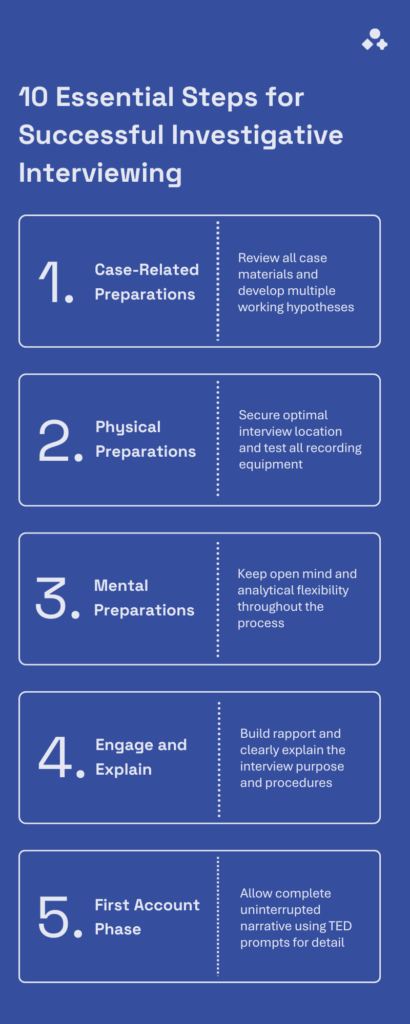
    Step 1: Case-Related Preparations 

    The foundation of any successful interview lies in comprehensive case preparation. Review all available investigation materials, evidence, and documentation thoroughly. Develop multiple working hypotheses rather than pursuing a single theory. Consider the interview’s aims and objectives clearly, and analyse the interviewee’s background, including their rights and any particular needs they may have. 

    This preparation phase is crucial for addressing all information needs, maintaining objectivity and ensuring you’re equipped to handle various scenarios that may arise during the interview process.  

    Step 2: Physical Preparations 

    Secure an optimal investigative interview location with minimal distractions and suitable conditions for effective communication. Ideally, the environment should be distraction-free yet comfortable, enabling clear dialogue without external interference. 

    Summary

    • Comprehensive Preparation is Essential – Successful interviews require thorough case review, optimal physical setup with tested recording equipment, and mental readiness with multiple working hypotheses.
    • Build Trust Through Professional Engagement – Apply the HEAR principle (Honesty, Empathy, Autonomy, Reflection) to establish rapport, explain procedures clearly, and assess interviewee vulnerability and legal requirements.
    • Allow Free Narrative Before Probing – Let interviewees provide complete uninterrupted accounts using TED prompts (Tell, Explain, Describe), then systematically clarify using the 5WH framework (Who, What, When, Where, Why, How).
    • Evaluate and Reflect for Continuous Improvement – Assess whether interview objectives were met, analye your performance techniques, document lessons learned, and plan next investigative steps based on obtained information.

    Make necessary arrangements for legal representation, interpreters, or support personnel as appropriate to the case. Test all recording equipment thoroughly – Davidhorn’s professional A/V recording systems ensure reliable documentation with multiple backup options, providing the support essential for evidential integrity. 

    Step 3: Mental Preparations 

    Maintain an open mind and analytical flexibility throughout the process. Consider alternative hypotheses to the evidence and anticipate different scenarios that may unfold. Show empathy and genuine interest in the interviewee’s situation. Mental preparation involves setting aside preconceptions and preparing to adapt your approach based on the interviewee’s responses and demeanour. 

    This psychological readiness enables you to respond appropriately to unexpected developments whilst maintaining professional composure. 

    Step 4: Engage and Explain 

    Initiating Contact and Establishing Ground Rules. Apply the HEAR principle consistently: Honesty, Empathy, Autonomy, Reflection. This approach builds trust whilst maintaining professional boundaries and ensuring the interviewee feels respected throughout the process. Continuously assess interviewee vulnerability considering age, mental and physical health, trauma, and other risk factors. Implement appropriate legal safeguards and consider specialist involvement when necessary. Utilise communication aids to ensure effective dialogue throughout the process. 

    At the beginning of an investigative interview, the interviewer should: 

    • Build rapport through empathy and respect. 
    • Assess the interviewee’s well-being to ensure they are fit for the interview. 
    • Clearly explain:
      • The case under investigation and the purpose of the interview. 
      • For suspects: the grounds for suspicion – explain what and why (without disclosing detailed evidence). 
      • For suspects: the right to legal counsel and the right to remain silent. 
      • All legal and practical procedures, including audio/video recording. 
      • That participation is voluntary (where applicable). 

    Establish Ground Rules. The interviewer should then set the following expectations: 

    • Everything said matters – the interviewee should provide as much detail as possible, even if it seems minor (e.g., “describe my pen”). 
    • Don’t filter – report everything, even if it seems irrelevant or uncertain. 
    • Focus and effort – memory recall takes concentration and may be tiring. 
    • Open communication – the interviewee should feel free to: 
      • Ask if they don’t understand. 
      • Say if they don’t know.
      • Correct misunderstandings or raise concerns about leading/inappropriate questions.
    • Interview structure – outline the topics to be covered, timing, and planned breaks. 
    • Confirm understanding – ensure the interviewee grasps the information and how it applies. 

    Rapport building isn’t about manipulation – it’s about creating an atmosphere where communication based on mutual respect and facts can occur. This foundation is crucial for establishing trust and obtaining reliable information. 

    Step 5: First Account Phase  

    Allow the interviewee to present their complete account without interruption. Exercise strategic patience and maintain control by carefully pacing and actively listening, rather than jumping into questioning. 

    Use TEDS prompts (Tell, Explain, Describe, Show Me) to encourage detailed responses. Document PLATCOM elements systematically: People, Location, Actions, Times, Communication, Objects and Motives. This free narrative phase often reveals crucial information that targeted questioning might miss. Do not interrupt. Postpone your probing until the first account is entirely over.  


    Listen to our podcast on Investigative Interviewing


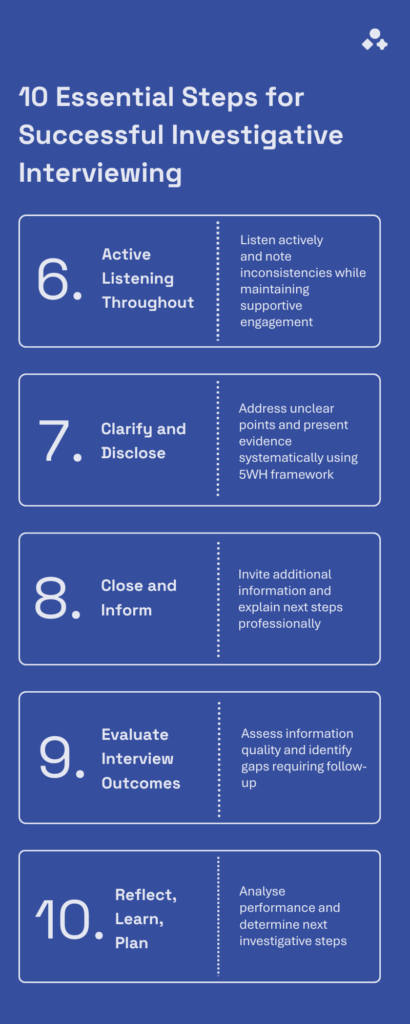
    Step 6: Active Listening Throughout   

    Listen actively to understand the interviewee’s perspective and facilitate the flow of information. Use silence and non-verbal cues to demonstrate engagement. Note inconsistencies, gaps, and areas requiring clarification whilst maintaining supportive engagement. 

    Step 7: Clarify and Disclose 

    Systematically review new information, your interview objectives, address PLATCOM elements and address all unclear points and gaps before introducing evidence or new information. If applicable, present key information stepwise to test account accuracy whilst minimising memory contamination. 

    Ensure comprehensive coverage using the 5WH framework: Who, What, When, Where, Why, How. This systematic approach ensures no crucial elements are overlooked. 

    Step 8: Close and Inform 

    Conclude the interview professionally by inviting the interviewee to provide additional information or ask questions. Clearly explain next steps, contact procedures, and timeline expectations. 

    Express appreciation for their cooperation and end respectfully, regardless of case outcomes. This professional closure may prove valuable for future interactions. 


    Read our eBooks on how to plan Investigative Interviews

    eBooks & whitepapers

    Step 9: Evaluate Interview Outcomes 

    After the interview, conduct a structured evaluation to determine whether the objectives were achieved. This includes: 

    • Assessing the quality and completeness of the information obtained in relation to the interview plan and investigative priorities. 
    • Identifying gaps, inconsistencies, or unanswered questions that may require clarification or follow-up. 
    • Evaluating the interviewee’s responses in light of known evidence and other case material. 

    This step helps ensure that the interview contributes meaningfully to the investigation and highlights any immediate follow-up actions. 

    Step 10: Reflect, Learn, and Plan Ahead 

    Following the evaluation of the content, reflect critically on your own performance as an interviewer: 

    • Analyse your interview techniques – What worked well? What could have been done differently? 
    • Identify areas for improvement in planning, communication, question style, rapport-building, and adaptability. 
    • Document lessons learned to support your ongoing professional development and improve future interviews. 
    • Determine and plan next steps in the investigation, such as re-interviews, new lines of inquiry, or further evidence collection. 

    This reflective phase ensures continuous learning and helps maintain high standards of investigative practice. 

    Conclusion 

    Successful investigative interviewing requires systematic preparation, skilled execution, and thorough evaluation. By following these 10 essential steps and maintaining focus on the core principles of Rapport, Empathy, Active Listening, and Professional Integrity, investigators can conduct interviews that are both effective and ethically sound. 

    The investment in proper technique and equipment, including professional recording systems that ensure complete documentation, pays dividends in terms of case outcomes and legal admissibility. Remember: the quality of your interviews determines the quality of your investigations. 

    Written by:

    Marta Hopfer-Gilles

    Fact checked by Ivar A Fahsing (PhD)  

    Claude AI was used while creating this post

    Related products

    • Fixed Recorder

      Fixed HD recorder for high security interview rooms.

    • Portable Recorder

      Lightweight, PACE-compliant interview recorder for any setting.

    • Capture

      Mobile app recorder for capturing evidence on the go.


    • Ark Interview Management

      Receive, monitor, and keep evidence throughout its lifetime.

    julio 31, 2025
  • Transforming police interviewing in Devon, Cornwall and Dorset

    Transforming police interviewing in Devon, Cornwall and Dorset

    Transforming police interviewing in Devon, Cornwall and Dorset

    In 2023, Devon & Cornwall Police and Dorset Police undertook an ambitious project to modernise their police interview recording systems with Davidhorn devices, installing 115 devices in interview rooms and 32 portable units in over 60 stations. Spanning villages, towns, cities, and even remote islands, this extensive rollout across three counties has transformed their interview capabilities, overcoming geographic and logistical challenges unique to the UK’s largest police regions. Sgt Ant Moorhouse – who lead the operational delivery of the project across the Alliance, talked to us about the implementation process and how it transformed the work of Devon & Cornwall Police and Dorset Police.

    Summary

    • Modernising Interview Recording: In 2023, Devon & Cornwall Police and Dorset Police implemented 115 fixed devices and 32 portable units across 60 stations, overcoming challenges like historic buildings and outdated equipment.
    • Improved Efficiency: The new devices reduced setup times, improved audio quality for court proceedings, and provided flexibility with portable kits—allowing officers to focus more on frontline duties.
    • Looking Ahead: With positive feedback, both forces are now exploring future advancements like AI-powered transcription and redaction to further enhance productivity and service delivery.
    Read more

    The unique challenges of policing in Devon, Cornwall, and Dorset

    Devon, Cornwall, and Dorset Police forces operate across one of the UK’s largest and most diverse geographic areas. With three counties, two police forces, and roughly 60 stations, covering this expansive territory presents distinct challenges. According to Sgt Moorhouse “Devon and Cornwall is the largest geographic force in the country. To get from one area to another can easily take hours, even using blue lights.” This extensive area, combined with a mix of urban, rural, and coastal communities, means that police response times can be stretched, and centralised resources, like custody centres, can be hours away in summertime traffic.

    Adding to the complexity, both forces were previously relying on outdated technology, including older style digital recorders, DVD-burning systems, and even portable tape recorders, which limited both flexibility and audio quality. Officers often found themselves dealing with clunky devices that required excessive setup time and resulted in poor sound quality—a major frustration in court, where clear recordings are essential. These limitations underscored the need for a significant upgrade, prompting the force not only to replace the outdated equipment but also to reconsider the placement of interview units across the region for maximum efficiency and accessibility.

    Implementing Davidhorn’s solution

    The project to implement Davidhorn’s devices and set up interview rooms across Devon, Cornwall, and Dorset was a large-scale effort, involving complex logistics and structural challenges. However, the deployment process itself went smoothly, thanks to careful planning and regular communication with Davidhorn’s Customer Success team. Sgt Moorhouse explained, “We conducted the rollout in a structured way, starting with Exeter to identify any issues before expanding.” This phased approach allowed the team to tackle potential challenges early, ensuring they were well-prepared for the larger rollout.

    Sgt Moorhouse explained that some of the police stations date back to the 1800s, making some installations a challenge. “Due to the historic buildings in some areas, we were facing questions like, can you actually drill into the wall, or is it solid granite?” Additionally, some contained asbestos that prevented any drilling, forcing the team to assess and rethink interview setups at certain locations.

    These issues, while challenging, were mostly anticipated and managed effectively by the project, allowing the team to complete the installations with minimal disruption. In total, 115 fixed devices and 32 portable units were installed, transforming both force’s interviewing capabilities and providing a much-anticipated modernisation across this vast police region.

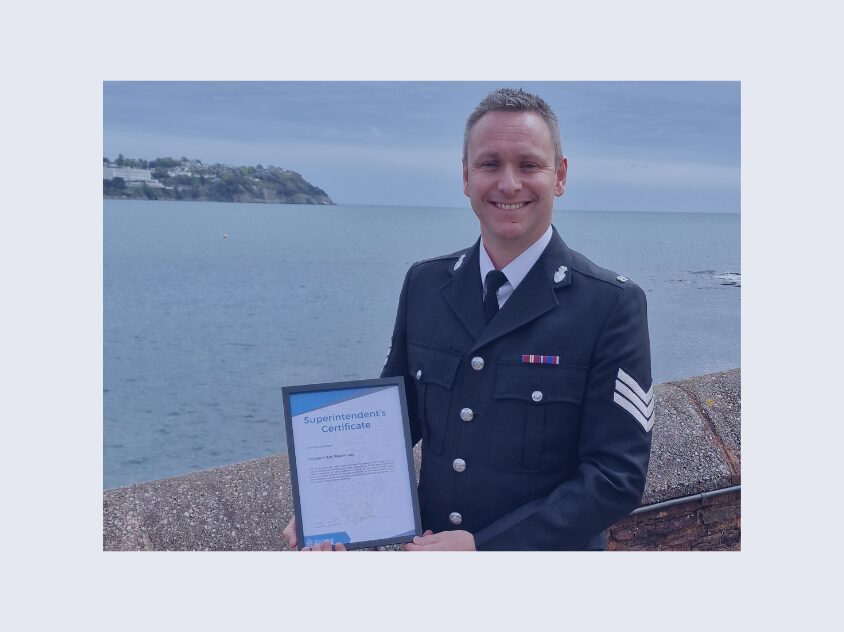
    Sgt Ant Moorhouse accepts commendation for his work delivering the Davidhorn Digital Interview Recording Project to the Alliance of Devon and Cornwall Police and Dorset Police.

    Support from Davidhorn

    Throughout the implementation, Davidhorn provided ongoing support to address the unique needs of the police force. Regular weekly meetings allowed the project team to discuss any challenges, adapt the system’s interface, and fine-tune metadata entry processes. Sgt Moorhouse noted, “If there was a problem, we would just contact the customer support, and we would get help straight away.” This close collaboration helped ensure the system was tailored to the force’s requirements and made the transition to digital recording as seamless as possible.

    Completed installs in Devon, Cornwall and Dorset.
    Completed installs in Devon, Cornwall and Dorset.
    Implementation process: A 3am start to travel to St Mary’s Police Station on the beautiful Isles of Scilly to deliver and train in the use of the new Davidhorn Portable DIR.

    How the new devices are making a difference

    The Davidhorn devices have brought substantial improvements in efficiency and ease of use, allowing officers to focus more on frontline duties. One key benefit is the reduced setup and close-down time for interviews. Sgt Ant Moorhouse observed, “Inputting metadata on that screen takes about 30 seconds, whereas on the old system it could take several minutes.” These small-time savings accumulate quickly, especially considering the high number of interviews conducted each and every day.

    Another major advancement is the portable recording kits, which provide critical flexibility in unique scenarios. For example, our Major Crime Investigation Team (MCIT) have used a portable kit to conduct an interview abroad. The team was able to record and immediately review the footage remotely, something that would have been impossible with their previous equipment. “The portable has been a real game changer with high-quality audio and video” Sgt Moorhouse explained.

    The new system has also improved the quality of audio recordings, which is crucial for i.e. interviews involving interpreters. Previously, poor audio quality had led to complaints from judges and solicitors in court, but with Davidhorn’s devices, the sound quality is much clearer, even during phone-based interpretation. “The sound quality is a lot better on the Davidhorn equipment,” Sgt Moorhouse noted, meaning recordings are now dependable and suitable for court proceedings.

    Furthermore, Davidhorn’s secure sharing link has simplified the process of sharing interview recordings with solicitors and other forces, eliminating the need for DVDs and reducing the risk of data breaches. “We use the sharing link for everything… it’s a win on time, but it’s also a win in terms of risk management,” Sgt Ant Moorhouse said.

    Looking towards the future

    With the implementation complete, Sgt Moorhouse is optimistic about the future potential of Davidhorn’s solutions. He sees advancements in artificial intelligence (AI) as a promising next step, particularly around automated redaction, statement-taking and transcription. Additionally, the feedback from officers has been overwhelmingly positive. “The kit in the stations is just so easy to use… they absolutely love its ease of use,” Sgt Moorhouse shared, adding that – last but not least – the compact design frees up valuable desk space in interview rooms.

    As Devon & Cornwall Police, and Dorset Police continue to embrace digital transformation, Davidhorn’s technology is set to support them in overcoming geographic and logistical challenges, enhancing productivity, efficiency, and ultimately providing a higher standard of service to their communities.

    Related products

    • Capture

      Mobile app recorder for capturing evidence on the go.


    • Portable Recorder

      Lightweight, PACE-compliant interview recorder for any setting.

    • Ark Interview Management

      Receive, monitor, and keep evidence throughout its lifetime.

    diciembre 18, 2024
  • Davidhorn Police Interview Summit 2026

    Davidhorn Police Interview Summit 2026

    Police Interview Summit 2026 – Agenda*

    Program: Wednesday 22 April

    08:00 – 09:00Registration and coffee
    09:00 – 09:30Opening Address
    Børge Hansen
    CEO, Davidhorn
    09:30 – 10:30Keynote – Interviewing complainants in cases of rape and sexual assault: lessons from research and improvements to practice
    Prof. Becky Milne and Dr. Patrick Tidmarsh
    10:30 – 10:40Discussion & Q&A
    10:40 – 11:00Coffee break
    11:00 – 11:20Promise meets complexity: what AI reveals about the complexity of child investigative interviewing
    Liisa Järvilehto
    Forensic psychologist at Helsinki University Hospital, psychotherapist
    11:20 – 11:30Discussion & Q&A
    11:30 – 11:50Whatever you say will be taken down in writing and may be given in evidence: Measuring the accuracy of written records of interviews with suspects
    Adrian Gates
    Former Detective and Sergeant in An Garda Síochána, researcher, member of iIIRG
    11:50 – 12:00Discussion & Q&A
    12:00 – 13:00Lunch
    13:00 – 14:00Presentation – Innovation project within the Norwegian Police exploring how AI can make police work more efficient
    AI4Interviews
    – Xander Radpey
    & Kristine Høybråten Ekberg
    Police Superintendent, Oslo Police District
    14:00 – 14:45Keynote – Product and Innovation
    Arnulf Refsnes,
    CPO, Davidhorn
    14:45 – 14:55Product and Innovation Q&A
    15:00 – 16:00Panel Discussion
    Commentary on future developments of interviewing
    Laura Hynes (NCA)
    (featuring: Prof. Becky Milne, Dr. Patrick Tidmarsh, Adrian Gates, Liisa Järvilehto, Dr. Ivar Fahsing, Børge Hansen)
    16:00 – 16:15Coffee break
    16:15 – 17:15Product Innovation Workshop
    Ingunn Østhassel

    Head of Design, Davidhorn
    17:15 – 18:00Networking Session
    18:00 – 18:40Live Podcast “Beyond a Reasonable Doubt“
    Guest: Vasylyna Yavorska, Just Group, Ukraine, host: Dr Ivar Fahsing
    19:00 – 21:00Social networking, food and drinks

    Program: Thursday 23 April

    06:30 – 07:30Social run (6 km, voluntary)
    07:30 – 08:00Coffee
    08:00 – 08:45Keynote – It doesn’t matter what you call it, it’s critically important that you do it: Rapport and its impact on information
    Prof. Laurence Alison
    ORBIT Creator & Lead Trainer
    08:45 – 12:45ORBIT interviewing model workshop
    12:45 – 13:45Lunch
    13:45 – 17:45TRIANGLE training
    Getting it Right: Communication with Children
    17:45 – 17:50Closing Remarks
    Børge Hansen
    CEO, Davidhorn

    Alongside the main programme: Product innovation showcases from Davidhorn and partners

    *Please note that the agenda may be subject to change

    Speakers

    Prof. Becky Milne
    Professor of Forensic Psychology
    UK
    Prof. Laurence Alison
    ORBIT Creator & Lead Trainer
    UK
    Dr. Patrick Tidmarsh
    Associate Professor in Criminal Justice
    UK
    Laura Hynes
    National Vulnerable Witness Adviser
    UK
    Dr. Ivar Fahsing
    Expert on Human Rights and Criminal Investigation
    Norway
    Liisa Järvilehto
    Clinical Forensic Psychologist
    Finland
    Børge Hansen
    CEO, Davidhorn
    Norway
    Adrian Gates
    Fromer DS in An Garda Síochána, Researcher
    Ireland
    Arnulf Refsnes
    CPO, Davidhorn
    Norway
    Dr. Frances Surmon-Böhr
    ORBIT Researcher & Lead Trainer
    UK
    Xander Radpey
    Head of Innovation and Digitalisation at Joint Unit for Intelligence and Investigation in Oslo Police District
    Norway
    Carly McAuley
    Director at Triangle
    UK
    Maxime Cole
    Director at Triangle
    UK
    Sarah Crisp
    Interviewing, Specialist Support & Advocacy, Triangle
    UK
    Vasylyna Yavorska
    Leader of JustGroup
    Ukraine
    Kristine Høybråten Ekberg
    Senior Police Officer
    Agder Police District
    Norway

    For Whom?

    Investigators, Police IT professionals and Digital Transformation Officers

    What?

    Davidhorn Police Interview Summit

    When?

    22 – 23 April 2026

    Where?

    Radisson Hotel Manchester City Centre
    Manchester, UK

    Following the success of our 2025 Summit in Copenhagen, we’re excited to announce that the Davidhorn Police Interview Summit returns in 2026!

    This year’s theme is Understanding.

    What to expect?

    Expert-Led Training & Keynotes:

    • Exclusive Orbit Interviewing Method and Triangle vulnerable witness interviewing workshop – specialist training for complex cases
    • World-Class Speakers: Confirmed speakers include Prof. Becky Milne, Dr. Patrick Tidmarsh, Dr. Ivar Fahsing and other leading voices in investigative interviewing research and practice.
    • Product Innovation Showcase: Hands-on workshops featuring Davidhorn’s latest product developments in interview recording and digital evidence management.

    Plus: Live podcast recording, networking sessions, workshops and peer learning opportunities with law enforcement professionals from across Europe.

    Whether you’re leading digital transformation initiatives, conducting critical interviews, or implementing vulnerable witness protocols, this summit delivers the expertise and connections you need to advance investigative interviewing excellence in your organisation.

    Pre-register for event 2026

    "*" señala los campos obligatorios

    Este campo es un campo de validación y debe quedar sin cambios.
    Address*
    Billing Address (if different than above)
    Consent*
    Consent*
    Consent*

    Recap of the last year

    View Presentations from Police Interview Summit 2025

    diciembre 5, 2025
  • Redfish Australia

    Redfish Australia

    Redfish: a trusted partner in Australia

    We are proud to highlight our partnership with Redfish Technologies Pty Ltd, an innovative Australian based company that specialises in digital recording and high level AV integration and implementation. Together, we have been delivering cutting-edge recording solutions to law enforcement agencies across Australia. In this blog post, we shed light on the remarkable work that Redfish Technologies does and how our collaboration is transforming the way evidence is gathered and managed.

    Redfish: A Trusted Partner in Australia

    Summary

    • Expertise and innovation: Redfish Technologies excels in delivering high-grade digital recording and presentation solutions for law enforcement, specialising in complex environments like Child Abuse Investigation Teams (CAIT). Their customer-centric approach ensures tailored, effective solutions using cutting-edge audio-visual technologies.
    • Installation best practices: With extensive experience in designing and installing interview suites, Redfish Technologies has developed best practices for capturing high-quality evidence. Their installations focus on reducing trauma for vulnerable and intimidated witnesses, ensuring the achievement of best evidence (ABE).
    • Collaborative successes: In partnership with Davidhorn, Redfish Technologies has significantly impacted Australian law enforcement, notably installing 120 interview recorders. Their comprehensive offerings include fixed installations, portable recorders, mobile apps, and centralized server solutions, enhancing evidence management and collection.
    Read more

    Expertise in complex environments

    Redfish Technologies has been instrumental in delivering investigative interview installations across the law enforcement industry, with a successful record of project implementation that brings together a wide range of client demands using Davidhorn applications and new cutting edge audio-visual technologies, creating high grade digital recording and presentation solutions. Redfish pride themselves in clearly understanding a client’s requirements and delivering an effective solution that meets the client’s desired goals. Their seasoned experience in delivering interview, and suspect suites, particularly for CAIT (Child Abuse Investigation Teams) has been invaluable.

    Innovative solutions

    They are well-known for being customer centric and innovative, their expertise extends to all types of current, proven, AV and recording technologies. This ensures that whatever the a clients specific needs may be—from courtrooms and tribunals to law enforcement agencies—Redfish Technologies has a solution tailored to fit.

    Installation best practices

    Redfish Technologies has through their client collaboration and design/installation work gained extensive experience regarding the specific requirements of a wide range of different interview settings. From our experience, partners which are working as closely with customers as Redfish Technologies do, have developed best practices on capturing high-quality evidence. This is particularly important when it comes to installation of interview suites for vulnerable and intimidated witnesses which can help reduce the trauma often relived when a witness is going through investigations and court hearings. Achieving best evidence (ABE) when recording investigative interviews is therefore essential and can only be consistently gained when interview suites are carefully planned and installed with this objective in mind.


    Collaborative successes

    Partnering with law enforcement

    Our joint ventures have notably made an impact in Australian law enforcement. One such example was the collaboration with an Australian police force where Redfish Technologies successfully installed 120 interview recorders with associated audio-visual support technologies alongside our digital evidence management solution.

    Comprehensive offerings

    These projects provided an all-encompassing approach that included fixed installations for suspect and ABE suites with focus on the specific requirements of CAIT teams. The provision also included portable recorders, mobile apps, and a centralised server solution to manage all the collected evidence seamlessly.

    Conclusion

    Our partnership with Redfish Technologies is a testament to the great work they do in technical and AV realms. It is an honor for us that they have chosen to deliver our state-of-the-art recording solutions to Australian law enforcement agencies. We are confident that together, we will continue to make strides in the industry, ensuring the highest quality of evidence collection and management for years to come.

    We look forward to further strengthening our collaboration and providing top-notch solutions for capturing and managing crucial evidence in diverse settings. Thank you, Redfish Technologies, for being more than just a vendor—a true partner in justice.

    Related products

    • Fixed Recorder

      Fixed HD recorder for high security interview rooms.

    • Capture

      Mobile app recorder for capturing evidence on the go.


    • Ark Interview Management

      Receive, monitor, and keep evidence throughout its lifetime.

    junio 18, 2024
  • How to Use Davidhorn’s Investigative Interview Recording Solution.

    How to Use Davidhorn’s Investigative Interview Recording Solution.

    How to Use Davidhorn’s Investigative Interview Solution. Webinar with Davidhorn CTO Magnus Green.

    (Live-recorded webinar from Davidhorn Police Interview Summit 2025)

    Fill out the form to watch the webinar.
 Please fill in all required fields (*) before submitting your inquiry.

    Our latest webinar, recorded during the Davidhorn Police Interview Summit 2025, was hosted by Magnus Green, Chief Technology Officer at Davidhorn.

    Magnus provided an exclusive hands-on demonstration of our comprehensive investigative interview solution, showcasing over 40 years of research and development in action.

    In this practical walkthrough, Magnus explored:

    • Complete interview workflow management – From initial planning through to post-interview analysis, demonstrating how technology supports the entire investigative process
    • Real-time interview demonstration – Live recording session showing seamless integration between planning, conducting, and monitoring interviews
    • Digital evidence integrity – How Digital Fingerprint SHA-256 and encryption protect evidence from tampering while maintaining court admissibility
    • Advanced transcription and AI assistance – Automated speech-to-text transcription capabilities with human oversight to ensure accuracy and reliability
    • Secure sharing capabilities – Controlled access systems for sharing evidence with legal representatives while maintaining audit trails and security
    • Flexible deployment options – Browser-based solutions that work across devices while respecting data sovereignty requirements

    Magnus’s demonstration highlighted how modern interview management technology streamlines investigative workflows while maintaining the highest standards of evidence integrity. Built with input from practitioners to solve real-world problems, this solution enhances efficiency without compromising the quality or admissibility of evidence.

    Discover how this proven technology transforms investigative interviewing from planning to courtroom presentation, supporting justice through innovation.

    "*" señala los campos obligatorios

    Este campo es un campo de validación y debe quedar sin cambios.
    Consent

    junio 23, 2025
  • Icelandic Police

    Icelandic Police

    The impact of Davidhorn’s systems on Icelandic police operations.

    The IT Department of the Central Police Force in Iceland between 2000 and 2003, orchestrated a game-changing transition by acquiring and implementing a system called LOKE. The dawn of 2005 saw LOKE in full operation, seamlessly merging seven distinct systems into one and introducing an array of much-needed new features.

    Summary

    • Implementation and integration: The Central Police Force in Iceland implemented the LOKE system, merging seven distinct systems into one by 2005. In 2013, they integrated Davidhorn’s interview recording solution into LOKE, streamlining the recording and sharing of investigative interviews.
    • Impact and recognition: This technological advancement made Iceland a model for other countries and garnered global attention, including from Microsoft. Árni E. Albertsson presented their innovative work at the 2017 Police Strategy Forum in Oxfordshire.
    • Efficiency and security: The adoption of Davidhorn’s solution improved efficiency, security, and user-friendliness in handling investigative interview recordings, transitioning from CDs to a centralized digital system with enhanced access control and mandatory video recording for serious cases.
    Read more

    In 2013 the police force acquired and implemented a Davidhorn interview recording solution, which was integrated into LOKE UI. Thanks to this forward-thinking approach, Iceland’s law enforcement was able to streamline its operations of recording and sharing the investigative interviews, making them a model for other countries to follow. 

    Recognized for their innovative achievements, one of the team members – Árni E. Albertsson, was invited to the 2017 Police Strategy Forum in Oxfordshire to present the Icelandic police’s work with Davidhorn. The team’s dedication to advancing technology in the field of law enforcement has made a lasting impact, paving the way for more efficient and effective policing.

    Searching for safer and more effective way to operate

    Prior to adopting Davidhorn’s solution, the Icelandic police encountered significant hurdles in recording interview management. Sharing these interviews across departments or districts meant relying on CDs, which not only generated high costs but also were susceptible to errors, damage, and loss. The police districts, eager to save money and improve security and efficiency, were looking for a solution that would allow them to share recordings in a safer and more effective way, providing easy access and distribution to those who needed it.

    The solution was first introduced in 2015, and by 2018-2019, Icelandic police had made significant strides in combining their various systems. The evolution of Iceland’s police IT infrastructure came from 27 separate police districts operating as independent islands to a centralised system.  

    Streamlined approach

    This streamlined approach to handle and share interviews provided enhanced access control and logging features, making it easier for the administrators to monitor who had access to specific recordings. Davidhorn assisted the team with training throughout the implementation process. Davidhorn held lectures in Iceland, training 30 individuals in 2016. This educational support ensured that Icelandic police could make the most of the technology. 

    Interview recording technology has become an essential tool for Icelandic police, now a mandated practice by the general prosecution for serious cases. According to these regulations, all witness and suspect interviews in significant cases must be video-recorded, underscoring the technology’s critical role in modern law enforcement. 

    Global attention

    Icelandic police’s innovative approach attracted attention from other countries and even leading tech companies like Microsoft. The Seattle-based corporation visited Iceland to learn more about their solutions and how they used Microsoft products. They were also involved in developing a mobile app for Icelandic police cars.  

    With Davidhorn’s solution, Icelandic police have significantly improved the way they handle recording of investigative interviews, making their operations more efficient, secure, and user-friendly. 

    Written by: Marta Hopfer-Gilles 

    (Chat GPT was used while creating this blog) 

    Related products

    • Ark Interview Management

      Receive, monitor, and keep evidence throughout its lifetime.

    • Capture

      Mobile app recorder for capturing evidence on the go.


    • Portable Recorder

      Lightweight, PACE-compliant interview recorder for any setting.

    junio 18, 2024
  • How to Set Up a Police Interview Recording Room.

    How to Set Up a Police Interview Recording Room.

    How to Set Up a Police Interview Recording Room. Webinar with Jeff Horn.

    (Live-recorded webinar from Davidhorn Police Interview Summit 2025)

    Fill out the form to watch the webinar.
 Please fill in all required fields (*) before submitting your inquiry.


    Our latest webinar, recorded during the Davidhorn Police Interview Summit 2025, was hosted by Jeff Horn, General Manager of Davidhorn UK. Jeff brought decades of specialised expertise in ensuring that crucial investigative work translates into admissible evidence in court.
    In this comprehensive technical presentation, Jeff explored:

    • Scientific foundations of police interview recording – Drawing from the original UK trials that established PACE legislation and the lessons learned from historical cases like the Guildford Four
    • Audio as primary evidence – Understanding why clear, audible audio takes precedence over video, and the technical requirements for court admissibility
    • Room design and environmental considerations – Practical guidance on acoustic treatment, camera positioning, and creating optimal recording environments for both suspect interviews and vulnerable witness suites
    • Technology standards for tamper-proof police interview recording – The critical role of Digital Fingerprint (SHA-256), AES-256 encryption, and maintaining chain of evidence integrity
    • Specialised considerations for vulnerable witnesses – Technical adaptations needed for child interview suites and trauma-informed recording approaches

    "*" señala los campos obligatorios

    Este campo es un campo de validación y debe quedar sin cambios.
    Consent

    Jeff’s presentation highlighted how proper technical implementation of recording systems directly impacts the admissibility and quality of evidence, ensuring that the vital work of investigators and the courage of witnesses translates effectively into the courtroom.
    Discover how these evidence-based technical standards and proven methodologies support justice while protecting the integrity of both the investigative process and those who participate in it.

    junio 10, 2025
  • Schleswig-Holstein Police

    Schleswig-Holstein Police

    Schleswig-Holstein Police:
    redefining victim interviewing

    With a palpable dedication to the victims, the team in Schleswig-Holstein embarked on a mission.

    Summary

    • Read how the transformation in sexual crimes victim support in Schleswig-Holstein police was carried out through:
    • Innovative victim interview support: To transform, the team working with sexual violence victims were emphasising victim-centric workflows, implemented audio-visual recorded interviews to minimise trauma, and have been pioneering specialised training for officers handling sexual crimes.
    • Technology and legal transformation: A key part of the transformation was the implementation of court-proof interview tools, alignment with legal changes like §58a StPO, and future vision for centralised data management to ensure more efficient and fair judicial procedures.
    • Leading example for Germany: Schleswig-Holstein’s combination of dedicated civil servants, innovative technology, and legal compliance sets a benchmark for victim protection and has the potential to influence other regions in supporting victims of sexual offenses.

    Their primary objective?

    To ensure that the entire process, from initial police involvement to the final decision of the judge, remained centered on the victims. They sought to improve the collection of evidence, streamline the process and eliminate the technological challenges.

    What they achieved in Schleswig-Holstein was nothing short of revolutionary. It all began over 25 years ago with the audio-documented investigative interview. Today such interviews are recorded audio-visually everywhere. They devised an approach built on international best practices that both protected victims and improved evidence collection through interviewing methodology. This approach has proven itself and can serve as an example for other police forces in the Federal Republic of Germany to improve the care of victims during the interviewing process.


    “The first step to a good interview is to record it. We were looking for a company that could help us with that. A contact recommended Davidhorn (previous Indico Systems) in 2012 and it turned out to be a great fit for us. We managed to push our investigation operations to another level. We’ve worked with them ever since.”
    Uwe Keller
    ex-Police Schleswig-Holstein

    Central to this new approach was a major shift in interviewing techniques. Recording interviews and employing investigative interviewing methodologies have been game-changers, reducing the number of times victims have to recount their trauma.

    Their pursuit of technological solutions led the police of Schleswig-Holstein to Davidhorn in 2010. The challenge? Finding a technical way of documenting court-proof interviews in order to prevent multiple interviews by the police.

    This transformation wasn’t initially triggered by a change in law or official directive. Instead, it was the result of individuals within the police force driven by passion, determination, and a desire to prioritise the victim’s perspective. Inspired by the Danish police and their practices, they wanted to bring the same standards to Schleswig-Holstein, especially in handling sexual crimes. The goal? Modify the workflows to give investigations the most effective start. A good initial interview is the key to subsequent investigations and measures.

    The collaboration with Davidhorn started with just three test recording sets. This number has increased over the years and is now available for all sex crime teams in the 26 criminal police departments in Schleswig-Holstein.

    A legal change in 2019, affecting interviewing protocols for suspected juveniles and suspects in homicide cases, led to expanding of the system and the acquisition of more interview kits. Now, Schleswig-Holstein boasts around 60 of these tools. For the team that primarily works with sexual crimes, portable solutions have proven invaluable.

    However, the Schleswig-Holstein police envisions the future with a centralized server solution that could eliminate the need to send interview CDs across the country – a process that is both time-consuming and prone to errors. These tech solutions could save time and human resources in the future by offering an automatic transcription function “Speech to Text” and AI-supported summaries of interviews.

    Shaping the new paradigm: victim-centric workflows

    The new approach is anchored in a pivotal first step: conducting a well-documented interview. The intent? To make a video interview available to those involved in the process, which saves the victim from having to be interviewed again in court so that they don’t have to relive the trauma. A practice that since 2019 has been a legal requirement in Germany.

    The practice proved that such an interview, which avoids a main hearing, makes sense at the end of the police measures when all facts are determined and established. Recorded initial police interviews are therefore still being carried out.

    In this respect, Schleswig-Holstein stands out. With approximately 1,200 interviews conducted annually, it is ahead of the curve compared to some other regions.

    In addition to altering their interviewing practices, the team in Schleswig-Holstein has also compiled a handbook of best practices for investigative interviews involving victims of sexual crimes. This resource serves as an invaluable tool for all colleagues within the region who work with these types of cases.

    This handbook has become something of an “internal law” within the police force, and its influence extends beyond Schleswig-Holstein. In the past, it was shared with the police in Slovenia, Hamburg, Berlin/Brandenburg and Lower Saxony, among others.

    The task force driving these best practices for dealing with victims of sexual crimes consists of just seven people: an officer from the police academy, two female prosecutors, three female investigators, and a press secretary who has previously worked with sex crime cases. They are the “guardians” of these standards across all of Schleswig-Holstein.

    Conscious and sensitive treatment of victims is at the core of their mission, emphasizing the importance of recording interviews as early as possible in the process. This prompt action, when someone comes to the police to report a sexual crime, minimizes the need for the victim to repeatedly relive their trauma by retelling their experiences.

    The transformation was the result of individuals within the police force driven by passion, determination, and a desire to prioritise the victim’s perspective.

    Shaping the new paradigm: victim-pioneering practices: Schleswig-Holstein’s progressive approach

    Schleswig-Holstein has truly pioneered the shift towards this new mindset. The game-changer was planning a coordinated effort with all litigants to introduce recorded interviews into trials. Without their consent, the endeavor wouldn’t have stood a chance. It’s been a journey hand in hand with attorneys, prosecutors and judges, fostering an environment in which they too saw the benefits of this more compassionate approach.

    Specifically in the domain of sexual crimes, the region employs specially trained officers. Out of 26 departments in Schleswig-Holstein, around 85 officers have specialized training in sexual crimes. The majority of these officers devote their work exclusively to such cases.

    Even before 2019, judges in Schleswig-Holstein began incorporating recorded interviews into their proceedings, even without a legal obligation to do so. However, since 2019, it’s become a legal requirement.

    Notably, the opening of the first “Childhood-House” in Flensburg (German only) now follows the efforts to protect the Schleswig-Holstein victims and vulnerable witnesses. This institution, inspired by the Swedish “Barnahus” project, serves as a benchmark for the rest of the country. Ambitious plans are afoot to expand and introduce more of suchcenters in Itzehoe, Lübeck, and Kiel.

    Envisioning change: towards unified and secure data sovereignty

    The German judicial system, consisting of the police, public prosecutors, lawyers and courts, works a little differently than in other countries. One significant factor is the question of who retains ownership of the case documents. Uwe Keller, a former officer from Schleswig-Holstein who worked on implementing these systems, considers a server solution – where data is stored locally within the area of responsibility of the public prosecutor’s office – to be a good fit for their needs. He emphasises that this solution ensures complete data sovereignty for both interviews and metadata.

    In Germany, there’s a legal framework called the “Criminal Procedure Code” (StPO), which regulates how the police, public prosecutors, lawyers and judges should work together. A newly introduced paragraph, §58a StPO, specifically addresses the recording of investigative interviews. Davidhorn’s solutions fully respect these legal requirements and provide easy-to-use tools that ensure an accurate representation of events.

    Roughly 15-20 years ago, implementing these changes was not an easy task. But now, with the invaluable lessons learned from previous efforts, the pace of change is accelerating. The simplification of data management will make the workflow simpler and safer for both institutions and victims.

    Davidhorn: a valuable ally in revolutionising police work

    From the lens of a victim, the Schleswig-Holstein police endeavored to forge better evidence and develop a superior process. Technological hurdles were of course part of the equation but were managed brilliantly by the parties involved. Together with Davidhorn they had to consider what specific requirements needed to be met and how the best tools could be used to address those requirements.

    Davidhorn was a key partner in this process. The collaboration started with just three test sets and has expanded over time to include all sexual crime teams in Schleswig-Holstein. Their solutions help to ensure that victims of sexual offenses are treated appropriately and with care.

    Still, it’s crucial to remember that even the most advanced technology can only play a supportive role in investigative interviews. The key lies in adopting the right mindset, process, and procedures. Luckily, Davidhorn also provides the appropriate solutions in this regard. Police officers are the first point of contact, but if they’re unsure how to react, no progress can be made. They need to know how to respond effectively and appropriately – another area where Davidhorn’s expertise comes into play.

    The combination of dedicated civil servants, specialised prosecutors and attorneys, cooperative judges and innovative technological solutions has certainly put Schleswig-Holstein at the forefront of victim protection in Germany. This progressive approach has the potential to be adapted and further developed throughout Germany in order to improve support for victims of sexual offenses and to make the judicial system more transparent and fairer overall.

    Written by: Marta Hopfer-Gilles 

    (Chat GPT was used while creating this blog) 

    Related products

    • Fixed Recorder

      Fixed HD recorder for high security interview rooms.

    • Capture

      Mobile app recorder for capturing evidence on the go.


    • Portable Recorder

      Lightweight, PACE-compliant interview recorder for any setting.

    junio 13, 2024
  • Investigative Interviewing in Portugal – ep. 25

    Investigative Interviewing in Portugal – ep. 25
    Investigative Interviewing in Portugal

    The Long Game Series

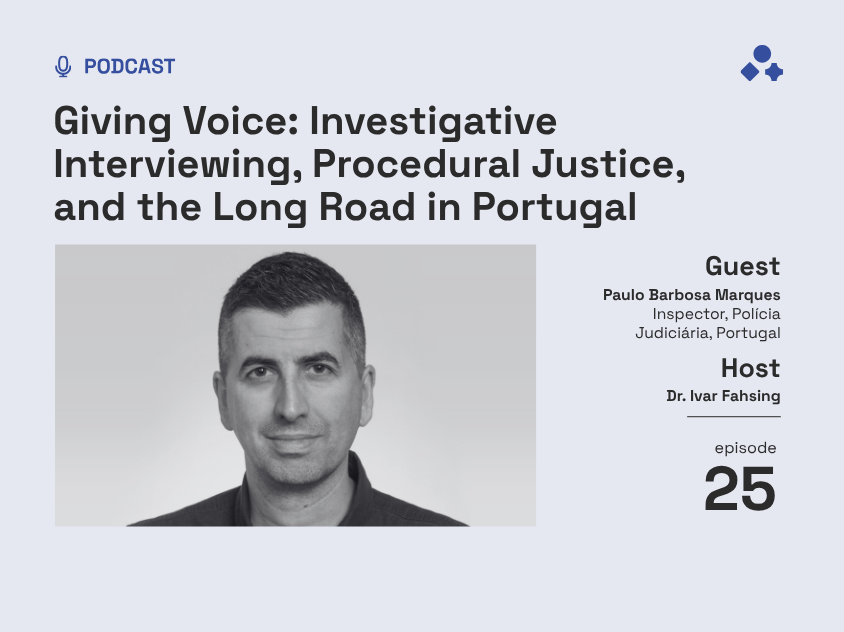
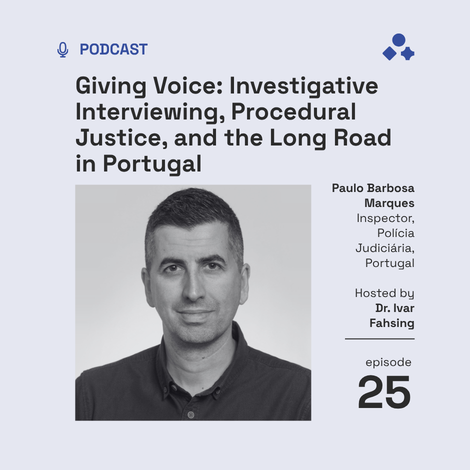
    Episode 25. Giving Voice: Investigative Interviewing, Procedural Justice, and the Long Road in Portugal

    Paulo Barbosa Marques has a simple way of describing the ethos of investigative interviewing: it is about giving voice. Giving the person in front of you — whether suspect, witness, or victim — the genuine opportunity to tell their own story, without it being contaminated by the investigator’s interests or assumptions.

    In this episode of Beyond a Reasonable Doubt, Dr Ivar Fahsing speaks with Paulo Barbosa Marques — Inspector at Portugal’s Polícia Judiciária, forensic psychologist, and one of Portugal’s leading advocates for science-based investigative interviewing — about what it takes to implement that ethos in a country without a national training framework, without published interviewing guidelines, and without systematic recording of suspect interviews.

    They discuss the difference between a confession culture and a culture that simply has not caught up with the science; what it means to help a suspect make a genuinely informed decision about whether to speak; why the macho culture in policing costs far more than it gains; and what Portuguese judges and prosecutors say about the value of recorded interviews — even before recording is mandated. And they debate honestly: on a scale of zero to ten, where is Portugal today?

    About the guest

    Paulo Barbosa Marques

    Paulo Barbosa Marques is an Inspector at the Polícia Judiciária — Portugal’s Criminal Police — and a licensed clinical and forensic psychologist. His career has spanned three law enforcement agencies: the Polícia de Segurança Pública, the Immigration and Border Service (SEF), and the Polícia Judiciária, where he works in serious criminal investigation. He is a former second lieutenant in the Portuguese Army Special Operations Force.

    Paulo Barbosa Marques holds a master’s degree in law and security from NOVA University of Lisbon and is currently a Legal and Forensic Psychology PhD student at the University of Santiago de Compostela. He is an associated researcher at BSAFE LAB (Universidade da Beira Interior), a founding member of the Portuguese Society of Psychiatry and Psychology of Justice, and the iIIRG Regional Champion for Portugal. He is a member of the Management Committee of the COST Action CA22128 — IMPLEMENDEZ — establishing networks to implement the Méndez Principles on effective interviewing globally.

    He is the co-editor, with Mário Paulino, of Police Psychology: New Trends in Forensic Psychological Science and Psychopathy and Criminal Behavior: Current Trends and Challenges, both published by Elsevier. His research spans investigative interviewing, crisis intervention, hostage negotiation, and the application of communication science to law enforcement and public order policing. 

    Watch and listen wherever you get your podcasts (YouTube link here)

    Related products

    • Fixed Recorder

      Fixed HD recorder for high security interview rooms.

    • Portable Recorder

      Lightweight, PACE-compliant interview recorder for any setting.

    • Capture

      Mobile app recorder for capturing evidence on the go.


    • Ark Interview Management

      Receive, monitor, and keep evidence throughout its lifetime.

    Transcript

    Guest: Paulo Barbosa Marques, Inspector, Polícia Judiciária, Portugal

    Host: Dr Ivar Fahsing


    Dr. Ivar Fahsing  [00:00]

    A warm welcome to you, Paulo Barbosa Marques from Portugal, to this episode of Beyond a Reasonable Doubt. We are so happy to have you on our podcast.

    Paulo Barbosa Marques  [00:19]

    Thank you so much for your invitation, Ivar. This is like a conversation between good friends, isn’t it? An opportunity to exchange some of our ideas and some of our previous conversations on this topic — and, as you know I am always saying, to practise my English with you. I see it as a good conversation. Thank you for the invitation and for letting me be part of this amazing podcast. I love it.

    Dr. Ivar Fahsing  [00:57]

    Yes, Paulo, I am so happy that you are here. The topic of this season is the implementation of investigative interviewing around the world, seen from different perspectives — especially from a practitioner’s point of view. You and I know each other quite well now and can consider each other good friends. But our listeners may not know you that well, so perhaps you could give a short introduction to your background and your interests.

    Paulo Barbosa Marques  [01:35]

    Of course. As you said, my name is Paulo Barbosa Marques, from Portugal. I am a police inspector at the Polícia Judiciária — the Criminal Police. I should say that I am here speaking in my own capacity and do not necessarily represent the views of my organisation. This is a conversation between friends.

    [01:35]

    As a police officer I have worked in three law enforcement agencies. Currently I am at the Polícia Judiciária. Previously I was at the Serviço de Estrangeiros e Fronteiras — the Immigration and Border Service. Before that, I served in the Polícia de Segurança Pública, which is the public security police responsible for safety in cities, public order policing, and community policing — a large organisation. That is where I began my law enforcement career. And before policing, I was a second lieutenant in the Portuguese Army Special Operations Force.

    [01:35]

    My academic background is in psychology. I am a licensed clinical and forensic psychologist and I have kept my licence current because I want to remain involved in bringing psychological science to our police forces. I also conduct research — not only on investigative interviewing but also on crisis intervention, the application of human communication concepts to law enforcement, hostage negotiation, and the use of communication models in public order policing. My aim is always to bring psychological science to practice, to improve practice, and to improve police legitimacy and public trust.

    Dr. Ivar Fahsing  [04:01]

    And you are also, as far as I know — because I have been lucky enough to contribute to it — the editor of the book Police Psychology: New Trends in Forensic Psychological Science, together with Mário Paulino.

    Paulo Barbosa Marques  [04:15]

    Yes — Police Psychology, and also Psychopathy and Criminal Behavior. Both were published by Elsevier. When I first had the opportunity to work on Police Psychology it felt like something very precious to me. That is where I met you, by inviting you to write a chapter. I thought: this cannot be just me and Mário writing about such a broad field. We need to invite the people who can genuinely contribute to each topic. I believe we assembled a remarkable group of authors. Police psychology is more established in the United States — we do not talk about it nearly enough in Europe. The idea was to reflect on the extraordinary contribution psychology has to make to law enforcement, to police officers and their families, to communities, and to mental health. Psychology has so much to give to our police academies, where the syllabus is heavily weighted towards law. We need to bring more psychological science into those curricula.

    Dr. Ivar Fahsing  [06:36]

    I share your view entirely. I just wanted to mention the book because it is quite a rare thing — our listeners should definitely look it up. It is available as an e-book as well as in hard copy, I believe?

    Paulo Barbosa Marques  [06:52]

    Yes — you can find Police Psychology as an e-book or in hard copy through Elsevier and Amazon. And Psychopathy and Criminal Behavior is also a very interesting book — it even includes a chapter on investigative interviewing with psychopaths.

    Dr. Ivar Fahsing  [07:38]

    Excellent recommendations. Both are well worth reading. The topic of today’s conversation, Paulo, is the impact of investigative interviewing on police practice — and we will see if there is time to go into some of the easier things to implement and some of the harder ones. But before we get to the Portuguese context specifically, I would like to hear your personal view: what would you say is the ethos of investigative interviewing? What does it really mean to you?

    Paulo Barbosa Marques  [08:25]

    When I think about the ethos of investigative interviewing, I think about procedural justice. I think about giving voice — giving someone who is accused of a crime, or who has witnessed a crime, the genuine opportunity to provide their own account: their perceptions, what their senses registered at the scene, their own story of what happened. It is not only about the application of a technique or a framework. The ethics behind it are really important. It is about the pillars of procedural justice, and it is connected to the perception of legitimacy. Everyone should have the opportunity to provide their own view of what happened and how it happened — without the contamination of others, including the investigator.

    Dr. Ivar Fahsing  [10:04]

    Exactly. That is a very interesting perspective — that everyone should have their voice heard in a way that is contaminated as little as possible by the view or the interests of someone else, including the officer. You are the first guest this season to frame it quite in those terms, and I think it is really interesting. I would like our listeners to reflect on how many different perspectives there can be on what investigative interviewing actually is. Let me take it a little further, Paulo: moving this to a Portuguese context, why do you think it is important to implement investigative interviewing in Portugal?

    Paulo Barbosa Marques  [11:01]

    I think it is important to implement evidence-based, science-based procedures. We can have a long discussion about terminology — ‘evidence-based investigative interviewing’, ‘science-based investigative interviewing’, different frameworks, PEACE and others. What I really believe is that if we want to reflect on accountability — accountability in the courtroom — we need to be able to explain how we gathered that testimonial evidence. Just as with physical evidence, we have to respect the chain of evidence. When we are talking about listening to people, that same accountability must be present in our work. And to be accountable, we need to bring psychological knowledge into our practice — what we have learned from memory research.

    [11:01]

    That is why when we begin any training in investigative interviewing, we need a module on memory, of course, and a module on law and ethics. Nowadays we also need to reflect on the Méndez Principles. We cannot just conduct interviews and say: ‘That’s how we always did it. That’s what I learned from my older colleague.’ We need a framework. Should it be tiered, with levels? Should it be PEACE or KREATIV? I am less concerned about which framework than that it be genuinely evidence-based, and that the training be scenario-based and professional — because we are talking about evidence that will be used in court and can determine a person’s life.

    [11:01]

    It may also determine public trust in the institution. In a major case, with journalists covering proceedings, if someone is challenged in court — ‘How did you obtain that evidence? How was that conducted?’ — and if an expert witness such as Dr Ivar Fahsing is called to explain what professional practice looks like, it becomes very difficult for the other side if they cannot demonstrate they followed established standards. That is why I believe we need to bring science-based investigative interviewing to all our law enforcement agencies. We do not need to wait for high-profile miscarriages of justice. The science is there for us to use.

    Dr. Ivar Fahsing  [15:57]

    When it comes to Portugal specifically — would you say Portugal has, or has had, a confession culture?

    Paulo Barbosa Marques  [16:08]

    I do not think we have a confession culture. Not at all. Portugal has a strong tradition of respect for human rights — it was one of the first countries to abolish the death penalty, for example. We have significant legal safeguards. You cannot easily convict someone on the basis of a confession alone; there needs to be corroborating evidence on the case file. I believe some officers from the 1980s and 1990s were influenced by the Reid Technique, but that is quite normal — not only in Portugal. Police organisations around the world looked at the United States approach and assumed that if it was done there, it must be the right way. The same happened in negotiation and other fields. That change of mindset needs to come from within, from people who are both police officers and researchers, who can look at the evidence and say: we have done it this way for four decades because we thought it was correct, but when I look at the research and at countries like the UK, Norway, and New Zealand, I can see there are better ways. So let us change.

    [16:08]

    We do not have a confessional culture, but in our training across different organisations we are working on it — at least in my own organisation. But we need to do it systematically across all organisations. The mindset is the critical thing. I do not conduct a suspect interview for the purpose of obtaining a confession. I want the person to talk. And in Portugal, even a confession obtained at the investigation stage is not evidence in chief — all evidence must be given again in court. A person may confess to the police and then say in court: ‘I said what I said because I was under pressure, they kept me in the room for six hours.’ What happens in court is what really counts. So why would I conduct an interview to obtain a confession? I want the person to talk, and that may open new lines of investigation. I am not looking for a confession.

    Dr. Ivar Fahsing  [20:10]

    What do you do then when a suspect does not want to talk?

    Paulo Barbosa Marques  [20:14]

    That is the hardest question. That is where we talk about building platforms, isn’t it? They have the right to remain silent, and many exercise that right with their lawyer present. What I always try to do — and I have to remind myself not to drift towards the approaches that talk about using influence to obtain confessions — is to be as neutral as possible while ensuring the person can make a genuinely informed decision.

    [20:14]

    I tell them: yes, that is your right. But perhaps this is the first time someone is here to listen to your side of the story. Before the trial, it may be your only opportunity. Your lawyer is here and I respect their advice, but I am not here to judge you. I think it is important to give you the chance to provide your explanation of what happened. I invite you to do that if you wish — you will not be judged. I try to build real rapport and make the person feel that this can be a genuine conversation. But I completely respect procedural safeguards and train officers to do the same.

    [20:14]

    What I find difficult is when a lawyer arrives, the suspect immediately says nothing, and the lawyer does not even take two minutes to understand what happened. They were appointed, they are being paid for their time, and their immediate instruction is: do not say anything. I want the person to make an informed personal decision — not a decision made for them by someone who has not even engaged with the facts. I do not try to condition them. I just want them to know: these facts may benefit from your version of events. Make your own choice.

    Dr. Ivar Fahsing  [22:19]

    I completely understand. I am pushing a little philosophically here, but I think it goes to the core of investigative interviewing. In Norway, we have moved towards a model where the interview training is essentially the same regardless of who you are interviewing — suspect, witness, or victim. I think that has been an important change. It takes away the pressure and the expectations from the officer. And it sends a message to the person in the room: you are in safe hands. No one is trying to manipulate you or pretending to be your friend in order to get something back. For me, that is probably the most important shift — what I often call the operationalisation of the presumption of innocence.

    Paulo Barbosa Marques  [30:22]

    Exactly. And there is another layer to what you are saying when you train officers to interview in the same way regardless of who is in front of them — it sends a very clear message about what the mindset should be. And that is where real change begins: when we are able to change the mindset. In many jurisdictions, the problem is also a macho culture — the idea that to do it well is to do it the hard way. We see this in public order policing too: why use communication when you could use force? But when you look at the liaison-based models — officers communicating with crowds, facilitating people’s legitimate interests, identifying those causing trouble — the results speak for themselves. We need that same mindset inside the interview room. And if an officer’s thinking is conditioned by an armour of tough culture, you can bring the best trainers in the world, but if the ears are not open, the mindset will not shift. That is why it is also important to bring more women into this space — they contribute enormously.

    Dr. Ivar Fahsing  [32:49]

    Can you say something more about that? It is a really interesting perspective, and I appreciate you sharing it so openly. When we were implementing KREATIV — the Norwegian version of PEACE — in the Norwegian Police, there was considerable resistance. People said: we don’t have time for planning. You come from a major crime unit, you have time — we are the real police. And there were always arguments about needing to be tough with suspects, bang the table, demand the truth. But I remember vividly, after one of my lectures for a force south of Oslo, a woman came up to me — very experienced, she had worked at the National Homicide Squad and was now back at her local force, a forensic child interviewer. She said: thank you. Because now, finally, what you are describing makes me want to do suspect interviewing again. For ten years I have felt this was a macho arena where you are expected to go in hard and judgmental. But you are telling me the opposite — that my skills as a patient, empathetic, good-listening child interviewer are probably also the best skills for interviewing suspects. Thank you for opening that door. And that was almost thirty years ago. What I see now in the toughest homicide squads in Oslo is that the majority of the best suspect interviewers are women.

    Paulo Barbosa Marques  [35:43]

    What I want is better gender balance — because I believe men can learn from women how to take off the body armour and be a little more vulnerable. Not only in policing, but in life. I come from the Special Forces — that is something I carry with genuine pride. And yet I know from my whole career that being operational is not the same as being macho. I know colleagues who have spent their careers in intervention units and been brought before courts for malpractice, and if I ask them to name one genuinely good piece of work — one arrest where skill and ethics carried the day — I struggle to find an answer. Using force is not the same as being professional. You can be kind, respectful, ethical, and vulnerable, and be an outstanding operational police officer. Society is not black and white. There are more colours. We cannot go into the streets or the interview room thinking that life, or a case file, or a crowd, is black and white.

    [35:43]

    Our officers are also struggling — with low salaries, with being posted far from home for twenty years, with burnout, with losing sight of why they came into the profession. They need good colleagues, good teachers, someone to remind them of the passion behind this job. Because somewhere along the way, some of them lost it. They fell into the tough culture, into using force as the default, and forgot that the real beauty of policing is to resolve the hardest situations with words alone. We will learn a great deal from women in this field.

    Dr. Ivar Fahsing  [41:14]

    Paulo, if I ask you on a scale of zero to ten — where zero is no implementation of investigative interviewing and the ethos we have been discussing, and ten is full implementation — where would you say Portugal is today?

    Paulo Barbosa Marques  [41:50]

    You are bringing numbers into this — as society does. Let me be clear that I am speaking about the Portuguese context as a whole, not only my own organisation. Portugal does not have a national training framework covering all investigative organisations. We do not have one for prosecutors either. We have only four or five researchers working on this topic. We do not have published guidelines on how to interview vulnerable witnesses, children, autistic children, or suspects. What saves us is our strong procedural safeguards and the rule of law — a legal tradition that is deeply secular and deeply respectful of rights. Without those safeguards, I believe we would have seen miscarriages of justice. And I would add: miscarriages of justice do not only happen in criminal proceedings. Denying someone asylum because an interviewer failed to gather their full narrative is a miscarriage of justice. The implementation of investigative interviewing has implications well beyond criminal investigation — forced returns interviews, asylum interviews, disciplinary interviews within police organisations.

    [41:50]

    If you push me for a number — I would say six, because I can see the opportunities. I can see good people and good leadership trying to bring this forward. We held a major event this year at the Polícia Judiciária, which was well received. I can see people engaging with international research. If we needed to produce operational guidelines tomorrow, we have the people to do it — we just need someone to say: let’s do it, let’s set up the working group. But I understand if you think six sounds too high.

    Dr. Ivar Fahsing  [47:35]

    I am perhaps being rude, but I think six sounds too high. If you do not have mandatory training, if you do not have a system that defines who receives what level of training, and if you do not have national guidelines, I would probably put Norway at six or seven — and we still have significant room for improvement in follow-up training and accreditation. When you say six, I think you are describing the potential rather than the current reality.

    Paulo Barbosa Marques  [48:25]

    Yes — potential, you are right. And I understand completely. You are at a stage in Norway where you can focus on specific refinements and each one will represent a meaningful step forward. In Portugal, if we were to establish a training framework and publish national guidelines, it would be like a decade’s worth of progress in a single step. I brought Professor Becky Milne to Portugal in 2014 — my first conference talk on cognitive interviewing was in 2013, more than ten years ago. We have been editing books, inviting authors, running conferences, workshops, training events. And we still have not secured the systematic attention we need — from an interior ministry or equivalent — to say: let’s see how the UK and Norway do this and apply it here. On so many topics, politicians look to other jurisdictions and copy. But some subjects, regardless of what researchers and practitioners say, simply do not attract that attention. And if we look at what has driven change in other countries, it does seem as though a high-profile miscarriage of justice is often what finally triggers action. I do not want that to be what it takes. I do not want to wait for that.

    Dr. Ivar Fahsing  [51:03]

    No. And that is precisely what happened in Norway — a couple of very high-profile miscarriages of justice that became the tipping point. We woke up from our comfortable assumptions about ourselves and said: perhaps Norway is not so innocent after all. Perhaps this small country near the North Pole needs to act to bring its self-image into line with reality.

    Paulo Barbosa Marques  [51:43]

    We should prevent that from becoming our story too.

    Dr. Ivar Fahsing  [52:22]

    Since we are making this podcast for Davidhorn — a company committed not only to technology but to better justice — what is the current practice in Portugal when it comes to recording suspect interviews?

    Paulo Barbosa Marques  [52:51]

    Definitely not all interviews are recorded — not even in serious cases like homicides or sexual crimes. We also need project managers who can apply for European funding — Horizon Europe and similar programmes — to secure the equipment. After investment in equipment would come investment in training, and then we can genuinely start. We do not currently have the equipment at scale.

    [52:51]

    My position is clear: we should be recording all interviews. And we should be thinking about possibilities like what Davidhorn offers — automatic transcription, which gives the investigator the freedom to be fully present in the conversation. Because rapport is not only about establishing it — it is about maintaining it. If you are constantly looking down at what you are writing, asking the person to stop and repeat themselves so you can catch up, it is impossible to maintain rapport. Impossible.

    Dr. Ivar Fahsing  [54:33]

    I would go further and say it is impossible to maintain free, uncontaminated recall. I have been analysing interviews conducted by the Norwegian Immigration Service, where they write during the interview — which we generally do not do in the police. What I see is that the interviewee becomes a slave to the interviewer’s report. Not free to follow their own memory. The interviewer decides when to start and when to stop. The witness’s account is shaped by the pace of someone else’s pen. And that is highly problematic for how memory actually works.

    Paulo Barbosa Marques  [55:37]

    In my view, those kinds of transcripts are not even evidence of what the person said — because they are not what the person said. They are an interpretation. ‘When asked if he was there, he said that he was there.’ You are speaking in the third person. I try to avoid that by using direct quotation wherever possible — writing exactly what was said, including if the person uses strong language. I have had suspects ask me: ‘Are you going to write that down?’ And I say: imagine there is a camera here. I am writing exactly what you say. I use a lot of direct quotation to avoid turning testimony into interpretation. It is not perfect — it is not a recording. But at least it tries to represent what the person actually said.

    [59:21]

    Recording is about reliability. And when I asked judges and prosecutors about this in a training session in Portugal, the response was very clear: even knowing that recorded interviews are not evidence in chief under our current law, judges said they would give significantly more weight to testimony from a recorded interview. They also said — and I heard this repeatedly — ‘record your interviews, because we do not know what happens inside that room, and these written transcripts tell us very little.’

    Dr. Ivar Fahsing  [01:01:13]

    Our conversation could go on all day. Thank you, Paulo — for a genuinely open, honest, and thoughtful discussion. And please forgive me for the leading questions along the way.

    Paulo Barbosa Marques  [01:01:42]

    Thank you so much, Ivar. And please don’t forget to show me the transcript before I sign it — I want to read it first. Thank you so much. It is always my pleasure.


    END OF TRANSCRIPT

    © 2026 Davidhorn. All rights reserved.

    Read more

    septiembre 3, 2026
  • Police interrogation in Brazil – ep. 24

    Police interrogation in Brazil – ep. 24
    Police interrogation in Brazil

    The Long Game Series

    Episode 24. From Confession to Information: Reforming Police Interviewing in Brazil

    Fernando Guzzi spent the first half of his career as what colleagues called a ‘good confession obtainer’. Then he was asked to teach police interrogation in the Brazilian police academy — and started reading the research. What he found changed everything. 

    In this episode of Beyond a Reasonable Doubt, Dr Ivar Fahsing speaks with Fernando Guzzi, a Police Commissioner from Santa Catarina, Brazil, about the journey from confession-centred policing to investigative interviewing — and what it means to make that shift inside a system still shaped by the legacy of military dictatorship. 

    They discuss what happens to trust when the interview dynamic breaks down; why public cooperation with police is an acute problem in Latin America; what 61% of investigators getting confessions right actually means for justice; and how recording technology is now transforming accountability in Brazil’s police stations — not just for evidence quality, but for the officers themselves. 

    Key Topics Discussed: 

    • Fernando Guzzi’s personal journey from confession-focused to information-focused interviewing 
    • The difference between confirming a hypothesis and gathering reliable information 
    • Investigative interviewing as a shift in understanding one’s democratic role 
    • Eyewitness identification, memory, and racial bias in Brazil 
    • What makes a trained detective different from an untrained person 
    • Brazil’s military dictatorship legacy and its impact on public trust in police 
    • Organised crime, the code of silence, and the case for cooperation 
    • Investigative interviewing as a tool for rebuilding institutional credibility 
    • Recording in Brazil — near-mandatory adoption, officer buy-in, and AI transcription 
    • Technology as part of professionalisation, not just evidence management   

    About the guest

    Fernando Guzzi

    Fernando Guzzi is a Police Commissioner in the Civil Investigative Police of Santa Catarina, Brazil, where he has served for nine years. Previously, he worked in the Paraná state police. Over a career spanning thousands of interviews — homicides, organised crime, feminicide, sexual offences, and white-collar crime — he underwent a significant professional transformation: from a practitioner focused on obtaining confessions to a specialist in evidence-based investigative interviewing. He now serves as an instructor at his state police academy, where he teaches investigative interviewing, eyewitness identification, and the psychology of memory. He holds a master’s degree focusing on eyewitness identification and racial bias. As both a local investigative manager and an educator, he is actively working to shift institutional culture across the Brazilian police — and has seen that shift begin to take hold. 


    Watch and listen wherever you get your podcasts (Youtube link here)

    Related products

    • Fixed Recorder

      Fixed HD recorder for high security interview rooms.

    • Portable Recorder

      Lightweight, PACE-compliant interview recorder for any setting.

    • Capture

      Mobile app recorder for capturing evidence on the go.


    • Ark Interview Management

      Receive, monitor, and keep evidence throughout its lifetime.

    Transcript

    Guest:  Fernando Guzzi, Police Commissioner, Civil Investigative Police, Santa Catarina, Brazil

    Host: Dr Ivar Fahsing


    Dr. Ivar Fahsing  [00:00]

    Fernando Guzzi, welcome to this episode of Beyond a Reasonable Doubt, a podcast from Davidhorn. Welcome.

    Fernando Guzzi  [00:09]

    Thank you, Ivar. It is an honour to be here. I am so glad that I can speak from my own experience, and I hope I can share some of what I have seen here in Brazil from the perspective of a police officer. Please — we can start. 

    Dr. Ivar Fahsing  [00:30]

    Thank you so much. Before we go anywhere, could you say a little more about who you are, your background, and your position, so that our listeners can get to know you a little better? 

    Fernando Guzzi   [00:39]

    Of course. I hold the position of Police Commissioner in the Civil Investigative Police in Brazil — not the Police Commissioner, but one of the police commissioners. I have been serving in this role for nine years now, currently in the state of Santa Catarina. Before that, I worked in the Paraná state police, another state in the south of Brazil. 

    [00:39]

    Since my very first day in the police, I was already conducting interviews and investigating homicides and other serious crimes — organised crime-related offences — because that is how things work in our state police. I have probably conducted thousands of interviews across every type of crime we have here in Brazil. 

    [00:39]

    What I find interesting — and I would like to share — is that for the first half of my career I did not know that investigative interviewing as a discipline even existed. I simply went with my instincts. And in my mind at the time, it was working, because I was getting a lot of confessions and solving cases. I started to become known as a ‘good confession obtainer’, something like that. 

    [00:39]

    So the director of my academy called me in and said: ‘I’ve heard you are a good interrogator. Come and join the police academy and teach the new officers how to interview.’ What he was really saying, without saying it, was: teach them how to obtain confessions. I sat the test, passed, and became an instructor — at that time we called it ‘interrogation techniques’. Now we call it investigative interviewing.

    [00:39]

    I was not going to stand in front of 30 new police officers and just talk and talk until people confessed. So I began to study seriously, and I delved into the scientific research. I discovered the Kognitiv Interview — as we say here in Brazil, or Cognitive Interview as you say there. I discovered Lilian Stein, William C. Connell, and then I found the whole universe of investigative interviewing. 

    [00:39]

    And studying all of this, I began to ask myself: what was I doing? All those confessions — all those people telling me, perhaps, what I wanted to hear, confirming my initial hypothesis. I started, in my mind, to revisit those old cases. They were probably guilty. But I could not be really sure. And I could not go back in time. 

    [00:39]

    So I decided: from now on, I will do the right thing. Or not ‘the right thing’ — perhaps the better way to put it is: I will do professional work. I do not want interviewees to confirm my beliefs. I want to get information from them — not just any information, but reliable, detailed, valuable, and auditable information. I want to be professional. 

    [00:39]

    I can say that for the last five years of my career I have been doing exactly this. And I can compare the old Fernando with this Fernando. I can testify that I feel so much better being this Fernando — trying to teach new and experienced police officers the technique and its advantages. My work as an investigator, a police officer, and a local manager feels like a different job entirely. I am not obtaining so many confessions, but we are still solving the cases. We are earning a better reputation from the judicial system. And there is no going back, because this way truly, truly works. 

    Dr. Ivar Fahsing  [06:46]

    What a really interesting story — thank you. It reminds me of my own early days. I shared an office with Asbjørn Rachlew, whom you have met several times. We were fortunate enough to be at the front of changing policy and practice in our own country.

    [06:46]

    I remember Asbjørn at that time — he was like you, the confession master. If they had a case with a suspect but no evidence, they came to Asbjørn. He was a former top athlete, so he wanted to win. He used every means available to him within the law — and sometimes stretching it — to achieve what he considered success, for himself personally and for the organisation. 

    [06:46]

    Then I remember one case — a homicide, or attempted homicide, between two rival outlaw motorcycle gangs, the Hells Angels and a group called the Outlaws. I was interviewing the main suspect and we had a genuinely good conversation. I was never that confession-focused kind of investigator — I was simply interested in people and their stories. Can I test what they say? Can I not? A little like how we work now, though I was not trained either. 

    [06:46]

    But Asbjørn and I had very different styles. He went to our boss and said: ‘Why are you letting Ivar sit there with this man? He is getting no results. Send me in and I’ll fix it.’ Our boss called me in and said, ‘Sorry — we have made a decision. Asbjørn will interview this suspect from now on.’ Asbjørn had not even told me he had spoken to her. I said: ‘If you think you can do it, do it then. I have a good relationship with him — respectful, he talks. I don’t know what more you want.’ 

    [06:46]

    The day after, Asbjørn went in. After fifteen minutes, the suspect banged his hand on the table and said: ‘You are a fucking arsehole. There will be no more interviews. I do not want to speak to you at all.’ And that also tainted me, Fernando, because the suspect assumed this was a classic good cop, bad cop routine. When I came back the next day and said I had no part in this plan, he did not believe me. The trust was gone. I think it is so interesting — even a member of an outlaw motorcycle gang wants to feel he can trust the police. 

    Fernando Guzzi   [09:30]

    Of course. He is a person. 

    Dr. Ivar Fahsing  [09:42]

    He had expectations of us. The way I met him, I think he felt those expectations were met. Then they were destroyed, and we could never restore that trust. You reminded me of that story. So — if we try to summarise: what is the ethos of investigative interviewing that was not there before? What is the difference? 

    Fernando Guzzi  [10:10]

    Before, the aim was different. Before adopting the technique, I thought of my role in the criminal justice system in a completely different way. Now I am starting to understand why I am here — why there is an investigative police, why there are democratic institutions. What is interesting is that I came to understand the role of my institution through interviewing — not through my law degree, which I needed to qualify for this position. In theory I should already have known. But I learned it in practice. 

    [10:10]

    Investigative interviewing started for me as a strategy to get more information, because I knew something was not working — not enough detail, some arrests not holding up in court. Then I began to realise that the way I used to work — closed questions, suggestive or leading questions — meant I was not obtaining new information. I was only confirming my initial hypothesis. And when dealing with an uncooperative witness or suspect, I could not create an environment conducive to the flow of information without resorting to some form of coercion — even if I did not recognise it as such at the time. 

    [10:10]

    As I got more deeply involved and applied investigative interviewing more effectively in practice, it became a new way of policing altogether — a new way of thinking about the police and its role in a democratic state. I finally understood — and I was already a law graduate, so this was overdue — that public security must coexist with individual freedoms. I learned it in practice. And investigative interviewing became more than a technical change or a personal mindset shift. It also became a tool for transforming the institutional culture of my police organisation as a whole. 

    [14:34]

    As a local manager, I oversee investigations without always conducting them directly, and I can see this change from that vantage point. I am also an instructor at the police academy, and I have the opportunity to share this perspective — as both a manager and an investigator — with new officers and with officers who return to the academy for further learning. I can hear from those more experienced officers, compare our approaches, and mostly I can convince them. I can see this shift not just in one officer or another, but in the institution as a whole. 

    Dr. Ivar Fahsing  [15:31]

    It is so interesting to hear this, Fernando — a really thought-provoking way of putting it. It took me many years to arrive at the same realisation: what are we really doing here? Because it is so much more than the interviewing itself. I sometimes say that the problems in suspect interviews were just a symptom of something larger — you see the symptoms strongly there, but they appeared in other areas too. 

    [15:31]

    I remember once, working in the National Homicide Unit — assisting local police forces with difficult cases — there was a witness who had observed the person most likely to be the perpetrator. They wanted to arrest him and have me interview him. I said: yes, but as soon as possible we need to conduct a line-up with that witness so she can help us confirm whether this is the right man. 

    [16:44]

    And if we are going to arrest him tomorrow, we have to do this today — because tomorrow there is a risk his photo will be in the newspaper or on television, and the line-up will be worthless. My bosses went into a meeting, came back, and said: ‘We heard what you said, Ivar, but we are not going to do it. We are going to arrest him, and you are going to do the interview.’ I asked why. They said: ‘What if she does not pick him out? If she does not identify him, we will not get him into custody, and you will not have the same leverage in the interview.’ 

    [17:26]

    I said: if she does not recognise him, maybe it is not him. We had no forensic evidence — nothing. He simply owned the same motorbike as the suspect and had been in the area. I think that reflects so clearly how we were thinking at the time. 

    Fernando Guzzi  [17:43]

    Yes. That reminds me — I also teach eyewitness identification at my academy, and I have a master’s degree on this topic from the perspective of racial bias here in Brazil. A new police commissioner asked me, in front of a class of twenty or thirty students: ‘What if the witness does not choose our suspect? Can we simply not include it in the file?’ I took a breath and said: we do what we should do. We explain how memory works and why we want to avoid bias. His common-sense question was overcome — he was convinced. And yes, in 2025, people still think like this. It is natural. But in our roles as managers, officers, and instructors, I am glad we can change this mindset. 

    Dr. Ivar Fahsing  [19:17]

    Sometimes when I had a new class of detectives — I was a professor at the Norwegian Police University College for a long time — I would ask them: what is it about you that makes you special? Why should you be in this room for this specialist training? What is different about the way you think compared to, say, your neighbour or your grandmother? 

    [19:17]

    And they could not answer it, Fernando. They did not know. And I think that is so important — that when you go into any skill, you have to be aware of the difficulties in it, which is what gives you humility. The more I read, the more I learn, the more complicated I see it is. Even the best Brazilian footballers can miss a penalty. Even Pelé missed penalties sometimes. Cristiano Ronaldo misses penalties in the most important competitions. It is technically a relatively simple action — but in that context, under that pressure, sometimes you simply cannot do it. 

    [19:17]

    And I think that is comparable to what it sometimes means to interview a suspect. If you start thinking about your own goal — if I score now, we will be world champions — you focus on yourself rather than the process. How am I going to do this correctly? How am I going to be genuinely interested in the other person’s story? Investigative interviewing takes away the weight on your shoulders — the idea that it is your job to come out of that room with a confession. It is not. 

    [22:06]

    It actually makes the job a bit easier in one way — you do not have to judge people. Your job is to try not to judge people. You can leave that to someone else, who is actually paid to do that. I think many police officers do not consider this. They think it is their job to judge as quickly as possible and determine: you did it. 

    Fernando Guzzi  [22:37]

    Yes, exactly. We grow up watching films and it is embedded in the culture. 

    Dr. Ivar Fahsing  [22:50]

    Fernando, you have been involved in this important work in Brazil and in other countries. Could you share some of your experiences — perhaps starting with Brazil — on how investigative interviewing is spreading? Is it spreading? Is it easy to build momentum? Do you meet resistance, and if so, what kind and why? 

    Fernando Guzzi  [23:20]

    In any country, I believe, there is a need to increase both the efficiency of criminal investigations and respect for human rights. We are never — and I say this from Brazil and Latin America, though probably anyone anywhere could say it — entirely free from authoritarian tendencies. We must always stay vigilant.

    [23:20]

    On the other hand, public security challenges — organised crime in Latin America, rising homicide rates, domestic violence, feminicide — demand a more professionalised police force capable of conducting effective investigations. But if I were to highlight what makes Brazil’s context distinctive, I would focus on how investigative interviewing can strengthen public trust in the police, and on the need to obtain information from people who do not trust us. 

    [23:20]

    Two major factors have contributed to democratic erosion and institutional discredit here in Brazil — particularly regarding the police. First, we emerge from a military dictatorship during which torture became a systematic practice. Because of that legacy, many people still fear entering a police station as a victim or witness and ending up treated as a suspect — or not leaving at all. Second, we face a severe challenge with organised crime. It is estimated that around half of all homicides in Latin America are related to organised crime. Investigating these crimes is difficult not only from a technological or inter-agency perspective, but because of the code of silence typical of mafia-like organisations. 

    [26:05]

    Public cooperation is essential for investigating these crimes. But how can we expect the public to provide information to the police if they do not trust the police? That is why I see investigative interviewing as one of the key means of rebuilding the public trust we genuinely need in this region. It is a technique where coercion and psychological manipulation no longer prevail, and where active listening and genuine interest in what the person has to say become central. 

    Dr. Ivar Fahsing  [26:44]

    That is so interesting. Excuse me, Fernando — I was looking at my phone, trying to find the name of the Brazilian footballer who led the famous protest. Sócrates. 

    Fernando Guzzi  [27:02]

    Sócrates, of course. 

    Dr. Ivar Fahsing  [27:04]

    Because I am not sure how many of our listeners know the history of Brazil’s authoritarian period. As a European, I will confess that I tend to think of Brazil in terms of samba, carnival, and football — a fantastic culture born of Latin, African, and European influences, represented by the most entertaining football in the world. When Sócrates led that protest, the world understood: these are the best footballers on earth, and things are not right in their country. 

    Fernando Guzzi  [27:51]

    Yes. We had the military dictatorship from 1964 to 1985 — so we are a young democracy. While the world was watching Sócrates, Zico, and others through the sixties, seventies, and eighties, people here in Brazil were being arrested without judicial orders and without rights. We left the dictatorship, but the practices do not simply disappear overnight. We had our constitution in 1988, but that was not a magic document that instantly made the police respect democracy and individual freedoms. Thank you for bringing Sócrates into the conversation — he was extraordinary.  

    Dr. Ivar Fahsing  [28:56]

    I still admire the way he played and the way he led — on the pitch, but also for so many more people across Brazil.

    Fernando Guzzi  [29:08]

    Yes. He was a great person.  

    Dr. Ivar Fahsing  [29:13]

    And I think it is interesting that you connect this to what investigative interviewing can help us with — that kind of transformation where policing’s origins, its relationship with power, still shapes what happens inside the interview room. Even in systems where the law looks fine on paper — technically correct — what matters is how it operates in practice. Criminal justice systems exist for justice, but when they are also instruments of power, they can crush those who challenge that power. That is one of the deep problems with investigative powers around the world. 

    Fernando Guzzi  [30:22]

    Yes. I tell new officers: we could probably make almost anyone say almost anything. If you are really determined, you can sit in an interview room and convince a person to confess to something they never did — even something terrible — because you represent the full power of the state. You can persuade them that confessing is the better option. We have to make these young officers — who in Brazil are already carrying powerful modern firearms — understand the responsibility that comes with that. When they understand they could do almost anything, the hope is that they will also understand the weight of that responsibility, and choose to restrain that power. 

    Dr. Ivar Fahsing  [32:16]

    Fascinating. We could continue this conversation for much longer, but I want to ask you one final question. As you know, Davidhorn is a world leader in producing recording technology for investigative interviews. What role do you see technology playing in the development we have been talking about? 

    Fernando Guzzi  [32:50]

    Today, I personally record all of my interviews. As head of a police station, I handle administrative and legal responsibilities alongside investigative work, so I personally conduct only the more complex interviews — homicides, feminicides, organised crime, sexual offences, armed robbery, white-collar crime, serious domestic violence. In simpler cases, officers under my supervision are still relying on written statements in some instances. But that is coming to an end here in my state. Within a year, we expect nearly 100% of interviews to be recorded, even in straightforward cases. 

    [32:50]

    Recording is essential, because only then can we verify how memory-dependent evidence was obtained. We have seen significant improvements in the maintenance of arrests and convictions since allegations of coercion or abuse are no longer raised, or even perceived, by defence attorneys. And police officers themselves are asking for their interviews to be recorded — because they feel safer with this approach. 

    [32:50]

    As for technology, it is not expensive today. In my state, we have software that compresses video files so they can be uploaded directly to the electronic judicial system — essentially with a single click after the interview. Some other states are even recording interviews using mobile phones linked to official software. And the concern that some unit heads had about transcription — we have to write reports that reference interview content — is now being addressed by AI transcription tools. Some are freely available; if you want to keep information secure, there are tools provided by the police. It is not expensive. 

    [32:50]

    Technology plays an important role in consolidating investigative interviewing. The only way to evaluate it, and to realise its full benefits, is by recording. Without recording, you cannot see how the evidence was collected. We are spreading quickly in Brazil, but we are still consolidating — not yet at 100%. And I see this as a real opportunity to demonstrate to the judiciary, to the press, and to all stakeholders that we are professionalising. It is not the gun or the badge that makes you different from your neighbour. It is the fact that you are studying psychology, understanding how memory works, and learning how to bring people into a conversation and obtain reliable, detailed information. Technology is part of all of this. 

    Dr. Ivar Fahsing  [38:41]

    It reminds me of a well-known saying from the British police about documentation: if it is not written down, it does not exist. The same applies here. If you cannot document how you did it, it does not exist — it can be disputed, twisted, rendered unreliable. 

    [38:41]

    Fernando Guzzi, thank you so much for a wonderful conversation. I have learned a great deal, and I am sure our listeners have too. Thank you.

    Fernando Guzzi  [39:13]

    Thank you so much, Ivar. I look forward to continuing to follow this amazing podcast. Congratulations — and I hope to see you again soon. and it is embedded in the culture. 


    END OF TRANSCRIPT

    © 2026 Davidhorn. All rights reserved.

    Read more

    agosto 12, 2026
Página anterior
1 2 3 4 … 8
Página siguiente
Davidhorn

UK: +44 (0)1582 490300

Other regions: +47 370 76 460

Sales and Technical:
sales@davidhorn.com

Support:
support@davidhorn.com

  • wpml-ls-flag
    • wpml-ls-flag
    • wpml-ls-flag
    • wpml-ls-flag
    • wpml-ls-flag
    • wpml-ls-flag

Other pages

  • Contact
  • Support
  • Product training
  • Security and Compliance
  • For Media

Receive the latest news

Este campo es un campo de validación y debe quedar sin cambios.
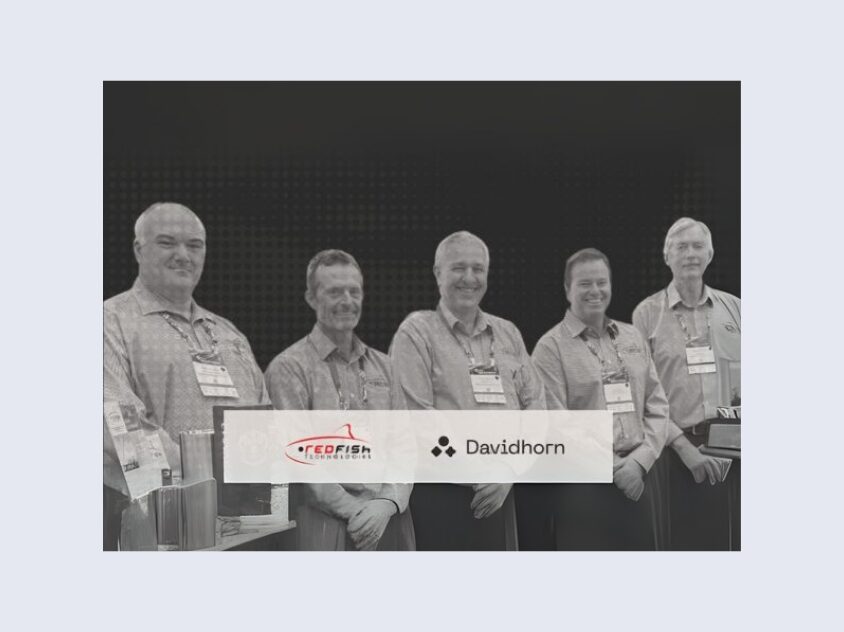
Name(Obligatorio)
Newsletter consent(Obligatorio)
Read our Privacy Policy.

Sign up for our newsletter and be the first to receive great offers and the latest news!


  • LinkedIn
  • Facebook
  • Instagram

Privacy Policy

Cookies

©Davidhorn. Code and Design Aptum