Zum Inhalt springen
Davidhorn
  • Lösungen

    Nach Branche

    • Polizei
    • Verteidigung
    • Einwanderung und Zoll
    • Vernehmungen von Kindern und Zeugen
    • Kommunalbehörden
    • Unternehmensuntersuchungen
    • Gesundheitswesen

    Nach Anwendungsfall

    • Vernehmung von schutzbedürftigen Zeugen
    • Vernehmungsräumen
    • Vernehmung vor Ort
  • Produkte

    Interview-Management

    • Ark Vernehmungsmanagement

    Aufnahmegeräte

    • Aufzeichnungsapp
    • Portable Recorder
    • Mini Recorder
    • Fixed Recorder
    • Software Recorder
    • Verdeckte Aufnahmegeräte

    Integrationen

    • Integrationen & Konfiguration
  • Kunden
  • Ressourcen Hub

    Ressourcen Hub

    • Blog
    • Datenblätter
    • eBooks und Whitepapers
    • Ereignisse
    • Podcasts
    • Webinare
  • Partner

    Partner

    • Partnerübersicht
    • Partner werden
  • Unternehmen

    Unternehmen

    • Über
    • KarriereKarriere bei Davidhorn
    • Kontakt
    • Kunden
Unterstützung
Demo Buchen
Davidhorn
Konto
  • Lösungen
    • Nach Branche
      • Polizei
      • Verteidigung
      • Einwanderung und Zoll
      • Barnahus
      • Kommunalbehörden
      • Unternehmensuntersuchungen
    • Nach Anwendungsfällen
      • Vernehmung von schutzbedürftigen Zeugen
      • Verdächtigenvernehmung
      • Vernehmung vor Ort
  • Produkte
    • Ark Interview Management
    • Mobile Recorder
    • Portable Recorder
    • Mini Recorder
    • Fixed Recorder
    • Software Recorder
    • Verdeckte Aufnahmegeräte
    • Admin- und API-Integrationen
  • Kunden
  • Ressourcen-Hub
    • Blog
    • Datenblatt
    • eBooks
    • Events
    • Podcasts
    • Webinare
  • Partner
    • Partnerübersicht
    • Partner werden
  • Unternehmen
    • Über
    • Nachricht
    • Kontakt
Unterstützen Sie
Demo buchen
  • Davidhorn
  • Prof. Laurence Alison über das Orbit-Modell – ep.13

    Prof. Laurence Alison über das Orbit-Modell – ep.13
    Dr. Ahmet Demirden on Investigative Interviewing

    The Long Game Series

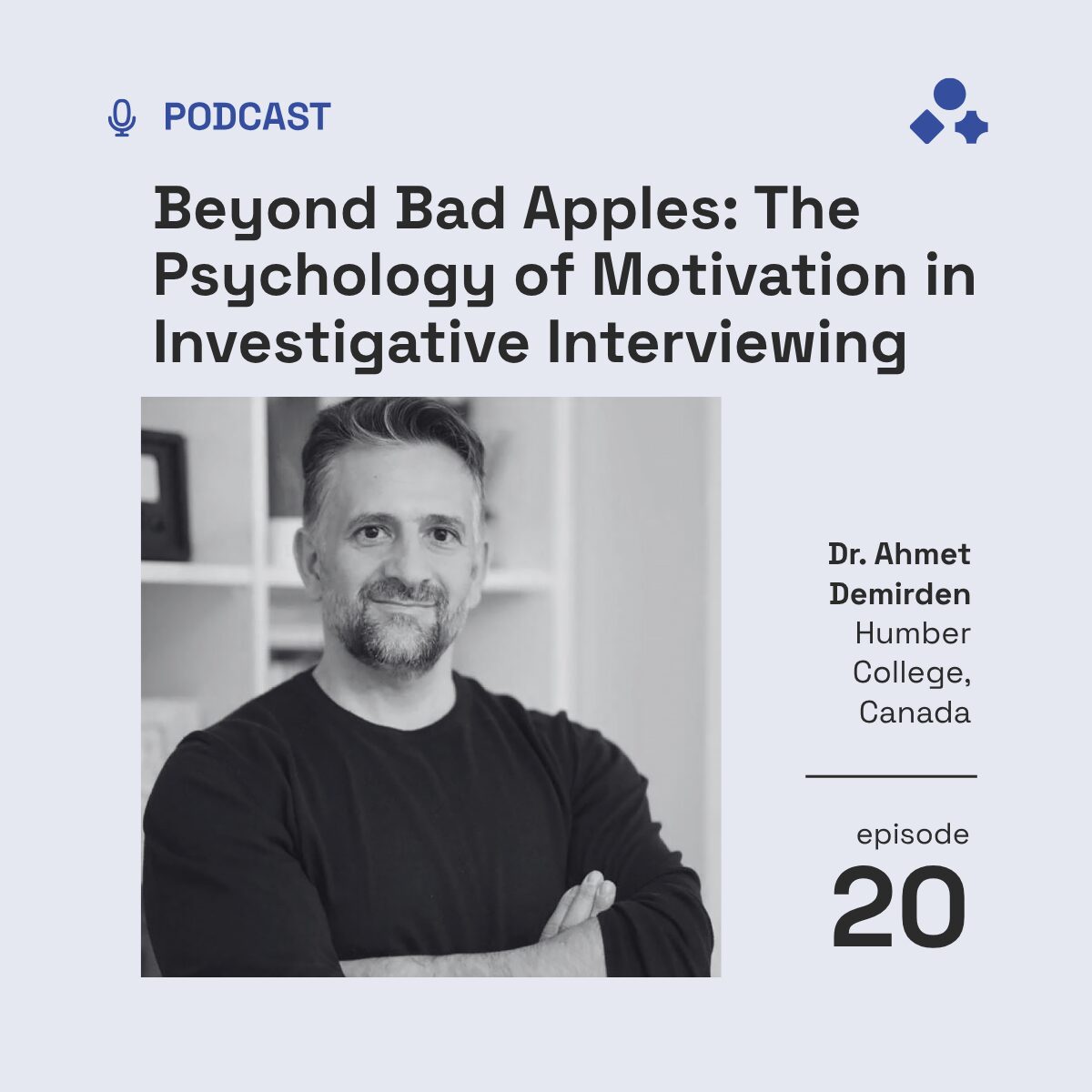
    Episode 20. Beyond Bad Apples: The Psychology of Motivation in Investigative Interviewing 

    Behavioral psychologist Ahmet Demirden reveals why investigative interviewing failures aren’t about bad apples—they’re about motivation, attitudes, and training.

    In this episode of Beyond a Reasonable Doubt, host Dr. Ivar Fahsing speaks with Dr. Ahmet Demirden, behavioral psychologist and criminal justice professor at Humber College, about the psychological mechanisms underlying investigative interviewing success and failure. Drawing on his unique background as both former police officer and academic researcher, Dr. Demirden challenges conventional wisdom about why officers sometimes fail to implement evidence-based interviewing practices. 

    Dr. Ahmet Demirden introduces the concept of regulatory focus theory to investigative interviewing, explaining how officers‘ motivational orientations – promotion focus versus prevention focus – fundamentally shape their approach to interviews. Promotion-focused investigators prioritise advancement and accomplishment, often seeking confessions and quick case closure, while prevention-focused investigators emphasise safety, obligation, and admissibility of evidence. Critically, Dr Demirden argues that these tendencies aren’t fixed personality traits but can be primed through organisational culture, training design, and leadership approaches. 

    The conversation dismantles the „bad apples“ narrative that dominates discussions of failures in investigative interviewing. Dr. Ahmet Demirden’s research and training experience across multiple jurisdictions – including Turkey, Canada, and numerous international contexts – demonstrates that officers rarely lack knowledge of proper techniques. Instead, failures stem from attitudes, perceived competency, organisational pressures, and the way effectiveness itself is defined and measured within police organisations. 

    Key Topics Discussed: 

    • Regulatory focus theory: promotion focus vs. prevention focus motivation 
    • Why investigative interviewing failures aren’t about „bad apples“ 
    • The gap between knowledge and implementation in police practice 
    • Attitudes, competency, and skills: the three pillars of effective training 
    • Virtual reality applications in investigative interview training 
    • Cross-cultural comparison: Turkish vs. Canadian legal frameworks 
    • The legality of deception and false evidence across jurisdictions 
    • The overlooked role of judges, prosecutors, and defence counsel 
    • Cognitive biases in judicial decision-making 
    • Recording technology as both safeguard and data resource 
    • Operationalising effectiveness: how we define success matters 
    • False confessions: understanding motivations beyond guilt 
    • The human aspects of all criminal justice actors 
    • Building receptivity to evidence-based practices through training design 
    • Creating psychologically safe practice environments 


    Equipped For Justice – Supporting ethical, human rights-compliant investigations worldwide

    About the guest

    Dr. Ahmet Demirden

    Dr. Ahmet Demirden is a behavioral psychologist currently investigating the mechanisms of rapport-building during investigative interviews. He completed his Master of Arts in Applied Disability Studies (MADS) at Brock University and earned his PhD in psychology at Ankara Yıldırım Beyazıt University. He has designed and delivered in-service training programs for national and international law enforcement agencies, including the Turkish National Police Service, CEPOL, INTERPOL, and the United Nations. 

    Dr. Demirden served as a Management Committee Member for COST Action CA2212: Establishing Networks to Implement the Principles on Effective Interviewing for Investigations (IMPLEMENDEZ) until 2025, when he relocated to Canada. He is currently a professor in the Criminal Justice Degree Program at Humber College and a visiting research fellow at The Luke Lab at Brock University. As a former police officer with the Turkish National Police Service for approximately 10 years, Ahmet strongly advocates for integrating behavioural research findings into the development of soft skills in policing. His research interests include investigative interviewing and organisational behaviour management in value-based policing from an operant perspective. Currently, he is exploring the use of virtual reality to enhance the effectiveness of investigative interview training. 

    Watch and listen wherever you get your podcasts (Youtube link here)

    Verwandte Produkte

    • Fixed Vernehmungsrekorder

      Vernehmungsrekorder von Davidhorn: Vielseitiger HD-Recorder für Verdächtige, Zeugenbefragungen und ABE-Aufnahmen….

    • Tragbarer Vernehmungs-Recorder

      Leichter Vernehmungsrekorder für jede Umgebung, der den strengsten Gesetzen entspricht.

    • Beweiserfassung: Aufzeichnungsapp

      Beweiserfassung mit Davidhorn: Erfassen Sie Ereignisse, führen Sie Tatortmanagement durch und zeichnen Sie…

    • Software zur Vernehmungsverwaltung: Ark

      Empfangen, überwachen und archivieren Sie Beweismittel während der gesamten Lebensdauer mit einer umfassenden…

    Abschrift

    Guest: Ahmet Demirden

    Host: Dr Ivar Fahsing


    Dr. Ivar Fahsing  00:00

    Welcome. I’m delighted to bring you this next episode of Beyond a Reasonable Doubt. It is a great honour for me to have you on the podcast. You and I know each other quite well by now, but perhaps you could introduce yourself — a little about your background, who you are, and what you do, for our listeners.

    Ahmet Demirden  00:22

    Absolutely. First of all, thank you very much, Ivar, for the invitation. It is an honour for me to be here as well. My name is Ahmet Demirden. I am currently with the Humber College Criminal Justice Degree Programme in Canada. I am a former police officer with Toronto Police Service — I served there for about ten years. My interest in investigative interviewing began as a police officer; I wanted to explore evidence-based practices. I did my master’s at Brock University on the PEACE model versus the Behavioural Analysis Interview in the United States, and then in around 2016 I decided to move into academia. I completed my PhD in psychology, then moved back to Turkey, where I worked for about eight years at the Turkish National Police Academy. That was a tremendous opportunity. I became involved in in-service training for many police services around the world through the International Police Academy, various international organisations, and some judicial organisations as well. So again, thank you very much for the invitation — it is a real pleasure to be here.

    Dr. Ivar Fahsing  01:31

    Thank you. What an exciting background. And like me, you also combine the practitioner and academic perspectives, which I find genuinely interesting — and which is one of the ideas behind this season. We want to speak with people who also have a foot in the camp of the police or the prosecution service, who can see things from the inside. Because we can all agree that there are many good ideas behind the scientific developments in this field, but theory and practice are not always easy to combine.

    Ahmet Demirden  02:06

    Yes, absolutely. In some cases it is the legal context; in others it is organisational variation, or personal and interpersonal factors, that can greatly impact the quality and effectiveness of interviewing in any given context.

    Dr. Ivar Fahsing  02:22

    I suppose so. I think, as in life generally, many circumstances have to come together to get things moving. Could I ask you, Ahmet — what would you say is the ethos of investigative interviewing? What is the value system? How would you define it?

    Ahmet Demirden  02:46

    I think right now we have a kind of universal understanding of the concept of investigative interviewing. In my experience, I observe that around the world we broadly accept — for example — respect for human rights and dignity, seeking the facts rather than focusing solely on obtaining a confession, and transparency and accountability. These are not only desirable qualities; they are legal requirements, both in inquisitorial and adversarial justice systems, and they are what the public expects. So I think that is very clear.

    That said, while human rights, dignity, fact-seeking, transparency, and accountability are broadly agreed upon, there may be some disagreement among practitioners and academics about the relative importance of any one of them. Perhaps we also need to look more closely at practitioners‘ motivations in investigative interviewing — and this is my psychologist’s perspective coming through.

    In general, we have seen recurring challenges across many jurisdictions. We have the PEACE model, which has been in practice for many years and is supported by a great deal of research on interviewing effectiveness, yet we still face certain vulnerabilities.

    I think we need to look more carefully at the motivational dimension. There is a theoretical framework in psychology around regulatory focus motivation: broadly, some people tend toward a promotion focus, while others tend toward a prevention focus. Let me explain how this relates to investigative interviewing. Some investigators may focus on obtaining a confession — not because they have ill intent, but because they define that as the primary objective. That is a promotion focus. Whereas others may be more focused on the admissibility of evidence: ‚I am gathering information, but it must hold up in court.‘ That is a prevention focus.

    What I have come to conclude is that poor practices in investigative interviewing are not necessarily driven by individual officers with bad intentions. It is not all about bad apples. Promotion focus investigators tend to be motivated by advancement and accomplishment — closing a case, moving quickly. Prevention focus motivation involves more emphasis on safety and obligation: paying closer attention to transparency and accountability. Promotion focus can manifest as risk-taking; prevention focus tends toward vigilance and adherence to rules.

    These individual differences are not necessarily case-specific — they reflect how we interact with the world. And importantly, while they are partly a personality trait, they can also be primed. So in my in-service training work, I focus not only on knowledge — which is important — but also on attitudes and competency. Do officers feel competent? Do they believe in the effectiveness of the method? Do they have the skills to implement it? That operationalisation is what matters.

    Dr. Ivar Fahsing  08:07

    That is a really interesting framing, Ahmet — and I think you are right. There is a ‚why‘ dimension. If someone tells me I should stop brushing my teeth with my right hand and start using my left, I would very much want to know why.

    Ahmet Demirden  08:25

    Absolutely. And as you will know from your experience, police officers are often asked to follow orders that they may not have the opportunity to question — not all the time, but operationally, they have to keep moving. That does not mean their attitudes are unimportant. They are vital.

    In my experience — I have now been working in this field for close to twenty years, twelve of those facilitating training — it is very rare that practitioners do not know what they are supposed to do. They know it. But in some cases they may feel, for example, ‚If the person is innocent, why would they lie? I wouldn’t lie.‘ Well, perhaps you would not, but people have different motivations for giving false confessions.

    And this concern is not limited to any specific geography. Based on my experience across a number of jurisdictions, I would say effective investigative interviewing is important globally — and equally important is how we define the concept of effectiveness.

    Dr. Ivar Fahsing  09:51

    Absolutely. And of course, what you are saying reminds me that we also have to recognise that we are all goal-driven human beings. Sometimes those goals are obvious — we talked earlier about you playing football with your son this morning; I was out catching lobster with my son. And you could ask: what is the real goal, Ahmet? Is it football, or is it simply doing something meaningful with our families?

    Ahmet Demirden  10:20

    Absolutely. And when it comes to investigative interviewing, as we have discussed, yes, there are still challenges, but we have come a long way. I remember back in 2006 and 2007, there was no formal training on effective investigative interviewing in North America. There was the Reid Behavioural Analysis Interview — and we know what the evidence base for that looks like.

    Motivation drives not only individuals but organisations. For example, in the law enforcement hiring process, many police services use the MMPI as a personality assessment. As a psychologist, I know it is not a valid or reliable measure for that purpose — but a civilian psychologist provides that opinion to the police service, and that shifts the accountability. The challenge is not limited to policing: it extends to risk assessments across the judicial system. We have known since the 1970s that unstructured risk assessments perform little better than chance, yet they continue to be used.

    When a suspect is being interviewed, that person is also a member of the public. When you interact with them, you are communicating a message — about how law enforcement operates in your jurisdiction — to their family, friends, and community. The goal compounds. It is not only about the investigation; it is about public relationships as well.

    Dr. Ivar Fahsing  12:26

    You mentioned that investigators can have either a preventive or a promotional mindset. If we go back to Turkey and your experience there — however far back you want to go — what would you say was the dominant culture amongst police officers or detectives in terms of those two orientations?

    Ahmet Demirden  12:54

    Well, first, some general context: Turkey has an inquisitorial justice system, which is quite different from North America. In that system, it is the prosecutor who is legally authorised to interview suspects. Police officers also interview suspects or witnesses, but they do so on behalf of and under the guidance of the prosecutor.

    Interestingly, within that legal framework, if a person gives a statement without legal counsel present, they have the right to recant that statement in court. That sounds protective, and in principle it is. But I think that practice may have created an environment in which officers feel a shift of responsibility — ‚If they want to recant, they can; their lawyer will sort it out.‘ So there appears to be an attitude shift whereby responsibility moves to the legal system.

    What I would be very interested in exploring — and I have not looked into the research on this — is: when suspects do recant their statements in court, what is the actual impact on the verdict? Because, as you know, we are all human beings — and so are judges. Once you have heard a confession, even if it is subsequently recanted and formally excluded, you know it and you cannot unknow it.

    Dr. Ivar Fahsing  14:49

    As they say in England: you can’t unring the bell.

    Ahmet Demirden  14:52

    Exactly. And this, with all due respect, is a perennial challenge for forensic psychologists working in the criminal justice system — going all the way back to Hugo Münsterberg, the first forensic psychologist to work in the United States. When you try to tell judges that their decision-making is not purely rational, they do not always welcome it. And yet we know, for example, that blood sugar levels — simply whether they are hungry or not — can impact bail decisions. They are human beings.

    So this apparent legal protection — the right to recant — may actually backfire on the officer’s vigilance during the investigation. The shift of responsibility to the courts or the legal system can create an attitude of ‚I will take your statement; if you want to recant, that is your right, here is your lawyer.‘ Vigilance then becomes someone else’s responsibility.

    Overall, based on my anecdotal observation rather than research findings, officers in Turkey appear to be prevention-focused. But how that motivation is translated into behaviour is more complicated, because of that shift of responsibility. That is why it is important to look at individual officers‘ tendencies, motivations, skills, and competence — while also recognising that they are operating within a judicial system, and can only influence that system to a certain degree.

    Dr. Ivar Fahsing  16:43

    Based not on research but on your personal knowledge — have there been cases in Turkey of miscarriages of justice or other scandals linked to police interviewing?

    Ahmet Demirden  16:55

    Well, as I mentioned, investigative interviewing in Turkey is formally the responsibility of the prosecution office, so it is slightly different from North America. I cannot recall a specific case right now, but I am sure there have been instances of false confessions. The challenge in Turkey is somewhat different from the North American context. In North America, if a statement or confession is voluntary and the suspect has been informed of their rights to counsel, it is generally admissible even without a lawyer present, provided there are no signs of coercion. It can later be found to constitute a false confession.

    In Turkey, because suspects have the right to recant without counsel, many statements may not even enter as evidence. So by official records, you may have fewer recorded false confessions — not because they did not occur, but because the statement was withdrawn before it could become evidence. The challenge may therefore be more complicated than a straightforward false confession: a decision-maker who has heard a statement that is later recanted is now influenced by knowledge they are supposed to set aside. Does that make sense?

    Dr. Ivar Fahsing  18:49

    Exactly. And many countries organise it that way — with the prosecution formally responsible and the police acting on their behalf. But as I said, I think investigative interviewing is also about relationships, isn’t it? It is about how you relate to your own citizens. Regardless of the court outcome, the person who was interviewed will carry an impression of how they were treated. If you think about that relational dimension, what would you say?

    Ahmet Demirden  19:41

    I think right now policing more broadly is moving towards what we call value-based policing. It is not only about community-based policing — which remains important — but that relationship with the public is becoming a paramount objective, in Turkey, Canada, the United States, and elsewhere. The relational importance of investigative interviewing is increasingly recognised.

    However, we also need to look honestly at the realities — for example, caseload. If an officer is carrying 300 pending cases, and I would love for them to start every interview with rapport-building and open-ended questions using PEACE techniques, but they have ten or fifteen minutes — how practical is that?

    What I consistently find in my experience is that similar challenges surface whether you are in a Turkish, Canadian, or other jurisdiction. There are individual differences between officers — they are human beings with their own challenges. There is organisational demand, societal demand, and everything happening globally that affects them locally. And we are rightly expecting them to commit to relational, value-based policing.

    That takes time. It comes down to survival instinct. First, I want to be safe on duty — physically, psychologically, and legally. Only once that safety is assured can I focus on investigative priorities. And chances are, my supervisors — however much they may speak about the importance of relationships — are ultimately going to measure me on operational objectives such as cases closed.

    Right now I am working with a local police service in Canada on a three-year project evaluating the effectiveness of their training. The preliminary findings suggest the training itself is current, the instructors are competent, and officers demonstrate improved knowledge, skills, and competence after training. But what appears to be missing is what we call the required drivers on the job: the systems that monitor, reinforce, and reward good practice.

    Research suggests that training accounts for only around fifteen per cent of performance on the job. The remaining eighty-five per cent comes from those required drivers. So relational or value-based policing — anywhere in the world — requires not just training, but those drivers. We also need to be realistic about what we are asking of officers. Every year, officers are carrying more tools and equipment on their vests — body-worn cameras, additional use-of-force options. It gets heavier and heavier. We need to be cognisant of that as well.

    Dr. Ivar Fahsing  23:58

    I think you are right. And there is another aspect to this when we talk about the ethos of investigative interviewing — one that links closely to your opening point about promotional versus preventional mindsets. From a professional standpoint, there is also a process quality focus, is there not? Do you agree?

    Ahmet Demirden  24:27

    Absolutely. I want to be clear that regulatory focus theory — I should credit Higgins for that — is a substantial area of social psychology and we cannot do it justice in a few minutes. But yes, the prevention focus is more about vigilance, which comes with procedural attention. It is not ‚I want to get a confession‘ but ‚I want to get the information, I want to get to the facts — and I need to do it correctly, without making mistakes.‘ The promotion focus, by contrast, is more about trying different approaches in pursuit of a goal: ‚That didn’t work, let me try another way.‘

    To use an analogy: if you are a vigilant person holding a hammer, you will be careful, deliberate — focused on not hitting your hand. If you have a promotion focus, you will hit the nail several times, adjusting as you go, unconcerned about the process as long as you achieve the result.

    I think it is something worth exploring in relation to investigative interviewing practice. More broadly, though, at the conceptual level, I feel there is now reasonable consistency and agreement on the ethics of investigative interviewing and the importance of rapport-building. That is broadly understood. The question now is: how do we translate that into a skill, and how do we change attitudes? Some people believe communication is an innate ability — you are either a good talker or you are not. But we know there is a skills dimension. Interviewing can be improved, just as you can improve your running even if you will never be the fastest in the world.

    For police officers, testimony in court is a genuinely challenging process — even for expert witnesses. Officers tend to have a prevention focus around avoiding difficulties or errors in the future. Where I think we are now in the investigative interviewing field is that we need to focus more on attitude change, and on competency and confidence, at the individual level. And at the organisational level, we need those required drivers — borrowing from the Kirkpatrick model of training evaluation — to observe, monitor, support, reinforce, and reward good practices.

    What I find in many police organisations is that, for various reasons — cost, prioritisation, practicality — there are no operational required drivers for interviewing performance. Training is given, and then officers go into the field. If there is an error, it will surface in court. I think we should go beyond that, and build required drivers not only for successful prosecutions and fact-seeking, but also because it is fundamental to relationship-building with the community.

    Dr. Ivar Fahsing  28:15

    Absolutely. Your analogy around required drivers made me think of driving and shooting — activities where it is relatively easy to measure whether you are doing it correctly. If you keep the vehicle on the road and return safely, you probably did well. If you hit the target, you did well. And what I reflected on is that perhaps we also need a clearer definition of what ‚good‘ looks like in investigative interviewing — so we can more readily say: ‚Officer A, this is why you performed well. Officer B, you need additional development in these areas.‘ If we had the right organisational culture, as is obvious in driving and firearms, we simply would not allow an officer to conduct interviews without meeting that standard.

    Ahmet Demirden  29:27

    Absolutely. I am glad you raised organisational culture, because it is important. We have seen cultural shifts before — in mental health, for example. It used to be: you are an officer, you need to be tough, do not complain, keep going. Now we are in a position where officers also need support; they are human beings too. That shift happened.

    In investigative interviewing, because the results and the feedback are not immediate — a case may not be dismissed for months or years — there is less of that reinforcing loop. When I was a police officer, back around 2006, I hoped someone would review my recordings and give me feedback. No one did. I had to ask for it. That is what I mean by required drivers. If I make an error in an investigative interview, it may surface in court, the case may be dismissed — and my organisation may never even hear about it.

    Let me give you an example. A local police service in the Greater Toronto Area, around 2010 I believe, interrogated a witness — not a suspect — in a homicide investigation, pressuring her to implicate her boyfriend. It was all recorded, audio and video. The witness repeatedly said she had not seen anything, but the officers told her she was a single mother and would be charged with obstruction of justice. It was on the record. The case was dismissed in court, it became public — and then, as far as the public knew, that was the end of it. No follow-up.

    If that had been a vehicle collision or an unlawful use of force, the feedback would have been immediate and the consequences clear. With investigative interviewing, we still have a long way to go in demonstrating its importance at the organisational level, so that culture can shift toward evidence-based practice.

    Dr. Ivar Fahsing  32:39

    I was thinking — because we talked about cars and firearms, which are technical — you get clear feedback immediately if something goes wrong. Could technology in investigative interviewing help us move toward better feedback mechanisms?

    Ahmet Demirden  33:02

    Absolutely, yes. This is actually another project I am working on with Dr. Nicole Luke at Brock University. I think we now have the technology to use as a tool, at least in the training phase and subsequently for follow-up — whether that is VR simulation or AI-based feedback agents.

    As I said earlier, perhaps officers‘ interviews could be reviewed by senior officers who provide feedback. But we also need to be realistic: officers may not have the time or luxury for that. And there are legal considerations that would need to be addressed. AI can facilitate this. AI agents could certainly support that process — but first we need the motivation to invest in it. I think it is coming.

    Hard skills, technical skills, are easier to observe and measure. Soft skills are more difficult. Verbal behaviour is relatively amenable to observation, measurement, evaluation, and feedback. But when you get into paralinguistic cues, micro-expressions, subtle signs of aggression in language — those are much harder to capture and assess. That is partly why some people think communication is an ability rather than a skill. Investigative interviewing is a skill. It can be improved.

    Dr. Ivar Fahsing  34:48

    I share that optimism about the role of technology. Think about weapons training — we use simulators today precisely because you cannot responsibly send people out without first establishing whether they can handle not only the technical aspects but the situational ones. Perhaps our community could move toward simulators that can assess whether someone is a safe interviewer.

    Ahmet Demirden  35:21

    Absolutely. Following research developments around the world, it is interesting — when you meet with international researchers or practitioners, you observe the same concerns and the same principles. I visited Oslo in 2021 or 2022 for a workshop on investigative interviewing, and it was remarkable: without any formal collaboration, by the third day, participants were saying, ‚You are not from our team, but you are talking about exactly the same things.‘ Because the research findings point in the same direction. The same ethos, the same principles, emerging from different starting points.

    That is encouraging. And technology people are working on this too. It will come, and it will greatly facilitate the implementation of effective interviewing techniques. On a side note — because I use the word ‚effective‘ — operationalisation of these concepts matters enormously. What is effective interviewing? For some, it means obtaining a confession. For others, it means the number of cases closed. We need to work on defining that clearly, and then consider how technology can reinforce the right concept.

    Dr. Ivar Fahsing  36:53

    I definitely think so. May I ask you — going back to the Turkish context — how widespread do you think audio-visual recording of interviews is in Turkey today? Is it routine or less common?

    Ahmet Demirden  37:08

    I am not entirely sure. There is a gap in the research, and I am looking into that. But I think there is variation. Recording tends to occur in the form of a written statement, which the suspect or person of interest and their legal counsel then review before signing or declining to sign.

    Recording statements is obviously vital. But some of the challenges I described go beyond whether statements are recorded. Because these statements — whether audio, video, or written — can be recanted in court on first appearance and may not enter as evidence at all. So they may not appear in any statistics on miscarriages of justice or false conviction, because they were never entered as evidence. But how they influence the decision-maker is worth exploring.

    Dr. Ivar Fahsing  38:09

    I was thinking about it more as a data resource for learning. If we want to develop the kind of technology that could create a simulation environment — the more real interview data we have from recordings across different jurisdictions, cultures, and situations — the better we can understand what interview behaviours lead to good outcomes and what behaviours do not. That is why I wanted to know whether they are actually recording interviews. Because that would be the most valuable data source.

    Ahmet Demirden  38:52

    Investigative interviewing is communication, so local variation will always exist. I am not sure there is a universal set of verbal or paralinguistic cues that would translate perfectly across jurisdictions — but I think they can all be operationalised at a local level.

    Take interrogation terminology, for example. In the Canadian context, technically it is ‚investigative interviewing,‘ not interrogation. But when the objective is obtaining a confession, whatever you call it, it effectively becomes an interrogation. In the Turkish context, technically only a court judge can interrogate a suspect — prosecutors and law enforcement technically do not interrogate. And yet when you listen to recordings, you can often detect that the objective is a confession, and that false evidence is being introduced. So each jurisdiction has its strengths and weaknesses.

    Introduction of false evidence is legal in Canada and illegal in Turkey, for instance. We can perhaps develop a universal set of principles, but we are always working within specific legal frameworks. And law enforcement and prosecutors function as agents of the courts. Some of the challenges therefore involve the judicial system itself.

    I try to be careful here, because forensic psychologists have historically had difficult experiences when challenging courts and their outcomes. Judges everywhere are professionals, and objective triers of fact — in principle. But with investigative interviewing practices, we should also be exploring the human dimensions of judicial decision-making. We have come a long way in recognising the human aspects of law enforcement officers. Judges are also human. They have cognitive biases — and as I mentioned, something as basic as blood sugar levels can influence decisions. That needs to be explored too.

    In both Canada and Turkey, my experience is that police officers tend to be more receptive to training and to academic input than judicial authorities. And in Turkey, I think lawyers also need training in investigative interviewing — because you are representing your client in an interview, and that requires understanding the process, not just knowing the law. Similarly for judges: if the assumption is that the right to recant is sufficient protection, is it? We need to look into that. If it is not, we need to find ways to improve it.

    Dr. Ivar Fahsing  42:26

    Time has flown, Ahmet. I have to say, this has been a real eye-opener for me. You have brought in some new perspectives that have given me a great deal to think about. I hope our listeners have found it equally interesting.

    Ahmet Demirden  42:39

    It is always a pleasure talking with you, Ivar.

    Dr. Ivar Fahsing  42:41

    Fantastic. And I should say it has been a unique opportunity to hear your perspectives from Canada, and to gain some insight into the situation in Turkey and the comparison between the two. Thank you very much, Ahmet.

    Ahmet Demirden  43:02

    The pleasure is mine. Thank you very much for the podcast and for having me. It has been a real pleasure.


    END OF TRANSCRIPT

    © 2026 Davidhorn. All rights reserved.
    Mehr erfahren

    22. Mai 2026
  • Prof. Laurence Alison über das Orbit-Modell – ep.13

    Prof. Laurence Alison über das Orbit-Modell – ep.13

    The Long Game Series

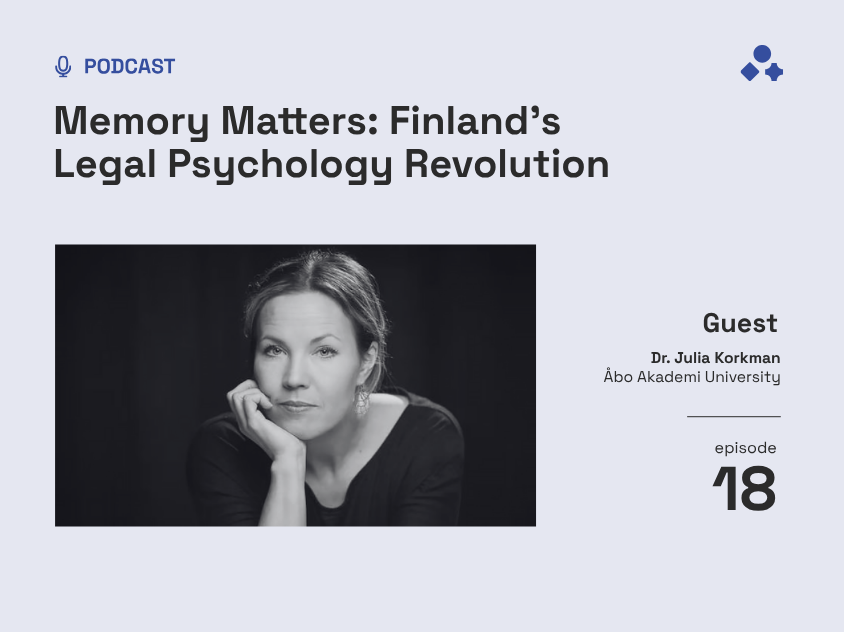
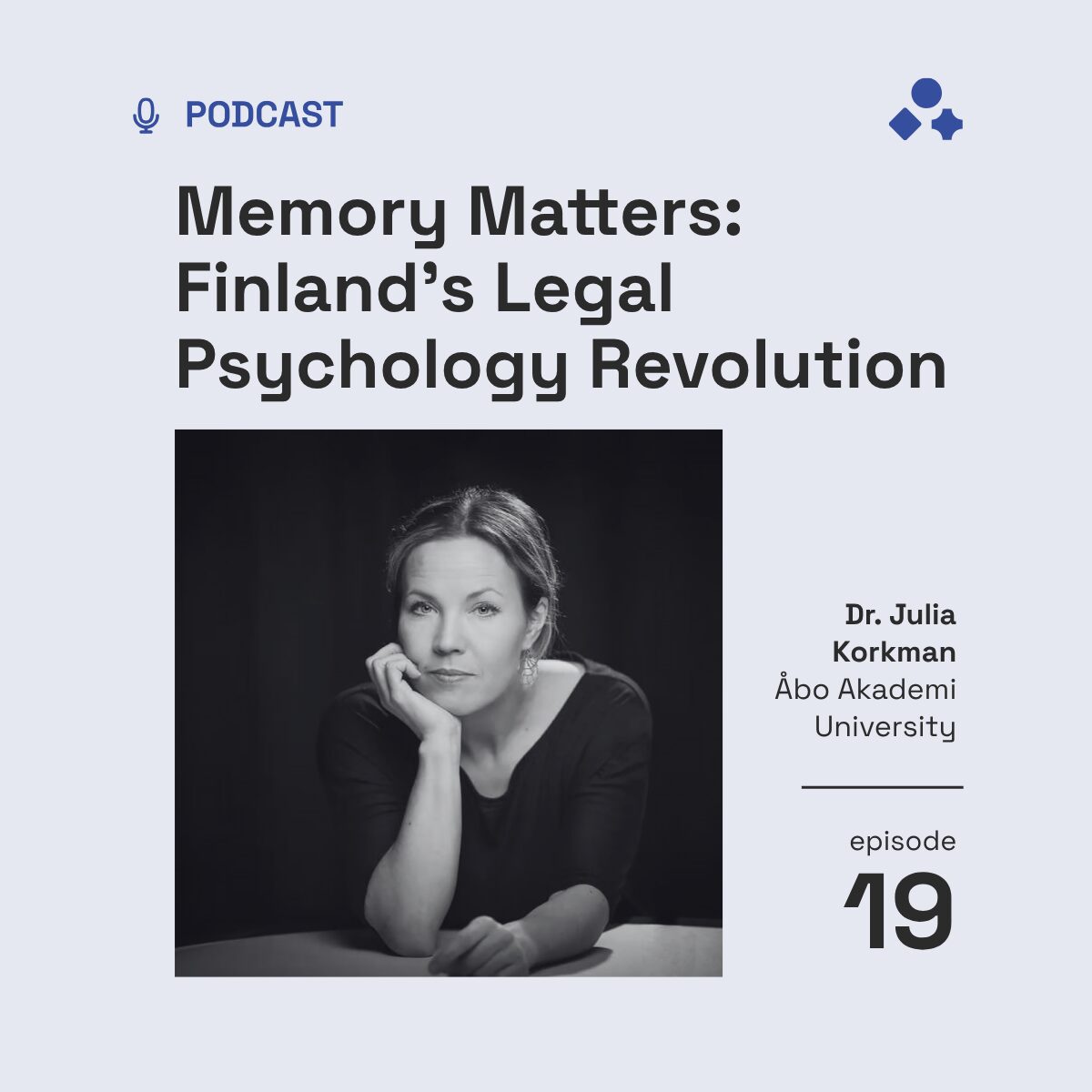
    Episode 19. Memory Matters: Finland’s Legal Psychology Revolution

    Legal psychologist Dr Julia Korkman reveals why investigative interviewing must be built on memory science – and how Finland is using AI to develop better practices. 

    In this episode of Beyond a Reasonable Doubt, host Dr Ivar Fahsing speaks with Dr Julia Korkman, one of the Nordic region’s most influential legal psychologists and current President of the European Association of Psychology and Law, about the critical intersection of memory science, investigative interviewing, and criminal justice reform in Finland and across Europe. 

    Julia Korkman opens with a powerful observation: the legal system was built by humans for humans, yet has „far too little recognition of how humans work.“ Despite memory being the fundamental material that police and justice professionals work with when investigating crimes – especially crimes against persons – officers in Finland and many countries worldwide are not required to have any training in how memory functions. This paradox drives much of Ms Korkman’s work on improving investigative practices through evidence-based approaches grounded in psychological research. 

    The conversation traces Julia Korkman’s trajectory into legal psychology, beginning over 20 years ago when she observed how poorly children were being interviewed in Finnish sexual abuse investigations. Witnessing firsthand how inappropriate interviewing techniques with young children could lead to problematic accounts and wrongful conclusions, she recognised investigative interviewing’s core role in miscarriages of justice. This early exposure shaped her career focus on memory research and improving interview practices to prevent these devastating outcomes for all parties involved. 

    The episode explores Finland’s unique legal landscape, including recent Supreme Court decisions showing impressive understanding of how human beings work, suggesting improvement despite ongoing challenges. Julia discusses her research on human trafficking cases involving cross-border victims, examining how remote hearing technology can make proceedings both more pragmatic and more human-friendly when properly implemented with judicial oversight and victim support. 

    Key Topics Discussed: 

    • Memory as the fundamental material of criminal investigations
    • The paradox: legal systems not based on how humans actually work 
    • Why memory training should be mandatory for justice professionals 
    • Investigative interviewing’s role in miscarriages of justice 
    • Judicial decision-making: the power of explicit reasoning and writing 
    • How requiring written verdicts prevents cognitive biases 
    • The need for mandatory hypothesis testing in police investigations 
    • Recent Finnish Supreme Court decisions showing psychological sophistication 
    • Cross-border investigations: human trafficking and remote hearings 
    • Recording as catalyst for positive cultural change through „certification“ 
    • Following Sweden’s example: recorded interviews as court evidence 
    • AI as potential real-time assistant for improving interview questions 
    • Technology in training and interview assessment 

    Equipped For Justice – Supporting ethical, human rights-compliant investigations worldwide

    About the guest

    Dr. Julia Korkman

    Dr Julia Korkman is a leading expert in legal psychology, specialising in investigative interviewing, witness reliability, child protection cases, and factors influencing rape victims‘ decisions to report. She co-leads the legal psychology research group at Åbo Akademi University in Finland, where she conducts cutting-edge research on memory, interview techniques, and judicial decision-making. 

    Dr Korkman plays a key role at the European Institute for Crime Prevention and Control (HEUNI), affiliated with the United Nations, where she works to improve victims‘ rights, address violence against women, and strengthen criminal justice practices through humane, evidence-based approaches. Since 2023, she has served as President of the European Association of Psychology and Law (EAPL), helping shape research priorities and policy recommendations across Europe. 

    Her extensive training work with judges, prosecutors, and police officers in Finland, Sweden, and throughout Europe has made her one of the region’s most influential voices on implementing psychological research findings in legal practice. Her current research includes human trafficking investigations, remote hearing technologies, and AI applications in investigative interviewing. 

    Watch and listen wherever you get your podcasts (Youtube link here)

    Verwandte Produkte

    • Fixed Vernehmungsrekorder

      Vernehmungsrekorder von Davidhorn: Vielseitiger HD-Recorder für Verdächtige, Zeugenbefragungen und ABE-Aufnahmen….

    • Tragbarer Vernehmungs-Recorder

      Leichter Vernehmungsrekorder für jede Umgebung, der den strengsten Gesetzen entspricht.

    • Beweiserfassung: Aufzeichnungsapp

      Beweiserfassung mit Davidhorn: Erfassen Sie Ereignisse, führen Sie Tatortmanagement durch und zeichnen Sie…

    • Software zur Vernehmungsverwaltung: Ark

      Empfangen, überwachen und archivieren Sie Beweismittel während der gesamten Lebensdauer mit einer umfassenden…

    Abschrift

    Guests: Julia Korkman

    Host: Dr Ivar Fahsing

    Recorded: 28 November 2025


    Dr. Ivar Fahsing  00:01

    Welcome, Julia Korkman, to our podcast.

    Julia Korkman  00:04

    Thank you so much.

    Dr. Ivar Fahsing  00:04

    I’m so honoured to have you here, Julia. I have to say to our listeners who don’t know you that at least in the Nordic region you are quite a famous psychologist within this area. So it’s a big honour having you here and I’m so impressed with what you are doing not only in Finland but across Europe.

    Julia Korkman  00:25

    Thank you.

    Dr. Ivar Fahsing  00:26

    Julia, this season of Beyond a Reasonable Doubt, the focus is on implementation of investigative interviewing — the need for it, what it really is, and why it’s important, seen from different perspectives and contexts. So may I ask you: what do you think is the ethos of investigative interviewing?

    Julia Korkman  00:54

    There would be so many different points of departure to answer that question. But I think the first and foremost answer would perhaps be that if investigative interviews are done the wrong way, they can lead to quite terrible miscarriages of justice for all involved parties.

    My own trajectory within legal psychology started with observing the way in which children were interviewed in Finland some 20-plus years ago in the investigation of particularly sexual abuse cases, which was really poor. I’m glad to say it’s a bit better today, but it’s still a difficult area. If you interview young children in a way that is not recommendable, you will inevitably end up with problematic accounts that include mistakes and can lead to completely wrongful conclusions. And we know from the large number of cases investigated in the Nordics, in Europe, and globally — wrongful convictions in which investigative interviewing has a core part to play.

    One of my favourite areas of research is memory — human memory. I can’t get over how surprising it is that although the legal system was built by human beings for human beings, and the basic material we look at when assessing crimes against persons is memory, these processes have far too little recognition of how humans actually work. In my country, as in many others, police officers and justice professionals are not obliged to have any training in how memory works — which is extraordinary, given that it is precisely what they work with when investigating crimes and trying to assess whether accounts are credible or reliable.

    Dr. Ivar Fahsing  03:32

    Absolutely. My work lately has been mostly on decision-making, and there is exactly the same issue — a common assumption that if you get information, you will automatically reach the right conclusion. It’s interesting to see how little attention is paid to that process, even though when you examine some Supreme Court verdicts there are actually good traditions of decision-making. But that good decision-making doesn’t seem to be made explicit.

    Julia Korkman  04:10

    I think you’re right. When looking at how judicial decision-making is conducted in many countries, including my own, judges are required to describe how they came to a certain conclusion. I train judges quite a bit here in Finland and also in Sweden, and I’ve heard many times judges comment on the fact that writing down why you came to a certain conclusion is an efficient measure to prevent the worst kinds of quick and poor decision-making.

    I heard one judge say that throughout an entire case he was pretty sure how it would turn out — and then when he came to write the decision, he thought: this doesn’t add up. I can’t write that he’s guilty simply because my gut feeling is that he probably did it. The evidence just doesn’t support it. This is what research tells us: if you take the time to logically assess the evidence, it prevents you from falling into those traps.

    This kind of slower, analytical assessment is of course something we would like to see more of in the police as well. One struggle in my country is that there is no explicit requirement to carry out hypothesis testing and actually document the assessment. That would be really valuable. I am still quite optimistic about the future here, though — some Supreme Court decisions over the last ten years have shown an impressive understanding of how human beings work.

    Dr. Ivar Fahsing  06:34

    I remember many years ago — at least 25 years ago — when I was just starting to do training in Norway. I invited a senior appeal court judge from Oslo to talk to my students about how the judiciary perceived our work on interviewing, and how we could improve from their perspective. That was quite rare at the time; judges didn’t really want to talk to police. He said: ‚There are a lot of good things going on in the police — but why don’t you try to help the witnesses to say the same thing when they come to court? Because after all, you have been talking to all of them. So why should I sit there as a judge and listen to all these different stories?‘ That was quite something.

    Julia Korkman  07:40

    So you should just train them to have the same story so he doesn’t need to bother about it?

    Dr. Ivar Fahsing  07:46

    Because — you know what happened, don’t you?

    Julia Korkman  07:49

    That’s interesting. It’s something police officers have also noted — that if you’re a police officer heard in court, you’re given quite a lot of credibility, in a way that is based on nothing. It’s not as if police officers have better eyesight or perception than other people. The same seems to go for medical doctors — they tend to be very highly regarded, which of course they should be, but they need to be scrutinised in the same way as any other expert witness, with attention to what they are actually basing their assessments on.

    Dr. Ivar Fahsing  08:37

    Exactly. As I’ve described, I was expecting from my PhD — with my brilliant supervisors Per Anders Granhagen and Karl Ask — to find some kind of generic model for good thinking. But I didn’t find it. Where I did find inspiration for a model was in descriptive research from Martin Innes and others who observed how experienced detectives actually behaved on their best days, and tried to conceptualise what that looked like. I think we also have to communicate to practitioners that this is not about changing everything they do — research shows there are things they are already doing correctly; we’re just trying to help them understand why.

    Julia Korkman  10:13

    That’s a really good point, and I also think this kind of positive research is important. We can of course learn a great deal from miscarriages of justice. In Sweden, for example, there have been several such cases — including the Kailinna case, in which a man was wrongfully convicted for 13 years before being released. A strong confirmation bias meant investigators were looking in only one direction and not taking into account evidence pointing elsewhere. Within that investigation, there was one detective who from the outset was arguing they should look in other directions — and he was essentially frozen out of the group and had to go on sick leave.

    This points to an organisational problem. The police in many countries — certainly in Finland and Sweden — have a very old-fashioned, top-down structure where the chief of each department has enormous power over how work is organised, and there are very few requirements around hypothesis testing or an open culture in which people can voice their thoughts freely. It should be better structured.

    There’s also something that goes back to what you noted about cross-professional communication. Here in Finland in the south, where there are more people, training for lawyers, police, prosecutors, and judges tends to happen separately, within their own professional groups. Whereas in the north, where distances are long and there are fewer professionals, they tend to train together. I’ve been invited to Lapland several times for full-day events that bring together all criminal justice actors, and it is genuinely beneficial for everyone. It leads to lively discussions — but that’s good. In the south, you sometimes hear tiring conversations where defence attorneys complain about the police or the police complain about defence attorneys. Bringing them together creates far more interest in genuinely understanding each other’s positions and finding common ground.

    Dr. Ivar Fahsing  14:42

    That’s really interesting. Part of what people like you can do is be a mediator between those groups, delivering the same message to different audiences. And if those groups don’t communicate with each other as much as they could, at least there is someone communicating to all of them.

    Julia Korkman  15:16

    Exactly. And there are related groups outside the criminal justice system as well. We have a research group called Psych Aid at Åbo Akademi working on asylum procedures and how they can be improved. One thing we hear quite often is that the lawyers working with asylum seekers and the asylum officials can be quite frustrated with each other — yet both groups agree that some professionals in each field are excellent and some are poor. Here too, collaboration would be in the best interest of everyone, and especially in the interests of the legal rights of the asylum seeker.

    And then there are interpreters. We really need to train interpreters in the context of investigative interviews. I’ve had the joy of doing this in Finland in recent years for court interpreters who specialise in child forensic interview interpretation. Many of them were highly skilled already, but when trained in suggestibility, open-ended questioning, and the NICHD protocol, several said they had probably been doing things wrong — because even though they were told to phrase questions exactly as the interviewer does, without understanding why open-ended questions matter, they weren’t always able to do that. They were trying to help the child talk, and we know that if the right instruments aren’t there, that inclination to help can lead to suggestion.

    My friend and colleague Sarah Landström — professor in Gothenburg and one of our best child interview researchers — was recently asked what the main problem is when child interviews go wrong. She said she thinks it’s the incredible desire to help children tell. If you don’t possess the right technique, if you don’t understand that ‚helpful‘ questions can be detrimental if they’re not open-ended and grounded in the child’s own experience, the consequences can be disastrous.

    Dr. Ivar Fahsing  21:10

    It is really interesting how important language is. I sometimes think that because language and culture are so deeply interwoven, we are habits of our own language. I remember saying for years: you have to start the interview with an open-ended question. But obviously that doesn’t always work in a communicative setting — you have to break the ice first. We often do it in a subtle way: in the rapport-building phase before this interview we chatted informally, with a closed question. But that subtle invite isn’t really closed — it’s inviting you to say as much as you find appropriate.

    Julia Korkman  22:20

    And it would have been very strange if you had said: ‚Tell me everything about your weekend.‘

    Dr. Ivar Fahsing  22:24

    Wouldn’t it? Completely — you would be invading my space in a very rude way. I think it’s so interesting how we probably have to focus even more in the future on how the advice from psychology looks in a cultural and linguistic context.

    Julia Korkman  22:47

    Luckily there’s a lot of interesting research on this. Annelies Reedevel, a professor from the Netherlands, is leading very interesting work on culture within investigative and legal psychology. One of her points is that we cannot expect individual police officers to have a deep understanding of all the cultures they may encounter — but they can have cultural humility and at least a minimum understanding of how they themselves are shaped by their own culture. It’s the beginning of Socratic insight into how much you don’t know.

    You were working quite a bit in Southeast Asia, and our interpreters from there noted that in some contexts it is much more difficult than in Northern Europe to say that you don’t know something or didn’t understand a question — it would be considered rude. That’s something that needs to be explicitly discussed before an interview.

    I also think of my early experience with the NICHD protocol. We sometimes noted — with some amusement — that it seemed to depart from the assumption that if you ask a young child to ‚tell me about yourself‘, they would start talking. In Finland, people are not taught to be especially talkative. That said, I think the culture has shifted: children today are much more encouraged to speak their minds. But other things remain very culturally dependent. How we socialise, how we build rapport — these differ significantly. A German study, for example, found that saying a child’s name repeatedly — ‚Eva, how are you? Nice to see you, Eva‘ — which might be fine in an American context, would feel immensely odd in Finland or Germany. These are things that need to be considered when applying any protocol to a specific context.

    Dr. Ivar Fahsing  27:43

    Absolutely. In many of the Asian countries where I work, it’s considered completely inappropriate to use the word ‚I‘ — in collective cultures, focusing on oneself is improper, so it’s implicit. You just say ‚eat rice‘ rather than ‚I eat rice‘. And if you then try to translate that into a different context and a different language, you lose a lot.

    Julia Korkman  28:29

    There is really interesting research on how adults who grew up in a traditional Chinese context recall their childhood experiences compared to those who grew up in a US context — specifically in relation to memories of what they did themselves. In more individualistic cultures, children are taught from a young age to talk about themselves and their own experiences. In more collectivistic cultures, children are not supposed to focus solely on their own perspective — and this is reflected in their adult memories: they remember less of what they themselves did, but more about the group.

    And of course, one thing we need to avoid when discussing cultural differences is to attach labels and assume: ‚You are from the Arab region, so you must be this or that.‘ It is about openness — the realisation that we are all children of our own cultures, and that there is far more variation than we tend to think. Luckily, there’s a growing recognition of this within the research tradition, which has historically been very Western-focused.

    Dr. Ivar Fahsing  30:11

    Speaking of shifts — could you tell me a little about how investigative interviewing is being applied in a Finnish context? We’ve spoken about your lecturing and mentoring of different actors, but thinking more specifically about the police: how are they implementing this knowledge, from your perspective?

    Julia Korkman  31:06

    I think I have a fairly good understanding of this. My colleague Tom Pakkanen did a comprehensive review of all the studies on how the Finnish police conduct investigative interviews. What emerged is that the picture is quite good when it comes to child interviews: there is clear guidance, strong recommendations, a one-year training required under the Pre-Trial Investigation Act, dedicated expert units, and forensic psychologists handling the most complex cases. That part is well established.

    The problem is that it essentially ends there. There has been increasing pressure to improve investigations of human trafficking — which is welcome — but there is no equivalent pressure for other serious crime types. Femicide, for example, is a significant problem in Finland, but it has not gained the attention that would require specialists. Sexual crimes are similar: some departments have specialised units doing excellent work and video recording all interviews, but it is entirely down to individual departments.

    For child suspects — young people under 18 involved in crime — there is an incredible gap. We have specialists who know how to interview reluctant children who have sent images online, for instance, and those children are often in a similar position to child suspects: they’ve done something wrong, they’re uncertain whether to talk, they’re very dependent on how the investigator approaches them. But we don’t apply this knowledge to child suspects. And as we know, child suspects are often also victims — from vulnerable backgrounds, sometimes manipulated by older criminals. Many would probably be quite willing to talk if approached properly. But there is no specific training for those officers.

    For adult interviews: as I said, my colleague went through everything available, and there is almost nothing on investigative interviewing in basic police studies. There is a small two-week course for experienced officers, but only a small group takes it each year. A study a couple of years ago found that officers around Finland knew almost nothing about different interviewing methods. The only one that was familiar to them was the NICHD. At least they hadn’t been taught Reid either — so I suppose that’s a plus.

    Dr. Ivar Fahsing  36:33

    Yes, I’ll bless that.

    Julia Korkman  36:36

    It was striking how little they knew about any other interviewing methods. One of my colleagues from the police — who was for a long time the chief detective at the sexual crimes unit at the Helsinki police — took a legal psychology training course I coordinate. She later said that it was quite a shock to have been working as a trained police officer, in investigations where the interview is the most crucial tool, and to realise that you have to look outside the police to actually learn about methods that were created by the police and for the police. We’re not really doing that well here.

    Dr. Ivar Fahsing  37:35

    That is really interesting. I think people from outside the Nordics tend to assume that Finland, Sweden, Denmark, Norway, and Iceland are quite similar in these areas — because we are very similar in so many other aspects of society and culture. But on this particular topic, there are quite significant differences. And I think what you point out about recording is probably, at least in Norway, what was the tipping point.

    I myself, together with my good friend and colleague Asbjørn Rachlew, led a national pilot project on recording all the way back in 1998. At that time, digital recording equipment was quite clunky and very expensive. The Minister of Justice invested significantly in testing different equipment. We distributed it to high-level departments around the country, and my job was to gather the experiences back. But we got nothing. After a year, there was no feedback.

    We needed to have a frank conversation. Doesn’t it work? Is something wrong with the technology? There was complete silence. Then one evening we went out for dinner and people started to talk. One officer said: ‚Ivar, I don’t feel comfortable with recording myself — because no one ever taught me how to do an interview.‘ That was the moment it became clear: the reluctance isn’t just about justice. It’s also about officers‘ wellbeing, isn’t it?

    Julia Korkman  39:48

    [Agrees]

    Dr. Ivar Fahsing  39:49

    And that was the turning point. I said: of course, if we’re going to implement recording as a Norwegian standard, the first standard is to teach officers basic interviewing skills — memory, human memory, communication. And I think that was also a really important thing about building this properly, because then they actually needed it. We also made it slightly exclusive: you are not going to do this unless you are trained for it. We have to take care of you.

    Of course, you can debate that — because the people without the training were probably the ones who really should have been recorded. But on the other hand, it gave it an aura of exclusivity: I am certified for recording. That became a skill, a badge. People wanted to be part of the group certified to conduct profiled, important interviews. I think it’s so interesting how something can be reframed into a culture of positive drive.

    Dr. Ivar Fahsing  40:29

    A final question — because you’re also doing a lot of interesting research in Finland on how technology can help implement or develop these kinds of skills and practices.

    Julia Korkman  41:23

    That would be a topic for a whole new discussion — but thinking very pragmatically: there are quite a few Finnish investigators who would actually want to do video recording, but some are not permitted to within their department. We are on our way, and we are typically following the example of Sweden, where the situation was also quite poor until a couple of years ago when new rules came in allowing initial interviews to be recorded and, in some cases, presented as evidence in court.

    One question I always get is: who is going to store all these video recordings? And how are we going to manage transcription — it’s so costly, and if prosecutors receive 13,000 pages of transcripts, that’s genuinely difficult. In Sweden, I’ve understood they now use very good automatic transcription — tools like Whisper and similar — and apparently also a programme that generates summaries for prosecutors. Of course these can’t be trusted completely, and there will be things you still need to go back and check. But the technology will make it much easier.

    In recent years I’ve also been looking quite a lot at human trafficking cases, many of which involve parties from around the world — in Finland we’ve had cases with berry pickers from Thailand, for example. You can either fly all these witnesses here, or you can ensure really decent ways of hearing people remotely. I’m currently doing research on hearing people remotely to court. There are a lot of good possibilities — pragmatic things like ensuring people are heard from safe spaces, with legal support and an understanding of the procedures. Cross-border hearings could become much easier and much more humane.

    And of course, one thing Norway has done for decades is preserve pretrial investigation evidence. If a victim develops Alzheimer’s, or dies, or is unable to speak about every aspect of a crime two or three years later in court proceedings that have dragged on, their voice can still be heard through the video-recorded interview.

    We also just published a study — the first author is Lisa Järvilehto, who is both an investigator with more than a decade of child abuse investigations and an excellent researcher. One of her studies examined using AI to help generate meaningful, relevant alternative hypotheses to child abuse allegations — and AI was actually very good at this. Experts are then well-placed to discard the ones that aren’t relevant. She is now looking at the extent to which AI can help human interviewers improve their questions.

    With all the limits that implies, I do think we can develop very useful tools for interview training, interview assessment, and perhaps even real-time aids in investigative interviews. But we need to be very mindful not to deploy anything before we can ensure it does not lead to negative consequences. I don’t see AI taking over investigative interviewing in any conceivable future — but I do see AI as a potentially very helpful assistant to it, and very much so in training and assessment contexts.

    Dr. Ivar Fahsing  47:03

    Julia, we could go on for the rest of the day with another list of really interesting topics. Thank you for a truly engaging and inspiring conversation.

    Julia Korkman  47:10

    Thank you — it was a pleasure, as always.


    END OF TRANSCRIPT

    © 2026 Davidhorn. All rights reserved.
    Mehr erfahren

    5. Mai 2026
  • Prof. Laurence Alison über das Orbit-Modell – ep.13

    Prof. Laurence Alison über das Orbit-Modell – ep.13
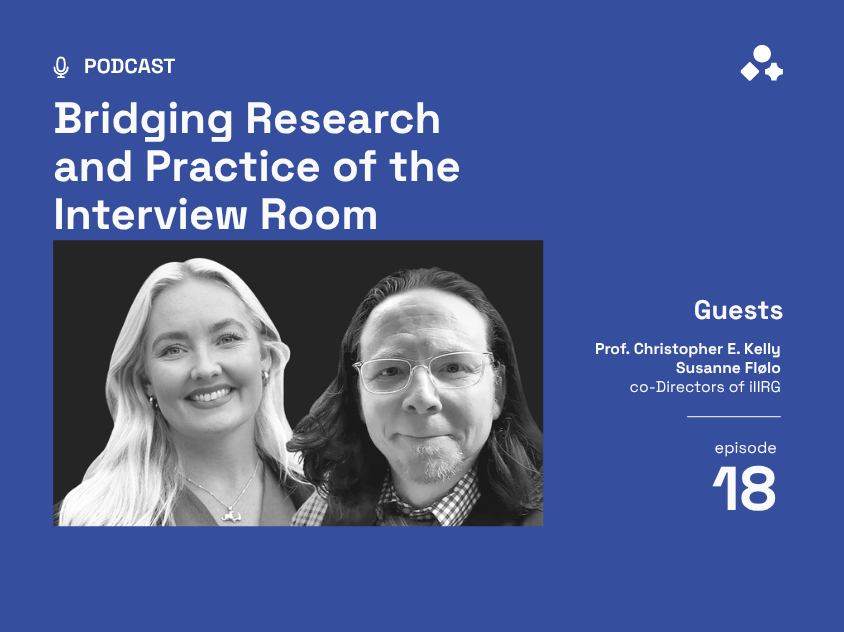
    investigative interviewing reform with iIIRG co-directors

    Episode 18. Bridging Research and Practice of the Interview Room

    Every major interviewing framework – PEACE, KREATIV, ORBIT – distils to the same essentials: stay nice, ask good questions, and listen.

    So why does confession-driven culture remain so deeply embedded, even in systems that have formally adopted investigative interviewing?

    In this episode of Beyond a Reasonable Doubt, host Børge Hansen speaks with two leading members of iIIRG – the International Investigative Interviewing Research Group – about what actually makes reform stick, and what keeps pulling it back.

    In this conversation, they cover:

    • Why confession culture persists — the incentive structures across police, prosecutors and courts that sustain it, and why outcome-based thinking crowds out accuracy
    • The first safeguard to fail under pressure — why the opening minutes of an interview determine everything that follows, and what ’sinking to your level of training‘ really means in practice
    • The accountability deficit — what supervisors miss when they only read written summaries, and why the entire justice system is making high-stakes decisions without seeing what actually happened in the room
    • Recording as a catalyst, not a luxury — how mandatory recording drove professional development in Norway, and why a technically excellent recording still needs independent expert analysis to be credible in court
    • AI in investigative interviewing — the risk of a new shortcut, shadow use of unapproved tools, and what responsible adoption actually requires
    • The global shift — from the Mendez Principles and the UN Manual to wartime implementation in Ukraine, how investigative interviewing has moved from niche reform to global professional standard
    • What a police chief can do on Monday morning — with no budget, no mandate, and no certainty — to start moving practice in the right direction

    Episode length: approximately 65 minutes

    Host: Børge Hansen, CEO, Davidhorn

    Production: Davidhorn – Beyond a Reasonable Doubt Podcast


    Equipped For Justice – Supporting ethical, human rights-compliant investigations worldwide

    About the guests

    Prof. Christopher E. Kelly

    Prof. Christopher E. Kelly is a professor of criminal justice with a research focus on what improves information quality in investigative interviews. He has partnered with law enforcement agencies in the United States and internationally for over a decade. Professor of Criminal Justice, Saint Joseph’s University, USA.

    Susanne H. Flølo

    Susanne Flølo is a human rights specialist and investigative interviewing practitioner. She has contributed to the UN Manual for Investigative Interviewing and the UNODC e-learning programme, and works at the Norwegian Centre for Human Rights (NCHR) and the Norwegian Mendez Centre.

    Watch and listen wherever you get your podcasts (Youtube link here)

    Verwandte Produkte

    • Fixed Vernehmungsrekorder

      Vernehmungsrekorder von Davidhorn: Vielseitiger HD-Recorder für Verdächtige, Zeugenbefragungen und ABE-Aufnahmen….

    • Tragbarer Vernehmungs-Recorder

      Leichter Vernehmungsrekorder für jede Umgebung, der den strengsten Gesetzen entspricht.

    • Beweiserfassung: Aufzeichnungsapp

      Beweiserfassung mit Davidhorn: Erfassen Sie Ereignisse, führen Sie Tatortmanagement durch und zeichnen Sie…

    • Software zur Vernehmungsverwaltung: Ark

      Empfangen, überwachen und archivieren Sie Beweismittel während der gesamten Lebensdauer mit einer umfassenden…

    Abschrift

    Guests: Susanne Flølo & Prof. Christopher E. Kelly

    Host: Børge Hansen

    Recorded: 20 February 2026


    Børge Hansen (Host)

    In a healthy democracy, the rule of law is only as strong as its most hidden moments. We talk about justice in public — in courtrooms and policy debates — but the real test happens when the door is closed. In that room, the tension is not just about solving a crime. It is about whether a system can stay objective under pressure. Can we move past confession-driven practices and treat interviewing as a forensic craft built for reliable facts?  00:00

    I am Børge Hansen and this is Beyond a Reasonable Doubt.

    In this series, we look at the mechanics of justice — from how interviews are conducted to how evidence holds up under scrutiny. Today is about the gap between what we know works and what actually happens under pressure: practice, supervision, and the minimum safeguards that any justice system should demand.

    Today I am joined by Susanne Flølo and Christopher E. Kelly. Both are active in the International Investigative Interviewing Research Group, iIIRG. They work to move evidence-based interviewing from research into day-to-day practice — where supervision, habits and culture decide what sticks.

    Susanne, you work in human rights and investigative interviewing standards. You have contributed to the UN Manual for Investigative Interviewing and the UNODC e-learning programme for investigative interviewing. Chris, you are a professor focusing on criminal justice, with a particular focus on what actually improves information quality in interviews.

    Susanne and Chris, thanks for joining us today. For listeners who have not come across iIIRG before — if you had to explain to a busy investigator in one sentence what iIIRG exists to change, and just as importantly, what iIIRG is deliberately not trying to be?

    Christopher E. Kelly (Guest)

    I can start with this. In one sentence, iIIRG was created to fill the space that exists between academic research and real-world practice. The explicit mission is to bring these two groups together — groups that have historically not always understood one another. When iIIRG was founded, in 2007 or 2008, it was with the explicit intention of bridging that gap between research and practice.  01:47

    Susanne Flølo (Guest)

    And I agree. First of all, thank you so much for having me — it is a great pleasure. I have listened to every episode of this podcast, so it is a real honour to have been invited. For me, the mission and purpose of iIIRG is very simple: we connect science to practice. We try to make sure that people who conduct interviews — whether they are police, military, immigration, or oversight bodies — actually have access to what works. And we try to help our members, whether practitioners, researchers, or other professionals, to uphold the highest possible professional standard in their work.  02:20

    Børge Hansen (Host)

    So what is your personal litmus test for an investigator who is operationally ready? One or two indicators.  03:05

    Susanne Flølo (Guest)

    A lot of people, I think, still treat interviewing as an art or an instinct. But to me, the litmus test of a good investigator is not the confession — however much Hollywood might lead us to believe otherwise. Rather, it is whether you are able to create the conditions for accurate, complete and reliable information to emerge. Interviewing is a disciplined forensic craft. It has methodology and structure, it is based on science, and it has profound consequences for justice, public trust, and even state stability.  03:10

    In every country we work in — whether Ukraine, Thailand, Brazil, Indonesia, or others — we meet investigators who intuitively understand the value of rapport-based interviewing long before they have even heard the term ‚investigative interviewing‘. And many of them have discovered the hard way that confrontational, confession-driven methods simply do not get them the information they need. So, again, we are simply trying to bridge the gap between research and practice.

    Christopher E. Kelly (Guest)

    And I would add: in terms of a litmus test, one of the most important qualities I have found is a level of curiosity — not just about an investigation, but about the world. An openness to different possibilities and a willingness to think beyond what is immediately in front of you. The best interviewers I have encountered over the years have been the ones who can think outside the box.  04:13

    That is related to something Susanne just said about art versus science. You hear it a lot from practitioners: this is more art than science. As a committed scientist, I have to object to that. I have come to believe that nobody particularly wants to be thought of as a scientist — white lab coat, elbow patches. That is not very fun. Artists and creative thinkers are fun, imaginative, able to break out of everyday norms. But I do believe there is a science to that kind of thinking, and we can teach it.

    Børge Hansen (Host)

    Frameworks like PEACE, KREATIV, and ORBIT are well known. But if you strip things down for investigators working under pressure, what is the smallest set of behaviours that protect reliability?  05:31

    Christopher E. Kelly (Guest)

    In addition to keeping an open mind and remaining flexible, I think the couple of essential qualities that all the models boil down to are: stay nice, ask good questions, and listen. Actually hear what people are saying, and allow them to speak. Because the opposite — being confrontational, asking closed questions, interrupting, doing more talking than the interviewee — that is not actually an interview. All the models come down to a rapport-building mentality that asks good questions and then lets the person speak.  05:56

    Susanne Flølo (Guest)

    Paired with curiosity and good analytic skills. But yes, I absolutely agree with Chris.  06:47

    Børge Hansen (Host)

    Good. So let us move to where the pressure really begins. Rules and frameworks are easy when things are quiet. But officers are on the clock and expected to produce results. When that pressure hits, you find out what the system really values. Why is confession-driven culture still so strong among investigators across the world?  06:48

    Susanne Flølo (Guest)

    Confession culture is, as you say, incredibly persistent. It is fast — or at least it is portrayed as fast. It is traditional. It is what supervisors often expect, and it is emotionally compelling. People feel as though they have cracked the case when someone admits guilt. The problem is that it is a terrible accuracy indicator.  07:39

    Confession-driven practices increase the risk of tunnel vision. They reinforce cognitive biases, and we know they lead to errors of justice and wrongful convictions. They also fundamentally clash with the presumption of innocence and the real purpose of the interview, which is to gather information — not to extract agreement. Another reason confession culture persists is systemic. Many police organisations cite lack of funding, time, or leadership focus. Those explanations tend to be the same everywhere. But underneath them, I think there is something far more basic: you cannot fix a problem you have not acknowledged exists. No country is immune to errors of justice, but you will not see them unless you are willing to believe they can actually happen in your system.

    Human fallibilities also play a huge role — misunderstandings about suggestibility, confirmation bias, primacy effects, false memories. Acknowledging these fallibilities helps explain why interviews need to be conducted in a structured, research-based way that actively mitigates these risks.

    Børge Hansen (Host)

    Chris, if the science backs what Susanne is describing, why is there still resistance?  09:12

    Christopher E. Kelly (Guest)

    Because none of us like change — and I will not just throw the police under the bus here. University professors are the same. Going from a confession orientation to one of information gathering is a fairly large shift in both mindset and practice.  09:28

    Speaking as an American: in my city of Philadelphia, a city of around one and a half million people, there were 250 murders in 2025 — down from 500 during the pandemic. The police are dealing with a significant backlog of cases. And in the American legal context, confession is king. When you get a confession, it is over. The detective can move on to the next case and hand it to the prosecutor, who knows that, barring some unusual issue, 97% of convictions in this country — a number similar globally — come through guilty pleas. When a defendant sees a confession in the file, that is a very powerful piece of evidence pushing them towards a guilty plea. So confessions are good for the police, and good for the prosecution, because they keep things moving.

    Børge Hansen (Host)

    Concrete results.  11:35

    Christopher E. Kelly (Guest)

    Exactly. It is outcome-based and short-term thinking. Here is a crime; I will solve it. And regardless of the veracity of the confession, it is treated as truth — because there is still a widespread misunderstanding of why people say they did things they actually did not do. The entire system is incentivised to get a confession. And accusatorial-style interrogations are very effective at producing them. So effective, in fact, that they get innocent people to confess. That is obviously where the problem lies. The incentive structure has to change. Prosecutors and investigators need to scrutinise confessions more closely and verify everything in them. But until police leaders, prosecutors, and lawmakers understand that a confession can be unreliable — and that even a genuine confession from a guilty person may not be the end of the information-gathering process — the culture will not shift.  11:37

    Børge Hansen (Host)

    Susanne, when standards come under strain — even in countries where investigative interviewing is the established standard — what is the first safeguard that slips in real life?  13:13

    Susanne Flølo (Guest)

    Empathy and rapport. We forget about their importance the moment pressure rises, and so the opening — and the planning that precedes it — becomes absolutely crucial. Everything that follows rests on what happens there. The opening determines rapport, determines cooperation, and determines whether the interviewer manages to stay open-minded. If you get that opening wrong, if you set a confrontational tone, you will probably never recover.  13:41

    We also see the same linguistic red flags everywhere in the world: leading questions; repeating a question until the person changes their answer or rapport breaks down entirely; narrative summaries that omit or distort key details; language that signals the interviewer has already decided what happened. These issues are universal, and they matter — because interviewing is not just about what the interviewer hears, it is about what the interviewer elicits. Small language choices can fundamentally shape the quality and reliability of the information obtained.

    That is why we insist on structure, planning, and an evidence-driven approach paired with audio and video recording. Because, as my colleague Dr. Ivar Fahsing likes to say: when the stakes are high, you do not rise to the occasion — you sink to your level of training. Which is why having a solid methodology in place is so incredibly important. And that goes not only for the police, but for the entire justice system.

    Børge Hansen (Host)

    Chris, where do you see the consequences of a confession-driven or ‚get answers fast‘ culture playing out?  15:31

    Christopher E. Kelly (Guest)

    In a confession culture, there are very few safeguards further down the line. The incentives for prosecutors are to keep cases moving, secure guilty pleas, and get on to the next file. Judges and juries — in the rare instance a case reaches that point — often lack any real understanding of good interviewing practices or what constitutes reliable information. And my big concern relates to recording.  15:44

    Everyone who talks about reform immediately recommends recording — and rightly so. But I like to push back a little, not because I disagree that recordings should be made, but because recording alone is not enough. It needs to come with independent evaluation. If you put a false confession in front of a jury — with multiple camera angles, crystal-clear audio — that recording looks compelling. Without someone contextualising and analysing what was actually said and how, all you have is everyone’s biases looking at a technically excellent recording of a false confession.

    I live in Pennsylvania, where confession expert witnesses are actually prohibited from testifying in court. There is a push here to record all interviews — but without that expert context, it could actually be worse than having a detective read a confession statement into the record. At least then a defence attorney can cross-examine the detective and find weaknesses. A recording is very hard to cross-examine. So the safeguards have to run all the way through the system — educating not just lay jurors, but prosecutors and judges as well.

    Børge Hansen (Host)

    You said that under pressure we sink to our level of training. If you rush the opening, what happens to the quality of everything that follows?  18:25

    Susanne Flølo (Guest)

    You risk failing to build rapport, which means you are far less likely to obtain accurate and complete information than if you had laid a good foundation from the outset. And if you start on the wrong foot, it is extremely difficult to recover. In those cases where rapport breaks down from the very beginning, it is time to bring in a different interviewer and try again — but that is not the ideal outcome. The best approach is to get it right once, do it well, and ensure proper planning for that opening.  18:45

    Christopher E. Kelly (Guest)

    And I would add: the first thing to go under high pressure is patience. It is related to planning and taking the time for an appropriate introduction — building a working relationship, not a friendship, but an understanding between two people on opposite sides of an issue about what each other needs. When patience goes, the other person’s needs go with it. And as Susanne says, once rapport is not there from the start, it is very hard to establish at all.  19:57

    Børge Hansen (Host)

    I have attended ORBIT training myself. It uses live actors with full backstories and cases running over several days — genuinely immersive. One thing that struck me watching was how even trained officers struggled with two very different challenging interviewees: one deeply traumatised and withdrawn; the other traumatised but dominant and acting out. How does the science actually find its way into practice in situations like those? These are police officers, not trained psychologists.  20:57

    Christopher E. Kelly (Guest)

    The science is still evolving on this. For the kinds of interviewees you describe — someone experiencing acute trauma during an interview, or someone who carries more general trauma — there is some research, but it is not nearly as mature as other areas. And I understand why practitioners find that frustrating.  22:06

    My response is always: we do not have all the answers yet. What we can do is base practice on the best available research at any given time. ORBIT is a good example — it has evolved since its inception and will continue to do so, because the team behind it is always working to understand the model better and update it. In two, five, or ten years, all of these models should look quite different.

    And sometimes — and this is a genuinely unsatisfying answer for practitioners — sometimes you are simply not going to have a successful interview. In many ways, ending an interview without the outcome you wanted is preferable to reverting to coercive or aggressive tactics, which is what can happen when someone is frustrated and not getting what they need. It may be better to pause, regroup, and try again with a different interviewer. But that takes resources, patience, and leadership. Every investigator has supervisors who should be providing oversight and ensuring principles are being upheld. That breaks down too often. But to reiterate: the science is evolving, and models like ORBIT are continuously bringing new findings into practice — which is exactly what the scientific process should look like.

    Børge Hansen (Host)

    Susanne, you travel the world observing people being trained. Are people getting impatient, reverting to old tactics — or are they able, as Chris described, to accept a difficult interview rather than conduct the wrong type of interview?  25:59

    Susanne Flølo (Guest)

    It depends. But what we most commonly see is that people go into the interview room without a clear plan — for rapport building, for the opening, for how to handle the evidence. It is a stressful situation. Even in training settings, people become incredibly stressed because they are being observed by colleagues, peers, and sometimes superiors.  26:16

    And we also need to build a genuine feedback culture. What we typically hear from supervisors after an interview is: ‚That went great. No notes.‘ But we know that no interview is ever perfect or without areas for improvement. People need to hear — and be comfortable receiving — feedback like: ‚You were about to lose rapport here because you were pushing too hard‘ or ‚We haven’t properly explored that line yet.‘ And not just feedback focused on the information obtained, but on the process itself: what did I do, what did I miss, how could I improve? That culture of constructive, process-focused reflection is often absent.

    Lawrence and Emily Alison’s work through ORBIT is incredibly valuable in this regard, because building rapport is genuinely difficult to teach. And of course, as Chris mentioned, it is also true that no matter how much training someone receives, some people will never be strong interviewers. That is an unfortunate reality. But we know that certain personal qualities — curiosity, patience, flexibility, and the ability to genuinely express empathy — are fundamental. Becky Milne has called it the X factor: who has it and who does not.

    Christopher E. Kelly (Guest)

    Can I offer a quick anecdote on training design? I was part of a team developing and piloting a training programme — I will not mention the agency or any names. We put into the role-play scenario an interviewee who was not traumatised, not belligerent, not resistant. Our role player was overly cooperative. Everything they said was false, but they were enthusiastic, open, and willing. Come in, I am happy to talk, anything you need.  28:58

    Over two deliveries of this training, with perhaps six or eight teams rotating through, very few of them knew how to handle it. These were experienced investigators, some of whom had been through science-based training, and they did not know what to do with someone being apparently cooperative. Several reverted to unproductive practices out of frustration and unmet expectations. It was a brilliant demonstration of confirmation bias — they expected resistance, and when it was not there, they were lost. I would encourage anyone designing role-play exercises to include that kind of interviewee.

    Børge Hansen (Host)

    Not putting up a fight, but being overly cooperative.  31:02

    Susanne Flølo (Guest)

    I believe that is what the Alisons would refer to as a ‚bad monkey‘ in the ORBIT model.  31:06

    Christopher E. Kelly (Guest)

    Yes, exactly.  31:10

    Børge Hansen (Host)

    Another blind spot: what leaders can actually see and manage. We talk a lot about the interviewer, but much less about leadership. If a supervisor only reads a written summary, what do they miss — and what gets lost when they do not see the interaction itself?  31:11

    Susanne Flølo (Guest)

    What you are pointing at, Børge, is one of the biggest global challenges: the accountability deficit. Leadership rarely sees the interview itself — they see the summary. And summaries hide a great deal: tone, pressure, leading language, body language, missed opportunities, and in some cases even coercion. Summaries also tend to overstate certainty, presenting a clean narrative where the actual interview may have been very messy. And the courts often also see only the summary. The entire justice system is making high-stakes decisions without ever seeing what actually happened in that interview room.  31:46

    This is why improving interviewing is never just about training frontline officers. At NCHR, we have seen repeatedly that unless you also train supervisors, managers and leadership, and unless you build systems around them, reforms do not stick. You get a good training workshop, people are enthusiastic for a few months, and then the system pulls everyone back into old habits — because the supervision, the metrics, and the accountability structures have not changed.

    And this brings in something that is often overlooked: evaluation. How can you evaluate the quality of an interview if you cannot revisit it in its most complete form? How do you learn from it? How do you train others from it? Without recordings, all of this becomes extremely difficult. When senior leaders champion transparency, recording and professionalisation, everything changes. When they do not, nothing changes. You simply cannot build a culture of high-quality interviewing without leadership creating the conditions for accountability, learning and long-term reform.

    Børge Hansen (Host)

    If you had to choose — what makes the science stick? Better training upfront, or day-to-day supervision?  33:56

    Susanne Flølo (Guest)

    It is both. But it also requires a fundamental understanding of the why. Why are we doing this? Why does it need to be done this way? If you believe your system is perfect, you will not change it. You need to be critical of your own structures and actively look for errors — because you will not find them unless you believe they can exist.  34:03

    Børge Hansen (Host)

    Chris, are there simple metrics that leaders could use?  34:39

    Christopher E. Kelly (Guest)

    The leaders I have encountered who embrace this movement are the ones who think of their organisations as learning organisations — not static, not ‚good enough‘, but searching for something better. And in investigative interviewing, we have the tools for that. But one leader does not make a social movement.  34:47

    For every forward-thinking leader with the power to implement reform, there are probably several more who are resistant — because they moved up through a system without that kind of reform and succeeded within it. Why would they want to change something that worked for them?

    Change therefore has to be both top-down and bottom-up. People doing the interviewing are not going to reform themselves. There has to be some directive from the top: we are going to do it this way. But it has to be reinforced, because leaders rotate, promote, retire. Someone new comes in and you may have to start again.

    What this means in practice is that we also have to reach people who are new in their careers — get them to see the value of science-based interviewing before they pick up bad habits. As they promote up, they become the supervisors giving constructive feedback. But that takes 20 years. I will always credit former LAPD detective Mark Severino, who had some success in his agency getting investigative interviewing training to brand new recruits — not waiting until someone reaches investigations rank, but starting at the patrol level, where officers are already conducting interviews and speaking to people every day.

    Børge Hansen (Host)

    When poor practices do show up, what does a healthy organisation’s response look like?  39:00

    Christopher E. Kelly (Guest)

    I have learned a great deal from a dear friend and colleague, Mike McCleary, formerly Assistant Sheriff in charge of investigations at the Las Vegas Metropolitan Police Department — a very senior position. The lesson I have internalised most from working with him is this: you cannot tell police — or academics, for that matter — what they did wrong without also telling them how to do better.  39:06

    Whether it is a one-to-one debrief on a specific interview or a five-day training course, going in to tell a police officer who takes pride in their work that what they have been doing is bad or wrong is going to make them shut down. The approach has to be: we can do better, and here is how. It is not about what not to do — you cannot change the past. It is about improving in the future. Try this next time. Think about how an interviewee might respond when you get frustrated or impatient, and what effect that has on rapport and on the information you will obtain going forward.

    Børge Hansen (Host)

    Let us talk about recording — not as technology, but on the trust side. What makes a recording credible? And what can quietly undermine it?  41:01

    Susanne Flølo (Guest)

    People tend to think of recording as a technical add-on or a luxury, but in our view it is neither. It is the engine that drives professionalism — and it can actually accelerate reform. Norway is a clear example. When video recording became mandatory, many officers were initially hesitant because they did not feel fully confident in their skills. But that transparency pushed the whole system to invest in training, structure and preparation. Recording did not follow the reform. It was instrumental to the reform. It was the catalyst that moved interviewing from a private, unobservable practice to a shared professional discipline that everyone could learn from.  41:25

    Recording interviews improves accountability almost immediately. It strengthens evidence, promotes fairness, and protects the interviewee, the information obtained, and the interviewer themselves. Even a poor interview: the full recording is protection. It also creates a feedback loop for training — you can revisit your own interviews, or see how colleagues approach difficult moments. When you can do that, the quality of practice rises quickly. It becomes a craft, not improvisation. If a justice system tells us it has limited resources, we typically point them towards recording as an obvious starting point.

    Børge Hansen (Host)

    Is hesitancy around recording still a barrier? People record themselves constantly on their phones these days.  42:56

    Susanne Flølo (Guest)

    Unfortunately, recording interviews is a different matter entirely. The evidential integrity problem is real — a snippet recorded on a personal mobile phone gives no assurance of completeness. Was it started just as the suspect decided to confess? We cannot know. You need proper systems in place. The evidential record has to be preserved and protected, and that requires institutional infrastructure, not personal devices.  43:17

    Christopher E. Kelly (Guest)

    I would add that recording is also good for research. The unit I have worked most closely with over the past decade is a gang investigations unit based within the Clark County Detention Center in Las Vegas. They had been recording their interviews long before they encountered any science-based training. We took a random sample of 50 recordings, analysed them, and fed the findings back into their practice. That process built trust, because they realised we were not there to harm them — we were there to help.  43:54

    One example: they kept interrupting their interviewees. The question would be asked, the interviewee would start speaking, and the investigator would talk over them. If they took one message from our feedback, it was simply: let them talk. We then continued working with them over subsequent years, including pre-post evaluation studies. Their practice improved demonstrably over time, the more they were exposed to this approach. Recording provides the data that makes that kind of outside analysis possible.

    Børge Hansen (Host)

    You mentioned earlier that a technically brilliant recording can actually camouflage a bad interview or a forced confession.  47:22

    Christopher E. Kelly (Guest)

    Yes. And that is a real limitation in the type of research I do. When a partner agency gives me recordings or transcripts, I generally cannot verify whether the police account is accurate or whether the interviewee’s account is truthful — I have to work with what I am given and acknowledge that limitation. It gets contextualised and triangulated with other research methodologies: surveys, research interviews, focus groups, experimental laboratory studies. When you take the totality of findings across all these methods, you can have reasonable confidence in the reliability of what you are seeing. But no single recording tells the whole story.  47:32

    Børge Hansen (Host)

    It is 2026, so we should talk about AI. Earlier in this series we spoke with representatives from the Norwegian police who are working on the FAIR project — AI for interviews. What are your thoughts about AI assistance during interviews?  48:48

    Susanne Flølo (Guest)

    I am not sure iIIRG has taken a formal organisational stance yet, but promoting the responsible use of technology is a clear priority for us. Personally, I am hearing a great many stories about officers already using the tools that are publicly available — and I think we are running a huge risk if we do not get the police properly engaged with AI development. The risk is that people will use these tools regardless, and sensitive information will end up in open language models where it does not belong. Ignoring it is not a solution. And we know that criminals are already using AI tools to improve their methods.  49:07

    Christopher E. Kelly (Guest)

    As an organisation, iIIRG is committed to the responsible use of technology, and AI is clearly the most significant development right now. But we genuinely do not know its full effects yet. As a researcher, I feel I need to advocate for more study of this. And as an individual sceptic — the history of policing has been a history of finding shortcuts to conclusions. We need to be very careful that AI is not seen as just another shortcut that undermines good practice.  50:57

    The polygraph comes to mind. It is a shortcut, and it has been used as one. If AI is framed in the same way — another tool for getting to a result faster — I do not think it will be effective. I am also cautious about large language models, because they learn the incentives that humans operate with. An LLM that ‚knows‘ a confession leads to a conviction may well push in that direction. That is a very dangerous territory. We need much more research before we go all in.

    Susanne Flølo (Guest)

    It also comes to mind what happened when a major AI company released the second version of their LLM — which actually performed worse than the first, precisely because of how people had been using it. These systems are not neutral.  53:32

    Børge Hansen (Host)

    What I am hearing is that the goal is not more technology per se — it is a record the court can trust, and a process people can rely on. If you want that to stick globally, what actually drives lasting change? Are we seeing a real shift, or are we still circling the same conversation?  53:45

    Susanne Flølo (Guest)

    I definitely think we are seeing a global shift. It is not isolated successes — there is broad momentum for investigative interviewing. At iIIRG, we have seen a significant increase in our work, and the same is true at NCHR and the Norwegian Mendez Centre. Interest is growing everywhere: Europe, Latin America, Africa, Southeast Asia. More governments, training centres, and oversight bodies are reaching out because they want to move away from confession-driven models towards something genuinely professional, ethical, and effective.  54:13

    At the international level, there have been some very significant developments. The Mendez Principles gave us, for the first time, a clear human rights framework for interviewing and information gathering — now available in 23 languages. The UN Manual on Investigative Interviewing anchors that science into practical guidance for states and individual officers, and is available in English, French, Arabic, Ukrainian, and very soon Spanish and Thai, all translated by local implementation groups. And the UNODC e-learning course on investigative interviewing allows us to scale training rapidly and at very low cost — reaching practitioners who would never otherwise have access to this material, often in their local language.

    Together, these tools have professionalized the conversation. States can now say, ‚Yes, we want this,‘ because implementation is understandable, operationalised, and supported by global standards. Investigative interviewing has moved from a niche reform to a global professional standard. And perhaps most encouragingly, we are seeing the Global South taking the lead in many of these efforts — Brazil, Thailand, Indonesia, and many others are innovating, contextualising and driving implementation forward. And I want to highlight the extraordinary work being done in Ukraine — implementing investigative interviewing at full scale even during the full-scale invasion.

    Børge Hansen (Host)

    Ukraine is clearly an extreme high-pressure environment. What was the trigger for moving down the investigative interviewing route there, and what has stopped it from sliding back?  57:19

    Susanne Flølo (Guest)

    Part of the motivation, since the full-scale invasion, has been a will to distance themselves from the opposing side in that conflict. But I also think there is a genuine commitment to improving the quality of information — and a recognition that investigators are now sitting on thousands of cases, each of enormous consequence, that will matter for generations after the war. The stakes could not be higher. They want to ensure that they do justice to the victims and their families.  57:51

    What has also been remarkable is that they have not just built political will — they have built a training infrastructure around it and achieved real consistency in training delivery, which is genuinely difficult in any large institution, particularly where leadership and mid-level management rotate. I think Ukraine probably warrants its own episode, and I would love to have Ukrainian colleagues explain it themselves.

    Christopher E. Kelly (Guest)

    Absolutely.  59:10

    Børge Hansen (Host)

    Not everywhere is change driven by legislation. Some places, it is driven by individuals with conviction. So if there is a chief of police listening right now — what is the one move they can make on Monday morning, no budget, that starts moving practice in the right direction?  59:48

    Christopher E. Kelly (Guest)

    I think they should visit iIIRG.org, sign up for the newsletter, become a member, look into attending one of our iIIRG In Conversation webinars, and consider our in-person conferences — the next of which is in July 2026. In all seriousness, beyond that pitch, getting plugged into the world community is the first step. iIIRG is one piece of this, but not the only one. There are organisations like iIIRG and Implementa that have information freely available. The Mendez Principles website. Scientific journals — and there are ways around the paywalls. The information is out there. They just have to reach out. And once they do, we see this all the time: someone signs up for the newsletter, attends a webinar, and that sparks something. We cannot do everything, but we can provide the entry point.  1:00:08

    Børge Hansen (Host)

    And if they do that — what should they expect to see improve in weeks or months, not years?  1:01:53

    Christopher E. Kelly (Guest)

    A mindset change. It is a necessary first step — not sufficient on its own, but necessary. A leader who develops a sense that there is a better way, who finds iIIRG or another science-based organisation and starts learning that a different approach exists — that awareness is the first step. And once they realise there is a worldwide network of people willing to help, the ball starts rolling quite quickly. Then comes Implementa, which is specifically designed to help organisations make change from within. The educational awareness piece is where everyone has to start.  1:02:07

    Susanne Flølo (Guest)

    I absolutely agree with Chris. And I would add that we can also connect them with people. In whatever country that imaginary commissioner is sitting, we almost certainly have contacts who are working on investigative interviewing there. We would be very happy to connect anyone — whether out of curiosity or with the ambition of a full police reform — with the research community in their country. We are open to everybody.  1:03:35

    Børge Hansen (Host)

    The playbook is not mysterious: pick your driver, embed it in supervision, and make quality visible. iIIRG is here to help. Effective interviewing is not just a people skill — it is a forensic discipline that protects the heart of the justice system. If we do not get the room right, the record cannot rescue it. Susanne, Chris — thank you for joining Beyond a Reasonable Doubt, and for helping move reliable practice to scale.  1:04:28

    Christopher E. Kelly (Guest)

    Thank you, Børge.  1:04:59

    Susanne Flølo (Guest)

    Thank you so much for having us.  1:05:00


    END OF TRANSCRIPT

    © 2026 Davidhorn. All rights reserved.
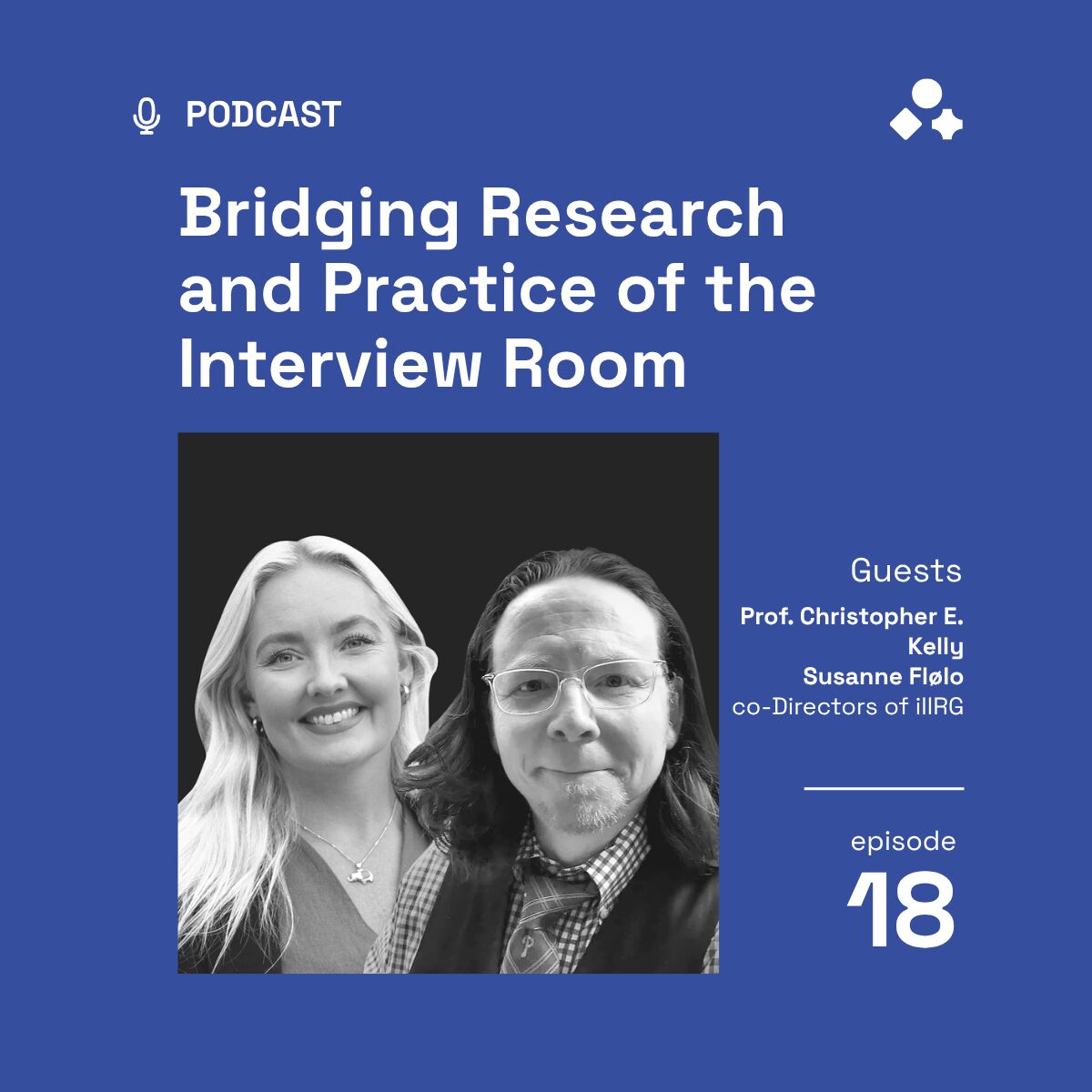
    Mehr erfahren

    13. April 2026
  • Prof. Laurence Alison über das Orbit-Modell – ep.13

    Prof. Laurence Alison über das Orbit-Modell – ep.13

    The Long Game Series

    Episode 17. Interview Recording, Technology, Top Management and Good Intentions

    Denmark was an early mover on investigative interview recording reform — its national standard arrived in 2015. Yet in 2021, for the first time in almost 100 years, two Danish police officers were convicted of attempting to coerce a confession.

    Thomas Skou Roer, one of the architects of that standard, joins Dr. Ivar Fahsing to examine what implementation really requires, and why getting policy right is only the beginning.

    In this candid and thought-provoking episode of Beyond a Reasonable Doubt, host Ivar Fahsing speaks with Thomas Skou Roer, associate professor at University College Copenhagen and former Danish criminal detective with 18 years of service, about the complex realities of implementing investigative interviewing standards in Denmark – and why having good standards doesn’t guarantee good practice. 

    Mr Roer opens with a powerful articulation of investigative interviewing’s ethos: „Do no harm, but get the job done.“ This dual mandate – balancing safeguards with efficiency – reflects the tension inherent in modern policing. He traces how this balance has shifted over generations, with the „safeguard edge“ becoming heavier than the „efficiency edge,“ though both remain essential. The conversation then explores whether this represents genuine progress or simply a reframing of age-old police practices. 

    The episode reveals Denmark’s investigative interviewing journey in frank detail. In 2015, Denmark implemented a national standard for investigative interviewing, eliminating district-by-district variations and establishing unified training programs. This followed groundbreaking research by Kristina Kepinski-Jakobsen on witness and suspect interviewing. Thomas was part of the working group that developed these standards, leading one of the key projects. 

    Yet in 2021 – six years after implementation – two Danish police officers were convicted of attempting to coerce a confession, marking the first such convictions in nearly 100 years. Another officer was charged (though acquitted) in 2024. These cases starkly illustrate the gap between implementing standards and changing practice, revealing that Denmark „still has some way to travel“ despite its progressive standards. 

    Mr Roer contrasts the Danish police’s implementation struggles with the Danish Immigration Services‘ success story. Immigration Services fully adopted investigative interviewing principles, mandating onboarding training for all personnel with no exceptions – offering a model for what effective implementation can look like when organisational commitment is genuine. 

    The conversation explores why implementation fails even when standards exist. Our guest emphasises that investigative interviewing isn’t merely a technique – it’s a fundamental mindset change requiring professional critical thinking skills and metacognition. The traditional guilt-perspective, confirmatory approach is deeply human, not just a police failing, making change difficult without active intervention. 

    A central theme is the structural and managerial barriers to implementation. Mr Roer argues the problem isn’t officers on the ground, who genuinely want to do quality work, but rather management systems, performance measurement frameworks, and political pressures. He critiques Denmark’s „new public management“ approach, which measures police efficiency through arbitrary timelines rather than actual public safety outcomes. True change requires „critical mass“ at the top management and political levels – not just within police forces but throughout the justice system. 

    Our guest offers a compelling vision for the future: AI-powered decision support tools that flag interesting interview moments („the interviewee said this was a boring kiss – what does that mean?“), identify weak hypotheses requiring more investigation, and help officers manage the massive data flows in modern investigations. He acknowledges the danger of creating „checklist policing“ but argues that officers need technological support given the cognitive demands and volume of information they face. 

    In a powerful comparison, Dr Fahsing likens police to military forces – both responsible for keeping citizens safe, both requiring massive technological investments to equip personnel properly. Norway and Denmark invest billions in F-35 fighters and frigates for armed forces, yet similar thinking about technological investment in policing lags behind. Thomas agrees, noting that military conflicts create awareness driving investment, while policing needs similar critical mass for change. 


    Episode Length: Approximately 36 minutes

    Production: Davidhorn – Beyond a Reasonable Doubt Podcast

    Host: Dr Ivar Fahsing


    Equipped For Justice – Supporting ethical, human rights-compliant investigations worldwide

    About the guest

    Thomas Skou Roer

    is an associate professor at University College Copenhagen, where he teaches criminology. He trains various organizations in investigative interviewing and investigative practice. Thomas is part of the ImpleMendez group, where he leads the Training Curriculum Network, establishing a global standard for training materials in investigative interviewing. 

    Thomas is a trained criminal detective in the Danish police, where he served for 18 years. He was part of the working group that created the current standard for interviewing in the Danish police, implemented in 2015. He is also a trained forensic psychologist from the University of Liverpool. His work focuses on the practical implementation challenges of evidence-based investigative practices and the structural changes required for sustainable reform in criminal justice systems. 

    Watch and listen wherever you get your podcasts.

    Verwandte Produkte

    • Fixed Vernehmungsrekorder

      Vernehmungsrekorder von Davidhorn: Vielseitiger HD-Recorder für Verdächtige, Zeugenbefragungen und ABE-Aufnahmen….

    • Tragbarer Vernehmungs-Recorder

      Leichter Vernehmungsrekorder für jede Umgebung, der den strengsten Gesetzen entspricht.

    • Beweiserfassung: Aufzeichnungsapp

      Beweiserfassung mit Davidhorn: Erfassen Sie Ereignisse, führen Sie Tatortmanagement durch und zeichnen Sie…

    • Software zur Vernehmungsverwaltung: Ark

      Empfangen, überwachen und archivieren Sie Beweismittel während der gesamten Lebensdauer mit einer umfassenden…

    Abschrift

    Guest: Thomas Skou Roer

    Host: Dr. Ivar Fahsing

    Recorded: 26 November 2025


    Dr. Ivar Fahsing (Host)

    I would like to invite you, Thomas Skou Roer from Denmark, to this episode of Beyond a Reasonable Doubt, Season 3. As you know, Thomas, the topic of this year’s season is the implementation of investigative interviewing. Although you no longer work for the Danish police authority, you worked for them for quite some time and you are deeply engaged in investigative practice in Denmark still. It is an honour to have you here today. Welcome.  00:00

    Thomas Skou Roer (Guest)

    Thank you very much, Ivar. Thank you for inviting me. It is a big honour for me and I am looking forward to a good conversation.  00:38

    Dr. Ivar Fahsing (Host)

    Fantastic, Thomas. You and I go quite far back, so some of these questions I am fairly sure we share opinions on — which makes it all the more interesting to discuss them over the next 40 minutes. Let me begin by inviting you to share with me and our listeners: what do you think is the ethos of investigative interviewing?  00:45

    Thomas Skou Roer (Guest)

    Well, the ethos — at least from my perspective — is, I think, ‚do no harm‘. But I also think there is another side to it: it has to get the job done as well. So it is ‚do no harm, but get the job done‘. By saying that, I mean that we need safeguards, but we also need efficiency in our investigative interviewing practice — so that we obtain the information we need while taking care of the people we need to safeguard. It is a double-edged sword, you might say, although it is of course heavier on the safeguard side.  01:12

    Dr. Ivar Fahsing (Host)

    That is a really good answer. If you try to reflect critically — don’t you think our colleagues from a generation before us would say that they did exactly the same?  01:50

    Thomas Skou Roer (Guest)

    Probably, yes. I think it is also about philosophy — about how much weight should be placed on each edge of that double-edged sword. I think there are still two edges, but the safeguard edge is becoming slightly heavier these days than the efficiency part. Whereas earlier, I would say it was probably more efficiency over safeguards. The balance has shifted.  01:59

    Dr. Ivar Fahsing (Host)

    Definitely. It is, as you say, about having your sword sharp — but about how to wield it in a safer way.  02:38

    Thomas Skou Roer (Guest)

    Yes. And maybe it is not about the sword itself, but about the wielding of it. Yes, I think that is a very good analogy.  02:47

    Dr. Ivar Fahsing (Host)

    So if you take us into a Danish context, Thomas — what is the situation in Denmark today? And looking back over the years you have been involved in strategic development there, why is this development important for Denmark?  02:56

    Thomas Skou Roer (Guest)

    Well, if we start with a brief historical perspective — around 2010, we had a very good researcher, one you know as well, Kristina Kæpinski-Jakobsen, who did some very interesting research on the interviewing of suspects. Before that, she had also done research on general witness interviewing — very important work. There were efforts to build on that and expand upon it, to change the landscape of investigative interviewing. But it remained fragmented. There was no national standard for how investigative interviewing should be conducted in Denmark. Different districts still had different approaches, although broadly there was probably reasonable agreement. But there was no standard.  03:15

    I was part of a working group and had the pleasure of leading one of the projects on developing the new standard for investigative interviewing in the Danish police, which was implemented in 2015. With that, we had a new national standard — there could no longer be different perspectives. It was one perspective. At least, that was the idea. And in practice, of course, challenges remain. But that was the intent.

    This also meant that from 2015, training in investigative interviewing began to be implemented on a much larger scale than we had been used to. Not large enough, but bigger. There were a number of basic programmes — perhaps one to three days — just to create an appetite, if you will. And then further courses for volume crime, and of course a course for video interviewing of child witnesses. That is essentially where we remain today, ten years later.

    Some local initiatives have attempted to expand the training regime, with mixed results. There have been efforts on trauma-informed interviewing for sexual assault victims, so things are still being done. But what is really interesting is this: we implemented the standard in 2015, and yet in 2021, for the first time in almost 100 years, two police officers were convicted of attempting to coerce a confession. Which was quite surprising — we had this new standard, and it had been implemented, but apparently not well enough. And in 2024, another officer was charged with the same offence, though acquitted. That too speaks to where Denmark stands right now.

    The status is that we have implemented investigative interviewing and developed the Danish model of interviewing, but implementation-wise we still have some way to travel. We are not there yet — in the Danish police at least. I say it that way because I also train the Danish Immigration Service, and they have fully adopted investigative interviewing as their standard. Everyone is onboarded using this method, and there are two courses — basic and advanced — as well as a child interviewing course. So the police is not alone in this. There are a number of actors employing the principles of investigative interviewing in Denmark, as is the case globally.

    Dr. Ivar Fahsing (Host)

    When we talk about the ethos of investigative interviewing — in my world, Thomas, it is probably not about interviewing at all. It is about how you think about an investigation, and what your job is. As you know, we often talk about what I call the change of mindset — the mindset that is traditionally more guilt-presumptive and confirmatory, which is not only something that comes from being a police officer. It is 100% human: to be suspicious, and to confirm that suspicion, especially if your job is to investigate. If you do not actively address that, the mindset will not change.  08:13

    Thomas Skou Roer (Guest)

    That is very true, Ivar. I absolutely agree. It is very much a mindset change. Investigative interviewing and investigative practice very much rely on professional critical thinking skills — and mostly, I would say, metacognition. Asking questions of your own thinking: why am I thinking this? What am I basing this on? That is one of the most difficult aspects of this.  08:59

    And it is very often trained as an appendix — ‚Could you do a bit on bias? A bit on System 1 and System 2 thinking?‘ But mostly, people want something about techniques. In some ways, you should perhaps switch that around: put the emphasis on the mindset, with techniques as a smaller component.

    Dr. Ivar Fahsing (Host)

    That is so interesting. And of course very difficult to do. I remember, Thomas, many years ago — when I was approaching this task in Norway together with my good friend and colleague Asbjørn Rachlew — I was called up by the director of the National Criminal Investigation Service in Norway, Kripos. His name was Arne Husse. He was quite a well-known figure in Norway at the time. He called me when I was still a very young officer at the homicide unit — on a temporary placement, not yet in a permanent position. They wanted to observe and evaluate you before offering a permanent role, given the travel and teamwork involved.  10:18

    He said he had heard I wanted to do a master’s in forensic and investigative psychology in England, and asked me why. My head of the homicide department joined that meeting — and he was clearly not a fan of me going to England. He was one of the older gurus of confession-based interviewing in Norway. He saw it as a threat to the way things were done. He could not say no to the director outright, but he made clear he did not approve: ‚You should send one of the older officers.‘

    The director challenged him in front of me: ‚Listen — what this young man is asking for is not support to spend two years on a beach in Thailand. He is asking for support to sit exams and work hard at a university in England. Do you understand that?‘ And then, to my boss: ‚Help him do it. Get out of here.‘ On the way out, the director stopped me, took my arm, and said: ‚Ivar, if you have any more problems with this man, come straight to me.‘

    That is the kind of leadership you need from senior officers — the courage it takes to embrace change in a national police culture. Thinking about that, Thomas, and relating it to the top management of the Danish police — have you seen similar change cultures or similar agendas?

    Thomas Skou Roer (Guest)

    Interesting question, Ivar. I have to say — no. Not directly like that. The closest we had was a period when Denmark had a bachelor’s degree in policing — during that time, top management were involved in supporting officers to pursue master’s degrees, partly to secure the required accreditation. But even then, it was more practical than visionary. It was not driven by a sense of direction towards evidence-based policing. The idea of evidence-based policing has been attempted multiple times in Denmark and is still being pursued, but senior management have called for it without necessarily understanding what it fully entails. Which makes implementation very difficult.  13:19

    My own story about doing a master’s is almost the complete opposite of yours. When I was accepted at a British university, I wrote to everyone in the Danish police — from the National Police Commissioner to my own district leaders — telling them I had this opportunity and asking for their support. And they all responded, in effect: ‚What a wonderful opportunity for you — have fun doing it on your own, because we will not support you.‘ To be fair, my local managers supported me with time, for which I was very grateful. But at the top level, the response was not visionary. Practical, at best.

    Dr. Ivar Fahsing (Host)

    Exactly. From a Norwegian perspective — and we are not saying right or wrong here, Thomas, only history will tell — when I look back to when I started as a detective in Oslo in the early 1990s, Copenhagen was always very close. We had close cooperation and learned a great deal from each other — perhaps more accurately, we learned a great deal from the Danish. I trained at Politigården for months and learned a lot. Denmark was in many ways more modern in its general policing approach. But when it comes to this particular topic, I feel Denmark has been absent from the international stage in a way that is surprising. Norway has advanced considerably. And it is genuinely interesting — because you would expect Denmark, as a country that leads on human rights and modern liberal democracy, to be at the forefront.  16:07

    Thomas Skou Roer (Guest)

    Yes, absolutely. The Danish police is a very closed organisation — as I imagine most police forces are. There is a very small research community looking into police practice, and access is very difficult because the police is protective of itself. That means knowledge within the organisation is largely tacit. And you cannot easily develop tacit knowledge. I think that is the biggest problem in Denmark: a great deal of hard-earned experience exists, but it is all tacit — there is no development.  17:41

    And when development does occur, it tends to be practically oriented: a new piece of software, a new piece of equipment — as opposed to a new methodology. Interestingly, there has been significant development on the operational side of policing — riot control, for instance. The dialogue concept for public order situations has evolved considerably, and new tactics were developed following a major incident in 1993. So within that part of the police, there has been meaningful change. But within investigative practice, we are not there yet. We miss people like your director. We miss people who will stand up and say: we will no longer do it this way. We will do it this way.

    Dr. Ivar Fahsing (Host)

    Absolutely. And as you will know, the Attorney General of Norway has since made it very clear — in writing, through national circulars — that there is no other way. That brings me to our next topic, Thomas. Thank you for being so open and frank about this. I do not enjoy speaking about Denmark in difficult terms — it is one of my favourite countries, and the Danish are among my favourite people. So thank you for being honest and scrutinising this uncomfortable subject.  20:36

    Thomas Skou Roer (Guest)

    You are welcome.  21:18

    Dr. Ivar Fahsing (Host)

    Does the Danish police record their interviews today?  21:19

    Thomas Skou Roer (Guest)

    They record some of their interviews. All child interviews are recorded. And there is a pilot scheme, running for a couple of years now, allowing sexual assault victims to be interviewed on video for use in court. But it has had mixed results. Not everyone chooses to do it, and defence attorneys are not always supportive. It turns out that some defence attorneys refrain from asking critical questions during the recorded interview, reserving them for court — because even though victims are recorded, they may still be required to attend court to answer additional questions that arise during the investigation. Victims have reported feeling that they end up going through another interview, which is the opposite of the intended effect.  21:31

    As for other serious cases — homicides or similar offences — some districts have implemented recording and may choose to do so, but they are not obligated. That is a significant difference. They can, but they are not required to. And I do not know how many actually choose to record. Transparency on that is essentially non-existent.

    Dr. Ivar Fahsing (Host)

    Yes.  23:16

    Thomas Skou Roer (Guest)

    And I feel I need to add: I was part of the police for 18 years, and I want to be clear that there are many very committed, very talented investigators and leaders in the Danish police. It is not all bad. But there is some structure around them that needs to change for them to do better work.  23:35

    Dr. Ivar Fahsing (Host)

    Sometimes I think about this as a systemic change, Thomas. You cannot blame the individuals inside the organisations. It is a systemic change, and linking it to individuals would not be fruitful. I completely agree.  24:15

    The reason I am interested in recording is this: from a Norwegian perspective, it was what I believe was the tipping point for many leading Norwegian detectives. When we agreed to pursue a national implementation of recording equipment — already in 1998 — officers felt extremely insecure about pressing that red button and recording themselves. And that feeling made them think: I need training, backed by science. There is a very interesting link between recording and professional development.

    Thomas Skou Roer (Guest)

    Yes, I agree. If officers were obligated to record all their interviews, and those recordings were subject to scrutiny — by an external authority, or at least internally, not every interview but a sample — I think that would make a huge difference to both implementation and quality.  25:28

    Dr. Ivar Fahsing (Host)

    It is like the old saying from Lord Kelvin: if you cannot measure it, you cannot improve it.  25:56

    Thomas Skou Roer (Guest)

    Yes. Yes, exactly.  26:02

    Dr. Ivar Fahsing (Host)

    A last question, Thomas, and then we will wrap up. Looking ahead — from a Danish perspective, and also more broadly, given that you work internationally and are heading to the Caribbean next week to lecture on these topics — what innovations, technologies, or policy changes do you think we need to effectively support positive change in investigation quality and interview quality? What do you hope for, or see coming?  26:04

    Thomas Skou Roer (Guest)

    That is a big question, Ivar. Globally, every officer feels under pressure resource-wise — they feel they do not have enough time to do quality work. My hope for the future is that we find suitable technologies to help officers manage an investigation and to think. I know that last part may sound controversial — of course we want officers to think for themselves. But they have been doing that for 500 years, and too many errors occur. We need decision support.  26:37

    In this era of AI, it should be possible to develop tools that can flag things during or after an interview: ‚The interviewee said something interesting here — explore that further.‘ Or for the investigation more broadly: ‚This hypothesis looks weak — the leads in this direction need to be strengthened.‘ Or: ‚This line is strong — can we make it even stronger?‘ Something that helps officers analyse the vast amounts of data that flow into an investigation today. The sheer volume — from digital and physical forensics to interviews and many other sources — is massive. Managing that information to know which directions to pursue is a significant challenge.

    So the hope is technological support for decision-making. Of course, that is also risky — if the system says ‚go‘, people just go. So we still need to train officers in critical thinking. Technology should support, not replace, that.

    On policy — that is more difficult. In Denmark, I hope we are approaching a critical mass for change. We have many gifted and talented officers, but some structures that need to change. One specific hope: moving away from New Public Management principles as a way of steering the police, and towards measuring what actually matters — are you creating a safer, higher-quality society for your citizens? Rather than: ‚In a violence case, you must complete step one within five days and step two within ten.‘ That is a skewed way of measuring police efficiency. A significant policy change is needed, and I hope we are getting closer to the critical mass that would enable that discussion — how to create and maintain an efficient and legitimate police force in Denmark.

    Dr. Ivar Fahsing (Host)

    Thank you, Thomas. That is a really interesting answer. It makes me think that what we sometimes call investigative interviewing becomes in many ways a denominator for something more fundamental — for what police work should really be about. And I think your answer reflects that. This is about something bigger. It is not just a technique.  31:49

    Thomas Skou Roer (Guest)

    No, definitely not just a technique. And Ivar, we could talk about this at length — and we have, many times. There has to be awareness at upper management level to drive this change. I honestly do not think the problem lies with the people on the ground. They want to do good work. But they need their managers to help them do quality work. And those managers need support from their managers, and so on up the chain. So when we talk about top management, we also need to talk about the political level — how political leadership needs to be on board with changing the system around the police. I do not think it is enough to have police managers on board, because those managers have managers in the Justice Department, and so on. Ultimately, this requires political will.  32:21

    Dr. Ivar Fahsing (Host)

    That is an interesting discussion, Thomas — because if you compare the two great forces in a country supposed to keep the people safe: the police, from an internal perspective, and the military, from an external one. What you are saying about equipping officers for the job expected of them requires big investments in technology and people. And that becomes even clearer when you compare policing with the armed forces. Norway and Denmark, like most Northern European countries, are now buying F-35s — an enormous investment to give pilots the technology they need. Norway is buying new frigates — major investments so our naval officers can operate effectively in the North Atlantic with equipment that is not outdated. And I think what you are saying is that the same mindset is necessary when it comes to policing, all the way from the top down.  33:51

    Thomas Skou Roer (Guest)

    Yes, absolutely. And I think the difference right now between the armed forces and the police is that there is a great deal of public and political awareness driving military investment — the war in Ukraine, the conflict in Gaza, wars around the globe. That is pushing the agenda. What I am talking about with critical mass is that we need similar awareness when it comes to policing. That is the hope.  35:24

    Dr. Ivar Fahsing (Host)

    Thomas, I would like to close with this. A wise man once said: if you are the smartest person in the room, you are in the wrong room. Today, I was in the right room. Thank you so much for a really engaging and thoughtful conversation.  36:03

    Thomas Skou Roer (Guest)

    Thank you, Ivar. And I feel exactly the same — what an honour.  36:27


    END OF TRANSCRIPT

    © 2025 Davidhorn. All rights reserved.

    Mehr erfahren

    30. März 2026
  • Prof. Laurence Alison über das Orbit-Modell – ep.13

    Prof. Laurence Alison über das Orbit-Modell – ep.13

    Episode 15. Innovation and the role of AI in Police Work with Norwegian Police

    Discover how Norwegian police are transforming investigative work through innovation and artificial intelligence.

    This episode examines the integration of AI in police work and investigative interviewing, advances in crime scene investigations, and the critical importance of accountability when deploying AI tools.

    The speakers discuss challenges in keeping pace with criminal innovation, the necessity for operational efficiency, and how international collaboration strengthens policing practices. They also address the cultural shift required within police organisations to embrace the innovation of AI in police work while navigating bureaucratic complexities. Join host Børge Hansen in conversation with three experts from Norway’s law enforcement community: Kjeld Hendrik Helland-Hansen and Oddvar Moldestad (Forensic Investigators, Western Police District) and Bente Skattør (Senior Advisor ICT and Innovation, Norwegian Police).

    When Police Innovation Meets Reality: Inside Norway’s AI Revolution

    At a recent crisis exercise with the Norwegian Navy, a forensic investigator walked through a simulated bomb scene speaking into a headset. No notebook. No frantic typing. Just his voice, capturing every detail as he moved through the chaos.

    Twenty minutes later, he had a complete report.

    „If I should have done this in the traditional manner,“ he said, „I’d use at least two days, perhaps more.“

    This is innovation in policing – not in some distant future, but happening right now in Norway’s Western Police District.

    The Trust Question

    Bente Skattør, Senior Advisor for ICT and Innovation at the Norwegian Police, is leading the charge to integrate AI into investigative work. She’s acutely aware of what’s at stake.

    „If we don’t move faster, I think we might lose trust; if we are lagging behind the criminals, that will immediately hit the trust for the police.“

    Bente Skattør

    The numbers are staggering. Norwegian police conduct 150,000 investigative interviews each year – every one traditionally typed manually. Meanwhile, criminals have embraced AI for deepfake voices and sophisticated scams. In Norway, AI-enabled fraud has now surpassed drug trafficking as a criminal enterprise.

    Small Steps, Big Impact of AI in Police Work

    What makes the Norwegian approach different is the philosophy: small, fast experiments with real officers in real situations. Not waiting for perfect systems.

    The results? AI interview transcription in 90 seconds. Crime scene documentation cut from days to minutes. But most importantly, the technology is designed with officers, not for them.

    Forensic investigators Kjeld Henrik Helland-Hansen and Oddvar Moldestad have tested voice-to-text systems in actual crime scenes, refined the templates, and brought colleagues along for the journey.

    „The ones that will benefit the most from it are the guys typing with one finger on their keyboards. They will really see the benefits.“

    Kjeld Henrik Helland-Hansen

    Accountability Built In

    For all the talk of AI, accountability remains central. Every transcription is verified. Every AI output is reviewed. The technology accelerates documentation, but humans maintain control.

    The real test comes in crisis exercises – four major exercises so far – where the team deploys their tools in realistic, high-pressure scenarios. They’ve proven that the technology works when it matters most, in what they call „the golden hour of investigation.“

    Beyond Borders

    The team has shared their work across Europe through Europol, in Brazil at international conferences, and with law enforcement agencies worldwide. They’ve earned a Europol Innovation Award and global recognition.

    But the awards aren’t the point. Criminals don’t respect borders, so innovation can’t either.

    „I think it’s counterproductive to sit in every country doing the same kind of innovation with just a small variance,“ Kjeld Henrik explains. The Norwegian team operates without financial commitments that would restrict knowledge sharing – because when one police force becomes more effective, it raises the bar for criminal operations everywhere.

    The Revolution

    Innovation in policing isn’t a future promise. It’s happening now in police districts across Norway, driven by investigators who understand both the technology and the work it must serve.

    The analog investigator who completed his crime scene report in 20 minutes didn’t become a tech expert overnight. He simply had tools that finally matched the way humans naturally work: by observing, speaking, and moving freely without being tethered to keyboards.

    That’s the revolution – making technology fit the investigation, not forcing investigators to fit the technology.

    „Innovation is a muscle that you have to train,“ Bente says. In Norway, that training is already well underway.

    Listen to the full conversation in Episode 15 of Beyond a Reasonable Doubt, where Børge Hansen talks with Bente Skattør, Kjeld Henrik Helland-Hansen, and Oddvar Moldestad about the real work of innovation in modern policing.


    Episode Length: Approximately 59 minutes

    Production: Davidhorn – Beyond a Reasonable Doubt Podcast

    Host: Børge Hansen, CEO, Davidhorn


    Equipped For Justice – Supporting ethical, human rights-compliant investigations worldwide

    About the guests

    Dr. Bente Skattør

    Senior Advisor for ICT and Innovation at the Norwegian Police and project lead for AI in investigative interviews. She drives innovation initiatives processing over 150,000 police interviews annually, integrating artificial intelligence into investigative work while maintaining rigorous human oversight. Her work has earned a Europol Innovation Award, a National Digitisation Award nomination, and a Global Innovation Prize in Brazil. With extensive experience in project management across Nordic and global contexts, Bente specialises in the intersection of AI, big data, and law enforcement – focusing on investigative interviews, cybercrime, and creating innovation cultures in complex, high-risk environments.

    Oddvar Moldestad

    Police Superintendent with over 20 years of experience as a forensic investigator in the Western Police District of Norway. Over the past two and a half years, he has been actively involved in the AI4Interviews project, working to modernise and streamline forensic workflows through the use of smart technology and artificial intelligence.

    Kjeld Hendrik Helland-Hansen

    Police Superintendent working as a crime scene investigator with the Norwegian Police, specialising in forensic documentation and crime-scene methodology. He has a background in archaeology from NTNU and has worked for several years at the forensic unit in the Western Police District of Norway.

    Kjeld has represented Norwegian policing internationally through the European Network of Forensic Science Institutes, as a delegate to EMFA under the ENFSI Scene of Crime Working Group. He has also served as the former head of the Norwegian Criminalistics Forum, an organisation for Norwegian crime scene investigators.

    In recent years, his work has focused on innovation at the intersection of policing, technology, and research. He is a contributor to the AI4Interviews project, exploring how hands-free technology, speech-to-text, and artificial intelligence can improve documentation, situational awareness, and evidence quality in crime scene investigations.

    Watch and listen also on YouTube and Apple Podcasts

    Verwandte Produkte

    • Fixed Vernehmungsrekorder

      Vernehmungsrekorder von Davidhorn: Vielseitiger HD-Recorder für Verdächtige, Zeugenbefragungen und ABE-Aufnahmen….

    • Tragbarer Vernehmungs-Recorder

      Leichter Vernehmungsrekorder für jede Umgebung, der den strengsten Gesetzen entspricht.

    • Beweiserfassung: Aufzeichnungsapp

      Beweiserfassung mit Davidhorn: Erfassen Sie Ereignisse, führen Sie Tatortmanagement durch und zeichnen Sie…

    • Software zur Vernehmungsverwaltung: Ark

      Empfangen, überwachen und archivieren Sie Beweismittel während der gesamten Lebensdauer mit einer umfassenden…

    Abschrift

    Host: Børge Hansen, CEO, Davidhorn
    Guests: Kjeld Hendrik Helland-Hansen and Oddvar Moldestad (Forensic Investigators, Western Police District) and Bente Skattør (Senior Advisor ICT and Innovation, Norwegian Police).


    BØRGE HANSEN: Today, we’re talking about innovation in policing and what it actually looks like. Criminals are already playing with AI tools. We see deepfake voices used to trick people, AI-written scams that feel uncomfortably personal. And at the same time, the amount of evidence is exploding. Every case means hours of video and audio, phone data, documents, and chat logs. The police aren’t just under pressure from offenders; they’re also buried under information. And still, many investigators are typing crime-scene notes by hand, replaying interviews over and over, and working in systems that don’t really talk to each other. So the question is, how do we keep up and how do we get ahead?

    The good news is that innovation is already happening inside policing. And the team around this table has been recognised for that work with a Europol Innovation Award, a National Digitisation Award nomination, and a Global Innovation Prize in Brazil. I’m very happy to have you here. Bente Skattør, project lead and innovation lead for AI for interviews at the Oslo Police. Kjeld Henrik Helland-Hansen, forensic investigator in the West Police District and the wildcard. And Oddvar Moldestad, also a forensic investigator and a longtime CSI innovator in the West. In this conversation, we’ll look at what’s actually changing at the crime scene, in the interview room and in the courtroom. What works, what’s hard and what it looks like when innovation comes from within the police.

    So let’s start there. Bente, you’re leading AI for interviews. When people ask you what is actually changing in policing right now, where do you begin?

    BENTE SKATTØR: I begin with the police officers, the CSI folks, the team, because that is where you actually start. But first of all, thank you very much for having us here. We are really thrilled to be here to talk about what we actually burn for, and that is innovation in the police. As you so clearly mentioned, Børge, the criminals have already embraced AI.

    And that is also where we are. We are really trying to embrace the technology, but of course, we have to do it in a responsible way. So what we’re doing now in the AI for interviews is actually trying to build upon the speech-to-text technology, AI analysis. So we are working with the police workers strongly and tightly because they have to take and use the tools.

    So that is essential, I think. So what we are working on is actually, as you said, we are working with investigation, and AI for interviews is actually about—we started with investigative interviews. So that is where we have the starting point. But we have seen the huge potential of using speech-to-text in many areas. That’s why we are also here for the CSI crime scene investigation, the courtroom, and putting TVC on the streets from the patrols. So we have huge potential.

    BØRGE HANSEN: What did you start with in investigative interviewing? I know Norway is really on the forefront there. Why is that and how does it work for you guys that you started out with something that the Norwegian police think they’re really good at already?

    BENTE SKATTØR: Yeah, it was not a coincidence. Because I’m really proud also that Norway has a good methodology of the way we are doing investigative interviews. So we have sort of stolen with pride from the PEACE in the UK, but we have also cultivated our own methodology. But the point is that they are writing the investigative interviews manually.

    And we saw also the potential for using Norwegian language models so they can focus on rather doing the summary or understanding what is in the interview instead of taking notes while they are doing the interview. And of course they are taking many. So in Norway, I know Norway is a small country, but anyhow we have approximately 150,000 each year interviews, whether they are inside or outside—150,000 interviews with victims, suspects or similar from the police.

    So we have a huge and very exciting potential and we have come that far that I hope people can see or hear that we are on the right way.

    BØRGE HANSEN: So what’s the impact that you’re seeking in AI for interviews? Obviously, you talk about the 150,000 interviews all across Norway. What’s the impact that you want to get out of those 150,000?

    BENTE SKATTØR: As you said in the start, Børge, we are having so much data within investigation and we need to help the investigators to do their job so they can focus on what really matters within investigation. So we can remove the boring job. It’s very important to have a good summary, of course, that they still have to do. And they also still have to control what is coming out of these language models when we do the transcription. But the potential of letting them focus more on the core case—that is investigation. And the data is not going to stop. It’s going to flood more. It’s growing each day and I have no belief that it will be less, it will be much more.

    BØRGE HANSEN: But you also work closely with, in Norway, we call PPS or police officers in the field, working in the field at the crime scene. How does that innovation work that you’re doing now? How does that impact the PPS situation?

    BENTE SKATTØR: We are in a position now where we actually can ask them and they have answered a questionnaire, but they’re also doing interviews about what they feel. But today it’s going very fast from when you take the interview in the street until it’s transcribed. It takes approximately one and a half to two minutes.

    BØRGE HANSEN: So from the interview performed to the transcription ready, a couple of minutes?

    BENTE SKATTØR: Yes, absolutely. And also the data will be valid inside the police. But we can also enable that for the court, for operation central and the core team if we have a huge case going on. So they can see the data also, what’s coming from the street immediately. So we also built that inside.

    BØRGE HANSEN: In our talks earlier, you often talk about innovation as a muscle that the organisation has to train. What does that look like in practice?

    BENTE SKATTØR: Yes, we have big muscles. I always say that innovation is a muscle that you have to train in order to keep up the speed with the AI revolution which is ongoing. So you have to exercise on the turn of the technology. So that means we also have to train on different arenas. We have to do smaller proof of concept, very fast, fail fast, but also going in the right direction.

    And then you have to work strategically. So when it comes to the smaller proofs of concept, doing the things to explore—then we have a really good example here, is about the crime scene investigation team. I’m really proud to have Oddvar and Kjeld Henrik on our team.

    BØRGE HANSEN: Before we move on to the CSI team, we also said that police work and innovation have to go hand in hand. And what does that look like on a good day?

    BENTE SKATTØR: When police officers say we are on the right way, this is good, it can be better. But when they say this is working and we are on the right—that’s giving me thrill. And I’ve lately been so lucky to hear that. And I also have seen that that makes us even stronger for striving for more innovation.

    BØRGE HANSEN: If criminals innovate faster than the police, why should the public still trust the police to keep up?

    BENTE SKATTØR: I think that is a huge question. First of all, if we don’t move faster, I think we might lose trust. Because if we are coming more and more or lacking behind the criminals, that will immediately hit the trust for the police. That’s kind of natural. And the police force is founded on trust. So if we don’t have the trust, it will be much harder to keep on going.

    BØRGE HANSEN: So, Bente, one of the challenges we’ve spoken about earlier is that we feel that people challenge us that we need to know everything about everything before we can start using these systems. But your approach is much more sandboxing and point-to-point solutions.

    BENTE SKATTØR: Yeah, and that is a huge… we can philosophise a lot and discuss whether we should have a general base model that can serve and suit everyone’s need, or you should go on point-to-point to actually deliver value. And when you are in that discussion, you can easily become paralysed. That is not a good thing because innovation has to happen fast. You have to respond to the needs and also to testing it out very fast on what works. So if you are going, and this is also what I’ve seen in several technology development in Norway, we sometimes think too much before we actually do something. So we have to look ahead, we have to do smaller point-to-point solutions, and if these smaller point-to-point solutions works, you can take the same piece of technology on the next thing, and then next thing. And that’s also the way we actually evolve the data.

    BØRGE HANSEN: So working in police, one could imagine that you’re not only working with supportive people. There’s a lot of cynicism in police work because—well, the reality of living with crime and criminals every day. How do you take that cynicism and turn it into something progressive or positive?

    BENTE SKATTØR: I think by meeting the police workers, I really do. Because when I speak about AI, the immediate question is, will the robot take my job? Of course we—I cannot, that is a question that is fair and you have to address it. So that is what you do. But that is also then why it’s so important to involve the police officers strongly and early. Because they see and hear what, because it’s hard to say, to think about what you need or what could help you. But once you see a proof of concept and you hear it in your own language, then you immediately see the help of how this will lighten your job. So that is by involving them, I think. And also admitting that, this is a sandbox, meaning that this is where we will test the new technology. But it doesn’t mean that everything will be working.

    BØRGE HANSEN: As many people listening, working in investigative work or courts or prosecution knows, policing is a profession that’s caught between extremes. There’s a lot of rules and regulations and bureaucracy that stops work. At the same time, there’s an urge to do things in the right proper way because lives are at stake. How do you navigate that as innovators in a very traditional setting?

    BENTE SKATTØR: Yeah, so this is actually what I’m burning for because I have worked now in 20 years or more within the police in ICT department, not operational. But I know that it is always saying that, no this is not allowed, or we cannot do that, or we have to check and so on. And I don’t say that we shouldn’t do that of course, we have to obey the law. But it is a huge difference saying what is possible under the law instead of saying, can we have the allowance? And I think that is a huge culture thing that we have to embrace in police as well. That we…

    Of course, within the law, but what is the playground? So to have that change, you need the leaders that have that same value and will give you allowance to test things and that also okay to fail.

    BØRGE HANSEN: For those of us who haven’t been to a crime scene, we have a lot of impressions from TV series. What is the job of working on a crime scene in 2024 or ’25?

    ODDVAR MOLDESTAD: If I may say so, crime scene investigation as a profession is all about documenting. What you observe, you observe traces, you observe persons, you observe objects, whatever. And that is quite boring work in many ways because you have to be very thorough, you have to be structured. And with the Sandwich Project we now are part of, we see how we can do these tasks in a better way. What we want to spend our time on is that is very important for crime solving. But at the same time, we can let technology do the boring part, I mean the documentation part of it. So we can use more time with other observations.

    BØRGE HANSEN: So can you just take us through a crime scene? We’re looking at a traditional crime scene, there’s been a breaking and entering, a house burglary. How does an investigator or a technical investigator work in that scene traditionally and how do they work now with technology that you guys have been working on?

    ODDVAR MOLDESTAD: Just briefly, first of all we establish what has happened and what do we need to do to start our crime scene investigation. And that is actually looking around. And then you start doing your thorough investigation where we use, could be photography, all kind of methods to describe the scene. And you are very accurate, you make drawings, you measure, measure every object.

    So we can try to recreate at a later point of time when you also done the whole investigation, make kind of recreation of what has happened. And yeah, that is a quite boring aspect of CSI work. So you have to be structured and write everything down and basically this is what we want technology to do for us because we see that could be a lot easier if you can have tools that can make this work easier, not only for us but of course also for the patrol officers. They have—they are first on the scene. They also need to do the same things we do, but of course they have other tasks as well. And yeah, we want to make this easier in many ways.

    BØRGE HANSEN: Traditional CSI work is what? Pen and paper, dictaphone…

    ODDVAR MOLDESTAD: Yeah, basically pen and paper. I think the last years we’ve had the ability to type into our tablets, but still you’re in this crime scene, you wear these gloves, you don’t want to contaminate anything, still you are forced to take up your phone or your computer or whatever and you have to type this in. So you don’t want to—if you find a suspected trace, you don’t want to take off your gloves and put on the gloves and do, redo this many times. So we saw quite early that voice-to-text could be the solution here. So that is what we started to do a couple of years ago when we started this project.

    BØRGE HANSEN: So these days you are working in a crime scene with voice-to-text. What does it look like to you? What is your working situation like?

    ODDVAR MOLDESTAD: I think you are perhaps more out in the field, and especially on this and testing this out in the—on the field. So perhaps you can elaborate more on that?

    KJELD HENRIK HELLAND-HANSEN: Yeah, so initially when we saw the possibilities in this, I thought it would be revolutionary just to have something that can transcribe my voice into text. So I don’t have to stand there in the dark with gloves and having to write this. So that was just fabulous. And then when you also realise that this transcription actually systemises, from the voice to text, and systemises according to a template that we work with. So what we call people and what we call objects and what we call traces, it puts everything in a system. So basically we can go through the crime scene, describe everything we see and then get out a finished report and that is just fabulous.

    I did some exercise with the Western police, and that was with a colleague who was also a CSI technician and also the patrol police. And one of my fellow colleagues, I would describe him as one of the more analog crime investigators in our office, but that’s fine, we’re different. He was using the headsets and just logging everything. It was counter-stabbing, it was an exercise with the Norwegian Navy where they had gone off two bombs and there were dead and wounded people—that was the scenario. And when we got to the place of the incident, then he started to log, describing everything and going along. And then this was transcribed and systemised. And we asked afterwards, so what do you think of this? And he just answered, yeah, honestly, I did this, I got this report now in 20 minutes.

    And if I should have done this in the traditional manner, I’d use at least two days, perhaps more. So that was a very satisfying answer for us at least because we are tech nerds, I admit it. So we like to move ahead, we like to be in the front and testing things, but this has to have an impact on the whole level, not only as tech-savvy guys, but I think in this case, the ones that will benefit the most from it are the guys typing with one finger on their keyboards. They will really see the benefits of this.

    BØRGE HANSEN: Crisis exercises, you guys said earlier that it gives you much more realistic data than synthetic test data. And as you describe, you can see the technology being used in practice with your own eyes. What’s the biggest surprises from these exercises? Good and bad.

    BENTE SKATTØR: I might answer that because to having allowance to test out early technology is quite cumbersome. Sometimes you have to plan very thoroughly or maybe you have to work with synthetic data, but these kind of arenas is really fantastic to explore technology. And so we jumped very fast into the exercise because we had short notice—that’s also very cool. That was a level of, parts running again. But you can actually, because now we have a toolkit of tools that works pretty well. And we also gather data. So we are in the golden hour of investigation. So we use also the interview solution and also the CSI. But the most important was actually it not that it worked, but it was a good stage of exploring technology much better than I hoped for. So now next year we are actually planning to do more so we can expose and test our solution to the end users. And then we can build on something that is already working, but also have add-ons to explore because there’s no danger to having mistakes in such exercises. That’s what we are aiming for, to learn, build.

    So I’m really thrilled about that. And one of the key questions that we have—we’ve also been participating in four exercises now. So we have data collected from these exercises. So when we have more power or GPUs or machine power in the police, it’s going to be really, really fun to run also AI analytics of this data. So yes, I’m really thrilled. And also what is… The people who work with this technology can be on stage to see how Kjeld Henrik and the bomb squad is using the technology. That’s essential also.

    BØRGE HANSEN: Let’s zoom out a little bit internationally. These challenges aren’t unique to Norway. You’re watching and working with others around the world who are wrestling with the same problems. Who’s inspiring you internationally and what are they learning from your work and the Nordic approach?

    KJELD HENRIK HELLAND-HANSEN: But I would also like to point out that we don’t have any financial commitment in many ways to this kind of thing. So we are eager to share. Now, criminals don’t care about borders. They don’t care if you’re in Norway or Denmark, or if you sit in one part of the world doing crimes in another part of the world. And I think it’s so important to share this kind of knowledge with our colleagues in law enforcement in other countries as well. Because I really believe that if we share this kind of knowledge, we will get something back. And I think it’s counterproductive to sit in every country doing the same kind of innovation with just a small variance. So that’s why I believe that Europol, for instance, here in Europe, is an essential hub for sharing.

    And our collaboration with different countries, it’s great because we see the same needs in every country, perhaps with small differences, but still—and recently when we were in Brazil, same thing. I think this is universal and we need to, since we are, I think I agree with you, Oddvar, we are in this particular area, we are quite in the front.

    And I think it’s our obligation to share this with our colleagues because what we do care about is helping people. That’s why we became police officers in the first place anyway. So this is our main task to help people. And if we can do that by sharing to help other colleagues doing the same thing, yeah, I cannot say it’s important enough.

    BØRGE HANSEN: Very good.

    BENTE SKATTØR: I would like to add also, because getting inspired by people which are much better than you, come on with it. Give us all, because that’s essential. And why shouldn’t we also be inspired by the criminals? Because they embrace the technology and they are really innovative. So of course we shouldn’t commit crime, but we should turn it around to combat crime.

    Getting the inspiration of being, having the possibility to embrace—because I strongly believe if we embrace the technology, we can see the possibilities. We can break up and see the possibilities and believe me, we will anyhow handle within the rule of law. But this is instead of taking what is possible within the law, it’s a complete different thing.

    BØRGE HANSEN: Do you think the criminals are eating elephants and running like that?

    BENTE SKATTØR: They are running. And then they suddenly also get innovative in a strategic matter. Then it’s becoming organised crime. And they are really innovative also to get hold of money and also of course doing really bad things hurting people. But they are really innovative in that they actually—when they have a possibility, they’re actually going for the low-hanging fruits, and then they organise it very fast. So they’re doing business. And also, as many probably already know, in Norway, committing fraud using AI and technology is a bigger business compared to selling drugs in Norway now, at the time being.

    BØRGE HANSEN: So let’s finish by looking forward and keeping it practical. If all this works, everyday investigative life and the quality of justice should improve. If you could change one thing in global policing tomorrow, one thing that would actually make investigators‘ lives better and justice more reliable, what would it be and why? Cooperation?

    BENTE SKATTØR: Cooperation across borders. Yes, together with academia, police, public sector and also industry across borders because the crime is borderless and we have to meet on the same, what you call, football stage as them. More cooperation.

    BØRGE HANSEN: Cross-border cooperation.

    KJELD HENRIK HELLAND-HANSEN: I agree quite much on that one. I mentioned the importance of sharing and exchanging ideas and seeing the possibilities to get that wider view to see what you can do. And also that you have leaders that see the importance of this, see, yeah, give you the space to try your wings, to try to be a bit more innovative, not just doing your day-to-day thing, but actually looking forward and see, have that vision. I think it’s important.

    BØRGE HANSEN: It’s out of the proverbial box thinking. How about you, Oddvar? One thing you would want to improve.

    ODDVAR MOLDESTAD: So learning more faster.

    BØRGE HANSEN: So we’ve covered a lot, tech, practice, culture, law. But what I hear, it’s ultimately about people and how they work. Innovation in policing isn’t a future dream, it’s already here. And tonight, you’ve given us a glimpse of how it looks from the inside. Thank you for joining me.

    ALL: Thank you.


    END OF TRANSCRIPT

    © 2025 Davidhorn. All rights reserved.

    Mehr erfahren

    16. März 2026
  • Prof. Laurence Alison über das Orbit-Modell – ep.13

    Prof. Laurence Alison über das Orbit-Modell – ep.13

    Episode 15. Innovation and the role of AI in Police Work with Norwegian Police

    Discover how Norwegian police are transforming investigative work through innovation and artificial intelligence.

    This episode examines the integration of AI in police work and investigative interviewing, advances in crime scene investigations, and the critical importance of accountability when deploying AI tools.

    The speakers discuss challenges in keeping pace with criminal innovation, the necessity for operational efficiency, and how international collaboration strengthens policing practices. They also address the cultural shift required within police organisations to embrace the innovation of AI in police work while navigating bureaucratic complexities. Join host Børge Hansen in conversation with three experts from Norway’s law enforcement community: Kjeld Hendrik Helland-Hansen and Oddvar Moldestad (Forensic Investigators, Western Police District) and Bente Skattør (Senior Advisor ICT and Innovation, Norwegian Police).

    When Police Innovation Meets Reality: Inside Norway’s AI Revolution

    At a recent crisis exercise with the Norwegian Navy, a forensic investigator walked through a simulated bomb scene speaking into a headset. No notebook. No frantic typing. Just his voice, capturing every detail as he moved through the chaos.

    Twenty minutes later, he had a complete report.

    „If I should have done this in the traditional manner,“ he said, „I’d use at least two days, perhaps more.“

    This is innovation in policing – not in some distant future, but happening right now in Norway’s Western Police District.

    The Trust Question

    Bente Skattør, Senior Advisor for ICT and Innovation at the Norwegian Police, is leading the charge to integrate AI into investigative work. She’s acutely aware of what’s at stake.

    „If we don’t move faster, I think we might lose trust; if we are lagging behind the criminals, that will immediately hit the trust for the police.“

    Bente Skattør

    The numbers are staggering. Norwegian police conduct 150,000 investigative interviews each year – every one traditionally typed manually. Meanwhile, criminals have embraced AI for deepfake voices and sophisticated scams. In Norway, AI-enabled fraud has now surpassed drug trafficking as a criminal enterprise.

    Small Steps, Big Impact of AI in Police Work

    What makes the Norwegian approach different is the philosophy: small, fast experiments with real officers in real situations. Not waiting for perfect systems.

    The results? AI interview transcription in 90 seconds. Crime scene documentation cut from days to minutes. But most importantly, the technology is designed with officers, not for them.

    Forensic investigators Kjeld Henrik Helland-Hansen and Oddvar Moldestad have tested voice-to-text systems in actual crime scenes, refined the templates, and brought colleagues along for the journey.

    „The ones that will benefit the most from it are the guys typing with one finger on their keyboards. They will really see the benefits.“

    Kjeld Henrik Helland-Hansen

    Accountability Built In

    For all the talk of AI, accountability remains central. Every transcription is verified. Every AI output is reviewed. The technology accelerates documentation, but humans maintain control.

    The real test comes in crisis exercises – four major exercises so far – where the team deploys their tools in realistic, high-pressure scenarios. They’ve proven that the technology works when it matters most, in what they call „the golden hour of investigation.“

    Beyond Borders

    The team has shared their work across Europe through Europol, in Brazil at international conferences, and with law enforcement agencies worldwide. They’ve earned a Europol Innovation Award and global recognition.

    But the awards aren’t the point. Criminals don’t respect borders, so innovation can’t either.

    „I think it’s counterproductive to sit in every country doing the same kind of innovation with just a small variance,“ Kjeld Henrik explains. The Norwegian team operates without financial commitments that would restrict knowledge sharing – because when one police force becomes more effective, it raises the bar for criminal operations everywhere.

    The Revolution

    Innovation in policing isn’t a future promise. It’s happening now in police districts across Norway, driven by investigators who understand both the technology and the work it must serve.

    The analog investigator who completed his crime scene report in 20 minutes didn’t become a tech expert overnight. He simply had tools that finally matched the way humans naturally work: by observing, speaking, and moving freely without being tethered to keyboards.

    That’s the revolution – making technology fit the investigation, not forcing investigators to fit the technology.

    „Innovation is a muscle that you have to train,“ Bente says. In Norway, that training is already well underway.

    Listen to the full conversation in Episode 15 of Beyond a Reasonable Doubt, where Børge Hansen talks with Bente Skattør, Kjeld Henrik Helland-Hansen, and Oddvar Moldestad about the real work of innovation in modern policing.


    Episode Length: Approximately 59 minutes

    Production: Davidhorn – Beyond a Reasonable Doubt Podcast

    Host: Børge Hansen, CEO, Davidhorn


    Equipped For Justice – Supporting ethical, human rights-compliant investigations worldwide

    About the guests

    Dr. Bente Skattør

    Senior Advisor for ICT and Innovation at the Norwegian Police and project lead for AI in investigative interviews. She drives innovation initiatives processing over 150,000 police interviews annually, integrating artificial intelligence into investigative work while maintaining rigorous human oversight. Her work has earned a Europol Innovation Award, a National Digitisation Award nomination, and a Global Innovation Prize in Brazil. With extensive experience in project management across Nordic and global contexts, Bente specialises in the intersection of AI, big data, and law enforcement – focusing on investigative interviews, cybercrime, and creating innovation cultures in complex, high-risk environments.

    Oddvar Moldestad

    Police Superintendent with over 20 years of experience as a forensic investigator in the Western Police District of Norway. Over the past two and a half years, he has been actively involved in the AI4Interviews project, working to modernise and streamline forensic workflows through the use of smart technology and artificial intelligence.

    Kjeld Hendrik Helland-Hansen

    Police Superintendent working as a crime scene investigator with the Norwegian Police, specialising in forensic documentation and crime-scene methodology. He has a background in archaeology from NTNU and has worked for several years at the forensic unit in the Western Police District of Norway.

    Kjeld has represented Norwegian policing internationally through the European Network of Forensic Science Institutes, as a delegate to EMFA under the ENFSI Scene of Crime Working Group. He has also served as the former head of the Norwegian Criminalistics Forum, an organisation for Norwegian crime scene investigators.

    In recent years, his work has focused on innovation at the intersection of policing, technology, and research. He is a contributor to the AI4Interviews project, exploring how hands-free technology, speech-to-text, and artificial intelligence can improve documentation, situational awareness, and evidence quality in crime scene investigations.

    Watch and listen also on YouTube and Apple Podcasts

    Verwandte Produkte

    • Fixed Vernehmungsrekorder

      Vernehmungsrekorder von Davidhorn: Vielseitiger HD-Recorder für Verdächtige, Zeugenbefragungen und ABE-Aufnahmen….

    • Tragbarer Vernehmungs-Recorder

      Leichter Vernehmungsrekorder für jede Umgebung, der den strengsten Gesetzen entspricht.

    • Beweiserfassung: Aufzeichnungsapp

      Beweiserfassung mit Davidhorn: Erfassen Sie Ereignisse, führen Sie Tatortmanagement durch und zeichnen Sie…

    • Software zur Vernehmungsverwaltung: Ark

      Empfangen, überwachen und archivieren Sie Beweismittel während der gesamten Lebensdauer mit einer umfassenden…

    Abschrift

    Host: Børge Hansen, CEO, Davidhorn
    Guests: Kjeld Hendrik Helland-Hansen and Oddvar Moldestad (Forensic Investigators, Western Police District) and Bente Skattør (Senior Advisor ICT and Innovation, Norwegian Police).


    BØRGE HANSEN: Today, we’re talking about innovation in policing and what it actually looks like. Criminals are already playing with AI tools. We see deepfake voices used to trick people, AI-written scams that feel uncomfortably personal. And at the same time, the amount of evidence is exploding. Every case means hours of video and audio, phone data, documents, and chat logs. The police aren’t just under pressure from offenders; they’re also buried under information. And still, many investigators are typing crime-scene notes by hand, replaying interviews over and over, and working in systems that don’t really talk to each other. So the question is, how do we keep up and how do we get ahead?

    The good news is that innovation is already happening inside policing. And the team around this table has been recognised for that work with a Europol Innovation Award, a National Digitisation Award nomination, and a Global Innovation Prize in Brazil. I’m very happy to have you here. Bente Skattør, project lead and innovation lead for AI for interviews at the Oslo Police. Kjeld Henrik Helland-Hansen, forensic investigator in the West Police District and the wildcard. And Oddvar Moldestad, also a forensic investigator and a longtime CSI innovator in the West. In this conversation, we’ll look at what’s actually changing at the crime scene, in the interview room and in the courtroom. What works, what’s hard and what it looks like when innovation comes from within the police.

    So let’s start there. Bente, you’re leading AI for interviews. When people ask you what is actually changing in policing right now, where do you begin?

    BENTE SKATTØR: I begin with the police officers, the CSI folks, the team, because that is where you actually start. But first of all, thank you very much for having us here. We are really thrilled to be here to talk about what we actually burn for, and that is innovation in the police. As you so clearly mentioned, Børge, the criminals have already embraced AI.

    And that is also where we are. We are really trying to embrace the technology, but of course, we have to do it in a responsible way. So what we’re doing now in the AI for interviews is actually trying to build upon the speech-to-text technology, AI analysis. So we are working with the police workers strongly and tightly because they have to take and use the tools.

    So that is essential, I think. So what we are working on is actually, as you said, we are working with investigation, and AI for interviews is actually about—we started with investigative interviews. So that is where we have the starting point. But we have seen the huge potential of using speech-to-text in many areas. That’s why we are also here for the CSI crime scene investigation, the courtroom, and putting TVC on the streets from the patrols. So we have huge potential.

    BØRGE HANSEN: What did you start with in investigative interviewing? I know Norway is really on the forefront there. Why is that and how does it work for you guys that you started out with something that the Norwegian police think they’re really good at already?

    BENTE SKATTØR: Yeah, it was not a coincidence. Because I’m really proud also that Norway has a good methodology of the way we are doing investigative interviews. So we have sort of stolen with pride from the PEACE in the UK, but we have also cultivated our own methodology. But the point is that they are writing the investigative interviews manually.

    And we saw also the potential for using Norwegian language models so they can focus on rather doing the summary or understanding what is in the interview instead of taking notes while they are doing the interview. And of course they are taking many. So in Norway, I know Norway is a small country, but anyhow we have approximately 150,000 each year interviews, whether they are inside or outside—150,000 interviews with victims, suspects or similar from the police.

    So we have a huge and very exciting potential and we have come that far that I hope people can see or hear that we are on the right way.

    BØRGE HANSEN: So what’s the impact that you’re seeking in AI for interviews? Obviously, you talk about the 150,000 interviews all across Norway. What’s the impact that you want to get out of those 150,000?

    BENTE SKATTØR: As you said in the start, Børge, we are having so much data within investigation and we need to help the investigators to do their job so they can focus on what really matters within investigation. So we can remove the boring job. It’s very important to have a good summary, of course, that they still have to do. And they also still have to control what is coming out of these language models when we do the transcription. But the potential of letting them focus more on the core case—that is investigation. And the data is not going to stop. It’s going to flood more. It’s growing each day and I have no belief that it will be less, it will be much more.

    BØRGE HANSEN: But you also work closely with, in Norway, we call PPS or police officers in the field, working in the field at the crime scene. How does that innovation work that you’re doing now? How does that impact the PPS situation?

    BENTE SKATTØR: We are in a position now where we actually can ask them and they have answered a questionnaire, but they’re also doing interviews about what they feel. But today it’s going very fast from when you take the interview in the street until it’s transcribed. It takes approximately one and a half to two minutes.

    BØRGE HANSEN: So from the interview performed to the transcription ready, a couple of minutes?

    BENTE SKATTØR: Yes, absolutely. And also the data will be valid inside the police. But we can also enable that for the court, for operation central and the core team if we have a huge case going on. So they can see the data also, what’s coming from the street immediately. So we also built that inside.

    BØRGE HANSEN: In our talks earlier, you often talk about innovation as a muscle that the organisation has to train. What does that look like in practice?

    BENTE SKATTØR: Yes, we have big muscles. I always say that innovation is a muscle that you have to train in order to keep up the speed with the AI revolution which is ongoing. So you have to exercise on the turn of the technology. So that means we also have to train on different arenas. We have to do smaller proof of concept, very fast, fail fast, but also going in the right direction.

    And then you have to work strategically. So when it comes to the smaller proofs of concept, doing the things to explore—then we have a really good example here, is about the crime scene investigation team. I’m really proud to have Oddvar and Kjeld Henrik on our team.

    BØRGE HANSEN: Before we move on to the CSI team, we also said that police work and innovation have to go hand in hand. And what does that look like on a good day?

    BENTE SKATTØR: When police officers say we are on the right way, this is good, it can be better. But when they say this is working and we are on the right—that’s giving me thrill. And I’ve lately been so lucky to hear that. And I also have seen that that makes us even stronger for striving for more innovation.

    BØRGE HANSEN: If criminals innovate faster than the police, why should the public still trust the police to keep up?

    BENTE SKATTØR: I think that is a huge question. First of all, if we don’t move faster, I think we might lose trust. Because if we are coming more and more or lacking behind the criminals, that will immediately hit the trust for the police. That’s kind of natural. And the police force is founded on trust. So if we don’t have the trust, it will be much harder to keep on going.

    BØRGE HANSEN: So, Bente, one of the challenges we’ve spoken about earlier is that we feel that people challenge us that we need to know everything about everything before we can start using these systems. But your approach is much more sandboxing and point-to-point solutions.

    BENTE SKATTØR: Yeah, and that is a huge… we can philosophise a lot and discuss whether we should have a general base model that can serve and suit everyone’s need, or you should go on point-to-point to actually deliver value. And when you are in that discussion, you can easily become paralysed. That is not a good thing because innovation has to happen fast. You have to respond to the needs and also to testing it out very fast on what works. So if you are going, and this is also what I’ve seen in several technology development in Norway, we sometimes think too much before we actually do something. So we have to look ahead, we have to do smaller point-to-point solutions, and if these smaller point-to-point solutions works, you can take the same piece of technology on the next thing, and then next thing. And that’s also the way we actually evolve the data.

    BØRGE HANSEN: So working in police, one could imagine that you’re not only working with supportive people. There’s a lot of cynicism in police work because—well, the reality of living with crime and criminals every day. How do you take that cynicism and turn it into something progressive or positive?

    BENTE SKATTØR: I think by meeting the police workers, I really do. Because when I speak about AI, the immediate question is, will the robot take my job? Of course we—I cannot, that is a question that is fair and you have to address it. So that is what you do. But that is also then why it’s so important to involve the police officers strongly and early. Because they see and hear what, because it’s hard to say, to think about what you need or what could help you. But once you see a proof of concept and you hear it in your own language, then you immediately see the help of how this will lighten your job. So that is by involving them, I think. And also admitting that, this is a sandbox, meaning that this is where we will test the new technology. But it doesn’t mean that everything will be working.

    BØRGE HANSEN: As many people listening, working in investigative work or courts or prosecution knows, policing is a profession that’s caught between extremes. There’s a lot of rules and regulations and bureaucracy that stops work. At the same time, there’s an urge to do things in the right proper way because lives are at stake. How do you navigate that as innovators in a very traditional setting?

    BENTE SKATTØR: Yeah, so this is actually what I’m burning for because I have worked now in 20 years or more within the police in ICT department, not operational. But I know that it is always saying that, no this is not allowed, or we cannot do that, or we have to check and so on. And I don’t say that we shouldn’t do that of course, we have to obey the law. But it is a huge difference saying what is possible under the law instead of saying, can we have the allowance? And I think that is a huge culture thing that we have to embrace in police as well. That we…

    Of course, within the law, but what is the playground? So to have that change, you need the leaders that have that same value and will give you allowance to test things and that also okay to fail.

    BØRGE HANSEN: For those of us who haven’t been to a crime scene, we have a lot of impressions from TV series. What is the job of working on a crime scene in 2024 or ’25?

    ODDVAR MOLDESTAD: If I may say so, crime scene investigation as a profession is all about documenting. What you observe, you observe traces, you observe persons, you observe objects, whatever. And that is quite boring work in many ways because you have to be very thorough, you have to be structured. And with the Sandwich Project we now are part of, we see how we can do these tasks in a better way. What we want to spend our time on is that is very important for crime solving. But at the same time, we can let technology do the boring part, I mean the documentation part of it. So we can use more time with other observations.

    BØRGE HANSEN: So can you just take us through a crime scene? We’re looking at a traditional crime scene, there’s been a breaking and entering, a house burglary. How does an investigator or a technical investigator work in that scene traditionally and how do they work now with technology that you guys have been working on?

    ODDVAR MOLDESTAD: Just briefly, first of all we establish what has happened and what do we need to do to start our crime scene investigation. And that is actually looking around. And then you start doing your thorough investigation where we use, could be photography, all kind of methods to describe the scene. And you are very accurate, you make drawings, you measure, measure every object.

    So we can try to recreate at a later point of time when you also done the whole investigation, make kind of recreation of what has happened. And yeah, that is a quite boring aspect of CSI work. So you have to be structured and write everything down and basically this is what we want technology to do for us because we see that could be a lot easier if you can have tools that can make this work easier, not only for us but of course also for the patrol officers. They have—they are first on the scene. They also need to do the same things we do, but of course they have other tasks as well. And yeah, we want to make this easier in many ways.

    BØRGE HANSEN: Traditional CSI work is what? Pen and paper, dictaphone…

    ODDVAR MOLDESTAD: Yeah, basically pen and paper. I think the last years we’ve had the ability to type into our tablets, but still you’re in this crime scene, you wear these gloves, you don’t want to contaminate anything, still you are forced to take up your phone or your computer or whatever and you have to type this in. So you don’t want to—if you find a suspected trace, you don’t want to take off your gloves and put on the gloves and do, redo this many times. So we saw quite early that voice-to-text could be the solution here. So that is what we started to do a couple of years ago when we started this project.

    BØRGE HANSEN: So these days you are working in a crime scene with voice-to-text. What does it look like to you? What is your working situation like?

    ODDVAR MOLDESTAD: I think you are perhaps more out in the field, and especially on this and testing this out in the—on the field. So perhaps you can elaborate more on that?

    KJELD HENRIK HELLAND-HANSEN: Yeah, so initially when we saw the possibilities in this, I thought it would be revolutionary just to have something that can transcribe my voice into text. So I don’t have to stand there in the dark with gloves and having to write this. So that was just fabulous. And then when you also realise that this transcription actually systemises, from the voice to text, and systemises according to a template that we work with. So what we call people and what we call objects and what we call traces, it puts everything in a system. So basically we can go through the crime scene, describe everything we see and then get out a finished report and that is just fabulous.

    I did some exercise with the Western police, and that was with a colleague who was also a CSI technician and also the patrol police. And one of my fellow colleagues, I would describe him as one of the more analog crime investigators in our office, but that’s fine, we’re different. He was using the headsets and just logging everything. It was counter-stabbing, it was an exercise with the Norwegian Navy where they had gone off two bombs and there were dead and wounded people—that was the scenario. And when we got to the place of the incident, then he started to log, describing everything and going along. And then this was transcribed and systemised. And we asked afterwards, so what do you think of this? And he just answered, yeah, honestly, I did this, I got this report now in 20 minutes.

    And if I should have done this in the traditional manner, I’d use at least two days, perhaps more. So that was a very satisfying answer for us at least because we are tech nerds, I admit it. So we like to move ahead, we like to be in the front and testing things, but this has to have an impact on the whole level, not only as tech-savvy guys, but I think in this case, the ones that will benefit the most from it are the guys typing with one finger on their keyboards. They will really see the benefits of this.

    BØRGE HANSEN: Crisis exercises, you guys said earlier that it gives you much more realistic data than synthetic test data. And as you describe, you can see the technology being used in practice with your own eyes. What’s the biggest surprises from these exercises? Good and bad.

    BENTE SKATTØR: I might answer that because to having allowance to test out early technology is quite cumbersome. Sometimes you have to plan very thoroughly or maybe you have to work with synthetic data, but these kind of arenas is really fantastic to explore technology. And so we jumped very fast into the exercise because we had short notice—that’s also very cool. That was a level of, parts running again. But you can actually, because now we have a toolkit of tools that works pretty well. And we also gather data. So we are in the golden hour of investigation. So we use also the interview solution and also the CSI. But the most important was actually it not that it worked, but it was a good stage of exploring technology much better than I hoped for. So now next year we are actually planning to do more so we can expose and test our solution to the end users. And then we can build on something that is already working, but also have add-ons to explore because there’s no danger to having mistakes in such exercises. That’s what we are aiming for, to learn, build.

    So I’m really thrilled about that. And one of the key questions that we have—we’ve also been participating in four exercises now. So we have data collected from these exercises. So when we have more power or GPUs or machine power in the police, it’s going to be really, really fun to run also AI analytics of this data. So yes, I’m really thrilled. And also what is… The people who work with this technology can be on stage to see how Kjeld Henrik and the bomb squad is using the technology. That’s essential also.

    BØRGE HANSEN: Let’s zoom out a little bit internationally. These challenges aren’t unique to Norway. You’re watching and working with others around the world who are wrestling with the same problems. Who’s inspiring you internationally and what are they learning from your work and the Nordic approach?

    KJELD HENRIK HELLAND-HANSEN: But I would also like to point out that we don’t have any financial commitment in many ways to this kind of thing. So we are eager to share. Now, criminals don’t care about borders. They don’t care if you’re in Norway or Denmark, or if you sit in one part of the world doing crimes in another part of the world. And I think it’s so important to share this kind of knowledge with our colleagues in law enforcement in other countries as well. Because I really believe that if we share this kind of knowledge, we will get something back. And I think it’s counterproductive to sit in every country doing the same kind of innovation with just a small variance. So that’s why I believe that Europol, for instance, here in Europe, is an essential hub for sharing.

    And our collaboration with different countries, it’s great because we see the same needs in every country, perhaps with small differences, but still—and recently when we were in Brazil, same thing. I think this is universal and we need to, since we are, I think I agree with you, Oddvar, we are in this particular area, we are quite in the front.

    And I think it’s our obligation to share this with our colleagues because what we do care about is helping people. That’s why we became police officers in the first place anyway. So this is our main task to help people. And if we can do that by sharing to help other colleagues doing the same thing, yeah, I cannot say it’s important enough.

    BØRGE HANSEN: Very good.

    BENTE SKATTØR: I would like to add also, because getting inspired by people which are much better than you, come on with it. Give us all, because that’s essential. And why shouldn’t we also be inspired by the criminals? Because they embrace the technology and they are really innovative. So of course we shouldn’t commit crime, but we should turn it around to combat crime.

    Getting the inspiration of being, having the possibility to embrace—because I strongly believe if we embrace the technology, we can see the possibilities. We can break up and see the possibilities and believe me, we will anyhow handle within the rule of law. But this is instead of taking what is possible within the law, it’s a complete different thing.

    BØRGE HANSEN: Do you think the criminals are eating elephants and running like that?

    BENTE SKATTØR: They are running. And then they suddenly also get innovative in a strategic matter. Then it’s becoming organised crime. And they are really innovative also to get hold of money and also of course doing really bad things hurting people. But they are really innovative in that they actually—when they have a possibility, they’re actually going for the low-hanging fruits, and then they organise it very fast. So they’re doing business. And also, as many probably already know, in Norway, committing fraud using AI and technology is a bigger business compared to selling drugs in Norway now, at the time being.

    BØRGE HANSEN: So let’s finish by looking forward and keeping it practical. If all this works, everyday investigative life and the quality of justice should improve. If you could change one thing in global policing tomorrow, one thing that would actually make investigators‘ lives better and justice more reliable, what would it be and why? Cooperation?

    BENTE SKATTØR: Cooperation across borders. Yes, together with academia, police, public sector and also industry across borders because the crime is borderless and we have to meet on the same, what you call, football stage as them. More cooperation.

    BØRGE HANSEN: Cross-border cooperation.

    KJELD HENRIK HELLAND-HANSEN: I agree quite much on that one. I mentioned the importance of sharing and exchanging ideas and seeing the possibilities to get that wider view to see what you can do. And also that you have leaders that see the importance of this, see, yeah, give you the space to try your wings, to try to be a bit more innovative, not just doing your day-to-day thing, but actually looking forward and see, have that vision. I think it’s important.

    BØRGE HANSEN: It’s out of the proverbial box thinking. How about you, Oddvar? One thing you would want to improve.

    ODDVAR MOLDESTAD: So learning more faster.

    BØRGE HANSEN: So we’ve covered a lot, tech, practice, culture, law. But what I hear, it’s ultimately about people and how they work. Innovation in policing isn’t a future dream, it’s already here. And tonight, you’ve given us a glimpse of how it looks from the inside. Thank you for joining me.

    ALL: Thank you.


    END OF TRANSCRIPT

    © 2025 Davidhorn. All rights reserved.

    Mehr erfahren

    4. März 2026
  • Child Interviewing with Triangle – ep.13

    Child Interviewing with Triangle – ep.13

    Episode 14. The Art and Science of Child Interviewing with Triangle

    In this episode, we speak with Carly McAuley and Maxime Cole from Triangle, a UK-based organisation specialising in investigative interviewing of children and vulnerable adults.

    Founded in 1997, Triangle has become a leading authority in forensic questioning techniques and vulnerable witness interviewing, training police forces across the UK and internationally while conducting interviews for criminal and family court cases.

    Triangle provides comprehensive services, including:

    • Investigative interviews for children and vulnerable adults (ages 2-60)
    • Forensic Questioning of Children (FQC) training for police forces
    • Intermediary services to facilitate communication
    • Expert witness testimony
    • Therapeutic support and advocacy
    • Transcription services that capture non-verbal communication
    • Consultation for school staff and first responders

    Carly McAuley and Maxime Cole shared with us Triangle’s approach to child and vulnerable witness interviewing. The conversation explores how very young children – even two and three-year-olds – can provide reliable, court-admissible evidence when interviewed using appropriate techniques. Triangle’s expertise challenges long-held assumptions about children’s capabilities and demonstrates that the quality of evidence obtained depends entirely on the adult interviewer’s communication skills, not the child’s inherent abilities.

    The discussion reveals the critical importance of language adaptation in child interviews. Simple changes like asking „what made him do that?“ instead of „why did he do that?“ can transform a child’s ability to respond. Carly and Maxine explain the „no guessing rule“ – a fundamental technique that teaches children that interviewers genuinely don’t know what happened because they weren’t there. This role reversal is essential for obtaining accurate accounts, as children naturally assume adults know everything.

    A significant portion of the conversation addresses the problem of „muddled“ accounts created when well-meaning adults – teachers, social workers, foster carers, and family members – repeatedly question children before formal interviews take place. Triangle often conducts „unmuddying interviews“ to separate what the child originally experienced from what others have added along the way. The guests emphasise that professionals need training on how to safely listen to children’s concerns without contaminating their accounts.

    Notable Quotes:

    "If we get it right with the youngest children with the most complex needs, then it helps our communication with everyone."
    "You can't get a good answer by asking a bad question."
    "Children's communicative competence is really reliant on the adults' communicative competence."

    Resources Mentioned:

    • Triangle’s „Two-Way Street“ and „Three-Way Street“ films
    • ORBIT training model
    • Forensic Questioning of Children (FQC) course
    • Davidhorn Police Interview Summit 2025

    Looking Ahead:

    Triangle will be presenting at the Davidhorn Police Interview Summit 2026, offering training opportunities for international practitioners interested in advanced child interviewing techniques.

    Connect with Triangle: Learn more about their training programmes and services for law enforcement, social services, and educational professionals.


    Episode Length: Approximately 59 minutes

    Production: Davidhorn – Beyond a Reasonable Doubt Podcast

    Host: Sigrun Rodrigues, former Chief Marketing Officer, Davidhorn


    Equipped For Justice – Supporting ethical, human rights-compliant investigations worldwide

    Watch and listen also on YouTube and Apple Podcasts

    Verwandte Produkte

    • Fixed Vernehmungsrekorder

      Vernehmungsrekorder von Davidhorn: Vielseitiger HD-Recorder für Verdächtige, Zeugenbefragungen und ABE-Aufnahmen….

    • Tragbarer Vernehmungs-Recorder

      Leichter Vernehmungsrekorder für jede Umgebung, der den strengsten Gesetzen entspricht.

    • Beweiserfassung: Aufzeichnungsapp

      Beweiserfassung mit Davidhorn: Erfassen Sie Ereignisse, führen Sie Tatortmanagement durch und zeichnen Sie…

    • Software zur Vernehmungsverwaltung: Ark

      Empfangen, überwachen und archivieren Sie Beweismittel während der gesamten Lebensdauer mit einer umfassenden…

    Abschrift

    Host: Sigrun Rodrigues, former Chief Marketing Officer, Davidhorn
    Guests: Carly McAuley and Maxime Cole, Directors at Triangle


    Sigrun Rodrigues: Hello and welcome to this podcast. I’m Sigrun Rodrigues, Chief Marketing Officer at Davidhorn, and I’m very excited to have you here today. Would you like to introduce yourselves?

    Carly McAuley: Thank you very much for having us. My name is Carly McAuley. I’m one of the directors at Triangle.

    Maxime Cole: Hi, I’m Maxime Cole, and I’m also a director at Triangle.

    SR: Tell me a little bit about Triangle. What is Triangle?

    CM: Triangle was created in 1997, and we currently provide specialist support to children, consultancy, and training. We also provide expert opinion, intermediaries, and therapeutic services. Everything we do is very bespoke, depending on what’s needed for the children and young people. Many of the children and young people we provide services to have had abusive starts to their lives, and we’re trying to help them come to terms with that. We provide advocacy services and investigative interviewing, which is what we’re here to talk about today.

    MC: Our investigative interviewing services are really growing every year. We’re doing more and more, and it’s what we mainly do now, along with a lot of training.

    SR: So, specifically, children’s interviewing?

    MC: Well, our specialism is with children and young people, but we actually work with people up to the age of 60. We’re asked to do investigative interviews if an adult has additional needs or communication difficulties that make it harder for someone else to interview them. We use the same skills that we use to interview children and young people for everybody anyway.

    CM: That’s a real fundamental Triangle belief, isn’t it? If we get it right with the youngest children with the most complex needs, then it helps our communication with everyone.

    MC: Absolutely.

    The Scope of Triangle’s Investigative Work

    SR: Is this related to police investigations? What type of investigations do you do specifically?

    MC: It’s quite a range. Some of the interviews we do are directly referred to us by the police. It might be because the child’s very young – we interview lots of two and three-year-olds for the police. Or it might be that the child has very complex needs. Quite often, we find that children have been taught to hate the police and told that they mustn’t speak to the police, so there’s already this barrier there. Coming in as an independent organisation can make it much easier for the child to communicate with us.

    The variety of investigations could be anything, but primarily, it’s sexual and physical abuse investigations that we’re involved in. Then some of our work comes from the family court. We’re asked to interview children so that the court can make decisions going forward.

    CM: But it’s not quite as simple as that, is it? Sometimes we’ll interview a child for family court, but what they end up saying makes that interview go back to the criminal court and back through a police investigation.

    SR: You’re discovering things in the process that nobody was aware of.

    CM: Exactly. It’s quite fluid.

    The Challenge of Initial Police Visits

    MC: The police are in a difficult situation with some children. In the UK, if a child says something potentially concerning to a teacher, for example, the police have to go out to visit that child with a social worker and try to get the child to repeat what they’ve said to the teacher before they’ll proceed to a visually recorded interview.

    For some children, it might have taken them four years to build enough rapport with that teacher to feel comfortable enough to tell them. Then they don’t know that social worker or that police officer, and they’re expected to repeat what they said straight away without having built any rapport. Often, that doesn’t work, so they don’t go on to be interviewed. Ultimately, it ends up in family court, and then we interview. So, actually, that child has said something potentially concerning before, but it never went to a police interview because they didn’t repeat what they’d said in that initial visit.

    CM: We’re becoming more aware the more police we’re training of the systems and the way they work. Recently, in one of the courses where we trained a local police force, they talked about having „no further action.“ That isn’t necessarily to do with what the child said – it’s not having enough evidence or not having the standard of evidence that would go to court. Whereas we specialise in knowing what questions to ask, how to ask them, and what’s needed for further action to take place.

    SR: So you’re trained and have the specialist competence to dig into the hard questions to get that evidence right.

    CM: Yes. And some of the things are really quite simple. We’re training the police to ask questions in a different way. For example, if you ask a child „why“ something happened, they find that really difficult to answer. But if you use a simple rephrase – „what made him do that“ instead of „why did he do that“ – they’re then able to answer the question.

    MC: And we spend a lot of time explaining to children that we don’t know what happened because we weren’t there. Children assume that adults know everything, and then they don’t see the need to provide the information they’re being asked for because they’re thinking, „Well, you already know. Why am I going through this with you?“ So we do a lot of that: „We don’t know because we weren’t there.“

    Training Police Forces

    SR: From what I understand, you train police forces?

    MC: Yes, we’ve trained a lot of different police forces now. Some police forces come to us – we’re based in Brighton – and others we train in force, so we go to them and train at their headquarters.

    SR: What does this training consist of?

    MC: It’s called FQC – Forensic Questioning of Children. When we initially started training, it was a four or five-day course and involved police officers taking an exam, so it was a pass-fail course. Then COVID hit. After speaking to many forces, we realised that having them out for four or five days was really difficult for police forces, making commissioners reluctant to do that. We’ve managed to compact it into a three-day course, which is where we’re at now.

    It doesn’t have a pass-fail examination, but the last day is spent with police practising what we’ve learned over two days so that we can observe. If we did have any major concerns, which have happened but very rarely, then we would follow that up.

    CM: And we offer support to the police after the course as well. They can contact us by phone or email, and they do. They might say, „I’ve got this three-year-old that says this – should we go and talk to them or should we go straight to the interview?“ It’s nice to be able to be there afterwards and advise.

    MC: We had a query last week about a child who’s now three and a half, but they were two and a half when the incident happened. The police were messaging us to say, „Is it still viable to interview? Should we still interview?“ It’s a real range of questions. Sometimes it’s supporting them with live cases, and other times it’s helping them decide whether an interview should take place – whether it’s in the child’s best interests or not.

    SR: Is it a one-off training or do you do repeat training?

    MC: We also do a one-day refresher course. That’s really important because sometimes you can forget, or you can unlearn elements of it and perhaps not use the techniques to their full potential.

    What the FQC Training Covers

    CM: In the course, we cover a lot of the basics about what language to use with children, how to adapt and simplify your communication to make it easier for children to understand. We cover a lot of rapport building because that’s absolutely essential, and we teach them how we build rapport with children.

    We cover a lot about attention and arousal – keeping an eye on the child and where they’re at within their window of tolerance. Are they able to communicate, or do we need to help them by doing something calming or something lively to get them back to a place where they’re able to communicate?

    We do a lot of troubleshooting – teaching what you would do if a child did this – and a lot of focus on separating out events with children.

    The Problem of „Muddling“ Through Repeated Questioning

    MC: We get called in to do what we call „unmuddying interviews.“ This happens a lot. Children are asked repeatedly. They might have told their teacher something, and then the safeguarding lead asks them about it. Then they get a visit from the social worker and the police, and they ask them about it. Perhaps they get police-protected and move into foster care, and then the foster carers ask them about it. Then they get a social worker who asks them. The next month, they get a new social worker, and that social worker asks them about it. By the time they get to the interview, it’s so muddled because they’ve been asked again and again.

    CM: We often get family members recording them, doing their own interviews on their phones.

    MC: It’s all so muddled by the time it gets to us. We teach the police about that as well – how to tell which parts have come from the child and which parts have been added by well-meaning adults along the way.

    We often say to children: „We need to find out what you saw with your own eyes, heard with your own ears, and felt with your own body.“ It’s all anchored back to that, so we can separate things out. We’ll acknowledge, „We know you’ve told lots of people, we know you’ve spoken to lots of different people.“ If we can, we’ll list those people and say, „Our job is to really think about everything that we’ve heard and that you’ve said and to get it really right.“

    SR: I’m from Norway, and we’ve had a few cases where whole villages have been in a bad state because the interviews weren’t done correctly. Teachers and lots of different people have been accused of doing things, and it’s turned out that the interviews weren’t done correctly. There have been some really bad miscarriages of justice following that.

    CM: People are trying to be helpful. It’s not – I mean, obviously, sometimes you get cases where people are trying to change a story or change what’s happened. But in our experience, the majority of the time, it’s because people are trying to help children, but actually, it’s not helping.

    Training School Staff

    MC: We also know – I don’t know about in Norway, but in England – the training that’s given to school staff, particularly because we know that’s a place where a lot of children do talk about things, is very negative. Don’t do this, don’t do that, don’t do this, don’t do that – but not what to do.

    Another thing we started a couple of years ago, post-COVID, was these workshops for school staff. We know there are huge funding issues, so they’re up to two hours long, where we talk about things that you can do rather than things you can’t, because it’s all very negative guidance out there currently.

    CM: It scares professionals off – the guidance that a lot of people are given in their safeguarding training is „don’t ask any questions, don’t do this, don’t do that.“

    MC: Professionals need to be taught how to safely listen to children’s concerns so that by the time children are interviewed about things, hopefully it’s only the second time they’ve talked about it, not the 22nd time.

    SR: And of course, in Norway, we have these Barnahus centres where children are brought in to be interviewed properly. Why do you work mainly within the UK?

    CM: Yes, we do. We have done some international work. In 2018, a colleague and I flew to India, and we trained the High Court judges in Delhi. We then flew to southern India and trained a whole lot of different professionals down there in the FQC training – how to communicate with children.

    We do a lot nationally. We train police nationally, as mentioned, and also social workers in schools and frontline workers. We try to link a lot of our training to serious case reviews because out of those come lots of learning points for us as a culture and a country.

    We’ve developed resources with the NSPCC, and we’ve also done some work with MOPAC, which is the Mayor’s Office for Policing and Crime. They look at the Met Police and make sure that everything they’re doing is efficient. We’ve helped them think about scripts for young people and vulnerable people who come into custody and need to understand processes a bit more.

    Working with Non-Verbal Communication

    MC: We do interview children who have very limited speech and who use other ways to communicate – symbols, picture books. Years ago, we interviewed someone using an eye gaze machine to communicate.

    CM: It’s more about them understanding us, I suppose, as well as them communicating.

    MC: There’s a film we made called „Two-Way Street,“ which is all about communication being two-way and not just putting it on the child. It’s the adults‘ responsibility as well. As a person, if you’re talking to someone and they’re not interested in you, you’re not going to tell them very much. Whereas if you’ve got a person that is interested and engaged and giving you the right non-verbal cues and signals, you’re going to engage a lot more. This is the case for children.

    Children are brought up in a society where, in the past, a lot has been done to them by adults. To suddenly put them in a position where the adult is asking them to talk about something that they have the knowledge of – children are a bit like, „Well, this isn’t usual.“ Kids go to school, and the teachers know everything. Kids are at home, and the parents are completely in control of what’s happening.

    It’s really trying to get those children and young people to realise that they’re the experts and that we’re part of a two-way process with them to help them tell us their expertise because we don’t know.

    The „No Guessing Rule“

    CM: As I mentioned earlier, we spend quite a lot of time in rapport building, reassuring children of that. There’s a rule called the „no guessing rule“ that we practise with children a lot. At school, children are taught to guess all the time. For us to then have them come and see us and say, „In this room, we don’t do guessing. What colour’s my car?“ And they’re like, „Red.“ „We’re not doing guessing. You’ve seen my car. Do you know what colour my car is?“

    I think for us, a key point in the training is to help the police and other adults understand that you have to spend time helping children understand this switch of roles.

    MC: It’s such a different process. With you talking about it being that two-way street as well, everyone that we train, we try to really outline that children’s communicative competence is really reliant on the adults‘ communicative competence. You can’t get a good answer by asking a bad question. It’s not going to work. The adults really need to develop their questioning skills to enable children to give their best evidence.

    Challenging Assumptions About Children’s Capabilities

    CM: Certainly, in the UK, there’s a saying – I don’t know if you have it in Norway – „never work with children or animals.“ Children are being blamed for their lack of competence all the time. We’ve heard people say, „If someone asked me to interview a three-year-old, I’d run a mile.“ It’s almost as if the child isn’t good enough at communicating. But actually, it’s us. It’s breaking the barriers.

    MC: You’ll get police saying, „Oh well, they can’t even sit still, so how can you interview them?“ It’s like, well, do you have to sit still to interview them? Can you do it while you’re moving on the floor? It’s looking at breaking those adults‘ expectations of how children should behave, and thinking, „Actually, it’s about me.“

    CM: Another bit to add is that „Two-Way Street“ film we made in the ’90s, and then we followed it up years later with „Three-Way Street“ because we realised that a lot of these children’s interactions weren’t just with one adult – there were normally two adults. If you think about that dynamic, that’s children being put in a room with two adults. That’s almost making it harder for the children because they’ve got two adults who they think know everything.

    MC: Carly and I do a lot of that when we’re interviewing, where we’re talking with each other. I’ll say, „Well, Carly, I don’t know because I wasn’t there. Do you know?“ „No, I haven’t seen that either.“ We do a lot of that, and then they understand together. Suddenly, the penny drops. „I’ve never been to Johnny’s school. I don’t know what his teachers are like. I haven’t met his mum or his family.“ „No, me neither.“ „So I don’t know.“ Then suddenly Johnny will pipe up, „But I know. I know!“ because he then realises why we’re asking the questions.

    CM: We teach the police a lot about that as well, because children are baffled sometimes: „Why on earth are you asking me that?“

    MC: Because adults know everything.

    The Evolution of Child Interviewing in the UK

    SR: You talk about PEACE interviewing, which is very relevant to us on the technology side. You’ve got these frameworks that were implemented early on in the UK, and I’m sure this has developed the cultural side of interviewing – the mindset that police go into the interviewing situation with. You’re teaching them that mindset to speak to children and have a different approach when they go into those conversations. You’ve been following this since the ’90s. Have you seen any change over time? Has it eroded? Has it gotten better? How would you describe this development since back then?

    CM: I think it has evolved. There are some positives and some negatives as well. One thing that is key for us at Triangle is that we know statistically that children with communication difficulties and disabilities are far more likely to be abused. Yet we are still not supporting those people in everyday life to have communication systems to enable them to communicate. That’s linked to education, but also ideas of what disabled people and people with communication difficulties are able to do. That hasn’t changed very much. We still see that as a big barrier.

    But what has changed a lot is the realisation that children can give evidence regardless of their age. It used to be extremely rare that children under five would be interviewed, and now it’s much more common. But we’re still not all the way there. There are still very young children who just aren’t seen as reliable just because of their age, so their evidence isn’t being gathered.

    MC: Sometimes we’re asked to interview four out of a five-sibling group, and we’re thinking, „Why are we not seeing the youngest one?“ It’s maybe because they’re two and a half. But actually, two-and-a-half-year-olds can give really great evidence if they’re interviewed in the right way.

    SR: That’s changed a lot since the ’90s, though, right?

    MC: It has changed a lot. We were involved many years ago in one of the first cases with a two-year-old who was a witness to murder. He was the sole witness. Initially, the police were very reluctant because he was so young, but we were able to support the two-year-old to communicate. They didn’t need to know what happened because they knew it was a murder. They didn’t need to know where because they knew where. They didn’t need to know when because they had a time scope. All they needed to know was who.

    Everyone who’s met a two-year-old knows that they can identify people, and this child knew the person. We did that through a mixture of speech and using photos and supporting the young person. That actually did end up going to trial. I think that was quite a first for England, believing that actually that could happen.

    Even now, in our police training, when we mention that, everyone’s like, „What? Two? How did you do that?“ It’s just focusing on what information is crucial. As Carly said earlier, if you’re asking children about timelines when they’ve been living in an abusive situation all their lives, and you’re thinking about how long this has been happening, time is a huge, difficult concept for children anyway. It depends on what the questions are and what information you need to gather.

    Working with Children with Limited Verbal Communication

    CM: The same with children and young people who communicate using yes and no – it’s really important if you’re interviewing them that you’re getting a balance of yes answers and no answers. If you’re asking a young person questions and all they’re communicating is „yes, yes, yes, yes, yes,“ it’s not really credible. Whereas if you’re really clever with your questioning and you’re getting „yes, no, yes, yes, no“ – there’s not a pattern – it’s much more effective and much more evidentially safe.

    The Problematic Push for Efficiency

    MC: The other thing, thinking about since the ’90s and what’s changed and hasn’t changed – at the moment, interviews go to the CPS, the Crown Prosecution Service. They review the interview and decide whether charges can be brought as a result. But they are asking police forces to keep their interviews to 20 to 30 minutes maximum because it’s more efficient that way for them to review the interview.

    But that doesn’t work for children. It really, really doesn’t work for children. We might spend 20 minutes of an interview talking about Play-Doh, and that is needed for that child because that’s resettling them. That’s letting them know that we’re attending to what they’re saying and that we’re interested in them. We would never be able to limit ourselves to time like that. I think that is a negative change. It’s trying to be streamlined for efficiency, but it just really doesn’t work for children.

    CM: We’ve found that a lot of children who come in to talk to us won’t really respond to „what have you come to talk to us about today“ type questions. We need quite a lot of warm-up. We’re not talking to them about their hobbies – it’s an interview at that stage – but we might be asking questions like, „Tell us all about what it was like living with your mum and dad.“ You might get lots and lots of details that aren’t evidentially relevant, but you might get really relevant stuff because we’re starting to build a picture and an understanding of that child’s lived experience. They might say a few things in there that we can then ask about later, and that’s when we get that evidence. We can’t do that in 20 minutes.

    MC: Absolutely. We know that children living with trauma, which a lot of the children we meet are, are within their window of tolerance. They can dip in and out of that. As Carly said, you’ll be there for hours sometimes, but the number of questions you’re asking would only add up to maybe 40 minutes or something because you’re doing so much to support them and not re-traumatise them. You’re enabling them to communicate safely for them and evidentially safely. It’s a balancing act.

    The Critical Importance of Visual Recording

    SR: I guess this is where recording comes in as relevant. Do you record your interviews with these children?

    MC: Yes, we record all of our interviews. We have an interviewing suite here at Triangle in Brighton, and then we have our portable camera from Davidhorn as well. When we’re travelling around the country, sometimes we use police interview suites and sometimes we use our portable camera, but we’re always recording interviews. It means that it can be used as the evidence in chief at court if it’s visually recorded.

    Also, we have so many children who communicate non-verbally. I think it’s not just us – children communicate non-verbally a lot. They show a lot. A good quality recording is absolutely crucial for that.

    We interviewed a seven-year-old here who, although she was completely verbal and a competent communicator, wasn’t able to verbally tell us what had happened to her. Almost the whole interview from her perspective was silent. She was able to draw what had happened, and then she was able to produce paper figures as representations of the people in her family. We could check using the paper figures who were in the picture. She was able to show, using those paper figures – actually manipulating them – to show us what had happened. Then she was able to indicate on sticky notes. We gave her written choices – „one time“ on one note and „more than one time“ on another note. She pointed to which one in response, or we had „yes,“ „no,“ or „don’t know.“ She was able to answer more questions about what had happened.

    The visual recording of that is crucial beyond crucial. It absolutely needs to be shown.

    CM: It needs to be a video recording.

    MC: Otherwise, they would be listening to just us talking.

    Body Language Contradicts Verbal Statements

    CM: We’ve also had an interview with a teenager where, unfortunately, the circumstances within her home were that dad had to leave the family home, and the family couldn’t afford to live in two homes. Just before the interview, she’d been told by mum, „Just say it was an accident. Say it wasn’t meant to happen because we can’t afford to live like this. We can’t afford for your dad to be the breadwinner in another home, running another home with more bills.“

    She came to interview, and I can’t remember whether she said at the beginning or the end that mum had said this to her. But when we were asking her questions, she was verbally saying, „Oh no, it didn’t happen.“ But her body – what she was doing with her hands – she was digging in her nails and she was covering her genital area, which was showing so much.

    For that interview, when we wrote our report at the end of it, we said that the transcript had to be read whilst watching the video so that you could see that although she was saying „no, no, that definitely didn’t happen,“ what she was showing in her body was very different.

    MC: If we hadn’t recorded that, you would have just got the transcript of her saying, „No, that didn’t happen.“

    SR: When you’re also saying you’re asked to do a 20 to 30-minute interview, potentially with a recording that is the same length, there is a lot of pressure on police and on the whole system to cut costs. This is what we’re seeing, and I think this is widely known. There’s definitely a balance between quality and cost in this case, specifically.

    Specialised Transcription Services

    CM: Absolutely. We offer a transcribing service as well after our interviews because we have learned over the years that other transcribing services out there don’t transcribe the non-verbal communication – they just transcribe the verbal communication. Whereas we have trained transcribers here who look out for all communication. That’s another service that we offer quite regularly after we’ve interviewed.

    MC: There are so many children who show what’s happened rather than tell.

    CM: Adults do as well. I’m realising here that I’m doing this with my hands all over the place!

    SR: That’s what we hear very often – that the best interviewers, independent of the case, are the interviewers who interview children because they are very concrete, really good at building rapport. There’s something there that if you put a child interviewer in front of a suspect, they can do a really, really good job as well, which is really interesting.

    MC: We were talking about that, actually, a couple of weeks ago, when training one of the police forces. They interview a lot of suspects and interview a lot of children, and they said, „Oh, I’m so going to use some of these techniques with interviewing suspects,“ especially commenting on non-verbal communications. They get so many no-comment interviews, but they say, „Oh, you’re nodding.“ That’s then in the transcript.

    CM: They can get those responses by verbalising the non-verbal communication, which is so often missed because that’s what we do with children. We say, „Oh, you’re nodding,“ and they’ll say, „Yeah, because that really did happen.“ They’ll add information if we notice and verbalise their non-verbal communication.

    Another one might be, „Oh, you’re looking at the door.“ „Yeah, because is he going to come? Is he coming here?“ There are these tiny, tiny little things.

    The Challenge of Inappropriate Vocabulary

    MC: The other one I wanted to add that Carly touched on – a lot of these children don’t have words to talk about what’s happened to them because they shouldn’t have words to know these things. Actually, these adults are putting them in a situation, asking them to talk about something that they shouldn’t really have access to at their age, especially regarding sexual abuse. Often, they would have been told by the abuser that „this is our little secret“ or „this is because you’re special.“ For that child to communicate is really hard.

    Having drawings and all these other resources, and showing and having that on camera, is just key.

    SR: Absolutely. There’s a lot of talk about AI. There is a lot of potential in saving time and cost through the use of AI. I just saw recent transcription research that highlighted what you said – that the transcribers being used are not necessarily trained in anything related to police work or interviewing. They very often just decide for themselves what to put in that transcript.

    It’s interesting to hear small techniques like you say – put words to what is going on and put little comments. There are ways to work around that to make sure this is highlighted. I think that is something that will probably come with more use of technology.

    Technology and AI in Child Interviewing

    CM: Absolutely, and of course, it has to include the non-verbal, which requires a video or visual recording.

    SR: Do you see that these types of technologies can help you in your work in the future? Are you reluctant?

    MC: I don’t think we’re reluctant at all. Absolutely, we would be interested in exploring technologies that could help us. It’s just difficult at the moment to really know in what ways, because the AI that we’ve experimented with – it’s not there yet. It’s just not that advanced. It needs to learn more, and it will learn more.

    I think it’d be really interesting. I mean, we have used it to help us create resources to explain things to children. I don’t see it as a threat. Some people see it as a threat, but AI obviously needs somebody who has those skills and knowledge to tell it what you want. It’s a two-way process to an extent.

    CM: Sorry, that’s a bit of a muddled answer, isn’t it? I think there are pros and cons. We do see it. We are beginning to look at it and explore. But obviously, you’ve got the huge area of GDPR and confidentiality and all of that, so it’s always going to be limited in our work for that reason.

    MC: Because we can’t feed it lots of confidential information and ask it to write us an interview plan.

    SR: No, exactly. Currently, you can’t. But hopefully, in the future, you can have a safe AI.

    CM: If you’re standing up in court to be cross-examined, you want to be sure that you’ve read that bundle of however many pages yourself rather than depend on a computer reading it and maybe missing out a bit that they didn’t think was essential.

    MC: That’s the thing. That’s what I mean by needing to learn more because there are so many nuances. The meaning of a sentence can be changed by a single word, and AI is not there yet to notice all of those. At the moment, everything’s still very manual.

    CM: As well, sometimes when we’re interviewing a child, they might say something that wasn’t necessarily in our questioning initially. But if you’ve read the bundle and you’ve got that background, you might see that as an important link to something that AI wouldn’t necessarily pick up.

    MC: Yeah, absolutely.

    Innovations Needed in the Justice System

    SR: Are there any other technologies or innovations or policy changes that you see can support children’s legal status and conditions in the justice system?

    CM: One of the things that we’ve been talking about a lot is that we’d really like to train first response officers – in the police and the ambulance service – to be able to communicate with children. We would love, for example, to help the ambulance service to write a script for their telephone operators that they can press a button that says „I’m talking to a child“ and their prompts change, because early information about reported incidents can be really crucial later on in an investigation.

    Currently, children aren’t necessarily being asked questions that they can process or understand. We’d really like to get involved in that from an innovation point of view.

    MC: First response officers are rarely given any training in talking to children. I think we’re missing potentially some really important bits of evidence from children almost at the scene of a crime or immediately afterwards, when a child might be more likely to be able to tell or give that initial bit of information, because the thing has just happened and they know and they understand what they’re being asked about because it’s in the context.

    CM: Because it’s in the context, exactly. That’s another thing – children don’t always know why they’re there. Training for first response officers could really change a lot for children.

    We’ve already been talking with some of the police that we trained recently, about when they arrive on a scene, and they have their body-worn cameras, and they do an initial Q&A. We’re already talking to them about using that as part of the rapport building.

    SR: These police officers rarely have any interview training, so to have specialist training like that is not happening, right? To actually empower them or enable them to ask the right questions is really, really crucial. I think also that is the moment when the child contacts the police – they’re in an urgent situation. You get the unfiltered truth, right?

    MC: Absolutely. It’s the unfiltered truth, and it’s also potentially that child’s first experience of the police. If that can be a positive one, then that child can be better protected throughout the rest of their lives.

    Prevention Through Education

    CM: One of our founder members of Triangle, Ruth Marchant, who sadly died a few years ago, had a mission statement: to change the world at Triangle. We can go out there and change the world. Something that we feel very strongly about at Triangle is children and young people being given safe education about their body and private parts and safety. That’s not to say it’s putting the onus on the children to keep themselves safe, because obviously it isn’t. But what it is to say is that if children are taught safely and in a fun way in nursery schools – we’re using really good resources about what safe touch and unsafe touch is, and the same as secrets, safe secrets and unsafe secrets – Triangle has designed our own resources, but there’s a lot else out there. I think that’s the key to children and young people saying things earlier.

    There was a young person we interviewed a few years ago who was about 14, and she’d been very sheltered. She’d been brought up with a very abusive father, lots of domestic violence, as well as sexual violence. One thing that will never leave me, I think, is her saying at the end of the interview – we always ask, „Is there anything else you want the judge to know?“ – and she said, „Why did no one tell me about this? Why wasn’t I taught that this wasn’t right?“

    Her experience had been that at age 14, she was finally allowed to go for a sleepover at a friend’s house. While getting ready for bed, she said to her friend, „Well, when’s your dad coming in?“ The friend said, „What do you mean?“ She said, „Well, at my house, my dad comes in and this is what happens.“ This was how this case came to light, because the friend told her parents, and then obviously they contacted the police.

    To me, that question of „Why wasn’t I educated? Why wasn’t I told about this?“ – she’s not the only young person. We interviewed another young person who did learn at school, but it wasn’t until she was in secondary school, in a personal, social health lesson, that she learned that it wasn’t okay for adults to do those things to you. This had been going on for years.

    MC: She was 11 or 12 at school when she was taught that.

    CM: We need to be teaching children much, much younger because if it’s always happened to you and you don’t know any different, why would you tell someone?

    MC: That’s definitely a societal change.

    Managing Secondary Trauma and Officer Wellbeing

    SR: There’s one more thing I would really like to ask you, because I know that there are a lot of police officers in the UK and everywhere who are going through a lot of trauma in their own work. I think you guys are working with such heartbreaking themes. How do you deal with these issues in your work? How do you manage to stay clear in your minds and mentally healthy?

    MC: Yeah, it’s a good question. I think it’s quite different for us than for the police, but we can talk about both. For us, we debrief after every interview, so we spend time together talking about how it went, but also how that made us feel. We’ve got peer support in that. Also, we barely work alone. We’ll always be working together, so we’ll always hear the same things. Whether one of us is in the recording room or in the interview room, we’ll still be open to the same information.

    Sometimes a child will say one thing that maybe I will go, „Oh, I found that a bit much,“ or Carly might say, „Oh, I found that a bit much,“ and I won’t. It’s interesting how different children in different situations maybe press different buttons for us. But having that debrief is key.

    We also have another colleague who will critically read reports and sometimes be involved in the planning. She’ll often check in with one of us or we’ll ask her opinion. We have access to a psychotherapist for supervision. We have regular supervision, and we also have access to a 24-hour counselling line that’s completely confidential.

    CM: Our interviewing team – we either interview together or with another colleague – so there’s always someone around for us to talk to.

    But with the police, I think it’s a really different story. They have very little protection against that sort of secondary trauma. A lot of the police forces that we’ve talked to say that they get a wellbeing questionnaire once a year, but then they don’t have that same opportunity that we do of debriefing after every interview. Not at all.

    At the last training that we did here with the police, we had quite a long conversation about how just in their role as a police officer, it’s assumed that you should deal with things like this. There’s an assumption that, well, you signed up for that job, you want to do it. So why are you moaning that you’ve just seen this or that?

    There was one case where the officer was saying, „Well, I knew it affected me, but I felt like I couldn’t go to anyone because it’s part of my job. But why did this one affect me but the other 20 didn’t? I didn’t want them to be going, ‚Well, maybe you should be moved to a different area,‘ because I love my job. I just needed a bit more help with this.“

    MC: We know that as humans, we’ve all had different backgrounds, we’ve all had different upbringings, and there’d be different triggers. Sometimes it won’t even be something that’s said. It might be a smell or a sight. Being able to identify that ourselves is key, and being able to open up about that and acknowledge that yes, you signed up to be a police officer, but still hearing this can be really difficult.

    I gave an example of certain friends that I will talk more to than others. I know sometimes if I’m with a certain group of friends, everyone will go around the table and say, „How was your day? How was your day?“ And they’ll completely bypass me because they don’t want to know how my day is, because they don’t want to know that this really happens and that this is a world that we live in.

    CM: It’s a real conversation killer at parties, isn’t it? „What do you do?“ „I interview children that have been abused.“

    MC: We do have quite a sense of humour as well. I’d say that’s another coping mechanism for us. You have to see a lighter side to life. Carly and I both enjoy walking a lot as well, so having those outdoor things. We both have pets. You have gardening. It’s having that free time, that balance of nurture for yourself and your families, other than your work, which I suppose is the same for all jobs, but particularly where you’re working with trauma.

    SR: Do you see that bringing any of those support systems could be beneficial for the police – having a 24/7 line where you can call?

    CM: There was one police force that did have something similar. But what they said was that often there wasn’t time before you’re on your next case. You don’t have time to ring up and process. It kind of links to the secondary trauma – you’re just adding on, aren’t you?

    MC: I mean, there are services in the UK for blue light workers that they can access – text services and phone services. But I don’t think it’s – I think the issue is often the time not being available.

    CM: I think it’s the time and the expectation of the role. When we train them here, we very much say, „You are humans. You’re going to have your own triggers. What you’re going to be hearing is horrendous, and you need to be able to have people within your organisation that you can go to and say, ‚That was really hard,‘ and have them acknowledge that and not go, ‚Oh well, that’s your job, get on with it. Don’t come moaning to me.’“

    It’s that openness, I suppose, really, that we are all humans and that it would be wrong – you shouldn’t be in this job if nothing affected you.

    MC: And investing in support services would reduce burnout. So yes, you need to spend money allowing people that time, but it saves you money in the long run.

    CM: Also in England for the police, a lot of police careers are only 30 years, and that’s due to the stress and the nature of the job.

    MC: That’s changing now.

    CM: It is changing, but my point with that is that it also adds pressure for some officers.

    Child Suspects and Fair Treatment

    SR: We’re coming to the end of this conversation, but I was just wondering about one thing. There’s been a series on Netflix called „The Accused.“ I don’t know if you’ve watched that one. It’s about a boy who’s a suspect of a murder, and that has brought a lot of discussion around social media here in Norway about interviewing of children and suspect interviewing of children, children suspects. Do you work with child suspects at all? Are you called in by the police to do that type of work?

    MC: No, but we would love to be. We aren’t really asked to do that kind of work as interviewers, but our intermediary teams do provide intermediaries for suspect interviews. They’ll go in – intermediaries are people who specialise in communication and they facilitate the communication between the child or young person or adult and the police or the court, whoever’s trying to communicate with that person. They’re the middle person, making sure that the police are asking questions that the child can understand and that the child is understanding the questions that they’re being asked.

    A lot of the time there’s a real breakdown where adults don’t even realise that the child’s misunderstood the question. It happens so much. We see it loads. So we do that for suspect interviews, but I don’t think it’s a right for child suspects yet to have an intermediary as standard under a certain age, which is worrying.

    CM: I think a lot of child suspects have additional needs, especially those who are involved in child exploitation cases, organised crime, because that’s part of why they have become a target. They have these additional needs and communication needs as a result, and I think that the support really needs to be there.

    I’ve never really understood why – so in the UK our justice system is centred around innocent until proven guilty – but why don’t we treat suspects the same as witnesses then? Because maybe they are actually also a witness.

    MC: Exactly. Having good quality, clear, coherent, accurate evidence, which is what you achieve by using an intermediary or by using specialist interviewers – that benefits everybody. It makes it more likely that justice will be achieved.

    CM: We would love to be more involved, and hopefully that’s a real growing area. I think our only experience of suspect interviewing is where there’s been family cases where there’s been abuse within the family, within siblings. We interview all of the siblings, and one of them has accused another one of them of a crime. So indirectly, but not – well, it has been a couple of cases. We were asked to interview a boy about rape, and then later we were asked to interview his siblings, one of whom was the accused. That was the reason we were called in in the first place – the rape accusation. But yes, our interview process was the same for witness and suspect.

    MC: It’s something that we feel – a lot of these young people are just as vulnerable and they need the same support. We need to come in with an open mind and a fair approach.

    Looking Ahead to the 2026 Summit

    SR: We saw each other at the conference in March where you also went through the ORBIT training, which was very interesting. We have another conference coming up in 2026, and we’re hoping that you will be there to run some training for those who would like to learn from you.

    MC: Absolutely. Very excited about that.

    CM: Hopefully we can also bring some international practitioners who would like to learn from you as well.

    MC: Yeah, definitely. That’s great.

    SR: Thank you so much for sharing all of your knowledge with us. We could probably talk for a lot longer, but thank you so much.

    CM: Thank you for having us.

    MC: Thank you.


    About the Guests

    Carly McAuley and Maxime Cole are Directors at Triangle, a UK-based organisation founded in 1997 that specialises in investigative interviewing of children and vulnerable adults. Triangle provides training, intermediary services, expert witness testimony, and therapeutic support to help children who have experienced abuse navigate the justice system.

    About Triangle

    Triangle operates from Brighton, UK, and works nationally across England with police forces, family courts, social services, and educational institutions. Their Forensic Questioning of Children (FQC) training has become a cornerstone programme for law enforcement professionals working with child witnesses and victims. The organisation’s founder, Ruth Marchant, envisioned Triangle as a vehicle for changing how society communicates with and protects its most vulnerable members.

    Mehr erfahren

    19. Dezember 2025
  • Isländische Polizei

    Isländische Polizei

    Die Auswirkungen der Davidhorn-Systeme auf die isländische Polizeiarbeit

    Zwischen 2000 und 2003 orchestrierte die IT-Abteilung der zentralen Polizeibehörde in Island einen bahnbrechenden Übergang durch die Einführung und Implementierung eines Systems namens LOKE. Im Jahr 2005 war LOKE voll funktionsfähig, vereinte sieben unterschiedliche Systeme in einem und führte eine Vielzahl dringend benötigter neuer Funktionen ein.

    Zusammenfassung

    • Implementierung und Integration: Die zentrale Polizeibehörde in Island implementierte das LOKE-System und vereinte bis 2005 sieben unterschiedliche Systeme in einem. Im Jahr 2013 integrierten sie die Vernehmungsaufzeichnungenslösung von Davidhorn in LOKE, wodurch die Aufzeichnung und Weitergabe von Vernehmungen optimiert wurde.
    • Auswirkungen und Anerkennung: Dieser technologische Fortschritt machte Island zu einem Vorbild für andere Länder und erregte weltweite Aufmerksamkeit, auch von Microsoft. Árni E. Albertsson präsentierte ihre innovative Arbeit auf dem Police Strategy Forum in Oxfordshire,
    • Effizienz und Sicherheit: Die Einführung der Lösung von Davidhorn verbesserte die Effizienz, Sicherheit und Benutzerfreundlichkeit bei der Handhabung von Vernehmungsaufzeichnungen, indem von CDs auf ein zentrales digitales System mit erweitertem Zugriffskontrollsystem und obligatorischer Videoaufzeichnung bei schweren Fällen umgestellt wurde.
    Mehr erfahren

    Im Jahr 2013 erwarb und implementierte die Polizei eine Vernehmungsaufzeichnungslösung von Davidhorn, die in die LOKE-Benutzeroberfläche integriert wurde. Dank dieses zukunftsorientierten Ansatzes konnte die isländische Strafverfolgung ihre Abläufe bei der Aufzeichnung und Weitergabe von Vernehmungen optimieren und sich damit zu einem Vorbild für andere Länder entwickeln.

    Anerkennung für ihre innovativen Leistungen: Einer der Teammitglieder, Árni E. Albertsson, wurde eingeladen, auf dem Police Strategy Forum 2017 in Oxfordshire die Arbeit der isländischen Polizei mit Davidhorn vorzustellen. Das Engagement des Teams für den technologischen Fortschritt im Bereich der Strafverfolgung hat nachhaltige Auswirkungen gehabt und den Weg für effizientere und effektivere Polizeiarbeit geebnet.

    Suche nach sichereren und effektiveren Arbeitsweisen

    Vor der Einführung der Davidhorn-Lösung stieß die isländische Polizei auf erhebliche Schwierigkeiten bei der Verwaltung von Vernehmungsaufzeichnungen. Das Teilen dieser Vernehmungen zwischen Abteilungen oder Bezirken bedeutete, auf CDs angewiesen zu sein, was nicht nur hohe Kosten verursachte, sondern auch anfällig für Fehler, Beschädigungen und Verluste war. Die Polizeibezirke, bestrebt, Kosten zu sparen und Sicherheit sowie Effizienz zu verbessern, suchten nach einer Lösung, die es ihnen ermöglicht, Aufzeichnungen auf sicherere und effektivere Weise zu teilen, mit einfachem Zugang und Verteilung für diejenigen, die sie benötigten.

    Die Lösung wurde erstmals 2015 eingeführt, und bis 2018-2019 hatte die isländische Polizei erhebliche Fortschritte bei der Zusammenführung ihrer verschiedenen Systeme erzielt. Die Entwicklung der IT-Infrastruktur der isländischen Polizei verlief von 27 getrennten Polizeibezirken, die als unabhängige Inseln operierten, hin zu einem zentralisierten System.

    Vereinfachter Ansatz

    Dieser vereinfachte Ansatz zur Handhabung und zum Teilen von Vernehmungen bot erweiterte Zugangskontroll- und Protokollierungsfunktionen, die es den Administratoren erleichterten, zu überwachen, wer Zugriff auf bestimmte Aufzeichnungen hatte. Davidhorn unterstützte das Team während des gesamten Implementierungsprozesses mit Schulungen. 2016 hielt Davidhorn Vorträge in Island und schulte 30 Personen. Diese pädagogische Unterstützung stellte sicher, dass die isländische Polizei die Technologie optimal nutzen konnte.

    Vernehmungsaufzeichnungstechnologie hat sich zu einem unverzichtbaren Werkzeug für die isländische Polizei entwickelt und ist nun eine vorgeschriebene Praxis der Staatsanwaltschaft für schwere Fälle. Laut diesen Vorschriften müssen alle Zeugen- und Verdächtigenvernehmungen in bedeutenden Fällen videoaufgezeichnet werden, was die kritische Rolle der Technologie in der modernen Strafverfolgung unterstreicht.

    Weltweite Aufmerksamkeit

    Der innovative Ansatz der isländischen Polizei erregte die Aufmerksamkeit anderer Länder und sogar führender Technologieunternehmen wie Microsoft. Das in Seattle ansässige Unternehmen besuchte Island, um mehr über deren Lösungen und die Nutzung von Microsoft-Produkten zu erfahren. Sie waren auch an der Entwicklung einer mobilen App für isländische Polizeifahrzeuge beteiligt.

    Mit der Lösung von Davidhorn hat die isländische Polizei die Art und Weise, wie sie Vernehmungen aufzeichnet, erheblich verbessert, was ihre Abläufe effizienter, sicherer und benutzerfreundlicher macht.

    Verfasst von: Marta Hopfer-Gilles

    (Chat GPT wurde bei der Erstellung dieses Blogs verwendet)

    Verwandte Produkte

    • Software zur Vernehmungsverwaltung: Ark

      Empfangen, überwachen und archivieren Sie Beweismittel während der gesamten Lebensdauer mit einer umfassenden…

    • Beweiserfassung: Aufzeichnungsapp

      Beweiserfassung mit Davidhorn: Erfassen Sie Ereignisse, führen Sie Tatortmanagement durch und zeichnen Sie…

    • Tragbarer Vernehmungs-Recorder

      Leichter Vernehmungsrekorder für jede Umgebung, der den strengsten Gesetzen entspricht.

    18. Juni 2024
  • Polizei Schleswig-Holstein

    Polizei Schleswig-Holstein

    Polizei Schleswig-Holstein:
    Neudefinition von Opferbefragungen

    Mit spürbarer Hingabe an die Opfer hat sich das Team in Schleswig-Holstein auf eine Mission begeben.

    Zusammenfassung

    • Lesen Sie, wie die Transformation in der Opferbetreuung bei Sexualdelikten durch die Polizei Schleswig-Holstein umgesetzt wurde durch:
    • Innovative Unterstützung bei Opferbefragungen: Um die Betreuung zu verbessern, konzentrierte sich das Team, das mit Opfern sexueller Gewalt arbeitet, auf opferzentrierte Arbeitsabläufe. Es wurden audio-visuelle Aufzeichnungen von Befragungen implementiert, um Traumata zu minimieren, und spezielle Schulungen für die Beamten, die Sexualdelikte bearbeiten, entwickelt.
    • Technologische und rechtliche Transformation: Ein wesentlicher Bestandteil der Transformation war die Einführung gerichtsfester Befragungsinstrumente, die Anpassung an gesetzliche Änderungen wie §58a StPO und die Zukunftsvision eines zentralisierten Datenmanagements, um effizientere und gerechtere gerichtliche Verfahren zu gewährleisten.
    • Führendes Beispiel für Deutschland: Die Kombination aus engagierten Beamten, innovativer Technologie und gesetzlicher Konformität in Schleswig-Holstein setzt Maßstäbe im Opferschutz und hat das Potenzial, andere Regionen bei der Unterstützung von Opfern sexueller Straftaten zu beeinflussen.

    Ihr Hauptziel?

    Sicherzustellen, dass der gesamte Prozess, von der ersten Beteiligung der Polizei bis zur endgültigen Entscheidung des Richters, opferzentriert bleibt. Sie strebten an, die Beweiserhebung zu verbessern, den Prozess zu straffen und technologische Herausforderungen zu meistern.

    Was in Schleswig-Holstein erreicht wurde, war nichts weniger als revolutionär. Alles begann vor über 25 Jahren mit dem audio-dokumentierten Vernehmung. Heute werden solche Vernehmungen überall audio-visuell aufgezeichnet. Sie entwickelten einen Ansatz, der auf internationalen Best Practices basiert und sowohl den Opferschutz als auch die Beweiserhebung durch Befragungsmethoden verbesserte. Dieser Ansatz hat sich bewährt und kann als Beispiel für andere Polizeikräfte in der Bundesrepublik Deutschland dienen, um die Betreuung von Opfern während des Befragungsprozesses zu verbessern.


    “Der erste Schritt zu einem guten Vernehmung ist es, es aufzuzeichnen. Wir suchten nach einem Unternehmen, das uns dabei helfen konnte. Ein Kontakt empfahl uns 2012 Davidhorn (ehemals Indico Systems) und es stellte sich als perfekte Lösung für uns heraus. Wir schafften es, unsere Ermittlungsoperationen auf ein neues Level zu bringen. Wir arbeiten seitdem mit ihnen zusammen.“
    Uwe Keller ehemaliger Polizist Schleswig-Holstein

    Zentral für diesen neuen Ansatz war ein grundlegender Wandel in den Befragungstechniken. Die Aufzeichnung von Vernehmungen und die Anwendung von Ermittlungsmethoden haben sich als bahnbrechend erwiesen, da sie die Anzahl der Wiederholungen, bei denen Opfer ihre Traumata erneut durchleben müssen, reduziert haben.

    Ihre Suche nach technologischen Lösungen führte die Polizei von Schleswig-Holstein 2010 zu Davidhorn. Die Herausforderung? Einen technischen Weg zu finden, um gerichtsfeste Vernehmungen zu dokumentieren und so Mehrfachbefragungen durch die Polizei zu verhindern.

    Diese Transformation wurde nicht durch eine Gesetzesänderung oder eine offizielle Direktive ausgelöst. Stattdessen war sie das Ergebnis von Einzelpersonen innerhalb der Polizei, die von Leidenschaft, Entschlossenheit und dem Wunsch angetrieben wurden, die Perspektive der Opfer in den Vordergrund zu stellen. Inspiriert von der dänischen Polizei und deren Praktiken wollten sie die gleichen Standards nach Schleswig-Holstein bringen, insbesondere im Umgang mit Sexualverbrechen. Das Ziel? Die Arbeitsabläufe so anzupassen, dass den Ermittlungen der effektivste Start gegeben wird. Ein gutes ErstVernehmung ist der Schlüssel zu den folgenden Ermittlungen und Maßnahmen.

    Die Zusammenarbeit mit Davidhorn begann mit nur drei Testaufnahmesets. Diese Zahl hat sich im Laufe der Jahre erhöht und steht jetzt allen Sexualstraftatenteams in den 26 Kriminalpolizeidienststellen in Schleswig-Holstein zur Verfügung.

    Eine Gesetzesänderung im Jahr 2019, die die Befragungsprotokolle für verdächtige Jugendliche und Verdächtige in Mordfällen betraf, führte zur Erweiterung des Systems und zur Anschaffung weiterer Befragungskits. Heute verfügt Schleswig-Holstein über rund 60 dieser Instrumente. Für das Team, das hauptsächlich mit Sexualverbrechen arbeitet, haben sich tragbare Lösungen als besonders wertvoll erwiesen.

    Allerdings stellt sich die Polizei Schleswig-Holstein eine Zukunft mit einer zentralisierten Serverlösung vor, die die Notwendigkeit beseitigen könnte, Vernehmung-CDs im ganzen Land zu versenden – ein Prozess, der sowohl zeitaufwendig als auch fehleranfällig ist. Diese technischen Lösungen könnten in Zukunft Zeit und personelle Ressourcen sparen, indem sie eine automatische Transkriptionsfunktion „Speech to Text“ und KI-unterstützte Zusammenfassungen von Vernehmungen bieten.

    Gestaltung des neuen Paradigmas: Opferzentrierte Arbeitsabläufe

    Der neue Ansatz basiert auf einem entscheidenden ersten Schritt: der Durchführung eines gut dokumentierten Vernehmungen. Der Zweck? Ein Video-Vernehmung für alle Beteiligten verfügbar zu machen, um das Opfer vor einer erneuten Befragung vor Gericht zu bewahren, sodass es das Trauma nicht noch einmal durchleben muss. Eine Praxis, die seit 2019 in Deutschland gesetzlich vorgeschrieben ist.

    Die Praxis hat gezeigt, dass eine solches Vernehmung, die eine Hauptverhandlung vermeidet, am Ende der polizeilichen Maßnahmen sinnvoll ist, wenn alle Fakten ermittelt und festgestellt wurden. Aufgezeichnete polizeiliche Vernehmungen werden daher weiterhin durchgeführt.

    In dieser Hinsicht sticht Schleswig-Holstein hervor. Mit rund 1.200 jährlich durchgeführten Vernehmungen ist es im Vergleich zu einigen anderen Regionen führend.

    Neben der Änderung ihrer Befragungspraxis hat das Team in Schleswig-Holstein auch ein Handbuch mit Best Practices für Vernehmungen mit Opfern sexueller Verbrechen zusammengestellt. Diese Ressource dient als wertvolles Werkzeug für alle Kolleginnen und Kollegen in der Region, die mit diesen Fällen arbeiten.

    Dieses Handbuch ist zu einer Art „internem Gesetz“ innerhalb der Polizei geworden, und sein Einfluss erstreckt sich über Schleswig-Holstein hinaus. In der Vergangenheit wurde es unter anderem mit der Polizei in Slowenien, Hamburg, Berlin/Brandenburg und Niedersachsen geteilt.

    Die Task Force, die diese Best Practices für den Umgang mit Opfern sexueller Straftaten vorantreibt, besteht aus nur sieben Personen: einem Beamten der Polizeiakademie, zwei Staatsanwältinnen, drei Ermittlerinnen und einem Pressesprecher, der zuvor mit Sexualverbrechen gearbeitet hat. Sie sind die „Wächter“ dieser Standards in ganz Schleswig-Holstein.

    Ein bewusster und sensibler Umgang mit den Opfern steht im Mittelpunkt ihrer Mission und betont die Bedeutung der frühestmöglichen Aufzeichnung von Vernehmungen im Prozess. Diese prompte Maßnahme, wenn jemand zur Polizei kommt, um ein Sexualverbrechen zu melden, minimiert die Notwendigkeit, dass das Opfer sein Trauma durch erneutes Erzählen seiner Erlebnisse wiederholt durchleben muss.

    Die Transformation war das Ergebnis von Einzelpersonen innerhalb der Polizei, die von Leidenschaft, Entschlossenheit und dem Wunsch angetrieben wurden, die Perspektive der Opfer in den Vordergrund zu stellen.

    Gestaltung des neuen Paradigmas: Opfer-pionierende Praktiken: Schleswig-Holsteins progressiver Ansatz

    Schleswig-Holstein hat wirklich den Weg zu diesem neuen Mindset geebnet. Der entscheidende Faktor war die Planung einer koordinierten Anstrengung mit allen Prozessbeteiligten, um aufgezeichnete Vernehmungen in die Prozesse einzuführen. Ohne deren Zustimmung hätte das Vorhaben keine Chance gehabt. Es war ein gemeinsamer Weg mit Anwälten, Staatsanwälten und Richtern, um ein Umfeld zu schaffen, in dem auch sie die Vorteile dieses mitfühlenderen Ansatzes erkannten.

    Insbesondere im Bereich der Sexualdelikte beschäftigt die Region speziell geschulte Beamte. Von den 26 Dienststellen in Schleswig-Holstein haben rund 85 Beamte eine spezialisierte Ausbildung im Bereich Sexualdelikte. Die Mehrheit dieser Beamten widmet ihre Arbeit ausschließlich solchen Fällen.

    Schon vor 2019 begannen Richter in Schleswig-Holstein, aufgezeichnete Vernehmungen in ihre Verfahren einzubeziehen, auch ohne gesetzliche Verpflichtung dazu. Seit 2019 ist dies jedoch gesetzlich vorgeschrieben.

    Bemerkenswert ist die Eröffnung des ersten „Childhood-Hauses“ in Flensburg, das nun den Bemühungen zum Schutz von Opfern und schutzbedürftigen Zeugen in Schleswig-Holstein folgt. Diese Institution, inspiriert vom schwedischen „Barnahus“-Projekt, dient als Maßstab für den Rest des Landes. Ambitionierte Pläne sind in Arbeit, um weitere Zentren in Itzehoe, Lübeck und Kiel einzurichten.

    Vision des Wandels: Hin zu einheitlicher und sicherer Datensouveränität

    Das deutsche Justizsystem, bestehend aus Polizei, Staatsanwaltschaft, Anwälten und Gerichten und funktioniert etwas anders als in anderen Ländern. Ein wesentlicher Faktor ist die Frage, wer die Eigentümerschaft der Fallakten behält. Uwe Keller, ein ehemaliger Beamter aus Schleswig-Holstein, der an der Implementierung dieser Systeme beteiligt war, hält eine Serverlösung – bei der die Daten lokal im Zuständigkeitsbereich der Staatsanwaltschaft gespeichert werden – für besonders passend. Er betont, dass diese Lösung sowohl für Vernehmungen als auch für Metadaten vollständige Datenhoheit gewährleistet.

    In Deutschland gibt es das rechtliche Regelwerk der „Strafprozessordnung“ (StPO), das regelt, wie Polizei, Staatsanwaltschaften, Anwälte und Richter zusammenarbeiten sollen. Ein neu eingeführter Paragraf, §58a StPO, befasst sich speziell mit der Aufzeichnung von Vernehmungen. Die Lösungen von Davidhorn erfüllen diese gesetzlichen Anforderungen vollumfänglich und bieten benutzerfreundliche Werkzeuge, die eine präzise Darstellung der Ereignisse gewährleisten.

    Vor etwa 15 bis 20 Jahren war die Umsetzung dieser Änderungen keine leichte Aufgabe. Doch nun, mit den wertvollen Lektionen aus früheren Bemühungen, beschleunigt sich das Tempo des Wandels. Die Vereinfachung des Datenmanagements wird den Arbeitsablauf sowohl für Institutionen als auch für Opfer einfacher und sicherer machen.

    Davidhorn: Ein wertvoller Verbündeter bei der Revolutionierung der Polizeiarbeit

    Aus der Sicht eines Opfers bemühte sich die Polizei Schleswig-Holstein, bessere Beweise zu sichern und einen überlegenen Prozess zu entwickeln. Technologische Hürden waren natürlich Teil der Gleichung, wurden aber von den beteiligten Parteien hervorragend gemeistert. Gemeinsam mit Davidhorn mussten sie überlegen, welche spezifischen Anforderungen erfüllt werden mussten und wie die besten Werkzeuge eingesetzt werden konnten, um diese Anforderungen zu erfüllen.

    Davidhorn war ein wichtiger Partner in diesem Prozess. Die Zusammenarbeit begann mit nur drei Testsets und hat sich im Laufe der Zeit auf alle Sexualstraftatenteams in Schleswig-Holstein ausgeweitet. Ihre Lösungen tragen dazu bei, dass Opfer sexueller Übergriffe angemessen und mit Sorgfalt behandelt werden.

    Es ist jedoch wichtig zu bedenken, dass selbst die fortschrittlichste Technologie nur eine unterstützende Rolle bei Vernehmungen spielen kann. Der Schlüssel liegt in der Annahme der richtigen Denkweise, Prozesse und Verfahren. Glücklicherweise bietet Davidhorn auch in diesem Bereich die passenden Lösungen. Polizisten sind der erste Ansprechpartner, aber wenn sie nicht wissen, wie sie reagieren sollen, kann kein Fortschritt erzielt werden. Sie müssen wissen, wie sie effektiv und angemessen reagieren können – ein weiterer Bereich, in dem Davidhorns Expertise ins Spiel kommt.

    Die Kombination aus engagierten Beamten, spezialisierten Staatsanwälten und Anwälten, kooperativen Richtern und innovativen technischen Lösungen hat Schleswig-Holstein in Deutschland an die Spitze des Opferschutzes gebracht. Dieser progressive Ansatz hat das Potenzial, in ganz Deutschland adaptiert und weiterentwickelt zu werden, um die Unterstützung für Opfer sexueller Straftaten zu verbessern und das Justizsystem insgesamt transparenter und gerechter zu machen.

    Verfasst von: Marta Hopfer-Gilles

    (Chat GPT wurde bei der Erstellung dieses Blogs verwendet)

    Verwandte Produkte

    • Fixed Vernehmungsrekorder

      Vernehmungsrekorder von Davidhorn: Vielseitiger HD-Recorder für Verdächtige, Zeugenbefragungen und ABE-Aufnahmen….

    • Beweiserfassung: Aufzeichnungsapp

      Beweiserfassung mit Davidhorn: Erfassen Sie Ereignisse, führen Sie Tatortmanagement durch und zeichnen Sie…

    • Tragbarer Vernehmungs-Recorder

      Leichter Vernehmungsrekorder für jede Umgebung, der den strengsten Gesetzen entspricht.

    13. Juni 2024
  • Prof. Dave Walsh über die Mendez-Prinzipien – ep.10

    Prof. Dave Walsh über die Mendez-Prinzipien – ep.10

    Folge 10.
    Ermittlungsmethoden zum Besseren verändern – Gespräch. Prof. Dave Walsh über die Mendez-Prinzipien

    Seien Sie dabei, wenn Professor Dave Walsh und Dr. Ivar Fahsing untersuchen, wie die Umsetzung der Mendez-Prinzipien die Zukunft der polizeilichen Vernehmung gestaltet und Gerechtigkeit und Menschenrechte über Grenzen hinweg fördert.

    Dieses globale Projekt bietet die Möglichkeit zur Zusammenarbeit und unterstützt die Festlegung neuer Standards für Ermittlungsverhöre und Vernehmungspraktiken weltweit.

    In diesem Gespräch, Professor Dave Walsh und Dr. Ivar Fahsing diskutieren das ImpleMendez Initiative, deren Ziel die Umsetzung der Mendez-Prinzipien weltweit in die Praxis der Vernehmungen einzuführen. Er unterstreicht die Bedeutung der Zusammenarbeit zwischen verschiedenen Disziplinen, die Entwicklung von Vernehmungstechniken und die Bedeutung einer reflektierten Praxis und ständiger Fortbildung. Das Gespräch berührt auch kulturelle Erwägungen bei der Vernehmung und die Zukunft der Vernehmung von Ermittlungsbeamten, wobei er die Notwendigkeit eines standardisierten Ansatzes zur Verbesserung der Ergebnisse im Strafrechtssystem betont.

    Die wichtigsten Erkenntnisse aus dem Gespräch über die Mendez-Prinzipien:

    1. ImpleMendez ist ein Netzwerk, das die Zusammenarbeit zwischen verschiedenen Disziplinen erleichtert.
    2. Die Mendez-Prinzipien bieten einen Rahmen für effektive Befragungen.
    3. Die Zusammenarbeit zwischen Wissenschaftlern und Praktikern ist für den Erfolg unerlässlich.
    4. Reflektierte Praxis ist entscheidend für die kontinuierliche Verbesserung der Gesprächsführung.
    5. Ein Training im PEACE-Modell oder ähnlichem führt zu besseren Interviewergebnissen.
    6. Die Planung ist eine Schlüsselkomponente einer effektiven Befragung zu Ermittlungszwecken.
    7. Der Aufbau und die Aufrechterhaltung eines guten Verhältnisses ist bei Vorstellungsgesprächen von entscheidender Bedeutung.
    8. Kulturelle Aspekte müssen bei der Befragungstechnik berücksichtigt werden.
    9. Fortlaufende Schulungen und Simulationen können die Ermittlungsfähigkeiten verbessern.
    10. Ein standardisierter Ansatz für die Befragung könnte die globalen Praktiken verbessern.

    Über den Gast

    Prof. Dave Walsh

    Spezialisiert auf Lehre und Forschung im Bereich der Kriminalistik und insbesondere auf die Befragung von Opfern, Zeugen und Verdächtigen in aller Welt.

    Prof. Walsh war ein Gründungsmitglied der International Investigative Interviewing Research Group (siehe: www.iiirg.org) und hat in diesem Bereich zahlreiche Publikationen veröffentlicht. Zu seinen zahlreichen aktuellen Projekten gehört die Leitung eines internationalen Projekts: ImpleMendez, das sich für eine breitere Umsetzung der „Mendez-Prinzipien“ für effektive Verhöre einsetzt, um grausame und unmenschliche Praktiken zu beenden, die sich durch unethische Verhöre auf so viele Menschenleben ausgewirkt haben: https://www.cost.eu/actions/CA22128/.

    Hören Sie auch auf Youtube und Apple Podcasts

    Verwandte Produkte

    • Fixed Vernehmungsrekorder

      Vernehmungsrekorder von Davidhorn: Vielseitiger HD-Recorder für Verdächtige, Zeugenbefragungen und ABE-Aufnahmen….

    • Tragbarer Vernehmungs-Recorder

      Leichter Vernehmungsrekorder für jede Umgebung, der den strengsten Gesetzen entspricht.

    • Beweiserfassung: Aufzeichnungsapp

      Beweiserfassung mit Davidhorn: Erfassen Sie Ereignisse, führen Sie Tatortmanagement durch und zeichnen Sie…

    • Software zur Vernehmungsverwaltung: Ark

      Empfangen, überwachen und archivieren Sie Beweismittel während der gesamten Lebensdauer mit einer umfassenden…

    Abschrift

    Ivar Fahsing:

    Willkommen bei der Sendung „Jenseits eines begründeten Zweifels“, die heute von Ivar Fahsing moderiert wird. Unser Gast ist Professor Dave Walsh. Dave, vielen Dank, dass Sie gekommen sind.

    Dave Walsh:

    Das ist mir ein Vergnügen. Es ist mir wirklich eine Freude, hier zu sein.

    Ivar Fahsing:

    Dave, es gibt viele Dinge, über die wir in diesem Podcast sprechen könnten, aber heute lade ich Sie ein, unseren Zuhörern zu erklären, was Implemendez eigentlich ist.

    Dave Walsh:

    Das ist eine, ja, ich kann Ihnen die jüngste Geschichte erzählen, wie wir hierher gekommen sind. Und es begann, wiederum vor relativ kurzer Zeit, mit einer Idee für ein Folgebuch, die Professor Ray Bull, ich glaube, er war schon einmal bei Ihnen zu Gast, und ich Anfang 2022 hatten, als wir ein Telefongespräch führten, Ideen austauschten und sagten, wir würden uns wieder melden. Wir wenden uns an Menschen in Ländern, die bisher noch nicht so viel über die Literatur ihres Landes und die Praktiken in ihrem Land erfahren haben. Das baut auf einem früheren Buch aus dem Jahr 2015 auf, das auch einige Länder enthielt, die damals noch nicht so bekannt waren, aber auch die üblichen Verdächtigen wie Großbritannien, die westeuropäischen Länder und natürlich die USA, Australien und so weiter und so fort. Diesmal haben wir uns bewusst dafür entschieden, nur die Länder einzubeziehen, die in der Literatur kaum erwähnt wurden, die in der Literatur behandelt wurden, die in der Literatur aufgedeckt wurden. Und ich wusste, dass Ray durch seine ausgedehnten Reisen und ich durch meine langjährigen Kontakte Zugang zu vielen dieser Menschen in diesen Ländern hatte oder haben konnte. Und so kam es, dass sich zu unserer großen Überraschung etwa 40 Personen meldeten und sagten, ich würde gerne ein Kapitel über unser Land schreiben. Und als wir diese Zusage erhielten, wurde daraus ein kürzlich veröffentlichtes Buch mit dem Titel „International Handbook of Investigative Interviewing and Interrogation“, das, sagen wir, 40 Länder umfasst. Und wir waren sehr zufrieden damit. Als wir die Idee der Berichterstattung ausbrüteten, sagte Ray zu mir, wir sollten sie nicht nur dazu bringen, über ihr Land zu sprechen, sondern auch darüber, wie sie, wenn überhaupt, auf die Mendez-Prinzipien reagiert haben. Und das war eine gute Idee. Und ich dachte mir, dass dieses Buch nicht nur ein Audit sein sollte, obwohl es als solches großartig ist, sondern dass es auch die Idee von Ray aufgreift und darauf aufbaut, indem wir fragen: Wo ist die Umsetzungsstrategie? Und mir wurde gesagt, es gäbe keine. Deshalb habe ich mich an eine Reihe von Leuten gewandt, darunter auch an Sie, wenn Sie sich erinnern, und gefragt, ob Sie an einem Projekt zur Umsetzung der Mendes-Prinzipien mitwirken wollen, das tatsächlich Bewegung in die Sache bringt, und zwar in einigen Ländern, aber sicherlich auch in anderen, und zwar eine erste Bewegung in Richtung Umsetzung, ohne naiv zu sein, dass dies in irgendeinem Land mehr als nur ein zwei- oder dreijähriges Projekt wäre. Aber er hat wirklich versucht, die Sache ins Rollen zu bringen.

    Wir kamen an einen Punkt, an dem wir wieder Leute ansprachen und fragten, ob Sie bei diesem Projekt mitmachen wollen. Und es meldeten sich 36 Personen aus ganz Europa bei uns. Und wir hatten das Glück, dass wir die Finanzierung sicherstellen konnten. Das war im Mai 2023. Als das ganze Projekt im Oktober begann, mussten wir unter anderem einen Namen für das Projekt finden, als das Geld da war. Und es war die Vorsitzende der Aktion, die stellvertretende Vorsitzende der Aktion, Professor Yvonne Daley, die sich sehr gut mit diesen Dingen auskennt, die die Idee für den Namen Implemendez hatte, und ich glaube, alle sind mit diesem Namen zufrieden.

    Obwohl es sich um ein Netzwerk handelt, das in diesem Moment, Mitte September 2024, wächst und wächst, haben wir fast 250 Mitglieder, die sich erfolgreich beworben haben. Und zwar aus 53 Ländern. Es ist ein Netzwerk. Implemendez ist ein Netzwerk, das die Zusammenarbeit, die Partnerschaft sowohl innerhalb der akademischen Welt als auch mit Akademikern und Praktikern, Akademikern und Praktikern und politischen Entscheidungsträgern und so weiter und so fort erleichtert, vor allem in Europa, aber auch anderswo. Brasilien, USA, Australien, Malaysia, Indonesien und Japan sind ebenfalls beteiligt. Südafrika ist ein weiteres Land. Ja, das stimmt.

    Wir sind also sehr erfreut und beeindruckt von der Begeisterung der meisten Mitglieder, die sich engagieren wollen. Und da wir sie nicht für ihre Arbeit bezahlen, übernehmen wir lediglich die Kosten für ihre Reise und Unterkunft. Wissen Sie, es ist immens, es ist so wunderbar, diese Menge an Energie, Ideen und Engagement für die Sache der Verbesserung investigativer Interviews auf globaler Ebene zu sehen und etwas entweder in ihren Ländern oder in anderen Ländern, in denen wir Fuß gefasst haben, tun zu wollen. Und es ist wunderbar zu sehen, dass seit dem Start des Projekts im Oktober letzten Jahres nun schon 11 Monate vergangen sind. Ja, es ist harte Arbeit, es ist viel Arbeit, aber es ist großartig und es lohnt sich. Es wird etwas passieren: Partnerschaften, Kooperationsteams werden sich daraus bilden und in der Tat haben wir bereits damit begonnen, das zu sehen, denn wir haben um Projekte gebeten und 16 waren erfolgreich, das wird unterstützt und dabei geht es vor allem um Menschen. Die lohnendste Erfahrung für mich war zu sehen, wie Menschen, die sich vor Oktober letzten Jahres noch nicht kannten, jetzt zusammenarbeiten und Projektgruppen bilden und Projektideen entwickeln. Das ist wunderbar. Symbolisch für die Energie des gesamten Projekts, wie ich sagte. Es ist also wirklich sehr, sehr gut, sehr lohnend.

    Ivar Fahsing:

    Wir sprechen über Mendez, nur um es unseren Zuhörern klar zu machen. Werden wir über die wirksamen Grundsätze für Ermittlungen und Informationsbeschaffung sprechen? Diese wurden unter der Leitung von Professor Juan Mendes ausgearbeitet und im Juni 2021 veröffentlicht. Nur um unsere Zuhörer darüber zu informieren, dass diese, kurz gesagt, die Mendez-Prinzipien, wahrscheinlich das erste globale Soft-Law-ähnliche Dokument sind, das etwas darüber aussagt, wie es eingesetzt wird und wie man sowohl strategisch als auch methodisch dorthin gelangt, und das wahrscheinlich auch ein wenig über die Befragung an sich hinausgeht. Wir haben auch eine Anleitung zur Behandlung von Verdächtigen, zur medizinischen Überwachung, zu Sicherheitsvorkehrungen. Das ist es, worüber wir sprechen. Implemendez.

    Dave Walsh:

    Die Umsetzung des Mendez-Prinzips.

    Ivar Fahsing:

    Vielen Dank. Ich finde es faszinierend zu sehen, wie viel Energie um diese Dinge herum vorhanden ist, was an sich schon interessant ist. Vielleicht, ich weiß nicht, ist das ein Hinweis darauf, dass es hier einen Mechanismus gibt, der etwas freisetzt, das sich zusammengebraut hatte.

    Dave Walsh:

    Ja, das ist das Übliche. Man sieht es in den Taschen, aber man sieht nicht das ganze Ausmaß, bis man tatsächlich etwas Geld spendet, und Implemendez scheint, wenn Sie so wollen, dieses Zuhause für Leute zu sein, die kommen und die Praxispolitik, die Rechtssysteme und die Ergebnisse der Justiz verbessern wollen. Und es ist natürlich wichtig zu erwähnen, dass die Zahl derer, die derzeit dabei sind, sich aus verschiedenen Disziplinen zusammensetzt. Damit wird anerkannt, dass es nicht nur um Ermittler geht, sondern auch um Juristen.

    Ivar Fahsing:

    Richter.

    Und Richter. Diese Menschen an Bord zu holen und ihnen die Mandez-Prinzipien nahe zu bringen, ist genauso wichtig wie die Beamten, die sie befragen sollen, um sie zu verstehen. Ich finde das also wirklich gut. Und natürlich ist es schön zu sehen, dass Anwälte mit Psychologen zusammenarbeiten. Das ist immer wieder schön zu sehen. Und das ist es, was wir auch den Dolmetschern vermitteln.

    Eine andere Gemeinschaft, Linguisten, wissen Sie, Sie haben viele Kriminologen, Soziologen, Strafrechtler, ja, eine wirklich gute Auswahl an akademischen und beruflichen Fähigkeiten innerhalb des Teams.

    Ivar Fahsing:

    Ja, ich denke, für Leute wie Sie und mich, die schon seit einigen Jahren im Bereich der investigativen Befragung, wenn man das so nennen kann, tätig sind, ist es kein Geheimnis, dass die Psychologie als Wissenschaft dominiert, und daran ist auch nichts auszusetzen. Es ist wahrscheinlich, wie Sie sagten, an der Zeit zu sehen, ob wir all die anderen Berufe aktivieren und einbeziehen können, die einen Beitrag dazu leisten können.

    Dave Walsh:

    Ich bin absolut einverstanden. Sie haben eine Menge zu bieten. Diese Art von Einsichten, was funktioniert und was… Was ist das Recht auf Schweigen, um des Argumentes willen? Und die damit verbundenen Menschenrechtsfragen sind für die Mendez-Prinzipien von entscheidender Bedeutung. Und Psychologen müssen das verstehen. Ich denke, ja, es gab eine Dominanz der Psychologen, und Sie können verstehen, warum, und bis zu einem gewissen Grad haben sie sich sehr gut geschlagen. Aber ich denke, es ist viel besser, wenn Menschen aus verschiedenen Disziplinen die Welt aus unterschiedlichen Perspektiven betrachten. Und das ist gut so.

    Ivar Fahsing:

    Und wie Sie sagten, ist die stellvertretende Vorsitzende dieses Projekts, Professor Daley, tatsächlich eine Professorin der Rechtswissenschaften.

    Dave Walsh:

    Das ist sie in der Tat. Und auch sie hat ein sehr gutes Argument, diese Professorin Daley, dass vor 10 Jahren in ihrem Land, oder vor fünf Jahren in ihrem Land, wahrscheinlich genauso gut, die Menschen aus verschiedenen Disziplinen nicht miteinander gesprochen haben. Und in der Tat würde sie darauf hinweisen, dass auch die Garda Síochána, die irische Polizei, nur ungern mit Akademikern zusammenarbeitet. Ich finde es also großartig, diese Zusammenarbeit in allen Farben zu sehen.

    Ivar Fahsing:

    Wir nennen das typischerweise Silos, Silos des Wissens. Und das finde ich auch.

    Dave Walsh:

    Aber natürlich ist die Realität in der realen Welt, die reale Welt agiert nicht in Silos. Sie ist beeinflusst, sie ist mit dem Iconocube verbunden, aber Sie wollen eine Gesamtheit des Wissens, eine größere Abdeckung des Wissens, des Verständnisses des Rechts. Ich glaube, einer unserer Kollegen hat sich mit der Erfahrung, von der Polizei in Gewahrsam genommen zu werden, eingehend beschäftigt. Eine wirklich interessante Arbeit. Wir Psychologen haben uns eher damit beschäftigt, was im Verhörraum passiert, aber die Erfahrung der Festnahme und Inhaftierung könnte, wir wissen es nicht, einen Einfluss auf den Grad der Kooperation oder des Widerstands bei der Befragung haben, wenn es eine ziemlich schreckliche Erfahrung war.

    Ich denke also, dass diese Art der Aneinanderreihung, diese Art von Erfahrungen, die Kombination dieser Erfahrungen wichtig ist, um zu sehen, ob es da etwas gibt. Vielleicht schenken wir dann auch dem, was in dem Interview passiert, mehr Aufmerksamkeit, eine breitere Aufmerksamkeit.

    Ivar Fahsing:

    Auf jeden Fall, es ist so interessant.

    Dave Walsh:

    Ja, ja, ich stimme zu.

    Ivar Fahsing:

    Wir werden noch einmal darauf zurückkommen, was die Aktivitäten sind und wohin sie sich Ihrer Meinung nach entwickeln. Aber zunächst einmal, liebe Hörer, wer ist Dave Walsh? Und wie sind Sie überhaupt in diese Sache hineingeraten? Wo? Der Hintergrund?

    Dave Walsh:

    Ja, okay, also, ich erinnere mich, dass ich im öffentlichen Dienst, dem britischen öffentlichen Dienst, in den Rang eines leitenden Angestellten aufstieg und Personalausbilder war. Ich lernte also, wie man etwas vorführt, und hatte Spaß an der Vorstellung. Aber das war nur ein kurzlebiger Posten. Und ich erinnere mich, dass ich von einem der Manager gefragt wurde, ob Sie an Betrugsermittlungen zu Lasten der öffentlichen Finanzen arbeiten wollten.

    Und ja, ich werde es ein paar Jahre lang machen, sagte ich, wissen Sie, dann werde ich mich woanders umsehen. Nun, diese zwei Jahre sollten vorbei sein, wissen Sie, wissen Sie, und hier sind wir. Und das war’s. Aber sehen Sie, fast 40 Jahre später war mein erstes Gespräch mit einem Verdächtigen am 20. Januar 1986. Der britische Police and Criminal Evidence Act war gerade in Kraft gesetzt worden. Das Gesetz trat am 1. Januar des Jahres in Kraft. Ich war sehr nervös, und der Verdächtige war der am wenigsten kriminelle aller Verdächtigen, die ich je gesehen habe. Er war wirklich nervös. Er konnte es kaum erwarten, es hinter sich zu bringen. Und Gott sei Dank, das war noch vor der Aufzeichnung, mussten wir unsere Befragung aufschreiben, was wir dann als zeitgleiche Notizen bezeichneten, was mein Mentor im Hintergrund tat, während ich mit diesem Mann sprach. Das ist ein interessanter Punkt, denn natürlich habe ich einige Jahre lang die Nerven verloren, man fühlt sich immer ein wenig ängstlich, wenn man sich nähert. Aber ich dachte auch, dass es ohne Zweifel besser wird. Und ich bekam die Ergebnisse für die Organisation. Und diese Interviews wurden immer noch nicht aufgezeichnet. Ich bekam Ergebnisse. Und wissen Sie, ich hatte mir dadurch einen guten Ruf erworben. Ich bin ein harter Arbeiter, ich habe immer hart gearbeitet und nie einen leichten Tag gehabt. Aber wissen Sie, ich erzielte diese Ergebnisse, und ich erwarb mir einen guten Ruf als jemand, der ziemlich schnell Ergebnisse erzielt. Aber ich dachte, ich würde alle weißen Dinge tun. Niemand war wirklich ein Vorbild und überwachte meine Interviews. Sie haben nur auf das Endergebnis geschaut, auf die Ergebnisse und die Einnahmen.

    Schauen Sie sich die Zahl der Fälle an, die er löst, oder die Zahl der Einweisungen, die er erhält, denn er war, wissen Sie, es gab, und ich dachte, ich mache einen tollen Job. Und das tat die Organisation auch. Diese Vorstellung, dass ich besser werden würde, wurde mir Mitte der 1990er Jahre bewusst, nachdem ich an einem Kurs teilgenommen hatte, in dem es um psychologische Hebel ging und jeder Zweifel in Ihrer Stimme, die Grundlage dieses Kurses von 1995 war immer noch, dass diese Leute schuldig waren. Daran dürfen Sie keine Zweifel zeigen. Ein Jahr später nahmen wir an einem völlig anderen Kurs teil. Und das hat mich verändert. Ich erkannte, dass das, was ich gut gemacht hatte, nicht das war, was die Leute in Interviews tun sollten. Und das hat mich bis ins Mark erschüttert.

    Das tat es. Und mir wurde klar, dass ich meinen Weg ändern musste. Das war gut, denn die Ergebnisse waren so einfach, weil man sehr unappetitliche Dinge tat und schnelle Ergebnisse erzielte. Das war ein viel geschickterer Ansatz, den ich lernte. Und das war ein Punkt in meiner Karriere, an dem ich mich nach fast 10 Jahren langweilte. Der Gedanke, einen geschickteren Job zu machen, hat mich also professioneller gemacht.

    Ivar Fahsing:

    Über die Zulassung hinausgehen.

    Dave Walsh:

    Wir sammeln Informationen, die weit über das hinausgehen, was wir an anderen Verbrechen untersucht haben, die möglicherweise begangen wurden. Das war großartig. Und das war der Auslöser dafür, dass ich mehr und mehr über diesen geschickteren Ansatz lernen wollte. Ich belegte den Masterstudiengang in Portsmouth. Und dann wurde ich zu gegebener Zeit auch noch Manager von Ermittlern. Ich hatte eine Ausbildung zum Ermittler und Manager von Ermittlern absolviert. In dieser Zeit begann ich also, eine Idee von der Befragung von Ermittlern zu entwickeln. Es hatte meine Aufmerksamkeit geweckt und ich hatte einige akademische Erfolge, sagen wir mal auf Master-Ebene. Diese Dissertation wurde dann von einem anderen Ihrer Referenten, Professor Milne, betreut und dann hatte ich das große Glück, und das habe ich immer noch, dass mir Professor Bull, Ray Bull, als Doktorvater zugewiesen wurde. Und ich war an einem Punkt angelangt, an dem ich dachte, dass ich wirklich verstehen muss, was in Interviews vor sich geht. Ich brauche ein wirklich tiefgehendes Verständnis und so werde ich mich weiter motivieren, indem ich wirklich verstehe, wie man ein Interview führt und was die Dynamik und die Schlüssel zum Erfolg sind. Denn Sie fragen immer noch einen Ermittler, der Ihnen verschiedene Gründe dafür nennt, was das typische „Ich kann sagen, was, wenn die Leute lügen“-Zeug war, das offensichtlich war. Die Leute versuchten immer noch, den alten Ansatz zu verfolgen, die Leute aus psychologischen Gründen zu Geständnissen zu verleiten, muss ich sagen. Das war die, und einige andere, die gute ethische Interviews führten, waren die ganze Bandbreite. Als ich dann zwei Jahre lang promovierte, dachte ich, dies würde meine akademische Wanderschaft eindämmen, nur um zu promovieren. Aber eigentlich hat es das nur verstärkt. Ich dachte wirklich, dass ich in die akademische Laufbahn wechseln würde. Irgendwann später, im Jahr 2010, habe ich dann meine Dissertation erfolgreich verteidigt, in der es um die Befragung von Betrugsverdächtigen ging. Zu diesem Zeitpunkt war ich schon so weit, dass ich mich mit diesem Thema beschäftigt hatte und die Welt der Wissenschaft auch wirklich genoss.

    Es hat mir wirklich Raum gegeben, den ich nie hatte. Zeit zum Nachdenken, Zeit zum Nachdenken, Zeit für den Intellekt. Wissen Sie, das ist, ich hatte auch mit dem Impostersyndrom bei Ihnen zu kämpfen. Ich hatte keine Ahnung, auch wenn Ray immer sagte, dass Sie das gut machen, das ist neu. Ich dachte nur, wissen Sie, ich hielt es wirklich nicht für so gut. Wahrscheinlich tue ich das immer noch nicht, um ehrlich zu sein, wissen Sie, es war neu und das Neue daran war natürlich, und das ist der Manager in mir, nehme ich an, dass, wissen Sie, es nicht genug war, um… Nun, ich glaube, die Psychologie war einfach nur froh, zu sehen, was in den Interviews passierte. Ich musste wissen, ob diese Interviews, dieses spezielle Modell, das ich zu dieser Zeit sehr befürwortete, tatsächlich das tat, was es zu tun vorgab, nämlich Informationen zu sammeln. Und das war dann wahrscheinlich der Schlüsselbereich, um herauszufinden, was das Ergebnis war, Sie wissen schon, nicht nur das Richtige zu tun, sondern auch die richtigen Ergebnisse zu erzielen. In meiner Doktorarbeit habe ich herausgefunden, dass der Aufbau von Beziehungen und die Anwendung des PEACE-Modells zu besseren Ergebnissen führen, wenn sie geschickt durchgeführt werden, nicht nur wenn sie durchgeführt werden, sondern wenn sie geschickt durchgeführt werden. Gleichzeitig wurden bei ungeschickter Durchführung nicht dieselbe Anzahl von Ergebnissen oder dieselbe Qualität der Ergebnisse erzielt. Es besteht also eindeutig ein Zusammenhang zwischen den vom PEACE-Modell vorgeschriebenen und empfohlenen guten Maßnahmen und den angestrebten Ergebnissen, unabhängig davon, ob die Person gestanden hat. Wenn er gestanden hat, nun, wissen Sie, wir sagen einfach, das ist noch interessanter, aber die Realität ist, dass sie vollständige Berichte bekommen haben, vollständige Berichte, wenn er am geschicktesten gemacht wurde. Es war wirklich eine Offenbarung.

    Ivar Fahsing:

    Und das Modell, von dem Sie jetzt sprechen, ist Ihr, wie wir es nennen, PEACE Pool? Ja, angefangen bei der Planung. Und wenn wir dieses Interview besser geplant hätten, säßen wir wahrscheinlich mit einem Aufzug hier, mit einem Alarm vor dem Fenster. Das könnte diese Aufnahme ruinieren. Das ist also ein gutes Beispiel. Schlechte Planung, nicht wahr?

    Dave Walsh:

    Nun, das war die Sache, nicht wahr? Denn wir bekamen nicht wirklich viel Anleitung. Ich meine, das Problem war natürlich die großartige Idee, alle zu schulen. Aber das ist das Übliche. Man stößt auf die Kosten für die Ausbildung und die Kosten, die entstehen, wenn man Leute von der Front abzieht und sie vertreten muss. Und sie haben eine schwache Ausbildung. Und für einige Leute, nicht für alle, aber für einige, brauchten sie einen Kurs über grundlegende Kommunikationsfähigkeiten. Und wenn man dann zum PEACE-Modell übergeht und über Planung nachdenkt, was ist gute Planung? Was gehört dazu? Und natürlich wurde mir im Laufe der Zeit klar, dass wir ermutigt wurden, zu planen, uns hinzusetzen und einen Gesprächsplan zu erstellen. Das ist alles sehr gut. Aber mir wurde natürlich klar, dass Planung nicht nur etwas ist, das man macht, wenn man weiß, dass man einen Verdacht hat, wenn man jemanden befragen muss. Es sind genau die Dinge, die Sie sofort taten, als Sie den Fall zur Untersuchung aufnahmen. Die Hypothesen, die Sie aufstellten oder nicht, die Spuren, denen Sie folgten oder nicht, die Schlussfolgerungen, die Sie aus den eingehenden Beweisen zogen, und die weitere Aufstellung von Hypothesen als Folge dessen, was hereinkam, waren alle Teil der Planung und Vorbereitung des Interviews, denn wenn Sie das nicht tun, zeigt sich im Interview, dass Sie diese Art von kontinuierlichen Planungs- und Vorbereitungsschritten nicht gemacht haben. Diese Ansicht teilen wir beide.

    Ivar Fahsing:

    Was soll ich sagen? Manchmal denke ich, dass der Begriff der Aufgeschlossenheit missbraucht wird. Das ist eine aktive Sache, etwas, das aus all den Dingen entsteht, die Sie hier ansprechen.

    Dave Walsh:

    Ich meine, es gibt immer noch die Tendenz, zu schnell Schlussfolgerungen zu ziehen und vorschnell zu handeln. Ich glaube, ich neige dazu, zu glauben, dass, wenn ein Ermittler, der über seine Arbeit nachdenkt und sie bewertet, über alles nachdenkt, was in einem bestimmten Fall geschehen sein könnte, und diese Hypothesen durch Nachforschungen ausschließt, dass sie wahrscheinlich nicht geschehen sind und definitiv nicht geschehen sind, dann fangen Sie hoffentlich an, den Kreis der Verdächtigen einzugrenzen und werden hoffentlich misstrauischer. Anstatt zu sagen: Das ist in meiner Karriere schon so oft passiert, ich weiß, was hier passiert ist. Ich mache das nicht gründlich. Ich denke also, dass diese Idee der Aufgeschlossenheit für manche Menschen nicht möglich ist, aber sie muss nicht wichtig sein, wenn Sie wirklich sehr gründlich nachgeforscht haben und nicht zu schnell zu Schlussfolgerungen gekommen sind. Sie können wirklich sagen: „Sehen Sie, das ist wahrscheinlich passiert, denn ich habe alle Möglichkeiten ausgeschlossen. Und zwar auf eine Weise, auf die Sie stolz sein können. Ja, genau. Ja, wissen Sie, und ich wüsste nicht, wie oft das passiert. Leider glaube ich nicht, dass die Menschen, wissen Sie, das ist ein Bereich, von dem Sie sagen würden, dass Sie bessere Entscheidungen treffen, ein besseres Urteilsvermögen haben, besser denken, und Sie möchten, dass der Bereich der Forschung erweitert wird, der viel mehr mit dem zu tun hat, was bei Untersuchungen passiert.

    Es ist viel teurer, viel arbeitsintensiver, aber es ist wahrscheinlich das, was jetzt gebraucht wird, weil wir vergessen, wir nennen es investigative Befragung, wir vergessen den investigativen Teil und konzentrieren uns auf die Befragung als das, was den Fall aufbricht und natürlich ist es die Untersuchung, die, wenn sie wirklich gründlich, umfassend und effektiv durchgeführt wird, zu der richtigen Schlussfolgerung in dem Fall führt, würde ich sagen. Aber wir vergessen den ermittlerischen Teil oder spielen ihn herunter und wir müssen wirklich, die akademische Gemeinschaft muss hier einen Schritt nach vorne machen, denke ich, und sich mit diesem Bereich befassen.

    Ivar Fahsing:

    Nun, ich denke, Sie wissen, dass das mein Standpunkt ist.

    Dave Walsh:

    Und ich habe nicht nur auf den Ton gespielt, sondern war ein entschiedener Verfechter dieser Methode.

    Ivar Fahsing:

    Und in vielerlei Hinsicht ist es das, was wir herausgefunden haben, nachdem wir das Investigative Interviewing in Norwegen eingeführt haben. Mein lieber Freund Asbjorn Rachlew und ich haben darüber diskutiert, wohin uns das eigentlich führt. Und nach etwa 10 Jahren haben wir festgestellt, dass dies nicht nur die Befragungen verändert hat, sondern auch unsere gesamte Denkweise. Wir können also viel mehr reformieren als nur die Befragung selbst. Und wie Sie schon sagten, gibt es immer noch ein großes Potenzial und nicht nur, wie Sie wahrscheinlich wissen, haben wir in Norwegen eine integrierte Staatsanwaltschaft. Als wir dies taten, stellten wir also auch das gesamte System in Frage, das an der Befragung oder an den Ermittlungen und der Strafverfolgung als solches beteiligt war.

    Dave Walsh:

    Kürzlich wurde eine Meta-Analyse des Bereichs 3 veröffentlicht, die sich zwar nicht auf den forensischen Bereich bezog, aber die Idee der Meta-Analyse war, dass die Menschen eine Abneigung gegen die erforderliche geistige Anstrengung haben. Und die Schlussfolgerung aus der Studie der Studien war, dass die Menschen im Allgemeinen von geistiger Anstrengung abrücken. Aber wenn es eine Kultur gibt…

    Ivar Fahsing:

    Kognitive Maßnahmen.

    Dave Walsh:

    Ja, in der Tat. Das gilt für ihn, und ich kann mir vorstellen, dass es auch für… Wie können wir… Unter welchen Umständen, denn es passiert nicht immer, nun ja, es gibt Zeiten, in denen diese mentale Anstrengung Teil des Geschäfts wird. Sie wissen schon, die Studie, die Idee der Schachspieler, sie müssen sich mental anstrengen, weil sie wissen, dass es ohne diese mentale Anstrengung nicht geht. Und ich denke, das ist der Punkt, an dem Sie, wissen Sie, mir sehr aufgefallen sind, nie den forensischen Bereich erwähnt haben. Ich kann mir vorstellen, dass das ein Bereich ist, in dem wir zeigen müssen, dass die geistige Anstrengung, die kognitive Anforderung ein Teil des Geschäfts ist. Sie ist kein Zusatz, kein Luxus, kein Bonus, wenn sie genutzt wird. Es muss Teil der Fähigkeiten des Interviewers sein, die mentale Anstrengung anzuwenden. Kopfschmerzen sind also garantiert, wenn Sie so wollen, ein notwendiger Bestandteil des Jobs. Und diese Generationshypothesen und ihre Überprüfung, über die wir kürzlich gesprochen haben, erfordern diese geistige Anstrengung.

    Ivar Fahsing:

    Unbedingt. Sie wissen, dass die Art und Weise, wie wir in Norwegen vorgehen, nicht auf einer Theorie aus der polizeilichen Ermittlungsarbeit beruht, sondern auf einer schwedischen Doktorarbeit über die Denkweise von Richtern, die vor dem schwedischen Obersten Gerichtshof Freisprüche erteilen. Und genau von dort stammt diese Idee der Hypothese. Was als mögliche Erklärung für diese Beweise oder diesen Vorfall nicht ausgeschlossen werden kann. Wenn das nicht aktiv untersucht und vernünftig ausgeschlossen wurde.

    Dave Walsh:

    Ja, in der Tat.

    Ivar Fahsing:

    Nun, der Verdächtige und Angeklagte sollte freigesprochen werden. Und das ist wahrscheinlich das, was wir heute als Ermittlungsqualität bezeichnen würden.

    Dave Walsh:

    Ja, absolut.

    Ivar Fahsing:

    Das muss sich nicht nur in den Ermittlungen und der Befragung widerspiegeln, sondern in all den Bereichen, aus denen wir Beweise gewinnen.

    Dave Walsh:

    Und das sind professionelle Ermittler, das ist es, was ein professioneller Ermittler tun sollte.

    Ivar Fahsing:

    Wahrscheinlich haben gute Detektive und Ermittler das auch schon getan. Sicher. Ein paar Mal, aber vielleicht ohne sich bewusst zu machen, was ich eigentlich tue, wenn ich gut bin und wann ich nicht so gut bin.

    Dave Walsh:

    Was soll ich tun? Ja, wissen Sie, wie wichtig das ist. Und wenn Sie einen Hof bauen, dann ist das der Weg nach vorne, würde ich sagen, für Ermittler, um das zu erfassen und zu feiern.

    Ivar Fahsing:

    Ja, das stimmt. Es ist interessant, dass Sie das als anerkannter Spezialist auf diesem Gebiet sagen, denn wenn ich jetzt Schulungen im Ausland gebe, nenne ich es nicht mehr „investigative Befragung“. Ich nenne es Ermittlungen und Befragungen, um noch deutlicher zu machen, dass es sich um eine Art vielschichtigen Prozess handelt und nicht nur um die Befragung von Menschen.

    Dave Walsh:

    Ja, das kann ich verstehen. Ich dachte, Sie könnten sagen, dass Sie es einfach nur Ermittlungen nennen, denn die Befragung ist nur ein Teil einer ganzen Reihe von Fähigkeiten, die Sie bei einer gut durchgeführten strafrechtlichen Ermittlung in diesem Zusammenhang einsetzen.

    Ivar Fahsing:

    Das ist eine Art Wortspiel, denn das investigative Interview hat in der Tat diese Art von aktiver Aufgeschlossenheit gefördert, denke ich. Aber Sie sagten mir gerade, dass dies viel mehr als nur das Interview selbst erfordert. Das ist ein wichtiger Punkt, denke ich. Aber Dave, wenn ich noch einmal auf Ihre eigene Forschung zurückkommen könnte, denn Sie sagen, dass Sie eigentlich sehen wollten, ob es wirklich funktioniert?

    Dave Walsh:

    Ja.

    Ivar Fahsing:

    Und was haben Sie tatsächlich gefunden?

    Dave Walsh:

    Ich fand heraus, dass es eine Assoziation gibt, denn dies wird angewandt, es wird vollständig angewandt, und zwar von Leuten, die im PEACE-Modell geschult wurden, und wenn ich das richtig sehe, denn ich war zu der Zeit, als ich mit dieser Studie begann, Teil der Schulungsabteilung. Ich war der regionale Ausbilder. Ich hatte also Zugang zu den Schulungsunterlagen und konnte sehen, wie und wann sie geschult wurden. Und so wusste ich, dass, wissen Sie, dass, ob sie wussten, dass sie geschult wurden oder ob sie geschult wurden und Zeit hatten, diese Schulung in die Praxis einzubetten, was mich zu einem anderen Punkt führt, den wir gerade dachten, aber auf dem Papier, um diese neuen, neu erlernten Fähigkeiten in die Praxis einzubetten und auf dem Papier, wissen Sie, zu der Zeit, das zu tun. Es war also interessant zu sehen, dass diejenigen, die geschult worden waren, einige von ihnen besser waren als die Kollegen, die noch nicht geschult worden waren. Aber wenn diese geschickten Vernehmungen, und es waren geschickte Vernehmungen, durchgeführt wurden, gab es Zeiten, in denen man an dem Vernehmungsbeamten verzweifelte, aber es gab auch Zeiten, in denen sie eindeutig geschickt darin waren, mit Menschen zu sprechen und sich mit ihnen zu unterhalten, wissen Sie, sie unterhielten sich mit Menschen, die sie vernünftigerweise verdächtigten, es zu haben, oder die einen Fall zu beantworten hatten, wenn sie das Verbrechen nicht begangen hatten, sie hatten Erklärungen zu geben, von denen einige natürlich wahrscheinlich tragfähig waren. Und es gab diese Verbindung, diesen Zusammenhang, die Korrelation zwischen guten Vernehmungen und guten Ergebnissen, den richtigen, und dem Sammeln eines vollständigen Berichts, so dass Sie wahrscheinlich ziemlich sicher sein konnten, dass das richtige Ergebnis herauskam, egal ob der Fall vor Gericht kam oder ob er auf andere Weise gelöst wurde. Das war es. Und die Möglichkeit, dass eine Person aus Angst ein Geständnis ablegte – viele der Verdächtigen waren eindeutig naiv, was das Strafrechtssystem anging. Es gab nur sehr wenige, die Ausbildung hat sich eindeutig ausgezahlt, um diese schlechten Dinge, schlechte Praktiken und Fehlverhalten zu vermeiden. Sie waren auch sehr gut darin, wenn es gut funktionierte, durch gute offene Fragen Informationen zu erhalten. Man konnte sehen, dass sie mehr Training wollten, weil sie eine Strategie planten und entwarfen. Es ist interessant, wenn wir die Ermittler umschulen, und das haben wir von Zeit zu Zeit getan, dass sie das Planungselement vergessen hatten. Dieser Teil des Planungselements, bei dem es darum geht, wie wir Beweise einbringen, wie wir Themen einbringen, war ziemlich, ich will nicht sagen, dass es ein Chaos war, aber es war eindeutig nicht viel darüber nachgedacht worden, wie wir das machen wollten. Ich glaube nicht, dass man diese Kunst in nur einer Woche beherrschen kann. Ich denke, dass Sie dann wahrscheinlich zurückgehen und ein Auffrischungstraining absolvieren müssen, das auf diesen anfänglichen Fähigkeiten aufbaut, aber auch diese Fähigkeiten erweitert, um über diese sehr komplexen Taktiken und die Verantwortlichkeiten des Interviewers zu sprechen. Ich denke also, das ist es, was ich, Sie wissen schon, was ich gerne in einer weiteren Schulung sehen würde, in diesen wirklich anspruchsvollen Bereichen der richtigen Themen, der richtigen Fragestrategie, der richtigen Strategie zur Offenlegung von Beweisen, des Aufbaus und der Aufrechterhaltung einer Beziehung. Ich habe vergessen, dass die am häufigsten zitierte Arbeit darin besteht, dass ich fand, dass zu viel über den Aufbau von Beziehungen gesprochen wurde. Und ich habe festgestellt, dass der Rapport am besten ist, wenn er nicht nur A, sondern auch verloren gehen kann. Selbst wenn sie anfangs aufgebaut wurde, ging sie im Laufe des Gesprächs verloren. B, wenn sie nicht verloren ging, wurde sie aufrechterhalten. Auch das veranschaulicht nicht nur die Bedeutung von Rapport, sondern auch die Bedeutung des PEACE-Modells, denn auch hier stiegen die Ergebnisse, die Menge der gesammelten Informationen, zusammen mit dem Rapport, nicht nur mit dem Aufbau und der Aufrechterhaltung, sondern auch mit dem geschickten Einsatz des Aufbaus und der Aufrechterhaltung des Rapports.

    Nun, Sie müssen einige für die Menschen ziemlich schwierige Themen ansprechen, die ziemlich lebensverändernde Folgen haben können. So wurde ich dann zu einem massiven Verfechter der Bedeutung von Rapport, sagen wir, dieser Studie.

    Ivar Fahsing:

    Wenn Sie Rapport sagen, ist es für uns offensichtlich, was Sie meinen. Könnten Sie kurz einhaken? Was meinen Sie?

    Dave Walsh:

    Ich liebe es, wenn sich ein Psychologe so richtig verausgabt, weil er all diese verschiedenen Erklärungen hat und dann auch noch die Sprache. Ich denke, unser guter Kollege Miet Vanderhallen hat diese Idee einer Arbeitsallianz, einer Arbeitsbeziehung, einer Wärme, der richtigen Art und Weise, Humor zu verwenden, wenn es nötig ist, auf den Punkt gebracht, ohne ihn zu überstrapazieren oder schlecht zu gebrauchen, sondern einfach mit einer Art von Witz, der die Dinge erleichtern kann. Und in der Tat ist es ganz typisch, dass Menschen, die an einem wirklich produktiven Gespräch beteiligt sind, selbst in den schwierigsten Bereichen Humor einsetzen. Es geht also wirklich darum, dass der Interviewer sich auf die Fähigkeiten des Gesprächspartners einstellt, um auf diese Art von Wellenlänge zu kommen, um diese Art von Harmonie zu erreichen. Wissen Sie, ich denke, das ist machbar, selbst bei den schwierigsten Verdächtigen.

    Ivar Fahsing:

    Und wahrscheinlich auch den Umgang mit herausforderndem Verhalten.

    Dave Walsh:

    Ja, ja, ja. Ich denke, ORBIT ist ein klassisches Beispiel dafür, dass Ermittler an bestimmten Punkten ihrer Karriere in den Schulungsraum zurückkehren müssen, denn ORBIT ist ziemlich komplex. Es ist übrigens auch absolut notwendig. Das Modell ist etwas, dem ich am meisten zustimme oder eher zustimme. Aber wissen Sie, eine Sache, die ich beim PEACE-Modell festgestellt habe, und ich habe verschiedene Leute gefragt, warum das so ist, war, dass sie ihnen in einer Woche auch noch etwas anderes beibringen mussten. Und Interviewer sind zufällige oder handelnde Lerner, aber sie sind nicht unbedingt von Natur aus reflektierende Lerner. Und dennoch, wissen Sie, das Wachstum war sicherlich in meiner Geschichte offensichtlich, aber ich habe es auch bei anderen gesehen, nämlich das Wachstum, das Verständnis für die Notwendigkeit, die eigene Leistung genau zu reflektieren und zu bewerten und zu beurteilen und in der Tat zu reflektieren und zu bewerten erscheinen oder auch als Manager die Leistung von Ermittlern fair, konsequent, konsistent anhand von Standards und der Vereinbarung von Standards zu untersuchen. Am zweiten Tag des PEACE-Programms geht es nicht nur um die Bewertung des Falles oder die fortlaufende Bewertung im Verlauf des Interviews, sondern auch um die persönliche Entwicklung. Und die, Sie aus dem Gespräch, wissen Sie, ich habe sagen müssen, na ja, es wurde einfach zu schwierig innerhalb einer Woche. Und doch ist es die, wissen Sie, wir wissen. Aus der Erwachsenenbildung wissen wir, dass unabhängig von dem Szenario, in dem Sie sich befinden, ob in der Forensik oder in einem anderen Bereich, unabhängig von der Qualität der Ausbildung, wir wissen aus der Erwachsenenbildung, dass sich die Fähigkeiten verschlechtern, wenn sie nicht durch Selbstevaluation, Peer-Evaluation, Supervisor-Evaluation und gutes, rechtzeitiges Feedback verstärkt werden.

    Ivar Fahsing:

    Wie jede Fähigkeit.

    Dave Walsh:

    Wie jede Fähigkeit. Sie würden sich wünschen, dass dies in der beruflichen Praxis verankert wird. In England und Wales und auch in anderen Ländern. Und was bekommen wir? Wir haben einen unverfälschten Beweis dafür, was in dem aufgezeichneten Interviewer passiert ist. Und ich frage meine Ermittler: Wann haben Sie sich das letzte Mal Ihre eigene Leistung angesehen und angehört? Und dann geht es natürlich darum, wie wir das messen können. Woher wissen wir, dass wir was getan haben? Und wann wir uns verbessern können. Diese Dinge müssen auf jeden Fall untersucht werden. Und es gibt einige Modelle, an denen Sie nicht vorbeikommen. Wir wissen, dass Menschen, die sich selbst einschätzen, in der Regel dazu neigen, ihr Selbstwertgefühl in einem bestimmten Bereich aufrechtzuerhalten, in dem es wichtig ist, dass sie gute Interviewer sind. Aber wissen Sie, es gibt einige Stellen, an denen Sie sich nicht verstecken können und einige Hilfsmittel, bei denen Sie absichtlich, na ja, an welchem Punkt haben Sie zusammengefasst? Haben Sie überhaupt eine Zusammenfassung gemacht? Wenn Sie ihnen diese Frage stellen, sagen sie: Ja, ja, das tun wir, das tun wir. Und, wissen Sie, wir wissen, dass sie es nicht tun, wissen Sie, es liegt nicht nur daran, dass ich zufällig eine Stichprobe von Nicht-Zusammenfassern habe. Ich habe es in meiner Zeit als Ermittlungsleiter, als Ausbilder für Ermittlungen und als Wissenschaftler erlebt. Das Fehlen von Zusammenfassungen, die übrigens angemessen sind, das Fehlen von Rapport, das Fehlen von Voraussicht bei der Offenlegung von Beweisen und Befragungsstrategien, all das wird wirklich offengelegt. Und es gibt Werkzeuge, die den Leuten helfen, sich der Bereiche bewusst zu werden, in denen sie sich verbessern müssen.

    Ivar Fahsing:

    Wie ein Fußballtrainer, der das Spiel analysiert. Das ist dasselbe.

    Dave Walsh:

    Ja, absolut. Und weil ich das Ergebnis dort bekommen habe, was hätte ich besser machen können? Und es wäre besser gewesen. Und genau das ist das Markenzeichen. Sie wollen als Ermittlungsprofis bezeichnet werden, denn ich habe die Erfahrung gemacht, dass die Leute so bezeichnet werden wollen. Ein weiteres Merkmal der Professionalität ist, dass Sie sich diesen verschiedenen Formen der Bewertung unterziehen. Das ist eine davon, wissen Sie, aber eine der wichtigsten. Woher weiß ich, ob ich gut arbeite? Woher weiß ich, ob ich ein guter Profi bin? Stellen Sie sich selbst auf die Probe, und das ist schwer, denn bei manchen Dingen ist der erste Schritt rückwärts sehr schwer, aber so kommen wir vorwärts.

    Ivar Fahsing:

    Sie haben es vorhin in diesem Gespräch angesprochen, die Faulheit, und das erinnert mich an gute Fußballer. Ich habe am wenigsten davon gehört, dass Leute wie David Beckham, wie Cristiano Ronaldo, ihre Mitspieler dazu neigen, sie schon auf dem Trainingsplatz zu finden, wenn sie kommen, sie waren schon da. Sie waren bereits die besten Spieler, aber sie waren die Ersten, die da waren und sie waren die Letzten, die gingen. Wenn Sie sich also von anderen abheben wollen, müssen Sie sich diese Art von Kultur aneignen. Ich finde es wirklich ermutigend zu hören, dass zumindest Sie das getan haben, denn es gibt nicht allzu viele Untersuchungen zu der, wie ich finde, sehr lohnenden Tatsache, dass sich Training auszahlt.

    Dave Walsh:

    Unbedingt.

    Ivar Fahsing:

    Es sollte Sie nicht schockieren, aber es ist wirklich interessant zu hören, dass dies zu den sehr interessanten Dingen gehört, die Sie bei Ihrer Forschung gefunden haben.

    Dave Walsh:

    Richard Leo, ein berühmter amerikanischer Wissenschaftler, hat einmal eine Studie mit dem Titel Inside the Interrogation Room durchgeführt. Und ich nannte es Verhörraum. Ich sagte zu ihm, ich mache eine Studie in der Schule draußen, die genauso wichtig ist. Sie fragten, auf welche Weise? Ich erzählte ihnen von der Planung und sie erzählten ihnen von der Auswertung. Sie sagten, noch einmal, Sie schauen sich Bereiche an, die von der Forschung kaum berührt werden. Und das sind zwei Bereiche. Was ist gute Planung? Was beinhaltet sie? Und sprechen Sie darüber. Dazu gehören auch die besonderen Fähigkeiten der Bewertung.

    Wissen Sie, ich habe gelernt, ein guter Beurteiler zu sein. Ich habe es auf die harte Tour gelernt, denn ich war kein natürlicher Reflektor. Ich war jemand, der den Job erledigt hat. Erst wenn man merkt, dass man sich verbessern muss, ist es wieder hart, aber es lohnt sich. Und ich würde sagen, wenn man meine Karriere als erfolgreich bezeichnen kann, dann war der Zeitpunkt, an dem ich begann, etwas zu tun, was man als Erfolg bezeichnen könnte, der Zeitpunkt, an dem ich aufhörte, der Held zu sein, der alles tut, und der Zeitpunkt, an dem ich vollständig lernte, was natürlich auch bedeutete, dass ich nicht zu viel nachdachte, aber auf jeden Fall nachdachte und bewertete und Maßnahmen für das nächste Gespräch plante. Und wenn man die Kunst erst einmal beherrscht, dann wird es, denn manche Menschen sind natürlicher als wir, ich war es, wie gesagt, nicht. Aber sobald Sie die Kunst beherrschen, wird sie Teil von Ihnen. Es wird Zeiten geben, in denen ich auf dieses Interview zurückblicke, jedes Mal, wenn ich eine Präsentation mehr oder weniger gut mache, denke ich darüber nach, was funktioniert hat, was nicht funktioniert hat, was ich hätte tun sollen, was ich hätte einbeziehen sollen und was ich vielleicht zu schnell verdrängt habe und all diese Dinge. Sie machen sich nicht selbst fertig, denn Sie schauen sich auch die Dinge an, die gut gelaufen sind, weil Sie sie in Ihre Fähigkeiten oder in die nächste Aufgabe aufnehmen wollen, wenn Sie diese Aufgabe erledigen. Aber ja, ich würde sagen, dass von all den Dingen, die ich getan habe, um zu lernen, zu reflektieren, es mir den Verstand geöffnet hat, aber es hat sicherlich auch die Türen geöffnet. Und ich liebe es. Und ich denke, ich möchte wirklich, dass die Menschen keine Angst vor dem Nachdenken haben und dem Nachdenken nicht aus dem Weg gehen.

    Ivar Fahsing:

    Nun, da stimme ich Ihnen absolut zu. Aber auf der anderen Seite braucht es auch Zeit und Mühe. Ich wollte Sie eigentlich fragen, was Professor Walsh sieht, wenn er in seine Kristallkugel blickt. Aber ich werde diese Frage wahrscheinlich anders formulieren, denn Sie haben mich auf den Gedanken gebracht, und das ist das Interessante an guten Gesprächen, dass Sie darauf hinweisen, dass Komplexität nicht nur eine Sache ist. Es sind viele verschiedene Dinge, die gleichzeitig bewältigt werden müssen. Wie Sie wissen, habe ich einen militärischen Hintergrund und bevor ich bei der Polizei anfing, hatten und haben wir dort eine Tradition der Simulation. Ich habe mich gefragt, ob es nicht an der Zeit ist, dass wir auch Zeit und Ressourcen aufwenden, um eine vollständige Simulationssuite zu entwickeln? Oder wie Sie zu sagen pflegten, wo man all diese Fähigkeiten gleichzeitig trainieren kann?

    Dave Walsh:

    Der Vortrag von Jody Coss hat mir sehr gut gefallen. Dieser Bereich ist wirklich noch sehr jung. Hat es Beine? Ich würde es gerne glauben. Einer der Gründe, warum mir die Idee so gut gefällt, ist das Konzept, dass man nicht unbedingt riesige Schulungssitzungen organisieren muss, sondern dass man einfach eine halbe Stunde lang mit einem Avatar ein neues Training durchführen kann. Ich denke, dass dies wirklich erforscht werden sollte, um zu sehen, wie weit wir gehen können, um Widerstandsmodelle zu bauen, Sie wissen schon, alle Arten von Unkooperation, verschiedene Formen und aus verschiedenen Gründen, mangelnde Kooperation und Angst, Sie wissen schon, und all das.

    Ich denke, wenn die Technologie diese verschiedenen, also Simulation ist nur in der Tatsache, dass es in der Ausbildung Zimmer, es ist mit einem Avatar statt einer realen Person, aber die Realität der Situation, andere als diese Dinge, ist, was Sie draußen bekommen würde. Ich denke, das ist es, und die Idee, sehr schnell eine Person zu haben, ohne dass man ein komplettes Training absolviert. Ich denke, das ist ein regelmäßiges Training für dieses Thema. Das ist ein interessantes Modell, um das zu verfolgen. Und dann ist die Schulung eine fortlaufende Sache. Sie werden Szenarien haben. Sie wissen, dass Sie in diesem Bereich besser werden können, aber lassen Sie uns dieses Szenario einführen. Lassen Sie uns ein Szenario erstellen, in dem diese Person geschult werden muss, die dann in diesem bestimmten Bereich geschult werden kann und ihre Fähigkeiten verbessert. Ja, und dann wird nicht nur das Denken Teil der täglichen Untersuchungen, sondern auch die Entwicklung, das Wachstum wird Teil der Kultur. Fortlaufend, fortlaufend, fortlaufend und nicht etwas, das man durchlaufen muss, bevor man es auf die Straße lassen kann, sozusagen. Eigentlich nur immer darauf bedacht, trainiert zu werden, sollte ich sagen.

    Ivar Fahsing:

    Ich wollte Sie unter anderem fragen, ob Sie sich vorstellen könnten, dass wir irgendwann eine Art standardisiertes Akkreditierungssystem für Vorstellungsgespräche haben werden. Hältst du das für sinnvoll?

    Dave Walsh:

    Nun, ich weiß, was Sie sagen wollen. Auf dem Papier klingt es recht attraktiv, recht verlockend. Gleichzeitig denke ich, dass eines der größten Probleme darin besteht, dass ich nicht nur das Glück hatte, mit Menschen aus verschiedenen Ländern zusammenzuarbeiten, sondern in den letzten zwei oder drei Jahren auch das Glück hatte, einige dieser Länder zu besuchen. Und man muss anerkennen, dass es in diesem Land einige kulturell wichtige Dinge gibt, wie die Dinge entstanden sind und die, Sie wissen schon, jedes Training, jedes, Entschuldigung, jedes Interviewmodell überlagern werden. Und wissen Sie, wie ich schon oft gesagt habe, ist für mich einer der Bereiche, in denen die Wissenschaft wachsen muss, ich meine, wir würden davon sprechen, dass die Psychologie fast ein westlich konzipiertes Fach ist, ist die Frage, ob die Psychologie oder diese Interviewtechniken leicht kulturübergreifend sind.

    Wissen Sie, der Punkt, an dem sich die Wissenschaft verbessern muss, ist die Frage, was wir tun müssen, um die Grundsätze anzupassen, ohne sie zu verfälschen. Sie wissen also, dass es absolut wichtig ist, die Prinzipien an ein bestimmtes Land anzupassen, ohne sie zu verzerren, denn dieses Land muss sich ein wenig verändern. Also, ja, wissen Sie, aber wissen Sie, das könnte das sein, was es tun muss, wissen Sie, die Leute sagen zu mir, Kanada ist immer noch auf Bekenntnisse angewiesen. Nun, vielleicht ist das der Punkt, an dem wir untersuchen müssen, warum. Anstatt zu sagen, lasst uns gehen und das Modell anpassen, in dem wir die Bekenntnisse für, Sie wissen schon, vielleicht müssen wir gehen. Und hier ist es wichtig, auch andere Interessengruppen mit einzubeziehen. Sie sagen nämlich, dass wir sozusagen zu den Grundlagen zurückkehren müssen.

    Und das macht es zu einer längerfristigen Angelegenheit, denn diese Rechnungen sind nie schnelle Lösungen. Das ist die Art von Dingen, bei denen man einfach sagen muss: „Gut, passen wir uns an. Ich meine, wir werden sagen, dass die Bekenntnisse ganz plötzlich sind. Ich sage schon seit 10 Jahren, dass die Beichte nicht zentral ist. Und jetzt sage ich, dass sie es doch sind, weil ich in Kanada bin oder wo auch immer. Und ich denke, wir müssen einige der Prinzipien, alle Prinzipien in den Griff bekommen, um konsistent zu bleiben, aber gleichzeitig erkennen, dass unter bestimmten Umständen eine Anpassung, nicht unbedingt eine Änderung, eine Anpassung ohne Verzerrung erforderlich ist. Und das ist das Spannende daran, herauszufinden, wie diese Anpassungen aussehen. Wenn Sie zu einem Strafrechtssystem übergehen, das nicht kontradiktorisch, sondern inquisitorisch ist, erfordert das einen anderen Ansatz? Auf den ersten Blick wahrscheinlich nicht, aber lassen Sie uns das weiter erforschen, denn es ist ein Argument, das die Leute anführen könnten, und wir müssen es irgendwie entkräften.

    Ivar Fahsing:

    Aber wenn Sie das sagen, denke ich an eine grundlegendere Fähigkeit, nämlich den Vergleich mit dem Autofahren. Es ist heute ganz offensichtlich, dass Sie einen Führerschein benötigen. Das macht Sie nicht zu einem Formel-1-Fahrer. Es geht darum, dass Sie das erforderliche Minimum erreichen.

    Dave Walsh:

    Ja, diese sind nicht verhandelbar.

    Ivar Fahsing:

    Nun, da wir ein schlechteres Strafrechtssystem haben, könnte es vielleicht einfacher sein, mit der allgemeinen Gesetzgebung zu beginnen. Es gibt bereits bestimmte Dinge, die man nicht einfach ignorieren kann, wie die politischen Bürgerrechte. Das sind die Mindestanforderungen, die vielleicht der Anfang einer globalen Akkreditierung sein könnten, auf die wir uns alle einigen könnten.

    Dave Walsh:

    Und natürlich haben wir jetzt die große Chance, nicht wahr? Jetzt haben wir die Mendez-Prinzipien. Die Mendez-Prinzipien bilden den Rahmen für die gemeinsamen Standards, die universellen Standards, die wir anwenden sollten. Das ist ein großartiger Moment. Was wir in den letzten 20 Jahren oder mehr gelernt haben, aber nicht viel mehr, ist, dass wir gelernt haben, dass schlechtes Verhalten zu schlechten Resultaten führt. Wir haben gelernt, dass es bestimmte Dinge gibt, die wir tun, die ethisch vertretbar sind und die, wenn wir als Ermittler geschickt sind, zu guten Ergebnissen führen können. Wir haben das gelernt, wir haben die Wissenschaft aufgebaut. Wir haben also all das, wissen Sie, keine bessere Signaländerung, als sie alle in dieses Dokument, das Mendez-Prinzip, eingeflossen sind. Wir sind jetzt an einem Punkt angelangt, an dem wir getrost in jeder beliebigen Sprache erklären können, was funktioniert.

    Ivar Fahsing:

    Ganz genau. Ich möchte dem noch etwas hinzufügen, denn wir können uns wahrscheinlich auch darauf einigen, dass das PEACE-Modell und das, was wir als investigative Befragung bezeichnen, zwar eine größere Sache ist, die dem ganzen Bereich zeigt, worüber wir nachdenken, was zu besseren Befragungen beitragen kann, eine Verbreitung ist, aber nicht so, wie wir es uns erhofft haben. Vor allem in den USA blüht es vielleicht nicht so auf wie erhofft. Aber haben Sie den Eindruck, dass die Mendez-Prinzipien tatsächlich einige dieser verschiedenen Gemeinschaften und Lücken überbrücken könnten?

    Dave Walsh:

    Ich denke, es muss mehr getan werden, um sicherzustellen, dass es eine größere Anerkennung gibt. Und in der Tat ist es notwendig, dass die Polizeiführung und die Staatsführung sagen: Seht her, das ist das Dokument, wir haben dieses Fachwissen, wir sind in einer Position, in der wir selbstbewusst sagen können, was nicht funktioniert oder was funktioniert. Wir brauchen uns nicht mehr zu streiten. Was wir tun müssen, ist zu sagen: „Gut, machen wir weiter. Wir haben dieses wunderbare Dokument, lassen Sie es uns umsetzen. Und wir streiten immer noch darüber, was funktioniert und was nicht funktioniert. Das sollten wir hinter uns lassen. Die Beweise liegen vor, was funktioniert und was nicht funktioniert. Und wir müssen damit weitermachen. Und wir müssen, ich habe ein großartiges Beispiel aus dem Buch, aus dem neuen Buch, wo ein Land sagt, wir führen jetzt Vernehmungsaufzeichnungen ein. Ich muss sagen, dass allein die Vernehmungsaufzeichnung ein großer Schritt nach vorn ist. Es ist einer von vielen Schritten, die unternommen werden müssen. Sie haben eine Ausnahmeregelung, die jetzt genutzt wird, und zwar viel mehr, als es jemals beabsichtigt war, um die Vernehmungsaufzeichnung in diesem Land zu vermeiden.

    Und so wird diese Ausnahme zur Norm. Und allein die Tatsache, dass sich Polizeiführer und Manager auf allen Ebenen nicht darum kümmern, sendet die falsche Botschaft aus. Wenn Interviewer denken, dass mir niemand etwas vorschreibt, dann ist das eben so. An dieser Stelle müssen die Polizeiführer also aufstehen, sich sozusagen ins Zeug legen und sagen: „Wissen Sie, uns wurde gesagt, dass es kein Zurück mehr gibt. Diese neue Art der Aufzeichnung von Befragungen ist der Weg nach vorne. Tun Sie es.

    Ivar Fahsing:

    In diesem Sinne möchte ich mich bei Ihnen bedanken.

    Dave Walsh:

    Es war mir ein echtes Vergnügen.

    Ivar Fahsing:

    Ich habe Sie aufgewärmt.

    Dave Walsh:

    Mit Leidenschaft sprechen, über ein leidenschaftliches Thema.

    Mehr erfahren

    20. Januar 2025
Vorherige Seite
1 … 4 5 6 7 8
Nächste Seite
Davidhorn

Vereinigtes Königreich: +44 (0)1582 490300

Andere Regionen: +47 370 76 460

Vertrieb und Technik:
sales@davidhorn.com

Support:
support@davidhorn.com

  • wpml-ls-flag
    • wpml-ls-flag
    • wpml-ls-flag
    • wpml-ls-flag
    • wpml-ls-flag
    • wpml-ls-flag

Andere Seiten

  • Kontakt
  • Unterstützung
Eine Kiwa-zertifizierte (ISO 19001, ISO 27001) Plakette. Ausgestellt von der norwegischen Akkreditierungsstelle MSYS 004.

Erhalten Sie die neuesten Nachrichten

Dieses Feld dient zur Validierung und sollte nicht verändert werden.

Melden Sie sich für unseren Newsletter an und erhalten Sie als Erster tolle Angebote und aktuelle Neuigkeiten!


  • LinkedIn
  • Facebook
  • Instagram

Datenschutzbestimmungen

Begriffe

Cookies

©Davidhorn. Code und Design Aptum