


The Long Game Series
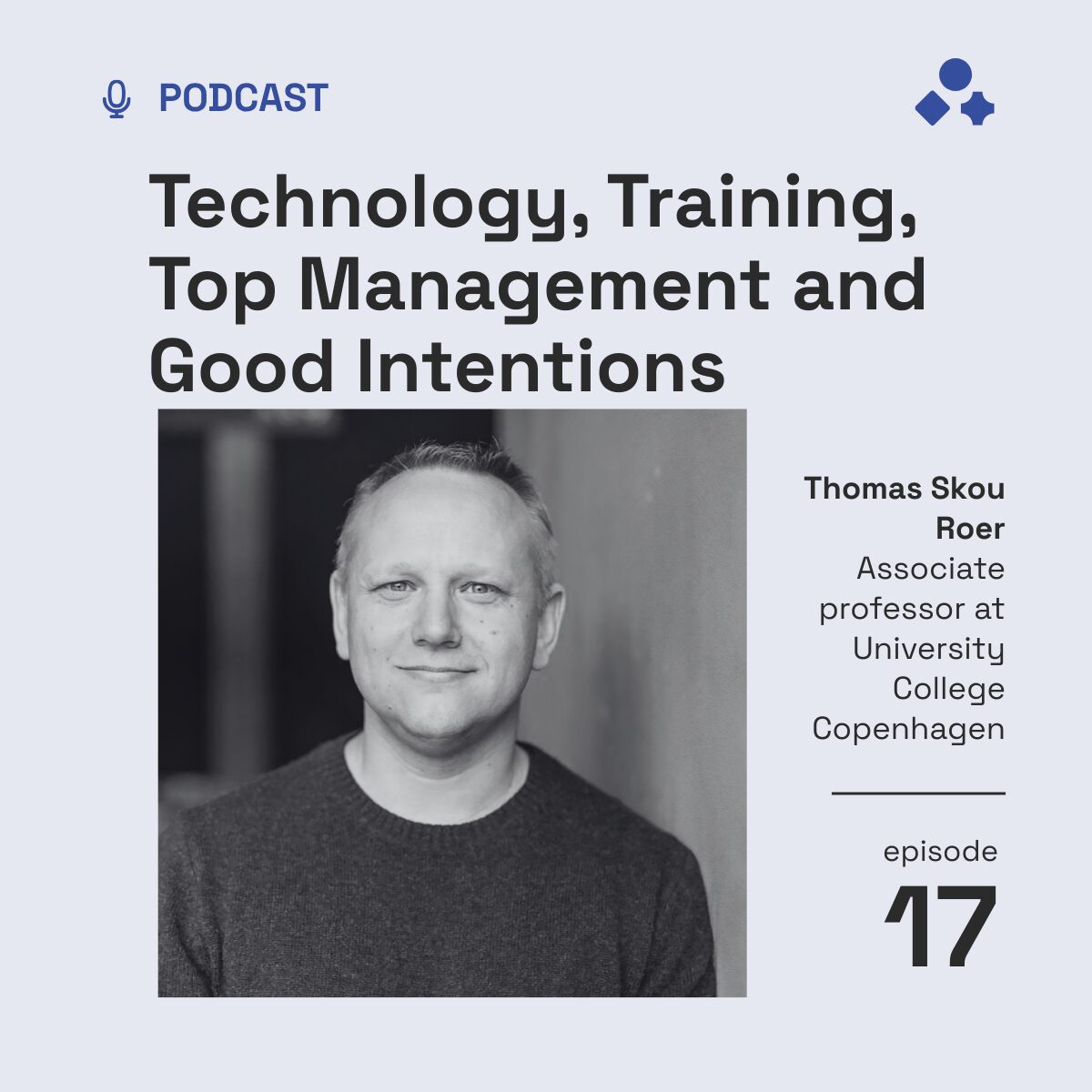
Episode 17. Interview Recording, Technology, Top Management and Good Intentions
Denmark was an early mover on investigative interview recording reform — its national standard arrived in 2015. Yet in 2021, for the first time in almost 100 years, two Danish police officers were convicted of attempting to coerce a confession.
Thomas Skou Roer, one of the architects of that standard, joins Dr. Ivar Fahsing to examine what implementation really requires, and why getting policy right is only the beginning.
In this candid and thought-provoking episode of Beyond a Reasonable Doubt, host Ivar Fahsing speaks with Thomas Skou Roer, associate professor at University College Copenhagen and former Danish criminal detective with 18 years of service, about the complex realities of implementing investigative interviewing standards in Denmark – and why having good standards doesn’t guarantee good practice.
Mr Roer opens with a powerful articulation of investigative interviewing’s ethos: “Do no harm, but get the job done.” This dual mandate – balancing safeguards with efficiency – reflects the tension inherent in modern policing. He traces how this balance has shifted over generations, with the “safeguard edge” becoming heavier than the “efficiency edge,” though both remain essential. The conversation then explores whether this represents genuine progress or simply a reframing of age-old police practices.
The episode reveals Denmark’s investigative interviewing journey in frank detail. In 2015, Denmark implemented a national standard for investigative interviewing, eliminating district-by-district variations and establishing unified training programs. This followed groundbreaking research by Kristina Kepinski-Jakobsen on witness and suspect interviewing. Thomas was part of the working group that developed these standards, leading one of the key projects.
Yet in 2021 – six years after implementation – two Danish police officers were convicted of attempting to coerce a confession, marking the first such convictions in nearly 100 years. Another officer was charged (though acquitted) in 2024. These cases starkly illustrate the gap between implementing standards and changing practice, revealing that Denmark “still has some way to travel” despite its progressive standards.
Mr Roer contrasts the Danish police’s implementation struggles with the Danish Immigration Services’ success story. Immigration Services fully adopted investigative interviewing principles, mandating onboarding training for all personnel with no exceptions – offering a model for what effective implementation can look like when organisational commitment is genuine.
The conversation explores why implementation fails even when standards exist. Our guest emphasises that investigative interviewing isn’t merely a technique – it’s a fundamental mindset change requiring professional critical thinking skills and metacognition. The traditional guilt-perspective, confirmatory approach is deeply human, not just a police failing, making change difficult without active intervention.
A central theme is the structural and managerial barriers to implementation. Mr Roer argues the problem isn’t officers on the ground, who genuinely want to do quality work, but rather management systems, performance measurement frameworks, and political pressures. He critiques Denmark’s “new public management” approach, which measures police efficiency through arbitrary timelines rather than actual public safety outcomes. True change requires “critical mass” at the top management and political levels – not just within police forces but throughout the justice system.
Our guest offers a compelling vision for the future: AI-powered decision support tools that flag interesting interview moments (“the interviewee said this was a boring kiss – what does that mean?”), identify weak hypotheses requiring more investigation, and help officers manage the massive data flows in modern investigations. He acknowledges the danger of creating “checklist policing” but argues that officers need technological support given the cognitive demands and volume of information they face.
In a powerful comparison, Dr Fahsing likens police to military forces – both responsible for keeping citizens safe, both requiring massive technological investments to equip personnel properly. Norway and Denmark invest billions in F-35 fighters and frigates for armed forces, yet similar thinking about technological investment in policing lags behind. Thomas agrees, noting that military conflicts create awareness driving investment, while policing needs similar critical mass for change.
Episode Length: Approximately 36 minutes
Production: Davidhorn – Beyond a Reasonable Doubt Podcast
Host: Dr Ivar Fahsing
Equipped For Justice – Supporting ethical, human rights-compliant investigations worldwide
About the guest
Thomas Skou Roer
is an associate professor at University College Copenhagen, where he teaches criminology. He trains various organizations in investigative interviewing and investigative practice. Thomas is part of the ImpleMendez group, where he leads the Training Curriculum Network, establishing a global standard for training materials in investigative interviewing.
Thomas is a trained criminal detective in the Danish police, where he served for 18 years. He was part of the working group that created the current standard for interviewing in the Danish police, implemented in 2015. He is also a trained forensic psychologist from the University of Liverpool. His work focuses on the practical implementation challenges of evidence-based investigative practices and the structural changes required for sustainable reform in criminal justice systems.
Related products


Transcript
Guest: Thomas Skou Roer
Host: Dr. Ivar Fahsing
Recorded: 26 November 2025
Dr. Ivar Fahsing (Host)
I would like to invite you, Thomas Skou Roer from Denmark, to this episode of Beyond a Reasonable Doubt, Season 3. As you know, Thomas, the topic of this year’s season is the implementation of investigative interviewing. Although you no longer work for the Danish police authority, you worked for them for quite some time and you are deeply engaged in investigative practice in Denmark still. It is an honour to have you here today. Welcome. 00:00
Thomas Skou Roer (Guest)
Thank you very much, Ivar. Thank you for inviting me. It is a big honour for me and I am looking forward to a good conversation. 00:38
Dr. Ivar Fahsing (Host)
Fantastic, Thomas. You and I go quite far back, so some of these questions I am fairly sure we share opinions on — which makes it all the more interesting to discuss them over the next 40 minutes. Let me begin by inviting you to share with me and our listeners: what do you think is the ethos of investigative interviewing? 00:45
Thomas Skou Roer (Guest)
Well, the ethos — at least from my perspective — is, I think, ‘do no harm’. But I also think there is another side to it: it has to get the job done as well. So it is ‘do no harm, but get the job done’. By saying that, I mean that we need safeguards, but we also need efficiency in our investigative interviewing practice — so that we obtain the information we need while taking care of the people we need to safeguard. It is a double-edged sword, you might say, although it is of course heavier on the safeguard side. 01:12
Dr. Ivar Fahsing (Host)
That is a really good answer. If you try to reflect critically — don’t you think our colleagues from a generation before us would say that they did exactly the same? 01:50
Thomas Skou Roer (Guest)
Probably, yes. I think it is also about philosophy — about how much weight should be placed on each edge of that double-edged sword. I think there are still two edges, but the safeguard edge is becoming slightly heavier these days than the efficiency part. Whereas earlier, I would say it was probably more efficiency over safeguards. The balance has shifted. 01:59
Dr. Ivar Fahsing (Host)
Definitely. It is, as you say, about having your sword sharp — but about how to wield it in a safer way. 02:38
Thomas Skou Roer (Guest)
Yes. And maybe it is not about the sword itself, but about the wielding of it. Yes, I think that is a very good analogy. 02:47
Dr. Ivar Fahsing (Host)
So if you take us into a Danish context, Thomas — what is the situation in Denmark today? And looking back over the years you have been involved in strategic development there, why is this development important for Denmark? 02:56
Thomas Skou Roer (Guest)
Well, if we start with a brief historical perspective — around 2010, we had a very good researcher, one you know as well, Kristina Kæpinski-Jakobsen, who did some very interesting research on the interviewing of suspects. Before that, she had also done research on general witness interviewing — very important work. There were efforts to build on that and expand upon it, to change the landscape of investigative interviewing. But it remained fragmented. There was no national standard for how investigative interviewing should be conducted in Denmark. Different districts still had different approaches, although broadly there was probably reasonable agreement. But there was no standard. 03:15
I was part of a working group and had the pleasure of leading one of the projects on developing the new standard for investigative interviewing in the Danish police, which was implemented in 2015. With that, we had a new national standard — there could no longer be different perspectives. It was one perspective. At least, that was the idea. And in practice, of course, challenges remain. But that was the intent.
This also meant that from 2015, training in investigative interviewing began to be implemented on a much larger scale than we had been used to. Not large enough, but bigger. There were a number of basic programmes — perhaps one to three days — just to create an appetite, if you will. And then further courses for volume crime, and of course a course for video interviewing of child witnesses. That is essentially where we remain today, ten years later.
Some local initiatives have attempted to expand the training regime, with mixed results. There have been efforts on trauma-informed interviewing for sexual assault victims, so things are still being done. But what is really interesting is this: we implemented the standard in 2015, and yet in 2021, for the first time in almost 100 years, two police officers were convicted of attempting to coerce a confession. Which was quite surprising — we had this new standard, and it had been implemented, but apparently not well enough. And in 2024, another officer was charged with the same offence, though acquitted. That too speaks to where Denmark stands right now.
The status is that we have implemented investigative interviewing and developed the Danish model of interviewing, but implementation-wise we still have some way to travel. We are not there yet — in the Danish police at least. I say it that way because I also train the Danish Immigration Service, and they have fully adopted investigative interviewing as their standard. Everyone is onboarded using this method, and there are two courses — basic and advanced — as well as a child interviewing course. So the police is not alone in this. There are a number of actors employing the principles of investigative interviewing in Denmark, as is the case globally.
Dr. Ivar Fahsing (Host)
When we talk about the ethos of investigative interviewing — in my world, Thomas, it is probably not about interviewing at all. It is about how you think about an investigation, and what your job is. As you know, we often talk about what I call the change of mindset — the mindset that is traditionally more guilt-presumptive and confirmatory, which is not only something that comes from being a police officer. It is 100% human: to be suspicious, and to confirm that suspicion, especially if your job is to investigate. If you do not actively address that, the mindset will not change. 08:13
Thomas Skou Roer (Guest)
That is very true, Ivar. I absolutely agree. It is very much a mindset change. Investigative interviewing and investigative practice very much rely on professional critical thinking skills — and mostly, I would say, metacognition. Asking questions of your own thinking: why am I thinking this? What am I basing this on? That is one of the most difficult aspects of this. 08:59
And it is very often trained as an appendix — ‘Could you do a bit on bias? A bit on System 1 and System 2 thinking?’ But mostly, people want something about techniques. In some ways, you should perhaps switch that around: put the emphasis on the mindset, with techniques as a smaller component.
Dr. Ivar Fahsing (Host)
That is so interesting. And of course very difficult to do. I remember, Thomas, many years ago — when I was approaching this task in Norway together with my good friend and colleague Asbjørn Rachlew — I was called up by the director of the National Criminal Investigation Service in Norway, Kripos. His name was Arne Husse. He was quite a well-known figure in Norway at the time. He called me when I was still a very young officer at the homicide unit — on a temporary placement, not yet in a permanent position. They wanted to observe and evaluate you before offering a permanent role, given the travel and teamwork involved. 10:18
He said he had heard I wanted to do a master’s in forensic and investigative psychology in England, and asked me why. My head of the homicide department joined that meeting — and he was clearly not a fan of me going to England. He was one of the older gurus of confession-based interviewing in Norway. He saw it as a threat to the way things were done. He could not say no to the director outright, but he made clear he did not approve: ‘You should send one of the older officers.’
The director challenged him in front of me: ‘Listen — what this young man is asking for is not support to spend two years on a beach in Thailand. He is asking for support to sit exams and work hard at a university in England. Do you understand that?’ And then, to my boss: ‘Help him do it. Get out of here.’ On the way out, the director stopped me, took my arm, and said: ‘Ivar, if you have any more problems with this man, come straight to me.’
That is the kind of leadership you need from senior officers — the courage it takes to embrace change in a national police culture. Thinking about that, Thomas, and relating it to the top management of the Danish police — have you seen similar change cultures or similar agendas?
Thomas Skou Roer (Guest)
Interesting question, Ivar. I have to say — no. Not directly like that. The closest we had was a period when Denmark had a bachelor’s degree in policing — during that time, top management were involved in supporting officers to pursue master’s degrees, partly to secure the required accreditation. But even then, it was more practical than visionary. It was not driven by a sense of direction towards evidence-based policing. The idea of evidence-based policing has been attempted multiple times in Denmark and is still being pursued, but senior management have called for it without necessarily understanding what it fully entails. Which makes implementation very difficult. 13:19
My own story about doing a master’s is almost the complete opposite of yours. When I was accepted at a British university, I wrote to everyone in the Danish police — from the National Police Commissioner to my own district leaders — telling them I had this opportunity and asking for their support. And they all responded, in effect: ‘What a wonderful opportunity for you — have fun doing it on your own, because we will not support you.’ To be fair, my local managers supported me with time, for which I was very grateful. But at the top level, the response was not visionary. Practical, at best.
Dr. Ivar Fahsing (Host)
Exactly. From a Norwegian perspective — and we are not saying right or wrong here, Thomas, only history will tell — when I look back to when I started as a detective in Oslo in the early 1990s, Copenhagen was always very close. We had close cooperation and learned a great deal from each other — perhaps more accurately, we learned a great deal from the Danish. I trained at Politigården for months and learned a lot. Denmark was in many ways more modern in its general policing approach. But when it comes to this particular topic, I feel Denmark has been absent from the international stage in a way that is surprising. Norway has advanced considerably. And it is genuinely interesting — because you would expect Denmark, as a country that leads on human rights and modern liberal democracy, to be at the forefront. 16:07
Thomas Skou Roer (Guest)
Yes, absolutely. The Danish police is a very closed organisation — as I imagine most police forces are. There is a very small research community looking into police practice, and access is very difficult because the police is protective of itself. That means knowledge within the organisation is largely tacit. And you cannot easily develop tacit knowledge. I think that is the biggest problem in Denmark: a great deal of hard-earned experience exists, but it is all tacit — there is no development. 17:41
And when development does occur, it tends to be practically oriented: a new piece of software, a new piece of equipment — as opposed to a new methodology. Interestingly, there has been significant development on the operational side of policing — riot control, for instance. The dialogue concept for public order situations has evolved considerably, and new tactics were developed following a major incident in 1993. So within that part of the police, there has been meaningful change. But within investigative practice, we are not there yet. We miss people like your director. We miss people who will stand up and say: we will no longer do it this way. We will do it this way.
Dr. Ivar Fahsing (Host)
Absolutely. And as you will know, the Attorney General of Norway has since made it very clear — in writing, through national circulars — that there is no other way. That brings me to our next topic, Thomas. Thank you for being so open and frank about this. I do not enjoy speaking about Denmark in difficult terms — it is one of my favourite countries, and the Danish are among my favourite people. So thank you for being honest and scrutinising this uncomfortable subject. 20:36
Thomas Skou Roer (Guest)
You are welcome. 21:18
Dr. Ivar Fahsing (Host)
Does the Danish police record their interviews today? 21:19
Thomas Skou Roer (Guest)
They record some of their interviews. All child interviews are recorded. And there is a pilot scheme, running for a couple of years now, allowing sexual assault victims to be interviewed on video for use in court. But it has had mixed results. Not everyone chooses to do it, and defence attorneys are not always supportive. It turns out that some defence attorneys refrain from asking critical questions during the recorded interview, reserving them for court — because even though victims are recorded, they may still be required to attend court to answer additional questions that arise during the investigation. Victims have reported feeling that they end up going through another interview, which is the opposite of the intended effect. 21:31
As for other serious cases — homicides or similar offences — some districts have implemented recording and may choose to do so, but they are not obligated. That is a significant difference. They can, but they are not required to. And I do not know how many actually choose to record. Transparency on that is essentially non-existent.
Dr. Ivar Fahsing (Host)
Yes. 23:16
Thomas Skou Roer (Guest)
And I feel I need to add: I was part of the police for 18 years, and I want to be clear that there are many very committed, very talented investigators and leaders in the Danish police. It is not all bad. But there is some structure around them that needs to change for them to do better work. 23:35
Dr. Ivar Fahsing (Host)
Sometimes I think about this as a systemic change, Thomas. You cannot blame the individuals inside the organisations. It is a systemic change, and linking it to individuals would not be fruitful. I completely agree. 24:15
The reason I am interested in recording is this: from a Norwegian perspective, it was what I believe was the tipping point for many leading Norwegian detectives. When we agreed to pursue a national implementation of recording equipment — already in 1998 — officers felt extremely insecure about pressing that red button and recording themselves. And that feeling made them think: I need training, backed by science. There is a very interesting link between recording and professional development.
Thomas Skou Roer (Guest)
Yes, I agree. If officers were obligated to record all their interviews, and those recordings were subject to scrutiny — by an external authority, or at least internally, not every interview but a sample — I think that would make a huge difference to both implementation and quality. 25:28
Dr. Ivar Fahsing (Host)
It is like the old saying from Lord Kelvin: if you cannot measure it, you cannot improve it. 25:56
Thomas Skou Roer (Guest)
Yes. Yes, exactly. 26:02
Dr. Ivar Fahsing (Host)
A last question, Thomas, and then we will wrap up. Looking ahead — from a Danish perspective, and also more broadly, given that you work internationally and are heading to the Caribbean next week to lecture on these topics — what innovations, technologies, or policy changes do you think we need to effectively support positive change in investigation quality and interview quality? What do you hope for, or see coming? 26:04
Thomas Skou Roer (Guest)
That is a big question, Ivar. Globally, every officer feels under pressure resource-wise — they feel they do not have enough time to do quality work. My hope for the future is that we find suitable technologies to help officers manage an investigation and to think. I know that last part may sound controversial — of course we want officers to think for themselves. But they have been doing that for 500 years, and too many errors occur. We need decision support. 26:37
In this era of AI, it should be possible to develop tools that can flag things during or after an interview: ‘The interviewee said something interesting here — explore that further.’ Or for the investigation more broadly: ‘This hypothesis looks weak — the leads in this direction need to be strengthened.’ Or: ‘This line is strong — can we make it even stronger?’ Something that helps officers analyse the vast amounts of data that flow into an investigation today. The sheer volume — from digital and physical forensics to interviews and many other sources — is massive. Managing that information to know which directions to pursue is a significant challenge.
So the hope is technological support for decision-making. Of course, that is also risky — if the system says ‘go’, people just go. So we still need to train officers in critical thinking. Technology should support, not replace, that.
On policy — that is more difficult. In Denmark, I hope we are approaching a critical mass for change. We have many gifted and talented officers, but some structures that need to change. One specific hope: moving away from New Public Management principles as a way of steering the police, and towards measuring what actually matters — are you creating a safer, higher-quality society for your citizens? Rather than: ‘In a violence case, you must complete step one within five days and step two within ten.’ That is a skewed way of measuring police efficiency. A significant policy change is needed, and I hope we are getting closer to the critical mass that would enable that discussion — how to create and maintain an efficient and legitimate police force in Denmark.
Dr. Ivar Fahsing (Host)
Thank you, Thomas. That is a really interesting answer. It makes me think that what we sometimes call investigative interviewing becomes in many ways a denominator for something more fundamental — for what police work should really be about. And I think your answer reflects that. This is about something bigger. It is not just a technique. 31:49
Thomas Skou Roer (Guest)
No, definitely not just a technique. And Ivar, we could talk about this at length — and we have, many times. There has to be awareness at upper management level to drive this change. I honestly do not think the problem lies with the people on the ground. They want to do good work. But they need their managers to help them do quality work. And those managers need support from their managers, and so on up the chain. So when we talk about top management, we also need to talk about the political level — how political leadership needs to be on board with changing the system around the police. I do not think it is enough to have police managers on board, because those managers have managers in the Justice Department, and so on. Ultimately, this requires political will. 32:21
Dr. Ivar Fahsing (Host)
That is an interesting discussion, Thomas — because if you compare the two great forces in a country supposed to keep the people safe: the police, from an internal perspective, and the military, from an external one. What you are saying about equipping officers for the job expected of them requires big investments in technology and people. And that becomes even clearer when you compare policing with the armed forces. Norway and Denmark, like most Northern European countries, are now buying F-35s — an enormous investment to give pilots the technology they need. Norway is buying new frigates — major investments so our naval officers can operate effectively in the North Atlantic with equipment that is not outdated. And I think what you are saying is that the same mindset is necessary when it comes to policing, all the way from the top down. 33:51
Thomas Skou Roer (Guest)
Yes, absolutely. And I think the difference right now between the armed forces and the police is that there is a great deal of public and political awareness driving military investment — the war in Ukraine, the conflict in Gaza, wars around the globe. That is pushing the agenda. What I am talking about with critical mass is that we need similar awareness when it comes to policing. That is the hope. 35:24
Dr. Ivar Fahsing (Host)
Thomas, I would like to close with this. A wise man once said: if you are the smartest person in the room, you are in the wrong room. Today, I was in the right room. Thank you so much for a really engaging and thoughtful conversation. 36:03
Thomas Skou Roer (Guest)
Thank you, Ivar. And I feel exactly the same — what an honour. 36:27
END OF TRANSCRIPT
© 2025 Davidhorn. All rights reserved.