Davidhorn
  • Solutions

    By Industry

    • Policing
    • Defence
    • Immigration and Customs
    • Child and Witness Interviewing
    • Local Authorities
    • Corporate Investigations
    • Healthcare

    By use case

    • Vulnerable witness interview
    • Suspect interview
    • Field interviews

    Featured

    Featured image_productivity

    eBook: Empowering Modern Policing with Innovative Solutions

    This eBook is based on two recent independent reports from Norway and the United Kingdom that review inefficiencies in policing and suggest improvements.

  • Products

    Recorders

    • Capture App
    • Portable Recorder
    • Mini Recorder
    • Fixed Recorder
    • Software Recorder
    • Covert Recorders

    Interview Management

    • Ark Interview Management

    Integrations

    • Integrations & Configuration
    Promotional graphic for a free webinar titled 'How to Use Davidhorn's Investigative Interview Solution,' hosted by Magnus Green. Features a blue speech bubble icon with the text 'Free webinar' and a blurred-out image of a person inside a blue circle.
  • Customers
  • Resource Hub

    Resource Hub

    • Blog
    • Datasheets
    • eBooks and Whitepapers
    • Events
    • Podcasts
    • Webinars

    Featured

    Featured image_productivity

    eBook: Empowering Modern Policing with Innovative Solutions

    This eBook is based on two recent independent reports from Norway and the United Kingdom that review inefficiencies in policing and suggest improvements.

  • Partners

    Partners

    • Partner overview
    • Become a Partner

    Featured

    Featured image_productivity

    eBook: Empowering Modern Policing with Innovative Solutions

    This eBook is based on two recent independent reports from Norway and the United Kingdom that review inefficiencies in policing and suggest improvements.

  • Company

    Company

    • About
    • CareerJobs at Davidhorn
    • Contact
    • Customers

    Featured

    Featured image_productivity

    eBook: Empowering Modern Policing with Innovative Solutions

    This eBook is based on two recent independent reports from Norway and the United Kingdom that review inefficiencies in policing and suggest improvements.

My account
Support
Book a Demo
Davidhorn
Account
  • Solutions
    • By Industry
      • Policing
      • Defence
      • Immigration & Customs
      • Barnahus
      • Local Authorities
      • Corporate Investigations
    • By use cases
      • Vulnerable witness interview
      • Suspect interview
      • Field interviews
  • Products
    • Ark Interview Management
    • Mobile Recorder
    • Portable Recorder
    • Mini Recorder
    • Fixed Recorder
    • Software Recorder
    • Covert Recorders
    • Admin and API Integrations
  • Customers
  • Resource Hub
    • Blog
    • Datasheet
    • eBooks
    • Events
    • Podcasts
    • Webinars
  • Partners
    • Partner overview
    • Become a Partner
  • Company
    • About
    • News
    • Contact
Support
Book demo
  • Davidhorn
  • Barnahus Moldova Interview Recording Equipment Case Study

    Barnahus Moldova Interview Recording Equipment Case Study

    From Crisis to Hope: How Moldova Revolutionised Child Protection with Technology and Determination

    How a small NGO in Eastern Europe transformed child protection services and became a beacon of hope for vulnerable children and Barnahus interview recording across the region.

    A Vision Born from Urgency

    In 1997, when Daniela Sîmboteanu founded the National Centre for Child Abuse Prevention (CNPAC) in Moldova, the initial plan was modest: conduct some prevention seminars in schools and wrap up the project within a few months. Twenty-seven years later, she sits as CEO of an organisation that has fundamentally transformed how Moldova protects its most vulnerable citizens – children who have experienced violence.

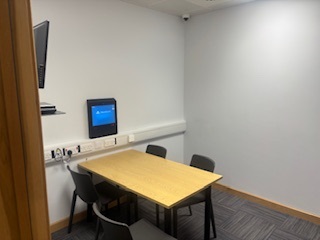
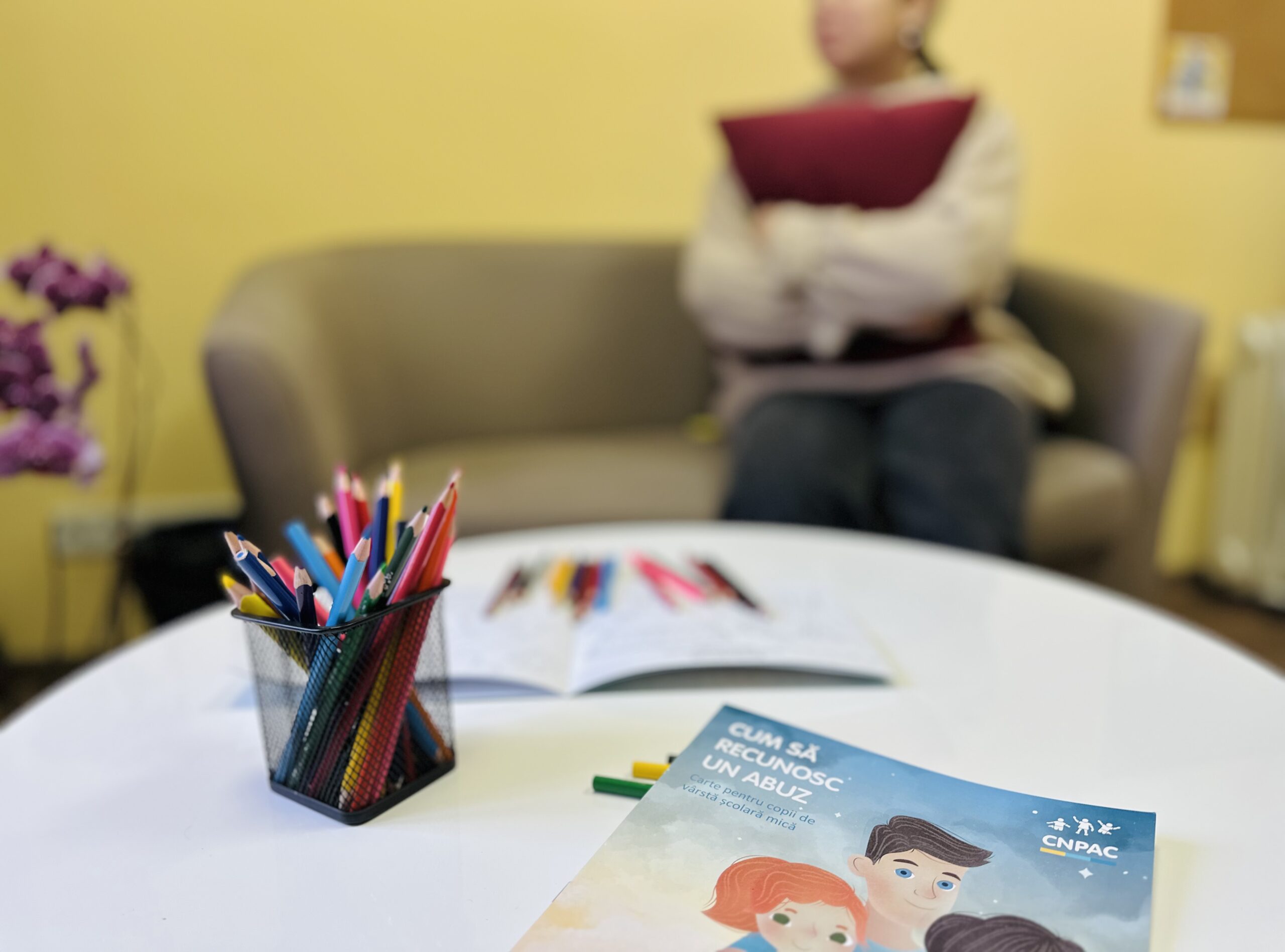
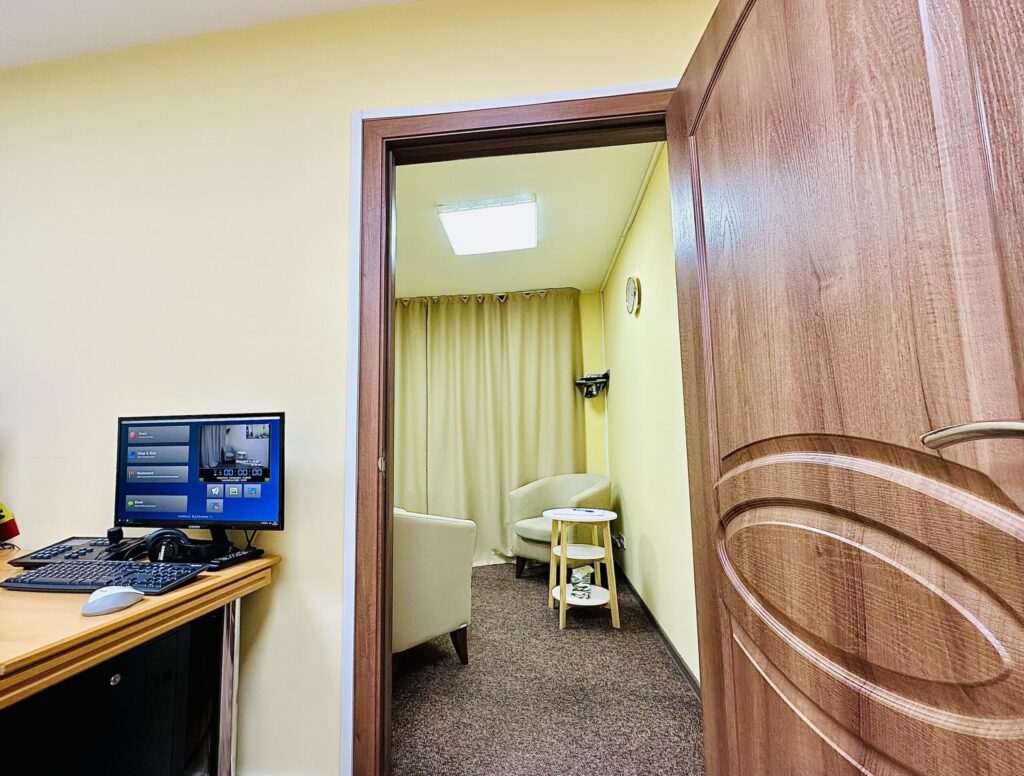
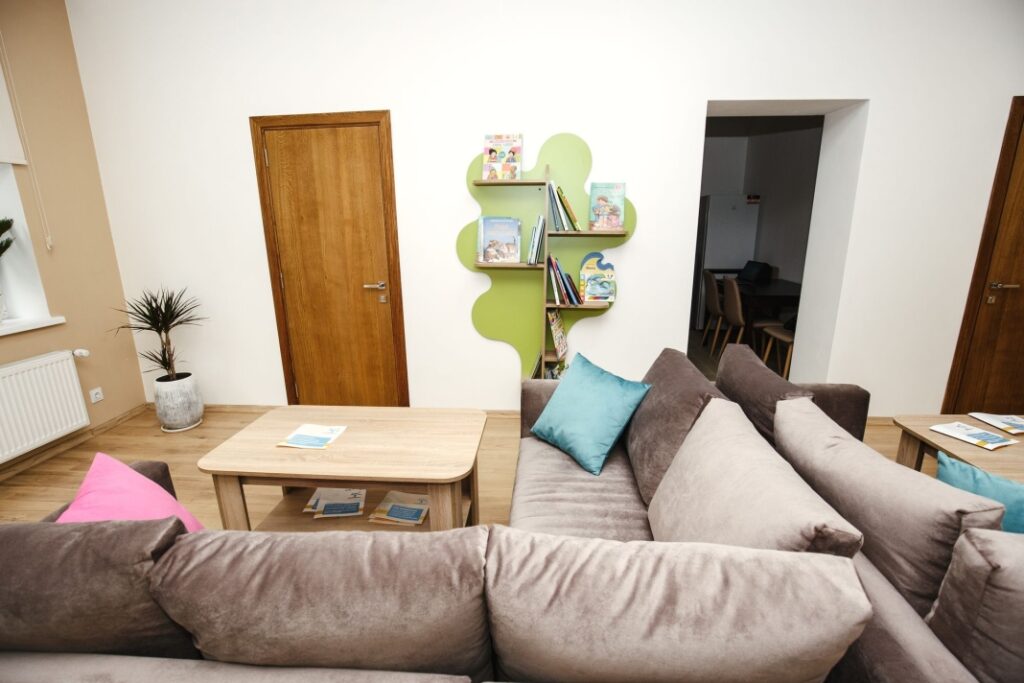
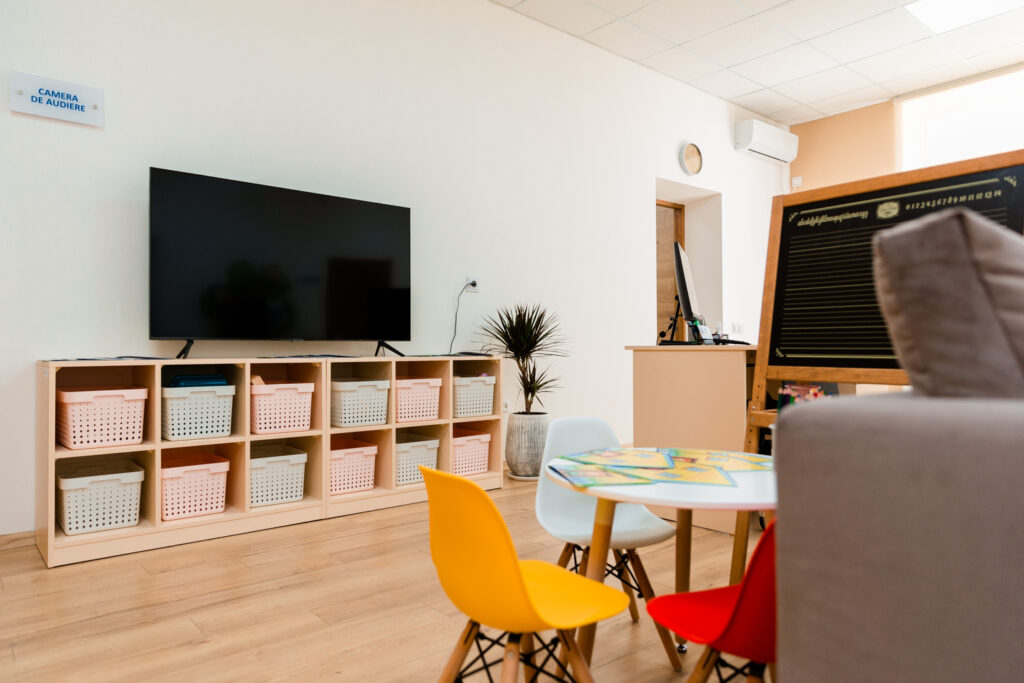
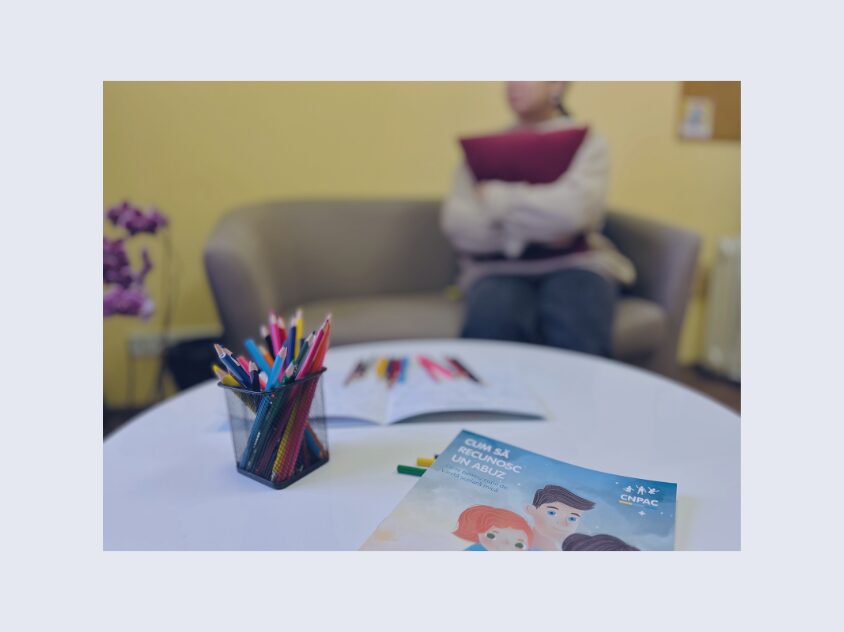
    Barnahus Interview Recording room

    “We quickly realised that the phenomenon of violence against children was very widely present in our society,” Ms Sîmboteanu reflects on those early days. What started as a short-term prevention project has evolved into something much more significant: Moldova’s first Barnahus (Children’s House), a revolutionary approach to child protection.

    The statistics that drove CNPAC’s evolution are sobering. Each year, over 1,000 children in Moldova become victims or witnesses of various crimes, with approximately 400 cases involving sexual violence. For these children, the traditional justice system often meant enduring a process that could be as traumatic as the original crime itself.

    Summary

    The Challenge: Moldova’s National Centre for Child Abuse Prevention (CNPAC) faced a justice system that unintentionally re-traumatised child victims. Over 1,000 children annually had to retell their experiences multiple times – to police, prosecutors, and in court – causing re-traumatisation and producing inconsistent evidence that undermined prosecutions.

    The Solution: After achieving legislative reform in 2012 mandating audio-video recorded interviews in child-friendly environments, CNPAC launched Moldova’s first Barnahus (Children’s House) in 2019. They selected Davidhorn’s Indico Software Recorder system for its reliability, court-ready evidence quality, and PACE compliance, installing systems in both Chișinău and Bălți.

    The Results:

    • Child Welfare: Children now give testimony once in a safe, supportive environment instead of enduring multiple interviews
    • Evidence Quality: Legal professionals report significantly improved evidence quality, with some now travelling from southern Moldova specifically to use the Barnahus facilities
    • Systemic Change: Moldova became the first country in the post-Soviet space to implement the Barnahus model, setting a precedent for the entire region
    • Professional Capacity: 28 certified interviewers trained nationwide, conducting over 400 specialised interviews annually
    • Sustainable Funding: Government now funds Barnahus as an essential state service, ensuring long-term sustainability
    • Ripple Effect: Other victim service providers across Moldova – including women’s shelters and UN Women projects – adopted similar recording technology, inspired by CNPAC’s success

    Key Quote: “Our cooperation with Davidhorn is super smooth and we are very happy with it. From the moment the equipment was installed, we used it. We didn’t have any difficulties.” – Diana Țeberneac, Child Interviewer, CNPAC

    “For us at Davidhorn, it has been an honour to contribute to such a groundbreaking child protection initiative in Moldova. Technology alone will not create change, but when combined with the dedication and vision of partners like CNPAC, it becomes a powerful enabler.” – Stig Knutsen, Chief Partner Officer, Davidhorn

    Implementation: Seamless installation and ongoing support from Davidhorn, with local IT partnership ensuring rapid resolution of any technical issues. The reliable technology has been instrumental in building professional confidence in the new system and proving its worth in courtrooms, transforming initial resistance into advocacy amongst legal professionals.

    Read more

    The System That Failed Children

    “Before 2012, child victims often had to repeat their testimony several times — first to the police officer, then to the prosecutor, and later in court. Each new interview meant reliving the trauma, and inconsistencies could appear simply because the child was exhausted or frightened. We understood that the system itself was unintentionally causing harm, which made the reform not only necessary but urgent,” says Ms Sîmboteanu.

    This was the reality in Moldova’s traditional legal system – a bureaucratic maze that didn’t prioritise child welfare and evidence gathering.

    Irina Sandu, CNPAC’s Head of Programmes, puts it clearly: “Unfortunately, not all children in Moldova yet benefit from hearing procedures conducted in child-friendly, properly equipped environments that meet established quality standards. This is precisely the area we strive to improve.”

    This commitment continues to guide the organisation’s mission – to advocate for and support the systemic changes needed to ensure that every child has access to safe, adapted, and trauma-informed environments during judicial processes.

    Building the Foundation for Change

    CNPAC’s transformation of Moldova’s child protection system didn’t happen overnight. It required a methodical, decade-spanning approach that combined grassroots service delivery with high-level legislative advocacy.

    The organisation first established credibility through direct service provision. In 2003, with support from the Open Society Institute, they created Moldova’s first specialised centre for psychological rehabilitation of child victims. This wasn’t just about providing services – it was about learning what worked and building the evidence base that would later convince policymakers and professionals to embrace radical change.

    Since 2006, CNPAC has expanded to offer accompaniment services for child victims in courts, giving them firsthand experience of the system’s shortcomings. This ground-level understanding proved invaluable when they began advocating for legislative reforms.

    The breakthrough came through international collaboration. Working with partners such as the OAK Foundation and the World Childhood Foundation, and drawing inspiration from successful models in Iceland and other Nordic countries, CNPAC launched a regional campaign for child-friendly justice. The goal was ambitious: to completely restructure how Moldova’s legal system interacted with child victims.

    Legislative Victory: Changing the Law

    In 2012, CNPAC achieved what many thought impossible: Moldova’s Parliament introduced special articles in the Criminal Proceeding Code specifically addressing the rights of child victims. The new legislation mandated that children who were victims of sexual crimes, domestic violence, or human trafficking must be interviewed under special conditions by specially trained professionals.

    Crucially, the law also required that all such interviews be recorded using audio-video technology – a requirement that would later prove essential for ensuring evidence quality and preventing re-traumatisation through repeated questioning.

    “This was stipulated in legislation,” Ms Sîmboteanu notes with evident pride. The mandatory recording requirement wasn’t just a bureaucratic checkbox; it was a fundamental shift toward evidence-based, trauma-informed justice.

    But legislative change was only the beginning. The harder work lay ahead: implementing these new requirements and training a generation of professionals to work differently with child victims.

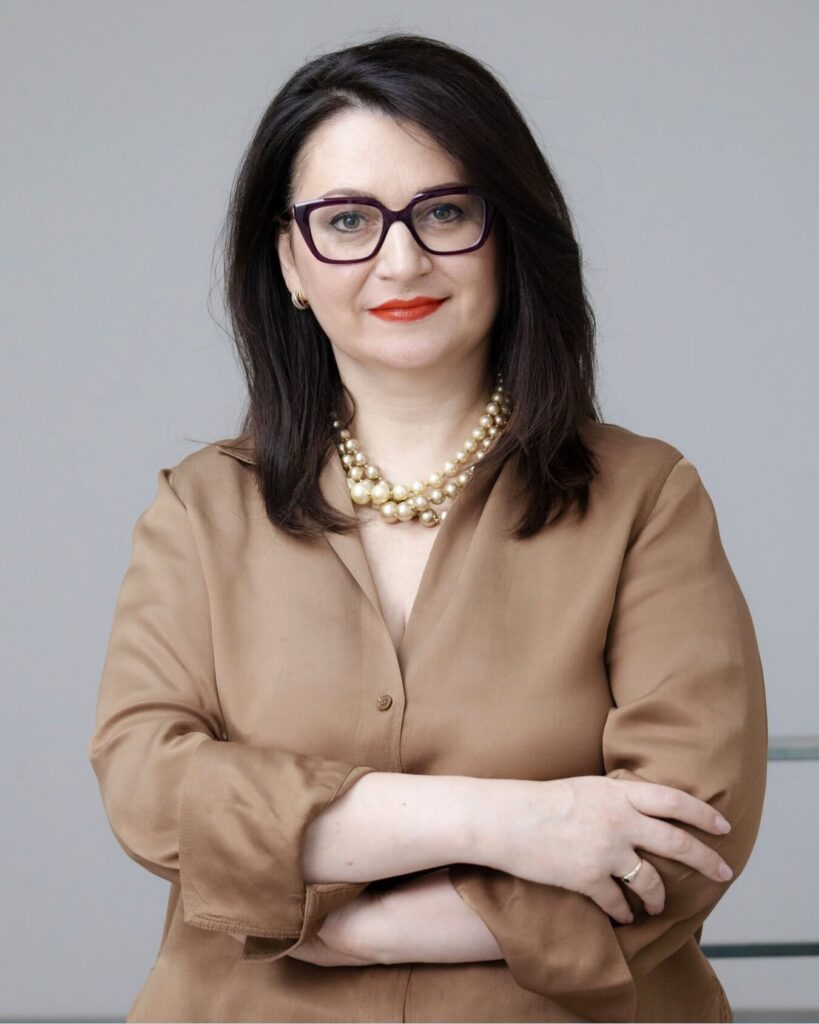
    Daniela Sîmboteanu from CNPAC Moldova

    From Law to Practice: The First Barnahus

    In 2015, CNPAC, in partnership with UNICEF and the Ministry of Justice, organised Moldova’s first training program for specialised child interviewers, bringing in international experts such as Nigel King from the UK and Bert Groen from the Netherlands. Among the first cohort was Diana Țeberneac, who would become one of Moldova’s most experienced child interviewers and a key figure in the Barnahus implementation.

    The training marked a crucial transition from advocacy to service delivery. CNPAC wasn’t content to simply campaign for change – they wanted to demonstrate how child-friendly justice could work in practice.

    In 2014, the first specialised interview equipment was purchased and installed within the social rehabilitation service managed by CNPAC. Since then, for more than ten years, hundreds of children from the central region of the country have been interviewed by trained professionals using this specialised setup, ensuring both legal reliability and emotional safety.

    The culmination of these efforts came in 2019 when the Moldovan government approved the regulatory framework for Barnahus services. CNPAC obtained accreditation as a service provider and launched Barnahus North in Bălți, serving 12 administrative units in northern Moldova and covering 571 localities.

    This wasn’t just another service launch – it was the first Barnahus implementation in the post-Soviet space, making Moldova a pioneer in child protection reform for the entire region.

    “Amicul” Child and Family Psychosocial Assistance Center

    Technology as an Enabler: The Davidhorn Solution

    With legislative requirements for audio-video recording in place, CNPAC needed technology that could meet international standards while proving reliable in Moldova’s specific context. They selected Davidhorn’s Indico Software Recorder system, a choice that would prove instrumental to their success.

    The technology implementation was refreshingly straightforward. “Our cooperation with Davidhorn is super smooth and we are very happy with it,” explains Diana Țeberneac. “From the moment the equipment was installed, we used it. We didn’t have any difficulties.”

    “For us at Davidhorn, it has been an honour to contribute to such a groundbreaking child protection initiative in Moldova. Technology alone will not create change, but when combined with the dedication and vision of partners like CNPAC, it becomes a powerful enabler. Our cooperation throughout the project has been excellent – from the very first meetings to the installations of our systems in Chișinău and Bălți. Seeing how our recording solutions have helped ensure both reliable evidence and a more humane experience for children is deeply meaningful to us. This is exactly why we do what we do – to support professionals who are making a real difference in the lives of vulnerable children.” reflects Stig Knutsen, Chief Partner Officer at Davidhorn.

    CNPAC installed two systems: one at Barnahus North in Bălți and another at their center in Chișinău. The fixed HD recording solutions provide court-ready evidence while maintaining the child-friendly environment essential to the Barnahus model.

    The reliability of the technology has been crucial to building professional confidence in the new system. If technical issues do arise, they’re resolved quickly through Davidhorn’s partnership with local IT specialists.

    Perhaps most importantly, the technology has proven its worth in the courtroom. Legal professionals who were initially sceptical of the Barnahus approach have become advocates after seeing the quality of evidence produced through recorded interviews.

    Barnahus Moldova

    Overcoming Resistance: The Power of Evidence

    Not everyone embraced the Barnahus model immediately. State institutions showed initial reluctance to use the new facilities, preferring familiar processes despite their limitations.

    “They were rather reluctant, or they were not very happy to come to the Barnahus,” Irina Sandu recalls. “We really faced this kind of resistance from the system, and it took us quite a lot to overcome this challenge.”

    The sources of resistance were understandable: habit, comfort with existing processes, and insufficient understanding of the benefits. Some professionals genuinely didn’t see what was wrong with the old way of doing things.

    CNPAC’s response was characteristically methodical. Instead of arguing or applying pressure, they focused on demonstrating results. They organised study visits, invited sceptical professionals to observe Barnahus interviews, and carefully documented outcomes.

    The strategy worked. Professionals began to recognise that Barnahus interviews produced higher-quality evidence while reducing trauma for children. Some legal teams now travel from southern Moldova to the northern Barnahus specifically because they trust the quality of evidence produced there.

    “We have some professionals who are ready to travel from South to North,” Daniela Sîmboteanu explains. “They are confident that interviewing in Barnahus will ensure good evidence for the case.”

    Measuring Success: More Than Numbers

    Today, CNPAC’s Barnahus operations handle over 400 interviews annually with just nine active interviewers – a testament to both the demand for services and the efficiency of the model. With the support of UNICEF, the organisation has trained 28 certified interviewers nationwide, creating a professional network capable of supporting expanded services.

    But the most compelling evidence of success comes from the people the system serves. CNPAC conducted research to gather feedback from children and parents who had experienced Barnahus interviews. The results were overwhelmingly positive: families appreciated the less traumatic experience and the supportive environment that helped them navigate the legal system.

    Children describe feeling safer and more comfortable. Parents report that the process felt “less dramatic” and more manageable. Legal professionals acknowledge that they get better evidence from interviews conducted in the Barnahus environment.

    “They appreciated the assistance in the Barnahus that helped them to pass easily through this experience,” Daniela Sîmboteanu explains. “To be in contact with the legal system in a less traumatic way.”

    Barnahus Interview Recording room
    “Amicul” Child and Family Psychosocial Assistance Center

    A Model That Inspires: The Ripple Effect

    The success of CNPAC’s Barnahus has created ripple effects throughout Moldova’s victim services landscape. Other organisations working with victims of violence have contacted Davidhorn directly, seeking similar recording technology for their facilities.

    “We are very glad that other service providers were inspired by us,” Ms Sîmboteanu notes with satisfaction. Women’s shelters, UN Women projects, and other victim services have adopted similar technology, creating what amounts to a new standard for recording in Moldova’s victim services sector.

    This organic spread of best practices demonstrates something crucial: when organisations implement genuinely effective solutions, other professionals notice and want to replicate them. The technology spillover effect has amplified CNPAC’s impact far beyond their direct services.

    Sustainable Success: The Funding Model

    Perhaps most impressively, CNPAC has achieved something many NGOs struggle with: sustainable government funding for their services. In 2019, the regulatory framework established Barnahus as a state-funded service, with CNPAC operating as an accredited service provider while the government covers operational costs.

    “The reality is that the state is conscious that Barnahus is a state-funded service,” Daniela Sîmboteanu explains. “As NGO, we’re service providers, so they procure the services from our organisation, but they cover the cost.”

    This represents a fundamental shift in how Moldova approaches child protection – from viewing it as charity work to recognising it as an essential government service. CNPAC still needs to advocate annually for budget increases, but the principle of state responsibility has been established.

    The sustainable funding model has allowed CNPAC to focus on service quality and expansion rather than constant fundraising. It also signals to other countries that Barnahus services can be integrated into national budgets rather than remaining dependent on international donors.

    Looking Forward: Technology and Expansion

    As CNPAC plans for future expansion – a second Barnahus is planned for southern Moldova with UNICEF support – they’re also thinking about technological evolution. The current CD/DVD recording format is becoming obsolete as fewer devices can read these formats.

    “Less and less devices accept CDs,” Diana Țeberneac observes. “We anticipate this as a risk, and we think that maybe these hearings could be registered in a more modern and sustainable way.”

    Davidhorn’s evolution toward cloud-based storage and digital sharing capabilities aligns perfectly with these needs. As the Barnahus network expands, the ability to share evidence securely and efficiently will become increasingly important.

    The technology needs reflect a broader trend: what started as a solution to meet legislative requirements has become a platform for continuous improvement in how Moldova protects children.

    Lessons for the World: A Replicable Model

    CNPAC’s 27-year journey from emergency response to systemic transformation offers valuable lessons for child protection advocates worldwide, particularly in regions with similar legal and cultural challenges.

    The first lesson is patience combined with persistence. Systemic change takes time, but consistent effort guided by clear vision can achieve remarkable results. CNPAC didn’t try to change everything at once; they built credibility through service delivery, then used that credibility to advocate for legislative change, then demonstrated how the new laws could work in practice.

    The second lesson is the power of evidence-based advocacy. Rather than simply arguing that the old system was wrong, CNPAC demonstrated that their approach produced better outcomes for everyone involved – children, families, and legal professionals alike.

    The third lesson is the importance of reliable technology partnerships. CNPAC’s success with Davidhorn’s recording systems wasn’t just about having good equipment; it was about having a technology partner that understood their mission and provided reliable support when needed.

    International Recognition: Moldova as a Pioneer

    CNPAC’s achievements have gained international recognition through their founding membership in the Barnahus Network, which connects similar initiatives across Europe. Their experience is particularly valuable because Moldova represents the first successful Barnahus implementation in a post-Soviet context.

    “From the methodological point of view, it’s the European BARNAHUS network,” Daniela Sîmboteanu explains when asked about international support. This international recognition brings both validation and responsibility. Other countries in similar situations look to Moldova’s experience for guidance on how to implement child-friendly justice reforms in challenging institutional environments.

    Barnahus Interview Recording room
    Barnahus Moldova

    The Human Impact: Why This Matters

    Behind every statistic and policy change are individual children whose lives have been fundamentally improved by CNPAC’s work. Diana Țeberneac, one of the first certified interviewers, has personally conducted hundreds of interviews using the Barnahus model and Davidhorn technology.

    The difference in children’s experiences is profound. Instead of facing a room full of intimidating officials, children now interact with a single, specially trained professional in a comfortable, child-friendly environment. The recording technology ensures their testimony is captured accurately without requiring repeated questioning.

    For families navigating the justice system, the Barnahus approach transforms what could be a traumatic ordeal into a manageable process where their children’s well-being is the primary concern.

    For legal professionals, the higher quality of evidence obtained through proper interviews leads to better case outcomes and more successful prosecutions of crimes against children.

    A Story of Hope and Determination

    The story of CNPAC and Moldova’s Barnahus implementation is ultimately a story about what’s possible when vision meets determination and reliable partnerships. It demonstrates that even small organisations in resource-constrained environments can achieve transformational change when they combine a clear mission, strategic thinking, and the right technology partners.

    Over nearly three decades, CNPAC has played a leading role in shaping Moldova’s child protection system – from developing policies and intersectoral cooperation mechanisms to promoting national prevention programs that have changed both professional practices and public attitudes toward child abuse.

    But beyond organisational success, CNPAC’s story represents something more significant: proof that with persistence, partnership, and proper technology support, it’s possible to build justice systems that truly serve their most vulnerable citizens.

    In a world where child protection often feels like a challenge, Moldova’s experience offers something precious: a working model that others can adapt and implement, creating a future where every child victim of violence has access to justice without re-traumatisation.

    The revolution in Moldova’s child protection system is far from complete – expansion to other regions continues, new technologies are being explored, and more professionals are being trained. But the foundation has been laid, the model has been proven, and the children of Moldova are safer because of it.

    Related products

    • Fixed Recorder

      Fixed HD recorder for high security interview rooms.

    • Capture

      Mobile app recorder for capturing evidence on the go.


    • Ark Interview Management

      Receive, monitor, and keep evidence throughout its lifetime.

    November 6, 2025
  • In Memory of David Horn

    In Memory of David Horn

    In Memory
    of David Horn
    – Pioneer of Investigative Interview Recording 

    On Thursday, 31st October, David Horn, founder of David Horn Communications Ltd. (which later became the UK branch of what is today Davidhorn), passed away peacefully.

    David Horn was a driving force in transforming investigative interviewing in the United Kingdom and beyond, and his contributions have left a strong mark on the pursuit of justice. 

    He began his career in law enforcement, rising to the rank of Chief Superintendent.

    
In the 1980s, David Horn served on the original Steering Committee for the introduction of recorded interviewing in the UK – a groundbreaking reform that would fundamentally change how police interviews were conducted and how justice was served. 

    In 1985, David founded David Horn Communications Ltd. with a clear mission: to develop technology that would ensure the integrity of investigative interviews. His company became the first to create a digital recording solution that fully met UK legislation for interview recording, setting new standards for accuracy and reliability in criminal investigations. 

    
David understood what many in law enforcement were coming to recognise – that mishandled police interviews had led to grave injustices and wrongful convictions, destroying innocent lives while allowing real perpetrators to walk free. He dedicated his life’s work to preventing such tragedies. 

    Throughout his career, David was passionate about combining technology with scientifically based, non-coercive interviewing techniques proven to be far more effective in discovering the facts. He believed deeply that proper interview recording wasn’t just about technology – it was about protecting the innocent and ensuring justice prevailed. 

    In February 2021, David Horn Communications Ltd. was acquired by Indico Systems AS, and in March 2023, the companies merged under a new name: Davidhorn – a fitting tribute to the man who started it all. 

    Today, police forces around the world regard Davidhorn as their trusted partner in implementing police interview recording solutions and methods. This global reach and reputation stand as a testament to David’s vision and unwavering commitment to justice. 

    David leaves behind his wife Maureen and sons Jeff and Stuart, who continue to carry forward his legacy within the company. 

    We are grateful for everything David Horn accomplished. His legacy lives on in every properly recorded interview and every innocent person whose life is protected by the standards he helped establish. 

    Our thoughts are with Maureen, Jeff, Stuart, and all of David’s family and friends. 

    Davidhorn Team

    November 7, 2025
  • Reading Council Interview Recording Equipment Case Study

    Reading Council Interview Recording Equipment Case Study

    Reading Council – Streamlining Investigations with Interview Recording Equipment

    Reading Borough Council‘s fraud investigation team was facing challenges with their outdated interview recording equipment. The 10–15-year-old portable DVD burning solution was becoming unreliable, with concerns about its longevity and audio quality. Paul Davis, with his background in the Metropolitan Police, recognised the need for a modern, efficient system that would save time and reduce costs. To ensure that interviews done across the council can be used in the court of law, the recorder in use must be recorded with a PACE compliant recorder. 

    Reading Borough customer case

    “We were still using the DVD burning solution with a portable machine that was quite old. The audio quality wasn’t that great, and there were concerns about the longevity of the kit,” explains Paul Davis from Reading Borough Council’s fraud investigation team. 

    Summary

    The Challenge: Reading Borough Council’s fraud investigation team was struggling with a 10-15 year old portable DVD burning system that had poor audio quality and reliability concerns.

    The Solution: After evaluating five different companies, they chose Davidhorn’s cloud-based digital interview recording system for its user-friendly design, reputation, and PACE compliance.

    The Results:

    • Time Savings: Eliminated DVD labelling, burning, and physical setup processes
    • Cost Reduction: Built-in transcription replaced expensive external transcription services
    • Storage Efficiency: Removed the need for physical DVD storage (previously kept for 6 years)
    • Enhanced Workflow: Added features like real-time streaming for complex investigations, tagging significant moments, and secure sharing capabilities
    • Multi-Department Impact: Now serves five council departments including Environmental Health, Licensing, and Planning Enforcement

    Key Quote: “It’s been a breath of fresh air for everybody. We can’t believe how we’ve worked without this before, as everyone’s been using the same antiquated system.” – Paul Davis, Reading Borough Council

    Implementation: Seamless process with strong customer support, transforming an outdated system into a modern, efficient digital solution that’s fit for purpose in today’s investigative environment.

    Read more

    The Search for Modern Council Interview Recording Equipment

    Paul spearheaded the initiative to find a replacement system, collaborating with five departments across the council, including Environmental Health, Licensing, Planning Enforcement, and Private Sector Housing. After evaluating different companies through demonstrations of their hardware and software, Davidhorn emerged as the clear choice. 

    “I wanted to implement a new solution because we were still using the DVD burning system.” says Mr. Davis. 

    What ultimately convinced Reading Borough Council to choose Davidhorn was the user-friendly nature of the equipment, the cloud option and the company’s reputation. 

    “The kit looked really user-friendly, which was really important for us. We didn’t want anything that was going to be too complicated. Davidhorn is very reputable around the world and has a good background in this field,” he emphasises. 

    A Seamless Implementation Process 

    The transition to the new council interview recording equipment was remarkably smooth. Mr. Davis worked closely with Davidhorn to install the equipment in a PACE interview suite. 

    “Once we’d agreed everything and made the decision to go with the kit from Davidhorn, it was a fairly easy process. We had to provide all the schematics of the building and room, but the whole process was really straightforward. I had a really good rapport with the Davidhorn Customer Success team member, who was on the phone or at the end of an email if I needed something. It was all very seamless.” 

    Paul Davis from Reading Borough Council’s fraud investigation team

    Transforming the Interview Process 

    The new cloud-based interview recording system has revolutionised how Reading Borough Council conducts interviews. The team has embraced the technology enthusiastically, appreciating its ease of use and time-saving features. 

    “It’s been a breath of fresh air for everybody. The team have found it really straightforward. You set up your metadata prior to the interview, go to the interview suite, put in your PIN, hit the button, and record. When the interview is concluded, it gets saved onto the cloud,” Mr. Davis explains. 

    The system offers several advanced features that have enhanced the team’s workflow, including transcription services, tagging significant moments during interviews, and streaming capabilities for complex investigations. 

    “What is really helpful is where you can stream the interview to someone who’s not actually in the room, which is beneficial for complex investigations where we may want someone like an expert in a specific field observing the interview.” 

    Completed install in Borough Council
    Completed install in Borough Council

    Significant Time and Cost Savings 

    The switch to Davidhorn’s digital solution has eliminated many time-consuming processes associated with the old DVD-based system. 

    “Our time is so critical and having a recording solution like this saves a lot of time. In the days of using DVDs, you’re having to peel off labels to put onto the discs for master and working copies. Setting up the old PACE machine, plugging it in, getting the speakers set out – the new solutions save us so much time.” 

    The built-in transcription service is another area where the council is seeing benefits. 

    “We’re using the transcription feature, and I think that’s going to be evolving as it gets better. It’s still very good and it’s going to save us a lot of money because we previously used an external transcription company.” 

    Storage has also been simplified dramatically, eliminating the need for physical storage space for DVDs that must be kept for up to six years. 

    “We’ve got a huge cupboard full of DVDs, which we’re not going to have anymore. That’s really good for us. We can’t believe how we’ve worked without this before, as everyone’s been using the same antiquated system.” 

    Looking to the Future 

    As the team continues to explore the system’s capabilities, they’re looking forward to using additional features such as the sharing function to collaborate with their legal team, and they’re eager to see enhancements to the transcription service. 

    Overall, Reading Borough Council’s experience with Davidhorn has been overwhelmingly positive, transforming their interview process into something more efficient, reliable, and fit for purpose in the modern age. 

    Related products

    • Fixed Recorder

      Fixed HD recorder for high security interview rooms.

    • Capture

      Mobile app recorder for capturing evidence on the go.


    • Ark Interview Management

      Receive, monitor, and keep evidence throughout its lifetime.

    May 30, 2025
  • Investigative Interviewing – 10 Essential Steps for Success

    Investigative Interviewing – 10 Essential Steps for Success
    The 10 Essential Steps for Successful Investigative Interviewing

    The 10 Essential Steps for Successful Investigative Interviewing 

    Professional investigative interviewing is a systematic process that requires meticulous
    preparation, skilled execution, and thorough evaluation. Drawing from established
    protocols and best practices, we present a 10-step framework that ensures effective,
    ethical, and legally sound interviews.

    Step 1: Case-Related Preparations 

    The foundation of any successful interview lies in comprehensive case preparation. Review all available investigation materials, evidence, and documentation thoroughly. Develop multiple working hypotheses rather than pursuing a single theory. Consider the interview’s aims and objectives clearly, and analyse the interviewee’s background, including their rights and any particular needs they may have. 

    This preparation phase is crucial for addressing all information needs, maintaining objectivity and ensuring you’re equipped to handle various scenarios that may arise during the interview process.  

    Step 2: Physical Preparations 

    Secure an optimal investigative interview location with minimal distractions and suitable conditions for effective communication. Ideally, the environment should be distraction-free yet comfortable, enabling clear dialogue without external interference. 

    Summary

    • Comprehensive Preparation is Essential – Successful interviews require thorough case review, optimal physical setup with tested recording equipment, and mental readiness with multiple working hypotheses.
    • Build Trust Through Professional Engagement – Apply the HEAR principle (Honesty, Empathy, Autonomy, Reflection) to establish rapport, explain procedures clearly, and assess interviewee vulnerability and legal requirements.
    • Allow Free Narrative Before Probing – Let interviewees provide complete uninterrupted accounts using TED prompts (Tell, Explain, Describe), then systematically clarify using the 5WH framework (Who, What, When, Where, Why, How).
    • Evaluate and Reflect for Continuous Improvement – Assess whether interview objectives were met, analye your performance techniques, document lessons learned, and plan next investigative steps based on obtained information.

    Make necessary arrangements for legal representation, interpreters, or support personnel as appropriate to the case. Test all recording equipment thoroughly – Davidhorn’s professional A/V recording systems ensure reliable documentation with multiple backup options, providing the support essential for evidential integrity. 

    Step 3: Mental Preparations 

    Maintain an open mind and analytical flexibility throughout the process. Consider alternative hypotheses to the evidence and anticipate different scenarios that may unfold. Show empathy and genuine interest in the interviewee’s situation. Mental preparation involves setting aside preconceptions and preparing to adapt your approach based on the interviewee’s responses and demeanour. 

    This psychological readiness enables you to respond appropriately to unexpected developments whilst maintaining professional composure. 

    Step 4: Engage and Explain 

    Initiating Contact and Establishing Ground Rules. Apply the HEAR principle consistently: Honesty, Empathy, Autonomy, Reflection. This approach builds trust whilst maintaining professional boundaries and ensuring the interviewee feels respected throughout the process. Continuously assess interviewee vulnerability considering age, mental and physical health, trauma, and other risk factors. Implement appropriate legal safeguards and consider specialist involvement when necessary. Utilise communication aids to ensure effective dialogue throughout the process. 

    At the beginning of an investigative interview, the interviewer should: 

    • Build rapport through empathy and respect. 
    • Assess the interviewee’s well-being to ensure they are fit for the interview. 
    • Clearly explain:
      • The case under investigation and the purpose of the interview. 
      • For suspects: the grounds for suspicion – explain what and why (without disclosing detailed evidence). 
      • For suspects: the right to legal counsel and the right to remain silent. 
      • All legal and practical procedures, including audio/video recording. 
      • That participation is voluntary (where applicable). 

    Establish Ground Rules. The interviewer should then set the following expectations: 

    • Everything said matters – the interviewee should provide as much detail as possible, even if it seems minor (e.g., “describe my pen”). 
    • Don’t filter – report everything, even if it seems irrelevant or uncertain. 
    • Focus and effort – memory recall takes concentration and may be tiring. 
    • Open communication – the interviewee should feel free to: 
      • Ask if they don’t understand. 
      • Say if they don’t know.
      • Correct misunderstandings or raise concerns about leading/inappropriate questions.
    • Interview structure – outline the topics to be covered, timing, and planned breaks. 
    • Confirm understanding – ensure the interviewee grasps the information and how it applies. 

    Rapport building isn’t about manipulation – it’s about creating an atmosphere where communication based on mutual respect and facts can occur. This foundation is crucial for establishing trust and obtaining reliable information. 

    Step 5: First Account Phase  

    Allow the interviewee to present their complete account without interruption. Exercise strategic patience and maintain control by carefully pacing and actively listening, rather than jumping into questioning. 

    Use TEDS prompts (Tell, Explain, Describe, Show Me) to encourage detailed responses. Document PLATCOM elements systematically: People, Location, Actions, Times, Communication, Objects and Motives. This free narrative phase often reveals crucial information that targeted questioning might miss. Do not interrupt. Postpone your probing until the first account is entirely over.  


    Listen to our podcast on Investigative Interviewing


    Step 6: Active Listening Throughout   

    Listen actively to understand the interviewee’s perspective and facilitate the flow of information. Use silence and non-verbal cues to demonstrate engagement. Note inconsistencies, gaps, and areas requiring clarification whilst maintaining supportive engagement. 

    Step 7: Clarify and Disclose 

    Systematically review new information, your interview objectives, address PLATCOM elements and address all unclear points and gaps before introducing evidence or new information. If applicable, present key information stepwise to test account accuracy whilst minimising memory contamination. 

    Ensure comprehensive coverage using the 5WH framework: Who, What, When, Where, Why, How. This systematic approach ensures no crucial elements are overlooked. 

    Step 8: Close and Inform 

    Conclude the interview professionally by inviting the interviewee to provide additional information or ask questions. Clearly explain next steps, contact procedures, and timeline expectations. 

    Express appreciation for their cooperation and end respectfully, regardless of case outcomes. This professional closure may prove valuable for future interactions. 


    Read our eBooks on how to plan Investigative Interviews

    eBooks & whitepapers

    Step 9: Evaluate Interview Outcomes 

    After the interview, conduct a structured evaluation to determine whether the objectives were achieved. This includes: 

    • Assessing the quality and completeness of the information obtained in relation to the interview plan and investigative priorities. 
    • Identifying gaps, inconsistencies, or unanswered questions that may require clarification or follow-up. 
    • Evaluating the interviewee’s responses in light of known evidence and other case material. 

    This step helps ensure that the interview contributes meaningfully to the investigation and highlights any immediate follow-up actions. 

    Step 10: Reflect, Learn, and Plan Ahead 

    Following the evaluation of the content, reflect critically on your own performance as an interviewer: 

    • Analyse your interview techniques – What worked well? What could have been done differently? 
    • Identify areas for improvement in planning, communication, question style, rapport-building, and adaptability. 
    • Document lessons learned to support your ongoing professional development and improve future interviews. 
    • Determine and plan next steps in the investigation, such as re-interviews, new lines of inquiry, or further evidence collection. 

    This reflective phase ensures continuous learning and helps maintain high standards of investigative practice. 

    Conclusion 

    Successful investigative interviewing requires systematic preparation, skilled execution, and thorough evaluation. By following these 10 essential steps and maintaining focus on the core principles of Rapport, Empathy, Active Listening, and Professional Integrity, investigators can conduct interviews that are both effective and ethically sound. 

    The investment in proper technique and equipment, including professional recording systems that ensure complete documentation, pays dividends in terms of case outcomes and legal admissibility. Remember: the quality of your interviews determines the quality of your investigations. 

    Written by:

    Marta Hopfer-Gilles

    Fact checked by Ivar A Fahsing (PhD)  

    Claude AI was used while creating this post

    Related products

    • Fixed Recorder

      Fixed HD recorder for high security interview rooms.

    • Portable Recorder

      Lightweight, PACE-compliant interview recorder for any setting.

    • Capture

      Mobile app recorder for capturing evidence on the go.


    • Ark Interview Management

      Receive, monitor, and keep evidence throughout its lifetime.

    July 31, 2025
  • How to Use Davidhorn’s Investigative Interview Recording Solution.

    How to Use Davidhorn’s Investigative Interview Recording Solution.

    How to Use Davidhorn’s Investigative Interview Solution. Webinar with Davidhorn CTO Magnus Green.

    (Live-recorded webinar from Davidhorn Police Interview Summit 2025)

    Fill out the form to watch the webinar.
 Please fill in all required fields (*) before submitting your inquiry.

    Our latest webinar, recorded during the Davidhorn Police Interview Summit 2025, was hosted by Magnus Green, Chief Technology Officer at Davidhorn.

    Magnus provided an exclusive hands-on demonstration of our comprehensive investigative interview solution, showcasing over 40 years of research and development in action.

    In this practical walkthrough, Magnus explored:

    • Complete interview workflow management – From initial planning through to post-interview analysis, demonstrating how technology supports the entire investigative process
    • Real-time interview demonstration – Live recording session showing seamless integration between planning, conducting, and monitoring interviews
    • Digital evidence integrity – How Digital Fingerprint SHA-256 and encryption protect evidence from tampering while maintaining court admissibility
    • Advanced transcription and AI assistance – Automated speech-to-text transcription capabilities with human oversight to ensure accuracy and reliability
    • Secure sharing capabilities – Controlled access systems for sharing evidence with legal representatives while maintaining audit trails and security
    • Flexible deployment options – Browser-based solutions that work across devices while respecting data sovereignty requirements

    Magnus’s demonstration highlighted how modern interview management technology streamlines investigative workflows while maintaining the highest standards of evidence integrity. Built with input from practitioners to solve real-world problems, this solution enhances efficiency without compromising the quality or admissibility of evidence.

    Discover how this proven technology transforms investigative interviewing from planning to courtroom presentation, supporting justice through innovation.

    "*" indicates required fields

    This field is for validation purposes and should be left unchanged.
    Country*
    Consent

    June 23, 2025
  • PACE Compliant Interview Recording in Trafford Council

    PACE Compliant Interview Recording in Trafford Council

    Trafford Council – modernising PACE Compliant Interview Recording

    Trafford Council‘s Regulatory Services team faced a unique challenge when their CD-based interview recording system mysteriously disappeared. This unexpected event became the catalyst for their digital transformation journey, leading them to implement PACE-compliant Davidhorn’s cloud-based interview recording solution.

    PACE Compliant Interview Recording in Trafford Council

    “We looked at our options and thought, digital is going to be so much easier,” explains Suzanne Whittaker, Regulatory Services Manager at Trafford Council. “Also, our IT within the Council is trying to push as much as possible down a cloud-based route for storage and data protection purposes.”

    Summary

    The Challenge: Trafford Council’s CD-based interview recording system mysteriously disappeared, forcing them to find a modern replacement for their regulatory services.

    The Solution: Implemented Davidhorn’s cloud-based PACE compliant digital interview recording system across seven departments including Environmental Health, Trading Standards, and Environmental Enforcement.

    The Results:

    • High-Volume Capability: Handles up to 40 interviews monthly for busy departments like Environmental Enforcement
    • Secure Sharing: Eliminated IT headaches with one-button sharing and full audit trails
    • Cost Savings: Built-in transcription replaced expensive external transcription services
    • Improved Case Management: Centralised storage for recordings and documents in one place
    • 25-Year Evolution: Progressed from tape recorders to CDs to modern cloud technology

    Key Quote: “The biggest benefit that we’re seeing compared with our previous equipment is the ability to share. It’s just removed that hassle.” – Suzanne Whittaker, Trafford Council

    Implementation: Despite initial IT firewall challenges, the system now serves multiple departments efficiently. Officers quickly adapted after initial nervousness, realising “it’s just so easy to use.”

    Unique Angle: A missing CD recorder became the catalyst for comprehensive digital transformation across regulatory services.

    Read more

    PACE Compliant Interview Recording in Trafford Council: A History of Evolution

    The council’s interview recording systems have evolved significantly over the years. As Ms. Whittaker recalls, “When I first joined Trafford, which was about 25 years ago, we were using a tape recorder, it was the double tape recorder. That got upgraded about 10 years ago to a CD system.” 

    This latest transition to a digital solution represents the council’s commitment to embracing modern technology and improving efficiency across multiple departments, including Environmental Health, Environmental Protection, Private Sector Housing, Pest Control, Trading Standards, Licensing, and the Environmental Enforcement team. 

    Meeting High-Volume Demands with PACE Compliant Interview Recording Solution

    The need for a reliable and efficient interview recording system is particularly crucial for departments like Environmental Enforcement, which handles, for instance, fly-tipping cases. To ensure that interviews conducted across the council can be used in the court of law, the recorder in use has to be PACE compliant – a requirement that Davidhorn’s solution fully meets. 

    “They probably do the most interviews, and they say that they can do up to 40 a month,” notes Ms. Whittaker. “Other teams, such as licensing, can conduct several interviews a month. In contrast, other teams may only need the equipment a handful of times in a year.” 

    With such varying usage patterns across departments, the cloud-based system offers the flexibility and reliability required to support all teams effectively whilst maintaining the strict compliance standards necessary for legal proceedings. 

    Transforming Case Management Through Digital Innovation 

    The implementation of Davidhorn’s digital interview recording system has significantly improved Trafford Council’s case management processes. “With case management, it’s a lot easier because you’ve actually got a place where you’ve got information stored, you’ve got the recording and any documents you need in the same place,” she explains. 

    However, the most substantial benefit has been the ability to share recordings securely. “The biggest benefit that we’re seeing compared with our previous equipment is the ability to share,” Ms. Whittaker emphasises. “Previously, this was a real issue for us.” 

    The council faced considerable challenges with their former CD-based system, particularly when responding to requests for interview copies. “Our IT team did not like us copying CDs because if somebody requested a copy of the interview, we would then have to try to find a way to copy the CD. And of course, they don’t let you plug anything into the network for data security.” 

    This limitation created significant obstacles in their workflow, which have now been eliminated. “It’s just removed that hassle now that actually there’s that button there that we can share it. And it’s fully audit trail.” 

    Cost and Time Savings Through Automated Transcription 

    The built-in transcription functionality offers substantial benefits for the council’s stretched resources. “Officers don’t have the time to transcribe their own interviews, so we then would have to go out and pay an external company to transcribe it, which, when finances are always being squeezed in the Council, it’s another benefit.” 

    By bringing transcription in-house through an automated system, Trafford Council can redirect financial resources to other critical services while reducing the administrative burden on their officers. 

    Navigating Implementation Challenges 

    The transition to the digital system was not without its challenges. The implementation process required close collaboration with the council’s IT department to address technical hurdles such as firewall configurations. 

    Another challenge was ensuring officers felt confident using the new system, particularly given the critical nature of PACE interviews. “I think there’s always going to be a nervousness, especially with a PACE interview, you don’t get to do it again if it goes wrong. That’s your one opportunity as an officer to get evidence that you can use in a court case if needed.” 

    However, these initial concerns have diminished as teams have become more familiar with the equipment. “The more that they have played around with it and started to use it, they’ve realised that it’s just so easy to use.” 

    Looking to the Future 

    As Trafford Council continues to embrace digital solutions, the Davidhorn recording system is playing a vital role in modernising its regulatory services. The council is now exploring additional functionalities, such as the visual recording capability, which represents a significant advancement from their previous audio-only system. 

    “Our IT team has loads of digital projects going on, so moving to a cloud-based system means they don’t have to be concerned with the storage and management of the data in this cloud-based solution,” Ms. Whittaker notes, highlighting the importance placed on these essential public protection services. 

    The transition to cloud-based interview recording exemplifies Trafford Council’s commitment to digital transformation, improving efficiency, and maintaining the highest standards in their regulatory functions despite the challenges of limited resources and competing priorities. 

    Related products

    • Fixed Recorder

      Fixed HD recorder for high security interview rooms.

    • Capture

      Mobile app recorder for capturing evidence on the go.


    • Ark Interview Management

      Receive, monitor, and keep evidence throughout its lifetime.

    June 2, 2025
  • How to Set Up a Police Interview Recording Room.

    How to Set Up a Police Interview Recording Room.

    How to Set Up a Police Interview Recording Room. Webinar with Jeff Horn.

    (Live-recorded webinar from Davidhorn Police Interview Summit 2025)

    Fill out the form to watch the webinar.
 Please fill in all required fields (*) before submitting your inquiry.


    Our latest webinar, recorded during the Davidhorn Police Interview Summit 2025, was hosted by Jeff Horn, General Manager of Davidhorn UK. Jeff brought decades of specialised expertise in ensuring that crucial investigative work translates into admissible evidence in court.
    In this comprehensive technical presentation, Jeff explored:

    • Scientific foundations of police interview recording – Drawing from the original UK trials that established PACE legislation and the lessons learned from historical cases like the Guildford Four
    • Audio as primary evidence – Understanding why clear, audible audio takes precedence over video, and the technical requirements for court admissibility
    • Room design and environmental considerations – Practical guidance on acoustic treatment, camera positioning, and creating optimal recording environments for both suspect interviews and vulnerable witness suites
    • Technology standards for tamper-proof police interview recording – The critical role of Digital Fingerprint (SHA-256), AES-256 encryption, and maintaining chain of evidence integrity
    • Specialised considerations for vulnerable witnesses – Technical adaptations needed for child interview suites and trauma-informed recording approaches

    "*" indicates required fields

    This field is for validation purposes and should be left unchanged.
    Country*
    Consent

    Jeff’s presentation highlighted how proper technical implementation of recording systems directly impacts the admissibility and quality of evidence, ensuring that the vital work of investigators and the courage of witnesses translates effectively into the courtroom.
    Discover how these evidence-based technical standards and proven methodologies support justice while protecting the integrity of both the investigative process and those who participate in it.

    June 10, 2025
  • Transforming police interviewing in Devon, Cornwall and Dorset

    Transforming police interviewing in Devon, Cornwall and Dorset

    Transforming police interviewing in Devon, Cornwall and Dorset

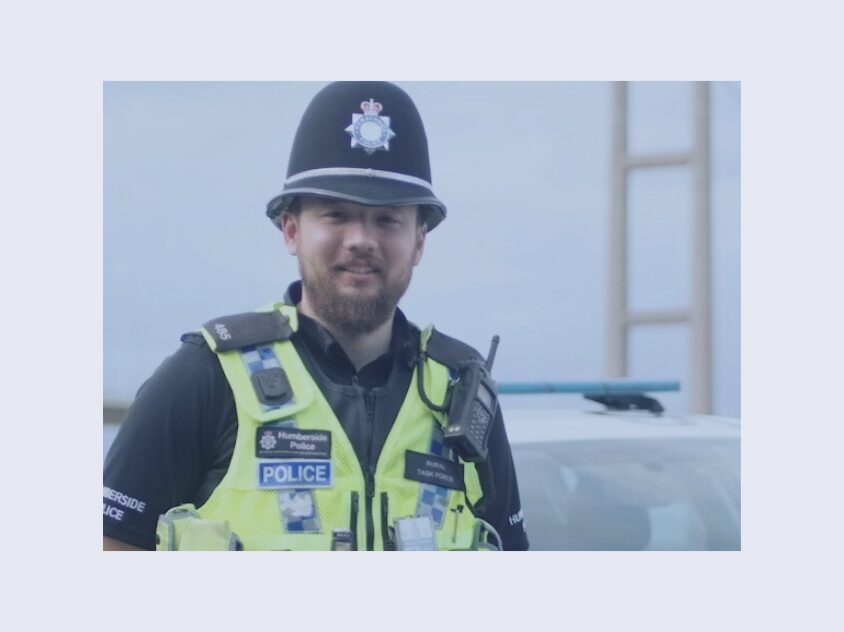
    In 2023, Devon & Cornwall Police and Dorset Police undertook an ambitious project to modernise their police interview recording systems with Davidhorn devices, installing 115 devices in interview rooms and 32 portable units in over 60 stations. Spanning villages, towns, cities, and even remote islands, this extensive rollout across three counties has transformed their interview capabilities, overcoming geographic and logistical challenges unique to the UK’s largest police regions. Sgt Ant Moorhouse – who lead the operational delivery of the project across the Alliance, talked to us about the implementation process and how it transformed the work of Devon & Cornwall Police and Dorset Police.

    Summary

    • Modernising Interview Recording: In 2023, Devon & Cornwall Police and Dorset Police implemented 115 fixed devices and 32 portable units across 60 stations, overcoming challenges like historic buildings and outdated equipment.
    • Improved Efficiency: The new devices reduced setup times, improved audio quality for court proceedings, and provided flexibility with portable kits—allowing officers to focus more on frontline duties.
    • Looking Ahead: With positive feedback, both forces are now exploring future advancements like AI-powered transcription and redaction to further enhance productivity and service delivery.
    Read more

    The unique challenges of policing in Devon, Cornwall, and Dorset

    Devon, Cornwall, and Dorset Police forces operate across one of the UK’s largest and most diverse geographic areas. With three counties, two police forces, and roughly 60 stations, covering this expansive territory presents distinct challenges. According to Sgt Moorhouse “Devon and Cornwall is the largest geographic force in the country. To get from one area to another can easily take hours, even using blue lights.” This extensive area, combined with a mix of urban, rural, and coastal communities, means that police response times can be stretched, and centralised resources, like custody centres, can be hours away in summertime traffic.

    Adding to the complexity, both forces were previously relying on outdated technology, including older style digital recorders, DVD-burning systems, and even portable tape recorders, which limited both flexibility and audio quality. Officers often found themselves dealing with clunky devices that required excessive setup time and resulted in poor sound quality—a major frustration in court, where clear recordings are essential. These limitations underscored the need for a significant upgrade, prompting the force not only to replace the outdated equipment but also to reconsider the placement of interview units across the region for maximum efficiency and accessibility.

    Implementing Davidhorn’s solution

    The project to implement Davidhorn’s devices and set up interview rooms across Devon, Cornwall, and Dorset was a large-scale effort, involving complex logistics and structural challenges. However, the deployment process itself went smoothly, thanks to careful planning and regular communication with Davidhorn’s Customer Success team. Sgt Moorhouse explained, “We conducted the rollout in a structured way, starting with Exeter to identify any issues before expanding.” This phased approach allowed the team to tackle potential challenges early, ensuring they were well-prepared for the larger rollout.

    Sgt Moorhouse explained that some of the police stations date back to the 1800s, making some installations a challenge. “Due to the historic buildings in some areas, we were facing questions like, can you actually drill into the wall, or is it solid granite?” Additionally, some contained asbestos that prevented any drilling, forcing the team to assess and rethink interview setups at certain locations.

    These issues, while challenging, were mostly anticipated and managed effectively by the project, allowing the team to complete the installations with minimal disruption. In total, 115 fixed devices and 32 portable units were installed, transforming both force’s interviewing capabilities and providing a much-anticipated modernisation across this vast police region.

    Sgt Ant Moorhouse accepts commendation for his work delivering the Davidhorn Digital Interview Recording Project to the Alliance of Devon and Cornwall Police and Dorset Police.

    Support from Davidhorn

    Throughout the implementation, Davidhorn provided ongoing support to address the unique needs of the police force. Regular weekly meetings allowed the project team to discuss any challenges, adapt the system’s interface, and fine-tune metadata entry processes. Sgt Moorhouse noted, “If there was a problem, we would just contact the customer support, and we would get help straight away.” This close collaboration helped ensure the system was tailored to the force’s requirements and made the transition to digital recording as seamless as possible.

    Completed installs in Devon, Cornwall and Dorset.
    Completed installs in Devon, Cornwall and Dorset.
    Implementation process: A 3am start to travel to St Mary’s Police Station on the beautiful Isles of Scilly to deliver and train in the use of the new Davidhorn Portable DIR.

    How the new devices are making a difference

    The Davidhorn devices have brought substantial improvements in efficiency and ease of use, allowing officers to focus more on frontline duties. One key benefit is the reduced setup and close-down time for interviews. Sgt Ant Moorhouse observed, “Inputting metadata on that screen takes about 30 seconds, whereas on the old system it could take several minutes.” These small-time savings accumulate quickly, especially considering the high number of interviews conducted each and every day.

    Another major advancement is the portable recording kits, which provide critical flexibility in unique scenarios. For example, our Major Crime Investigation Team (MCIT) have used a portable kit to conduct an interview abroad. The team was able to record and immediately review the footage remotely, something that would have been impossible with their previous equipment. “The portable has been a real game changer with high-quality audio and video” Sgt Moorhouse explained.

    The new system has also improved the quality of audio recordings, which is crucial for i.e. interviews involving interpreters. Previously, poor audio quality had led to complaints from judges and solicitors in court, but with Davidhorn’s devices, the sound quality is much clearer, even during phone-based interpretation. “The sound quality is a lot better on the Davidhorn equipment,” Sgt Moorhouse noted, meaning recordings are now dependable and suitable for court proceedings.

    Furthermore, Davidhorn’s secure sharing link has simplified the process of sharing interview recordings with solicitors and other forces, eliminating the need for DVDs and reducing the risk of data breaches. “We use the sharing link for everything… it’s a win on time, but it’s also a win in terms of risk management,” Sgt Ant Moorhouse said.

    Looking towards the future

    With the implementation complete, Sgt Moorhouse is optimistic about the future potential of Davidhorn’s solutions. He sees advancements in artificial intelligence (AI) as a promising next step, particularly around automated redaction, statement-taking and transcription. Additionally, the feedback from officers has been overwhelmingly positive. “The kit in the stations is just so easy to use… they absolutely love its ease of use,” Sgt Moorhouse shared, adding that – last but not least – the compact design frees up valuable desk space in interview rooms.

    As Devon & Cornwall Police, and Dorset Police continue to embrace digital transformation, Davidhorn’s technology is set to support them in overcoming geographic and logistical challenges, enhancing productivity, efficiency, and ultimately providing a higher standard of service to their communities.

    Related products

    • Capture

      Mobile app recorder for capturing evidence on the go.


    • Portable Recorder

      Lightweight, PACE-compliant interview recorder for any setting.

    • Ark Interview Management

      Receive, monitor, and keep evidence throughout its lifetime.

    December 18, 2024
  • Vulnerable witness interviewing – ep.14

    Vulnerable witness interviewing – ep.14
    vulnerable witness interviewing with Triangle

    Episode 14. The Art and Science of Child Interviewing with Triangle

    In this episode, we speak with Carly McAuley and Maxime Cole from Triangle, a UK-based organisation specialising in investigative interviewing of children and vulnerable adults.

    Founded in 1997, Triangle has become a leading authority in forensic questioning techniques and vulnerable witness interviewing, training police forces across the UK and internationally while conducting interviews for criminal and family court cases.

    Triangle provides comprehensive services, including:

    • Investigative interviews for children and vulnerable adults (ages 2-60)
    • Forensic Questioning of Children (FQC) training for police forces
    • Intermediary services to facilitate communication
    • Expert witness testimony
    • Therapeutic support and advocacy
    • Transcription services that capture non-verbal communication
    • Consultation for school staff and first responders

    Carly McAuley and Maxime Cole shared with us Triangle’s approach to child and vulnerable witness interviewing. The conversation explores how very young children – even two and three-year-olds – can provide reliable, court-admissible evidence when interviewed using appropriate techniques. Triangle’s expertise challenges long-held assumptions about children’s capabilities and demonstrates that the quality of evidence obtained depends entirely on the adult interviewer’s communication skills, not the child’s inherent abilities.

    The discussion reveals the critical importance of language adaptation in child interviews. Simple changes like asking “what made him do that?” instead of “why did he do that?” can transform a child’s ability to respond. Carly and Maxine explain the “no guessing rule” – a fundamental technique that teaches children that interviewers genuinely don’t know what happened because they weren’t there. This role reversal is essential for obtaining accurate accounts, as children naturally assume adults know everything.

    A significant portion of the conversation addresses the problem of “muddled” accounts created when well-meaning adults – teachers, social workers, foster carers, and family members – repeatedly question children before formal interviews take place. Triangle often conducts “unmuddying interviews” to separate what the child originally experienced from what others have added along the way. The guests emphasise that professionals need training on how to safely listen to children’s concerns without contaminating their accounts.

    Notable Quotes:

    "If we get it right with the youngest children with the most complex needs, then it helps our communication with everyone."
    "You can't get a good answer by asking a bad question."
    "Children's communicative competence is really reliant on the adults' communicative competence."

    Resources Mentioned:

    • Triangle’s “Two-Way Street” and “Three-Way Street” films
    • ORBIT training model
    • Forensic Questioning of Children (FQC) course
    • Davidhorn Police Interview Summit 2025

    Looking Ahead:

    Triangle will be presenting at the Davidhorn Police Interview Summit 2026, offering training opportunities for international practitioners interested in advanced child interviewing techniques.

    Connect with Triangle: Learn more about their training programmes and services for law enforcement, social services, and educational professionals.


    Episode Length: Approximately 59 minutes

    Production: Davidhorn – Beyond a Reasonable Doubt Podcast

    Host: Sigrun Rodrigues, former Chief Marketing Officer, Davidhorn


    Equipped For Justice – Supporting ethical, human rights-compliant investigations worldwide

    Watch and listen also on YouTube and Apple Podcasts

    Related products

    • Fixed Recorder

      Fixed HD recorder for high security interview rooms.

    • Portable Recorder

      Lightweight, PACE-compliant interview recorder for any setting.

    • Capture

      Mobile app recorder for capturing evidence on the go.


    • Ark Interview Management

      Receive, monitor, and keep evidence throughout its lifetime.

    Transcript

    Host: Sigrun Rodrigues, former Chief Marketing Officer, Davidhorn
    Guests: Carly McAuley and Maxime Cole, Directors at Triangle


    Sigrun Rodrigues: Hello and welcome to this podcast. I’m Sigrun Rodrigues, Chief Marketing Officer at Davidhorn, and I’m very excited to have you here today. Would you like to introduce yourselves?

    Carly McAuley: Thank you very much for having us. My name is Carly McAuley. I’m one of the directors at Triangle.

    Maxime Cole: Hi, I’m Maxime Cole, and I’m also a director at Triangle.

    SR: Tell me a little bit about Triangle. What is Triangle?

    CM: Triangle was created in 1997, and we currently provide specialist support to children, consultancy, and training. We also provide expert opinion, intermediaries, and therapeutic services. Everything we do is very bespoke, depending on what’s needed for the children and young people. Many of the children and young people we provide services to have had abusive starts to their lives, and we’re trying to help them come to terms with that. We provide advocacy services and investigative interviewing, which is what we’re here to talk about today.

    MC: Our investigative interviewing services are really growing every year. We’re doing more and more, and it’s what we mainly do now, along with a lot of training.

    SR: So, specifically, children’s interviewing?

    MC: Well, our specialism is with children and young people, but we actually work with people up to the age of 60. We’re asked to do investigative interviews if an adult has additional needs or communication difficulties that make it harder for someone else to interview them. We use the same skills that we use to interview children and young people for everybody anyway.

    CM: That’s a real fundamental Triangle belief, isn’t it? If we get it right with the youngest children with the most complex needs, then it helps our communication with everyone.

    MC: Absolutely.

    The Scope of Triangle’s Investigative Work

    SR: Is this related to police investigations? What type of investigations do you do specifically?

    MC: It’s quite a range. Some of the interviews we do are directly referred to us by the police. It might be because the child’s very young – we interview lots of two and three-year-olds for the police. Or it might be that the child has very complex needs. Quite often, we find that children have been taught to hate the police and told that they mustn’t speak to the police, so there’s already this barrier there. Coming in as an independent organisation can make it much easier for the child to communicate with us.

    The variety of investigations could be anything, but primarily, it’s sexual and physical abuse investigations that we’re involved in. Then some of our work comes from the family court. We’re asked to interview children so that the court can make decisions going forward.

    CM: But it’s not quite as simple as that, is it? Sometimes we’ll interview a child for family court, but what they end up saying makes that interview go back to the criminal court and back through a police investigation.

    SR: You’re discovering things in the process that nobody was aware of.

    CM: Exactly. It’s quite fluid.

    The Challenge of Initial Police Visits

    MC: The police are in a difficult situation with some children. In the UK, if a child says something potentially concerning to a teacher, for example, the police have to go out to visit that child with a social worker and try to get the child to repeat what they’ve said to the teacher before they’ll proceed to a visually recorded interview.

    For some children, it might have taken them four years to build enough rapport with that teacher to feel comfortable enough to tell them. Then they don’t know that social worker or that police officer, and they’re expected to repeat what they said straight away without having built any rapport. Often, that doesn’t work, so they don’t go on to be interviewed. Ultimately, it ends up in family court, and then we interview. So, actually, that child has said something potentially concerning before, but it never went to a police interview because they didn’t repeat what they’d said in that initial visit.

    CM: We’re becoming more aware the more police we’re training of the systems and the way they work. Recently, in one of the courses where we trained a local police force, they talked about having “no further action.” That isn’t necessarily to do with what the child said – it’s not having enough evidence or not having the standard of evidence that would go to court. Whereas we specialise in knowing what questions to ask, how to ask them, and what’s needed for further action to take place.

    SR: So you’re trained and have the specialist competence to dig into the hard questions to get that evidence right.

    CM: Yes. And some of the things are really quite simple. We’re training the police to ask questions in a different way. For example, if you ask a child “why” something happened, they find that really difficult to answer. But if you use a simple rephrase – “what made him do that” instead of “why did he do that” – they’re then able to answer the question.

    MC: And we spend a lot of time explaining to children that we don’t know what happened because we weren’t there. Children assume that adults know everything, and then they don’t see the need to provide the information they’re being asked for because they’re thinking, “Well, you already know. Why am I going through this with you?” So we do a lot of that: “We don’t know because we weren’t there.”

    Training Police Forces

    SR: From what I understand, you train police forces?

    MC: Yes, we’ve trained a lot of different police forces now. Some police forces come to us – we’re based in Brighton – and others we train in force, so we go to them and train at their headquarters.

    SR: What does this training consist of?

    MC: It’s called FQC – Forensic Questioning of Children. When we initially started training, it was a four or five-day course and involved police officers taking an exam, so it was a pass-fail course. Then COVID hit. After speaking to many forces, we realised that having them out for four or five days was really difficult for police forces, making commissioners reluctant to do that. We’ve managed to compact it into a three-day course, which is where we’re at now.

    It doesn’t have a pass-fail examination, but the last day is spent with police practising what we’ve learned over two days so that we can observe. If we did have any major concerns, which have happened but very rarely, then we would follow that up.

    CM: And we offer support to the police after the course as well. They can contact us by phone or email, and they do. They might say, “I’ve got this three-year-old that says this – should we go and talk to them or should we go straight to the interview?” It’s nice to be able to be there afterwards and advise.

    MC: We had a query last week about a child who’s now three and a half, but they were two and a half when the incident happened. The police were messaging us to say, “Is it still viable to interview? Should we still interview?” It’s a real range of questions. Sometimes it’s supporting them with live cases, and other times it’s helping them decide whether an interview should take place – whether it’s in the child’s best interests or not.

    SR: Is it a one-off training or do you do repeat training?

    MC: We also do a one-day refresher course. That’s really important because sometimes you can forget, or you can unlearn elements of it and perhaps not use the techniques to their full potential.

    What the FQC Training Covers

    CM: In the course, we cover a lot of the basics about what language to use with children, how to adapt and simplify your communication to make it easier for children to understand. We cover a lot of rapport building because that’s absolutely essential, and we teach them how we build rapport with children.

    We cover a lot about attention and arousal – keeping an eye on the child and where they’re at within their window of tolerance. Are they able to communicate, or do we need to help them by doing something calming or something lively to get them back to a place where they’re able to communicate?

    We do a lot of troubleshooting – teaching what you would do if a child did this – and a lot of focus on separating out events with children.

    The Problem of “Muddling” Through Repeated Questioning

    MC: We get called in to do what we call “unmuddying interviews.” This happens a lot. Children are asked repeatedly. They might have told their teacher something, and then the safeguarding lead asks them about it. Then they get a visit from the social worker and the police, and they ask them about it. Perhaps they get police-protected and move into foster care, and then the foster carers ask them about it. Then they get a social worker who asks them. The next month, they get a new social worker, and that social worker asks them about it. By the time they get to the interview, it’s so muddled because they’ve been asked again and again.

    CM: We often get family members recording them, doing their own interviews on their phones.

    MC: It’s all so muddled by the time it gets to us. We teach the police about that as well – how to tell which parts have come from the child and which parts have been added by well-meaning adults along the way.

    We often say to children: “We need to find out what you saw with your own eyes, heard with your own ears, and felt with your own body.” It’s all anchored back to that, so we can separate things out. We’ll acknowledge, “We know you’ve told lots of people, we know you’ve spoken to lots of different people.” If we can, we’ll list those people and say, “Our job is to really think about everything that we’ve heard and that you’ve said and to get it really right.”

    SR: I’m from Norway, and we’ve had a few cases where whole villages have been in a bad state because the interviews weren’t done correctly. Teachers and lots of different people have been accused of doing things, and it’s turned out that the interviews weren’t done correctly. There have been some really bad miscarriages of justice following that.

    CM: People are trying to be helpful. It’s not – I mean, obviously, sometimes you get cases where people are trying to change a story or change what’s happened. But in our experience, the majority of the time, it’s because people are trying to help children, but actually, it’s not helping.

    Training School Staff

    MC: We also know – I don’t know about in Norway, but in England – the training that’s given to school staff, particularly because we know that’s a place where a lot of children do talk about things, is very negative. Don’t do this, don’t do that, don’t do this, don’t do that – but not what to do.

    Another thing we started a couple of years ago, post-COVID, was these workshops for school staff. We know there are huge funding issues, so they’re up to two hours long, where we talk about things that you can do rather than things you can’t, because it’s all very negative guidance out there currently.

    CM: It scares professionals off – the guidance that a lot of people are given in their safeguarding training is “don’t ask any questions, don’t do this, don’t do that.”

    MC: Professionals need to be taught how to safely listen to children’s concerns so that by the time children are interviewed about things, hopefully it’s only the second time they’ve talked about it, not the 22nd time.

    SR: And of course, in Norway, we have these Barnahus centres where children are brought in to be interviewed properly. Why do you work mainly within the UK?

    CM: Yes, we do. We have done some international work. In 2018, a colleague and I flew to India, and we trained the High Court judges in Delhi. We then flew to southern India and trained a whole lot of different professionals down there in the FQC training – how to communicate with children.

    We do a lot nationally. We train police nationally, as mentioned, and also social workers in schools and frontline workers. We try to link a lot of our training to serious case reviews because out of those come lots of learning points for us as a culture and a country.

    We’ve developed resources with the NSPCC, and we’ve also done some work with MOPAC, which is the Mayor’s Office for Policing and Crime. They look at the Met Police and make sure that everything they’re doing is efficient. We’ve helped them think about scripts for young people and vulnerable people who come into custody and need to understand processes a bit more.

    Working with Non-Verbal Communication

    MC: We do interview children who have very limited speech and who use other ways to communicate – symbols, picture books. Years ago, we interviewed someone using an eye gaze machine to communicate.

    CM: It’s more about them understanding us, I suppose, as well as them communicating.

    MC: There’s a film we made called “Two-Way Street,” which is all about communication being two-way and not just putting it on the child. It’s the adults’ responsibility as well. As a person, if you’re talking to someone and they’re not interested in you, you’re not going to tell them very much. Whereas if you’ve got a person that is interested and engaged and giving you the right non-verbal cues and signals, you’re going to engage a lot more. This is the case for children.

    Children are brought up in a society where, in the past, a lot has been done to them by adults. To suddenly put them in a position where the adult is asking them to talk about something that they have the knowledge of – children are a bit like, “Well, this isn’t usual.” Kids go to school, and the teachers know everything. Kids are at home, and the parents are completely in control of what’s happening.

    It’s really trying to get those children and young people to realise that they’re the experts and that we’re part of a two-way process with them to help them tell us their expertise because we don’t know.

    The “No Guessing Rule”

    CM: As I mentioned earlier, we spend quite a lot of time in rapport building, reassuring children of that. There’s a rule called the “no guessing rule” that we practise with children a lot. At school, children are taught to guess all the time. For us to then have them come and see us and say, “In this room, we don’t do guessing. What colour’s my car?” And they’re like, “Red.” “We’re not doing guessing. You’ve seen my car. Do you know what colour my car is?”

    I think for us, a key point in the training is to help the police and other adults understand that you have to spend time helping children understand this switch of roles.

    MC: It’s such a different process. With you talking about it being that two-way street as well, everyone that we train, we try to really outline that children’s communicative competence is really reliant on the adults’ communicative competence. You can’t get a good answer by asking a bad question. It’s not going to work. The adults really need to develop their questioning skills to enable children to give their best evidence.

    Challenging Assumptions About Children’s Capabilities

    CM: Certainly, in the UK, there’s a saying – I don’t know if you have it in Norway – “never work with children or animals.” Children are being blamed for their lack of competence all the time. We’ve heard people say, “If someone asked me to interview a three-year-old, I’d run a mile.” It’s almost as if the child isn’t good enough at communicating. But actually, it’s us. It’s breaking the barriers.

    MC: You’ll get police saying, “Oh well, they can’t even sit still, so how can you interview them?” It’s like, well, do you have to sit still to interview them? Can you do it while you’re moving on the floor? It’s looking at breaking those adults’ expectations of how children should behave, and thinking, “Actually, it’s about me.”

    CM: Another bit to add is that “Two-Way Street” film we made in the ’90s, and then we followed it up years later with “Three-Way Street” because we realised that a lot of these children’s interactions weren’t just with one adult – there were normally two adults. If you think about that dynamic, that’s children being put in a room with two adults. That’s almost making it harder for the children because they’ve got two adults who they think know everything.

    MC: Carly and I do a lot of that when we’re interviewing, where we’re talking with each other. I’ll say, “Well, Carly, I don’t know because I wasn’t there. Do you know?” “No, I haven’t seen that either.” We do a lot of that, and then they understand together. Suddenly, the penny drops. “I’ve never been to Johnny’s school. I don’t know what his teachers are like. I haven’t met his mum or his family.” “No, me neither.” “So I don’t know.” Then suddenly Johnny will pipe up, “But I know. I know!” because he then realises why we’re asking the questions.

    CM: We teach the police a lot about that as well, because children are baffled sometimes: “Why on earth are you asking me that?”

    MC: Because adults know everything.

    The Evolution of Child Interviewing in the UK

    SR: You talk about PEACE interviewing, which is very relevant to us on the technology side. You’ve got these frameworks that were implemented early on in the UK, and I’m sure this has developed the cultural side of interviewing – the mindset that police go into the interviewing situation with. You’re teaching them that mindset to speak to children and have a different approach when they go into those conversations. You’ve been following this since the ’90s. Have you seen any change over time? Has it eroded? Has it gotten better? How would you describe this development since back then?

    CM: I think it has evolved. There are some positives and some negatives as well. One thing that is key for us at Triangle is that we know statistically that children with communication difficulties and disabilities are far more likely to be abused. Yet we are still not supporting those people in everyday life to have communication systems to enable them to communicate. That’s linked to education, but also ideas of what disabled people and people with communication difficulties are able to do. That hasn’t changed very much. We still see that as a big barrier.

    But what has changed a lot is the realisation that children can give evidence regardless of their age. It used to be extremely rare that children under five would be interviewed, and now it’s much more common. But we’re still not all the way there. There are still very young children who just aren’t seen as reliable just because of their age, so their evidence isn’t being gathered.

    MC: Sometimes we’re asked to interview four out of a five-sibling group, and we’re thinking, “Why are we not seeing the youngest one?” It’s maybe because they’re two and a half. But actually, two-and-a-half-year-olds can give really great evidence if they’re interviewed in the right way.

    SR: That’s changed a lot since the ’90s, though, right?

    MC: It has changed a lot. We were involved many years ago in one of the first cases with a two-year-old who was a witness to murder. He was the sole witness. Initially, the police were very reluctant because he was so young, but we were able to support the two-year-old to communicate. They didn’t need to know what happened because they knew it was a murder. They didn’t need to know where because they knew where. They didn’t need to know when because they had a time scope. All they needed to know was who.

    Everyone who’s met a two-year-old knows that they can identify people, and this child knew the person. We did that through a mixture of speech and using photos and supporting the young person. That actually did end up going to trial. I think that was quite a first for England, believing that actually that could happen.

    Even now, in our police training, when we mention that, everyone’s like, “What? Two? How did you do that?” It’s just focusing on what information is crucial. As Carly said earlier, if you’re asking children about timelines when they’ve been living in an abusive situation all their lives, and you’re thinking about how long this has been happening, time is a huge, difficult concept for children anyway. It depends on what the questions are and what information you need to gather.

    Working with Children with Limited Verbal Communication

    CM: The same with children and young people who communicate using yes and no – it’s really important if you’re interviewing them that you’re getting a balance of yes answers and no answers. If you’re asking a young person questions and all they’re communicating is “yes, yes, yes, yes, yes,” it’s not really credible. Whereas if you’re really clever with your questioning and you’re getting “yes, no, yes, yes, no” – there’s not a pattern – it’s much more effective and much more evidentially safe.

    The Problematic Push for Efficiency

    MC: The other thing, thinking about since the ’90s and what’s changed and hasn’t changed – at the moment, interviews go to the CPS, the Crown Prosecution Service. They review the interview and decide whether charges can be brought as a result. But they are asking police forces to keep their interviews to 20 to 30 minutes maximum because it’s more efficient that way for them to review the interview.

    But that doesn’t work for children. It really, really doesn’t work for children. We might spend 20 minutes of an interview talking about Play-Doh, and that is needed for that child because that’s resettling them. That’s letting them know that we’re attending to what they’re saying and that we’re interested in them. We would never be able to limit ourselves to time like that. I think that is a negative change. It’s trying to be streamlined for efficiency, but it just really doesn’t work for children.

    CM: We’ve found that a lot of children who come in to talk to us won’t really respond to “what have you come to talk to us about today” type questions. We need quite a lot of warm-up. We’re not talking to them about their hobbies – it’s an interview at that stage – but we might be asking questions like, “Tell us all about what it was like living with your mum and dad.” You might get lots and lots of details that aren’t evidentially relevant, but you might get really relevant stuff because we’re starting to build a picture and an understanding of that child’s lived experience. They might say a few things in there that we can then ask about later, and that’s when we get that evidence. We can’t do that in 20 minutes.

    MC: Absolutely. We know that children living with trauma, which a lot of the children we meet are, are within their window of tolerance. They can dip in and out of that. As Carly said, you’ll be there for hours sometimes, but the number of questions you’re asking would only add up to maybe 40 minutes or something because you’re doing so much to support them and not re-traumatise them. You’re enabling them to communicate safely for them and evidentially safely. It’s a balancing act.

    The Critical Importance of Visual Recording

    SR: I guess this is where recording comes in as relevant. Do you record your interviews with these children?

    MC: Yes, we record all of our interviews. We have an interviewing suite here at Triangle in Brighton, and then we have our portable camera from Davidhorn as well. When we’re travelling around the country, sometimes we use police interview suites and sometimes we use our portable camera, but we’re always recording interviews. It means that it can be used as the evidence in chief at court if it’s visually recorded.

    Also, we have so many children who communicate non-verbally. I think it’s not just us – children communicate non-verbally a lot. They show a lot. A good quality recording is absolutely crucial for that.

    We interviewed a seven-year-old here who, although she was completely verbal and a competent communicator, wasn’t able to verbally tell us what had happened to her. Almost the whole interview from her perspective was silent. She was able to draw what had happened, and then she was able to produce paper figures as representations of the people in her family. We could check using the paper figures who were in the picture. She was able to show, using those paper figures – actually manipulating them – to show us what had happened. Then she was able to indicate on sticky notes. We gave her written choices – “one time” on one note and “more than one time” on another note. She pointed to which one in response, or we had “yes,” “no,” or “don’t know.” She was able to answer more questions about what had happened.

    The visual recording of that is crucial beyond crucial. It absolutely needs to be shown.

    CM: It needs to be a video recording.

    MC: Otherwise, they would be listening to just us talking.

    Body Language Contradicts Verbal Statements

    CM: We’ve also had an interview with a teenager where, unfortunately, the circumstances within her home were that dad had to leave the family home, and the family couldn’t afford to live in two homes. Just before the interview, she’d been told by mum, “Just say it was an accident. Say it wasn’t meant to happen because we can’t afford to live like this. We can’t afford for your dad to be the breadwinner in another home, running another home with more bills.”

    She came to interview, and I can’t remember whether she said at the beginning or the end that mum had said this to her. But when we were asking her questions, she was verbally saying, “Oh no, it didn’t happen.” But her body – what she was doing with her hands – she was digging in her nails and she was covering her genital area, which was showing so much.

    For that interview, when we wrote our report at the end of it, we said that the transcript had to be read whilst watching the video so that you could see that although she was saying “no, no, that definitely didn’t happen,” what she was showing in her body was very different.

    MC: If we hadn’t recorded that, you would have just got the transcript of her saying, “No, that didn’t happen.”

    SR: When you’re also saying you’re asked to do a 20 to 30-minute interview, potentially with a recording that is the same length, there is a lot of pressure on police and on the whole system to cut costs. This is what we’re seeing, and I think this is widely known. There’s definitely a balance between quality and cost in this case, specifically.

    Specialised Transcription Services

    CM: Absolutely. We offer a transcribing service as well after our interviews because we have learned over the years that other transcribing services out there don’t transcribe the non-verbal communication – they just transcribe the verbal communication. Whereas we have trained transcribers here who look out for all communication. That’s another service that we offer quite regularly after we’ve interviewed.

    MC: There are so many children who show what’s happened rather than tell.

    CM: Adults do as well. I’m realising here that I’m doing this with my hands all over the place!

    SR: That’s what we hear very often – that the best interviewers, independent of the case, are the interviewers who interview children because they are very concrete, really good at building rapport. There’s something there that if you put a child interviewer in front of a suspect, they can do a really, really good job as well, which is really interesting.

    MC: We were talking about that, actually, a couple of weeks ago, when training one of the police forces. They interview a lot of suspects and interview a lot of children, and they said, “Oh, I’m so going to use some of these techniques with interviewing suspects,” especially commenting on non-verbal communications. They get so many no-comment interviews, but they say, “Oh, you’re nodding.” That’s then in the transcript.

    CM: They can get those responses by verbalising the non-verbal communication, which is so often missed because that’s what we do with children. We say, “Oh, you’re nodding,” and they’ll say, “Yeah, because that really did happen.” They’ll add information if we notice and verbalise their non-verbal communication.

    Another one might be, “Oh, you’re looking at the door.” “Yeah, because is he going to come? Is he coming here?” There are these tiny, tiny little things.

    The Challenge of Inappropriate Vocabulary

    MC: The other one I wanted to add that Carly touched on – a lot of these children don’t have words to talk about what’s happened to them because they shouldn’t have words to know these things. Actually, these adults are putting them in a situation, asking them to talk about something that they shouldn’t really have access to at their age, especially regarding sexual abuse. Often, they would have been told by the abuser that “this is our little secret” or “this is because you’re special.” For that child to communicate is really hard.

    Having drawings and all these other resources, and showing and having that on camera, is just key.

    SR: Absolutely. There’s a lot of talk about AI. There is a lot of potential in saving time and cost through the use of AI. I just saw recent transcription research that highlighted what you said – that the transcribers being used are not necessarily trained in anything related to police work or interviewing. They very often just decide for themselves what to put in that transcript.

    It’s interesting to hear small techniques like you say – put words to what is going on and put little comments. There are ways to work around that to make sure this is highlighted. I think that is something that will probably come with more use of technology.
    Technology and AI in Child Interviewing

    CM: Absolutely, and of course, it has to include the non-verbal, which requires a video or visual recording.

    SR: Do you see that these types of technologies can help you in your work in the future? Are you reluctant?

    MC: I don’t think we’re reluctant at all. Absolutely, we would be interested in exploring technologies that could help us. It’s just difficult at the moment to really know in what ways, because the AI that we’ve experimented with – it’s not there yet. It’s just not that advanced. It needs to learn more, and it will learn more.

    I think it’d be really interesting. I mean, we have used it to help us create resources to explain things to children. I don’t see it as a threat. Some people see it as a threat, but AI obviously needs somebody who has those skills and knowledge to tell it what you want. It’s a two-way process to an extent.

    CM: Sorry, that’s a bit of a muddled answer, isn’t it? I think there are pros and cons. We do see it. We are beginning to look at it and explore. But obviously, you’ve got the huge area of GDPR and confidentiality and all of that, so it’s always going to be limited in our work for that reason.

    MC: Because we can’t feed it lots of confidential information and ask it to write us an interview plan.

    SR: No, exactly. Currently, you can’t. But hopefully, in the future, you can have a safe AI.

    CM: If you’re standing up in court to be cross-examined, you want to be sure that you’ve read that bundle of however many pages yourself rather than depend on a computer reading it and maybe missing out a bit that they didn’t think was essential.

    MC: That’s the thing. That’s what I mean by needing to learn more because there are so many nuances. The meaning of a sentence can be changed by a single word, and AI is not there yet to notice all of those. At the moment, everything’s still very manual.

    CM: As well, sometimes when we’re interviewing a child, they might say something that wasn’t necessarily in our questioning initially. But if you’ve read the bundle and you’ve got that background, you might see that as an important link to something that AI wouldn’t necessarily pick up.

    MC: Yeah, absolutely.

    Innovations Needed in the Justice System

    SR: Are there any other technologies or innovations or policy changes that you see can support children’s legal status and conditions in the justice system?

    CM: One of the things that we’ve been talking about a lot is that we’d really like to train first response officers – in the police and the ambulance service – to be able to communicate with children. We would love, for example, to help the ambulance service to write a script for their telephone operators that they can press a button that says “I’m talking to a child” and their prompts change, because early information about reported incidents can be really crucial later on in an investigation.

    Currently, children aren’t necessarily being asked questions that they can process or understand. We’d really like to get involved in that from an innovation point of view.

    MC: First response officers are rarely given any training in talking to children. I think we’re missing potentially some really important bits of evidence from children almost at the scene of a crime or immediately afterwards, when a child might be more likely to be able to tell or give that initial bit of information, because the thing has just happened and they know and they understand what they’re being asked about because it’s in the context.

    CM: Because it’s in the context, exactly. That’s another thing – children don’t always know why they’re there. Training for first response officers could really change a lot for children.

    We’ve already been talking with some of the police that we trained recently, about when they arrive on a scene, and they have their body-worn cameras, and they do an initial Q&A. We’re already talking to them about using that as part of the rapport building.

    SR: These police officers rarely have any interview training, so to have specialist training like that is not happening, right? To actually empower them or enable them to ask the right questions is really, really crucial. I think also that is the moment when the child contacts the police – they’re in an urgent situation. You get the unfiltered truth, right?

    MC: Absolutely. It’s the unfiltered truth, and it’s also potentially that child’s first experience of the police. If that can be a positive one, then that child can be better protected throughout the rest of their lives.

    Prevention Through Education

    CM: One of our founder members of Triangle, Ruth Marchant, who sadly died a few years ago, had a mission statement: to change the world at Triangle. We can go out there and change the world. Something that we feel very strongly about at Triangle is children and young people being given safe education about their body and private parts and safety. That’s not to say it’s putting the onus on the children to keep themselves safe, because obviously it isn’t. But what it is to say is that if children are taught safely and in a fun way in nursery schools – we’re using really good resources about what safe touch and unsafe touch is, and the same as secrets, safe secrets and unsafe secrets – Triangle has designed our own resources, but there’s a lot else out there. I think that’s the key to children and young people saying things earlier.

    There was a young person we interviewed a few years ago who was about 14, and she’d been very sheltered. She’d been brought up with a very abusive father, lots of domestic violence, as well as sexual violence. One thing that will never leave me, I think, is her saying at the end of the interview – we always ask, “Is there anything else you want the judge to know?” – and she said, “Why did no one tell me about this? Why wasn’t I taught that this wasn’t right?”

    Her experience had been that at age 14, she was finally allowed to go for a sleepover at a friend’s house. While getting ready for bed, she said to her friend, “Well, when’s your dad coming in?” The friend said, “What do you mean?” She said, “Well, at my house, my dad comes in and this is what happens.” This was how this case came to light, because the friend told her parents, and then obviously they contacted the police.

    To me, that question of “Why wasn’t I educated? Why wasn’t I told about this?” – she’s not the only young person. We interviewed another young person who did learn at school, but it wasn’t until she was in secondary school, in a personal, social health lesson, that she learned that it wasn’t okay for adults to do those things to you. This had been going on for years.

    MC: She was 11 or 12 at school when she was taught that.

    CM: We need to be teaching children much, much younger because if it’s always happened to you and you don’t know any different, why would you tell someone?

    MC: That’s definitely a societal change.

    Managing Secondary Trauma and Officer Wellbeing

    SR: There’s one more thing I would really like to ask you, because I know that there are a lot of police officers in the UK and everywhere who are going through a lot of trauma in their own work. I think you guys are working with such heartbreaking themes. How do you deal with these issues in your work? How do you manage to stay clear in your minds and mentally healthy?

    MC: Yeah, it’s a good question. I think it’s quite different for us than for the police, but we can talk about both. For us, we debrief after every interview, so we spend time together talking about how it went, but also how that made us feel. We’ve got peer support in that. Also, we barely work alone. We’ll always be working together, so we’ll always hear the same things. Whether one of us is in the recording room or in the interview room, we’ll still be open to the same information.

    Sometimes a child will say one thing that maybe I will go, “Oh, I found that a bit much,” or Carly might say, “Oh, I found that a bit much,” and I won’t. It’s interesting how different children in different situations maybe press different buttons for us. But having that debrief is key.

    We also have another colleague who will critically read reports and sometimes be involved in the planning. She’ll often check in with one of us or we’ll ask her opinion. We have access to a psychotherapist for supervision. We have regular supervision, and we also have access to a 24-hour counselling line that’s completely confidential.

    CM: Our interviewing team – we either interview together or with another colleague – so there’s always someone around for us to talk to.

    But with the police, I think it’s a really different story. They have very little protection against that sort of secondary trauma. A lot of the police forces that we’ve talked to say that they get a wellbeing questionnaire once a year, but then they don’t have that same opportunity that we do of debriefing after every interview. Not at all.

    At the last training that we did here with the police, we had quite a long conversation about how just in their role as a police officer, it’s assumed that you should deal with things like this. There’s an assumption that, well, you signed up for that job, you want to do it. So why are you moaning that you’ve just seen this or that?

    There was one case where the officer was saying, “Well, I knew it affected me, but I felt like I couldn’t go to anyone because it’s part of my job. But why did this one affect me but the other 20 didn’t? I didn’t want them to be going, ‘Well, maybe you should be moved to a different area,’ because I love my job. I just needed a bit more help with this.”

    MC: We know that as humans, we’ve all had different backgrounds, we’ve all had different upbringings, and there’d be different triggers. Sometimes it won’t even be something that’s said. It might be a smell or a sight. Being able to identify that ourselves is key, and being able to open up about that and acknowledge that yes, you signed up to be a police officer, but still hearing this can be really difficult.

    I gave an example of certain friends that I will talk more to than others. I know sometimes if I’m with a certain group of friends, everyone will go around the table and say, “How was your day? How was your day?” And they’ll completely bypass me because they don’t want to know how my day is, because they don’t want to know that this really happens and that this is a world that we live in.

    CM: It’s a real conversation killer at parties, isn’t it? “What do you do?” “I interview children that have been abused.”

    MC: We do have quite a sense of humour as well. I’d say that’s another coping mechanism for us. You have to see a lighter side to life. Carly and I both enjoy walking a lot as well, so having those outdoor things. We both have pets. You have gardening. It’s having that free time, that balance of nurture for yourself and your families, other than your work, which I suppose is the same for all jobs, but particularly where you’re working with trauma.

    SR: Do you see that bringing any of those support systems could be beneficial for the police – having a 24/7 line where you can call?

    CM: There was one police force that did have something similar. But what they said was that often there wasn’t time before you’re on your next case. You don’t have time to ring up and process. It kind of links to the secondary trauma – you’re just adding on, aren’t you?
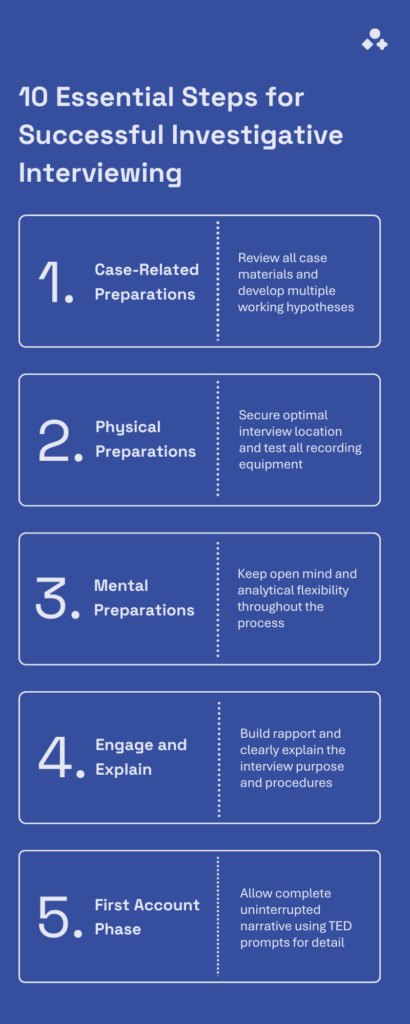
    MC: I mean, there are services in the UK for blue light workers that they can access – text services and phone services. But I don’t think it’s – I think the issue is often the time not being available.
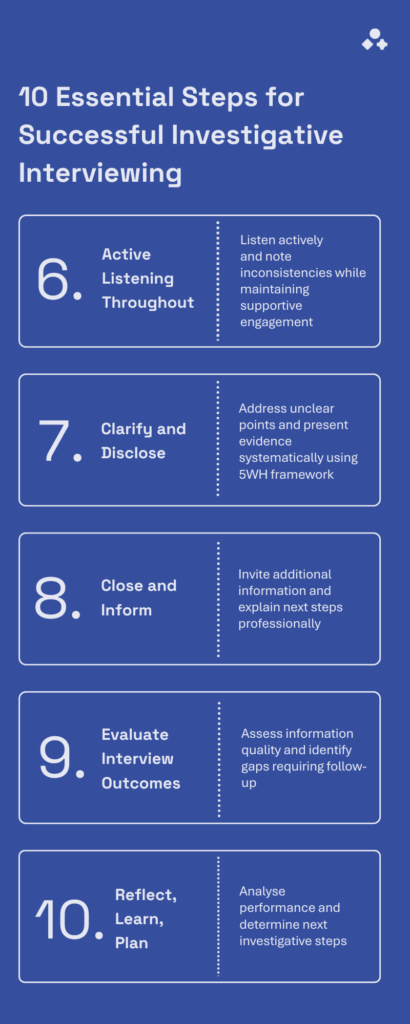
    CM: I think it’s the time and the expectation of the role. When we train them here, we very much say, “You are humans. You’re going to have your own triggers. What you’re going to be hearing is horrendous, and you need to be able to have people within your organisation that you can go to and say, ‘That was really hard,’ and have them acknowledge that and not go, ‘Oh well, that’s your job, get on with it. Don’t come moaning to me.’”

    It’s that openness, I suppose, really, that we are all humans and that it would be wrong – you shouldn’t be in this job if nothing affected you.

    MC: And investing in support services would reduce burnout. So yes, you need to spend money allowing people that time, but it saves you money in the long run.

    CM: Also in England for the police, a lot of police careers are only 30 years, and that’s due to the stress and the nature of the job.

    MC: That’s changing now.

    CM: It is changing, but my point with that is that it also adds pressure for some officers.

    Child Suspects and Fair Treatment

    SR: We’re coming to the end of this conversation, but I was just wondering about one thing. There’s been a series on Netflix called “The Accused.” I don’t know if you’ve watched that one. It’s about a boy who’s a suspect of a murder, and that has brought a lot of discussion around social media here in Norway about interviewing of children and suspect interviewing of children, children suspects. Do you work with child suspects at all? Are you called in by the police to do that type of work?

    MC: No, but we would love to be. We aren’t really asked to do that kind of work as interviewers, but our intermediary teams do provide intermediaries for suspect interviews. They’ll go in – intermediaries are people who specialise in communication and they facilitate the communication between the child or young person or adult and the police or the court, whoever’s trying to communicate with that person. They’re the middle person, making sure that the police are asking questions that the child can understand and that the child is understanding the questions that they’re being asked.

    A lot of the time there’s a real breakdown where adults don’t even realise that the child’s misunderstood the question. It happens so much. We see it loads. So we do that for suspect interviews, but I don’t think it’s a right for child suspects yet to have an intermediary as standard under a certain age, which is worrying.

    CM: I think a lot of child suspects have additional needs, especially those who are involved in child exploitation cases, organised crime, because that’s part of why they have become a target. They have these additional needs and communication needs as a result, and I think that the support really needs to be there.

    I’ve never really understood why – so in the UK our justice system is centred around innocent until proven guilty – but why don’t we treat suspects the same as witnesses then? Because maybe they are actually also a witness.

    MC: Exactly. Having good quality, clear, coherent, accurate evidence, which is what you achieve by using an intermediary or by using specialist interviewers – that benefits everybody. It makes it more likely that justice will be achieved.

    CM: We would love to be more involved, and hopefully that’s a real growing area. I think our only experience of suspect interviewing is where there’s been family cases where there’s been abuse within the family, within siblings. We interview all of the siblings, and one of them has accused another one of them of a crime. So indirectly, but not – well, it has been a couple of cases. We were asked to interview a boy about rape, and then later we were asked to interview his siblings, one of whom was the accused. That was the reason we were called in in the first place – the rape accusation. But yes, our interview process was the same for witness and suspect.

    MC: It’s something that we feel – a lot of these young people are just as vulnerable and they need the same support. We need to come in with an open mind and a fair approach.

    Looking Ahead to the 2026 Summit

    SR: We saw each other at the conference in March where you also went through the ORBIT training, which was very interesting. We have another conference coming up in 2026, and we’re hoping that you will be there to run some training for those who would like to learn from you.

    MC: Absolutely. Very excited about that.

    CM: Hopefully we can also bring some international practitioners who would like to learn from you as well.

    MC: Yeah, definitely. That’s great.

    SR: Thank you so much for sharing all of your knowledge with us. We could probably talk for a lot longer, but thank you so much.

    CM: Thank you for having us.

    MC: Thank you.


    About the Guests

    Carly McAuley and Maxime Cole are Directors at Triangle, a UK-based organisation founded in 1997 that specialises in investigative interviewing of children and vulnerable adults. Triangle provides training, intermediary services, expert witness testimony, and therapeutic support to help children who have experienced abuse navigate the justice system.

    About Triangle

    Triangle operates from Brighton, UK, and works nationally across England with police forces, family courts, social services, and educational institutions. Their Forensic Questioning of Children (FQC) training has become a cornerstone programme for law enforcement professionals working with child witnesses and victims. The organisation’s founder, Ruth Marchant, envisioned Triangle as a vehicle for changing how society communicates with and protects its most vulnerable members.

    Read more

    December 2, 2025
  • Icelandic Police

    Icelandic Police

    The impact of Davidhorn’s systems on Icelandic police operations.

    The IT Department of the Central Police Force in Iceland between 2000 and 2003, orchestrated a game-changing transition by acquiring and implementing a system called LOKE. The dawn of 2005 saw LOKE in full operation, seamlessly merging seven distinct systems into one and introducing an array of much-needed new features.

    Summary

    • Implementation and integration: The Central Police Force in Iceland implemented the LOKE system, merging seven distinct systems into one by 2005. In 2013, they integrated Davidhorn’s interview recording solution into LOKE, streamlining the recording and sharing of investigative interviews.
    • Impact and recognition: This technological advancement made Iceland a model for other countries and garnered global attention, including from Microsoft. Árni E. Albertsson presented their innovative work at the 2017 Police Strategy Forum in Oxfordshire.
    • Efficiency and security: The adoption of Davidhorn’s solution improved efficiency, security, and user-friendliness in handling investigative interview recordings, transitioning from CDs to a centralized digital system with enhanced access control and mandatory video recording for serious cases.
    Read more

    In 2013 the police force acquired and implemented a Davidhorn interview recording solution, which was integrated into LOKE UI. Thanks to this forward-thinking approach, Iceland’s law enforcement was able to streamline its operations of recording and sharing the investigative interviews, making them a model for other countries to follow. 

    Recognized for their innovative achievements, one of the team members – Árni E. Albertsson, was invited to the 2017 Police Strategy Forum in Oxfordshire to present the Icelandic police’s work with Davidhorn. The team’s dedication to advancing technology in the field of law enforcement has made a lasting impact, paving the way for more efficient and effective policing.

    Searching for safer and more effective way to operate

    Prior to adopting Davidhorn’s solution, the Icelandic police encountered significant hurdles in recording interview management. Sharing these interviews across departments or districts meant relying on CDs, which not only generated high costs but also were susceptible to errors, damage, and loss. The police districts, eager to save money and improve security and efficiency, were looking for a solution that would allow them to share recordings in a safer and more effective way, providing easy access and distribution to those who needed it.

    The solution was first introduced in 2015, and by 2018-2019, Icelandic police had made significant strides in combining their various systems. The evolution of Iceland’s police IT infrastructure came from 27 separate police districts operating as independent islands to a centralised system.  

    Streamlined approach

    This streamlined approach to handle and share interviews provided enhanced access control and logging features, making it easier for the administrators to monitor who had access to specific recordings. Davidhorn assisted the team with training throughout the implementation process. Davidhorn held lectures in Iceland, training 30 individuals in 2016. This educational support ensured that Icelandic police could make the most of the technology. 

    Interview recording technology has become an essential tool for Icelandic police, now a mandated practice by the general prosecution for serious cases. According to these regulations, all witness and suspect interviews in significant cases must be video-recorded, underscoring the technology’s critical role in modern law enforcement. 

    Global attention

    Icelandic police’s innovative approach attracted attention from other countries and even leading tech companies like Microsoft. The Seattle-based corporation visited Iceland to learn more about their solutions and how they used Microsoft products. They were also involved in developing a mobile app for Icelandic police cars.  

    With Davidhorn’s solution, Icelandic police have significantly improved the way they handle recording of investigative interviews, making their operations more efficient, secure, and user-friendly. 

    Written by: Marta Hopfer-Gilles 

    (Chat GPT was used while creating this blog) 

    Related products

    • Ark Interview Management

      Receive, monitor, and keep evidence throughout its lifetime.

    • Capture

      Mobile app recorder for capturing evidence on the go.


    • Portable Recorder

      Lightweight, PACE-compliant interview recorder for any setting.

    June 18, 2024
1 2 3 … 6
Next Page
Davidhorn

UK: +44 (0)1582 490300

Other regions: +47 370 76 460

Sales and Technical:
sales@davidhorn.com

Support:
support@davidhorn.com

  • wpml-ls-flag
    • wpml-ls-flag
    • wpml-ls-flag

Other pages

  • Contact
  • Support
  • Product training
A Kiwa certified (ISO 19001, ISO 27001) badge. Issued by the Norwegian Accreditation MSYS 004.

Receive the latest news

This field is for validation purposes and should be left unchanged.

Sign up for our newsletter and be the first to receive great offers and the latest news!


  • LinkedIn
  • Facebook
  • Instagram

Privacy Policy

Terms

Cookies

©Davidhorn. Code and Design Aptum