
Skip to content
Davidhorn
  • Solutions

    By Industry

    • Policing
    • Defence
    • Immigration and Asylum
    • Child and Witness Interviewing
    • Local Authorities
    • Corporate Investigations
    • Healthcare

    By use case

    • Vulnerable witness interview
    • Suspect interview
    • Field interviews
  • Products

    Recorders

    • Capture App
    • Portable Recorder
    • Mini Recorder
    • Fixed Recorder
    • Indico Recorder
    • Covert Recorders

    Interview Management

    • Ark Interview Management

    Integrations

    • System Integrations & Configuration
    Promotional graphic for a free webinar titled 'How to Use Davidhorn's Investigative Interview Solution,' hosted by Magnus Green. Features a blue speech bubble icon with the text 'Free webinar' and a blurred-out image of a person inside a blue circle.
  • Customers
  • Resource Hub

    Resource Hub

    • Blog
    • Datasheets
    • eBooks and Whitepapers
    • Events
    • Webinars
  • Partners

    Partners

    • Partner overview
    • Become a Partner
  • Company

    Company

    • About
    • CareerJobs at Davidhorn
    • Contact
    • Customers
  • wpml-ls-flagen
    • wpml-ls-flagde
    • wpml-ls-flagfr
    • wpml-ls-flages
    • wpml-ls-flagit
    • wpml-ls-flagpl
Support
Book demo
Davidhorn
Account
  • Solutions
    • By Industry
      • Policing
      • Defence
      • Immigration & Asylum
      • Barnahus
      • Local Authorities
      • Corporate Investigations
    • By use cases
      • Vulnerable witness interview
      • Suspect interview
      • Field interviews
  • Products
    • Ark Interview Management
    • Mobile Recorder
    • Portable Recorder
    • Mini Recorder
    • Fixed Recorder
    • Software Recorder
    • Covert Recorders
    • System Integrations & Configuraton
      • Integrations and APIs
  • Customers
  • Resource Hub
    • Blog
    • Datasheet
    • eBooks
    • Events
    • Podcasts
    • Webinars
  • Partners
    • Partner overview
    • Become a Partner
  • Company
    • About
    • News
    • Contact
Support
Book demo
  • Davidhorn
  • Kenyan Criminal Justice System – transformation.

    Kenyan Criminal Justice System – transformation.
    Davidhorn supports UN to transform Kenyan Criminal Justice System

    Davidhorn supports UN to transform Kenyan Criminal Justice System

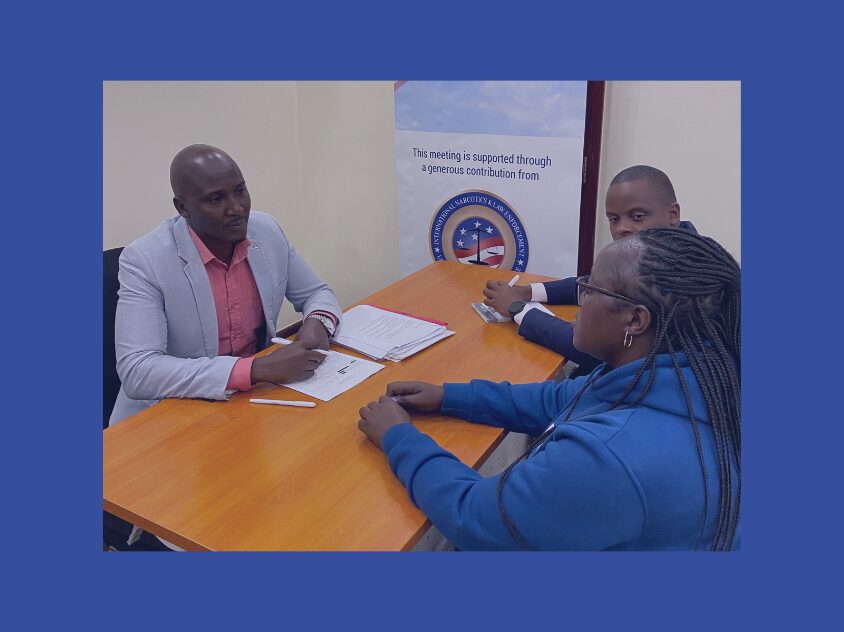
    In a significant stride towards upholding human rights in Kenya, the United Nations Office on Drugs and Crime (UNODC) is leading an initiative to enhance the Kenyan Criminal Justice System.

    With a focus on elevating transparency, accountability, and fairness, this initiative includes the implementation of Digitally Recorded Interviewing (DIR) techniques, backed by advanced Interviewing Techniques Training for law enforcement officers. Davidhorn, a pioneering technology provider, proudly stands as a partner in this transformative effort.

    Summary

    • Partnership for justice: UNODC and Davidhorn are enhancing Kenya’s criminal justice system with Digitally Recorded Interviewing (DIR) techniques and advanced training for law enforcement, aiming for greater transparency and accountability.
    • Training and deployment: Experts like Jeff Horn and Jackie Vallack have trained Kenyan police across multiple units, equipping them with DIR devices to improve interview accuracy and reduce reliance on written accounts.
    • Protecting the vulnerable: The initiative supports Kenya’s Child Justice and SGBV Strategies, focusing on safeguarding vulnerable populations and combating wildlife crime in collaboration with the Kenya Wildlife Service (KWS).

    Davidhorn’s mission is to combine technological solutions with ethical interview practices to improve justice and human rights globally. This lines up with the UN’s Sustainable Development Goal 16: “Promote peaceful and inclusive societies for sustainable development, provide access to justice for all and build effective, accountable and inclusive institutions at all levels.” That’s why projects like training for Kenyan police officers in Digitally Recorded Suspect Interviews in Nairobi (July-August 2023) resonateed deeply with Davidhorn’s commitment to these ideals.

    Under the guidance of Marion Crepet, a Human Rights lawyer employed by the UNODC, the training marked a pivotal step in reshaping Kenya’s justice system. Jeff Horn from Davidhorn delivered a comprehensive presentation that encompassed three stages to succeed with Digital Interview Recording (DIR):

    1. Planning for success
    2. Administrator Introduction to Database setup and maintenance
    3. User training and practical application of equipment.

    Ten DIR devices now empower Kenyan police officers to capture interviews with witnesses and suspects, curbing the reliance on written accounts and fostering a more transparent and accountable process. Davidhorn’s technology not only ensures accurate evidence collection but also safeguards vulnerable witnesses and promotes transparency in suspect statement recordings.

    Jackie Vallack, an experienced former Derbyshire officer with specialised training in Interview Techniques, spearheaded the training and course and was supported by David Ward from Focused Conservation, an NGO dedicated to combating environmental crimes. The training reached various Kenyan Police Departments, including the Serious Crime Unit, Transnational Organized Crime Unit, Kenyan Wildlife Crime Unit, Anti Human Trafficking Unit, Child Protection Unit, and Environmental Crime Unit.

    Reflecting on the training, Jeff Horn of Davidhorn shared:


    “Witnessing the enthusiasm of Kenyan police officers to embrace Davidhorn’s solutions was truly inspiring. The comprehensive training in advanced interviewing techniques has been engaging and promising. While the journey towards a fairer justice system in Kenya and Eastern African countries is ongoing, the officers’ positive response is a hopeful sign.”

    Amidst challenges faced by Kenyan authorities in the criminal justice system, the UN’s support is paving the way for crucial improvements. Davidhorn’s technology holds immense potential to address these challenges. In particular, Kenya’s Child Justice and Sexual and Gender-Based Violence (SGBV) Strategies, supported by the UN, stand as a pivotal project aimed at protecting victims and creating a more inclusive justice system. By prioritizing victim-centred approaches, these strategies uphold the rights and dignity of all Kenyans, especially those vulnerable to abuse and exploitation.

    With approximately 60 percent of Africa’s population falling under the age of 25, the focus naturally turns to children and young adults who are particularly susceptible and exposed. Acknowledging their vulnerability, it becomes imperative to design distinct measures that guarantee their safety and well-being.


    “The initiatives are in line with the strategic focus of the Judiciary to transform the justice system into a people-centred one that upholds the dignity and rights of all Kenyans, especially victims of Sexual and Gender-Based Violence, child abuse and exploitation. We are in effect sending a clear message that our society will not tolerate those who prey upon the vulnerable” [1]

    said Hon. Martha Koome President of the Supreme Court of Kenya, and the first woman to occupy this position.

    Moreover, UNODC’s collaborative efforts in wildlife protection are reshaping the fight against wildlife crime in Kenya. Recognising the challenge of wildlife poaching, UNODC partners with the Kenya Wildlife Service (KWS) to enhance internal systems and mechanisms to prevent it. This comprehensive approach supports the entire criminal justice chain, from wildlife rangers to financial analysts, judges, and other practitioners, strengthening their capacity to prevent, investigate, prosecute, and resolve wildlife and forest crimes.

    In closing, these initiatives collectively herald a new era for Kenya’s criminal justice system. By embracing technology, advanced training, and international collaboration, Kenya is poised to build a more transparent, accountable, and fair justice system that upholds human rights, and protects the vulnerable. Davidhorn is proud to be a part of this journey.

    Written by:

    Chat GPT was used while creating this post

    [1] https://www.unodc.org/easternafrica/en/Stories/launch-of-the-child-justice-and-sexual-and-gender-based-violence-sbgv-strategies.html

    Related products

    • Fixed Recorder

      Fixed HD recorder for high security interview rooms.

    • Portable Recorder

      Lightweight, PACE-compliant interview recorder for any setting.

    • Capture

      Mobile app recorder for capturing evidence on the go.


    • Ark Interview Management

      Receive, monitor, and keep evidence throughout its lifetime.

    June 26, 2024
  • How to turn interrogation into investigative interviewing?

    How to turn interrogation into investigative interviewing?
    Turning interrogation into investigative interviewing

    Turning interrogation into investigative interviewing

    Investigative interviewing should not be confused with interrogation. Investigative interviewing is a crucial tool for law enforcement, journalists, and other professionals who need to gather accurate and reliable information from people.

    Investigative interviewing should not be confused with interrogation, which is a more confrontational and adversarial process that aims to obtain a confession or other incriminating information. Investigative interviewing is a conversation-based approach that aims to elicit truthful and complete accounts of events, as well as the thoughts, feelings, and motivations of those involved.  

    Summary

    • Investigative interviewing vs. interrogation: Investigative interviewing is a conversation-based approach focused on gathering complete information, while interrogation is confrontational, aiming to obtain confessions through psychological tactics and manipulation.
    • Critiques of interrogation methods: Traditional interrogation techniques are criticised for their potential to induce false confessions, lack of scientific foundation, violation of suspects’ rights, and negative impact on vulnerable populations. There is a growing advocacy for ethical and effective practices like the PEACE model.
    • Mindset and application: Investigative interviewing fosters a safe and supportive environment, encouraging voluntary and accurate disclosures. It is applicable not only in criminal investigations but also in workplace disputes, journalistic inquiries, and academic research.

    What is the difference between interrogation and investigative interviewing?

    The main difference between investigative interviewing and interrogation lies in their respective mindsets. Investigative interviewing is based on the premise that the interviewee is a potential source of information who may have valuable insights into a case or situation. The interviewer’s goal is to establish rapport and trust with the interviewee, and to encourage them to share what they know in a relaxed and non-threatening environment. This requires a curious and open-minded approach, where the interviewer listens carefully to what the interviewee says, asks follow-up questions to clarify and expand on their answers, and avoids making assumptions or judgments.

    In contrast, interrogation is based on the premise that the interviewee is a suspect who has committed a crime or knows critical information that they are withholding. The interrogator’s goal is to break down the interviewee’s resistance and get them to confess or reveal incriminating details. This often involves a confrontational and intimidating approach, where the interrogator uses psychological tactics to manipulate the interviewee’s emotions, perceptions, and beliefs. Common interrogation techniques include making false promises or threats, using physical or emotional stress, and creating a sense of isolation or fear.


    Listen to our podcast on Investigative interviewing

    Critiques of traditional interrogation methods

    The main critiques of traditional interrogation methods often revolve around the ethical, psychological, and legal implications of such practices. Numerous studies and reports from well-renowned sources support these critiques and have led to a growing consensus on the need for reform in interrogation practices, with a focus on techniques that are both effective and respectful of suspects’ rights and psychological well-being. The adoption of evidence-based practices is increasingly advocated within law enforcement communities around the world.

    The main criticism are focused around the following issues:

    1. Coerciveness and false confessions: Traditional interrogation techniques, such as the Reid technique, have been criticised for their potential to induce stress, anxiety, and psychological manipulation, which can lead to false confessions. Studies have shown that these techniques can be particularly coercive and misleading, resulting in innocent people admitting to crimes they did not commit.

    2. Lack of scientific foundation: Critics argue that some traditional interrogation methods lack a solid scientific foundation and rely more on the intuition and experience of the interrogator rather than empirical evidence and psychological research.

    3. Violation of rights: There is concern that aggressive interrogation tactics may violate the rights of suspects, particularly the right to remain silent and the right to legal counsel, as guaranteed by legal frameworks such as the Miranda rights in the United States.

    4. Impact on vulnerable populations: Certain groups, such as juveniles, the mentally ill, or those with cognitive impairments, are more susceptible to the pressures of interrogation and may not fully understand their rights or the implications of their statements, making them more vulnerable to coercion.

    5. Advocacy for reform and best practices: In response to these critiques, there has been a push toward more ethical and effective interviewing techniques, such as the PEACE model (Preparation and Planning, Engage and Explain, Account, Closure, and Evaluate), which emphasises communication, rapport building, and obtaining information without coercion.

    Mindset matters

    The mindset of investigative interviewing is more conducive to gathering accurate and reliable information than interrogation. By creating a safe and supportive environment, the interviewer can encourage the interviewee to share information voluntarily, without feeling coerced or intimidated. This, in turn, increases the likelihood that the information obtained is truthful and complete, and that the interviewee feels respected and heard. Moreover, investigative interviewing can be used not only in criminal investigations but also in other contexts, such as workplace disputes, journalistic investigations, or academic research.

    It’s one OR the other

    In conclusion, investigative interviewing and interrogation are two distinct approaches to gathering information from interviewees. While interrogation aims to obtain a confession or other incriminating information through confrontational and adversarial means, investigative interviewing aims to elicit truthful and complete accounts of events and feelings through a curious and open-minded approach. By understanding the differences between these two mindsets, professionals can choose the most appropriate approach for their needs and achieve their goals more effectively.

    Written by:

    Resources

    1. “Investigative Interviewing: Strategies and Techniques” by Michael E. Lamb, LaTonya S. Summers, and David J. La Rooy – a comprehensive textbook that covers the theoretical and practical aspects of investigative interviewing.
    2. “Interviewing and Interrogation for Law Enforcement” by John E. Hess – a guidebook that provides law enforcement officers with practical tips and techniques for conducting successful interviews and interrogations.
    3. “The Reid Technique of Interviewing and Interrogation” by John E. Reid and Joseph P. Buckley – a classic textbook that describes the Reid technique, a widely used approach to interrogation.
    4. “Investigative Interviewing: Psychology and Practice” by Rebecca Milne and Ray Bull – a book that examines the psychological principles and best practices of investigative interviewing.
    5. “The Innocence Project” – a nonprofit organisation that works to exonerate wrongfully convicted individuals and improve the criminal justice system. They provide resources and research on investigative techniques, including interrogation and eyewitness identification.
    6. “Police-induced confessions: Risk factors and recommendations.” Law and Human Behavior, 34(1), 3-38 by Kassin, S. M., Drizin, S. A., Grisso, T., Gudjonsson, G. H., Leo, R. A., & Redlich, A. D. (2010).
    7. “You’re guilty, now confess! Why are police permitted to use deceptive interrogation techniques?” by Meissner, C. A., & Kassin, S. M. (2004).  American Journal of Public Health, 94(6), 1078-1084.
    8. “Police interrogation and American justice.” Harvard University Press, by Leo, R. A. (2008)
    9. “Youth on trial: A developmental perspective on juvenile justice.” University of Chicago Press, by Grisso, T., & Schwartz, R. G. (Eds.). (2000).
    10. “National evaluation of the PEACE investigative interviewing course.” Police Research Award Scheme, Home Office, by Clarke, C., & Milne, R. (2001).
    11. ChatGPT was used in the creation of this article. Edited by domain experts within investigative interviewing. 

    Related products

    • Fixed Recorder

      Fixed HD recorder for high security interview rooms.

    • Portable Recorder

      Lightweight, PACE-compliant interview recorder for any setting.

    • Capture

      Mobile app recorder for capturing evidence on the go.


    • Ark Interview Management

      Receive, monitor, and keep evidence throughout its lifetime.

    June 26, 2024
Previous Page
1 2 3 4
Davidhorn

UK: +44 (0)1582 490300

Other regions: +47 370 76 460

Sales and Technical:
sales@davidhorn.com

Support:
support@davidhorn.com

  • wpml-ls-flag
    • wpml-ls-flag
    • wpml-ls-flag
    • wpml-ls-flag
    • wpml-ls-flag
    • wpml-ls-flag

Other pages

  • Contact
  • Assistance
  • Product training
  • Security and Compliance
  • For Media
A Kiwa certified (ISO 19001, ISO 27001) badge. Issued by the Norwegian Accreditation MSYS 004.

Receive the latest news

This field is for validation purposes and should be left unchanged.
Name(Required)
Newsletter consent(Required)
Read our Privacy Policy.

Sign up for our newsletter and be the first to receive great offers and the latest news!


  • LinkedIn
  • Facebook
  • Instagram

Privacy Policy

Terms

Cookies

©Davidhorn. Code and Design Aptum