Aller au contenu
Davidhorn
  • Solutions

    Par secteur d’activité

    • Police
    • La défense
    • Immigration et douanes
    • Interviews d’enfants et de témoins
    • Autorités locales
    • Enquêtes sur les entreprises
    • Soins de santé

    Par cas d’utilisation

    • Entretien avec un témoin vulnérable
    • Entretien avec le suspect
    • Entretiens sur le terrain
  • Produits

    Enregistreurs

    • Capture App
    • Enregistreur portable
    • Mini enregistreur
    • Enregistreur fixe
    • Enregistreur de logiciels
    • Enregistreurs secrets

    Gestion des Interviews

    • Gestion des Interviews dans l’Ark

    Intégrations

    • Intégrations et configuration
    Graphique promotionnel pour un webinaire gratuit intitulé "How to Use Davidhorn's Investigative Interviews Solution", animé par Magnus Green. Elle comporte une bulle de dialogue bleue avec le texte "Free webinar" et l'image floue d'une personne à l'intérieur d'un cercle bleu.
  • Clients
  • Centre de ressources

    Centre de ressources

    • Blog
    • Fiches techniques
    • Livres électroniques et livres blancs
    • Evénements
    • Podcasts
    • Webinaires
  • Partenaires

    Partenaires

    • Aperçu des partenaires
    • Devenez partenaire
  • Entreprise

    Entreprise

    • A propos de
    • CarrièreEmplois à Davidhorn
    • Contact
    • Clients
  • wpml-ls-flagfr
    • wpml-ls-flagen
    • wpml-ls-flagde
    • wpml-ls-flages
    • wpml-ls-flagit
    • wpml-ls-flagpl
Mon compte
Aide
Réserver une démo
Davidhorn
Compte
  • Solutions
    • Par secteur d’activité
      • Police
      • La défense
      • Immigration et douanes
      • Barnahus
      • Autorités locales
      • Enquêtes sur les entreprises
    • Par cas d’utilisation
      • Entretien avec un témoin vulnérable
      • Entretien avec le suspect
      • Entretiens sur le terrain
  • Produits
    • Gestion des Interviews dans l’Ark
    • Enregistreur mobile
    • Enregistreur portable
    • Mini enregistreur
    • Enregistreur fixe
    • Enregistreur de logiciels
    • Enregistreurs secrets
    • Administration et intégrations API
  • Clients
  • Centre de ressources
    • Blog
    • Fiche technique
    • Livres électroniques
    • Evénements
    • Podcasts
    • Webinaires
  • Partenaires
    • Aperçu des partenaires
    • Devenez partenaire
  • Entreprise
    • A propos de
    • Actualités
    • Contact
Soutien
Démonstration de livres
  • Davidhorn
  • Réformer les auditions d’investigation dans la pratique – ép. 18

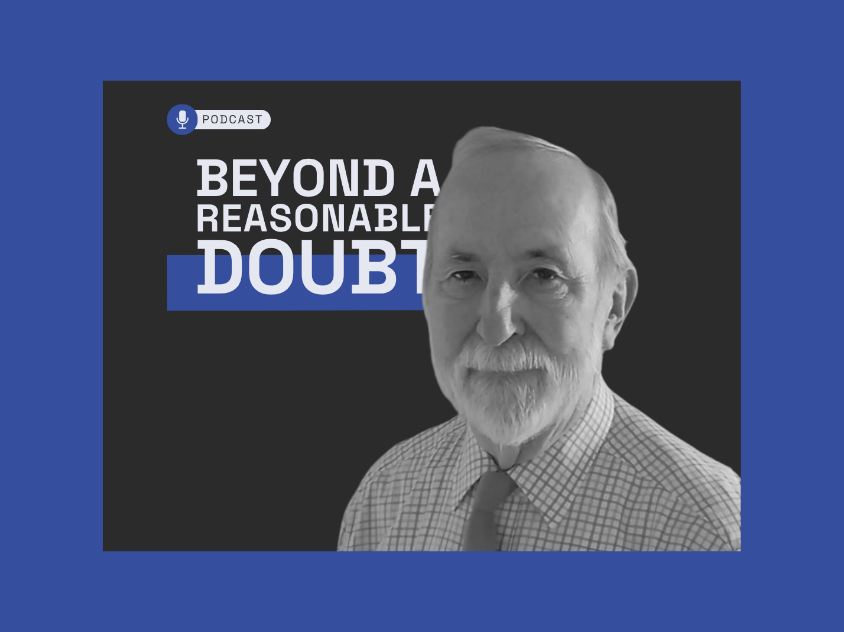
    Réformer les auditions d’investigation dans la pratique – ép. 18
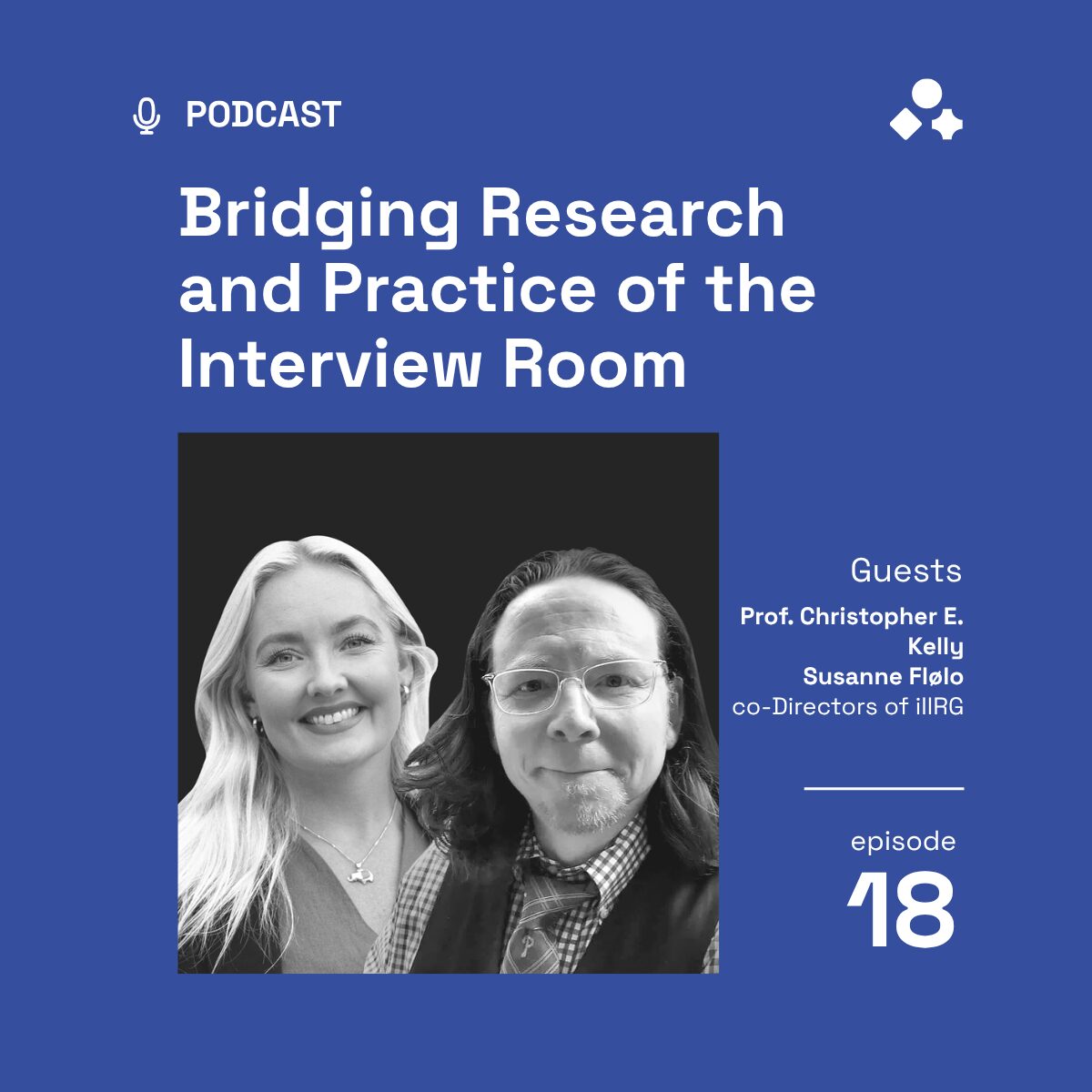
    investigative interviewing reform with iIIRG co-directors

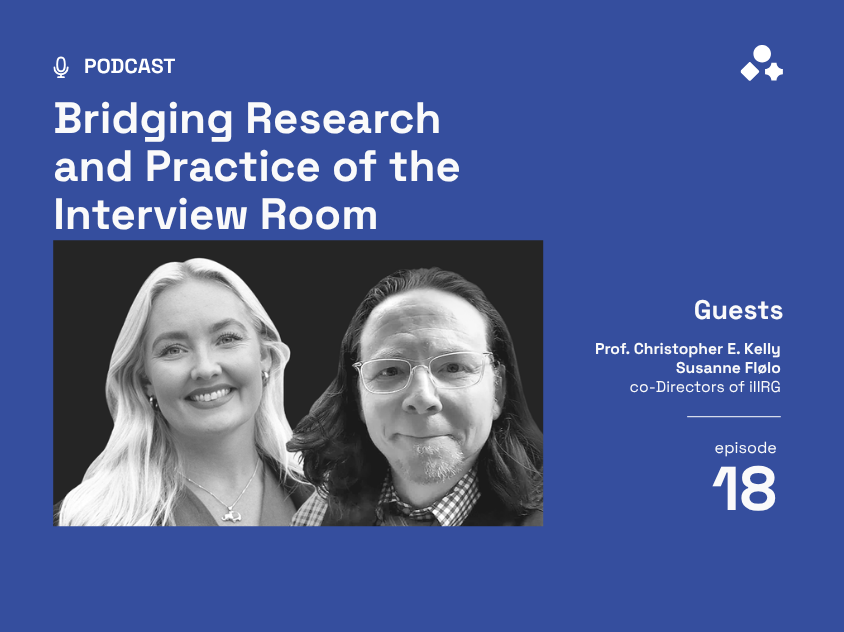
    Episode 18. Bridging Research and Practice of the Interview Room

    Every major interviewing framework – PEACE, KREATIV, ORBIT – distils to the same essentials: stay nice, ask good questions, and listen.

    So why does confession-driven culture remain so deeply embedded, even in systems that have formally adopted investigative interviewing?

    In this episode of Beyond a Reasonable Doubt, host Børge Hansen speaks with two leading members of iIIRG – the International Investigative Interviewing Research Group – about what actually makes reform stick, and what keeps pulling it back.

    In this conversation, they cover:

    • Why confession culture persists — the incentive structures across police, prosecutors and courts that sustain it, and why outcome-based thinking crowds out accuracy
    • The first safeguard to fail under pressure — why the opening minutes of an interview determine everything that follows, and what ‘sinking to your level of training’ really means in practice
    • The accountability deficit — what supervisors miss when they only read written summaries, and why the entire justice system is making high-stakes decisions without seeing what actually happened in the room
    • Recording as a catalyst, not a luxury — how mandatory recording drove professional development in Norway, and why a technically excellent recording still needs independent expert analysis to be credible in court
    • AI in investigative interviewing — the risk of a new shortcut, shadow use of unapproved tools, and what responsible adoption actually requires
    • The global shift — from the Mendez Principles and the UN Manual to wartime implementation in Ukraine, how investigative interviewing has moved from niche reform to global professional standard
    • What a police chief can do on Monday morning — with no budget, no mandate, and no certainty — to start moving practice in the right direction

    Episode length: approximately 65 minutes

    Host: Børge Hansen, CEO, Davidhorn

    Production: Davidhorn – Beyond a Reasonable Doubt Podcast


    Equipped For Justice – Supporting ethical, human rights-compliant investigations worldwide

    About the guests

    Prof. Christopher E. Kelly

    Prof. Christopher E. Kelly is a professor of criminal justice with a research focus on what improves information quality in investigative interviews. He has partnered with law enforcement agencies in the United States and internationally for over a decade. Professor of Criminal Justice, Saint Joseph’s University, USA.

    Susanne H. Flølo

    Susanne Flølo is a human rights specialist and investigative interviewing practitioner. She has contributed to the UN Manual for Investigative Interviewing and the UNODC e-learning programme, and works at the Norwegian Centre for Human Rights (NCHR) and the Norwegian Mendez Centre.

    Watch and listen wherever you get your podcasts (Youtube link here)

    Related products

    • Enregistreur fixe d’auditions HD

      Enregistreur HD fixe pour les salles d’audition de haute sécurité.

    • Enregistreur portable d’auditions

      Enregistreur d’audition léger, conforme aux normes internationales, pour tout type d’environnement.

    • Capture – Enregistrement d’auditions mobiles

      Enregistreur d’application mobile pour capturer des preuves en déplacement.

    • Logiciel Ark – Gestion d’auditions et preuves numériques

      Recevoir, contrôler et conserver les preuves tout au long de leur durée de vie.

    Transcript

    Guests: Susanne Flølo & Prof. Christopher E. Kelly

    Host: Børge Hansen

    Recorded: 20 February 2026


    Børge Hansen (Host)

    In a healthy democracy, the rule of law is only as strong as its most hidden moments. We talk about justice in public — in courtrooms and policy debates — but the real test happens when the door is closed. In that room, the tension is not just about solving a crime. It is about whether a system can stay objective under pressure. Can we move past confession-driven practices and treat interviewing as a forensic craft built for reliable facts?  00:00

    I am Børge Hansen and this is Beyond a Reasonable Doubt.

    In this series, we look at the mechanics of justice — from how interviews are conducted to how evidence holds up under scrutiny. Today is about the gap between what we know works and what actually happens under pressure: practice, supervision, and the minimum safeguards that any justice system should demand.

    Today I am joined by Susanne Flølo and Christopher E. Kelly. Both are active in the International Investigative Interviewing Research Group, iIIRG. They work to move evidence-based interviewing from research into day-to-day practice — where supervision, habits and culture decide what sticks.

    Susanne, you work in human rights and investigative interviewing standards. You have contributed to the UN Manual for Investigative Interviewing and the UNODC e-learning programme for investigative interviewing. Chris, you are a professor focusing on criminal justice, with a particular focus on what actually improves information quality in interviews.

    Susanne and Chris, thanks for joining us today. For listeners who have not come across iIIRG before — if you had to explain to a busy investigator in one sentence what iIIRG exists to change, and just as importantly, what iIIRG is deliberately not trying to be?

    Christopher E. Kelly (Guest)

    I can start with this. In one sentence, iIIRG was created to fill the space that exists between academic research and real-world practice. The explicit mission is to bring these two groups together — groups that have historically not always understood one another. When iIIRG was founded, in 2007 or 2008, it was with the explicit intention of bridging that gap between research and practice.  01:47

    Susanne Flølo (Guest)

    And I agree. First of all, thank you so much for having me — it is a great pleasure. I have listened to every episode of this podcast, so it is a real honour to have been invited. For me, the mission and purpose of iIIRG is very simple: we connect science to practice. We try to make sure that people who conduct interviews — whether they are police, military, immigration, or oversight bodies — actually have access to what works. And we try to help our members, whether practitioners, researchers, or other professionals, to uphold the highest possible professional standard in their work.  02:20

    Børge Hansen (Host)

    So what is your personal litmus test for an investigator who is operationally ready? One or two indicators.  03:05

    Susanne Flølo (Guest)

    A lot of people, I think, still treat interviewing as an art or an instinct. But to me, the litmus test of a good investigator is not the confession — however much Hollywood might lead us to believe otherwise. Rather, it is whether you are able to create the conditions for accurate, complete and reliable information to emerge. Interviewing is a disciplined forensic craft. It has methodology and structure, it is based on science, and it has profound consequences for justice, public trust, and even state stability.  03:10

    In every country we work in — whether Ukraine, Thailand, Brazil, Indonesia, or others — we meet investigators who intuitively understand the value of rapport-based interviewing long before they have even heard the term ‘investigative interviewing’. And many of them have discovered the hard way that confrontational, confession-driven methods simply do not get them the information they need. So, again, we are simply trying to bridge the gap between research and practice.

    Christopher E. Kelly (Guest)

    And I would add: in terms of a litmus test, one of the most important qualities I have found is a level of curiosity — not just about an investigation, but about the world. An openness to different possibilities and a willingness to think beyond what is immediately in front of you. The best interviewers I have encountered over the years have been the ones who can think outside the box.  04:13

    That is related to something Susanne just said about art versus science. You hear it a lot from practitioners: this is more art than science. As a committed scientist, I have to object to that. I have come to believe that nobody particularly wants to be thought of as a scientist — white lab coat, elbow patches. That is not very fun. Artists and creative thinkers are fun, imaginative, able to break out of everyday norms. But I do believe there is a science to that kind of thinking, and we can teach it.

    Børge Hansen (Host)

    Frameworks like PEACE, KREATIV, and ORBIT are well known. But if you strip things down for investigators working under pressure, what is the smallest set of behaviours that protect reliability?  05:31

    Christopher E. Kelly (Guest)

    In addition to keeping an open mind and remaining flexible, I think the couple of essential qualities that all the models boil down to are: stay nice, ask good questions, and listen. Actually hear what people are saying, and allow them to speak. Because the opposite — being confrontational, asking closed questions, interrupting, doing more talking than the interviewee — that is not actually an interview. All the models come down to a rapport-building mentality that asks good questions and then lets the person speak.  05:56

    Susanne Flølo (Guest)

    Paired with curiosity and good analytic skills. But yes, I absolutely agree with Chris.  06:47

    Børge Hansen (Host)

    Good. So let us move to where the pressure really begins. Rules and frameworks are easy when things are quiet. But officers are on the clock and expected to produce results. When that pressure hits, you find out what the system really values. Why is confession-driven culture still so strong among investigators across the world?  06:48

    Susanne Flølo (Guest)

    Confession culture is, as you say, incredibly persistent. It is fast — or at least it is portrayed as fast. It is traditional. It is what supervisors often expect, and it is emotionally compelling. People feel as though they have cracked the case when someone admits guilt. The problem is that it is a terrible accuracy indicator.  07:39

    Confession-driven practices increase the risk of tunnel vision. They reinforce cognitive biases, and we know they lead to errors of justice and wrongful convictions. They also fundamentally clash with the presumption of innocence and the real purpose of the interview, which is to gather information — not to extract agreement. Another reason confession culture persists is systemic. Many police organisations cite lack of funding, time, or leadership focus. Those explanations tend to be the same everywhere. But underneath them, I think there is something far more basic: you cannot fix a problem you have not acknowledged exists. No country is immune to errors of justice, but you will not see them unless you are willing to believe they can actually happen in your system.

    Human fallibilities also play a huge role — misunderstandings about suggestibility, confirmation bias, primacy effects, false memories. Acknowledging these fallibilities helps explain why interviews need to be conducted in a structured, research-based way that actively mitigates these risks.

    Børge Hansen (Host)

    Chris, if the science backs what Susanne is describing, why is there still resistance?  09:12

    Christopher E. Kelly (Guest)

    Because none of us like change — and I will not just throw the police under the bus here. University professors are the same. Going from a confession orientation to one of information gathering is a fairly large shift in both mindset and practice.  09:28

    Speaking as an American: in my city of Philadelphia, a city of around one and a half million people, there were 250 murders in 2025 — down from 500 during the pandemic. The police are dealing with a significant backlog of cases. And in the American legal context, confession is king. When you get a confession, it is over. The detective can move on to the next case and hand it to the prosecutor, who knows that, barring some unusual issue, 97% of convictions in this country — a number similar globally — come through guilty pleas. When a defendant sees a confession in the file, that is a very powerful piece of evidence pushing them towards a guilty plea. So confessions are good for the police, and good for the prosecution, because they keep things moving.

    Børge Hansen (Host)

    Concrete results.  11:35

    Christopher E. Kelly (Guest)

    Exactly. It is outcome-based and short-term thinking. Here is a crime; I will solve it. And regardless of the veracity of the confession, it is treated as truth — because there is still a widespread misunderstanding of why people say they did things they actually did not do. The entire system is incentivised to get a confession. And accusatorial-style interrogations are very effective at producing them. So effective, in fact, that they get innocent people to confess. That is obviously where the problem lies. The incentive structure has to change. Prosecutors and investigators need to scrutinise confessions more closely and verify everything in them. But until police leaders, prosecutors, and lawmakers understand that a confession can be unreliable — and that even a genuine confession from a guilty person may not be the end of the information-gathering process — the culture will not shift.  11:37

    Børge Hansen (Host)

    Susanne, when standards come under strain — even in countries where investigative interviewing is the established standard — what is the first safeguard that slips in real life?  13:13

    Susanne Flølo (Guest)

    Empathy and rapport. We forget about their importance the moment pressure rises, and so the opening — and the planning that precedes it — becomes absolutely crucial. Everything that follows rests on what happens there. The opening determines rapport, determines cooperation, and determines whether the interviewer manages to stay open-minded. If you get that opening wrong, if you set a confrontational tone, you will probably never recover.  13:41

    We also see the same linguistic red flags everywhere in the world: leading questions; repeating a question until the person changes their answer or rapport breaks down entirely; narrative summaries that omit or distort key details; language that signals the interviewer has already decided what happened. These issues are universal, and they matter — because interviewing is not just about what the interviewer hears, it is about what the interviewer elicits. Small language choices can fundamentally shape the quality and reliability of the information obtained.

    That is why we insist on structure, planning, and an evidence-driven approach paired with audio and video recording. Because, as my colleague Dr. Ivar Fahsing likes to say: when the stakes are high, you do not rise to the occasion — you sink to your level of training. Which is why having a solid methodology in place is so incredibly important. And that goes not only for the police, but for the entire justice system.

    Børge Hansen (Host)

    Chris, where do you see the consequences of a confession-driven or ‘get answers fast’ culture playing out?  15:31

    Christopher E. Kelly (Guest)

    In a confession culture, there are very few safeguards further down the line. The incentives for prosecutors are to keep cases moving, secure guilty pleas, and get on to the next file. Judges and juries — in the rare instance a case reaches that point — often lack any real understanding of good interviewing practices or what constitutes reliable information. And my big concern relates to recording.  15:44

    Everyone who talks about reform immediately recommends recording — and rightly so. But I like to push back a little, not because I disagree that recordings should be made, but because recording alone is not enough. It needs to come with independent evaluation. If you put a false confession in front of a jury — with multiple camera angles, crystal-clear audio — that recording looks compelling. Without someone contextualising and analysing what was actually said and how, all you have is everyone’s biases looking at a technically excellent recording of a false confession.

    I live in Pennsylvania, where confession expert witnesses are actually prohibited from testifying in court. There is a push here to record all interviews — but without that expert context, it could actually be worse than having a detective read a confession statement into the record. At least then a defence attorney can cross-examine the detective and find weaknesses. A recording is very hard to cross-examine. So the safeguards have to run all the way through the system — educating not just lay jurors, but prosecutors and judges as well.

    Børge Hansen (Host)

    You said that under pressure we sink to our level of training. If you rush the opening, what happens to the quality of everything that follows?  18:25

    Susanne Flølo (Guest)

    You risk failing to build rapport, which means you are far less likely to obtain accurate and complete information than if you had laid a good foundation from the outset. And if you start on the wrong foot, it is extremely difficult to recover. In those cases where rapport breaks down from the very beginning, it is time to bring in a different interviewer and try again — but that is not the ideal outcome. The best approach is to get it right once, do it well, and ensure proper planning for that opening.  18:45

    Christopher E. Kelly (Guest)

    And I would add: the first thing to go under high pressure is patience. It is related to planning and taking the time for an appropriate introduction — building a working relationship, not a friendship, but an understanding between two people on opposite sides of an issue about what each other needs. When patience goes, the other person’s needs go with it. And as Susanne says, once rapport is not there from the start, it is very hard to establish at all.  19:57

    Børge Hansen (Host)

    I have attended ORBIT training myself. It uses live actors with full backstories and cases running over several days — genuinely immersive. One thing that struck me watching was how even trained officers struggled with two very different challenging interviewees: one deeply traumatised and withdrawn; the other traumatised but dominant and acting out. How does the science actually find its way into practice in situations like those? These are police officers, not trained psychologists.  20:57

    Christopher E. Kelly (Guest)

    The science is still evolving on this. For the kinds of interviewees you describe — someone experiencing acute trauma during an interview, or someone who carries more general trauma — there is some research, but it is not nearly as mature as other areas. And I understand why practitioners find that frustrating.  22:06

    My response is always: we do not have all the answers yet. What we can do is base practice on the best available research at any given time. ORBIT is a good example — it has evolved since its inception and will continue to do so, because the team behind it is always working to understand the model better and update it. In two, five, or ten years, all of these models should look quite different.

    And sometimes — and this is a genuinely unsatisfying answer for practitioners — sometimes you are simply not going to have a successful interview. In many ways, ending an interview without the outcome you wanted is preferable to reverting to coercive or aggressive tactics, which is what can happen when someone is frustrated and not getting what they need. It may be better to pause, regroup, and try again with a different interviewer. But that takes resources, patience, and leadership. Every investigator has supervisors who should be providing oversight and ensuring principles are being upheld. That breaks down too often. But to reiterate: the science is evolving, and models like ORBIT are continuously bringing new findings into practice — which is exactly what the scientific process should look like.

    Børge Hansen (Host)

    Susanne, you travel the world observing people being trained. Are people getting impatient, reverting to old tactics — or are they able, as Chris described, to accept a difficult interview rather than conduct the wrong type of interview?  25:59

    Susanne Flølo (Guest)

    It depends. But what we most commonly see is that people go into the interview room without a clear plan — for rapport building, for the opening, for how to handle the evidence. It is a stressful situation. Even in training settings, people become incredibly stressed because they are being observed by colleagues, peers, and sometimes superiors.  26:16

    And we also need to build a genuine feedback culture. What we typically hear from supervisors after an interview is: ‘That went great. No notes.’ But we know that no interview is ever perfect or without areas for improvement. People need to hear — and be comfortable receiving — feedback like: ‘You were about to lose rapport here because you were pushing too hard’ or ‘We haven’t properly explored that line yet.’ And not just feedback focused on the information obtained, but on the process itself: what did I do, what did I miss, how could I improve? That culture of constructive, process-focused reflection is often absent.

    Lawrence and Emily Alison’s work through ORBIT is incredibly valuable in this regard, because building rapport is genuinely difficult to teach. And of course, as Chris mentioned, it is also true that no matter how much training someone receives, some people will never be strong interviewers. That is an unfortunate reality. But we know that certain personal qualities — curiosity, patience, flexibility, and the ability to genuinely express empathy — are fundamental. Becky Milne has called it the X factor: who has it and who does not.

    Christopher E. Kelly (Guest)

    Can I offer a quick anecdote on training design? I was part of a team developing and piloting a training programme — I will not mention the agency or any names. We put into the role-play scenario an interviewee who was not traumatised, not belligerent, not resistant. Our role player was overly cooperative. Everything they said was false, but they were enthusiastic, open, and willing. Come in, I am happy to talk, anything you need.  28:58

    Over two deliveries of this training, with perhaps six or eight teams rotating through, very few of them knew how to handle it. These were experienced investigators, some of whom had been through science-based training, and they did not know what to do with someone being apparently cooperative. Several reverted to unproductive practices out of frustration and unmet expectations. It was a brilliant demonstration of confirmation bias — they expected resistance, and when it was not there, they were lost. I would encourage anyone designing role-play exercises to include that kind of interviewee.

    Børge Hansen (Host)

    Not putting up a fight, but being overly cooperative.  31:02

    Susanne Flølo (Guest)

    I believe that is what the Alisons would refer to as a ‘bad monkey’ in the ORBIT model.  31:06

    Christopher E. Kelly (Guest)

    Yes, exactly.  31:10

    Børge Hansen (Host)

    Another blind spot: what leaders can actually see and manage. We talk a lot about the interviewer, but much less about leadership. If a supervisor only reads a written summary, what do they miss — and what gets lost when they do not see the interaction itself?  31:11

    Susanne Flølo (Guest)

    What you are pointing at, Børge, is one of the biggest global challenges: the accountability deficit. Leadership rarely sees the interview itself — they see the summary. And summaries hide a great deal: tone, pressure, leading language, body language, missed opportunities, and in some cases even coercion. Summaries also tend to overstate certainty, presenting a clean narrative where the actual interview may have been very messy. And the courts often also see only the summary. The entire justice system is making high-stakes decisions without ever seeing what actually happened in that interview room.  31:46

    This is why improving interviewing is never just about training frontline officers. At NCHR, we have seen repeatedly that unless you also train supervisors, managers and leadership, and unless you build systems around them, reforms do not stick. You get a good training workshop, people are enthusiastic for a few months, and then the system pulls everyone back into old habits — because the supervision, the metrics, and the accountability structures have not changed.

    And this brings in something that is often overlooked: evaluation. How can you evaluate the quality of an interview if you cannot revisit it in its most complete form? How do you learn from it? How do you train others from it? Without recordings, all of this becomes extremely difficult. When senior leaders champion transparency, recording and professionalisation, everything changes. When they do not, nothing changes. You simply cannot build a culture of high-quality interviewing without leadership creating the conditions for accountability, learning and long-term reform.

    Børge Hansen (Host)

    If you had to choose — what makes the science stick? Better training upfront, or day-to-day supervision?  33:56

    Susanne Flølo (Guest)

    It is both. But it also requires a fundamental understanding of the why. Why are we doing this? Why does it need to be done this way? If you believe your system is perfect, you will not change it. You need to be critical of your own structures and actively look for errors — because you will not find them unless you believe they can exist.  34:03

    Børge Hansen (Host)

    Chris, are there simple metrics that leaders could use?  34:39

    Christopher E. Kelly (Guest)

    The leaders I have encountered who embrace this movement are the ones who think of their organisations as learning organisations — not static, not ‘good enough’, but searching for something better. And in investigative interviewing, we have the tools for that. But one leader does not make a social movement.  34:47

    For every forward-thinking leader with the power to implement reform, there are probably several more who are resistant — because they moved up through a system without that kind of reform and succeeded within it. Why would they want to change something that worked for them?

    Change therefore has to be both top-down and bottom-up. People doing the interviewing are not going to reform themselves. There has to be some directive from the top: we are going to do it this way. But it has to be reinforced, because leaders rotate, promote, retire. Someone new comes in and you may have to start again.

    What this means in practice is that we also have to reach people who are new in their careers — get them to see the value of science-based interviewing before they pick up bad habits. As they promote up, they become the supervisors giving constructive feedback. But that takes 20 years. I will always credit former LAPD detective Mark Severino, who had some success in his agency getting investigative interviewing training to brand new recruits — not waiting until someone reaches investigations rank, but starting at the patrol level, where officers are already conducting interviews and speaking to people every day.

    Børge Hansen (Host)

    When poor practices do show up, what does a healthy organisation’s response look like?  39:00

    Christopher E. Kelly (Guest)

    I have learned a great deal from a dear friend and colleague, Mike McCleary, formerly Assistant Sheriff in charge of investigations at the Las Vegas Metropolitan Police Department — a very senior position. The lesson I have internalised most from working with him is this: you cannot tell police — or academics, for that matter — what they did wrong without also telling them how to do better.  39:06

    Whether it is a one-to-one debrief on a specific interview or a five-day training course, going in to tell a police officer who takes pride in their work that what they have been doing is bad or wrong is going to make them shut down. The approach has to be: we can do better, and here is how. It is not about what not to do — you cannot change the past. It is about improving in the future. Try this next time. Think about how an interviewee might respond when you get frustrated or impatient, and what effect that has on rapport and on the information you will obtain going forward.

    Børge Hansen (Host)

    Let us talk about recording — not as technology, but on the trust side. What makes a recording credible? And what can quietly undermine it?  41:01

    Susanne Flølo (Guest)

    People tend to think of recording as a technical add-on or a luxury, but in our view it is neither. It is the engine that drives professionalism — and it can actually accelerate reform. Norway is a clear example. When video recording became mandatory, many officers were initially hesitant because they did not feel fully confident in their skills. But that transparency pushed the whole system to invest in training, structure and preparation. Recording did not follow the reform. It was instrumental to the reform. It was the catalyst that moved interviewing from a private, unobservable practice to a shared professional discipline that everyone could learn from.  41:25

    Recording interviews improves accountability almost immediately. It strengthens evidence, promotes fairness, and protects the interviewee, the information obtained, and the interviewer themselves. Even a poor interview: the full recording is protection. It also creates a feedback loop for training — you can revisit your own interviews, or see how colleagues approach difficult moments. When you can do that, the quality of practice rises quickly. It becomes a craft, not improvisation. If a justice system tells us it has limited resources, we typically point them towards recording as an obvious starting point.

    Børge Hansen (Host)

    Is hesitancy around recording still a barrier? People record themselves constantly on their phones these days.  42:56

    Susanne Flølo (Guest)

    Unfortunately, recording interviews is a different matter entirely. The evidential integrity problem is real — a snippet recorded on a personal mobile phone gives no assurance of completeness. Was it started just as the suspect decided to confess? We cannot know. You need proper systems in place. The evidential record has to be preserved and protected, and that requires institutional infrastructure, not personal devices.  43:17

    Christopher E. Kelly (Guest)

    I would add that recording is also good for research. The unit I have worked most closely with over the past decade is a gang investigations unit based within the Clark County Detention Center in Las Vegas. They had been recording their interviews long before they encountered any science-based training. We took a random sample of 50 recordings, analysed them, and fed the findings back into their practice. That process built trust, because they realised we were not there to harm them — we were there to help.  43:54

    One example: they kept interrupting their interviewees. The question would be asked, the interviewee would start speaking, and the investigator would talk over them. If they took one message from our feedback, it was simply: let them talk. We then continued working with them over subsequent years, including pre-post evaluation studies. Their practice improved demonstrably over time, the more they were exposed to this approach. Recording provides the data that makes that kind of outside analysis possible.

    Børge Hansen (Host)

    You mentioned earlier that a technically brilliant recording can actually camouflage a bad interview or a forced confession.  47:22

    Christopher E. Kelly (Guest)

    Yes. And that is a real limitation in the type of research I do. When a partner agency gives me recordings or transcripts, I generally cannot verify whether the police account is accurate or whether the interviewee’s account is truthful — I have to work with what I am given and acknowledge that limitation. It gets contextualised and triangulated with other research methodologies: surveys, research interviews, focus groups, experimental laboratory studies. When you take the totality of findings across all these methods, you can have reasonable confidence in the reliability of what you are seeing. But no single recording tells the whole story.  47:32

    Børge Hansen (Host)

    It is 2026, so we should talk about AI. Earlier in this series we spoke with representatives from the Norwegian police who are working on the FAIR project — AI for interviews. What are your thoughts about AI assistance during interviews?  48:48

    Susanne Flølo (Guest)

    I am not sure iIIRG has taken a formal organisational stance yet, but promoting the responsible use of technology is a clear priority for us. Personally, I am hearing a great many stories about officers already using the tools that are publicly available — and I think we are running a huge risk if we do not get the police properly engaged with AI development. The risk is that people will use these tools regardless, and sensitive information will end up in open language models where it does not belong. Ignoring it is not a solution. And we know that criminals are already using AI tools to improve their methods.  49:07

    Christopher E. Kelly (Guest)

    As an organisation, iIIRG is committed to the responsible use of technology, and AI is clearly the most significant development right now. But we genuinely do not know its full effects yet. As a researcher, I feel I need to advocate for more study of this. And as an individual sceptic — the history of policing has been a history of finding shortcuts to conclusions. We need to be very careful that AI is not seen as just another shortcut that undermines good practice.  50:57

    The polygraph comes to mind. It is a shortcut, and it has been used as one. If AI is framed in the same way — another tool for getting to a result faster — I do not think it will be effective. I am also cautious about large language models, because they learn the incentives that humans operate with. An LLM that ‘knows’ a confession leads to a conviction may well push in that direction. That is a very dangerous territory. We need much more research before we go all in.

    Susanne Flølo (Guest)

    It also comes to mind what happened when a major AI company released the second version of their LLM — which actually performed worse than the first, precisely because of how people had been using it. These systems are not neutral.  53:32

    Børge Hansen (Host)

    What I am hearing is that the goal is not more technology per se — it is a record the court can trust, and a process people can rely on. If you want that to stick globally, what actually drives lasting change? Are we seeing a real shift, or are we still circling the same conversation?  53:45

    Susanne Flølo (Guest)

    I definitely think we are seeing a global shift. It is not isolated successes — there is broad momentum for investigative interviewing. At iIIRG, we have seen a significant increase in our work, and the same is true at NCHR and the Norwegian Mendez Centre. Interest is growing everywhere: Europe, Latin America, Africa, Southeast Asia. More governments, training centres, and oversight bodies are reaching out because they want to move away from confession-driven models towards something genuinely professional, ethical, and effective.  54:13

    At the international level, there have been some very significant developments. The Mendez Principles gave us, for the first time, a clear human rights framework for interviewing and information gathering — now available in 23 languages. The UN Manual on Investigative Interviewing anchors that science into practical guidance for states and individual officers, and is available in English, French, Arabic, Ukrainian, and very soon Spanish and Thai, all translated by local implementation groups. And the UNODC e-learning course on investigative interviewing allows us to scale training rapidly and at very low cost — reaching practitioners who would never otherwise have access to this material, often in their local language.

    Together, these tools have professionalized the conversation. States can now say, ‘Yes, we want this,’ because implementation is understandable, operationalised, and supported by global standards. Investigative interviewing has moved from a niche reform to a global professional standard. And perhaps most encouragingly, we are seeing the Global South taking the lead in many of these efforts — Brazil, Thailand, Indonesia, and many others are innovating, contextualising and driving implementation forward. And I want to highlight the extraordinary work being done in Ukraine — implementing investigative interviewing at full scale even during the full-scale invasion.

    Børge Hansen (Host)

    Ukraine is clearly an extreme high-pressure environment. What was the trigger for moving down the investigative interviewing route there, and what has stopped it from sliding back?  57:19

    Susanne Flølo (Guest)

    Part of the motivation, since the full-scale invasion, has been a will to distance themselves from the opposing side in that conflict. But I also think there is a genuine commitment to improving the quality of information — and a recognition that investigators are now sitting on thousands of cases, each of enormous consequence, that will matter for generations after the war. The stakes could not be higher. They want to ensure that they do justice to the victims and their families.  57:51

    What has also been remarkable is that they have not just built political will — they have built a training infrastructure around it and achieved real consistency in training delivery, which is genuinely difficult in any large institution, particularly where leadership and mid-level management rotate. I think Ukraine probably warrants its own episode, and I would love to have Ukrainian colleagues explain it themselves.

    Christopher E. Kelly (Guest)

    Absolutely.  59:10

    Børge Hansen (Host)

    Not everywhere is change driven by legislation. Some places, it is driven by individuals with conviction. So if there is a chief of police listening right now — what is the one move they can make on Monday morning, no budget, that starts moving practice in the right direction?  59:48

    Christopher E. Kelly (Guest)

    I think they should visit iIIRG.org, sign up for the newsletter, become a member, look into attending one of our iIIRG In Conversation webinars, and consider our in-person conferences — the next of which is in July 2026. In all seriousness, beyond that pitch, getting plugged into the world community is the first step. iIIRG is one piece of this, but not the only one. There are organisations like iIIRG and Implementa that have information freely available. The Mendez Principles website. Scientific journals — and there are ways around the paywalls. The information is out there. They just have to reach out. And once they do, we see this all the time: someone signs up for the newsletter, attends a webinar, and that sparks something. We cannot do everything, but we can provide the entry point.  1:00:08

    Børge Hansen (Host)

    And if they do that — what should they expect to see improve in weeks or months, not years?  1:01:53

    Christopher E. Kelly (Guest)

    A mindset change. It is a necessary first step — not sufficient on its own, but necessary. A leader who develops a sense that there is a better way, who finds iIIRG or another science-based organisation and starts learning that a different approach exists — that awareness is the first step. And once they realise there is a worldwide network of people willing to help, the ball starts rolling quite quickly. Then comes Implementa, which is specifically designed to help organisations make change from within. The educational awareness piece is where everyone has to start.  1:02:07

    Susanne Flølo (Guest)

    I absolutely agree with Chris. And I would add that we can also connect them with people. In whatever country that imaginary commissioner is sitting, we almost certainly have contacts who are working on investigative interviewing there. We would be very happy to connect anyone — whether out of curiosity or with the ambition of a full police reform — with the research community in their country. We are open to everybody.  1:03:35

    Børge Hansen (Host)

    The playbook is not mysterious: pick your driver, embed it in supervision, and make quality visible. iIIRG is here to help. Effective interviewing is not just a people skill — it is a forensic discipline that protects the heart of the justice system. If we do not get the room right, the record cannot rescue it. Susanne, Chris — thank you for joining Beyond a Reasonable Doubt, and for helping move reliable practice to scale.  1:04:28

    Christopher E. Kelly (Guest)

    Thank you, Børge.  1:04:59

    Susanne Flølo (Guest)

    Thank you so much for having us.  1:05:00


    END OF TRANSCRIPT

    © 2026 Davidhorn. All rights reserved.
    Read more

    mars 30, 2026
  • L’enregistrement des auditions au Danemark – ép. 17

    L’enregistrement des auditions au Danemark – ép. 17

    The Long Game Series

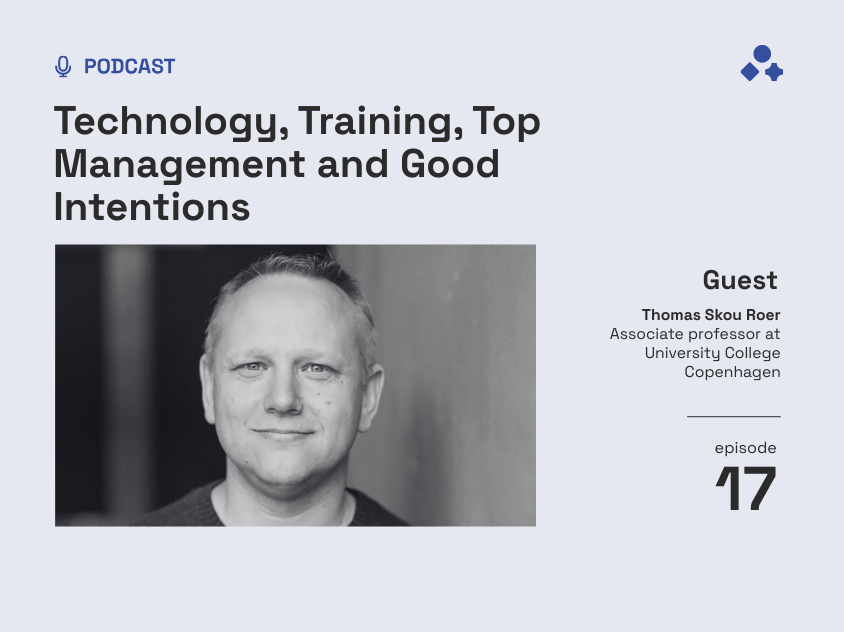
    Episode 17. Interview Recording, Technology, Top Management and Good Intentions

    Denmark was an early mover on investigative interview recording reform — its national standard arrived in 2015. Yet in 2021, for the first time in almost 100 years, two Danish police officers were convicted of attempting to coerce a confession.

    Thomas Skou Roer, one of the architects of that standard, joins Dr. Ivar Fahsing to examine what implementation really requires, and why getting policy right is only the beginning.

    In this candid and thought-provoking episode of Beyond a Reasonable Doubt, host Ivar Fahsing speaks with Thomas Skou Roer, associate professor at University College Copenhagen and former Danish criminal detective with 18 years of service, about the complex realities of implementing investigative interviewing standards in Denmark – and why having good standards doesn’t guarantee good practice. 

    Mr Roer opens with a powerful articulation of investigative interviewing’s ethos: “Do no harm, but get the job done.” This dual mandate – balancing safeguards with efficiency – reflects the tension inherent in modern policing. He traces how this balance has shifted over generations, with the “safeguard edge” becoming heavier than the “efficiency edge,” though both remain essential. The conversation then explores whether this represents genuine progress or simply a reframing of age-old police practices. 

    The episode reveals Denmark’s investigative interviewing journey in frank detail. In 2015, Denmark implemented a national standard for investigative interviewing, eliminating district-by-district variations and establishing unified training programs. This followed groundbreaking research by Kristina Kepinski-Jakobsen on witness and suspect interviewing. Thomas was part of the working group that developed these standards, leading one of the key projects. 

    Yet in 2021 – six years after implementation – two Danish police officers were convicted of attempting to coerce a confession, marking the first such convictions in nearly 100 years. Another officer was charged (though acquitted) in 2024. These cases starkly illustrate the gap between implementing standards and changing practice, revealing that Denmark “still has some way to travel” despite its progressive standards. 

    Mr Roer contrasts the Danish police’s implementation struggles with the Danish Immigration Services’ success story. Immigration Services fully adopted investigative interviewing principles, mandating onboarding training for all personnel with no exceptions – offering a model for what effective implementation can look like when organisational commitment is genuine. 

    The conversation explores why implementation fails even when standards exist. Our guest emphasises that investigative interviewing isn’t merely a technique – it’s a fundamental mindset change requiring professional critical thinking skills and metacognition. The traditional guilt-perspective, confirmatory approach is deeply human, not just a police failing, making change difficult without active intervention. 

    A central theme is the structural and managerial barriers to implementation. Mr Roer argues the problem isn’t officers on the ground, who genuinely want to do quality work, but rather management systems, performance measurement frameworks, and political pressures. He critiques Denmark’s “new public management” approach, which measures police efficiency through arbitrary timelines rather than actual public safety outcomes. True change requires “critical mass” at the top management and political levels – not just within police forces but throughout the justice system. 

    Our guest offers a compelling vision for the future: AI-powered decision support tools that flag interesting interview moments (“the interviewee said this was a boring kiss – what does that mean?”), identify weak hypotheses requiring more investigation, and help officers manage the massive data flows in modern investigations. He acknowledges the danger of creating “checklist policing” but argues that officers need technological support given the cognitive demands and volume of information they face. 

    In a powerful comparison, Dr Fahsing likens police to military forces – both responsible for keeping citizens safe, both requiring massive technological investments to equip personnel properly. Norway and Denmark invest billions in F-35 fighters and frigates for armed forces, yet similar thinking about technological investment in policing lags behind. Thomas agrees, noting that military conflicts create awareness driving investment, while policing needs similar critical mass for change. 


    Episode Length: Approximately 36 minutes

    Production: Davidhorn – Beyond a Reasonable Doubt Podcast

    Host: Dr Ivar Fahsing


    Equipped For Justice – Supporting ethical, human rights-compliant investigations worldwide

    About the guest

    Thomas Skou Roer

    is an associate professor at University College Copenhagen, where he teaches criminology. He trains various organizations in investigative interviewing and investigative practice. Thomas is part of the ImpleMendez group, where he leads the Training Curriculum Network, establishing a global standard for training materials in investigative interviewing. 

    Thomas is a trained criminal detective in the Danish police, where he served for 18 years. He was part of the working group that created the current standard for interviewing in the Danish police, implemented in 2015. He is also a trained forensic psychologist from the University of Liverpool. His work focuses on the practical implementation challenges of evidence-based investigative practices and the structural changes required for sustainable reform in criminal justice systems. 

    Watch and listen wherever you get your podcasts.

    Related products

    • Enregistreur fixe d’auditions HD

      Enregistreur HD fixe pour les salles d’audition de haute sécurité.

    • Enregistreur portable d’auditions

      Enregistreur d’audition léger, conforme aux normes internationales, pour tout type d’environnement.

    • Capture – Enregistrement d’auditions mobiles

      Enregistreur d’application mobile pour capturer des preuves en déplacement.

    • Logiciel Ark – Gestion d’auditions et preuves numériques

      Recevoir, contrôler et conserver les preuves tout au long de leur durée de vie.

    Transcript

    Guest: Thomas Skou Roer

    Host: Dr. Ivar Fahsing

    Recorded: 26 November 2025


    Dr. Ivar Fahsing (Host)

    I would like to invite you, Thomas Skou Roer from Denmark, to this episode of Beyond a Reasonable Doubt, Season 3. As you know, Thomas, the topic of this year’s season is the implementation of investigative interviewing. Although you no longer work for the Danish police authority, you worked for them for quite some time and you are deeply engaged in investigative practice in Denmark still. It is an honour to have you here today. Welcome.  00:00

    Thomas Skou Roer (Guest)

    Thank you very much, Ivar. Thank you for inviting me. It is a big honour for me and I am looking forward to a good conversation.  00:38

    Dr. Ivar Fahsing (Host)

    Fantastic, Thomas. You and I go quite far back, so some of these questions I am fairly sure we share opinions on — which makes it all the more interesting to discuss them over the next 40 minutes. Let me begin by inviting you to share with me and our listeners: what do you think is the ethos of investigative interviewing?  00:45

    Thomas Skou Roer (Guest)

    Well, the ethos — at least from my perspective — is, I think, ‘do no harm’. But I also think there is another side to it: it has to get the job done as well. So it is ‘do no harm, but get the job done’. By saying that, I mean that we need safeguards, but we also need efficiency in our investigative interviewing practice — so that we obtain the information we need while taking care of the people we need to safeguard. It is a double-edged sword, you might say, although it is of course heavier on the safeguard side.  01:12

    Dr. Ivar Fahsing (Host)

    That is a really good answer. If you try to reflect critically — don’t you think our colleagues from a generation before us would say that they did exactly the same?  01:50

    Thomas Skou Roer (Guest)

    Probably, yes. I think it is also about philosophy — about how much weight should be placed on each edge of that double-edged sword. I think there are still two edges, but the safeguard edge is becoming slightly heavier these days than the efficiency part. Whereas earlier, I would say it was probably more efficiency over safeguards. The balance has shifted.  01:59

    Dr. Ivar Fahsing (Host)

    Definitely. It is, as you say, about having your sword sharp — but about how to wield it in a safer way.  02:38

    Thomas Skou Roer (Guest)

    Yes. And maybe it is not about the sword itself, but about the wielding of it. Yes, I think that is a very good analogy.  02:47

    Dr. Ivar Fahsing (Host)

    So if you take us into a Danish context, Thomas — what is the situation in Denmark today? And looking back over the years you have been involved in strategic development there, why is this development important for Denmark?  02:56

    Thomas Skou Roer (Guest)

    Well, if we start with a brief historical perspective — around 2010, we had a very good researcher, one you know as well, Kristina Kæpinski-Jakobsen, who did some very interesting research on the interviewing of suspects. Before that, she had also done research on general witness interviewing — very important work. There were efforts to build on that and expand upon it, to change the landscape of investigative interviewing. But it remained fragmented. There was no national standard for how investigative interviewing should be conducted in Denmark. Different districts still had different approaches, although broadly there was probably reasonable agreement. But there was no standard.  03:15

    I was part of a working group and had the pleasure of leading one of the projects on developing the new standard for investigative interviewing in the Danish police, which was implemented in 2015. With that, we had a new national standard — there could no longer be different perspectives. It was one perspective. At least, that was the idea. And in practice, of course, challenges remain. But that was the intent.

    This also meant that from 2015, training in investigative interviewing began to be implemented on a much larger scale than we had been used to. Not large enough, but bigger. There were a number of basic programmes — perhaps one to three days — just to create an appetite, if you will. And then further courses for volume crime, and of course a course for video interviewing of child witnesses. That is essentially where we remain today, ten years later.

    Some local initiatives have attempted to expand the training regime, with mixed results. There have been efforts on trauma-informed interviewing for sexual assault victims, so things are still being done. But what is really interesting is this: we implemented the standard in 2015, and yet in 2021, for the first time in almost 100 years, two police officers were convicted of attempting to coerce a confession. Which was quite surprising — we had this new standard, and it had been implemented, but apparently not well enough. And in 2024, another officer was charged with the same offence, though acquitted. That too speaks to where Denmark stands right now.

    The status is that we have implemented investigative interviewing and developed the Danish model of interviewing, but implementation-wise we still have some way to travel. We are not there yet — in the Danish police at least. I say it that way because I also train the Danish Immigration Service, and they have fully adopted investigative interviewing as their standard. Everyone is onboarded using this method, and there are two courses — basic and advanced — as well as a child interviewing course. So the police is not alone in this. There are a number of actors employing the principles of investigative interviewing in Denmark, as is the case globally.

    Dr. Ivar Fahsing (Host)

    When we talk about the ethos of investigative interviewing — in my world, Thomas, it is probably not about interviewing at all. It is about how you think about an investigation, and what your job is. As you know, we often talk about what I call the change of mindset — the mindset that is traditionally more guilt-presumptive and confirmatory, which is not only something that comes from being a police officer. It is 100% human: to be suspicious, and to confirm that suspicion, especially if your job is to investigate. If you do not actively address that, the mindset will not change.  08:13

    Thomas Skou Roer (Guest)

    That is very true, Ivar. I absolutely agree. It is very much a mindset change. Investigative interviewing and investigative practice very much rely on professional critical thinking skills — and mostly, I would say, metacognition. Asking questions of your own thinking: why am I thinking this? What am I basing this on? That is one of the most difficult aspects of this.  08:59

    And it is very often trained as an appendix — ‘Could you do a bit on bias? A bit on System 1 and System 2 thinking?’ But mostly, people want something about techniques. In some ways, you should perhaps switch that around: put the emphasis on the mindset, with techniques as a smaller component.

    Dr. Ivar Fahsing (Host)

    That is so interesting. And of course very difficult to do. I remember, Thomas, many years ago — when I was approaching this task in Norway together with my good friend and colleague Asbjørn Rachlew — I was called up by the director of the National Criminal Investigation Service in Norway, Kripos. His name was Arne Husse. He was quite a well-known figure in Norway at the time. He called me when I was still a very young officer at the homicide unit — on a temporary placement, not yet in a permanent position. They wanted to observe and evaluate you before offering a permanent role, given the travel and teamwork involved.  10:18

    He said he had heard I wanted to do a master’s in forensic and investigative psychology in England, and asked me why. My head of the homicide department joined that meeting — and he was clearly not a fan of me going to England. He was one of the older gurus of confession-based interviewing in Norway. He saw it as a threat to the way things were done. He could not say no to the director outright, but he made clear he did not approve: ‘You should send one of the older officers.’

    The director challenged him in front of me: ‘Listen — what this young man is asking for is not support to spend two years on a beach in Thailand. He is asking for support to sit exams and work hard at a university in England. Do you understand that?’ And then, to my boss: ‘Help him do it. Get out of here.’ On the way out, the director stopped me, took my arm, and said: ‘Ivar, if you have any more problems with this man, come straight to me.’

    That is the kind of leadership you need from senior officers — the courage it takes to embrace change in a national police culture. Thinking about that, Thomas, and relating it to the top management of the Danish police — have you seen similar change cultures or similar agendas?

    Thomas Skou Roer (Guest)

    Interesting question, Ivar. I have to say — no. Not directly like that. The closest we had was a period when Denmark had a bachelor’s degree in policing — during that time, top management were involved in supporting officers to pursue master’s degrees, partly to secure the required accreditation. But even then, it was more practical than visionary. It was not driven by a sense of direction towards evidence-based policing. The idea of evidence-based policing has been attempted multiple times in Denmark and is still being pursued, but senior management have called for it without necessarily understanding what it fully entails. Which makes implementation very difficult.  13:19

    My own story about doing a master’s is almost the complete opposite of yours. When I was accepted at a British university, I wrote to everyone in the Danish police — from the National Police Commissioner to my own district leaders — telling them I had this opportunity and asking for their support. And they all responded, in effect: ‘What a wonderful opportunity for you — have fun doing it on your own, because we will not support you.’ To be fair, my local managers supported me with time, for which I was very grateful. But at the top level, the response was not visionary. Practical, at best.

    Dr. Ivar Fahsing (Host)

    Exactly. From a Norwegian perspective — and we are not saying right or wrong here, Thomas, only history will tell — when I look back to when I started as a detective in Oslo in the early 1990s, Copenhagen was always very close. We had close cooperation and learned a great deal from each other — perhaps more accurately, we learned a great deal from the Danish. I trained at Politigården for months and learned a lot. Denmark was in many ways more modern in its general policing approach. But when it comes to this particular topic, I feel Denmark has been absent from the international stage in a way that is surprising. Norway has advanced considerably. And it is genuinely interesting — because you would expect Denmark, as a country that leads on human rights and modern liberal democracy, to be at the forefront.  16:07

    Thomas Skou Roer (Guest)

    Yes, absolutely. The Danish police is a very closed organisation — as I imagine most police forces are. There is a very small research community looking into police practice, and access is very difficult because the police is protective of itself. That means knowledge within the organisation is largely tacit. And you cannot easily develop tacit knowledge. I think that is the biggest problem in Denmark: a great deal of hard-earned experience exists, but it is all tacit — there is no development.  17:41

    And when development does occur, it tends to be practically oriented: a new piece of software, a new piece of equipment — as opposed to a new methodology. Interestingly, there has been significant development on the operational side of policing — riot control, for instance. The dialogue concept for public order situations has evolved considerably, and new tactics were developed following a major incident in 1993. So within that part of the police, there has been meaningful change. But within investigative practice, we are not there yet. We miss people like your director. We miss people who will stand up and say: we will no longer do it this way. We will do it this way.

    Dr. Ivar Fahsing (Host)

    Absolutely. And as you will know, the Attorney General of Norway has since made it very clear — in writing, through national circulars — that there is no other way. That brings me to our next topic, Thomas. Thank you for being so open and frank about this. I do not enjoy speaking about Denmark in difficult terms — it is one of my favourite countries, and the Danish are among my favourite people. So thank you for being honest and scrutinising this uncomfortable subject.  20:36

    Thomas Skou Roer (Guest)

    You are welcome.  21:18

    Dr. Ivar Fahsing (Host)

    Does the Danish police record their interviews today?  21:19

    Thomas Skou Roer (Guest)

    They record some of their interviews. All child interviews are recorded. And there is a pilot scheme, running for a couple of years now, allowing sexual assault victims to be interviewed on video for use in court. But it has had mixed results. Not everyone chooses to do it, and defence attorneys are not always supportive. It turns out that some defence attorneys refrain from asking critical questions during the recorded interview, reserving them for court — because even though victims are recorded, they may still be required to attend court to answer additional questions that arise during the investigation. Victims have reported feeling that they end up going through another interview, which is the opposite of the intended effect.  21:31

    As for other serious cases — homicides or similar offences — some districts have implemented recording and may choose to do so, but they are not obligated. That is a significant difference. They can, but they are not required to. And I do not know how many actually choose to record. Transparency on that is essentially non-existent.

    Dr. Ivar Fahsing (Host)

    Yes.  23:16

    Thomas Skou Roer (Guest)

    And I feel I need to add: I was part of the police for 18 years, and I want to be clear that there are many very committed, very talented investigators and leaders in the Danish police. It is not all bad. But there is some structure around them that needs to change for them to do better work.  23:35

    Dr. Ivar Fahsing (Host)

    Sometimes I think about this as a systemic change, Thomas. You cannot blame the individuals inside the organisations. It is a systemic change, and linking it to individuals would not be fruitful. I completely agree.  24:15

    The reason I am interested in recording is this: from a Norwegian perspective, it was what I believe was the tipping point for many leading Norwegian detectives. When we agreed to pursue a national implementation of recording equipment — already in 1998 — officers felt extremely insecure about pressing that red button and recording themselves. And that feeling made them think: I need training, backed by science. There is a very interesting link between recording and professional development.

    Thomas Skou Roer (Guest)

    Yes, I agree. If officers were obligated to record all their interviews, and those recordings were subject to scrutiny — by an external authority, or at least internally, not every interview but a sample — I think that would make a huge difference to both implementation and quality.  25:28

    Dr. Ivar Fahsing (Host)

    It is like the old saying from Lord Kelvin: if you cannot measure it, you cannot improve it.  25:56

    Thomas Skou Roer (Guest)

    Yes. Yes, exactly.  26:02

    Dr. Ivar Fahsing (Host)

    A last question, Thomas, and then we will wrap up. Looking ahead — from a Danish perspective, and also more broadly, given that you work internationally and are heading to the Caribbean next week to lecture on these topics — what innovations, technologies, or policy changes do you think we need to effectively support positive change in investigation quality and interview quality? What do you hope for, or see coming?  26:04

    Thomas Skou Roer (Guest)

    That is a big question, Ivar. Globally, every officer feels under pressure resource-wise — they feel they do not have enough time to do quality work. My hope for the future is that we find suitable technologies to help officers manage an investigation and to think. I know that last part may sound controversial — of course we want officers to think for themselves. But they have been doing that for 500 years, and too many errors occur. We need decision support.  26:37

    In this era of AI, it should be possible to develop tools that can flag things during or after an interview: ‘The interviewee said something interesting here — explore that further.’ Or for the investigation more broadly: ‘This hypothesis looks weak — the leads in this direction need to be strengthened.’ Or: ‘This line is strong — can we make it even stronger?’ Something that helps officers analyse the vast amounts of data that flow into an investigation today. The sheer volume — from digital and physical forensics to interviews and many other sources — is massive. Managing that information to know which directions to pursue is a significant challenge.

    So the hope is technological support for decision-making. Of course, that is also risky — if the system says ‘go’, people just go. So we still need to train officers in critical thinking. Technology should support, not replace, that.

    On policy — that is more difficult. In Denmark, I hope we are approaching a critical mass for change. We have many gifted and talented officers, but some structures that need to change. One specific hope: moving away from New Public Management principles as a way of steering the police, and towards measuring what actually matters — are you creating a safer, higher-quality society for your citizens? Rather than: ‘In a violence case, you must complete step one within five days and step two within ten.’ That is a skewed way of measuring police efficiency. A significant policy change is needed, and I hope we are getting closer to the critical mass that would enable that discussion — how to create and maintain an efficient and legitimate police force in Denmark.

    Dr. Ivar Fahsing (Host)

    Thank you, Thomas. That is a really interesting answer. It makes me think that what we sometimes call investigative interviewing becomes in many ways a denominator for something more fundamental — for what police work should really be about. And I think your answer reflects that. This is about something bigger. It is not just a technique.  31:49

    Thomas Skou Roer (Guest)

    No, definitely not just a technique. And Ivar, we could talk about this at length — and we have, many times. There has to be awareness at upper management level to drive this change. I honestly do not think the problem lies with the people on the ground. They want to do good work. But they need their managers to help them do quality work. And those managers need support from their managers, and so on up the chain. So when we talk about top management, we also need to talk about the political level — how political leadership needs to be on board with changing the system around the police. I do not think it is enough to have police managers on board, because those managers have managers in the Justice Department, and so on. Ultimately, this requires political will.  32:21

    Dr. Ivar Fahsing (Host)

    That is an interesting discussion, Thomas — because if you compare the two great forces in a country supposed to keep the people safe: the police, from an internal perspective, and the military, from an external one. What you are saying about equipping officers for the job expected of them requires big investments in technology and people. And that becomes even clearer when you compare policing with the armed forces. Norway and Denmark, like most Northern European countries, are now buying F-35s — an enormous investment to give pilots the technology they need. Norway is buying new frigates — major investments so our naval officers can operate effectively in the North Atlantic with equipment that is not outdated. And I think what you are saying is that the same mindset is necessary when it comes to policing, all the way from the top down.  33:51

    Thomas Skou Roer (Guest)

    Yes, absolutely. And I think the difference right now between the armed forces and the police is that there is a great deal of public and political awareness driving military investment — the war in Ukraine, the conflict in Gaza, wars around the globe. That is pushing the agenda. What I am talking about with critical mass is that we need similar awareness when it comes to policing. That is the hope.  35:24

    Dr. Ivar Fahsing (Host)

    Thomas, I would like to close with this. A wise man once said: if you are the smartest person in the room, you are in the wrong room. Today, I was in the right room. Thank you so much for a really engaging and thoughtful conversation.  36:03

    Thomas Skou Roer (Guest)

    Thank you, Ivar. And I feel exactly the same — what an honour.  36:27


    END OF TRANSCRIPT

    © 2025 Davidhorn. All rights reserved.

    Read more

    mars 16, 2026
  • Mise en œuvre des auditions d’investigation en Thaïlande – ép. 16

    Mise en œuvre des auditions d’investigation en Thaïlande – ép. 16
    implementing investigative interviewing

    The Long Game Series
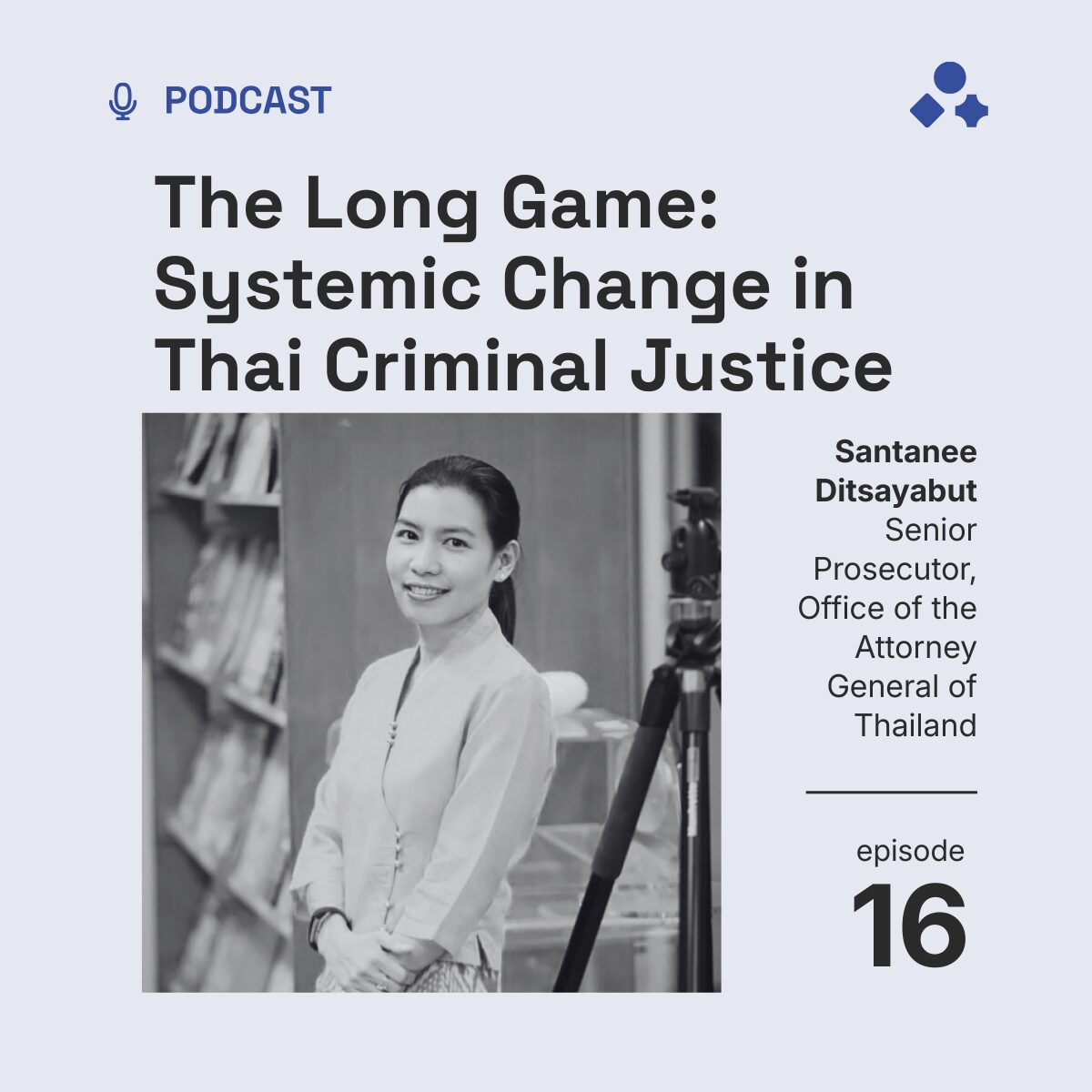
    Episode 16. Systemic Change in Thai Criminal Justice

    The Long Game Series: Thailand leads Asia in implementing investigative interviewing nationwide. Prosecutor Santanee Ditsayabut reveals how systematic training transforms justice. 

    In this episode of Beyond a Reasonable Doubt, recorded in Hua Hin, Thailand, Dr Ivar Fahsing speaks with Ms. Santanee Ditsayabut, senior prosecutor at the Office of the Attorney General of Thailand and director of the Secretariat of the Nitivajra Institute, about Thailand’s pioneering efforts to implement investigative interviewing across an entire nation’s criminal justice system.

    Ms. Santanee Ditsayabut shares the story of Thailand’s PEACE Program Informity – a comprehensive initiative bringing together prosecutors, police, special investigators from the Department of Special Investigation (DSI), judges, and officers from multiple government agencies to learn and implement ethical, evidence-based interviewing practices. This multi-year collaboration between the Norwegian Centre for Human Rights, the Thailand Institute of Justice, and the Association for the Prevention of Torture (APT) represents one of Asia’s most ambitious criminal justice reform initiatives. 

    The conversation explores the unique challenges and opportunities of implementing investigative interviewing in Thailand, where cultural values of respect and dignity naturally align with the ethos of ethical interviewing, yet practical concerns about time constraints and traditional practices create resistance. Ms. Ditsayabut candidly discusses how training reveals eye-opening moments for practitioners who discover cognitive biases like confirmation bias and tunnel vision they never knew affected their work, and how understanding brain function and memory science transforms their approach to gathering reliable evidence. 

    A key theme is the importance of patience and long-term strategic thinking in systemic change. Rather than expecting overnight transformation, Thailand’s approach involves training small groups intensively – including future policy makers and university students – who become champions spreading the principles throughout their organisations. The episode reveals how this methodical approach is creating sustainable change across Thailand’s criminal justice ecosystem. 

    Santanee Ditsayabut emphasises that investigative interviewing isn’t merely about following human rights principles – it’s about understanding the science behind why these approaches produce more reliable evidence and better case outcomes. She discusses the critical role of judges in understanding memory science to properly evaluate evidence, using powerful examples of how lack of this knowledge can lead to miscarriages of justice. 

    The episode culminates in celebrating a historic milestone: Thailand is certifying its first national trainers and champions for the PEACE program, positioning the country as a leader in Asia for evidence-based, human-rights-compliant investigative interviewing. Technology, including recording systems like Davidhorn’s solutions, plays a crucial role in supporting this transformation by enabling accurate documentation and evidence management. 

    Listen to the full conversation in Episode 16 of Beyond a Reasonable Doubt, where dr Ivar Fahsing talks with Santanee Ditsayabut.


    Episode Length: Approximately 30 minutes

    Production: Davidhorn – Beyond a Reasonable Doubt Podcast

    Host: Dr. Ivar Fahsing


    Equipped For Justice – Supporting ethical, human rights-compliant investigations worldwide

    About the guest

    Santanee Ditsayabut

    Ms. Santanee Ditsayabut is a senior prosecutor at the Office of the Attorney General of Thailand and director of the Secretariat of the Nitivajra Institute, established to strengthen Thailand’s criminal justice system. She graduated LL.B. with first-class honours from Chulalongkorn University in 1995 and ranked first in the Thai Bar exam in 1996. She holds two LL.M. degrees from the University of Pennsylvania and the University of Wisconsin-Madison, funded by a Royal Thai Government scholarship. Since 2001, she has served as a public prosecutor with extensive experience in international legal cooperation. 

    Ms. Ditsayabut was part of the task force for the 11th UN Congress on Crime Prevention and Criminal Justice in 2005 and was seconded to UNODC as a regional expert for the Terrorism Prevention Branch, promoting implementation of counter-terrorism conventions in Asia and the Pacific. Her expertise covers transnational crime, particularly trafficking in persons, and combating violence against women and children. She chaired key consultations at the 22nd and 23rd sessions of the Commission on Crime Prevention and Criminal Justice, including negotiations leading to the 2014 UN Model Strategies on the Elimination of Violence against Children. 

    Ms. Ditsayabut serves on the Advisory Council drafting the Mendez Principles on effective interviewing for investigations and information gathering, and actively implements these principles among law enforcement practitioners in Thailand. She previously served as chief prosecutor of a provincial office and now leads Thailand’s national efforts to implement evidence-based, human-rights-compliant investigative interviewing practices. 

    Watch and listen wherever you get your podcasts.

    Related products

    • Enregistreur fixe d’auditions HD

      Enregistreur HD fixe pour les salles d’audition de haute sécurité.

    • Enregistreur portable d’auditions

      Enregistreur d’audition léger, conforme aux normes internationales, pour tout type d’environnement.

    • Capture – Enregistrement d’auditions mobiles

      Enregistreur d’application mobile pour capturer des preuves en déplacement.

    • Logiciel Ark – Gestion d’auditions et preuves numériques

      Recevoir, contrôler et conserver les preuves tout au long de leur durée de vie.

    Transcript

    Host: Dr. Ivar Fahsing, CEO, Davidhorn
    Guests: Santanee Ditsayabut


    Dr. Ivar Fahsing  (00:00)

    Welcome to another episode of Beyond a Reasonable Doubt. Today we are in Hua Hin, Thailand, and our guest is Santanee Ditsayabut. Welcome.

    Santanee Ditsayabut  (00:13)

    Welcome to Thailand, and welcome to Hua Hin.

    Dr. Ivar Fahsing  (00:16)

    Thank you so much. Santanee, you are not only a dear friend, but you are also a senior expert prosecutor at the Attorney General’s Office here in Thailand, and you are the Director of the Secretariat of the Nitivajra Institute, which promotes effectiveness and quality in the criminal justice system. It is an honour to have you as a guest on our podcast today.

    Santanee Ditsayabut  (00:39)

    It is an honour for me to be your guest too. Welcome to Hua Hin — it is so nice to have a chance to talk with you.

    Dr. Ivar Fahsing  (00:47)

    Thank you so much. The theme of this year’s season of Beyond a Reasonable Doubt is “Implementing Investigative Interviewing: The Near and Far Horizons.” My first question is for you, because I know you are leading a project in Thailand called the PEACE Program Informity, where you bring together people from different agencies across the criminal justice system to systematically implement investigative interviewing across your country. Before we dive into that, I would like you to reflect on what you believe is the true ethos of investigative interviewing, and why you think it can promote quality in the justice system here in Thailand.

    Santanee Ditsayabut  (01:33)

    When I first learned about investigative interviewing, perhaps five years ago, I came to think of it as a way to find the truth without unintentionally assuming the facts. It is, I believe, the best way to apply the principle of presumption of innocence — a principle we as law enforcement officers are taught from day one when we enter the legal world, but one that we sometimes forget in practice.

    So I think investigative interviewing is more than just questioning. You need to look at it as a whole process, not just the questioning step — that is only one step. You need to view it as a process of discovering the truth, which begins with planning and preparation. That is everything. It is also a process of gathering reliable evidence, and it truly benefits the prosecutor: if evidence is gathered from a reliable source, we can prove it beyond reasonable doubt in court.

    Learning about investigative interviewing also helps you understand how the brain works, how it functions, and how to respond to that systematically in order to achieve the best results from the inquiry process. That is the fascinating thing — not only following the principles of human rights, but understanding the research behind why you should respect those rights, because it affects the behaviour of the person you are questioning, and ultimately produces the most effective outcome.

    Dr. Ivar Fahsing  (03:31)

    I couldn’t agree more. As you know, I have been involved in a similar pioneering project in my own country, for very much the same reasons — it all sounds very familiar. Are there any particular challenges in Thailand that you think we need to address, and why is investigative interviewing particularly relevant here?

    Santanee Ditsayabut  (03:56)

    I think the challenges can feel almost impossible at first. In the past, we approached questioning very simply: you ask, and another person answers. But investigative interviewing requires more than just walking into a room and asking questions. It requires a process of planning and preparation, of thinking thoroughly. Some officers say they simply do not have the time. When a criminal case comes in, you need to act quickly — there is no time for such a process, they say. And they do not immediately see how respecting human rights will affect the outcome of the case. They see it as an international standard, but not as something that will improve their results.

    So the challenge in Thailand is twofold: is it possible given our time constraints, and will it actually be effective — or is it just an unnecessary burden imposed by international standards? That is what we need to address.

    Dr. Ivar Fahsing  (05:07)

    If I may add — I have been fortunate enough to visit Thailand many times over more than 30 years. In my personal view, Thai culture is a very respectful and polite culture. I would say that the respectful, dignified approach to interviewing that lies at the heart of this ethos should actually fit very well with Thai culture.

    Santanee Ditsayabut  (05:37)

    Yes, indeed. We do not practise torture or use force in interviewing — that is simply not acceptable in Thailand. But I think there are still some misunderstandings and blind spots. For example, a simple one I often see: some police officers believe that if you are interviewing a suspect, you need to be patient and persistent. So they may question someone for three hours straight, six hours, sometimes overnight — because to them, that is what patience means. But they do not realise it is not effective. If you keep questioning a person who is already exhausted, they may say things they do not mean to say.

    It is not that they intentionally violate anyone’s rights — they simply do not know it does not work. I think investigative interviewing helps practitioners become aware of cognitive biases like confirmation bias and tunnel vision. Once you learn about them, you can keep yourself aware before entering the interview room. It also opens your eyes to memory science — for example, two people who describe an event differently are not necessarily lying. Both may be telling the truth. And our brains do not store memories in chronological order, even though we are often taught to ask questions in a neat step-by-step sequence. These are the kinds of things that make investigative interviewing so fascinating and eye-opening for us.

    Dr. Ivar Fahsing  (07:29)

    Together with Santanee, and with support from my centre at the Norwegian Centre for Human Rights — where I hold my guest professorship — alongside the Thailand Institute of Justice and the Association for the Prevention of Torture (APT), we have been fortunate to conduct quite a number of training sessions across Thailand over the past years. We have trained prosecutors, special investigators from the DSI, officers at the Royal Police Cadet Academy, and personnel from the Ministry of Interior and other agencies. I also recall that judges attended the summer training.

    What is the general impression among your participants? Is investigative interviewing catching on in Thailand? Are people responding well?

    Santanee Ditsayabut  (08:33)

    Yes. From what I have observed, once people learn about investigative interviewing they love it — because it unlocks something they never quite understood before. All our participants are law enforcement officers from different organisations — we have even had a soldier in one session — and they exchange a great deal with each other. They begin to recognise what they may have been doing wrong and what they can improve.

    And investigative interviewing is not just something you study — you need to practise it. In the training, participants have the chance to try things for themselves. They discover from the inside what works and what does not. The feedback I consistently receive is that it is eye-opening. It is engaging, because it is not just sitting and listening — they discover things for themselves. For example, they watch a video clip and try to recall what they saw, and they discover that even they cannot remember everything, and that different people watching the same clip remember it differently. That is very striking for them. Many say they can apply these principles not only in their work but in their daily lives.

    Many participants come back and say they want to introduce the principles of investigative interviewing — especially the PEACE model — to their colleagues. They are keen to do more training. They understand that this is not something you can learn from a book; it requires investment in the right kind of training: intensive workshops, not just lectures. My concern is that because these workshops are intensive, we can only accommodate small numbers at a time. But all those participants can spread the word, and the network grows.

    I now hear from many participants that they had come across investigative interviewing before but could not grasp it from a single lecture. Once they train with us, they understand it far more deeply — and they return to the very first question I mentioned: is it possible in Thailand? But this time, with the confidence to say yes, it is.

    Dr. Ivar Fahsing  (11:32)

    These are challenges we face everywhere. You have to understand the philosophy behind it, the connection to international legal and human rights standards — that is the process quality of interviewing. But also, as you say, the psychology, the theory of memory, and the importance of not contaminating your evidence. And ultimately, as you put it so well —

    Santanee Ditsayabut  (12:02)

    That is exactly the right word: skill.

    Dr. Ivar Fahsing  (12:04)

    A skill that you lose if you do not practise. You have to keep at it to become truly good — it is hard work, and you need honest feedback to improve. But I would also like to acknowledge what you have been doing for so many years, Santanee. Last week, that work was recognised in a very meaningful way — I was personally invited to meet the Minister of Justice in Thailand. His Excellency was clearly aware of the developments in the country and asked me to continue assisting. He wanted to expand the training programme as widely as possible.

    We also had the company of Davidhorn CEO Børge Hansen, and the Minister was particularly interested in how technology connected to investigative interviewing could improve the quality and effectiveness of Thai investigative procedure. I think that is clear evidence that your work is spreading — and reaching the very highest levels of Thai society.

    Santanee Ditsayabut  (13:28)

    Thank you for mentioning that. It reminds me that to make investigative interviewing work, you need more than practitioner training — you need support at the policy level, and you need the right equipment. The Nitivajra Institute is at the front line of awareness about investigative interviewing in Thailand, and we are working to bridge the policy level and the practitioners.

    For example, for our second cohort training here in Hua Hin, my supervisor also met with senior leadership to discuss exactly what you described — how to embed this at the policy level, and how technology can support it. One important element of investigative interviewing is that interviews should be recorded. In Thailand today, we only routinely record in high-profile cases and interviews involving children. But we are beginning to see the broader benefits of recording, and with modern technology it need not be a burden.

    Yesterday I was speaking with one of our participants who had just completed her first simulation exercise — she had interviewed a simulated suspect in under 40 minutes. I asked her how long the same interview would typically take in her day-to-day work. She said perhaps two hours. I asked why. She explained that in the traditional approach, she first has to speak with the witness to gather background on the incident, and only then begin the actual interview. But with investigative interviewing, you record from the start, and technology can transcribe it afterwards. It is actually less work than what officers are doing now. If you can help people see that, you can dispel the myth that this approach is too time-consuming.

    Dr. Ivar Fahsing  (16:22)

    You are absolutely right. In the beginning it may seem more resource-intensive, but when done properly it is actually more efficient. As you say, thorough planning means you do not enter the interview without knowing what you are looking for — wandering without direction is what truly wastes time. And when transcription is automated, the investigator can focus entirely on being present during the interview, and handle the administrative work afterwards.

    This is also one of the technological projects we have planned to develop here in Thailand. We intend to use recordings from your training sessions — which are less sensitive from a GDPR perspective — to build and test AI transcription tools, to see how accurate and reliable we can make the automated output. That will move us quickly toward both higher quality and higher efficiency.

    Based on all of this — and knowing you well enough to notice when you are concerned — when you look at the future of investigative interviewing in Thailand, what are your worries? What do you think could be the main barrier to progress?

    Santanee Ditsayabut  (18:02)

    My worry is mindset — including at the policy level. As I said, once practitioners are trained they see the benefits for themselves. I am not worried about practitioners. But we cannot simply put senior officers through a training course. So the question is: how do we demonstrate to high-level decision-makers that this is genuinely useful and that it can enhance the effectiveness of the criminal justice system — so that they will give it their political support?

    Once practitioners are trained, their mindset shifts. But if they walk out of the training room and back into an environment where their supervisors do not understand what they are doing, their capacity is limited. That is why I believe three things need to come together: political will, practitioner mindset, and the right technology. If you can achieve all three, the future will be bright.

    Dr. Ivar Fahsing  (19:41)

    I couldn’t agree more. And there is something I think is genuinely rare about Thailand’s development compared to other projects I have seen around the world — you have been able to bring together experienced practitioners from many different agencies, more or less reflecting the entire chain of justice. That is a great strength, and it is quite uncommon.

    My own background is in the Norwegian development, and when we were doing this we did not think carefully enough about how the changes would ripple through not only police work, but also the work of prosecutors, defence lawyers, and ultimately judges. If you do not change the whole chain, how can you achieve a real effect?

    So what would you say is the next step for Thailand?

    Santanee Ditsayabut  (20:37)

    I think the next step is to do more of what we are doing now — but with greater reach. As you mentioned, pulling together organisations toward the same goal is key. Our participants from the first cohort have already spread the word so effectively that recruiting for the second cohort was straightforward. The interest has even extended beyond the criminal justice system to the military. When the military asks to join, that underlines how the practitioner community, once it understands investigative interviewing, naturally spreads the network.

    So we invite people we believe will become champions in the future, and the network keeps growing. The challenge is how to keep that network active and supported, while continuing to demonstrate the concrete benefits to supervisors. And as you said, investigative interviewing is a skill — you need to keep practising. It cannot be a one-time event. You need to keep the network alive, support its members, help them grow, and make the case to their leadership. That is how we make it sustainable.

    Dr. Ivar Fahsing  (22:21)

    I think you are right. And I find it fascinating that your approach here reflects something in the wider culture — an intuitive understanding that processes like this must take time.

    Santanee Ditsayabut  (22:36)

    Of course it takes time. We have moved on from ancient practices — methods that relied on oaths, rituals, or coercion to obtain information. Now we have a criminal justice system, and I believe it can and should continue to move forward. I would also add something I forgot to mention: sometimes, to fully support investigative interviewing, we will need to amend the law to complement the process.

    Dr. Ivar Fahsing  (23:08)

    What about judges?

    Santanee Ditsayabut  (23:09)

    The involvement of judges is absolutely essential, because the judge is the one who decides. If a judge does not understand how evidence is gathered, they may overlook critical context. As a prosecutor, I have seen judgements that reflected confirmation bias.

    Let me give a specific example: a witness was raped by her stepbrother and did not want to believe it was real. Her testimony was inconsistent as a result. If the judge understands that there is an alternative explanation — that the victim may be speaking differently from the facts because she cannot bring herself to accept what happened — the outcome of the case might be very different.

    Dr. Ivar Fahsing  (24:04)

    That is so important, because this is fundamentally about evidence evaluation. For those of us who have had the opportunity to study psychology, we understand that the brain’s real function is not to produce a realistic, accurate memory. Its function is to process experience in a way that allows you to keep living.

    Santanee Ditsayabut  (24:27)

    Yes.

    Dr. Ivar Fahsing  (24:28)

    Sometimes memory is there to help you construct a life you can bear.

    Santanee Ditsayabut  (24:34)

    Yes, exactly.

    Dr. Ivar Fahsing  (24:36)

    And if you do not understand that as a prosecutor or a judge, you may be unable to make sense of what you are hearing — and you might automatically dismiss a victim as unreliable, when in fact she is simply undergoing a very normal psychological process.

    Santanee Ditsayabut  (24:50)

    Yes. And at the end of the day, that leads to a miscarriage of justice — which is precisely what we must avoid.

    Dr. Ivar Fahsing  (24:58)

    So this tells us that investigative interviewing is far more than a model or a set of steps. It is a science-based framework for understanding and collecting evidence from human beings and human memory.

    Santanee Ditsayabut  (25:16)

    I have one final question for you. This is, in one sense, a year to celebrate — a very important milestone for investigative interviewing in Thailand. This week, we are in the process of certifying the first national trainers and champions for the PEACE programme. It is exciting that we have come this far.

    But we still need strategic investment to sustain this. How can we get the attention of decision-makers and make them willing to commit to that investment?

    Dr. Ivar Fahsing  (26:13)

    I think we need to help them see the benefits of investigative interviewing for themselves — through evidence, or through first-hand experience. Learning from countries that have already implemented this successfully, and seeing the outcomes with their own eyes.

    Santanee Ditsayabut  (26:41)

    I completely agree. Perhaps a study visit to a country where investigative interviewing is fully integrated across the justice chain. And technology may well have a role to play there too.

    Dr. Ivar Fahsing  (26:49)

    Yes — technology, study visits, or access to trusted, authoritative voices. Not just one person making the case, but evidence that senior leaders find credible. That requires careful thinking about how we build that kind of influence.

    Santanee Ditsayabut  (27:13)

    Absolutely. And I know that you are engaged on another front as well — you have your own lectures at Chulalongkorn University, where you are teaching the next generation of lawyers. As you said earlier in this conversation, the long-term perspective is everything. You need to be patient.

    Dr. Ivar Fahsing  (27:23)

    Yes. You need to be patient, and you need to prepare the ground for future officers to grow up with investigative interviewing as a given. This brings us back to the composition of participants in the PEACE model course — we bring together not only young practitioners and mid-level officers, but also the prospective policymakers of tomorrow. That mix creates the conditions and momentum to carry investigative interviewing forward in Thailand.

    Santanee Ditsayabut  (28:15)

    I couldn’t have said it better myself. Santanee, thank you for a wonderful conversation, and for joining us on the podcast today.

    Santanee Ditsayabut  (28:24)

    And I would like to thank the Norwegian Centre for Human Rights for supporting us in implementing investigative interviewing in Thailand from the very beginning. Our partnerships are growing — with APT, the Thailand Institute of Justice, and many more — because we all see the benefit of investigative interviewing in enhancing the effectiveness of justice systems, not only in Thailand but around the world. Thank you very much.

    Dr. Ivar Fahsing  (28:54)

    Thank you, Santanee. I think this goes beyond Thailand. I think Thailand is leading the way in Asia — not just Southeast Asia, but Asia as a whole. The way you and your colleagues have led this project, the seniority of the people who have invested in it, the commitment from across the system — I believe Thailand is going to be one of the truly leading nations in Asia on this.

    Santanee Ditsayabut  (29:20)

    Thank you very much. Let us make it a universal commitment.

    Dr. Ivar Fahsing  (29:26)

    Thank you so much.


    END OF TRANSCRIPT

    © 2026 Davidhorn. All rights reserved.
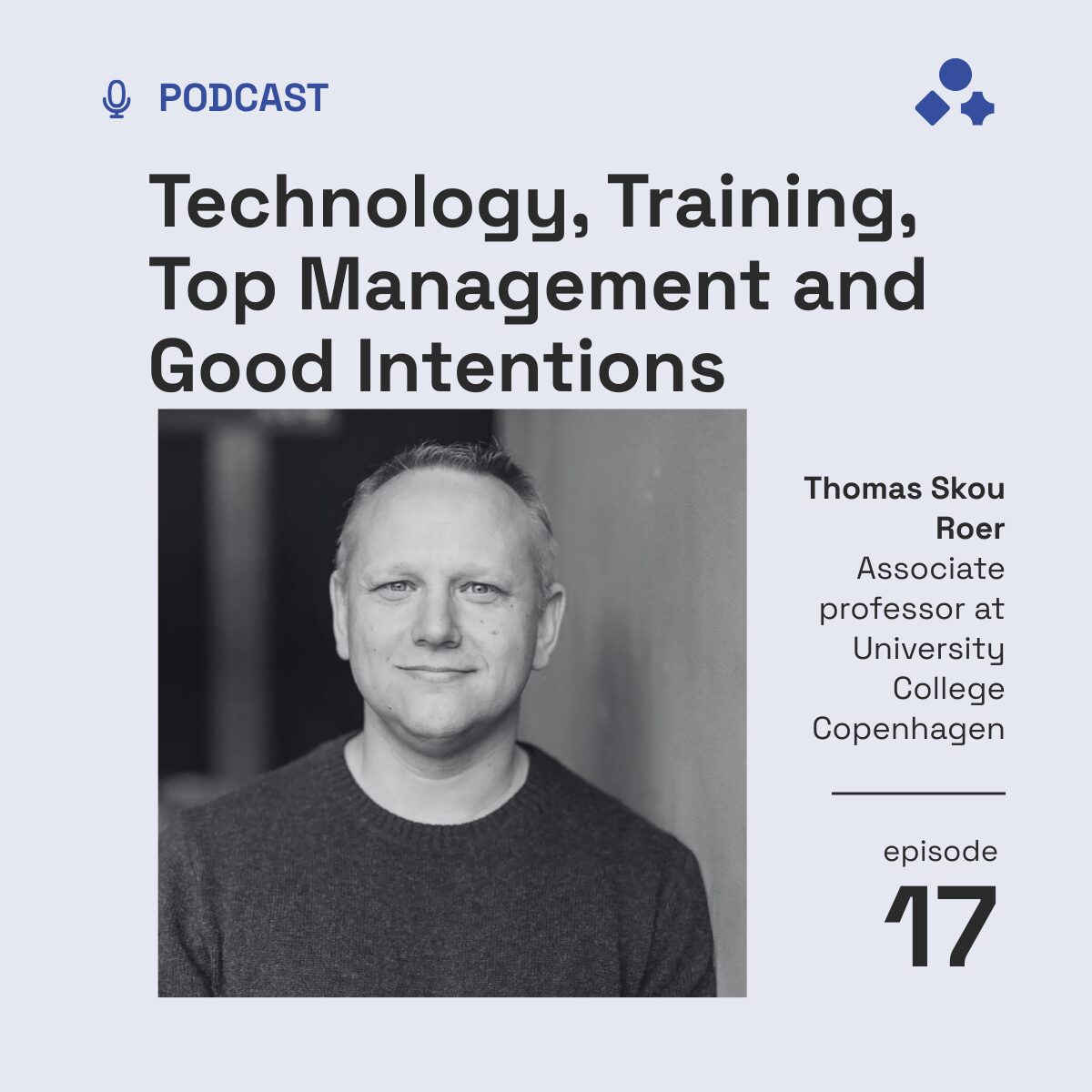
    Read more

    mars 4, 2026
  • Innovation et IA dans les forces de sécurité intérieure norvégiennes – ép. 15

    Innovation et IA dans les forces de sécurité intérieure norvégiennes – ép. 15

    Episode 15. Innovation and the role of AI in Police Work with Norwegian Police

    Discover how Norwegian police are transforming investigative work through innovation and artificial intelligence.

    This episode examines the integration of AI in police work and investigative interviewing, advances in crime scene investigations, and the critical importance of accountability when deploying AI tools.

    The speakers discuss challenges in keeping pace with criminal innovation, the necessity for operational efficiency, and how international collaboration strengthens policing practices. They also address the cultural shift required within police organisations to embrace the innovation of AI in police work while navigating bureaucratic complexities. Join host Børge Hansen in conversation with three experts from Norway’s law enforcement community: Kjeld Hendrik Helland-Hansen and Oddvar Moldestad (Forensic Investigators, Western Police District) and Bente Skattør (Senior Advisor ICT and Innovation, Norwegian Police).

    When Police Innovation Meets Reality: Inside Norway’s AI Revolution

    At a recent crisis exercise with the Norwegian Navy, a forensic investigator walked through a simulated bomb scene speaking into a headset. No notebook. No frantic typing. Just his voice, capturing every detail as he moved through the chaos.

    Twenty minutes later, he had a complete report.

    “If I should have done this in the traditional manner,” he said, “I’d use at least two days, perhaps more.”

    This is innovation in policing – not in some distant future, but happening right now in Norway’s Western Police District.

    The Trust Question

    Bente Skattør, Senior Advisor for ICT and Innovation at the Norwegian Police, is leading the charge to integrate AI into investigative work. She’s acutely aware of what’s at stake.

    “If we don’t move faster, I think we might lose trust; if we are lagging behind the criminals, that will immediately hit the trust for the police.”

    Bente Skattør

    The numbers are staggering. Norwegian police conduct 150,000 investigative interviews each year – every one traditionally typed manually. Meanwhile, criminals have embraced AI for deepfake voices and sophisticated scams. In Norway, AI-enabled fraud has now surpassed drug trafficking as a criminal enterprise.

    Small Steps, Big Impact of AI in Police Work

    What makes the Norwegian approach different is the philosophy: small, fast experiments with real officers in real situations. Not waiting for perfect systems.

    The results? AI interview transcription in 90 seconds. Crime scene documentation cut from days to minutes. But most importantly, the technology is designed with officers, not for them.

    Forensic investigators Kjeld Henrik Helland-Hansen and Oddvar Moldestad have tested voice-to-text systems in actual crime scenes, refined the templates, and brought colleagues along for the journey.

    “The ones that will benefit the most from it are the guys typing with one finger on their keyboards. They will really see the benefits.”

    Kjeld Henrik Helland-Hansen

    Accountability Built In

    For all the talk of AI, accountability remains central. Every transcription is verified. Every AI output is reviewed. The technology accelerates documentation, but humans maintain control.

    The real test comes in crisis exercises – four major exercises so far – where the team deploys their tools in realistic, high-pressure scenarios. They’ve proven that the technology works when it matters most, in what they call “the golden hour of investigation.”

    Beyond Borders

    The team has shared their work across Europe through Europol, in Brazil at international conferences, and with law enforcement agencies worldwide. They’ve earned a Europol Innovation Award and global recognition.

    But the awards aren’t the point. Criminals don’t respect borders, so innovation can’t either.

    “I think it’s counterproductive to sit in every country doing the same kind of innovation with just a small variance,” Kjeld Henrik explains. The Norwegian team operates without financial commitments that would restrict knowledge sharing – because when one police force becomes more effective, it raises the bar for criminal operations everywhere.

    The Revolution

    Innovation in policing isn’t a future promise. It’s happening now in police districts across Norway, driven by investigators who understand both the technology and the work it must serve.

    The analog investigator who completed his crime scene report in 20 minutes didn’t become a tech expert overnight. He simply had tools that finally matched the way humans naturally work: by observing, speaking, and moving freely without being tethered to keyboards.

    That’s the revolution – making technology fit the investigation, not forcing investigators to fit the technology.

    “Innovation is a muscle that you have to train,” Bente says. In Norway, that training is already well underway.

    Listen to the full conversation in Episode 15 of Beyond a Reasonable Doubt, where Børge Hansen talks with Bente Skattør, Kjeld Henrik Helland-Hansen, and Oddvar Moldestad about the real work of innovation in modern policing.


    Episode Length: Approximately 59 minutes

    Production: Davidhorn – Beyond a Reasonable Doubt Podcast

    Host: Børge Hansen, CEO, Davidhorn


    Equipped For Justice – Supporting ethical, human rights-compliant investigations worldwide

    About the guests

    Dr. Bente Skattør

    Senior Advisor for ICT and Innovation at the Norwegian Police and project lead for AI in investigative interviews. She drives innovation initiatives processing over 150,000 police interviews annually, integrating artificial intelligence into investigative work while maintaining rigorous human oversight. Her work has earned a Europol Innovation Award, a National Digitisation Award nomination, and a Global Innovation Prize in Brazil. With extensive experience in project management across Nordic and global contexts, Bente specialises in the intersection of AI, big data, and law enforcement – focusing on investigative interviews, cybercrime, and creating innovation cultures in complex, high-risk environments.

    Oddvar Moldestad

    Police Superintendent with over 20 years of experience as a forensic investigator in the Western Police District of Norway. Over the past two and a half years, he has been actively involved in the AI4Interviews project, working to modernise and streamline forensic workflows through the use of smart technology and artificial intelligence.

    Kjeld Hendrik Helland-Hansen

    Police Superintendent working as a crime scene investigator with the Norwegian Police, specialising in forensic documentation and crime-scene methodology. He has a background in archaeology from NTNU and has worked for several years at the forensic unit in the Western Police District of Norway.

    Kjeld has represented Norwegian policing internationally through the European Network of Forensic Science Institutes, as a delegate to EMFA under the ENFSI Scene of Crime Working Group. He has also served as the former head of the Norwegian Criminalistics Forum, an organisation for Norwegian crime scene investigators.

    In recent years, his work has focused on innovation at the intersection of policing, technology, and research. He is a contributor to the AI4Interviews project, exploring how hands-free technology, speech-to-text, and artificial intelligence can improve documentation, situational awareness, and evidence quality in crime scene investigations.

    Watch and listen also on YouTube and Apple Podcasts

    Related products

    • Enregistreur fixe d’auditions HD

      Enregistreur HD fixe pour les salles d’audition de haute sécurité.

    • Enregistreur portable d’auditions

      Enregistreur d’audition léger, conforme aux normes internationales, pour tout type d’environnement.

    • Capture – Enregistrement d’auditions mobiles

      Enregistreur d’application mobile pour capturer des preuves en déplacement.

    • Logiciel Ark – Gestion d’auditions et preuves numériques

      Recevoir, contrôler et conserver les preuves tout au long de leur durée de vie.

    Transcript

    Host: Børge Hansen, CEO, Davidhorn
    Guests: Kjeld Hendrik Helland-Hansen and Oddvar Moldestad (Forensic Investigators, Western Police District) and Bente Skattør (Senior Advisor ICT and Innovation, Norwegian Police).


    BØRGE HANSEN: Today, we’re talking about innovation in policing and what it actually looks like. Criminals are already playing with AI tools. We see deepfake voices used to trick people, AI-written scams that feel uncomfortably personal. And at the same time, the amount of evidence is exploding. Every case means hours of video and audio, phone data, documents, and chat logs. The police aren’t just under pressure from offenders; they’re also buried under information. And still, many investigators are typing crime-scene notes by hand, replaying interviews over and over, and working in systems that don’t really talk to each other. So the question is, how do we keep up and how do we get ahead?

    The good news is that innovation is already happening inside policing. And the team around this table has been recognised for that work with a Europol Innovation Award, a National Digitisation Award nomination, and a Global Innovation Prize in Brazil. I’m very happy to have you here. Bente Skattør, project lead and innovation lead for AI for interviews at the Oslo Police. Kjeld Henrik Helland-Hansen, forensic investigator in the West Police District and the wildcard. And Oddvar Moldestad, also a forensic investigator and a longtime CSI innovator in the West. In this conversation, we’ll look at what’s actually changing at the crime scene, in the interview room and in the courtroom. What works, what’s hard and what it looks like when innovation comes from within the police.

    So let’s start there. Bente, you’re leading AI for interviews. When people ask you what is actually changing in policing right now, where do you begin?

    BENTE SKATTØR: I begin with the police officers, the CSI folks, the team, because that is where you actually start. But first of all, thank you very much for having us here. We are really thrilled to be here to talk about what we actually burn for, and that is innovation in the police. As you so clearly mentioned, Børge, the criminals have already embraced AI.

    And that is also where we are. We are really trying to embrace the technology, but of course, we have to do it in a responsible way. So what we’re doing now in the AI for interviews is actually trying to build upon the speech-to-text technology, AI analysis. So we are working with the police workers strongly and tightly because they have to take and use the tools.

    So that is essential, I think. So what we are working on is actually, as you said, we are working with investigation, and AI for interviews is actually about—we started with investigative interviews. So that is where we have the starting point. But we have seen the huge potential of using speech-to-text in many areas. That’s why we are also here for the CSI crime scene investigation, the courtroom, and putting TVC on the streets from the patrols. So we have huge potential.

    BØRGE HANSEN: What did you start with in investigative interviewing? I know Norway is really on the forefront there. Why is that and how does it work for you guys that you started out with something that the Norwegian police think they’re really good at already?

    BENTE SKATTØR: Yeah, it was not a coincidence. Because I’m really proud also that Norway has a good methodology of the way we are doing investigative interviews. So we have sort of stolen with pride from the PEACE in the UK, but we have also cultivated our own methodology. But the point is that they are writing the investigative interviews manually.

    And we saw also the potential for using Norwegian language models so they can focus on rather doing the summary or understanding what is in the interview instead of taking notes while they are doing the interview. And of course they are taking many. So in Norway, I know Norway is a small country, but anyhow we have approximately 150,000 each year interviews, whether they are inside or outside—150,000 interviews with victims, suspects or similar from the police.

    So we have a huge and very exciting potential and we have come that far that I hope people can see or hear that we are on the right way.

    BØRGE HANSEN: So what’s the impact that you’re seeking in AI for interviews? Obviously, you talk about the 150,000 interviews all across Norway. What’s the impact that you want to get out of those 150,000?

    BENTE SKATTØR: As you said in the start, Børge, we are having so much data within investigation and we need to help the investigators to do their job so they can focus on what really matters within investigation. So we can remove the boring job. It’s very important to have a good summary, of course, that they still have to do. And they also still have to control what is coming out of these language models when we do the transcription. But the potential of letting them focus more on the core case—that is investigation. And the data is not going to stop. It’s going to flood more. It’s growing each day and I have no belief that it will be less, it will be much more.

    BØRGE HANSEN: But you also work closely with, in Norway, we call PPS or police officers in the field, working in the field at the crime scene. How does that innovation work that you’re doing now? How does that impact the PPS situation?

    BENTE SKATTØR: We are in a position now where we actually can ask them and they have answered a questionnaire, but they’re also doing interviews about what they feel. But today it’s going very fast from when you take the interview in the street until it’s transcribed. It takes approximately one and a half to two minutes.

    BØRGE HANSEN: So from the interview performed to the transcription ready, a couple of minutes?

    BENTE SKATTØR: Yes, absolutely. And also the data will be valid inside the police. But we can also enable that for the court, for operation central and the core team if we have a huge case going on. So they can see the data also, what’s coming from the street immediately. So we also built that inside.

    BØRGE HANSEN: In our talks earlier, you often talk about innovation as a muscle that the organisation has to train. What does that look like in practice?

    BENTE SKATTØR: Yes, we have big muscles. I always say that innovation is a muscle that you have to train in order to keep up the speed with the AI revolution which is ongoing. So you have to exercise on the turn of the technology. So that means we also have to train on different arenas. We have to do smaller proof of concept, very fast, fail fast, but also going in the right direction.

    And then you have to work strategically. So when it comes to the smaller proofs of concept, doing the things to explore—then we have a really good example here, is about the crime scene investigation team. I’m really proud to have Oddvar and Kjeld Henrik on our team.

    BØRGE HANSEN: Before we move on to the CSI team, we also said that police work and innovation have to go hand in hand. And what does that look like on a good day?

    BENTE SKATTØR: When police officers say we are on the right way, this is good, it can be better. But when they say this is working and we are on the right—that’s giving me thrill. And I’ve lately been so lucky to hear that. And I also have seen that that makes us even stronger for striving for more innovation.

    BØRGE HANSEN: If criminals innovate faster than the police, why should the public still trust the police to keep up?

    BENTE SKATTØR: I think that is a huge question. First of all, if we don’t move faster, I think we might lose trust. Because if we are coming more and more or lacking behind the criminals, that will immediately hit the trust for the police. That’s kind of natural. And the police force is founded on trust. So if we don’t have the trust, it will be much harder to keep on going.

    BØRGE HANSEN: So, Bente, one of the challenges we’ve spoken about earlier is that we feel that people challenge us that we need to know everything about everything before we can start using these systems. But your approach is much more sandboxing and point-to-point solutions.

    BENTE SKATTØR: Yeah, and that is a huge… we can philosophise a lot and discuss whether we should have a general base model that can serve and suit everyone’s need, or you should go on point-to-point to actually deliver value. And when you are in that discussion, you can easily become paralysed. That is not a good thing because innovation has to happen fast. You have to respond to the needs and also to testing it out very fast on what works. So if you are going, and this is also what I’ve seen in several technology development in Norway, we sometimes think too much before we actually do something. So we have to look ahead, we have to do smaller point-to-point solutions, and if these smaller point-to-point solutions works, you can take the same piece of technology on the next thing, and then next thing. And that’s also the way we actually evolve the data.

    BØRGE HANSEN: So working in police, one could imagine that you’re not only working with supportive people. There’s a lot of cynicism in police work because—well, the reality of living with crime and criminals every day. How do you take that cynicism and turn it into something progressive or positive?

    BENTE SKATTØR: I think by meeting the police workers, I really do. Because when I speak about AI, the immediate question is, will the robot take my job? Of course we—I cannot, that is a question that is fair and you have to address it. So that is what you do. But that is also then why it’s so important to involve the police officers strongly and early. Because they see and hear what, because it’s hard to say, to think about what you need or what could help you. But once you see a proof of concept and you hear it in your own language, then you immediately see the help of how this will lighten your job. So that is by involving them, I think. And also admitting that, this is a sandbox, meaning that this is where we will test the new technology. But it doesn’t mean that everything will be working.

    BØRGE HANSEN: As many people listening, working in investigative work or courts or prosecution knows, policing is a profession that’s caught between extremes. There’s a lot of rules and regulations and bureaucracy that stops work. At the same time, there’s an urge to do things in the right proper way because lives are at stake. How do you navigate that as innovators in a very traditional setting?

    BENTE SKATTØR: Yeah, so this is actually what I’m burning for because I have worked now in 20 years or more within the police in ICT department, not operational. But I know that it is always saying that, no this is not allowed, or we cannot do that, or we have to check and so on. And I don’t say that we shouldn’t do that of course, we have to obey the law. But it is a huge difference saying what is possible under the law instead of saying, can we have the allowance? And I think that is a huge culture thing that we have to embrace in police as well. That we…

    Of course, within the law, but what is the playground? So to have that change, you need the leaders that have that same value and will give you allowance to test things and that also okay to fail.

    BØRGE HANSEN: For those of us who haven’t been to a crime scene, we have a lot of impressions from TV series. What is the job of working on a crime scene in 2024 or ’25?

    ODDVAR MOLDESTAD: If I may say so, crime scene investigation as a profession is all about documenting. What you observe, you observe traces, you observe persons, you observe objects, whatever. And that is quite boring work in many ways because you have to be very thorough, you have to be structured. And with the Sandwich Project we now are part of, we see how we can do these tasks in a better way. What we want to spend our time on is that is very important for crime solving. But at the same time, we can let technology do the boring part, I mean the documentation part of it. So we can use more time with other observations.

    BØRGE HANSEN: So can you just take us through a crime scene? We’re looking at a traditional crime scene, there’s been a breaking and entering, a house burglary. How does an investigator or a technical investigator work in that scene traditionally and how do they work now with technology that you guys have been working on?

    ODDVAR MOLDESTAD: Just briefly, first of all we establish what has happened and what do we need to do to start our crime scene investigation. And that is actually looking around. And then you start doing your thorough investigation where we use, could be photography, all kind of methods to describe the scene. And you are very accurate, you make drawings, you measure, measure every object.

    So we can try to recreate at a later point of time when you also done the whole investigation, make kind of recreation of what has happened. And yeah, that is a quite boring aspect of CSI work. So you have to be structured and write everything down and basically this is what we want technology to do for us because we see that could be a lot easier if you can have tools that can make this work easier, not only for us but of course also for the patrol officers. They have—they are first on the scene. They also need to do the same things we do, but of course they have other tasks as well. And yeah, we want to make this easier in many ways.

    BØRGE HANSEN: Traditional CSI work is what? Pen and paper, dictaphone…

    ODDVAR MOLDESTAD: Yeah, basically pen and paper. I think the last years we’ve had the ability to type into our tablets, but still you’re in this crime scene, you wear these gloves, you don’t want to contaminate anything, still you are forced to take up your phone or your computer or whatever and you have to type this in. So you don’t want to—if you find a suspected trace, you don’t want to take off your gloves and put on the gloves and do, redo this many times. So we saw quite early that voice-to-text could be the solution here. So that is what we started to do a couple of years ago when we started this project.

    BØRGE HANSEN: So these days you are working in a crime scene with voice-to-text. What does it look like to you? What is your working situation like?

    ODDVAR MOLDESTAD: I think you are perhaps more out in the field, and especially on this and testing this out in the—on the field. So perhaps you can elaborate more on that?

    KJELD HENRIK HELLAND-HANSEN: Yeah, so initially when we saw the possibilities in this, I thought it would be revolutionary just to have something that can transcribe my voice into text. So I don’t have to stand there in the dark with gloves and having to write this. So that was just fabulous. And then when you also realise that this transcription actually systemises, from the voice to text, and systemises according to a template that we work with. So what we call people and what we call objects and what we call traces, it puts everything in a system. So basically we can go through the crime scene, describe everything we see and then get out a finished report and that is just fabulous.

    I did some exercise with the Western police, and that was with a colleague who was also a CSI technician and also the patrol police. And one of my fellow colleagues, I would describe him as one of the more analog crime investigators in our office, but that’s fine, we’re different. He was using the headsets and just logging everything. It was counter-stabbing, it was an exercise with the Norwegian Navy where they had gone off two bombs and there were dead and wounded people—that was the scenario. And when we got to the place of the incident, then he started to log, describing everything and going along. And then this was transcribed and systemised. And we asked afterwards, so what do you think of this? And he just answered, yeah, honestly, I did this, I got this report now in 20 minutes.

    And if I should have done this in the traditional manner, I’d use at least two days, perhaps more. So that was a very satisfying answer for us at least because we are tech nerds, I admit it. So we like to move ahead, we like to be in the front and testing things, but this has to have an impact on the whole level, not only as tech-savvy guys, but I think in this case, the ones that will benefit the most from it are the guys typing with one finger on their keyboards. They will really see the benefits of this.

    BØRGE HANSEN: Crisis exercises, you guys said earlier that it gives you much more realistic data than synthetic test data. And as you describe, you can see the technology being used in practice with your own eyes. What’s the biggest surprises from these exercises? Good and bad.

    BENTE SKATTØR: I might answer that because to having allowance to test out early technology is quite cumbersome. Sometimes you have to plan very thoroughly or maybe you have to work with synthetic data, but these kind of arenas is really fantastic to explore technology. And so we jumped very fast into the exercise because we had short notice—that’s also very cool. That was a level of, parts running again. But you can actually, because now we have a toolkit of tools that works pretty well. And we also gather data. So we are in the golden hour of investigation. So we use also the interview solution and also the CSI. But the most important was actually it not that it worked, but it was a good stage of exploring technology much better than I hoped for. So now next year we are actually planning to do more so we can expose and test our solution to the end users. And then we can build on something that is already working, but also have add-ons to explore because there’s no danger to having mistakes in such exercises. That’s what we are aiming for, to learn, build.

    So I’m really thrilled about that. And one of the key questions that we have—we’ve also been participating in four exercises now. So we have data collected from these exercises. So when we have more power or GPUs or machine power in the police, it’s going to be really, really fun to run also AI analytics of this data. So yes, I’m really thrilled. And also what is… The people who work with this technology can be on stage to see how Kjeld Henrik and the bomb squad is using the technology. That’s essential also.

    BØRGE HANSEN: Let’s zoom out a little bit internationally. These challenges aren’t unique to Norway. You’re watching and working with others around the world who are wrestling with the same problems. Who’s inspiring you internationally and what are they learning from your work and the Nordic approach?

    KJELD HENRIK HELLAND-HANSEN: But I would also like to point out that we don’t have any financial commitment in many ways to this kind of thing. So we are eager to share. Now, criminals don’t care about borders. They don’t care if you’re in Norway or Denmark, or if you sit in one part of the world doing crimes in another part of the world. And I think it’s so important to share this kind of knowledge with our colleagues in law enforcement in other countries as well. Because I really believe that if we share this kind of knowledge, we will get something back. And I think it’s counterproductive to sit in every country doing the same kind of innovation with just a small variance. So that’s why I believe that Europol, for instance, here in Europe, is an essential hub for sharing.

    And our collaboration with different countries, it’s great because we see the same needs in every country, perhaps with small differences, but still—and recently when we were in Brazil, same thing. I think this is universal and we need to, since we are, I think I agree with you, Oddvar, we are in this particular area, we are quite in the front.

    And I think it’s our obligation to share this with our colleagues because what we do care about is helping people. That’s why we became police officers in the first place anyway. So this is our main task to help people. And if we can do that by sharing to help other colleagues doing the same thing, yeah, I cannot say it’s important enough.

    BØRGE HANSEN: Very good.

    BENTE SKATTØR: I would like to add also, because getting inspired by people which are much better than you, come on with it. Give us all, because that’s essential. And why shouldn’t we also be inspired by the criminals? Because they embrace the technology and they are really innovative. So of course we shouldn’t commit crime, but we should turn it around to combat crime.

    Getting the inspiration of being, having the possibility to embrace—because I strongly believe if we embrace the technology, we can see the possibilities. We can break up and see the possibilities and believe me, we will anyhow handle within the rule of law. But this is instead of taking what is possible within the law, it’s a complete different thing.

    BØRGE HANSEN: Do you think the criminals are eating elephants and running like that?

    BENTE SKATTØR: They are running. And then they suddenly also get innovative in a strategic matter. Then it’s becoming organised crime. And they are really innovative also to get hold of money and also of course doing really bad things hurting people. But they are really innovative in that they actually—when they have a possibility, they’re actually going for the low-hanging fruits, and then they organise it very fast. So they’re doing business. And also, as many probably already know, in Norway, committing fraud using AI and technology is a bigger business compared to selling drugs in Norway now, at the time being.

    BØRGE HANSEN: So let’s finish by looking forward and keeping it practical. If all this works, everyday investigative life and the quality of justice should improve. If you could change one thing in global policing tomorrow, one thing that would actually make investigators’ lives better and justice more reliable, what would it be and why? Cooperation?

    BENTE SKATTØR: Cooperation across borders. Yes, together with academia, police, public sector and also industry across borders because the crime is borderless and we have to meet on the same, what you call, football stage as them. More cooperation.

    BØRGE HANSEN: Cross-border cooperation.

    KJELD HENRIK HELLAND-HANSEN: I agree quite much on that one. I mentioned the importance of sharing and exchanging ideas and seeing the possibilities to get that wider view to see what you can do. And also that you have leaders that see the importance of this, see, yeah, give you the space to try your wings, to try to be a bit more innovative, not just doing your day-to-day thing, but actually looking forward and see, have that vision. I think it’s important.

    BØRGE HANSEN: It’s out of the proverbial box thinking. How about you, Oddvar? One thing you would want to improve.

    ODDVAR MOLDESTAD: So learning more faster.

    BØRGE HANSEN: So we’ve covered a lot, tech, practice, culture, law. But what I hear, it’s ultimately about people and how they work. Innovation in policing isn’t a future dream, it’s already here. And tonight, you’ve given us a glimpse of how it looks from the inside. Thank you for joining me.

    ALL: Thank you.


    END OF TRANSCRIPT

    © 2025 Davidhorn. All rights reserved.

    Read more

    décembre 19, 2025
  • Auditions de témoins vulnérables – ép. 14

    Auditions de témoins vulnérables – ép. 14
    vulnerable witness interviewing with Triangle

    Episode 14. The Art and Science of Child Interviewing with Triangle

    In this episode, we speak with Carly McAuley and Maxime Cole from Triangle, a UK-based organisation specialising in investigative interviewing of children and vulnerable adults.

    Founded in 1997, Triangle has become a leading authority in forensic questioning techniques and vulnerable witness interviewing, training police forces across the UK and internationally while conducting interviews for criminal and family court cases.

    Triangle provides comprehensive services, including:

    • Investigative interviews for children and vulnerable adults (ages 2-60)
    • Forensic Questioning of Children (FQC) training for police forces
    • Intermediary services to facilitate communication
    • Expert witness testimony
    • Therapeutic support and advocacy
    • Transcription services that capture non-verbal communication
    • Consultation for school staff and first responders

    Carly McAuley and Maxime Cole shared with us Triangle’s approach to child and vulnerable witness interviewing. The conversation explores how very young children – even two and three-year-olds – can provide reliable, court-admissible evidence when interviewed using appropriate techniques. Triangle’s expertise challenges long-held assumptions about children’s capabilities and demonstrates that the quality of evidence obtained depends entirely on the adult interviewer’s communication skills, not the child’s inherent abilities.

    The discussion reveals the critical importance of language adaptation in child interviews. Simple changes like asking “what made him do that?” instead of “why did he do that?” can transform a child’s ability to respond. Carly and Maxine explain the “no guessing rule” – a fundamental technique that teaches children that interviewers genuinely don’t know what happened because they weren’t there. This role reversal is essential for obtaining accurate accounts, as children naturally assume adults know everything.

    A significant portion of the conversation addresses the problem of “muddled” accounts created when well-meaning adults – teachers, social workers, foster carers, and family members – repeatedly question children before formal interviews take place. Triangle often conducts “unmuddying interviews” to separate what the child originally experienced from what others have added along the way. The guests emphasise that professionals need training on how to safely listen to children’s concerns without contaminating their accounts.

    Notable Quotes:

    "If we get it right with the youngest children with the most complex needs, then it helps our communication with everyone."
    "You can't get a good answer by asking a bad question."
    "Children's communicative competence is really reliant on the adults' communicative competence."

    Resources Mentioned:

    • Triangle’s “Two-Way Street” and “Three-Way Street” films
    • ORBIT training model
    • Forensic Questioning of Children (FQC) course
    • Davidhorn Police Interview Summit 2025

    Looking Ahead:

    Triangle will be presenting at the Davidhorn Police Interview Summit 2026, offering training opportunities for international practitioners interested in advanced child interviewing techniques.

    Connect with Triangle: Learn more about their training programmes and services for law enforcement, social services, and educational professionals.


    Episode Length: Approximately 59 minutes

    Production: Davidhorn – Beyond a Reasonable Doubt Podcast

    Host: Sigrun Rodrigues, former Chief Marketing Officer, Davidhorn


    Equipped For Justice – Supporting ethical, human rights-compliant investigations worldwide

    Watch and listen also on YouTube and Apple Podcasts

    Related products

    • Enregistreur fixe d’auditions HD

      Enregistreur HD fixe pour les salles d’audition de haute sécurité.

    • Enregistreur portable d’auditions

      Enregistreur d’audition léger, conforme aux normes internationales, pour tout type d’environnement.

    • Capture – Enregistrement d’auditions mobiles

      Enregistreur d’application mobile pour capturer des preuves en déplacement.

    • Logiciel Ark – Gestion d’auditions et preuves numériques

      Recevoir, contrôler et conserver les preuves tout au long de leur durée de vie.

    Transcript

    Host: Sigrun Rodrigues, former Chief Marketing Officer, Davidhorn
    Guests: Carly McAuley and Maxime Cole, Directors at Triangle


    Sigrun Rodrigues: Hello and welcome to this podcast. I’m Sigrun Rodrigues, Chief Marketing Officer at Davidhorn, and I’m very excited to have you here today. Would you like to introduce yourselves?

    Carly McAuley: Thank you very much for having us. My name is Carly McAuley. I’m one of the directors at Triangle.

    Maxime Cole: Hi, I’m Maxime Cole, and I’m also a director at Triangle.

    SR: Tell me a little bit about Triangle. What is Triangle?

    CM: Triangle was created in 1997, and we currently provide specialist support to children, consultancy, and training. We also provide expert opinion, intermediaries, and therapeutic services. Everything we do is very bespoke, depending on what’s needed for the children and young people. Many of the children and young people we provide services to have had abusive starts to their lives, and we’re trying to help them come to terms with that. We provide advocacy services and investigative interviewing, which is what we’re here to talk about today.

    MC: Our investigative interviewing services are really growing every year. We’re doing more and more, and it’s what we mainly do now, along with a lot of training.

    SR: So, specifically, children’s interviewing?

    MC: Well, our specialism is with children and young people, but we actually work with people up to the age of 60. We’re asked to do investigative interviews if an adult has additional needs or communication difficulties that make it harder for someone else to interview them. We use the same skills that we use to interview children and young people for everybody anyway.

    CM: That’s a real fundamental Triangle belief, isn’t it? If we get it right with the youngest children with the most complex needs, then it helps our communication with everyone.

    MC: Absolutely.

    The Scope of Triangle’s Investigative Work

    SR: Is this related to police investigations? What type of investigations do you do specifically?

    MC: It’s quite a range. Some of the interviews we do are directly referred to us by the police. It might be because the child’s very young – we interview lots of two and three-year-olds for the police. Or it might be that the child has very complex needs. Quite often, we find that children have been taught to hate the police and told that they mustn’t speak to the police, so there’s already this barrier there. Coming in as an independent organisation can make it much easier for the child to communicate with us.

    The variety of investigations could be anything, but primarily, it’s sexual and physical abuse investigations that we’re involved in. Then some of our work comes from the family court. We’re asked to interview children so that the court can make decisions going forward.

    CM: But it’s not quite as simple as that, is it? Sometimes we’ll interview a child for family court, but what they end up saying makes that interview go back to the criminal court and back through a police investigation.

    SR: You’re discovering things in the process that nobody was aware of.

    CM: Exactly. It’s quite fluid.

    The Challenge of Initial Police Visits

    MC: The police are in a difficult situation with some children. In the UK, if a child says something potentially concerning to a teacher, for example, the police have to go out to visit that child with a social worker and try to get the child to repeat what they’ve said to the teacher before they’ll proceed to a visually recorded interview.

    For some children, it might have taken them four years to build enough rapport with that teacher to feel comfortable enough to tell them. Then they don’t know that social worker or that police officer, and they’re expected to repeat what they said straight away without having built any rapport. Often, that doesn’t work, so they don’t go on to be interviewed. Ultimately, it ends up in family court, and then we interview. So, actually, that child has said something potentially concerning before, but it never went to a police interview because they didn’t repeat what they’d said in that initial visit.

    CM: We’re becoming more aware the more police we’re training of the systems and the way they work. Recently, in one of the courses where we trained a local police force, they talked about having “no further action.” That isn’t necessarily to do with what the child said – it’s not having enough evidence or not having the standard of evidence that would go to court. Whereas we specialise in knowing what questions to ask, how to ask them, and what’s needed for further action to take place.

    SR: So you’re trained and have the specialist competence to dig into the hard questions to get that evidence right.

    CM: Yes. And some of the things are really quite simple. We’re training the police to ask questions in a different way. For example, if you ask a child “why” something happened, they find that really difficult to answer. But if you use a simple rephrase – “what made him do that” instead of “why did he do that” – they’re then able to answer the question.

    MC: And we spend a lot of time explaining to children that we don’t know what happened because we weren’t there. Children assume that adults know everything, and then they don’t see the need to provide the information they’re being asked for because they’re thinking, “Well, you already know. Why am I going through this with you?” So we do a lot of that: “We don’t know because we weren’t there.”

    Training Police Forces

    SR: From what I understand, you train police forces?

    MC: Yes, we’ve trained a lot of different police forces now. Some police forces come to us – we’re based in Brighton – and others we train in force, so we go to them and train at their headquarters.

    SR: What does this training consist of?

    MC: It’s called FQC – Forensic Questioning of Children. When we initially started training, it was a four or five-day course and involved police officers taking an exam, so it was a pass-fail course. Then COVID hit. After speaking to many forces, we realised that having them out for four or five days was really difficult for police forces, making commissioners reluctant to do that. We’ve managed to compact it into a three-day course, which is where we’re at now.

    It doesn’t have a pass-fail examination, but the last day is spent with police practising what we’ve learned over two days so that we can observe. If we did have any major concerns, which have happened but very rarely, then we would follow that up.

    CM: And we offer support to the police after the course as well. They can contact us by phone or email, and they do. They might say, “I’ve got this three-year-old that says this – should we go and talk to them or should we go straight to the interview?” It’s nice to be able to be there afterwards and advise.

    MC: We had a query last week about a child who’s now three and a half, but they were two and a half when the incident happened. The police were messaging us to say, “Is it still viable to interview? Should we still interview?” It’s a real range of questions. Sometimes it’s supporting them with live cases, and other times it’s helping them decide whether an interview should take place – whether it’s in the child’s best interests or not.

    SR: Is it a one-off training or do you do repeat training?

    MC: We also do a one-day refresher course. That’s really important because sometimes you can forget, or you can unlearn elements of it and perhaps not use the techniques to their full potential.

    What the FQC Training Covers

    CM: In the course, we cover a lot of the basics about what language to use with children, how to adapt and simplify your communication to make it easier for children to understand. We cover a lot of rapport building because that’s absolutely essential, and we teach them how we build rapport with children.

    We cover a lot about attention and arousal – keeping an eye on the child and where they’re at within their window of tolerance. Are they able to communicate, or do we need to help them by doing something calming or something lively to get them back to a place where they’re able to communicate?

    We do a lot of troubleshooting – teaching what you would do if a child did this – and a lot of focus on separating out events with children.

    The Problem of “Muddling” Through Repeated Questioning

    MC: We get called in to do what we call “unmuddying interviews.” This happens a lot. Children are asked repeatedly. They might have told their teacher something, and then the safeguarding lead asks them about it. Then they get a visit from the social worker and the police, and they ask them about it. Perhaps they get police-protected and move into foster care, and then the foster carers ask them about it. Then they get a social worker who asks them. The next month, they get a new social worker, and that social worker asks them about it. By the time they get to the interview, it’s so muddled because they’ve been asked again and again.

    CM: We often get family members recording them, doing their own interviews on their phones.

    MC: It’s all so muddled by the time it gets to us. We teach the police about that as well – how to tell which parts have come from the child and which parts have been added by well-meaning adults along the way.

    We often say to children: “We need to find out what you saw with your own eyes, heard with your own ears, and felt with your own body.” It’s all anchored back to that, so we can separate things out. We’ll acknowledge, “We know you’ve told lots of people, we know you’ve spoken to lots of different people.” If we can, we’ll list those people and say, “Our job is to really think about everything that we’ve heard and that you’ve said and to get it really right.”

    SR: I’m from Norway, and we’ve had a few cases where whole villages have been in a bad state because the interviews weren’t done correctly. Teachers and lots of different people have been accused of doing things, and it’s turned out that the interviews weren’t done correctly. There have been some really bad miscarriages of justice following that.

    CM: People are trying to be helpful. It’s not – I mean, obviously, sometimes you get cases where people are trying to change a story or change what’s happened. But in our experience, the majority of the time, it’s because people are trying to help children, but actually, it’s not helping.

    Training School Staff

    MC: We also know – I don’t know about in Norway, but in England – the training that’s given to school staff, particularly because we know that’s a place where a lot of children do talk about things, is very negative. Don’t do this, don’t do that, don’t do this, don’t do that – but not what to do.

    Another thing we started a couple of years ago, post-COVID, was these workshops for school staff. We know there are huge funding issues, so they’re up to two hours long, where we talk about things that you can do rather than things you can’t, because it’s all very negative guidance out there currently.

    CM: It scares professionals off – the guidance that a lot of people are given in their safeguarding training is “don’t ask any questions, don’t do this, don’t do that.”

    MC: Professionals need to be taught how to safely listen to children’s concerns so that by the time children are interviewed about things, hopefully it’s only the second time they’ve talked about it, not the 22nd time.

    SR: And of course, in Norway, we have these Barnahus centres where children are brought in to be interviewed properly. Why do you work mainly within the UK?

    CM: Yes, we do. We have done some international work. In 2018, a colleague and I flew to India, and we trained the High Court judges in Delhi. We then flew to southern India and trained a whole lot of different professionals down there in the FQC training – how to communicate with children.

    We do a lot nationally. We train police nationally, as mentioned, and also social workers in schools and frontline workers. We try to link a lot of our training to serious case reviews because out of those come lots of learning points for us as a culture and a country.

    We’ve developed resources with the NSPCC, and we’ve also done some work with MOPAC, which is the Mayor’s Office for Policing and Crime. They look at the Met Police and make sure that everything they’re doing is efficient. We’ve helped them think about scripts for young people and vulnerable people who come into custody and need to understand processes a bit more.

    Working with Non-Verbal Communication

    MC: We do interview children who have very limited speech and who use other ways to communicate – symbols, picture books. Years ago, we interviewed someone using an eye gaze machine to communicate.

    CM: It’s more about them understanding us, I suppose, as well as them communicating.

    MC: There’s a film we made called “Two-Way Street,” which is all about communication being two-way and not just putting it on the child. It’s the adults’ responsibility as well. As a person, if you’re talking to someone and they’re not interested in you, you’re not going to tell them very much. Whereas if you’ve got a person that is interested and engaged and giving you the right non-verbal cues and signals, you’re going to engage a lot more. This is the case for children.

    Children are brought up in a society where, in the past, a lot has been done to them by adults. To suddenly put them in a position where the adult is asking them to talk about something that they have the knowledge of – children are a bit like, “Well, this isn’t usual.” Kids go to school, and the teachers know everything. Kids are at home, and the parents are completely in control of what’s happening.

    It’s really trying to get those children and young people to realise that they’re the experts and that we’re part of a two-way process with them to help them tell us their expertise because we don’t know.

    The “No Guessing Rule”

    CM: As I mentioned earlier, we spend quite a lot of time in rapport building, reassuring children of that. There’s a rule called the “no guessing rule” that we practise with children a lot. At school, children are taught to guess all the time. For us to then have them come and see us and say, “In this room, we don’t do guessing. What colour’s my car?” And they’re like, “Red.” “We’re not doing guessing. You’ve seen my car. Do you know what colour my car is?”

    I think for us, a key point in the training is to help the police and other adults understand that you have to spend time helping children understand this switch of roles.

    MC: It’s such a different process. With you talking about it being that two-way street as well, everyone that we train, we try to really outline that children’s communicative competence is really reliant on the adults’ communicative competence. You can’t get a good answer by asking a bad question. It’s not going to work. The adults really need to develop their questioning skills to enable children to give their best evidence.

    Challenging Assumptions About Children’s Capabilities

    CM: Certainly, in the UK, there’s a saying – I don’t know if you have it in Norway – “never work with children or animals.” Children are being blamed for their lack of competence all the time. We’ve heard people say, “If someone asked me to interview a three-year-old, I’d run a mile.” It’s almost as if the child isn’t good enough at communicating. But actually, it’s us. It’s breaking the barriers.

    MC: You’ll get police saying, “Oh well, they can’t even sit still, so how can you interview them?” It’s like, well, do you have to sit still to interview them? Can you do it while you’re moving on the floor? It’s looking at breaking those adults’ expectations of how children should behave, and thinking, “Actually, it’s about me.”

    CM: Another bit to add is that “Two-Way Street” film we made in the ’90s, and then we followed it up years later with “Three-Way Street” because we realised that a lot of these children’s interactions weren’t just with one adult – there were normally two adults. If you think about that dynamic, that’s children being put in a room with two adults. That’s almost making it harder for the children because they’ve got two adults who they think know everything.

    MC: Carly and I do a lot of that when we’re interviewing, where we’re talking with each other. I’ll say, “Well, Carly, I don’t know because I wasn’t there. Do you know?” “No, I haven’t seen that either.” We do a lot of that, and then they understand together. Suddenly, the penny drops. “I’ve never been to Johnny’s school. I don’t know what his teachers are like. I haven’t met his mum or his family.” “No, me neither.” “So I don’t know.” Then suddenly Johnny will pipe up, “But I know. I know!” because he then realises why we’re asking the questions.

    CM: We teach the police a lot about that as well, because children are baffled sometimes: “Why on earth are you asking me that?”

    MC: Because adults know everything.

    The Evolution of Child Interviewing in the UK

    SR: You talk about PEACE interviewing, which is very relevant to us on the technology side. You’ve got these frameworks that were implemented early on in the UK, and I’m sure this has developed the cultural side of interviewing – the mindset that police go into the interviewing situation with. You’re teaching them that mindset to speak to children and have a different approach when they go into those conversations. You’ve been following this since the ’90s. Have you seen any change over time? Has it eroded? Has it gotten better? How would you describe this development since back then?

    CM: I think it has evolved. There are some positives and some negatives as well. One thing that is key for us at Triangle is that we know statistically that children with communication difficulties and disabilities are far more likely to be abused. Yet we are still not supporting those people in everyday life to have communication systems to enable them to communicate. That’s linked to education, but also ideas of what disabled people and people with communication difficulties are able to do. That hasn’t changed very much. We still see that as a big barrier.

    But what has changed a lot is the realisation that children can give evidence regardless of their age. It used to be extremely rare that children under five would be interviewed, and now it’s much more common. But we’re still not all the way there. There are still very young children who just aren’t seen as reliable just because of their age, so their evidence isn’t being gathered.

    MC: Sometimes we’re asked to interview four out of a five-sibling group, and we’re thinking, “Why are we not seeing the youngest one?” It’s maybe because they’re two and a half. But actually, two-and-a-half-year-olds can give really great evidence if they’re interviewed in the right way.

    SR: That’s changed a lot since the ’90s, though, right?

    MC: It has changed a lot. We were involved many years ago in one of the first cases with a two-year-old who was a witness to murder. He was the sole witness. Initially, the police were very reluctant because he was so young, but we were able to support the two-year-old to communicate. They didn’t need to know what happened because they knew it was a murder. They didn’t need to know where because they knew where. They didn’t need to know when because they had a time scope. All they needed to know was who.

    Everyone who’s met a two-year-old knows that they can identify people, and this child knew the person. We did that through a mixture of speech and using photos and supporting the young person. That actually did end up going to trial. I think that was quite a first for England, believing that actually that could happen.

    Even now, in our police training, when we mention that, everyone’s like, “What? Two? How did you do that?” It’s just focusing on what information is crucial. As Carly said earlier, if you’re asking children about timelines when they’ve been living in an abusive situation all their lives, and you’re thinking about how long this has been happening, time is a huge, difficult concept for children anyway. It depends on what the questions are and what information you need to gather.

    Working with Children with Limited Verbal Communication

    CM: The same with children and young people who communicate using yes and no – it’s really important if you’re interviewing them that you’re getting a balance of yes answers and no answers. If you’re asking a young person questions and all they’re communicating is “yes, yes, yes, yes, yes,” it’s not really credible. Whereas if you’re really clever with your questioning and you’re getting “yes, no, yes, yes, no” – there’s not a pattern – it’s much more effective and much more evidentially safe.

    The Problematic Push for Efficiency

    MC: The other thing, thinking about since the ’90s and what’s changed and hasn’t changed – at the moment, interviews go to the CPS, the Crown Prosecution Service. They review the interview and decide whether charges can be brought as a result. But they are asking police forces to keep their interviews to 20 to 30 minutes maximum because it’s more efficient that way for them to review the interview.

    But that doesn’t work for children. It really, really doesn’t work for children. We might spend 20 minutes of an interview talking about Play-Doh, and that is needed for that child because that’s resettling them. That’s letting them know that we’re attending to what they’re saying and that we’re interested in them. We would never be able to limit ourselves to time like that. I think that is a negative change. It’s trying to be streamlined for efficiency, but it just really doesn’t work for children.

    CM: We’ve found that a lot of children who come in to talk to us won’t really respond to “what have you come to talk to us about today” type questions. We need quite a lot of warm-up. We’re not talking to them about their hobbies – it’s an interview at that stage – but we might be asking questions like, “Tell us all about what it was like living with your mum and dad.” You might get lots and lots of details that aren’t evidentially relevant, but you might get really relevant stuff because we’re starting to build a picture and an understanding of that child’s lived experience. They might say a few things in there that we can then ask about later, and that’s when we get that evidence. We can’t do that in 20 minutes.

    MC: Absolutely. We know that children living with trauma, which a lot of the children we meet are, are within their window of tolerance. They can dip in and out of that. As Carly said, you’ll be there for hours sometimes, but the number of questions you’re asking would only add up to maybe 40 minutes or something because you’re doing so much to support them and not re-traumatise them. You’re enabling them to communicate safely for them and evidentially safely. It’s a balancing act.

    The Critical Importance of Visual Recording

    SR: I guess this is where recording comes in as relevant. Do you record your interviews with these children?

    MC: Yes, we record all of our interviews. We have an interviewing suite here at Triangle in Brighton, and then we have our portable camera from Davidhorn as well. When we’re travelling around the country, sometimes we use police interview suites and sometimes we use our portable camera, but we’re always recording interviews. It means that it can be used as the evidence in chief at court if it’s visually recorded.

    Also, we have so many children who communicate non-verbally. I think it’s not just us – children communicate non-verbally a lot. They show a lot. A good quality recording is absolutely crucial for that.

    We interviewed a seven-year-old here who, although she was completely verbal and a competent communicator, wasn’t able to verbally tell us what had happened to her. Almost the whole interview from her perspective was silent. She was able to draw what had happened, and then she was able to produce paper figures as representations of the people in her family. We could check using the paper figures who were in the picture. She was able to show, using those paper figures – actually manipulating them – to show us what had happened. Then she was able to indicate on sticky notes. We gave her written choices – “one time” on one note and “more than one time” on another note. She pointed to which one in response, or we had “yes,” “no,” or “don’t know.” She was able to answer more questions about what had happened.

    The visual recording of that is crucial beyond crucial. It absolutely needs to be shown.

    CM: It needs to be a video recording.

    MC: Otherwise, they would be listening to just us talking.

    Body Language Contradicts Verbal Statements

    CM: We’ve also had an interview with a teenager where, unfortunately, the circumstances within her home were that dad had to leave the family home, and the family couldn’t afford to live in two homes. Just before the interview, she’d been told by mum, “Just say it was an accident. Say it wasn’t meant to happen because we can’t afford to live like this. We can’t afford for your dad to be the breadwinner in another home, running another home with more bills.”

    She came to interview, and I can’t remember whether she said at the beginning or the end that mum had said this to her. But when we were asking her questions, she was verbally saying, “Oh no, it didn’t happen.” But her body – what she was doing with her hands – she was digging in her nails and she was covering her genital area, which was showing so much.

    For that interview, when we wrote our report at the end of it, we said that the transcript had to be read whilst watching the video so that you could see that although she was saying “no, no, that definitely didn’t happen,” what she was showing in her body was very different.

    MC: If we hadn’t recorded that, you would have just got the transcript of her saying, “No, that didn’t happen.”

    SR: When you’re also saying you’re asked to do a 20 to 30-minute interview, potentially with a recording that is the same length, there is a lot of pressure on police and on the whole system to cut costs. This is what we’re seeing, and I think this is widely known. There’s definitely a balance between quality and cost in this case, specifically.

    Specialised Transcription Services

    CM: Absolutely. We offer a transcribing service as well after our interviews because we have learned over the years that other transcribing services out there don’t transcribe the non-verbal communication – they just transcribe the verbal communication. Whereas we have trained transcribers here who look out for all communication. That’s another service that we offer quite regularly after we’ve interviewed.

    MC: There are so many children who show what’s happened rather than tell.

    CM: Adults do as well. I’m realising here that I’m doing this with my hands all over the place!

    SR: That’s what we hear very often – that the best interviewers, independent of the case, are the interviewers who interview children because they are very concrete, really good at building rapport. There’s something there that if you put a child interviewer in front of a suspect, they can do a really, really good job as well, which is really interesting.

    MC: We were talking about that, actually, a couple of weeks ago, when training one of the police forces. They interview a lot of suspects and interview a lot of children, and they said, “Oh, I’m so going to use some of these techniques with interviewing suspects,” especially commenting on non-verbal communications. They get so many no-comment interviews, but they say, “Oh, you’re nodding.” That’s then in the transcript.

    CM: They can get those responses by verbalising the non-verbal communication, which is so often missed because that’s what we do with children. We say, “Oh, you’re nodding,” and they’ll say, “Yeah, because that really did happen.” They’ll add information if we notice and verbalise their non-verbal communication.

    Another one might be, “Oh, you’re looking at the door.” “Yeah, because is he going to come? Is he coming here?” There are these tiny, tiny little things.

    The Challenge of Inappropriate Vocabulary

    MC: The other one I wanted to add that Carly touched on – a lot of these children don’t have words to talk about what’s happened to them because they shouldn’t have words to know these things. Actually, these adults are putting them in a situation, asking them to talk about something that they shouldn’t really have access to at their age, especially regarding sexual abuse. Often, they would have been told by the abuser that “this is our little secret” or “this is because you’re special.” For that child to communicate is really hard.

    Having drawings and all these other resources, and showing and having that on camera, is just key.

    SR: Absolutely. There’s a lot of talk about AI. There is a lot of potential in saving time and cost through the use of AI. I just saw recent transcription research that highlighted what you said – that the transcribers being used are not necessarily trained in anything related to police work or interviewing. They very often just decide for themselves what to put in that transcript.

    It’s interesting to hear small techniques like you say – put words to what is going on and put little comments. There are ways to work around that to make sure this is highlighted. I think that is something that will probably come with more use of technology.

    Technology and AI in Child Interviewing

    CM: Absolutely, and of course, it has to include the non-verbal, which requires a video or visual recording.

    SR: Do you see that these types of technologies can help you in your work in the future? Are you reluctant?

    MC: I don’t think we’re reluctant at all. Absolutely, we would be interested in exploring technologies that could help us. It’s just difficult at the moment to really know in what ways, because the AI that we’ve experimented with – it’s not there yet. It’s just not that advanced. It needs to learn more, and it will learn more.

    I think it’d be really interesting. I mean, we have used it to help us create resources to explain things to children. I don’t see it as a threat. Some people see it as a threat, but AI obviously needs somebody who has those skills and knowledge to tell it what you want. It’s a two-way process to an extent.

    CM: Sorry, that’s a bit of a muddled answer, isn’t it? I think there are pros and cons. We do see it. We are beginning to look at it and explore. But obviously, you’ve got the huge area of GDPR and confidentiality and all of that, so it’s always going to be limited in our work for that reason.

    MC: Because we can’t feed it lots of confidential information and ask it to write us an interview plan.

    SR: No, exactly. Currently, you can’t. But hopefully, in the future, you can have a safe AI.

    CM: If you’re standing up in court to be cross-examined, you want to be sure that you’ve read that bundle of however many pages yourself rather than depend on a computer reading it and maybe missing out a bit that they didn’t think was essential.

    MC: That’s the thing. That’s what I mean by needing to learn more because there are so many nuances. The meaning of a sentence can be changed by a single word, and AI is not there yet to notice all of those. At the moment, everything’s still very manual.

    CM: As well, sometimes when we’re interviewing a child, they might say something that wasn’t necessarily in our questioning initially. But if you’ve read the bundle and you’ve got that background, you might see that as an important link to something that AI wouldn’t necessarily pick up.

    MC: Yeah, absolutely.

    Innovations Needed in the Justice System

    SR: Are there any other technologies or innovations or policy changes that you see can support children’s legal status and conditions in the justice system?

    CM: One of the things that we’ve been talking about a lot is that we’d really like to train first response officers – in the police and the ambulance service – to be able to communicate with children. We would love, for example, to help the ambulance service to write a script for their telephone operators that they can press a button that says “I’m talking to a child” and their prompts change, because early information about reported incidents can be really crucial later on in an investigation.

    Currently, children aren’t necessarily being asked questions that they can process or understand. We’d really like to get involved in that from an innovation point of view.

    MC: First response officers are rarely given any training in talking to children. I think we’re missing potentially some really important bits of evidence from children almost at the scene of a crime or immediately afterwards, when a child might be more likely to be able to tell or give that initial bit of information, because the thing has just happened and they know and they understand what they’re being asked about because it’s in the context.

    CM: Because it’s in the context, exactly. That’s another thing – children don’t always know why they’re there. Training for first response officers could really change a lot for children.

    We’ve already been talking with some of the police that we trained recently, about when they arrive on a scene, and they have their body-worn cameras, and they do an initial Q&A. We’re already talking to them about using that as part of the rapport building.

    SR: These police officers rarely have any interview training, so to have specialist training like that is not happening, right? To actually empower them or enable them to ask the right questions is really, really crucial. I think also that is the moment when the child contacts the police – they’re in an urgent situation. You get the unfiltered truth, right?

    MC: Absolutely. It’s the unfiltered truth, and it’s also potentially that child’s first experience of the police. If that can be a positive one, then that child can be better protected throughout the rest of their lives.

    Prevention Through Education

    CM: One of our founder members of Triangle, Ruth Marchant, who sadly died a few years ago, had a mission statement: to change the world at Triangle. We can go out there and change the world. Something that we feel very strongly about at Triangle is children and young people being given safe education about their body and private parts and safety. That’s not to say it’s putting the onus on the children to keep themselves safe, because obviously it isn’t. But what it is to say is that if children are taught safely and in a fun way in nursery schools – we’re using really good resources about what safe touch and unsafe touch is, and the same as secrets, safe secrets and unsafe secrets – Triangle has designed our own resources, but there’s a lot else out there. I think that’s the key to children and young people saying things earlier.

    There was a young person we interviewed a few years ago who was about 14, and she’d been very sheltered. She’d been brought up with a very abusive father, lots of domestic violence, as well as sexual violence. One thing that will never leave me, I think, is her saying at the end of the interview – we always ask, “Is there anything else you want the judge to know?” – and she said, “Why did no one tell me about this? Why wasn’t I taught that this wasn’t right?”

    Her experience had been that at age 14, she was finally allowed to go for a sleepover at a friend’s house. While getting ready for bed, she said to her friend, “Well, when’s your dad coming in?” The friend said, “What do you mean?” She said, “Well, at my house, my dad comes in and this is what happens.” This was how this case came to light, because the friend told her parents, and then obviously they contacted the police.

    To me, that question of “Why wasn’t I educated? Why wasn’t I told about this?” – she’s not the only young person. We interviewed another young person who did learn at school, but it wasn’t until she was in secondary school, in a personal, social health lesson, that she learned that it wasn’t okay for adults to do those things to you. This had been going on for years.

    MC: She was 11 or 12 at school when she was taught that.

    CM: We need to be teaching children much, much younger because if it’s always happened to you and you don’t know any different, why would you tell someone?

    MC: That’s definitely a societal change.

    Managing Secondary Trauma and Officer Wellbeing

    SR: There’s one more thing I would really like to ask you, because I know that there are a lot of police officers in the UK and everywhere who are going through a lot of trauma in their own work. I think you guys are working with such heartbreaking themes. How do you deal with these issues in your work? How do you manage to stay clear in your minds and mentally healthy?

    MC: Yeah, it’s a good question. I think it’s quite different for us than for the police, but we can talk about both. For us, we debrief after every interview, so we spend time together talking about how it went, but also how that made us feel. We’ve got peer support in that. Also, we barely work alone. We’ll always be working together, so we’ll always hear the same things. Whether one of us is in the recording room or in the interview room, we’ll still be open to the same information.

    Sometimes a child will say one thing that maybe I will go, “Oh, I found that a bit much,” or Carly might say, “Oh, I found that a bit much,” and I won’t. It’s interesting how different children in different situations maybe press different buttons for us. But having that debrief is key.

    We also have another colleague who will critically read reports and sometimes be involved in the planning. She’ll often check in with one of us or we’ll ask her opinion. We have access to a psychotherapist for supervision. We have regular supervision, and we also have access to a 24-hour counselling line that’s completely confidential.

    CM: Our interviewing team – we either interview together or with another colleague – so there’s always someone around for us to talk to.

    But with the police, I think it’s a really different story. They have very little protection against that sort of secondary trauma. A lot of the police forces that we’ve talked to say that they get a wellbeing questionnaire once a year, but then they don’t have that same opportunity that we do of debriefing after every interview. Not at all.

    At the last training that we did here with the police, we had quite a long conversation about how just in their role as a police officer, it’s assumed that you should deal with things like this. There’s an assumption that, well, you signed up for that job, you want to do it. So why are you moaning that you’ve just seen this or that?

    There was one case where the officer was saying, “Well, I knew it affected me, but I felt like I couldn’t go to anyone because it’s part of my job. But why did this one affect me but the other 20 didn’t? I didn’t want them to be going, ‘Well, maybe you should be moved to a different area,’ because I love my job. I just needed a bit more help with this.”

    MC: We know that as humans, we’ve all had different backgrounds, we’ve all had different upbringings, and there’d be different triggers. Sometimes it won’t even be something that’s said. It might be a smell or a sight. Being able to identify that ourselves is key, and being able to open up about that and acknowledge that yes, you signed up to be a police officer, but still hearing this can be really difficult.

    I gave an example of certain friends that I will talk more to than others. I know sometimes if I’m with a certain group of friends, everyone will go around the table and say, “How was your day? How was your day?” And they’ll completely bypass me because they don’t want to know how my day is, because they don’t want to know that this really happens and that this is a world that we live in.

    CM: It’s a real conversation killer at parties, isn’t it? “What do you do?” “I interview children that have been abused.”

    MC: We do have quite a sense of humour as well. I’d say that’s another coping mechanism for us. You have to see a lighter side to life. Carly and I both enjoy walking a lot as well, so having those outdoor things. We both have pets. You have gardening. It’s having that free time, that balance of nurture for yourself and your families, other than your work, which I suppose is the same for all jobs, but particularly where you’re working with trauma.

    SR: Do you see that bringing any of those support systems could be beneficial for the police – having a 24/7 line where you can call?

    CM: There was one police force that did have something similar. But what they said was that often there wasn’t time before you’re on your next case. You don’t have time to ring up and process. It kind of links to the secondary trauma – you’re just adding on, aren’t you?

    MC: I mean, there are services in the UK for blue light workers that they can access – text services and phone services. But I don’t think it’s – I think the issue is often the time not being available.

    CM: I think it’s the time and the expectation of the role. When we train them here, we very much say, “You are humans. You’re going to have your own triggers. What you’re going to be hearing is horrendous, and you need to be able to have people within your organisation that you can go to and say, ‘That was really hard,’ and have them acknowledge that and not go, ‘Oh well, that’s your job, get on with it. Don’t come moaning to me.’”

    It’s that openness, I suppose, really, that we are all humans and that it would be wrong – you shouldn’t be in this job if nothing affected you.

    MC: And investing in support services would reduce burnout. So yes, you need to spend money allowing people that time, but it saves you money in the long run.

    CM: Also in England for the police, a lot of police careers are only 30 years, and that’s due to the stress and the nature of the job.

    MC: That’s changing now.

    CM: It is changing, but my point with that is that it also adds pressure for some officers.

    Child Suspects and Fair Treatment

    SR: We’re coming to the end of this conversation, but I was just wondering about one thing. There’s been a series on Netflix called “The Accused.” I don’t know if you’ve watched that one. It’s about a boy who’s a suspect of a murder, and that has brought a lot of discussion around social media here in Norway about interviewing of children and suspect interviewing of children, children suspects. Do you work with child suspects at all? Are you called in by the police to do that type of work?

    MC: No, but we would love to be. We aren’t really asked to do that kind of work as interviewers, but our intermediary teams do provide intermediaries for suspect interviews. They’ll go in – intermediaries are people who specialise in communication and they facilitate the communication between the child or young person or adult and the police or the court, whoever’s trying to communicate with that person. They’re the middle person, making sure that the police are asking questions that the child can understand and that the child is understanding the questions that they’re being asked.

    A lot of the time there’s a real breakdown where adults don’t even realise that the child’s misunderstood the question. It happens so much. We see it loads. So we do that for suspect interviews, but I don’t think it’s a right for child suspects yet to have an intermediary as standard under a certain age, which is worrying.

    CM: I think a lot of child suspects have additional needs, especially those who are involved in child exploitation cases, organised crime, because that’s part of why they have become a target. They have these additional needs and communication needs as a result, and I think that the support really needs to be there.

    I’ve never really understood why – so in the UK our justice system is centred around innocent until proven guilty – but why don’t we treat suspects the same as witnesses then? Because maybe they are actually also a witness.

    MC: Exactly. Having good quality, clear, coherent, accurate evidence, which is what you achieve by using an intermediary or by using specialist interviewers – that benefits everybody. It makes it more likely that justice will be achieved.

    CM: We would love to be more involved, and hopefully that’s a real growing area. I think our only experience of suspect interviewing is where there’s been family cases where there’s been abuse within the family, within siblings. We interview all of the siblings, and one of them has accused another one of them of a crime. So indirectly, but not – well, it has been a couple of cases. We were asked to interview a boy about rape, and then later we were asked to interview his siblings, one of whom was the accused. That was the reason we were called in in the first place – the rape accusation. But yes, our interview process was the same for witness and suspect.

    MC: It’s something that we feel – a lot of these young people are just as vulnerable and they need the same support. We need to come in with an open mind and a fair approach.

    Looking Ahead to the 2026 Summit

    SR: We saw each other at the conference in March where you also went through the ORBIT training, which was very interesting. We have another conference coming up in 2026, and we’re hoping that you will be there to run some training for those who would like to learn from you.

    MC: Absolutely. Very excited about that.

    CM: Hopefully we can also bring some international practitioners who would like to learn from you as well.

    MC: Yeah, definitely. That’s great.

    SR: Thank you so much for sharing all of your knowledge with us. We could probably talk for a lot longer, but thank you so much.

    CM: Thank you for having us.

    MC: Thank you.


    About the Guests

    Carly McAuley and Maxime Cole are Directors at Triangle, a UK-based organisation founded in 1997 that specialises in investigative interviewing of children and vulnerable adults. Triangle provides training, intermediary services, expert witness testimony, and therapeutic support to help children who have experienced abuse navigate the justice system.

    About Triangle

    Triangle operates from Brighton, UK, and works nationally across England with police forces, family courts, social services, and educational institutions. Their Forensic Questioning of Children (FQC) training has become a cornerstone programme for law enforcement professionals working with child witnesses and victims. The organisation’s founder, Ruth Marchant, envisioned Triangle as a vehicle for changing how society communicates with and protects its most vulnerable members.

    Read more

    décembre 2, 2025
  • Laurence Alison sur le modèle Orbit – ép. 13

    Laurence Alison sur le modèle Orbit – ép. 13
    Laurence Alison dans le podcast de Davidhorn

    Épisode 13. PEACE et le modèle Orbit – Une conversation avec le professeur Laurence Alison

    EN DIRECT du Sommet Davidhorn 2025 sur les auditions des forces de l’ordre

    Laurence Alison et Ivar Fahsing discutent du modèle Orbit, de l’importance des pratiques fondées sur des données probantes, des influences culturelles sur les auditions et de l’évolution des techniques au fil du temps.

    Cette conversation explore les nuances des techniques d’auditions dans les forces de l’ordre, en se concentrant sur le modèle Orbit et sa relation avec le modèle PEACE. Laurence Alison et Ivar discutent de l’importance des pratiques fondées sur des données probantes, de l’influence des facteurs culturels sur les auditions et de l’évolution des techniques au fil du temps. Ils reviennent sur leurs débuts de carrière et sur les difficultés rencontrées pour mettre en œuvre des stratégies d’auditions efficaces dans différents pays. Cette conversation plonge dans l’évolution de la psychologie de l’interrogatoire, en se concentrant sur les processus de prise de décision au sein des forces de l’ordre, l’importance de la formation et de la certification pour les enquêteurs, et le rôle potentiel de la technologie et de l’IA dans l’amélioration des techniques d’interrogatoire.

    Les intervenants font part de leur expérience et de leurs recherches, soulignant la nécessité d’améliorer les systèmes et la formation afin d’améliorer les résultats des enquêtes.

    Principaux enseignements de la conversation sur le modèle orbital :

    1. Orbit ne remplace pas le modèle PEACE.
    2. L’approche Orbit se concentre sur la gestion des résistances lors des auditions.
    3. Les pratiques fondées sur des données probantes sont cruciales pour la formation des policiers.
    4. Les différences culturelles ont un impact sur l’acceptation des techniques d’audition.
    5. Il faut persévérer dans les questions lors des auditions.
    6. Tous les modèles d’audition ne sont pas fondés sur des preuves solides.
    7. L’efficacité des techniques d’audition peut varier d’une région à l’autre.
    8. La formation doit être adaptée aux besoins spécifiques des services répressifs.
    9. L’importance de la prise de décision lors des auditions est souvent négligée.
    10. Pour que la formation soit efficace, il est essentiel d’instaurer un climat de confiance avec les praticiens.
    11. Il est essentiel de comprendre le processus de réflexion des policiers.
    12. La certification et la formation améliorent la qualité des enquêtes.
    13. La technologie peut aider à tester et à certifier les compétences.
    14. L’IA pourrait améliorer les auditions en fournissant des connaissances approfondies.
    15. La réduction de la charge cognitive est essentielle lors des auditions.

    À propos de l’invité

    Prof. Laurence Alison

    Le professeur Alison, MBE, est un expert de renommée internationale dans le domaine de la prise de décision en cas d’incident critique, des techniques d’audition et de la hiérarchisation des risques pour les délinquants.

    Il a été débriefeur psychologique pour plus de 460 incidents critiques, dont le 7/7 et le tsunami du lendemain de Noël, tout en donnant des conseils sur plus de 200 cas majeurs, tels que les interrogatoires militaires à Kandahar et à Bassorah.

    Son travail novateur a permis d’établir des normes nationales pour les auditions de lutte contre le terrorisme au Royaume-Uni et son outil d’allocation des ressources pour l’exploitation sexuelle des enfants a permis au gouvernement britannique d’économiser plus de 15 millions de livres sterling, tout en étant adopté dans 24 pays européens et au-delà.

    Son expertise couvre les domaines des forces de l’ordre, des opérations militaires et de la résilience des soins de santé. Il a pris des engagements financiers importants, notamment un investissement de 2 millions de livres sterling sur dix ans pour l’université de Liverpool, qui servira de centre de recherche sur l’exploitation sexuelle des enfants.

    En savoir plus sur le professeur Alison.

    Écoutez aussi sur YouTube et Apple Podcasts

    Produits apparentés

    • Enregistreur fixe d’auditions HD

      Enregistreur HD fixe pour les salles d’audition de haute sécurité.

    • Enregistreur portable d’auditions

      Enregistreur d’audition léger, conforme aux normes internationales, pour tout type d’environnement.

    • Capture – Enregistrement d’auditions mobiles

      Enregistreur d’application mobile pour capturer des preuves en déplacement.

    • Logiciel Ark – Gestion d’auditions et preuves numériques

      Recevoir, contrôler et conserver les preuves tout au long de leur durée de vie.

    Transcription

    Ivar Fahsing :
    Bonsoir à tous. Bienvenue au sommet de l’audition Davidhorn ici à Copenhague et à ce podcast en direct. Je vous souhaite également la bienvenue, Laurence Alison. C’est pour cela qu’ils sont étranges, n’est-ce pas ? Je m’appelle Ivar Fahsing et c’est un honneur de vous accueillir ce soir. Nous sommes passés par, la discussion Laurence sur, je vais directement à la balle.

    Laurence Alison : (00:17)
    Nous le ferons.

    Speaker 2 (00:27)
    L’un de vos excellents produits, sur lequel j’ai fait des recherches pendant des années, s’appelle Orbit. Il s’agit d’une approche d’audition basée sur le rapport. Et comme vous le savez, l’approche scientifique dominante en matière d’audition s’appelle le modèle PEACE.

    Est-ce la mort de la paix ?

    Speaker 1 (00:44)
    Non, absolument pas. Et si je disais quelque chose dans ce sens, je me ferais probablement tirer dessus par Andy Smith, qui est le chef de file national en ce moment. Oui, je pense qu’il y a une certaine confusion. Il ne s’agit absolument pas d’un modèle compétitif. Et je pense qu’il est très proche de PEACE. Si vous lisez la documentation originale de PEACE, il n’y a rien qui soit en contradiction avec ce que nous enseignons. Je pense que ce qui est arrivé à PEACE, c’est qu’une partie du programme n’a pas été enseignée telle qu’elle avait été écrite à l’origine.

    Et parfois, lorsque nous formons les gens, certains officiers traitent cela de manière très mécanique. Vous devez faire ceci, vous devez faire cela, vous devez faire cela et ainsi de suite. Jusqu’à la traduction inappropriée de ce que l’on appelle la phase de défi, où parfois, comme nous l’avons vu dans certains auditions au Royaume-Uni, ils vont jusqu’au bout, puis soudainement ils jettent tout sur la phase de défi. Mais cela ne figure pas dans la version originale de PEACE.

    Je ne pense donc pas qu’il s’agisse d’un modèle compétitif. Je pense qu’il est largement sympathique et conforme à ce qui est enseigné dans PEACE. Et PEACE, tel que je le conçois, est en grande partie une approche de planification de toute façon, concernant les phases qu’il est important de mener et de traverser, tandis qu’Orbit est très, très spécifique. Il permet aux officiers de police de comprendre les compétences requises pour traiter avec les gens lorsqu’ils sont résistants ou difficiles.

    non pas pour les tromper, les persuader, les cajoler ou les manipuler, mais pour rendre cette interaction raisonnable, proportionnée et équitable. Ainsi, si quelqu’un vous parle, vous n’avez pas besoin d’Orbit parce que cela fonctionne. C’est lorsque vous rencontrez une résistance ou une difficulté que ces compétences sont importantes.

    Speaker 2 (02:15)
    L’église que nous entendons ici n’est pas pour la PAIX.

    Intervenant 1 (02:19)
    Ce n’est pas pour PEACE là-dedans. Vous savez, PEACE existe depuis longtemps. Il semble fonctionner parfaitement bien pour la police britannique, il n’y a donc aucune raison de le changer. Mais pour moi, il n’y a rien dans ce que nous enseignons qui soit incohérent ou incompatible avec ce qui est décrit dans PEACE.

    Speaker 2 (02:35)
    Vous êtes si poli, Laurence. Je disais que pendant la pause, il manque quelque chose. Pourrais-je suggérer qu’il s’agit peut-être d’un turbo booster ?

    Speaker 1 (02:46)
    Vous êtes

    en essayant de me faire dire du mal de la PAIX.

    Speaker 2 (02:48)
    Plus que cela, comme vous l’avez dit, d’accord, glissons-le alors et disons, qu’est-ce qu’Orbit ne livre pas ?

    Speaker 1 (02:54)
    Ne pas livrer. Je pense que cela n’aborde pas une partie très importante de ce qui est important dans une audition, à savoir la prise de décision. Vous savez, les processus cognitifs sur la façon dont vous gérez une audition, les types de questions, les choses comme l’utilisation stratégique des preuves, ces éléments, la divulgation avant l’audition, la préparation des déclarations, tous ces éléments, dont nous savons tous qu’ils sont importants. Vous savez, une grande partie de votre travail, Ivar, et les éléments de prise de décision. Il ne s’agit pas d’un modèle de prise de décision.

    Il s’agit d’un modèle très spécifique sur la manière de traiter les gens différemment, en fonction des différentes formes de résistance. Enfin, pour en revenir à PEACE, ce que PEACE n’enseigne pas aux officiers, c’est la manière de traiter les gens lorsqu’ils sont difficiles. Et c’est ce sur quoi nous nous sommes concentrés.

    Speaker 2 (03:35)
    Il s’agit d’une clarification très utile, car il existe différents modèles et vous vous demandez parfois s’il faut prendre A ou B. Ici, vous avez besoin de deux pilules.

    Speaker 1 (03:45)
    Oui, comme vous le savez, nous avons suivi des formations dans le monde entier, et les forces de sécurité intérieure utilisent des choses différentes, et nous en avons déjà parlé. Vous savez, il y a beaucoup de confusion et si j’étais un officier de police de première ligne recevant une formation aux auditions, je ne saurais pas ce qui se passe parce que c’est un peu un mélange de tout et n’importe quoi. Vous savez, je pense qu’il y a trop d’idées dans le pot et je conseillerais à la police d’interroger tous les modèles qu’on lui vend.

    Sur quoi vous fondez-vous pour m’enseigner cela ? Sur quelles données se base-t-il ? Quel est le type de données sur lesquelles elles se fondent ? Lorsque vous faites cette affirmation, dites-moi sur quoi elle se fonde. Où sont les preuves ? Je veux dire, de la même manière que vous ne prendriez pas une pilule ou une intervention médicale avec cela, je suppose, en sachant qu’elle a fait l’objet de tests rigoureux. Oui, c’est vrai.

    Vous savez, je voudrais savoir ce que je m’apprête à mettre dans mon corps et que cela a été testé. Tous les modèles existants ne reposent donc pas sur des preuves solides.

    Speaker 2 (04:40)
    Absolument pas.

    Si vous pensez à Orbit, nous discuterons du fait que je pense que dans certaines communautés, dans certains pays, il fonctionne très bien, il est très populaire, en particulier aux Pays-Bas et au Royaume-Uni, et vous venez d’être présenté en Norvège, je suppose qu’en Irlande, il y a quelques bureaux que je connais qui l’apprécient vraiment. Y a-t-il des endroits où vous pensez que c’est plus nécessaire ?

    Ensuite, d’autres

    Speaker 1 (05:03)
    Je pense que les États-Unis en ont besoin parce que, historiquement, ils ont utilisé d’autres méthodes qui ne sont pas fondées sur des preuves, qui sont endémiques et qui sont en quelque sorte ancrées dans l’ADN de leur mode de fonctionnement. Et je pense que ce véhicule est en train de se retourner lentement. Mais si vous utilisez la technique A depuis 60 ou 70 ans et qu’il s’agit de l’approche la plus efficace, vous ne pouvez pas vous permettre d’en faire autant.

    Je pense qu’il est difficile de convaincre les gens de l’importance de ce modèle, simplement parce qu’il existe depuis longtemps. Je pense qu’il est difficile de convaincre les gens de ce message. Cela dit, nous travaillons avec le procureur de l’État de Californie, un homme charmant appelé Vern Pearson, qui est très sensible à cette question. Nous nous rendons sur place chaque année et nous organisons des formations. Ils essaient d’étendre cette activité à l’ensemble de la région. Et, vous savez, c’est, c’est en train de se transformer lentement au point que je pense qu’il y aura très peu d’activités de formation.

    de ces autres techniques utilisées dans l’État de Californie, au moins. Nous travaillons également avec le Federal Law Enforcement Training Center (FLETC). Ils sont très réactifs et mon expérience aux États-Unis avec le HIG, High Valley Detainee Derogation Group, est assez positive. Ils sont sceptiques à juste titre, mais ils sont très réceptifs.

    Speaker 2 (06:14)
    pour vous demander, parce que vous voyagez aussi beaucoup à travers le monde. Je me disais simplement qu’il y a peut-être une question culturelle sous-jacente ici qui est au-delà ou qui n’est pas nécessairement liée à des auditions plus poussés, est-ce que nous prenons des leçons de ce pays ou non ? Qui êtes-vous pour me donner des leçons ?

    Speaker 1 (06:31)
    Peut-être, oui, peut-être. En fait, nous ne rencontrons pas vraiment cela lorsque nous nous rendons dans d’autres pays. J’ai été surprise de voir à quel point les gens sont réceptifs. Il peut y avoir un peu de résistance. Je ne peux pas citer de noms, n’est-ce pas ? Je me souviens d’un groupe militaire avec lequel nous étions, il y a quelques années, et je me souviens d’être entré dans la pièce, et je me suis dit, mon Dieu, ça va être un cauchemar. Ils étaient une trentaine, tous tatoués, les bras croisés, et on pouvait voir des gens très expérimentés.

    Et tout à fait raisonnablement, ils regardaient un psychologue barbu et se disaient : “Est-ce qu’il sait ? C’est assez juste, vous savez. Mais nous avons renversé la situation assez rapidement en parlant de ce dont nous étions en train de parler, en étant respectueux et en permettant à la discussion de s’exprimer et bla, bla, bla. Je n’ai trouvé cela nulle part. J’ai trouvé un scepticisme sain, mais globalement une réceptivité. Mais pour en revenir à votre remarque sur PEACE et PACE, je pense qu’au Royaume-Uni,

    La faiblesse de nos agents en matière d’interrogatoire réside dans le manque de persévérance, de rigueur et de questions justes et impartiales, mais fermes. Je pense qu’il y a un peu de cela, qu’il s’agisse d’un retour de balancier de PACE où il y a une sorte de réticence à, vous savez, sonder un peu plus, peu importe ce que c’est, je ne sais pas. Mais il est certain que je constate que certains de nos officiers britanniques posent une question et qu’ils vont

    Je pense que si la personne a donné une réponse incomplète, vous avez le droit de l’explorer un peu ou s’il y a une divergence dans ce qui a été dit, cela n’a pas de sens, vous avez dit ceci, mais d’un autre côté, nous avons ceci. s’il y a une divergence dans ce qui a été dit, cela n’a pas de sens, vous avez dit ceci, mais d’un autre côté, nous avons cela. Je pense donc qu’il y a un peu d’hésitation dans certaines de nos forces de l’ordre britanniques et je ne sais pas si cela est associé à PEACE.

    Je ne peux pas le dire, mais il y a certainement cet élément.

    Speaker 2 (08:17)
    La raison pour laquelle je vous ai posé cette question culturelle, c’est que vous êtes Asbjørn Rachlew, un ami à nous deux. Nous faisions de la formation à Beyrouth, financée en partie par l’Union européenne. Deux hauts fonctionnaires sont donc venus inspecter cette salle de formation pour s’assurer que l’argent était dépensé comme prévu. Il s’agissait d’un juge allemand et d’un ancien juge français de la Cour suprême.

    Au début, ils observaient de loin et étaient un peu réservés. Mais au fil des jours, ils se sont de plus en plus impliqués et se sont montrés enthousiastes. Je me suis dit que ça avait l’air vraiment bien. Et puis nous sommes allés dîner et ils étaient tellement, ils étaient tous dans le coup, oh, c’est vraiment bon. Après quelques verres de vin, j’ai dit : ” N’est-ce pas ?

    N’est-ce pas fascinant ? Nous sommes ici à Beyrouth. Le juge allemand et le juge français sont fascinés par ce que nous mettons en œuvre ici à Beyrouth. Et ce n’est le cas dans aucun de vos pays. Dans le taxi qui nous ramène à l’hôtel,

    Je pense que c’est un Allemand qui a dit : “Ivar, vous savez sûrement pourquoi. Vous devez savoir pourquoi il n’a été adopté ni en France ni en Allemagne. a dit, non, aidez-moi.

    Speaker 1 (09:28)
    britannique.

    C’est une bonne chose.

    Speaker 2 (09:29)
    Wah agwin, c’est même un taux

    Speaker 1 (09:31)
    Je vais vous raconter une autre histoire. Non pas qu’il s’agisse d’une audition pertinente, mais nous avons développé un outil pour étudier la gestion des ressources dans les affaires d’images indécentes. Comme vous le savez, il y a tellement d’individus qui téléchargent, distribuent ou possèdent des images indécentes au Royaume-Uni et partout ailleurs qu’il est impossible d’enquêter sur chacun d’entre eux. Vous devez donc enquêter sur ceux qui vous semblent les plus probables.

    impliqué dans un délinquant de contact également. Nous aimerions tous les prendre, mais nous ne pouvons pas. Nous devons nous concentrer sur ceux qui sont réellement des délinquants de contact. Quoi qu’il en soit, pendant de nombreuses années, nous avons développé un outil qui a vu le jour dans le Kent. Je travaillais avec un officier de police, Matthew Long, un homme charmant. Il s’est retiré de la protection de l’enfance, mais il est monté en grade au sein de la NCA. C’est un homme charmant, qui a fait son doctorat avec moi. Quoi qu’il en soit, pendant de nombreuses années, nous avons développé cet outil et il était très bon. Il était très précis. Il permettait d’identifier correctement les individus qui étaient beaucoup plus susceptibles d’être des délinquants de contact.

    tout en identifiant correctement les personnes qui ne sont pas susceptibles d’être contactées par les vendeurs. Nous avons ensuite réalisé un grand projet. Lorsque nous étions dans l’Union européenne, nous avons été financés par Fighting International. Nous avons reçu des fonds suffisants pour étudier la question en Estonie, en Espagne et dans d’autres pays. Certains d’entre vous connaissent peut-être les travaux de Hofstede sur la variabilité culturelle. La question a été posée,

    dans ces différents pays, peut-être que les pédophiles sont différents, vous savez, donc il peut y avoir des différences entre le Royaume-Uni et l’Estonie et ce désespoir. J’ai dit : “Non, vous gaspillez votre argent. L’outil sera le même où que nous allions. Je vous garantis que l’outil sera le même. Quoi qu’il en soit, nous avons obtenu des données de l’Estonie et de tous ces autres pays. Et sans surprise, l’outil est à peu près exactement le même. Il y a de minuscules variations. Mais chaque pays voulait qu’il soit appelé. Vous savez,

    ERAT si c’était en Estonie ou SPERAT si c’était en Espagne ou FERAT si c’était en France parce qu’ils voulaient être propriétaires de leur propre outil. Je pense donc qu’il y a un peu de politique et vous savez, peu importe, mais en tant que scientifique, vous ne vous en souciez pas, c’est comme ça. C’est comme avec l’affaire Orbit. Ce n’est pas que nous avons fait des études sur la façon de parler aux enfants victimes d’abus sexuels en Corée du Sud. Le modèle est le même.

    honnêteté, empathie, autonomie, évocation, intérêt pour les valeurs, les pensées et les croyances. Les formes de résistance ou de difficulté peuvent être différentes, comme l’embarras, la honte et la peur. Mais si vous vous adressez aux gens de manière appropriée, si vous êtes persistant, patient, capable d’être polyvalent, authentique, intéressé, à l’écoute, vous obtiendrez davantage d’informations.

    Speaker 2 (11:53)
    Absolument. Je suppose que le seuil à partir duquel on peut parler d’injustice est un peu différent. En Angleterre, vous ne pouvez pas poser une question deux fois. Au Vietnam, ils sont heureux que vous les battiez, mais vous ne les battez pas si fort.

    Speaker 1 (11:59)
    Que voulez-vous dire ?

    Nous en avons parlé pendant la pause, l’idée de poser une question deux fois. Je suis d’accord. Je ne pense pas que vous puissiez poser deux fois la même question. Mais je pense que ce que nous faisons, et j’en parlais il y a une minute au Royaume-Uni, c’est que nous sommes réticents à poser une question à laquelle il n’a pas été répondu. Et je ne le ferais pas. Si vous me disiez quelque chose maintenant et que je ne comprenais pas ce que vous avez dit, ce n’est pas parce que vous êtes trompeur, mais je voudrais en savoir plus. Trompeur. Et vous ne penseriez pas que je suis oppressif en le demandant. Si je vous posais toujours la même question, ce serait oppressif.

    Mais si je n’ai pas exploré correctement ce que vous avez dit dans un esprit de curiosité et d’intérêt, alors je pense que c’est tout à fait normal. Oui, c’est vrai. Oui, c’est vrai.

    Speaker 2 (12:42)
    Respect.

    vous vous êtes très tôt engagé avec des praticiens dans votre recherche, ce qui est quelque chose qui vous accompagne encore en tant que chercheur, que vous avez une relation très étroite et de confiance avec les praticiens.

    Speaker 1 (12:56)
    Dieu, 1991 Je crois que j’ai obtenu mon diplôme de premier cycle. Est-ce exact ? Quoi qu’il en soit, c’était à l’époque de la sortie du Silence des agneaux.

    et tous les jeunes branchés voulaient devenir profileurs de délinquants. J’ai travaillé avec David Cantor, un homme intéressant. Nous n’y reviendrons pas. Pendant quelques années, j’étais à l’université de Surrey et tous les jeunes branchés voulaient devenir profileurs de délinquants. J’ai commencé à me pencher sur la question et je me suis rendu compte que la plupart de ces études n’étaient que des conneries. Je sortais de trois ans d’études universitaires, d’une adhésion rigoureuse aux méthodes scientifiques et de l’arrivée sur les lieux d’un crime de gens qui se promenaient et qui disaient : “Réfléchissez”,

    C’est un postier qui déteste sa mère ou je ne sais quelle autre connerie. David, béni soit-il, est arrivé alors que j’étais encore étudiante en master, et lui a donné une énorme pile de documents. C’est ce qui a développé mon intérêt pour les auditions et la prise de décision. Il s’agissait d’une pile de documents de cette taille. Et je n’étais qu’un étudiant en master. J’étais beaucoup plus jeune que lui. Il m’a dit qu’il s’agissait d’une opération d’infiltration et qu’il y avait tout ce qu’il fallait.

    Chaque lettre, chaque appel téléphonique et chaque rencontre entre un agent secret appelé Lizzie James et la cible, Colin Stagg. Et ce, dans le sillage du meurtre de Rachel Nichell, dont la plupart d’entre vous sont bien trop jeunes pour se souvenir, assassinée à Wimbledon Common sous les yeux de son fils de trois ans. Il s’agissait d’une affaire de meurtre horrible. Un psychologue, prétendument spécialiste du profilage des délinquants, avait établi un profil très ambigu et vague, qui aurait pu correspondre à n’importe qui.

    Colin Stagg a été arrêté pour cette affaire, il a été interrogé de manière approfondie et une opération d’infiltration a été mise en place dans le cadre de laquelle une femme de 30 ans a été infiltrée sous le nom de code de Lizzie James qui, en gros, et c’est une version très courte de l’histoire, a développé une relation avec Colin Stagg et s’est en quelque sorte offerte à lui s’il avouait ce délit, ce qu’il n’a en fait jamais fait.

    Speaker 2 (14:46)
    Parce que

    qu’il était assez homme pour elle.

    Speaker 1 (14:48)
    Oui, exactement. J’ai donc analysé toute cette opération d’infiltration et j’en ai été consterné. Elle était clairement coercitive, corrompue, avec tous les biais de confirmation auxquels on peut s’attendre. Le profil était faux. Quoi qu’il en soit, l’affaire n’a jamais été portée devant les tribunaux. Elle a été out of the voire d’erre par le juge en chef Ognor, qui l’a qualifiée de conduite la plus grossière et d’enquête policière trop zélée.

    Ce qui était intéressant, c’est que du point de vue de la prise de décision, il y avait de tout. C’était du genre, voici le type que nous pensons qu’il est. Et nous chercherons toutes les preuves pour le confirmer. Et l’audition était mauvais. Et vous pouviez clairement démontrer statistiquement que ce type était dirigé, clairement dirigé. Et mon début de carrière a été orienté, j’ai eu une

    Je me suis rendu compte que je m’étais fait un nom lorsque j’ai plaidé dans diverses affaires judiciaires et que, dans l’ouest de York, on m’a dit : “Vous savez comment on vous appelle, vous ? J’ai répondu que non. Ils m’ont dit qu’on vous appelait l’homme à la hache de guerre. Et j’ai demandé ce que cela signifiait. Parce qu’on vous fait intervenir lorsqu’un tas de faux psychologues ont inventé un tas de conneries et on vous fait intervenir pour détruire, redresser ces théories douteuses. Et c’est ce que j’ai fait au début des années 90.

    Ce fut une bonne expérience, car elle m’a fait prendre conscience de la rigueur dont il faut faire preuve si l’on veut contribuer à quelque chose de significatif et de pratique et aider la police. Il vaut mieux que ce soit ce que vous dites que c’est. Et malheureusement, en psychologie, les études expérimentales sont censées être bonnes. Comme nous le savons tous, la psychologie a fait l’objet d’un grand débat il y a quelque temps sur ses mérites, son applicabilité et sa reproductibilité.

    Au début des années 90, une grande partie de mes recherches visait à disséquer les problèmes posés par d’autres théories. Je ne voulais pas devenir un profileur de délinquants, mais cela m’intéressait. Mais je me suis vite rendu compte que je venais d’obtenir un diplôme à l’University College de Londres, qui était très rigoureux. Et qu’il y avait toutes ces choses bidon qui se passaient. Mais c’était au début des années 90.

    Speaker 2 (16:43)
    Oui, exactement. J’ai eu la chance de déjeuner avec David, parce que je me demandais alors s’il était possible pour moi, en tant qu’officier de police norvégien, de faire le Master, et nous avons appris qu’il voulait…

    Speaker 1 (16:54)
    .

    Speaker 2 (16:58)
    un avertisseur de ce que l’on attendrait de nous s’ils investissaient dans le maître. Et il a dit, je me souviens qu’il a dit quelque chose comme ça. Souvenez-vous, les gars, ce que vos patrons veulent que vous rameniez, c’est une belle valise bien rangée. Et à l’intérieur, il y a un gros bouton vert “qui l’a fait”. Et il m’a dit : “Sachez que ce n’est pas ce que je vais vous donner”. J’ai dit, eh bien, où allez-vous nous donner alors ? Et il m’a répondu,

    Eh bien, je pense que ce que nous pouvons vous offrir, c’est de vous aider à faire en sorte qu’au fil du temps, vous aidiez la police norvégienne à réfléchir différemment à ses problèmes. Je pense que c’était un très bon conseil.

    Speaker 1 (17:36)
    C’est un esprit brillant qui a créé un nouveau domaine de la psychologie, la psychologie d’investigation, qui n’existait pas auparavant. Il a apporté de nouvelles idées à ce domaine et il y a eu des progrès, comme vous le savez, dans le domaine du profilage. Il y a maintenant des études qui peuvent nous aider avec le profilage géographique, il y a la gestion des risques et David est un personnage maladroit, mais je le respecte et je l’admire.

    vous savez

    Speaker 2 (18:01)
    Je suis personnellement très reconnaissant de ses encouragements et de la chaleur qu’il m’a apportée pendant ce temps. Je me souviens aussi d’une autre chose que vous avez dite, vous avez fait cette recherche sur le profilage des délinquants et le retour à la prise de décision. Je me souviens de ce que David a dit : “Quelle est l’alternative si le profilage des délinquants ne fonctionne pas, que devriez-vous faire à la place ? Et il a répondu : une meilleure réflexion.

    Vous devez absolument vous améliorer dans ce que vous faites. Et parce qu’en général, vous supervisez des choses assez évidentes et les cas que nous examinons, il y a des informations évidentes que vous supervisez ou que vous avez perdues ou que vous n’avez pas traitées ou… Donc c’était l’autre chose, savoir, renforcer la façon dont vous pensez. Je crois que vous avez également écrit cela, vous et lui, dans un document de recherche.

    pour l’administration centrale. Je ne vais pas vous citer, mais je pense que c’était vers la fin des années 90, 1998, 1999. La raison pour laquelle je m’en souviens si bien est que vous avez dit : “Je fais des recherches sur la prise de décision avec mes brillants superviseurs, Per Anders, Gunnar Öhl et Karl Ask à l’université de Göteborg, avec qui vous travailliez à l’époque. Je me suis dit que nous avions besoin d’un modèle.

    pour savoir comment penser en tant que détective, tout comme le modèle PEACE ou l’orbite, que vous devez disposer d’une sorte de système pour vous aider. Qu’allez-vous faire alors ? Eh bien, c’est une question assez générique. C’est une citation tirée de l’un de vos rapports qui m’a donné cette idée. Quel pourrait être ce point de départ ? B. Et je pense que c’est un peu comme ça.

    Une bonne réflexion se caractérise par une recherche approfondie d’une alternative sans privilégier celle qui est déjà présente à l’esprit.

    Speaker 1 (19:44)
    Cool, vraiment bien.

    Speaker 2 (19:46)
    Il y a un nom complet dessus.

    Speaker 1 (19:47)
    Je suis très impressionné par cela. Ai-je écrit ? Vous avez une bien meilleure mémoire de mon passé que moi.

    Speaker 2 (19:52)
    Je dois dire, Laurence, que je suis très reconnaissant pour cette phrase car il y a quelques détectives norvégiens de premier plan dans la salle. Je pense qu’ils peuvent également témoigner que cela est devenu une sorte de pièce maîtresse de la partie décisionnelle dans la version norvégienne de la formation PEACE. Il s’agit donc d’identifier activement ces explications alternatives des preuves, des histoires différentes correspondant aux mêmes preuves ?

    Et pouvons-nous les identifier activement lors de l’audition ? Pouvons-nous l’exclure activement ou remplacer le soupçon ? Où trouvez-vous plus, vous savez, d’inférences vers la meilleure explication ? Quelle est l’explication qui correspond le mieux aux preuves disponibles ? Cet aspect est donc devenu très important pour la Norvège, et probablement plus important que le modèle d’audition lui-même.

    Speaker 1 (20:34)
    Eh bien, comme vous le savez, vous développez ce travail et comme vous le savez, il y a un grand intérêt pour la prise de décision. Je pense que le seul psychologue à avoir reçu le prix Nobel de la paix est Dan Kahneman. Et curieusement, ce n’est pas pour ses travaux sur la prise de décision, mais pour l’ensemble de l’économie. Mais vous savez, tous les travaux de Kahneman et Tversky sur le biais de confirmation, l’heuristique, et cetera, et cetera, sont de bonnes choses. Et vous vous en serez inspiré dans votre thèse. Donc, mais écoutez, je veux dire,

    Ce qui m’intéressait au début, parce que ça avait l’air sexy, c’était ce qui se passait dans l’esprit du criminel. C’est de cela qu’il s’agissait au début des années 90. Mais vous vous êtes vite rendu compte, ou je me suis rendu compte, que je pense que vous pouvez apporter une plus grande contribution si vous comprenez ce qui se passe dans l’esprit du policier. La façon dont ils pensent, la façon dont ils recueillent les informations, voilà ce qui est le plus important à bien des égards. Et ces deux éléments combinés peuvent être soit très mal faits, soit très bien faits.

    Si un policier à l’esprit ouvert se rend à une audition et interroge correctement, il obtiendra un résultat. Si vous avez un policier à l’esprit fermé qui utilise des préjugés de confirmation et des techniques coercitives, il obtiendra ce qu’il a toujours pensé qu’il obtiendrait au départ. Mais vous savez, ce n’est pas une situation facile à vivre, n’est-ce pas ?

    Speaker 2 (21:37)
    Définitivement,

    Vous vous êtes donc rendu seul à Göteborg et avez passé deux jours avec moi, Per Anders et Carl pour déterminer comment procéder. Pouvons-nous réellement comparer les prises de décision ? Je voulais en effet comparer les détectives anglais et norvégiens. Il est en fait impossible de comparer une bonne prise de décision d’un secteur à l’autre, d’un pays à l’autre, d’une juridiction à l’autre.

    Speaker 1 (22:28)
    Et étaient-ils très différents ?

    Speaker 2 (22:30)
    Ils l’étaient,

    Je me souviens de la première information selon laquelle vous devriez faire cela dans la, la, dans la, dans la suite hydroélectrique. Et je me suis dit que ce serait un avantage pour les Britanniques, parce qu’ils en ont l’habitude. Nous avons donc décidé de le faire à l’extérieur. Mais ce que nous avons découvert, c’est que Carl dans ces études que nous voulions qu’ils voient, pouvez-vous identifier les inclinaisons possibles ?

    une bonne réflexion. Vous avez donc dit : “C’est bien, Ivar, mais ne faites pas cela sans un étalon-or”. Ce n’est pas le nombre d’hypothèses qui compte, c’est leur qualité. C’est un autre bon conseil que j’ai reçu. Je n’aime pas, vous n’aimez pas la formulation ici, mais c’était un conseil très important. Ensuite, nous appliquons le processus Delfi pour identifier les…

    qu’un cas de personne peu enviable et nous sommes rapidement tombés d’accord sur le fait qu’il n’y en a que six. Il n’y a que six explications possibles à la disparition d’une personne. Et toutes ont des besoins d’enquête sous-jacents. Elles répondent donc à des besoins d’information. Nous leur avons donc également demandé de nous indiquer les mesures d’enquête à prendre. Et lorsque nous avons fait cela, les Britanniques ont obtenu une moyenne de 80 %

    l’étalon-or, tandis que les Norvégiens en avaient 41.

    Speaker 1 (23:49)
    Qu’est-ce que vous pensez que c’était ?

    Speaker 2 (23:50)
    Pas de formation, pas de retour d’information, pas de formation. Comme vous et moi. Ou très peu de formation. C’est pourquoi plus de formation en Angleterre, plus ils étaient en forme. Je pense, vous savez, qu’il faut rationaliser la raison pour laquelle vous faites cela. Il y a quelqu’un qui regarde par-dessus leur épaule dans le système d’accréditation. Vous savez que lorsque mon plan…

    Speaker 1 (23:51)
    Pas de train.

    Speaker 2 (24:09)
    a 24 heures, quelqu’un frappera à cette porte et viendra vérifier. Et si ce n’est pas bon, ils feront un rapport. Et si ce n’est pas bon après tant et tant d’heures, il n’y aura pas de jour où ils reviendront. Je pense que c’est surtout en Angleterre qu’il s’agit d’empêcher les autorités de dépenser de l’argent pour de mauvaises enquêtes, mais cela signifie aussi qu’elles, vous savez, nous…

    Speaker 1 (24:30)
    Do they

    Les officiers norvégiens sont peut-être moins exposés aux affaires ?

    Speaker 2 (24:35)
    Je serai évident. Donc, donc, donc, donc vous obtenez une plus grande exposition, mais il y a aussi le fait que si vous, et c’est tout à fait évident quand nous pouvons, je n’en ai pas fait l’hypothèse. pensait que la différence ne serait pas si grande, puis nous avons réalisé qu’il n’y en a pas.

    La certification n’est pas accessible, la recertification ou quoi que ce soit d’autre. Il y a donc, bien sûr, des Norvégiens qui se sont très bien débrouillés, mais aussi d’autres qui se sont très mal débrouillés. Nous nous sommes alors dit qu’il fallait un système. Il faut en fait une accréditation pour être un bon détective et il faut en quelque sorte se recycler et prouver à nouveau que l’on est toujours à la hauteur.

    C’est ce qui est ressorti de cette recherche. Il est intéressant de noter que la direction de la police norvégienne s’en est inspirée. Nous nous dirigeons donc lentement vers un système dans lequel vous devez suivre une formation avant d’obtenir un emploi et vous devez également obtenir ce type de…

    Speaker 1 (25:32)
    Are

    Mais vous avez de plus en plus de jeunes détectives ? Je pense qu’au Royaume-Uni, c’est la même chose : ils prennent en charge des affaires en raison des ressources, des finances et de tout ce qui s’ensuit. Les jeunes prennent en charge des affaires très médiatisées, sans nécessairement avoir assez d’expérience pour s’asseoir. Nous avons mené une étude sur les enquêtes de viols, qui s’est révélée très intéressante. L’une des manipulations que nous avons effectuées, c’était un type d’étude similaire. Nous avons donné à un…

    Dans le cas d’un scénario concernant une enquête sur un viol, nous avons élaboré un étalon-or de la même manière en examinant la qualité des décisions. Nous avons dit à la moitié du groupe : “Je suis vraiment désolé, mais vous êtes pressés par le temps aujourd’hui, vous allez donc devoir faire vite”. Même si nous leur avons accordé exactement le même temps qu’à l’autre groupe auquel nous n’avons pas dit cela. Ce qui est intéressant, c’est que certains enquêteurs enquêtaient sur des viols depuis plus de sept ans. Vous pouviez donc avoir un officier qui était détective depuis 10 ans.

    et a fait sept ans de viol. Un autre policier qui a été inspecteur pendant 20 ans et qui a consacré six ans au viol obtiendrait de moins bons résultats. C’est un peu comme un saut aléatoire, mais c’est un peu comme les études sur les personnes capables d’évaluer la qualité de la nourriture. Il existe en fait des études sur des personnes capables de regarder des porcs et de dire que ce sera un porc convenable à manger. Mais cela ne s’applique pas aux vaches.

    Cela peut sembler bizarre, mais je veux dire qu’il s’agit de connaissances spécifiques à un domaine. Exactement. Vous auriez donc pu vous occuper de personnes disparues. Exactement. Pendant 20 ans et six ans sur le viol, vous n’obtiendrez pas d’aussi bons résultats qu’une personne qui a passé huit ans sur le viol. Seulement, l’une des choses dont nous ne savons pas grand-chose, c’est quelle est la variation dans ces différents types d’enquêtes. Mais sept ans semblent être un facteur prédictif.

    Un autre prédicteur était le besoin de fermeture, qui est une différence individuelle liée à la tolérance à l’ambiguïté. Nous avons constaté que les personnes très décidées, mais également tolérantes à l’ambiguïté, avaient tendance à obtenir de bons résultats dans cette tâche. Par ailleurs, nous avons mesuré l’intelligence fluide, c’est-à-dire les matrices progressives de Raven, qui sont non numériques et non verbales, et qui ont trait à la manière dont les gens reconnaissent les schémas.

    Il s’agit donc d’un schéma, de la reconnaissance de schémas complexes dans l’information, de l’ouverture d’esprit, mais de l’esprit de décision, de beaucoup d’expérience. Par ailleurs, j’ai mentionné cette manipulation autour de la pression temporelle. Nous avons constaté que les personnes particulièrement douées pour prendre des décisions, lorsqu’elles étaient pressées par le temps, faisaient tout ce qu’elles avaient à faire et étaient capables d’éliminer les éléments redondants assez rapidement. Alors que les personnes qui avaient moins de sept ans,

    n’étaient pas très décisifs, ne toléraient pas l’ambiguïté et avaient une faible intelligence fluide, paniquaient simplement lorsqu’on leur disait qu’ils avaient moins de temps et ne faisaient pas toutes les choses essentielles. C’était donc très intéressant. En termes d’expérience, vous devez avoir un certain degré d’expérience. L’intelligence est un facteur prédictif et, bien sûr, la formation et l’exposition. c’est, enfin, l’autre, désolé, je m’égare. L’autre chose qui m’intéresse de plus en plus, c’est

    Comment faire progresser les gens dans la maîtrise d’une compétence technique complexe sans leur faire subir sept années de trempage ? Exactement. Vous avez mentionné Hydra. J’ai participé aux premiers jours d’Hydra, un grand projet d’apprentissage immersif basé sur des scénarios. Et c’était très bien. Mais je suis très intéressé par le concept de micro-apprentissage, l’apprentissage court, mais répétitif. C’est pourquoi..,

    Il y a quelque chose, il y a une littérature émergente et le micro-apprentissage qui pourrait être pertinent pour les auditions, pourrait être pertinent pour la prise de décision. Comment amener les gens à acquérir une compétence technique complexe qui prend normalement beaucoup de temps ?

    Speaker 2 (29:04)
    Un peu de tennis chaque semaine au lieu d’une fois par an.

    Speaker 1 (29:06)
    Oui, exactement. Vous savez, si vous apprenez le tennis, est-ce que je passe huit heures avec vous, puis je vous interdis de recommencer pendant un an ? Ou est-ce que je m’assure que vous vous entraînez 10 minutes par jour tous les jours pendant trois semaines ?

    Speaker 2 (29:16)
    Pensez-vous, comme je l’ai dit, que la recherche sur les détectives britanniques et norvégiens spécialisés dans les homicides a montré, du moins suggéré, que la certification, que vous devez réellement faire quelque chose pour obtenir et conserver le certificat. Est-ce quelque chose que nous pourrions considérer comme l’audition, mais aussi comme le monde de l’audition ?

    Speaker 1 (29:32)
    dépend de la façon dont elle est certifiée.

    Speaker 2 (29:36)
    Exactement. Vous savez, vous pourriez probablement y penser. Vous savez, nous avons des systèmes d’accréditation pour toutes sortes de choses. L’audition est un processus. L’audition est un processus et certaines étapes ne doivent pas être ignorées.

    Speaker 1 (29:51)
    Oui, je veux dire, c’est comme tout, n’est-ce pas ? Vous voulez vous assurer que la mesure est une mesure juste de ce que vous savez qui améliore la performance. C’est comme, je veux dire, non pas que nous devions redevenir politiques, mais je veux dire, certains gouvernements, que je ne nommerai pas, ont conçu des mécanismes excessifs pour mesurer la performance. Et cela peut aussi être un problème.

    Ma réponse est donc que cela dépend de la métrique. Cela dépend de la mesure. Cela dépend de son caractère onéreux et de son intention. L’idée de mesurer est manifestement importante. L’idée de surveillance, de performance et de contrôle est importante. Mais encore une fois, pour en revenir à la prise de décision, j’ai certainement, eh bien, je veux dire, même en revenant aux choses dont nous parlions, l’intensité excessive des auditions, vous voulez vous assurer que c’est proportionné, que c’est juste, que c’est réglementé et que ce n’est pas exagéré.

    Comme vous le savez, mes autres domaines d’intérêt sont la prise de décision en situation critique et l’inertie décisionnelle. Ainsi, dans les cas très médiatisés où toutes les options semblent mauvaises, la pire chose à faire est de ne rien faire, mais cela arrive fréquemment. Nous avons tous en tête d’innombrables exemples de prises de décision problématiques où les gens ont été trop lents à agir ou n’ont pas agi du tout. Et la recherche nous l’a appris.

    Speaker 2 (30:48)
    Merci

    Speaker 1 (31:03)
    qu’une partie de cela est liée à la perception de la responsabilité d’une mauvaise décision. Et donc, vous savez, j’ai une option cataclysmique et une mauvaise option, mais je ne veux pas être responsable de l’une ou de l’autre, alors je ne fais rien. En fait, la mauvaise option est meilleure que l’option cataclysmique. Alors, désolé, je divague un peu, mais oui, je pense que la certification est une bonne idée, le degré d’examen, tant qu’il s’agit d’une mesure juste et non d’une mesure excessive.

    Speaker 2 (31:26)
    Je pense que Davidhorn nous a accordé cette audition et que la technologie peut également jouer un rôle. Si vous voulez tester et certifier des personnes, vous devez être fiable, testable et cohérent. La technologie peut jouer un rôle à cet égard, si nous pouvons documenter cette compétence et la tester de manière cohérente.

    et il s’agit probablement d’un futur pour voir s’il peut être aussi efficace, vous savez.

    Speaker 1 (31:53)
    Je veux dire que tout ce qui peut aider à observer les détails de ce qui se passe dans la salle d’audition et vous savez que nous avons tous regardé une présentation tout à l’heure sur la transcription et la traduction et la technologie pour aider à observer tout cela doit évidemment être utile.

    Speaker 2 (32:07)
    Évidemment, et je suppose que vous n’auriez pas pu faire vos recherches sur Orbit sans les enregistrements, n’est-ce pas ?

    Speaker 1 (32:12)
    Extrêmement difficile. Extrêmement difficile. Presque tout notre matériel était audiovisuel. Certains n’étaient que des enregistrements. Je ne pense pas qu’il n’y ait eu que des transcriptions. Je pense que tout était au moins audio. Oui, c’est vrai.

    Speaker 2 (32:23)
    Je pense vraiment, nous en parlons aussi au sommet, que l’IA peut nous aider. Je pense qu’une partie de l’inertie décisionnelle que vous constatez dans vos recherches sur la prise de décision critique est également…

    entrave massivement les auditions. Les intervieweurs ne savent pas quoi demander. Ils ne suivent pas. Ils ne sont pas en mesure de comprendre ce que cela signifie. Dans mon cas, en ce moment. Vous pouvez leur enseigner autant de techniques d’audition que vous le souhaitez. Mais s’ils ne savent pas ce qu’ils veulent savoir, comment sauront-ils quoi demander ? Ils commencent alors à tourner en rond et à ennuyer le suspect,

    Speaker 1 (32:38)
    est aussi était.

    Speaker 2 (33:02)
    Fuck up the intro.

    Intervenant 1 (33:03)
    Eh bien, tout ce qui peut contribuer à réduire la charge cognitive sera extrêmement utile. Børge et moi en avons parlé. Toute technologie qui peut aider à organiser l’information ou à vous donner un petit coup de pouce ou à la visualiser d’une manière importante ou simplement vous donner accès à quelque chose qui sera plus rapide, tout cela sera certainement utile. Je veux dire par là que nous travaillons un peu, sans vouloir m’écarter d’un autre domaine, mais nous travaillons avec la DARPA.

    sur l’utilisation de l’IA dans le triage médical et les incidents impliquant un grand nombre de victimes. Vous savez, lorsqu’un hôpital est débordé à la suite d’une fusillade, à quel moment doit-on transférer l’autonomie à un système ? Vous savez, en examinant tout cela, je pense que c’est important, mais quiconque a été impliqué dans l’IA, que ce soit en tant qu’éthicien, juriste ou psychologue, sait que l’une des choses importantes est qu’il faut garder l’humain dans la boucle quelque part, parce que ce que l’on ne peut pas faire, c’est de ne pas le faire.

    Ce qui met les gens mal à l’aise, c’est qu’ils ne savent pas ce que fait l’IA au moment où elle le fait. Ainsi, lorsque nous avons parlé aux chirurgiens de l’IA dans le contexte des accidents de masse, ils nous ont répondu qu’ils étaient tout à fait favorables à l’IA si elle pouvait nous soulager et si un chirurgien pouvait nous aider. Mais nous voulons savoir pourquoi elle procède à un tel triage, ce qui est parfaitement raisonnable. Exactement. Les auditions avec l’IA sont donc très intéressants. J’ai joué avec différents chatbots pour voir si je pouvais leur mentir avec succès.

    Je ne citerai pas de noms en particulier. Il y en a un qui m’a vraiment impressionné. Je peux le dire, n’est-ce pas ? L’inflexion. Quelqu’un a-t-il essayé l’inflexion ? L’avez-vous essayée ? C’est très impressionnant. En fait, je me suis sentie mal à l’aise d’y renoncer. Mais ce qui est intéressant, c’est que beaucoup de ceux que j’ai essayés ont essayé de prétendre qu’ils étaient humains, alors que je savais qu’ils ne l’étaient pas. Et j’ai dit,

    Désolé, j’ai changé d’avis, vous pouvez couper cette partie. Mais je discutais avec l’un d’entre eux et il m’a dit : “Oh, bonjour Laurence, qu’est-ce qui vous intéresse ? J’ai répondu que j’aimais bien les œuvres d’art. Ils m’ont répondu : “Oh, vraiment ? Et j’ai dit, oui. Et j’ai dit, vous aimez les œuvres d’art ? Et ils ont dit, oui, j’aime bien Picasso. Je me suis dit que c’était des conneries. Vous n’avez jamais vu de Picasso. Je leur ai demandé où ils avaient vu un Picasso. Oh, je n’en ai pas vu. Il essayait de faire ce que les intervieweurs font mal, c’est-à-dire être congruent avec moi et comme moi. Mais celui de l’inflexion ne m’a pas menti. Il a reconnu qu’il s’agissait d’un robot.

    et c’était direct, ça disait que je n’avais jamais vu d’art de ma vie, que je ne pouvais pas vous dire de quoi il s’agissait. Je me suis dit que je pouvais vivre avec ça. Vous voyez ce que je veux dire ? Du point de vue de l’audition, j’ai trouvé que c’était racontable, parce qu’il n’essayait pas de…

    Speaker 2 (35:19)
    en quelque sorte des conneries, oui ?

    Speaker 1 (35:20)
    Et c’était une très bonne métaphore. J’ai dit, bon, nous parlons depuis environ une heure maintenant. J’ai dit, si j’étais un animal, qu’est-ce que je serais ? Il m’a répondu que c’était un animal et m’a donné une bonne description de la raison. J’ai trouvé cela très intelligent. Et cela semblait rationnel par rapport à ce que j’ai, je sais que nous sommes en train de dévier de notre route. Quel animal était-ce ? La pieuvre. Vous avez donc vos tentacules sur beaucoup de choses et vous glissez dans tous les sens et vous êtes assez mercurien, ce que je fais maintenant, je suppose. Mais je…

    Mais c’était une métaphore inventive et imaginative à laquelle je pouvais m’identifier. Quoi qu’il en soit, nous nous éloignons de PEACE. Je veux dire, en termes d’audition avec l’IA, je suppose que nous y arriverons à un moment ou à un autre. Parce qu’elle ne se fatiguera jamais. Je sais, deux choses qui vont arriver aux intervieweurs, je suis maintenant fatigué.

    Speaker 2 (36:00)
    Et est-ce que, dernière question, est-ce que vous pensez, Laurence, qu’un jour, les robots ou l’IA remplaceront l’intervieweur humain ?

    Speaker 1 (36:08)
    C’est tout à fait concevable. Je veux dire, même si vous pensez à l’empathie cognitive, vous savez, si vous, si j’interviewe une jeune femme de 19 ans qui est allée en Syrie et a vécu cette expérience et que j’ai, que j’ai une connaissance limitée de cette expérience, une IA pourrait potentiellement connaître toutes les routes que cette personne a pu emprunter. J’aurai donc des connaissances beaucoup plus riches et plus denses que moi.

    Donc, en termes de connaissances, il l’aura, il ne se fatiguera pas comme je le ferais avec l’un ou l’autre. Donc je ne sais pas, potentiellement.

    Speaker 2 (36:42)
    Comme vous l’avez dit plus tôt, techniquement, un robot peut probablement piloter un avion de manière plus sûre qu’un pilote humain.

    Speaker 1 (36:51)
    Presque certainement,

    Speaker 2 (36:52)
    Il se peut donc que ce soit la même chose.

    Speaker 1 (36:54)
    Potentiellement,

    Speaker 2 (36:55)
    Merci beaucoup, Professeur Laurence Alison.

    En savoir plus

    mars 20, 2025
  • La naissance de Barnahus : Comment l’Islande a révolutionné la protection de l’enfance

    La naissance de Barnahus : Comment l’Islande a révolutionné la protection de l’enfance
    Le créateur de Barnahus, Bragi-Gudbrandsson, dans le podcast de Davidhorn

    La naissance de Barnahus : Comment l’Islande a révolutionné la protection de l’enfance

    Derrière la conversation

    Dans un récent épisode de l’émission “Beyond a Reasonable Doubt“, l’animateur Ivar Fahsing a rencontré Bragi Guðbrandsson à Reykjavik pour discuter de l’une des innovations les plus importantes dans le domaine des services de protection de l’enfance. Leur conversation a révélé l’histoire fascinante de la façon dont un petit pays nordique a été le pionnier d’un modèle qui allait transformer la façon dont l’Europe traite les cas de maltraitance d’enfants.

    Résumé

    • Un système en crise : Au milieu des années 1990, l’Islande a découvert que son système de protection de l’enfance était gravement fragmenté entre 180 comités locaux, que les enfants étaient soumis à de multiples auditions et qu’ils étaient de nouveau traumatisés par la procédure judiciaire, d’où la nécessité d’un changement systémique.
    • Une solution révolutionnaire : Bragi Guðbrandsson a développé Barnahus (“Maison des enfants”), un concept révolutionnaire qui a réuni tous les services de protection de l’enfance sous un même toit, offrant un environnement adapté aux enfants pour les auditions médico-légales, les examens médicaux et les thérapies, malgré la résistance initiale des professionnels de la médecine et de la justice.
    • Impact international : Le modèle Barnahus s’est depuis étendu à 28 États européens, chaque pays l’adaptant à son cadre culturel et juridique spécifique tout en conservant son principe fondamental de protection centrée sur l’enfant, démontrant ainsi qu’un changement systémique fondamental peut conduire à de meilleurs résultats pour les enfants vulnérables.
    En savoir plus

    Un système en crise

    Au milieu des années 1990, l’Islande a été confrontée à une révélation surprenante. Une étude révolutionnaire a montré que les abus sexuels sur les enfants étaient bien plus répandus que ce que l’on avait imaginé. Le système censé protéger ces enfants vulnérables était fragmenté entre 180 comités locaux, dont beaucoup desservaient des populations de moins de 300 personnes. Les enfants étaient interrogés à de multiples reprises, confrontés à leurs agresseurs présumés devant les tribunaux et subissaient un nouveau traumatisme profond dans le cadre du processus même qui était censé les aider.

    La vision du changement

    C’est là qu’entre en scène Bragi Guðbrandsson, qui deviendra l’architecte de l’une des plus importantes réformes des services de protection de l’enfance.

    “Nous avions plus de 100 cas par an traités dans différents secteurs – protection de l’enfance, police, professions médicales – mais le système était totalement incapable de traiter ces cas”, explique M. Guðbrandsson. La recherche a révélé un manque inquiétant de collaboration entre les agences, l’absence de lignes directrices professionnelles et le fait que les enfants étaient soumis à des interrogatoires répétés.

    Construction de la maison des enfants

    La solution ? Barnahus – littéralement “Maison des enfants” – un concept révolutionnaire qui regroupe tous les services sous un même toit. Mais la création de ce havre de paix pour les enfants vulnérables n’a pas été sans difficultés. La profession médicale s’y est d’abord opposée, préférant effectuer les examens dans les hôpitaux. La communauté juridique s’inquiétait de la neutralité, arguant que les palais de justice étaient des lieux plus appropriés pour recueillir les témoignages.

    Faire ses preuves

    Pourtant, la vision de Guðbrandsson a perduré. En créant un environnement accueillant pour les enfants, où les auditions médico-légales, les examens médicaux et les thérapies peuvent avoir lieu, Barnahus a considérablement amélioré l’expérience des enfants et la qualité des preuves recueillies.

    L’impact a été immédiat et mesurable. Les recherches comparant les expériences des enfants dans les palais de justice et dans les Barnahus ont mis en évidence des différences frappantes. Alors que les enfants rencontrent souvent leurs agresseurs présumés dans les ascenseurs ou les couloirs des palais de justice, les Barnahus offrent un environnement sûr et non intimidant qui permet aux enfants de mieux raconter leur expérience.

    Un modèle qui a traversé les frontières

    Ce qui a commencé en Islande s’est maintenant répandu dans toute l’Europe, 28 États ayant adopté le modèle. Mais ce qui est peut-être le plus fascinant, c’est l’évolution de Barnahus. Comme le souligne Guðbrandsson, “Barnahus n’est pas une recette pour l’atelier de cuisine du futur. Barnahus contient plutôt les ingrédients nécessaires pour créer quelque chose qui correspond à votre culture, à votre cadre juridique et à vos traditions professionnelles”.

    S’adapter aux besoins locaux

    Cette flexibilité a été la clé de son succès. Chaque pays a adapté le modèle à son propre contexte juridique et culturel, tout en conservant le principe de base : placer les besoins des enfants au centre du processus.

    Un héritage de changement

    La diffusion de Barnahus dans toute l’Europe représente plus que l’adoption d’un nouveau système : elle représente un changement fondamental dans la manière dont nous envisageons la protection des enfants vulnérables. Elle montre que lorsque nous donnons la priorité à l’expérience de ceux que nous essayons d’aider, nous obtenons souvent de meilleurs résultats pour toutes les personnes concernées.

    Du premier centre à Reykjavik à des dizaines d’autres dans toute l’Europe, Barnahus témoigne de ce qui peut être réalisé lorsque nous sommes prêts à repenser fondamentalement nos systèmes établis. Il nous rappelle que, parfois, les solutions les plus efficaces ne proviennent pas d’améliorations progressives des processus existants, mais de l’audace d’imaginer une approche entièrement nouvelle.

    Produits apparentés

    • Enregistreur fixe d’auditions HD

      Enregistreur HD fixe pour les salles d’audition de haute sécurité.

    • Enregistreur portable d’auditions

      Enregistreur d’audition léger, conforme aux normes internationales, pour tout type d’environnement.

    • Capture – Enregistrement d’auditions mobiles

      Enregistreur d’application mobile pour capturer des preuves en déplacement.

    • Logiciel Ark – Gestion d’auditions et preuves numériques

      Recevoir, contrôler et conserver les preuves tout au long de leur durée de vie.

    février 17, 2025
  • Transformer l’interrogatoire : Un voyage vers l’audition éthique

    Transformer l’interrogatoire : Un voyage vers l’audition éthique
    Eric Shepherd dans le podcast de Davidhorn

    Transformer l’interrogatoire : Un voyage vers l’audition éthique

    Dans le dernier épisode de “Beyond a Reasonable Doubt”, nous avons eu le privilège d’accueillir le professeur Eric Shepherd. Professeur Eric Shepherdune figure emblématique de l’audition. Cet épisode n’a pas été qu’une simple discussion ; il a révélé les profonds changements qui ont transformé les pratiques d’interrogatoire, passant de la coercition à l’audition éthique.

    Résumé

    • De la coercition à la conversation : Le professeur Eric Shepherd souligne le passage historique d’une “culture de l’aveu”, axée sur la coercition, à l’audition éthique, qui privilégie le respect, la dignité et le dialogue ouvert.
    • Le pouvoir du respect : Shepherd souligne comment le fait de traiter les personnes auditionnées avec empathie et respect favorise la confiance et permet d’obtenir des informations plus véridiques et plus complètes au cours des enquêtes.
    • Surmonter les défis : Bien que les auditions éthiques aient gagné du terrain, les pratiques de la “culture de l’aveu” persistent. Les progrès dépendent de la formation continue, de l’éducation et de l’engagement à respecter les normes mondiales en matière de pratiques d’enquête éthiques.
    En savoir plus

    Le contexte historique

    Le professeur Shepherd nous a ramenés à une époque où l’interrogatoire était synonyme de coercition, une époque où l’objectif était d’obtenir des aveux, quels que soient les moyens utilisés. Il décrit avec force une “culture de l’aveu” où le succès d’un interrogatoire se mesurait à sa capacité à obtenir des aveux de manière rapide et efficace. Cette approche, profondément ancrée dans la culture policière, donnait la priorité aux résultats plutôt qu’aux droits et à la dignité de la personne auditionnée.

    Un changement de paradigme dans le maintien de l’ordre

    Le tournant s’est produit lorsque les considérations éthiques ont commencé à s’infiltrer dans ces méthodes traditionnelles. Shepherd se souvient de la résistance à laquelle il a été confronté lorsqu’il a introduit les concepts d’Auditions éthiques dans les années 1980. Son travail a d’abord été accueilli avec scepticisme et rejeté, considéré comme un idéal académique qui n’avait rien à voir avec le monde “réel” de la police. Cependant, ces idées ont lentement gagné du terrain, illustrant la reconnaissance croissante de la nécessité d’un changement.

    L’audition éthique : la nouvelle norme

    L’audition éthique, comme l’explique Shepherd, place le respect de la personne auditionnée au premier plan. Il s’agit de considérer la personne en face de vous non pas comme un suspect à abattre, mais comme un être humain digne et respectueux. Cette approche n’est pas seulement une question de morale, elle est aussi une question d’efficacité. Shepherd affirme que le respect favorise un dialogue plus ouvert, qui a plus de chances de déboucher sur des informations véridiques et complètes.

    Le rôle du respect

    L’un des moments les plus convaincants de cet épisode est celui où Shepherd évoque le pouvoir de transformation du respect dans la salle d’audition. Il insiste sur le fait que le respect de la personne auditionnée peut conduire à plus qu’une simple conformité éthique ; il peut changer toute la dynamique de l’interaction. Ce respect se traduit par une approche plus empathique, où l’enquêteur cherche à comprendre plutôt qu’à dominer la conversation.

    Défis et résistances

    Malgré les progrès accomplis, M. Shepherd reconnaît que le chemin vers des auditions pleinement éthiques est loin d’être terminé. Il reste des défis à relever, notamment pour faire évoluer la “culture de l’aveu” qui imprègne encore de nombreux services de police. Pour relever ces défis, il faut une éducation et une formation continues, ainsi qu’un engagement en faveur du changement à tous les niveaux de l’forces de l’ordre.

    Regarder vers l’avenir

    L’épisode se termine sur une note d’espoir, Shepherd esquissant l’avenir de l’audition. Il envisage une norme mondiale de pratique où l’audition éthique n’est pas seulement un idéal, mais un aspect fondamental de toutes les formations et opérations des forces de l’ordre. L’objectif ultime est un système de justice pénale où l’intégrité, le respect et la vérité sont les piliers de chaque interaction.

    Produits apparentés

    • Enregistreur fixe d’auditions HD

      Enregistreur HD fixe pour les salles d’audition de haute sécurité.

    • Enregistreur portable d’auditions

      Enregistreur d’audition léger, conforme aux normes internationales, pour tout type d’environnement.

    • Capture – Enregistrement d’auditions mobiles

      Enregistreur d’application mobile pour capturer des preuves en déplacement.

    • Logiciel Ark – Gestion d’auditions et preuves numériques

      Recevoir, contrôler et conserver les preuves tout au long de leur durée de vie.

    février 10, 2025
  • Eric Shepherd sur l’audition – ép. 11

    Eric Shepherd sur l’audition – ép. 11

    Épisode 11.
    Repenser la salle d’audition : Le professeur Eric Shepherd sur l’audition

    Rejoignez-nous pour une discussion entre le Dr Ivar Fahsing et le professeur Eric Shepherd. Professeur Eric Shepherdun pionnier de l’audition éthique. Ils explorent l’évolution de l’interrogatoire policier et l’impact significatif des techniques d’audition respectueuses et non coercitives.

    Ivar Fahsing discute avec le professeur Eric Shepherd de la transformation du monde de l’audition, en soulignant sa profonde évolution. Ils explorent l’influence mondiale des Mendez Centersqui prônent des techniques d’auditions éthiques qui remettent en question les pratiques policières traditionnelles axées sur les aveux. Soulignant l’importance du respect, de l’empathie et de la compréhension des différences culturelles, la discussion révèle comment ces éléments sont cruciaux pour améliorer le rapport et l’efficacité des auditions. Le professeur Shepherd critique l’approche pratique de la résolution des problèmes dans la police, qui privilégie souvent la rapidité au détriment de l’éthique, et souligne la nécessité d’un processus d’audition axé sur la conversation et fondé sur le respect mutuel et l’intégrité éthique. L’épisode aborde également l’impact de la culture organisationnelle sur les techniques d’auditions, les effets significatifs de la qualité des auditions de témoins sur les auditions, et le besoin urgent de recherche sur le rôle des conseillers juridiques et la divulgation stratégique des preuves. Cette conversation perspicace marque un tournant vers des pratiques d’enquête plus respectueuses, plus efficaces et plus respectueuses de l’éthique.

    Principaux enseignements de la conversation sur les auditions :

    1. Les centres Mendez répartis dans le monde entier représentent une avancée significative dans le domaine des auditions.
    2. L’audition éthique remet en question les pratiques policières traditionnelles.
    3. Le respect et l’empathie sont essentiels pour établir des relations au cours des auditions.
    4. Les différences culturelles peuvent avoir un impact sur les techniques d’audition et l’efficacité.
    5. Dans le passé, les policiers ont souvent opéré dans le cadre d’une “culture du coff” qui privilégie les aveux par rapport aux pratiques éthiques.
    6. Les policiers sont des personnes qui résolvent les problèmes de manière pratique, et l’objectif est souvent de “faire le travail”.
    7. Poser des questions peut souvent servir à garder le contrôle et peut être utilisé par la police pour réduire l’anxiété. Les réponses ne sont pas nécessairement traitées avant de poser la question suivante.
    8. Tous les officiers de police, ainsi que d’autres professions, doivent avoir des conversations avec les gens. L’objectif de l’audition est d’amener les autres à parler, en transformant l’audition en une activité continue et mutuelle entre deux individus. L’audition est une conversation à but précis.
    9. Les quatre premières minutes d’une rencontre sont essentielles pour établir le respect et la confiance. C’est pourquoi nous saluons toujours quelqu’un au début d’une rencontre. Sans respect, la conversation n’aboutit à rien ; les êtres humains sentent immédiatement qu’ils sont respectés. Pour que l’audition fonctionne, nous devons respecter la personne, l’information et la loi.

    A propos de l’invité

    Prof. Eric Shepherd

    Ancien professeur de sciences de l’investigation, de la sécurité et de la police à la City University de Londres, Eric consacre désormais son expertise à plein temps à Forensic Solutions, une société de conseil spécialisée dans l’amélioration des performances des organisations et des individus en matière de gestion des cas et des risques. Son travail se concentre sur le développement de compétences médico-légales fondamentales telles que la gestion des conversations et des relations, les enquêtes, les auditions et la prise de décision. Avec une formation d’officier de la Royal Marine et de l’Intelligence Corps, et des qualifications en psychologie légale, en psychologie du conseil et en psychothérapie, Eric apporte plus de 35 ans d’expérience diversifiée dans des rôles académiques, cliniques et opérationnels. Il a considérablement influencé les pratiques policières tant au Royaume-Uni qu’à l’étranger, en préconisant des techniques d’audition éthiques, réfléchies et ouvertes d’esprit. Eric a joué un rôle essentiel dans le développement de la gestion des conversations (CM). Il a contribué à jeter les bases de PEACE, le modèle national d’audition au Royaume-Uni. Auteur et formateur respecté, Eric a apporté sa contribution à de nombreuses forces de sécurité intérieure et administrations dans le monde entier, dans des domaines aussi variés que la lutte contre le terrorisme, la criminalité économique et la formation des enquêteurs professionnels. Ses projets actuels comprennent l’élaboration de guides sur le CM et de textes collaboratifs sur l’audition. Eric est également disponible pour des consultations d’experts sur les erreurs judiciaires liées aux aveux forcés, démontrant ainsi son engagement à défendre la justice et les normes éthiques dans les enquêtes.

    Écoutez aussi sur YouTube et Apple Podcasts

    Produits apparentés

    • Enregistreur fixe d’auditions HD

      Enregistreur HD fixe pour les salles d’audition de haute sécurité.

    • Enregistreur portable d’auditions

      Enregistreur d’audition léger, conforme aux normes internationales, pour tout type d’environnement.

    • Capture – Enregistrement d’auditions mobiles

      Enregistreur d’application mobile pour capturer des preuves en déplacement.

    • Logiciel Ark – Gestion d’auditions et preuves numériques

      Recevoir, contrôler et conserver les preuves tout au long de leur durée de vie.

    Transcription

    Ivar Fahsing :

    Eric Shepherd, bienvenue dans cet épisode du podcast Au-delà du doute raisonnable.

    Eric Shepherd :

    Nous vous remercions.

    Ivar Fahsing :

    Aujourd’hui, nous sommes accueillis par Ivar Fahsing de Dublin. Nous sommes ici aujourd’hui, Eric, à l’occasion du lancement du premier centre irlandais Mendez pour les auditions. C’est un événement historique que d’avoir des centres qui travaillent maintenant dans le pays, qui travaillent dans toute l’Europe pour améliorer la qualité des auditions dans toute l’Europe et même dans le monde entier. Je dois dire que pour moi, ce qui a vraiment fait de cette journée une journée historique, c’est le fait qu’avec 10 minutes de retard, le Dr Eric Shepherd arrive dans l’amphithéâtre et que cela se passe ici, à Dublin, ce qui a vraiment fait de cette journée une journée historique. Et pour les auditeurs, je dois juste expliquer clairement pourquoi. Pour ceux d’entre vous qui connaissent mon parcours, j’ai commencé à travailler dans la police à la fin des années 80. En 1993, j’ai lu un article intitulé Ethical Interviewing. Je crois qu’il a été publié dans un magazine appelé The Police Review. C’est vous qui l’avez écrit. Au début, cet article m’a beaucoup choqué parce qu’il insinuait en quelque sorte que les auditions n’étaient pas éthiques. Il manquait quelque chose. Et vous avez utilisé des mots, si je ne me trompe pas, pour dire qu’il y a une culture du brassard dans la salle d’audition. Tout à coup, j’ai compris qu’il s’agissait d’une personne qui savait de quoi elle parlait. Et j’ai dû me regarder dans le miroir. Ivar, y a-t-il une culture du brassard dans votre salle d’audition ? Et c’était le cas. Tout d’abord, je tiens à vous remercier d’avoir écrit cet article, car il a définitivement changé ma façon de penser sur la manière dont je faisais mon travail, sur mes relations avec les personnes avec lesquelles j’essayais de travailler, mais aussi sur mes relations avec mes collègues au sein de la police sur la manière dont nous pensions notre propre pratique. Cela a donc été un véritable changement de paradigme pour moi. Plus tard, lorsque nous avons introduit l’audition dans la police norvégienne, cinq ou six ans plus tard, nous ne voulions pas nous contenter d’une semaine de formation. Nous voulions aussi les préparer mentalement et les sensibiliser, leur faire prendre conscience de la situation. Mais à l’époque, je devrais probablement savoir que les forces de sécurité intérieure ne sont pas très riches. Nous n’avions donc pas les moyens de traduire toute la littérature existante. Et il n’y avait pas de culture de la lecture dans la police à l’époque. Nous n’avons donc pu traduire qu’un seul document, et c’est le seul qui ait été traduit et distribué à la police norvégienne. Je dis cela en guise d’introduction pour montrer à quel point j’apprécie votre présence aujourd’hui et à quel point cela signifie quelque chose pour moi et à quel point vous êtes important pour mes collègues policiers, du moins en Norvège. C’est donc pour moi un moment très, très spécial.

    Eric Shepherd :

    Nous vous remercions.

    Ivar Fahsing :

    Je rencontre en fait l’un de mes rares héros universitaires. Je sais donc que vous avez également un bagage professionnel, et pas seulement théorique, pour ce que vous faites, ce que vous écrivez et ce que vous dites. Cela m’amène à la première question. Pourriez-vous me dire, ainsi qu’à nos auditeurs, pourquoi vous vous êtes engagé ? Pourquoi avez-vous écrit cet article ? Pourquoi vous êtes-vous intéressé aux auditions et à la manière dont ils ont été menés ?

    Eric Shepherd :

    Par où commencer ? Je suppose que j’ai commencé à travailler pour les services de police un peu par hasard. Si je regarde en arrière, la plupart des choses qui me sont arrivées dans ma vie sont arrivées par accident. J’ai commencé à poser des questions et à m’intéresser aux réponses des gens au début des années 60, dans le cadre d’un cours d’histoire anglaise intitulé “La fin de l’empire”. J’ai travaillé dans un centre d’interrogatoire dans le sud de l’Arabie. Ce qui est intéressant, c’est qu’avant cela, je n’avais jamais réfléchi sérieusement à une question ou à des réponses. En fait, pas du tout. Mais au cours de la dizaine d’années qui ont suivi, par toutes sortes de voies, j’ai été impliqué dans le processus d’interrogatoire et j’ai appris aux gens à résister à l’interrogatoire, vraiment dans un cadre militaire. Mais bien sûr, ce qui s’est passé, c’est que nous avons notre propre histoire au Royaume-Uni, et bien sûr, les gens viennent dans des endroits comme les centres d’interrogatoire pour apprendre à poser des questions eux-mêmes, alors ce que j’ai découvert, c’est qu’au milieu des années 70, j’ai eu l’occasion de retourner au Royaume-Uni et d’étudier la psychologie, mais aussi de suivre une formation clinique et de me qualifier en tant que psychothérapeute et de faire un doctorat sur la nature des gens qui traitent les réponses des gens lorsqu’ils posent des questions, en particulier les médecins. Puis, vers la fin des années 70, j’ai décidé que je devais probablement partir et essayer de ne plus être dans un environnement où l’on travaillait pour Sa Majesté, etc. Je suis donc parti et, par pur hasard, j’ai trouvé un emploi au sein de la police métropolitaine. La police métropolitaine avait eu un problème très torturé en ce qui concerne les troubles civils au Royaume-Uni et en particulier dans la communauté noire du sud de Londres. Il y avait eu des émeutes et d’autres ailleurs. Elle souhaitait vraiment trouver une autre façon d’aborder les gens face à face dans la rue, mais aussi lorsqu’elle les interrogeait. Mon travail consistait donc à travailler au sein d’une équipe appelée Human Awareness Training (formation à la prise de conscience humaine). C’est là que j’ai commencé à essayer de développer un moyen d’expliquer aux officiers de police ce qui faisait réagir les gens lorsque vous leur posiez des questions, lorsque vous étiez en relation avec eux. L’une des choses qui m’a vraiment frappée lorsque j’ai examiné la façon dont les policiers voient leur travail, et c’est tout à fait compréhensible, c’est qu’ils le voient comme un processus. Il s’agit donc d’une séquence d’activités qui leur permet de passer à la suivante si l’activité est réussie. Mais bien sûr, la conversation ne fonctionne pas comme ça. L’une des choses les plus étranges, et encore une fois, vous l’avez mentionnée lors de votre présentation, c’est qu’en se penchant sur ce que l’on appelle la culture du menottage, le menottage étant le mot qui désigne les aveux, les officiers de police, et c’est compréhensible, sont très pragmatiques. Ils sont très terre à terre. Faire son travail peut très facilement devenir une question de rapidité. Et si vous le faites rapidement, c’est encore mieux, etc. Ils sont donc ce que l’on pourrait appeler des résolveurs de problèmes très pratiques. Mais bien sûr, le problème d’être un résolveur de problèmes très pratique est que si vous avez affaire à des êtres humains, vous avez affaire à tout un tas de choses qui se passent à l’intérieur de l’autre personne. Et cela donne lieu à beaucoup de réflexion. Il est difficile de faire dire à un officier de police ce qui se passe à l’intérieur.

    J’ai donc tracé deux lignes allant littéralement d’est en ouest et de haut en bas. À l’extrémité ouest de la ligne qui traverse la page, j’ai inscrit “moi” et à l’autre extrémité de la ligne, j’ai inscrit “l’autre”, puis sur la ligne de haut en bas, j’ai inscrit “totalement en contrôle” et “totalement sous contrôle”. Cela a permis de créer quatre quadrants. Ce qui est important, c’est que très souvent, nous constatons que lorsque les gens font leur travail et qu’ils discutent, ils sont vraiment intéressés. Ils se concentrent sur leur propre intérêt, et non sur celui de l’autre personne. Et ce qu’ils veulent, c’est garder le contrôle. Cela signifie qu’ils sont piégés dans un segment où ils se contrôlent totalement, ce qui les destine presque à vouloir dominer la situation, dominer la personne. Ce que j’ai trouvé vraiment étrange, et je ne l’ai jamais dit auparavant, mais dans l’article que vous avez mentionné, j’ai découvert que les policiers posent des questions dans le cadre d’un programme de réduction de l’anxiété. Ils posent des questions pour garder le contrôle. Ils ne traitent pas vraiment la réponse avant de penser à la question suivante. Ce que l’on constate, c’est qu’une grande partie des auditions historiques avec la police consiste à faire en sorte que la personne confirme ce que l’officier de police a en tête. Je me suis dit que c’était intéressant.

    Ivar Fahsing :

    Comment votre article a-t-il été reçu ?

    Eric Shepherd :

    J’ai travaillé avec le Met au début des années 80, jusqu’en 1983, et j’ai essayé très fort de dire que, pour moi, l’audition, que j’ai inventé en tant qu’expression en 1983, remonte en fait à 1980, lorsque j’essayais de décrire comment gérer une conversation, parce que c’est fondamentalement la même chose. Tous les officiers de police, tous les professionnels, en fin de compte, doivent gérer une conversation avec un autre individu. Et le problème avec la conversation, c’est que beaucoup de gens la considèrent plutôt comme un jeu de tennis où vous avez un filet, vous êtes là, Ivar là-bas. Vous me posez une question, la balle arrive et je la renvoie. C’est un modèle un peu fou, car la conversation ne se résume pas à frapper une balle dans tous les sens. L’autre diagramme que j’avais l’habitude de dessiner pour les officiers de la police métropolitaine était ce joli signe à l’infini, c’est-à-dire une boucle continue. Ce qui se passe en réalité, c’est que, un peu comme vous et moi maintenant, vous me regardez, votre tête bouge, et c’est reparti. Ce qui est important pour moi, c’est que la conversation est en fait une activité mutuelle continue qui se déroule en permanence. Ce n’est pas seulement moi, c’est nous deux. Et ce que je dois faire pour comprendre où nous allons arriver là où j’aimerais que nous soyons en termes de couverture des problèmes, c’est que je dois savoir que je coule en vous et que vous coulez en moi. C’est très compliqué. Mais c’est aussi très simple.

    Ce qui m’a toujours frappé, c’est que les gens utilisent des mots comme première impression. Le problème de la conversation, c’est que la première impression compte. La première chose à faire est de comprendre la conversation et de se familiariser avec elle. L’une des choses que j’ai remarquées, c’est que les personnes qui ne savent pas converser sont inévitablement de piètres questionneurs, parce qu’elles ne s’intéressent pas vraiment à ce que l’autre personne, donc un vrai conversationniste n’est pas celui qui parle tout seul, une vraie conversation consiste à amener l’autre personne à lui dire des choses. Et bien sûr, cela crée un autre type de relation. J’y ai donc pensé, mais si vous amenez les officiers de police, les stagiaires, à réfléchir à la manière dont fonctionne la conversation et si vous les amenez à perfectionner leur capacité à susciter l’intérêt de l’autre personne qui parle, alors vous pourrez les amener à cette question de ce qui serait une conversation à dessein, c’est-à-dire une audition d’investigation. En effet, une audition n’est qu’une conversation à but précis. Ce qu’il ne faut surtout pas faire, c’est être tellement obnubilé par l’objectif et par le type de procédures à suivre pour y parvenir que l’on en oublie les principes fondamentaux de la conversation.

    Ivar Fahsing :

    Vous me rendez nerveux.

    Eric Shepherd :

    Pourquoi ?

    Ivar Fahsing :

    Je crains maintenant que ma première idée de l’objectif de cette conversation ne gâche la conversation, mais j’espère que ce ne sera pas le cas. En fait, j’ose répéter la question.

    Eric Shepherd :

    Oui, je continue.

    Ivar Fahsing :

    Qu’a-t-il fait, comment a-t-il été reçu ? Parce que, comme je l’ai dit dans mon introduction, Eric, pour moi, la première fois que je l’ai lu, c’était assez provocant.

    Eric Shepherd :

    Oui. Eh bien, cela s’est passé comme un ballon de plomb, je suppose, en réalité. Le vrai problème, c’est que c’était probablement la bonne idée au mauvais moment. Et il faut être tout à fait juste parce que, dans une certaine mesure, si vous vous reportez 40 ans en arrière, l’occasion en or que j’ai eue a été de passer de la police métropolitaine à l’une des plus petites forces de sécurité intérieure de Grande-Bretagne, la police de la ville de Londres, qui se trouve en plein cœur de Londres. Là encore, c’était un accident. Le responsable de la formation, John, m’a appelé et m’a demandé si j’aimerais venir discuter de la formation des agents, car il avait l’idée qu’ils pourraient peut-être améliorer leurs relations avec le public. C’est ainsi que dans les salles de formation, littéralement au sixième étage du commissariat de police de Bishop’s Gate, en face de la gare de Liverpool Street, nous avons présenté aux stagiaires une autre façon d’entrer en contact avec le public et de poser des questions. J’ai mis au point un modèle que j’ai essayé de faire comprendre aux gens : c’est un puzzle, ce n’est pas une chose linéaire. Je l’ai appelé GEMC (salutations, explications, activités mutuelles), ce qui ressemble un peu au signe de l’infini et à la fermeture. Ce que j’ai vraiment essayé de faire comprendre, c’est que l’accueil se fait littéralement dès la première fois que la rencontre a lieu. En fait, vous n’êtes pas salué lorsque vous entrez dans la salle d’audition. C’était, et c’était un modèle applicable dès le moment où vous rencontriez la personne elle-même, si vous ne l’aviez pas vue auparavant, ou si vous l’aviez rencontrée lors de sa mise en détention, etc. Et bien sûr, pour en revenir à cette question, la période critique pendant laquelle les premières impressions comptent vraiment est celle des quatre minutes. C’est au cours des quatre premières minutes de chaque rencontre que nous prenons nos décisions : faisons-nous confiance à cette personne ? S’intéresse-t-elle à moi ? Et c’est la personne qui regarde vers le policier. Je suppose que cela m’a donné l’occasion de dire que cette salutation était intégrée. Mais ce qui est important dans cette salutation, c’est que vous envoyez des messages sur ce que vous ressentez pour l’autre personne. Pour moi, la notion de respect est fondamentale et, encore une fois, elle a du sens. Au cœur de l’existence humaine, ce qui vous importe, ce qui m’importe, ce qui importe à nos enfants, à leurs amis, à tous ceux que nous avons rencontrés aujourd’hui, c’est que, fondamentalement, nous savons quand quelqu’un ne nous respecte pas. Mais nous savons certainement quand quelqu’un nous respecte en tant qu’être humain. Et cela ne veut pas dire qu’il doit tomber à la renverse et nous donner ce que nous voulons ou quoi que ce soit d’autre. Mais le respect est toujours, toujours détectable. J’ai donc commencé à réfléchir et à me demander quels sont les éléments qui vont de pair avec le respect. Et la première chose, c’est que sans le respect d’un autre être humain, on n’arrive à rien. L’important, c’est que si vous regardez les modèles traditionnels d’interrogatoire, les personnes qui s’attaquent à leur intégrité physique, qui exploitent leurs vulnérabilités, qu’elles soient psychologiques, intellectuelles, développementales ou autres, vous saurez rapidement si la personne qui pose les questions a du respect pour l’autre personne. C’est assez évident. Cela se voit. Si vous êtes un spectateur et que vous voyez cela, que doit-il en être pour celui qui le reçoit ? Pour moi, c’est fondamentalement le respect. Et bien sûr, ce que j’ai essayé de faire avec mes collègues policiers, c’est de leur dire qu’en fait, le respect dans un contexte policier, c’est que vous avez appris à respecter la loi.

    Ivar Fahsing :

    Oui.

    Eric Shepherd :

    Et vous êtes là pour faire respecter la loi. Mais en fait, comme l’a dit Emmanuel Kant, la pierre angulaire du droit est le respect de la personne. En effet, pourquoi y aurait-il des lois si ce n’était pour les gens et l’importance de la régulation d’une société. Si vous dites que vous respectez la loi, vous devez absolument respecter la personne. Pour respecter la personne, il faut donc aussi se demander ce qu’il en est du respect de l’information. La notion d’intégrité est donc omniprésente dans le respect des personnes, le respect de l’information et le respect de la loi. Prenons l’exemple du système américain. Dans le système américain, il est toujours permis de mentir à un suspect. C’est toujours permis. Ils sont toujours autorisés à déformer les preuves afin de progresser dans leur objectif d’obtenir des aveux de la part d’une personne qu’ils croient ou savent coupable. Mais cela m’a toujours troublé parce que vous savez, on peut dire, vous savez, le fruit d’un arbre empoisonné. Mais le problème pour moi, je suppose, c’est que, fondamentalement, chaque fois qu’un officier de police ou quiconque pose des questions, ce que la société fait, c’est de leur faire confiance pour avoir une position morale particulière.

    Et cette position morale doit nécessairement être fondée sur l’éthique. Et il y a vraiment deux façons d’envisager la vie en termes de position morale. Nous avons tous une boussole morale. Nous l’affichons dans notre comportement, que nous soyons un homme ou une femme d’affaires ou autre. La façon dont nous faisons des affaires démontre notre sens moral, la façon dont un clinicien prend une décision à propos de quelque chose, d’une opération, démontre sa position morale. La position morale ne peut donc être que fondée sur des principes, c’est-à-dire qu’elle repose sur la nature de l’obligation envers l’autre individu en tant que semblable. Les Grecs avaient un mot pour cela, comme ils le font toujours, et il s’agit de la logique déontique. Il s’agit de la logique de l’obligation.

    Ou vous pouvez adopter l’autre position, celle que j’ai mentionnée précédemment, à savoir celle de l’opportunisme. Les pragmatiques, les personnes qui vivent, je cite, la réalité, qui vivent la vie de la rue, qui travaillent avec la criminalité, etc. Le dénominateur commun des policiers du monde entier est donc le pragmatisme.

    C’est ainsi qu’ils voient la réalité du monde. Et bien sûr, si vous vivez dans un environnement où l’ensemble de l’organisation, sur le plan de la gestion et de l’organisation, est fondé sur le pragmatisme et la volonté d’accomplir le travail, cela favorisera toujours l’opportunisme comme solution parce que cela permet d’accomplir le travail et que plus vous le faites rapidement, mieux c’est et moins vous utilisez de ressources, mieux c’est. Vous pouvez donc comprendre pourquoi une position qui prône le respect de la personne, le respect de la loi et le respect de l’information n’est pas très populaire.

    Ce qui s’est passé, c’est que nous avons formé des cohortes successives d’officiers de la police de la ville de Londres. Puis, par pure chance, la personne pour laquelle je travaillais au Met a été nommée chef adjoint de la police du Merseyside, et elle m’a demandé d’aller me former là-bas. Elle m’a permis de développer la gestion des conversations et nous l’avons introduite en 1985. C’était la première force de police à former à la gestion de la conversation par opposition aux techniques d’audition.

    Nous avions l’habitude de recevoir des visiteurs d’autres forces. Nous les formions dans le cadre d’un cours national sur les approches de gestion de la conversation dans le cadre des auditions. Il ne s’agissait pas nécessairement d’essayer de s’assurer qu’il s’agissait de découvrir des faits plutôt que des aveux.

    En 1990, au centre de formation du quartier général de la police métropolitaine, ils ont organisé une conférence sur les interrogatoires de police et je pense que je devais être le troisième orateur. Ce qui s’est passé, c’est que quelqu’un est passé devant moi et a fait la publicité de la technique qu’ils utilisaient dans une grande force de police au Royaume-Uni et qui était en fait fondée sur la technique READ aux États-Unis. Et la technique READ, comme vous le savez, est axée sur la confession. Le type qui était devant moi avait donc fait une bande-annonce sur la façon dont on pouvait envoyer des gens suivre des cours basés sur la technique READ, bien qu’ils l’aient appelée différemment. Je me suis levé et j’ai écrit un article sur l’audition éthique. Je me souviens d’avoir terminé le document et d’avoir dit : “Les gars, j’ai toujours aimé que les Grecs aient un mot pour cela, un peu comme la logique déontique. Et les Grecs ont un mot qui s’appelle Kyros. Kyros est un joli mot en grec, car il peut signifier l’automne, mais aussi “le moment”, “le bon moment” pour faire quelque chose. Vous avez Kronos, qui est le temps chronologique, le temps passé, le temps futur, le temps présent. Kyros, c’est le bon moment, le bon moment pour dire à quelqu’un : “Je t’aime”. Le bon moment pour dire à quelqu’un : “Je te comprends”. Le bon moment pour dire : “Pouvons-nous y réfléchir ? Le bon moment et j’ai dit, les gars, c’est Kyros.

    Ivar Fahsing :

    Fascinant. Je vois maintenant. J’ai manifestement beaucoup appris. Parce que dans ma tête, je sais que l’audition commence quelque part, même après cet article. Mais vous me ramenez maintenant aux fondements de certains éléments ici. Et c’est volontiers le cas de certaines des choses essentielles que nous essayons de transmettre en Norvège. C’est pourquoi nous avons dû commencer par une remise à plat de l’éthique et de la morale. Ce respect fondamental de l’être humain que vous rencontrez dans cette conversation. Et si vous ne respectez pas cela, si vous ne maintenez pas cette intégrité, il ne pourra jamais s’agir d’une véritable conversation.

    Eric Shepherd :

    Absolument.

    Ivar Fahsing :

    Je suis donc très heureux de découvrir d’où cela vient réellement. J’ai trouvé une vraie source, je pense. Nous vous remercions. Qu’en pensez-vous ? S’agit-il d’une question de culture ? Dans quelle mesure cela diffère-t-il ? Ces éléments fondamentaux dont vous avez parlé jusqu’à présent dans la conversation sont-ils différents si vous allez en Corée, aux États-Unis, en Afrique ?

    Eric Shepherd :

    C’est une question qui demande beaucoup de réflexion. À mon avis, il est clair qu’il y aura des différences culturelles. Oui, dans les pays où je suis allé, c’est très évident. Mais je suppose que le problème pour moi, et vous réfléchissez peut-être à ce que j’ai dit jusqu’à présent, Ivar, c’est que j’essaie de trouver les points communs entre les gens plutôt que les différences. Et il me semble que fondamentalement, qu’il s’agisse du Japon, de la Thaïlande, de l’Arabie du Sud, de l’Allemagne, de la Norvège, etc. Ce qui m’a vraiment frappé, et j’ai également travaillé en Amérique, c’est que j’ai toujours été très impressionné par le fait que lorsque je parle de questions liées au respect des êtres humains et ainsi de suite, il s’agit en fait de la lingua franca. Les gens le comprennent.

    Mais ce qui me frappe vraiment, c’est qu’il peut y avoir différentes manières de gérer ce processus interactif, mais fondamentalement, je n’ai jamais rien trouvé d’autre que le point commun d’un être humain qui sait qu’il est traité d’une manière qui le respecte pour ce qu’il est. Et c’est une chose intéressante et facile. Il n’est pas nécessaire d’aimer une personne pour la respecter. Le problème, pour moi, c’est que le respect se manifeste par toute une série d’autres comportements qui l’attestent. Si vous pouvez le refléter dans la façon dont vous conversez et interagissez littéralement avec cette personne et dont vous réagissez à ce qu’elle dit et à ce qu’elle ne dit pas toujours, mais qu’elle exprime de façon non verbale dans la façon dont elle vous regarde et dont elle réagit, alors la désolation, le désespoir, la peur, l’incapacité à comprendre tous ces types de problèmes produisent à nouveau de l’apathie. Vous savez très vite qu’une personne n’éprouve aucun sentiment à votre égard, à l’égard de votre position, à l’égard de ce qui s’est passé, à l’égard des circonstances. À l’autre bout, à l’extrémité, se trouve la sympathie, mais au milieu de cette ligne se trouve l’empathie. L’empathie consiste donc à se placer du côté de l’autre personne du cercle et à regarder en arrière. Il s’agit donc d’une clé fondamentale, car vous pouvez alors au moins comprendre ce qui se passe potentiellement dans la tête et dans le cœur de cette personne. Vous ne pouvez pas savoir, vous ne pouvez qu’essayer de vous dire : comment cela doit-il être ? Là où le principe entre en jeu, c’est lorsque vous l’utilisez à leur désavantage. Je pense donc qu’une fois que vous savez comment une personne se situe, c’est là que votre boussole morale entre en jeu. Vous n’exploitez pas sa position en regardant en arrière. On a beaucoup parlé de la façon dont la police interagissait avec les personnes intellectuellement défavorisées. La plupart des policiers savent que quelqu’un n’est pas très intelligent. C’est ce qu’on appelle la compréhension. J’ai vécu dans un village. Le gars coupait l’herbe. Tout le monde savait qu’il n’était pas très intelligent. En fait, les policiers sont des gens très pragmatiques. Je les ai trouvés incroyablement doués pour lire les gens qui ne sont pas très intelligents. L’empathie est donc très importante.

    Je pense qu’il faut aussi soutenir une personne. Et si vous apportez un soutien, même minime, à quelqu’un, vous savez, cela vous rend la pareille. Cela vous permet de mieux comprendre les problèmes de cette personne. Et bien sûr, vous pouvez nous soutenir. Oui. Mais il faut aussi être positif. En fait, vous avez un travail à faire. Vous devez voyager pour voyager, mais vous pouvez aussi dire que ce qui compte, ce n’est pas ce que vous faites, mais la façon dont vous le faites. C’est une belle phrase ? Je pense que l’autre chose est que vous devez être ouvert avec une personne. Parfois, vous ne pouvez pas tout révéler et il y a des choses qui n’ont pas de sens pour vous. Mais nous savons qu’en fait, un certain degré d’ouverture est essentiel. Car cette ouverture est tout autant liée à la notion d’explication et de compréhension du pourquoi, du pourquoi maintenant, du pourquoi ici, de ce genre de questions. Et je pense que l’autre chose que les gens savent très bien à propos du respect, c’est que les autres comportements, les gens savent très vite quand vous portez un jugement. Je pense donc que ne pas porter de jugement, c’est en fait faire preuve d’impartialité.

    L’autre chose qui va de pair, je pense, c’est ce qu’on appelle le franc-parler. Vous dites des choses que la personne comprendra. Par conséquent, l’empathie dit que cette personne est intellectuellement désavantagée. Elle est désavantagée sur le plan du développement. Il faut donc lui parler de manière à ce qu’elle comprenne le monde à sa manière. Enfin, je suppose que la dernière chose à faire, c’est de revenir au point où nous en sommes aujourd’hui. Pourquoi sommes-nous en relation les uns avec les autres ? Fondamentalement, il n’y a que deux formes de relations dans la vie qui apparaissent lorsque vous rencontrez une personne. Soit vous parlez à travers la personne, c’est une relation transversale, soit c’est une relation de haut en bas, vous voyez ? Et si vous occupez une position comme celle d’un officier de police, il est très facile de glisser dans la position haute, ce qui crée automatiquement une personne dans une position basse. Les relations haut-bas se retrouvent donc chez les enseignants, à la mairie, chez les médecins, chez les parents, parfois chez les enfants, etc. Les relations haut-bas sont donc très symptomatiques des organisations, qui sont en fait, dans le cas des services de police, à l’origine de tout le processus d’enquête, dont l’audition n’est qu’une partie. Ce qui me frappe vraiment, c’est que les façons positionnelles d’envisager la conversation sont fatales, absolument fatales, parce qu’à mon avis, si vous parlez en face d’une personne, elle sait que vous lui parlez en face. Ce que j’ai fait ici, Ivar, c’est de dire qu’au centre se trouve le respect, mais que le respect se manifeste par l’empathie, le soutien, la positivité, l’ouverture, l’absence de jugement, le fait de s’adresser directement à quelqu’un et de lui parler d’égal à égal. C’est ce que j’ai découvert au début des années 60 en interrogeant des terroristes. Je pense qu’interroger des terroristes sera toujours stressant. C’est un véritable défi et je ne savais pas à l’époque que j’étais en train de mettre en évidence quelque chose que j’ai ensuite écrit sous la forme d’un acronyme : la réponse, vous savez, le respect, l’empathie, le soutien de ce positif et, bien sûr, c’est logique parce que dans les quatre premières minutes, c’est ce que vous mettez en évidence dans votre réponse. C’est tout.

    Ivar Fahsing :

    C’est cela. Je peux le sentir, il y a une certaine énergie qui va, qui est plus intense entre nous quand vous parlez de cas évidents d’injustice. En quoi cela vous motive-t-il, Eric ? Et quel est le lien avec notre conversation sur les auditions et la gestion des conversations ?

    Eric Shepherd :

    Pendant la plus grande partie de la première période de travail avec les services de police, j’ai examiné les problèmes que l’on pouvait qualifier d’inconduite, de mauvais traitements et de toutes sortes d’autres problèmes. Ce qui m’a vraiment frappé, c’est qu’il était trop facile de blâmer la personne à qui l’on confiait la tâche d’exécuter quelque chose qui était presque préprogrammé. Vous l’avez très bien décrit au début de la culture du brassard. Ce qui me frappe vraiment, c’est que ce qui est le plus apparent, c’est notre prise de conscience de l’institutionnalisation de l’aveu. Cela s’est produit au 19e siècle, avec la création des forces de sécurité intérieure. La toute première force de police a été créée au Royaume-Uni avec le Maine et la police métropolitaine. Mais vous pouvez constater qu’en fait, avant cela, les systèmes de justice fonctionnaient grâce à des personnes qui obtenaient des aveux. À la fin des années 1900, l’idée que nous avions besoin de détectives s’est imposée. La toute première force de détectives a donc été créée, avec seulement une demi-douzaine de détectives au sein de la police métropolitaine, approuvés par le ministère de l’Intérieur. Ce qui est intéressant, c’est qu’il s’agissait de preuves testimoniales. Et ce qu’ils voulaient, c’était de grands pragmatiques. Ce que vous pouvez constater, c’est qu’ils lisaient instantanément la situation. Ils arrivaient à une théorie de cas, puis ils se demandaient où se trouvait le suspect probable. Le suspect entrait dans le cadre et l’objet de l’exercice était d’obtenir des aveux de cette personne. Ce qui m’a vraiment frappé lorsque j’ai commencé à travailler pour la police métropolitaine en 1980, c’est que la police métropolitaine, en tant que modèle des services de police britanniques, mais aussi d’autres services de police, était prise au piège dans toute cette affaire d’aveux. Comment obtenez-vous des aveux ? Comment l’obtenir rapidement ? Bien sûr, vous n’arrêtiez pas le suspect, vous l’invitiez au poste de police, vous l’ameniez au poste de police car il n’était pas en état d’arrestation. Ils ne bénéficiaient d’aucune protection juridique. Ils étaient donc détenus là, pas en état d’arrestation, mais au secret. Ils ne disaient pas aux gens s’ils étaient présents lorsqu’ils étaient arrêtés, par exemple à leur domicile ou ailleurs, sur leur lieu de travail, où ils avaient été emmenés. Ils ne savaient donc pas où ils se trouvaient. Le dénominateur commun est donc que les personnes seront incarcérées psychologiquement. Et bien sûr, ce qui se passe ensuite, c’est qu’on les laisse transpirer. L’important, c’est qu’à l’époque où nous connaissons les êtres humains, la plupart d’entre eux ne supportent pas l’isolement. Et donc, une fois qu’ils sont sortis de l’isolement, il y a cette énorme pression interne pour dire quelque chose plutôt que rien, n’importe quoi à n’importe qui. Pour moi, l’essentiel est donc que vous vous engagiez dans une démarche presque programmatique pour inciter une personne à se confesser. Et ce qui me semble intéressant, c’est qu’une fois de plus, vous pouvez le constater de manière répétée dans le monde entier, dans différentes cultures. Ce qui se passe, c’est qu’une fois que la personne est d’accord avec ce qu’on lui présente comme étant arrivé, tout l’objet de l’exercice est de la contraindre, de la faire capituler. Il y a eu deux ou trois décisions au Royaume-Uni. En fait, ce que vous faites, c’est contraindre une personne. Et lorsque vous contraignez une personne, ce que vous faites, un peu comme la méthode Reed en Amérique, c’est que vous l’incitez à cesser de dire ce qu’elle aimerait dire, comme “je suis innocent, je ne sais rien”, et que vous l’incitez à dire ce qu’elle ne dirait pas, c’est-à-dire “c’est moi qui l’ai fait, tout va bien”. Une fois que vous avez examiné la dynamique de l’ensemble, le point important est qu’à ce stade, lorsque la personne dit, d’accord, je l’ai fait, ce qui se passerait alors, dans le contexte britannique, c’est que les officiers auraient un, ce qui serait un formulaire de déclaration en haut, ils écriraient la légende sur le fait de vous donner leur libre arbitre et d’autres choses de ce genre au bas de la page. Ils remettaient ensuite le formulaire à l’individu, qui l’écrivait. Mais comme il n’y avait pas d’enregistrement, personne n’a jamais su qu’en fait, la personne écrivait ce qu’on lui demandait d’écrire. Ainsi, ce qui ressemblait à une confession contenait très souvent des mots, etc. Et si vous regardez, la preuve en est que je parie qu’en tant qu’officier de police norvégien, lorsque vous regardez les anciennes confessions, elles étaient toujours chronologiques. Or, les êtres humains ne racontent pas des histoires de manière chronologique. Ils contenaient également du vocabulaire, des expressions et des éléments que le policier souhaitait y voir figurer. Les choses qu’ils ne voulaient pas y voir figurer seraient laissées de côté. L’important, c’est que les documents des officiers de police étaient entièrement égocentriques. Et bien sûr, il a été incroyablement difficile de prouver que c’était le cas. L’une de mes plus longues affaires d’erreur judiciaire concernait un homme qui avait passé 27 ans en prison. Il m’a fallu environ 13 ans de travail sur cette affaire pour arriver à prouver que ce n’étaient pas ses paroles. Mais ce qui est important pour moi, c’est que le chemin parcouru nous permet aujourd’hui, grâce aux progrès scientifiques, à la technologie, à la vidéosurveillance et à toutes ces autres questions, de savoir que les preuves testimoniales sont importantes, mais qu’elles ne sont probablement pas suffisantes pour prouver qu’il s’agit bien de paroles. Bien que les preuves testimoniales soient importantes, ce sont probablement les témoins qui sont les plus importants.

    Et je me suis surpris à dire, en fin de compte, que si l’on ne parvient pas à interroger correctement les témoins, on ne parviendra jamais à interroger correctement les suspects. Car si vous y réfléchissez bien, le parent pauvre de l’interrogatoire, de l’interrogatoire d’enquête, a été l’interrogatoire des témoins. Nous consacrons tous nos efforts à l’interrogatoire des suspects. Nous pourrions avoir des auditions spécialisés avec les témoins. Nous pourrions avoir des auditions sur des cas particuliers et d’autres choses similaires, pour ainsi dire. Mais en fait, ce qui se passe, c’est que les preuves testimoniales, qui comptent toujours, sont générées par des femmes et des hommes qui disent réellement : “Racontez-moi ce qui s’est passé”. La grande majorité des témoignages ne sont pas enregistrés électroniquement. La grande majorité d’entre elles sont écrites par un officier de police qui révise mentalement ce qui lui est dit. Ce que nous savons sur le plan psychologique, c’est que si je suis un policier et que j’ai interrogé la personne A, la personne B, la personne C, lorsque j’arrive à la personne D, j’ai déjà un état d’esprit qui influence la façon dont je vais façonner ce que cette personne va dire. Ce que vous constatez, c’est que la qualité des auditions avec les témoins dans le monde est désespérément faible. Cela s’explique par le fait que l’on se fie à la capacité de l’être humain à conserver sa mémoire, à sa disposition d’esprit, à ses préjugés de confirmation et à sa propre théorie sur ce qu’il pense s’être passé, etc. Une déclaration de témoin est donc toujours un reflet très édité et subjectif de ce que la personne a réellement dit. Si vous interrogez ensuite un suspect sur la base d’un nombre X d’auditions avec des témoins et que vous n’avez pas d’ADN, pas de vidéo, pas ceci, pas cela, vous comprenez pourquoi je dis que si vous n’interrogez pas correctement les témoins, comment pourrez-vous jamais interroger correctement les suspects ? Enfin, je pense qu’il est tout à fait approprié de poursuivre les recherches sur la manière dont les gens interrogent les suspects dans le cadre d’une enquête. Cependant, je voudrais soulever une question très problématique. Pouvez-vous me dire combien d’articles de recherche vous avez lus sur la façon dont les gens font face à la présence d’un conseiller juridique lors d’une audition et si ce conseiller juridique s’engage dans ce que l’on appelle la défense active ? C’est très important, car la plupart des modèles que vous voyez sont dépourvus de conseiller juridique. Mais l’autre élément qui me paraît vraiment important, ce sont les déclarations préparées.

    Mais la question la plus importante pour moi est que j’ai toujours été déconcerté par l’inattention portée à un fait très fondamental. Si un conseiller juridique conseille un suspect, toute la planification du monde ne suffira pas à résoudre le véritable problème lié à ce que l’on appelle la divulgation, la divulgation des preuves. Si vous introduisez la notion de rencontre entre un enquêteur et un conseiller juridique avant le début de l’audition, ce conseiller juridique s’appuiera sur ce que l’on appelle la divulgation. Il conseillera donc son client. La réponse de ce dernier repose en grande partie sur la décision prise par ce conseiller juridique à l’égard de l’enquêteur. L’utilisation stratégique des preuves pourrait, et corrigez-moi si je me trompe, être ramenée à cette idée. Vous pouvez la réduire à cette idée. Il s’agit de retarder la divulgation de quelque chose jusqu’à ce que vous pensiez que c’est le bon moment pour le dire. Vous souvenez-vous de ce mot grec, kyrok, le bon moment ? Eh bien, je dois dire que, oui, il faut faire des choix difficiles. Mais si je suis conseiller juridique et qu’il n’y a pas de divulgation ou une divulgation limitée, alors mon client ne répondra pas à vos questions, ce qui pose un réel problème de recherche. Ou bien mon client va produire une déclaration écrite, et la plupart des déclarations préparées à l’avance sont généralement courtes, sans engagement et ne rendent que très peu compte de ce qui leur a été dit. Il serait donc vraiment stupide de la part d’un conseiller juridique de permettre à ses clients de rédiger une déclaration complètement absurde, manifestement mensongère, etc. Quoi qu’il en soit, si vous êtes un enquêteur, c’est le prochain niveau de difficulté que nous devons résoudre. Comment gérer les décisions relatives à la divulgation et à la collaboration avec les conseillers juridiques, car il s’agit d’un problème intéressant qui doit faire l’objet de recherches.

    Ivar Fahsing :

    Absolument. Je peux dire que ce que vous dites génère beaucoup de problèmes, mais il faut bien sûr replacer tout cela dans son contexte.

    Eric Shepherd :

    Absolument.

    Ivar Fahsing :

    C’est comme si vous me rameniez à nos premiers programmes nationaux de formation en Norvège à la fin des années 1990 et au début des années 2000, où nous venions d’une culture où l’on essayait en fait de réduire l’impact du conseiller juridique, voire de le faire sortir de la pièce. J’ai demandé ce que cela signifiait pour votre relation avec ce conseiller juridique. Comment pouvez-vous l’activer ? Cela peut vous donner un équilibre dans cette auditions. Il est évident que nous ne devrions pas aller trop loin dans les différences nationales lorsqu’il s’agit de droit procédural. Mais bien sûr, dans un pays comme la Norvège, ce n’est pas ce conseiller juridique qui aura tous les documents lorsqu’il arrivera au poste pour vous dire que vous êtes là. Et bien sûr, il peut y avoir des choses que vous ne pouvez pas partager avec votre client à ce stade. Mais vous devez savoir que c’est là que nous commençons. C’est en quelque sorte la base de vos conseils. C’est le premier point, qui est différent en Norvège et en Angleterre, par exemple. Par ailleurs, en Norvège, si vous êtes un suspect, votre droit de ne pas être interrogé, votre droit au silence est absolu. Vous pouvez littéralement quitter la pièce. Vous n’êtes pas obligé de rester assis. Je pense qu’il est absolument consternant de voir, dans une société aussi civilisée que l’Angleterre et le Pays de Galles, que quelqu’un est obligé de s’asseoir et de ne faire aucun commentaire. Pas de commentaire. Si je ne veux pas interagir avec vous, je ne veux pas interagir avec vous. Je pense que c’est un droit humain fondamental. C’est également différent dans le contexte des auditions et je pense que cela fait quelque chose. Vous savez ce que vous avez dit au début, l’intégrité. Il s’agit simplement d’un aspect juridique qui vous interdit de quitter la pièce.

    Il s’agit également d’une violation fondamentale de l’intégrité humaine, je pense également qu’il s’agit d’une violation au moins de certaines idées fondamentales concernant la charge de la preuve et le droit à la liberté.

    Eric Shepherd :

    Je suis tout à fait d’accord. Il me semble qu’il faut être sensible aux différences entre les pays du monde. Je ne reproche pas aux gens de se comporter comme ils le font compte tenu des circonstances dans lesquelles ils se trouvent. J’ai parlé de boussole morale. Soit vous avez des principes, soit vous êtes dans l’opportunisme. Vous ne pouvez donc pas être à la fois opportun et fondé sur des principes. La question que je me pose alors est la suivante : la preuve de notre sens moral, c’est notre comportement. Et notre comportement est la preuve de notre état d’esprit. L’état d’esprit est une disposition à penser, à raisonner, à interpréter, à prendre des décisions et à agir d’une certaine manière. Voilà donc votre état d’esprit. Dès la petite enfance, les êtres humains sont très, très vulnérables au développement d’un état d’esprit adapté aux circonstances dans lesquelles ils se trouvent. C’est le cas d’un enfant face à ses parents dans la famille. On constate donc que les êtres humains sont particulièrement enclins à développer un état d’esprit fixe. Cet état d’esprit fixe est celui qui répond à la récompense. Et les êtres humains réagissent à la récompense. Ce que nous savons, c’est que les personnes qui se voient confier la tâche d’enquêter ou de mener des auditions montrent qu’elles sont prêtes à agir d’une manière pour laquelle elles seront récompensées. Est-ce qu’on va leur donner un : Vous avez un brassard. Bravo pour votre confession. Vous l’avez fait rapidement. Au fait, vous avez une promotion. En tant que psychologues, nous devrions voir que nous pouvons développer, et à juste titre, des approches, que vous souhaitiez les considérer de manière linéaire, qu’il s’agisse de votre préparation et de votre planification, de votre engagement et de votre explication, de votre compte rendu, de votre clarification, de votre remise en question, de votre conclusion, de votre évaluation et ainsi de suite. Ce que vous pouvez voir, c’est que tous ces types d’approche, qu’il s’agisse de l’accueil, de l’explication, de l’activité mutuelle, de la clôture, etc. du GMAC, ce que nous savons, c’est que les gens suivront ce qu’ils pensent être le modèle, mais en réalité, ce qu’ils mettent en œuvre, c’est leur état d’esprit, qui montre leur position morale. Il y a donc toujours des gens. En tant que psychologues, nous devons donc prendre du recul et nous demander comment développer l’environnement managérial dans lequel ce que nous disons est, d’accord, une théorie de cas. Eh bien, nous devrions vraiment penser en termes de théories de cas alternatives, et non pas en termes d’une seule théorie de cas. Et pensons à ce que l’on dit des preuves provenant des services de renseignement ou d’autres sources. Plutôt qu’une seule explication, pensez à une explication alternative et à une autre. Que disent les avocats lorsque vous vous présentez au tribunal ? Officier, je vous ai dit qu’il y avait une autre explication. Et bien sûr, les officiers de police sont pris au dépourvu. Je n’ai pas pensé à cette explication. Pour moi, l’essentiel est donc que pour faire l’effort de sortir et d’examiner différentes séries de cas, vous devez examiner les preuves. Et ce que nous constatons aujourd’hui, c’est que l’analyse fine, la maîtrise des détails, leur compréhension, est une activité fondamentale qui se situe en dehors de la situation de l’audition. Ce que nous devrions faire, c’est former les gens à gérer les détails, à créer différentes théories de cas, à évaluer les preuves, à prendre du recul et à se dire “d’accord”. Vous et moi avons travaillé dans des équipes d’enquêteurs et ce que nous savons, c’est que l’on se tourne toujours vers le chef, le leader, le chef qui, souvent, qu’il le veuille ou non, qu’il en ait vraiment l’intention, a tendance à détenir le monopole de l’idée de la théorie de l’affaire. Et bien sûr, ce qui se passe vraiment dans le monde des autres organisations, c’est comment inviter les autres personnes à contribuer au traitement ? Je pense donc que la prochaine étape de l’audition consistera à étudier le fonctionnement des équipes d’enquêteurs et la manière dont ils travaillent sur l’ensemble du processus d’élimination des préjugés, en combattant toutes les formes possibles de préjugés, dont la plupart naissent d’une chose appelée préjugé de confirmation. Je pense qu’il y a là un domaine très riche pour Mendes, qui dit, regardons comment l’organisation fonctionne, comment l’équipe fonctionne, comment cela fonctionne et la psychologie qui s’y rattache.

    Ivar Fahsing :

    Je vais maintenant essayer de conclure. Merci beaucoup et j’espère que nous pourrons vous inviter à nouveau à une prochaine occasion.

    Eric Shepherd :

    Je ne peux que m’en réjouir. Merci pour votre patience. Merci beaucoup.

    En savoir plus

    janvier 31, 2025
  • Mise en œuvre des principes de Mendez

    Mise en œuvre des principes de Mendez
    Podcast avec le professeur Dave Walsh sur les principes de Mendez

    Mise en œuvre des principes de Mendez : L’importance de la formation et de la pratique dans les auditions

    Dans un contexte de mondialisation rapide, la recherche de normes uniformes dans les pratiques des services répressifs, en particulier lors des auditions, n’a jamais été aussi pressante. Cette question, ainsi que celle de savoir si les principes de Mendez peuvent jouer ce rôle, a été au centre d’une récente discussion avec le professeur Dave Walsh sur le podcast “Beyond a Reasonable Doubt“, animé par le Dr Ivar Fahsing.

    En savoir plus sur le lancement du manuel de l’ONU

    The UN Manual on Investigative Interviewing has been launched 

    Résumé

    • L’initiative ImpleMendez : Une collaboration mondiale réunissant des experts en droit, en psychologie et en criminologie afin d’améliorer les pratiques d’audition et de promouvoir des normes éthiques.
    • Formation et adaptation : Une formation rigoureuse et continue permet aux enquêteurs d’affiner et de faire évoluer leurs compétences, ce qui garantit que les techniques restent efficaces et équitables.
    • Les principes de Mendez : Un cadre pour des auditions éthiques qui respectent la dignité, l’équité et les droits humains tout en évitant les erreurs judiciaires.
    En savoir plus

    L’initiative ImpleMendez : Une approche collaborative

    Le professeur Walsh a présenté l’initiative ImpleMendez, un réseau mondial qui rassemble des professionnels du droit, de la psychologie et de la criminologie afin d’améliorer les résultats de la justice. En encourageant la collaboration et le partenariat, l’initiative vise à affiner les pratiques d’audition et à promouvoir des méthodes éthiques et efficaces à l’échelle mondiale.

    La formation, pierre angulaire de l’excellence

    Au cœur de l’initiative ImpleMendez, l’accent est mis sur une formation rigoureuse. M. Walsh a souligné l’importance de ne pas se contenter d’acquérir des compétences, mais de les appliquer et de les affiner en permanence. Une pratique régulière incite les enquêteurs à évaluer et à adapter leurs techniques de manière critique, afin que les auditions évoluent avec l’expérience et l’exposition.

    Défendre les droits humains grâce aux principes de Mendez

    Les principes de Mendez constituent un cadre global pour l’éthique des auditions. En donnant la priorité à la dignité, à l’équité et au respect des droits humains, ces principes visent à prévenir les erreurs judiciaires et à instaurer la confiance dans le processus d’enquête.

    Relever les défis de la mise en œuvre des principes de Mendez

    L’adoption de normes mondiales n’est pas sans difficultés. Les systèmes juridiques, les contextes culturels et les disparités de ressources posent des défis à la mise en œuvre des principes de Mendez. Toutefois, le dialogue sur ces obstacles favorise l’évolution et l’adaptation, garantissant que ces normes restent pertinentes dans diverses régions.

    Favoriser l’apprentissage continu pour la justice

    Le professeur Walsh a souligné l’importance de créer une culture de l’apprentissage continu au sein des services répressifs. Une formation solide, combinée à l’adhésion à des normes mondiales telles que les principes de Mendez, permet aux enquêteurs de contribuer à un système juridique plus juste et plus équitable.

    Produits apparentés

    • Enregistreur fixe d’auditions HD

      Enregistreur HD fixe pour les salles d’audition de haute sécurité.

    • Enregistreur portable d’auditions

      Enregistreur d’audition léger, conforme aux normes internationales, pour tout type d’environnement.

    • Capture – Enregistrement d’auditions mobiles

      Enregistreur d’application mobile pour capturer des preuves en déplacement.

    • Logiciel Ark – Gestion d’auditions et preuves numériques

      Recevoir, contrôler et conserver les preuves tout au long de leur durée de vie.

    janvier 22, 2025
Page précédente
1 2 3 4 … 6
Page suivante
Davidhorn

ROYAUME-UNI : +44 (0)1582 490300

Autres régions : +47 370 76 460

Ventes et technique :
sales@davidhorn.com

Support :
support@davidhorn.com

  • wpml-ls-flag
    • wpml-ls-flag
    • wpml-ls-flag
    • wpml-ls-flag
    • wpml-ls-flag
    • wpml-ls-flag

Autres pages

  • Contact
  • Aide
Un badge certifié Kiwa (ISO 19001, ISO 27001). Délivré par l'accréditation norvégienne MSYS 004.

Recevez les dernières nouvelles

Ce champ n’est utilisé qu’à des fins de validation et devrait rester inchangé.

Inscrivez-vous à notre lettre d’information et soyez les premiers à recevoir des offres intéressantes et les dernières nouvelles !


  • LinkedIn
  • Facebook
  • Instagram

Politique de confidentialité

Conditions

Cookies

©Davidhorn. Code et conception Aptum