Vai al contenuto
Davidhorn
  • Solutions

    By Industry

    • Policing
    • Defence
    • Immigration and Asylum
    • Child and Witness Interviewing
    • Local Authorities
    • Corporate Investigations
    • Healthcare

    By use case

    • Vulnerable witness interview
    • Suspect interview
    • Field interviews
  • Products

    Interview Management

    • Ark Interview Management

    Recorders

    • Capture App
    • Portable Recorder
    • Mini Recorder
    • Fixed Recorder
    • Indico Recorder
    • Covert Recorders

    Integrations

    • System Integrations & Configuration
  • Customers
  • Resource Hub

    Resource Hub

    • Blog
    • Datasheets
    • eBooks and Whitepapers
    • Events
    • Podcasts
    • Webinars
  • Partners

    Partners

    • Partner overview
    • Become a Partner
  • Company

    Company

    • About
    • CareerJobs at Davidhorn
    • Contact
    • Customers
  • wpml-ls-flagit
    • wpml-ls-flagen
    • wpml-ls-flagde
    • wpml-ls-flagfr
    • wpml-ls-flages
    • wpml-ls-flagpl
My account
Support
Book a Demo
Davidhorn
  • Solutions
    • By Industry
      • Policing
      • Defence
      • Immigration & Asylum
      • Barnahus
      • Local Authorities
      • Corporate Investigations
    • By use cases
      • Vulnerable witness interview
      • Suspect interview
      • Field interviews
  • Products
    • Ark Interview Management
    • Mobile Recorder
    • Portable Recorder
    • Mini Recorder
    • Fixed Recorder
    • Software Recorder
    • Covert Recorders
    • System Integrations & Configuraton
      • Integrations and APIs
  • Customers
  • Resource Hub
    • Blog
    • Datasheet
    • eBooks
    • Events
    • Podcasts
    • Webinars
  • Partners
    • Partner overview
    • Become a Partner
  • Company
    • About
    • News
    • Contact
Support
Book demo
  • Davidhorn
  • Dr. Patrick Tidmarsh on transforming sexual crime investigations 

    Dr. Patrick Tidmarsh on transforming sexual crime investigations 
    Podcast Episode with dr. Patrick Tidmarsh

    Only 2.6% for sexual crimes gets charged – Patrick Tidmarsh on transforming sexual crime investigations

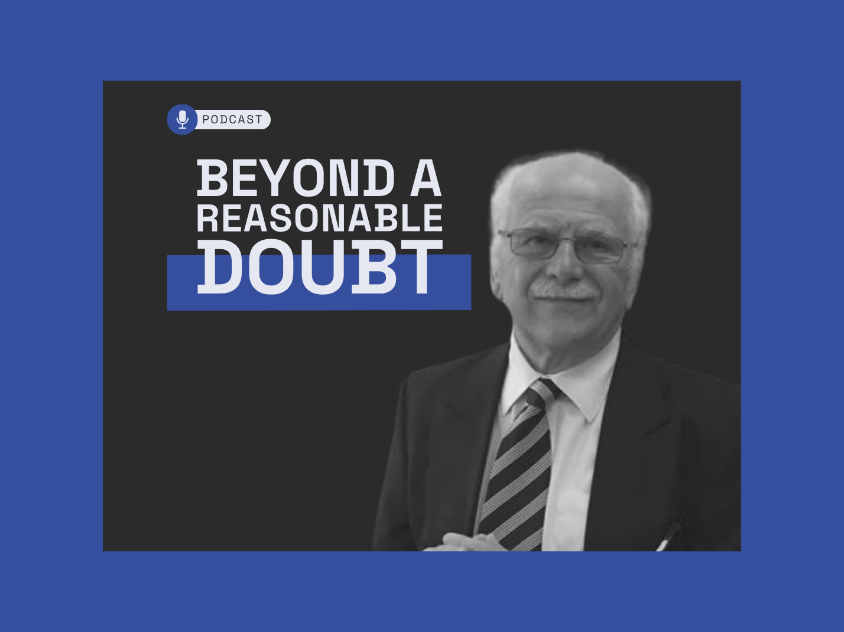
    In the latest episode of “Beyond a Reasonable Doubt,” Dr. Patrick Tidmarsh sheds light on some of the most pressing issues in the field of investigative interviewing, particularly regarding sexual crime investigations and relationship-based crimes. Dr. Tidmarsh, a renowned expert with decades of experience in both offender treatment and police training, discusses with Dr. Ivar Fahsing the profound impact of his “The Whole Story” concept on criminal investigations. 

    Summary

    • Transforming Sexual Crime Investigations: Dr. Patrick Tidmarsh’s “The Whole Story” approach advocates for a holistic understanding of offenders and victims, reshaping how sexual crimes are investigated and handled within policing systems.
    • Challenging Misconceptions: The discussion highlights critical issues, including low reporting rates (only 5% within 72 hours) and the myth of high false reporting, which is closer to 5%. It also addresses the impact of ingrained misogyny on victim trust and investigation quality.
    • Impact and Progress: By implementing training programs rooted in “The Whole Story,” investigators have reduced victim-blaming attitudes, improved case handling, and significantly boosted victim satisfaction, paving the way for more empathetic and effective policing practices.
    Read more

    The Whole Story approach 

    Dr. Tidmarsh’s approach emphasises a holistic understanding of sexual crime investigations. He argues that effective policing must begin with a deep understanding of offenders, which in turn clarifies the experiences and reactions of victims. His approach has introduced new dimensions and tools for practitioners, fundamentally changing how sexual crimes are handled across various policing systems. 

    Reporting and misconceptions 

    One of the striking data points discussed in the podcast is the alarming statistic that only about 5% of sexual abuse victims report the crime within 72 hours. This delay is significant, not because it implies any fault on the part of the victim, but because it highlights the immense challenges victims face in coming forward. Dr. Tidmarsh notes that societal and systemic barriers, such as ingrained misogyny within policing, often discourage victims from reporting. Historically, cases involving sexual crimes were not seen as “proper policing” work and were often relegated to the margins of the policing world. 

    Misogyny and policing 

    The discussion also touches on the pervasive issue of misogyny in policing, especially concerning how sexual crime cases are handled. Dr. Tidmarsh points out that this not only affects the investigation quality but also impacts the satisfaction and trust victims have in the justice process. However, training programs that incorporate “The Whole Story” approach have been shown to reduce victim-blaming attitudes among investigators significantly and improve the overall handling of these sensitive cases. 

    False reporting rates 

    Another critical topic addressed is the misconception around false reporting. Contrary to the prevalent myth that false reporting is high in sexual crimes, research indicates that the rate of false reports is actually between 2% and 10%, more likely closer to 5%. Dr. Tidmarsh emphasises that most people who report sexual crimes are telling the truth, and a better understanding of the nature of these crimes can help investigators identify the truth more effectively. 

    Impact and future directions 

    “The Whole Story” approach has not only changed investigative practices but has also had a measurable impact on how victims perceive their treatment by the police. After implementing specialised training and approaches like those advocated by Dr. Patrick Tidmarsh, victim satisfaction rates have shown significant improvement. This shift is crucial in a landscape where trust in the police is critical for effective justice. 

    Conclusion 

    Dr. Patrick Tidmarsh’s contributions to investigative interviewing highlight an important shift towards more empathetic, informed, and effective policing practices. His work continues to influence and reshape the handling of sexual and relationship-based crimes globally. It aims to foster a justice system that truly understands and respects the experiences of victims while rigorously pursuing the truth. As we look forward to more innovations in the field, it’s clear that the foundations laid by experts like Dr. Tidmarsh will play a vital role in shaping future practices in criminal justice. 

    Related products

    • Fixed Recorder

      Fixed HD recorder for high security interview rooms.

    • Portable Recorder

      Lightweight, PACE-compliant interview recorder for any setting.

    • Capture

      Mobile app recorder for capturing evidence on the go.


    • Ark Interview Management

      Receive, monitor, and keep evidence throughout its lifetime.

    10 Gennaio 2025
  • Prof. Ray Bull: Investigative Interviewing Revolution Pioneer 

    Prof. Ray Bull: Investigative Interviewing Revolution Pioneer 

    Prof. Ray Bull: Investigative Interviewing Revolution Pioneer

    In a world where policing tactics and methodologies are constantly evolving, the contributions of Professor Ray Bull stand out for their profound impact on investigative interviewing. His pioneering work, especially with the introduction of the PEACE method in the UK, has fundamentally changed how police conduct interviews, shifting the focus towards non-coercive, empathy-driven approaches.  

    Summary

    • Revolutionising Investigative Interviewing: Prof. Ray Bull transformed police interviewing with the introduction of the PEACE method, shifting from coercive tactics to empathy-driven, non-coercive approaches grounded in psychological principles.
    • The PEACE Method: Emphasising steps like Preparation, Engagement, and Evaluation, the PEACE method fosters respect and rapport, improving both the dignity of suspects and the effectiveness of investigations.
    • Global Influence: Prof. Bull’s work has inspired police forces worldwide to adopt ethical interviewing practices, proving that respect for human rights can enhance investigative outcomes.
    Read more

    Professor Bull’s journey began when “common sense” interrogations were treated as the only way to go, often leading to harsh and ineffective interviewing practices. Recognising the flaws in such approaches, Prof. Bull advocated for a methodology grounded in psychological principles, aiming to support communication and generate more honest responses from suspects. This shift was not only about changing techniques but transforming the entire cultural understanding of what an interview could be. 

    The PEACE method, in which development Prof. Bull was heavily involved, emphasises Preparation and Planning, Engage and Explain, Account, Closure, and Evaluate – steps that encourage respect, rapport, and understanding between interviewer and interviewee. This approach challenges the traditional model, promoting instead an interaction that respects the dignity of all involved, including suspects who might otherwise face coercion. 

    This transformation didn’t happen in isolation. It was supported by broader changes in police training, which began to include cultural awareness and communication skills. Prof. Ray Bull’s evaluations and ongoing research have continuously demonstrated that empathetic interviewing not only upholds the dignity of the interviewee but also increases the effectiveness of police investigations. 

    Prof. Ray Bull’s influence extends beyond the UK, inspiring changes in policing and interviewing practices around the world. It is a reminder that the way forward in law enforcement and justice involves a commitment to ethical practices that respect human rights. His work continues to inspire a new generation of law enforcement professionals and academics to rethink how interviews should be conducted in the service of justice. 

    Listen to the conversation between Dr. Ivar Fahsing and Prof. Ray Bull to learn more about PEACE method and how it still radiates across the globe. 

    Related products

    • Fixed Recorder

      Fixed HD recorder for high security interview rooms.

    • Portable Recorder

      Lightweight, PACE-compliant interview recorder for any setting.

    • Capture

      Mobile app recorder for capturing evidence on the go.


    • Ark Interview Management

      Receive, monitor, and keep evidence throughout its lifetime.

    30 Dicembre 2024
  • Police Interrogation Science vs Practice with Mark Fallon

    Police Interrogation Science vs Practice with Mark Fallon
    Police Interrogation Science vs Practice with Mark Fallon

    I used to believe that an innocent person wouldn’t confess to a crime they didn’t commit. I was wrong -Mark Fallon

    After the success of season 1, our podcast “Beyond a Reasonable Doubt” is back with new episodes hosted by Dr. Ivar Fahsing. In the upcoming episodes, the renowned scholar and practitioner focuses on picking the brains of some of the biggest legends in Investigative Interviewing and Police Interrogation to discuss the gap between the theory and the practice and moving away from the “common sense” interrogation to science-based interviewing.  

    Summary

    • Mark Fallon’s Advocacy for Ethical Interrogation: The blog highlights Mark Fallon’s extensive career with NCIS and his shift from using harsh interrogation methods to promoting humane, effective, and ethical interviewing techniques, detailed in his book “Unjustifiable Means.” His efforts aim to move US practices closer to European standards, which prioritise human rights and dignity.
    • Contrasts in Interrogation Practices: Fallon points out significant differences between the interrogation methods in the United States and Europe, particularly the slower transition in the U.S. from coercive techniques like Enhanced Interrogation Techniques (EITs) to more ethical practices, such as the ORBIT method, which aligns with scientific research and legal standards.
    • Impact of Ethical Standards on Justice: The post underscores the potential for profound changes within the justice system through adherence to ethical standards, highlighting how empirical and respectful interrogation methods not only boost law enforcement credibility but also ensure justice and human dignity are upheld.
    Read more

    We are kicking off with a conversation with Mark Fallon, a former NCIS investigator and advocate for ethical interrogation. His career spanned several decades and was marked by significant changes in US military and intelligence interrogation practices. His insights in the newest episode of “Beyond a Reasonable Doubt” reveal big differences between United States’ and European methods and underscore USA’s ongoing journey towards more humane law enforcement practices. 

    Throughout his career, Fallon has participated in major investigations, including the first World Trade Center attack and the USS Cole bombing. These experiences exposed him to the harsh realities and ineffectiveness of torture, driving his shift towards promoting humane and effective interrogation techniques. His book, “Unjustifiable Means,” explores the troubling aspects of US interrogation methods and his personal crusade against them, advocating for a shift towards rapport-based interviewing that aligns with human rights principles. 

    Unlike many European countries, where ethical standards and human rights are increasingly more embedded in law enforcement practices, the US has historically been slower to abandon coercive police interrogation methods, such as the Enhanced Interrogation Techniques (EITs). Fallon’s advocacy highlights the critical need for the US to align more closely with practices that prioritise human dignity and justice in interrogation methods (i.e. the ORBIT method). 

    Mr. Fallon stresses the need to align modern police interrogation methods with scientific research and strict legal standards to avoid past errors and boost law enforcement credibility. His experience highlights how ethical standards can drive significant change in the justice system, ensuring empirical methods that improve the quality of investigations and interrogation methods that respect justice and human dignity. 

    His story is not only about transitioning from traditional interrogation to ethical interviewing; it’s about a commitment to justice and the profound impact that one individual’s perseverance and principles can have on the global stage. 

    To understand the full extent of these issues and the potential for positive change, tune into Ivar Fashing’s discussion with Mark Fallon, where they explore how determination and ethics can bring significant improvements in even the most challenging environments. 

    Related products

    • Fixed Recorder

      Fixed HD recorder for high security interview rooms.

    • Portable Recorder

      Lightweight, PACE-compliant interview recorder for any setting.

    • Capture

      Mobile app recorder for capturing evidence on the go.


    • Ark Interview Management

      Receive, monitor, and keep evidence throughout its lifetime.

    17 Dicembre 2024
  • Davidhorn CEO – Børge Hansen – end of year message

    Davidhorn CEO – Børge Hansen – end of year message

    End of year message from Børge Hansen, CEO Davidhorn 

    As we close another successful year at Davidhorn, join Sigrun Rodrigues, our Chief Marketing Officer, and Børge Hansen, our CEO, as they reflect on the remarkable achievements and milestones of 2024.

    In this comprehensive year-end review, discover the groundbreaking innovations in our police interview recording technology. Learn how our cutting-edge solutions have enhanced investigative interviewing capabilities and supported criminal justice systems across multiple jurisdictions.

    Explore how we’ve strategically expanded our global footprint through new partnerships with international law enforcement agencies, technology distributors, and justice sector organisations. Our collaboration network now spans multiple continents, bringing advanced recording solutions to police departments and investigative units worldwide.

    This insightful conversation covers the year’s key highlights, including major product launches, technological breakthroughs, client success stories, and industry recognition. Sigrun and Børge discuss the challenges overcome, lessons learned, and the strategic decisions that shaped Davidhorn’s growth trajectory throughout 2024.

    Tune in for this comprehensive review of our transformative year, and get an exclusive sneak peek into our exciting plans, upcoming innovations, and strategic initiatives for 2025. Don’t miss this opportunity to understand how Davidhorn continues to lead the evolution of police interview recording technology.

    16 Dicembre 2024
  • Productivity in Policing: Empowering Modern Policing with Innovative Solutions

    Productivity in Policing: Empowering Modern Policing with Innovative Solutions
    Picture of the whitepaper on police productivity

    Productivity in Policing: Empowering Modern Policing with Innovative Solutions


    Fill out the form to get access to the report.

    This whitepaper aims to provide a comprehensive review of challenges that modern police forces face and actions they can take to increase productivity in policing and cost-efficiency related to investigative interviews.

    By adopting new technologies, police can become better equipped to handle modern crime patterns and the endless squeeze between expectations to deliver high-quality public services and public spending.

    This whitepaper is based on two recent independent reports from Norway and the United Kingdom that review inefficiencies in policing and suggest improvements. The insights show that the main challenges are similar across modern, mature countries.

    From mobile policing and remote interview tools to automated transcription and data integration, this whitepaper explores how the right technologies can streamline operations, reduce administrative burdens, and improve frontline effectiveness.

    In this whitepaper on Productivity in Policing, you can learn:

    • Insights from the reports
    • How technology can be a productivity enhancer
    • Recommendations on how to change in order to stay productive while maintaining high-quality policing

    By adopting the right technology in the right way, law enforcement can promote justice and public trust, heralding a new era in policing.

    Understanding the shifting landscape of police operations and the technology supporting this change is crucial for investigators and anyone involved in investigative interviewing.

    "*" indica i campi obbligatori

    Questo campo serve per la convalida e dovrebbe essere lasciato inalterato.
    Consent

    3 Ottobre 2024
  • Investigative Interviewing podcast – s01 summary

    Investigative Interviewing podcast – s01 summary
    Investigative Interviewing podcast - s01 summary

    Reflecting on Season 1 of the Investigative Interviewing podcast: “Beyond a Reasonable Doubt”  

    Looking back: “Beyond a Reasonable Doubt”

    Listen

    As we wrap up the first season of our Investigative Interviewing podcast “Beyond a Reasonable Doubt”, it’s a great moment to reflect on the insights shared by our guests around investigative interviewing. Our podcast aimed to look into the complexities of investigative interviewing and the broader implications for law enforcement practices globally. Through engaging conversations, we explored themes of ethical interviewing, human rights, and the transformative power of technology in policing. 

    Exploring investigative interviewing techniques  

    One of the recurring themes this season was the shift towards ethical interviewing techniques. Dr. Ivar Fahsing and Dr. Asbjørn Rachlew, pioneers in this field from Norway, kicked off our series by discussing the evolution of investigative interviewing in their country. They highlighted the importance of non-coercive methods and the critical role these techniques play in ensuring justice and avoiding miscarriages of justice. 

    Fanny Aboagye

    Human rights at the forefront  

    In our conversation with Prof. Juan Méndez, a renowned human rights advocate and former UN Special Rapporteur on Torture, we explored the significance of the Méndez Principles. These guidelines underscore the prohibition of torture and coercion, advocating for interviewing methods that respect the dignity and rights of all individuals. Prof. Méndez’s insights shed light on the global impact of these principles and the necessity of aligning police work with international human rights standards. 

    Global perspectives on Investigative Interviewing

    Our episodes with Fanny Aboagye, Assistant Commissioner of the Ghana Police Force, and Gisle Kvanvig offered valuable perspectives on the international adoption of ethical interviewing practices. Aboagye discussed the launch of the UN Manual on Investigative Interviewing and its implications for policing in Africa. She emphasised the importance of management support and training in implementing these changes and highlighted the role of gender in non-confrontational interviewing styles. 

    Gisle Kvanvig brought a unique viewpoint on the practical challenges and successes in adopting new interviewing methods and provided a realistic look at the global landscape of policing reforms. 

    Psychological insights and communication  

    Emily Alison, specialists in communication and ethical interviewing and Becky Milne – Professor of Forensic Psychology, shared their expertise on the psychological aspects of interviewing. Their focus on building rapport and understanding the psychological dynamics at play during interviews was particularly enlightening. Emily Alison insights emphasised the need for empathy and effective communication in gathering reliable information. Prof. Becky Milne also highlighted the importance of context and detailed questioning to elicit more accurate responses from interviewees. 

    Technological integration in policing  

    Throughout the season, a key highlight was the integration of technology in modern policing. The discussions underscored how advancements in recording technology, such as digital and mobile solutions, are revolutionising evidence collection. These innovations not only enhance the accuracy and reliability of evidence but also streamline processes, making law enforcement more efficient and cost-effective. 

    Looking Ahead  

    As we conclude the first season of “Beyond a Reasonable Doubt,” we are inspired by the commitment of our guests to advance ethical, effective, and humane policing practices. Their collective insights provide a roadmap for law enforcement agencies worldwide to adopt more just and transparent methods. 

    We look forward to continuing this conversation in future seasons, exploring new developments and sharing more success stories from the field. Stay tuned for more discussions as we strive to transform investigative practices for the better. 

    Related products

    • Fixed Recorder

      Fixed HD recorder for high security interview rooms.

    • Portable Recorder

      Lightweight, PACE-compliant interview recorder for any setting.

    • Capture

      Mobile app recorder for capturing evidence on the go.


    • Ark Interview Management

      Receive, monitor, and keep evidence throughout its lifetime.

    16 Settembre 2024
  • Fanny Aboagye on UN investigative Interviewing Manual – ep.06

    Fanny Aboagye on UN investigative Interviewing Manual – ep.06

    Episode 06.
    “We have to do the right thing from now on” – Fanny Aboagye on UN investigative Interviewing Manual

    Listen

    Fanny Aboagye, Assistant Commissioner of the Ghana Police Force and collaborator on The UN Manual on Investigative Interviewing for Criminal Investigation, discusses its launch and impact on investigations in Africa in particular.

    The UN Investigative Interviewing Manual emphasises the importance of obtaining accurate information through ethical interviewing techniques and avoiding coercive methods. A key takeaway is the need for change in the way interviews are conducted, with a focus on building trust and gathering reliable information. Fanny highlights the importance of management support and training in implementing these changes. She also discusses the role of gender in investigative interviewing, noting that women may have a natural advantage in non-confrontational, communicative styles of interviewing. Despite challenges, Fanny remains optimistic about the impact of The Manual and the potential for positive change in policing practices. 

    Key takeaways from the conversation

    1. The UN Manual on Investigative Interviewing emphasises the importance of obtaining accurate information through ethical interviewing techniques and avoiding coercive methods. 
    2. There is a need for change in the way interviews are conducted, with a focus on building trust and gathering reliable information. 
    3. Management support and training are crucial in implementing these changes in policing practices. 
    4. Gender can play a role in investigative interviewing, with women potentially having a natural advantage in non-confrontational, communicative styles of interviewing. 

    About the guest

    Fanny Aboagye

    Chief Superintendent of Ghana Police Service, UN Police Liaison Office, Police Course Director at Kofi Annan International Peacekeeping Training Centre and collaborator on The UN Manual on Investigative Interviewing for Criminal Investigation.

    Listen on Youtube

    Related products

    • Fixed Recorder

      Fixed HD recorder for high security interview rooms.

    • Portable Recorder

      Lightweight, PACE-compliant interview recorder for any setting.

    • Capture

      Mobile app recorder for capturing evidence on the go.


    • Ark Interview Management

      Receive, monitor, and keep evidence throughout its lifetime.

    Transcript

    Ivar Fahsing  

    Welcome to the podcast, Fanny Aboagye. You are currently the Assistant Commissioner of the Ghana Police Force. But this week we are together here in New York on the UN COPS High-Level Meeting for the event of launching the UN manual on investigative interviewing. And from your perspective, from your background, position and experience, what would you say are the reasons why such a manual is needed? 

    Fanny Aboagye 

    Thank you very much, Ivar. We are here in New York to launch the UN Manual on Investigative Interviewing. I think this manual is very necessary at this time because for several years, I believe, investigators, their experiences, have taken a lot of things for granted. And so, most of our investigations, all our interviews are done to obtain confessions from our interviewees. 

    The manual brings out the human rights aspects of investigative interviewing, which means accurate information, not to use any coercive method to obtain this information. 

    My first entry into the police, the question that was posed by our first lecturer: how do you obtain accurate information? And the answers that came out were as good as you can imagine. I mean, from coercive methods, unethical methods. That was the first time that I was actually introduced to ethical interviewing. And so when I had the opportunity working in New York to be part of this group of people to develop this manual, I thought the manual has come at the right time. 

    There’s nothing like too late. It has actually come to smoothing the way investigators do interviews. In saying that, what I mean is sometimes you think you are doing the right thing, you know, until you are introduced to something else. Then you know that you can modify your way of working to be able to, you know, give proper justice to every investigation that you are doing. So I think this manual actually fills that gap. 

    When you read it looks quite familiar. The methods in it looks quite familiar, but when you read it again and again and again, you realise that it provides some additional areas of interviewing that you might not have thought about. So the manual actually is a good one. 

    It came the right time of our career as police officers. The new officers coming in as investigators will have to do the right thing from now. And so I think that’s what this manual helps us to achieve.  

    Ivar Fahsing 

    Absolutely. In many ways, what I think at least is that we are, as police officers, not really taught from the beginning how different an interview is from a normal conversation. So it’s kind of, you think you intuitively can interview because you’re able to speak or talk and as I think the manual shows that no, the purpose of a normal conversation is not to gather accurate and reliable information is mainly to be part of a social play. You don’t really want the whole story, you don’t want all the details, that’s breaching social codes. You just want the headlines and then move on. Exactly the opposite of what you really want in an interview. If you came back from vacation or a weekend, if someone asks you to start from the time you left home and include all details until you return, you know, it will be a tremendous breach of social codes and anything. So this is, I think, also so important to remind ourselves as professionals that it’s actually a very different purpose and that requires for different methods as well. 

    Although what you are saying, Fanny, is that this is a much needed instrument now for building that awareness and skill base early on, as far as I understand, this is still quite far from reality in most of the countries, not only in Africa, but also in Europe, of countries that actually have been going through a process of change. And when I say change, I mean that you deliberately have to leave behind what you used to do and you have to know why. And then deliberately take in something different because you think that brings you closer to where you should be. So that deliberate shift also recognized on the top level in your organization because it has to be facilitated by resources, by training and by mindset cultures, I guess. So could you say something about what that looks like in Ghana or in Western Africa as far as you know when it comes to that process of change? 

    Fanny Aboagye 

    Definitely change is always a very difficult thing, especially when people are very used to their organizational culture. Yeah, but change can happen when you know where you want to be. Talking about Ghana and about the police, our vision is to become a world-class policing, with respect to human rights So this becomes where we want to be. Where we are now is very difficult to determine. 

    So some are a little ahead of others. And so we need to kind of reach those who are a little behind, closer to those who have actually advanced in investigative interviewing. I think basically this has to be part of our training curriculum, right from the basic training in our academies, because in all of this, the academy is where we do training for our very senior officers, yeah? But in all of this, because of oversights, responsibilities. Even the senior officers need to understand the process so that they can have good oversight over our younger officers. So I think to get to be a world-class policing as our vision says, it is important that some of this change is embraced and is promoted, you know, because if we don’t, if we don’t even accept that we have to change, then we will not get anywhere. So we have to embrace this in totality. I will say that coming a good step in the right direction. Because from here, I’m going to introduce the manual to Director General CID so that because investigators mostly do the interviewing right so that they can also incorporate it into their detective training school. So in all the different levels the basic training school, the detective training school, the police academy, the command and staff college, all of these different levels have different impacts when it comes to interviewing. So I believe Ghana is doing what we are doing because that’s the knowledge that we have now. That is what we know. I mean, that is the experience that has been gotten over the years. But I know that if we want to really reach our objective of being a world-class policing, then we have to be fine police officers, you know, excelling in every area of our work and making sure that when you present a case to court, you have done the right thing, you know, and that will actually give us, you know, the convictions that we want from the courts. Maybe not that much, but then you know that you have gone through the right steps and this is what the manual provides for us. So I think Ghana is on course and we are still committed to you know gradually shaping our officers and our thinking you know and not relaxing into the Ghana culture. This is how we do it you know and not wanting to change. This manual is a good manual and it will go a long way to help the service. 

    Ivar Fahsing 

    This is the first documentation of a true global standard. This is what we should aim for. And it’s sometimes much easier to find that outside because then you probably have less discussion in the inside, well, what is really the standard. Sometimes that’s really hard to carry that message inside any organization, no matter your position. Because, as you said, people basically don’t want to change. We are just built that way, that why can’t I just go on? Do you mean I’m not good enough for these kind of typical human things. That change is not that easy. So I think it’s really interesting to hear what you say about the importance of management, oversight, and also to communicate expectations and future directions. So that’s, I think it shows deep insight, I think, in what is necessary to foster these changes. There are early research from the early 90s in England where they actually started to see what creates a positive change in the rescue Investigative interviewing and they early on found that the police districts that didn’t involve the top level management in this change process didn’t prosper. 

    You know, speaking from a Ghana perspective, but I guess also as having spent a lifetime in policing in Western Africa, what would you say is the situation around you? You see a similar development in other African countries, or is this something that mainly is going on in your own country? 

    Fanny Aboagye 

    Policing is almost the same when two police officers from different countries meet. You see, they are very like-minded when it comes to how we work. I will be more than certain to say that it’s almost the same for people in my sub-regions. Of course, I have the honor to also facilitate some of the courses at Kofi Annan International Peacekeeping Training, where officers are drawn from across the West Africa region and we like collaborative policing where we have all these officers to share their experiences from across their countries. And in all honesty, it comes almost to the same way of doing things. With respect to the manual, I believe that there should be like an implementation phase of this manual to reach as many countries and continents as possible. I’m saying this because when you have something that’s so beneficial to you, it shouldn’t happen that other countries around you do not have same methodology. And so I’m thinking, like, if there would be a way to have maybe trainings. And I mean, we have a lot of Peacekeeping centers around West Africa and these institutions can be used, they can facilitate the sharing of this knowledge to a much wider countries in the region. So I think if the organizers or those who started to do this can think about that. Because I think at the end of the day, what we want to really achieve is to have a non-coercive process when it comes to interviewing. 

    When you go to peacekeeping missions, we have people from all over the world coming into these missions and to perform their police roles in these missions. If we are not like -minded, we ourselves will be a problem even in the mission. But if we are like-minded and we come there, then we complement each other. You know, there may be people who will be very good at training, there may be people who will be very good at interviewing, but then we can complement each other. They will not be leaving anybody behind. Then the country that we are serving can benefit from these experiences. So I think when I have to think about the sub-region, I believe we are all on the page where we need to kind of correct a lot of things around interviewing. And so a follow-up phase to reach as many as we can will be helpful for even my region, West Africa. 

    Ivar Fahsing 

    I really agree with your reflections that police officers and maybe even detectives around the world are quite similar. I definitely share that reflection. I’ve also been fortunate enough to do investigations almost everywhere in the world during my time as a detective. You meet people that have had the same position as yourself over time and you feel… It’s so interesting that you have exactly the same focus. 

    What is your background and how did you end up in this position? 

    Fanny Aboagye  

    I’m an assistant commissioner of police now. Currently, I’m the divisional commander for Western North region. When it says that you are a divisional commander, it means that you have a lot of districts and stations under you and you are responsible for the operation, administrative and everything, you know, for that division. 

    My story in police is quite interesting because I came into the police as a professional. My university education was in estate management. So we were recruited as estate officers from the university into the police. And then I learned about peacekeeping, and so my then supervisor and boss, agreed and and so we did the UN exam and went to East Timur in 2002. And that changed my perspective on policing, especially because it was a conflict zone and it was an executive mandate, which means that we need to be police officers in that mission. It trained me to use the weapon, to do investigations, and to do everything about policing in that mission. 

    So I have had the opportunity of learning so much about peacekeeping. Peacekeeping, security, safety, and all these different complex contests. That has actually equipped me in many, many diverse, you know, contests because like in mission, you know, you can start from something small and then generate into, much more complex situation. And when you are working in such fields, you are able to adjust to the different contests that you come into. 

    My current post was in January this year. That’s when I was transferred to my current division. And I mean, so far, I would say that it’s working well there. Because I have accumulated all these experiences before, it’s quite easy to manage the division. 

    We’re actually doing our best to bring policing to the doorsteps of people and not to abuse the privileges that comes with the work because sometimes when you are in uniform, you seem to be like a different person. So we are trying to get more contacts with our clients and educating them as to what they have to do when they have all these conflicts. We are also trying to do proper investigations. 

    I’m still, I mean, forging forward in what I do and making sure that everywhere that I am, I bring impact to both the officers and even the clients that we meet, you know, and ensure that policing is not… so to say, the way people look at them, like very afraid of them, but to bring them so close to the people that they know that police are the friends of the people. 

    Ivar Fahsing 

    That’s so fascinating. What strikes me, Fanny, that I never thought about this in this way before until I hear your story, is that what we also in Norway call peacekeeping policing is actually very transformational work. 

    You are coming into areas that are sometimes scattered of any structure and governance and security and you have to start to build something and transform. So I think your background there is so important and the skills you have and the things you’ve seen not only in your own region but around the world. It must be a tremendous strength in your position it also gives you a lens where you can analyze where are we actually, what should be expected, what is policing actually all about. 

    Really inspirational to hear that, yourself as a female officer, what is the gender rate at the time?  

    Fanny Aboagye 

    I think we are now about 27 % of our male counterparts. So, I mean, in Ghana we have quite a high number of female offices. The majority of course are junior officers, but even the senior core, we should probably be like 15-17 percent of the senior core. So that’s quite encouraging and junior offices look up to us so much. 

    It’s quite encouraging and I mean I also like the fact that our current administration is sending us out onto the field. I mean it shows that the operational thing of policing is not only for the men and they are introducing a lot of senior officers in the regions which is quite… It’s quite good and quite interesting because like… Maybe previously, years, years ago, the very senior officer, because there were so few, we’re all concentrated at the headquarters, you know, and really not that out. So this has actually given us an opportunity to prove ourselves as females and to do the work. Let also the people see us as equal. 

    Like we talked about change before, there’s always… that difficulty changing but once you have your authorities or the senior officers going that direction they are able to move everybody into that direction and so I think females are doing quite well in Ghana now. We have a lot of senior female senior police officers very intelligent, hard-working offices and we are all doing our bit to help the service and to contribute our quota to the service.  

    Ivar Fahsing 

    I’m sure you’re a fantastic role model and I want to share with you, because I think also there is a gender issue in the transformation towards investigative interviewing, as you said yourself, we are trying to move away from accusatory, confession-oriented styles that very often is linked to kind of a macho way of policing, that way you’re being intimidating, it comes less natural to women. 

    And I think the non-confrontational, communicative, active listening way is at least something that we saw in Norway 20-25 years ago, came much more natural.  

    Fanny Aboagye 

    For women.  

    Ivar Fahsing 

    For women. So I have to say that probably in Norway now you see that the top level, the gold level of interviewers in our most profiled cases are a majority of women. Not only on the leadership positions, but also in the operational interview detectives. And it’s a very challenging job to go into that room and see what information you can bring out with relevance in a professional way. It’s a core task in any high-level investigation, and it’s all resting on the shoulders of professional women. 

    I think also just the dynamics, because after all, at least in many of the most serious crimes, there’s no secret that most of the perpetrators are men. So the risk of getting a cockfight inside that interview room is actually much less if you have a female interviewer. 

    That’s at least our experience. And I think it’s under-communicated, this gender issue in the transformation towards investigative interviewing. I think it’s very important, not only for the production of good interviews, but for the transformation of the culture around it.  

    Fanny Aboagye 

    Yeah, absolutely. I agree. 

     Ivar Fahsing 

    Well, before we round off, there is one more question I would like to ask you. If you look around the world now, it’s not everything that we’re seeing is going the right way. We have conflicts, we also have political developments that are not very optimistic. 

    Nevertheless, we are promoting a more human rights-based way of interviewing in this hostile world. And I guess some people would call our efforts a bit naive and over optimistic. But still, you seem to believe in it and fight for. What do you think about your future?  

    Fanny Aboagye 

    I know what you’re saying and it’s a very difficult situation that we have now because there’s not too much transparency in the world now makes it… It’s very difficult to operate the context that you have because your bosses are receiving instructions in a direction that probably favors the government or the political space and that information is not a must-know. 

    So sometimes you wonder why you are pushing a good agenda that is not being embraced at the top. Because the top itself is also struggling to find their ground. We are not naive. I think that what this manual provides is knowledge, awareness and great skill. Maybe it doesn’t move as fast as we wanted for obvious reasons, you know, for the political space, for… Some people are even adamant to change. Some of our authorities, they just don’t like it. This is what is giving us a good face, getting more convictions, and you know, ticking the box. You know how many people were you able to prosecute last, you know, so all of these things are going to hinder the first progress or the first implementation of the tenets of this manual. 

    That’s not naive. And so like I said before, our task is to make sure that at least the middle management, the supervisors, grab this, embrace this. And then how that will move up the ladder, but we are also not naive about some of it almost looks like an impossibility, but I believe that investigative interviewing is not done at that top hierarchy. It’s done mostly in the middle you know. And so that’s our space. 

    And we have to make sure that our space is good, our space is intact, our space is not coercive. Eventually, this space is going to give a good light to the political space, right? I know it’s going to be difficult to just permeate the political space. But so far, if we are able to make sure that the policing space is good and intact, the government and all of those things will begin to appreciate, you know, what we do as police officers. But that’s really a very difficult context and scenario. 

    Ivar Fahsing 

    I completely agree and it’s so fundamental what you’re saying that policing space is about creating trust and which is absolutely the fundamental of our legitimacy as law enforcement officers if you don’t have that fundamental trust in your own population. 

    How can you even do the job? That trust is created in those daily meetings. Every single day our officers meet some of their citizens. And how do you actually develop that meeting? How do you show that dignity? No matter how difficult this situation is, you stay professional and follow your methods and your ethical codes and it will take you a very long way. I think we’re talking about, like you say, the absolute core values of what policing is all about. So I obviously share your optimism, even in a bit dark period of the world, I think that makes it probably even more important that we fight for these fundamental principles of not only of policing but of human dignity.  

    Fanny Aboagye 

    Absolutely. 

    Ivar Fahsing 

    Well, but that, Fanny, I will not steal more of your precious time and I say thanks a lot for a really interesting conversation. I’ve learned a lot of you.  

    Fanny Aboagye 

    Same here.  

    Ivar Fahsing 

    And I wish you the best in your future mission. Thank you. And I hope we can cooperate.  

    Fanny Aboagye 

    Yes, most definitely. In the future.  

    Ivar Fahsing 

    Thank you so much.  

    Fanny Aboagye 

    Thanks a lot. 

    Read more

    3 Settembre 2024
  • Ethical Interviewing: Fanny Aboagye from the Ghana Police Force

    Ethical Interviewing: Fanny Aboagye from the Ghana Police Force
    Ethical Interviewing: Fanny Aboagye from the Ghana Police Force

    Ethical Interviewing: Fanny Aboagye from the Ghana Police Force on reshaping police interview techniques 

    New episode of “Beyond a Reasonable Doubt” is out!

    Listen

    In our latest podcast episode, we had the privilege of hosting Fanny Aboagye, the Assistant Commissioner of the Ghana Police Force, who is at the forefront of pioneering change in law enforcement in Africa. Amidst the historical corridors of the UN in New York, Fanny Aboagye shared with Dr. Ivar Fahsing, her invaluable perspectives on why the new UN Manual on Investigative Interviewing is a cornerstone for modern policing. 

    The need for change in policing techniques 

    Fanny’s career, marked by extensive peacekeeping missions and leadership roles, brings a rich understanding of the complexities and challenges in police reform. Her insights into the transition from traditional coercive interrogation methods to techniques that respect human rights are not just timely but necessary. As policing faces global scrutiny, the manual Fanny Aboagye helps promote is designed to ensure that interviews yield accurate and reliable information through ethical means. 

    Fanny Aboagye

    Training for a new era 

    One of the most compelling aspects of our conversation was Fanny’s emphasis on training and cultural change within police forces. She highlighted how Ghana is embracing these new methods as part of its vision to achieve world-class policing standards. This involves a deep-rooted shift in training curricula and operational practices to foster a culture that upholds dignity and human rights at every level.

    The shift towards female leadership 

    The inclusion and ascension of women in the police force are not just about achieving gender parity but also about enhancing the effectiveness and ethical standards of policing. In Ghana, the proportion of women in the police force has seen a significant rise, with about 27% of officers being women, and even more heartening is the 15-17% representation in senior roles. This marked increase in female presence across all levels, particularly in operational and field roles, demonstrates a transformative shift in the traditionally male-dominated sphere of policing. 

    Fanny Aboagye’s narrative shines a light on the profound changes happening within the Ghanaian police force. Previously, senior female officers were primarily stationed at headquarters, somewhat removed from frontline duties. However, recent policies have propelled them into more active roles in the field, challenging and reshaping the operational dynamics of policing. This strategic inclusion allows women to prove their mettle alongside their male counterparts, breaking down long-standing stereotypes and fostering a more inclusive environment. 

    This evolution in the workforce is crucial for several reasons. First, it promotes a more balanced approach to policing, especially in situations where sensitivity and empathic communication are required. Research and experiences from various countries, including Norway, suggest that women often excel in roles that require non-confrontational and communicative approaches, skills that are vital in investigative interviewing. These skills not only lead to better outcomes in individual cases but also help in transforming the “macho” image of policing into one that is more inclusive and just. 

    Broadening the impact

    Fanny Aboagye also pointed out the broader implications of these changes, noting the importance of such reforms in other African countries and beyond. Her work with the Kofi Annan International Peacekeeping Training Centre exemplifies how shared knowledge and collaborative training efforts can elevate policing standards across regions. 

    The global implications of ethical interviewing 

    This episode not only sheds light on the transformative efforts in policing but also reinforces the belief that ethical interviewing is fundamental to justice and community trust. As law enforcement agencies worldwide navigate these changes, leaders like Fanny Aboagye are instrumental in guiding them towards practices that respect human rights and enhance the effectiveness of the criminal justice system. 

    Tune in to gain a deeper understanding of how ethical interviewing is reshaping the landscape of international law enforcement, driven by dedicated professionals committed to reform and integrity. 

    Related products

    • Fixed Recorder

      Fixed HD recorder for high security interview rooms.

    • Portable Recorder

      Lightweight, PACE-compliant interview recorder for any setting.

    • Capture

      Mobile app recorder for capturing evidence on the go.


    • Ark Interview Management

      Receive, monitor, and keep evidence throughout its lifetime.

    2 Settembre 2024
  • Capturing Interviews with portable police recording devices

    Capturing Interviews with portable police recording devices

    eBook: Capturing Interviews On the Go with portable police recording devices

    Fill out the form to get access to the eBook.

    This guide explores the best practices for using mobile and portable police recording devices.

    In today’s world, crime knows no boundaries. The need for swift and effective law enforcement has never been more crucial. Especially with the growing global focus on police effectiveness.

    By enhancing operational speed, efficiency, and safety, these tools not only support legal proceedings but also promote justice and public trust, heralding a new era in policing.

    From use cases and best practices to hardware and software recommendations.

    In this eBook on portable police recording devices, you can learn:

    • How to create a mobile interview setup
    • Cost-effective strategies for modern policing
    • Techniques for capturing clear audio and video evidence on the go
    • The benefits of using portable recording devices for immediate evidence collection
    • Best practice for maintaining data security and integrity in field operations

    Understanding the shifting landscape of police operations and the technology supporting this change is crucial for investigators and anyone involved in investigative interviewing.

    About the author

    For almost 40 years, Jeff Horn has been working in close collaboration with Police and other law enforcement establishments internationally. Jeff has developed a deep understanding of the challenges when creating the best evidence during investigative interviews. 

    "*" indica i campi obbligatori

    Questo campo serve per la convalida e dovrebbe essere lasciato inalterato.
    Consent
    6 Agosto 2024
  • Ethical interviewing: Gisle Kvanvig on investigative interviewing 

    Ethical interviewing: Gisle Kvanvig on investigative interviewing 
    Ethical interviewing: Gisle Kvanvig on investigative interviewing

    Moving global policing towards ethical interviewing practices: Gisle Kvanvig

    New episode of “Beyond a Reasonable Doubt” is out!

    Listen

    In this episode of “Beyond a Reasonable Doubt”, Børge Hansen, the CEO of Davidhorn had the pleasure of speaking with Gisle Kvanvig, Director for multilateral cooperation  at the Norwegian Centre for Human Rights.

    Gisle’s journey through various international and non-governmental organisations has equipped him with unique insights into the human rights landscape, culminating in his current focus on improving police practices through investigative interviewing. 

    Ethical interviewing: Gisle Kvanvig on investigative interviewing

    Ethical foundations and practical applications 

    Gisle detailed the creation of the UN Manual on Investigative Interviewing for Criminal Investigations, a groundbreaking tool aimed at harmonising global standards in law enforcement. This manual isn’t just a set of guidelines; it’s a transformative document designed to ensure fair, effective, and humane treatment within the criminal justice system, aligning perfectly with Sustainable Development Goal #16 which promotes just, peaceful, and inclusive societies. 

    Gisle Kvanvig

    The importance of methodology and ethical interviewing in justice 

    One of the key takeaways from this discussion was the critical role of methodology in maintaining the presumption of innocence. Gisle emphasised how traditional interrogation techniques often compromise this fundamental principle, while structured interviews support it. This approach not only helps in aligning police work with international human rights standards but also enhances the effectiveness of the judicial process by preventing miscarriages of justice. 

    Impacting global law enforcement 

    Gisle also shared how the Norwegian Centre for Human Rights is influencing law enforcement practices worldwide. From Vietnam to Brazil, the adoption of these new interviewing techniques is fostering a more ethical approach to policing. The success stories Gisle recounted illustrate a significant shift in how officers perceive their roles and responsibilities, moving away from coercion towards a more evidence-based, respectful interaction with suspects. 

    Future directions 

    Looking ahead, Gisle highlighted the ongoing need to adapt and refine these methods to address various global challenges, including corruption, violent crimes, and war crimes. The adaptability of investigative interviewing makes it a powerful tool not only for developed countries but also for developing nations struggling with diverse crime dynamics. 

    Gisle Kvanvig provided insights into how ethical investigative interviewing is shaping the future of law enforcement globally. It’s clear that through continued education, adaptation, and international cooperation, we can achieve a more just and humane world. 

    Related products

    • Fixed Recorder

      Fixed HD recorder for high security interview rooms.

    • Portable Recorder

      Lightweight, PACE-compliant interview recorder for any setting.

    • Capture

      Mobile app recorder for capturing evidence on the go.


    • Ark Interview Management

      Receive, monitor, and keep evidence throughout its lifetime.

    5 Agosto 2024
Pagina precedente
1 2 3 4
Pagina successiva
Davidhorn

UK: +44 (0)1582 490300

Other regions: +47 370 76 460

Sales and Technical:
sales@davidhorn.com

Support:
support@davidhorn.com

  • wpml-ls-flag
    • wpml-ls-flag
    • wpml-ls-flag
    • wpml-ls-flag
    • wpml-ls-flag
    • wpml-ls-flag

Other pages

  • Contact
  • Support
  • Product training
  • Security and Compliance

Receive the latest news

Questo campo serve per la convalida e dovrebbe essere lasciato inalterato.

Sign up for our newsletter and be the first to receive great offers and the latest news!


  • LinkedIn
  • Facebook
  • Instagram

Privacy Policy

Cookies

©Davidhorn. Code and Design Aptum