Logo
  • Solutions

    By Industry

    • Policing
    • Defence
    • Immigration and Asylum
    • Child and Witness Interviewing
    • Local Authorities
    • Corporate Investigations
    • Healthcare

    By use case

    • Vulnerable witness interview
    • Suspect interview
    • Field interviews
  • Products

    Interview Management

    • Ark Interview Management

    Recorders

    • Capture App
    • Portable Recorder
    • Mini Recorder
    • Fixed Recorder
    • Software Recorder
    • Covert Recorders

    Integrations

    • System Integrations & Configuration
  • Customers
  • Resource Hub

    Resource Hub

    • Blog
    • Datasheets
    • eBooks and Whitepapers
    • Events
    • Podcasts
    • Webinars
  • Partners

    Partners

    • Partner overview
    • Become a Partner
  • Company

    Company

    • About
    • CareerJobs at Davidhorn
    • Contact
    • Customers
My account
Support
Book a Demo
Logo
  • Solutions
    • By Industry
      • Policing
      • Defence
      • Immigration & Asylum
      • Barnahus
      • Local Authorities
      • Corporate Investigations
    • By use cases
      • Vulnerable witness interview
      • Suspect interview
      • Field interviews
  • Products
    • Ark Interview Management
    • Mobile Recorder
    • Portable Recorder
    • Mini Recorder
    • Fixed Recorder
    • Software Recorder
    • Covert Recorders
    • System Integrations & Configuraton
      • Integrations and APIs
  • Customers
  • Resource Hub
    • Blog
    • Datasheet
    • eBooks
    • Events
    • Podcasts
    • Webinars
  • Partners
    • Partner overview
    • Become a Partner
  • Company
    • About
    • News
    • Contact
Support
Book demo
  • Logo
  • Human Rights activist, Juan Méndez – ep.02

    Human Rights activist, Juan Méndez – ep.02
    Welcome to the second episode of "Beyond a Reasonable Doubt”. In this session, Dr. Ivar Fahsing sits down with Prof. Juan Méndez, a renowned human rights advocate and former UN Special Rapporteur on Torture. Recorded in New York during the launch of the UN Manual on Investigative Interviewing for Criminal Investigation, this episode offers a deep dive into Prof. Méndez's crucial role in shaping guidelines that integrate police interviewing techniques with human rights standards. Join us as we explore the ethical transformation of modern policing practices, underscore the prohibition of torture, and discuss the global impact of these changes. Prof. Méndez's insights into the evolution of legal standards and his personal experiences enhance our understanding of the delicate balance between effective law enforcement and the preservation of human rights.

    Episode 02.
    I’d rather be called naive than tolerant of injustice – human rights activist, Juan Méndez

    Welcome to the second episode of «Beyond a Reasonable Doubt”. In this session, Dr. Ivar Fahsing sits down with Prof. Juan Méndez, a renowned human rights advocate and former UN Special Rapporteur on Torture.

    Recorded in New York during the launch of the UN Manual on Investigative Interviewing for Criminal Investigation, this episode offers a deep dive into Mr. Méndez’s crucial role in shaping guidelines that integrate police interviewing techniques with human rights standards. 

    Join us as we explore the ethical transformation of modern policing practices, underscore the prohibition of torture, and discuss the global impact of these changes. Prof. Méndez’s insights into the evolution of legal standards and his personal experiences enhance our understanding of the delicate balance between effective law enforcement and the preservation of human rights. 

    Key takeaways from the conversation

    1. The UN Manual on Investigative Interviewing for Criminal Investigations aligns police interviewing techniques with human rights standards. 
    1. The manual aims to make police work more effective and compliant with international law, particularly the prohibition of torture and coercion. 
    1. The Méndez principles played a crucial role in the creation of the manual and provide a policy document for national-level implementation. 
    1. Empathy and effective communication are essential in gathering accurate and reliable information during interviews. 
    1. The Fruit of the Poisonous Tree doctrine puts pressure on the police to obtain evidence legally and prevents the use of evidence obtained through illegal means. 
    1. Ethical interviewing practices are crucial in building trust and confidence in the criminal justice system. 

    About the guests

    Prof. Juan Méndez is an Argentine lawyer, former United Nations Special Rapporteur on Torture and Other Cruel, Inhuman or Degrading Treatment or Punishment, and a human rights activist known for his work on behalf of political prisoners.
    Initiator of Principles on Effective Interviewing for Investigations and Information Gathering (Méndez Principles).

    Dr. Ivar A Fahsing is a Norwegian detective chief superintendent and associate professor at the Norwegian Police University College. Co-author of the UNPOL manual on investigative interviewing in cooperation with the Norwegian Centre of Human Rights.

    Listen on Youtube

    Related products

    • Fixed Recorder

      Fixed HD recorder for high security interview rooms.

    • Portable Recorder

      Lightweight, PACE-compliant interview recorder for any setting.

    • Capture

      Mobile app recorder for capturing evidence on the go.


    Transcript

    Davidhorn  

    Hi everyone, I’m Børge Hansen, CEO of Davidhorn and welcome to the second episode of Beyond a Reasonable Doubt. We are absolutely thrilled to have an incredible conversation hosted by Dr. Ivar Fahsing with Prof. Juan Méndez the legendary human rights advocate and former UN Special Rapporteur on torture. 

     We caught up with Prof. Mendez in New York during the launch of the groundbreaking UN Manual on Investigative Interviewing for Criminal Investigations. 

     Get ready to deep dive as we explore Prof. Méndez’s pivotal role in creating guidelines that align police interviewing techniques with human rights standards. We’ll discuss the ethics of modern policing, and we’ll reinforce the absolute ban on torture. It’s an inspiring and fascinating conversation you don’t want to miss. 

    Let’s get started. 

    Ivar Fahsing 

    We are meeting at the launch the new UN manual on investigative interviewing for a number of police chiefs from around the world. And I remember… 

    You have to correct me if I’m quoting you wrong now, but when this manual was validated in November, you were part of that validation meeting.  

    Juan Méndez  

    Yep.  

    Ivar Fahsing 

    And I remember you said something like this, that. I think initially I said that if it wasn’t for the Méndez principles, it would be harder to get this UN manual. But then you said something that you kind of turned it around and said, the manual validates the principles. So I was thinking that could be an interesting start of the conversation. If you agree, if I’m quoting you correctly? 

    Juan Méndez 

    I think you are. In my experience, at least, you know, I first published my report to the General Assembly, it was my last report because my term was coming to an end. And I had consulted with a number of people before writing the report. And on that occasion, I called for a protocol because that was my, you know, my legal bias to call it a protocol. 

    But the idea was to have a set of guidelines that the police could use to make the work more effective, but also more compliant with the international human rights standards. And particularly the standard of the absolute prohibition of torture, of psychological torture, and of any coercion. Because all of that is part of international law. 

    And that immediately when that report was published and discussed at the General Assembly, this is October. And we got such a good reception, in part because we had calls on some very good specialists to do the early consultation that helped me draft the report and among them Asbjørn Rachlew, Mark Fallon, a lot of very good people. And so we already had an audience. I mean, they had been part of it to begin with, but the UN police actually picked up on it very early. 

    There was so much interest that we had a meeting about how to, you know, take it from there and produce something along the lines of what I had suggested we needed. And the UN police was there from day one. 

    As it happened, I didn’t know about it, but they were also working on what is now the UN police manual. 

    And as we worked on our principles, there were parallel contacts between UN police and us. And so the ideas were very much shared. I mean, we all agreed that we needed a set of guidelines and that the set of guidelines should be based on the 30 or 40 years experience of people who had looked at this and had published and researched about how good police work can be done that is compliant with human rights standards, guarantees all the safeguards that suspects should have in a democratic police environment or criminal justice environment and at the same time provides a positive and affirmative vehicle for police to do its work more effectively than relying on coercion and things like that that have been proven to be counterproductive.  

    Ivar Fahsing 

    Absolutely. So if you look at the relationship then between the Méndez principles can be seen more as a policy document on a national level. 

    Juan Méndez 

    Yeah.  

    Ivar Fahsing 

    Whilst the UN manual for how to do interviews is more a guidelines for practitioners.  

    Juan Méndez 

    Yes. Well, I mean, the principles that we decided in the steering committee and the advisory group, you know, we took about 100 people involved in this exercise and took us about four years. We decided to distill the fundamental principles of methodology that has already been proven to be the right one and has been studied also. So we basically did not want to adopt one standard or, you know, this is the way the Norwegian police does it or the British police does it. We kind of condensed and distilled the fundamental principles knowing that that is not enough to be a training manual. That a training manual has to observe those principles but go beyond them and have much more in the way of methodologies of training and even details about where to sit and how to approach the first questions and then wait for answers, things like that. 

    What we were trying to accomplish, it was not necessary to get into all those details. But we also recognize that our principles require the drafting of manuals or proper training of police and particularly of people conducting interviews. In the case of the UN police, they decided to go into more detail, among other things, because the UN Police Manual is like a minimum standard that all contributing police forces have to agree to before they can join peacekeeping operations, for example, and things like that. So in their case, they have to be more detailed and more specific. 

    I think they also benefit from experiences that were already there from literature and training exercises that the Norwegian Center for Human Rights has been conducting for years that of course were beyond what we were trying to accomplish. But I think it was a good coincidence that they were working on something as a kind of minimum standard, but more detailed. And we were working on something that eventually could be considered a sort of non-binding legal instrument, to judge whether, you know, in interviews with suspects, with witnesses, and with victims, was conducted appropriately under, you know, kind of standards that could universalized.  

    Ivar Fahsing 

    Exactly. I think you’re right. I think that’s like my good friend, Asbjørn sometimes like to say is that when you take away a tool from a petitioner, no matter if it’s illegal, it was his tool. So you have to replace it with something that they can use. 

    Juan Méndez 

    Yeah, I heard Asbjørn say you have to give the policeman alternatives. Yes and alternatives that are human rights compliant, but that are also more effective. So you have to start by understanding what the whole purpose of the interview is. And I also heard Asbjørn say the purpose of the interview is to get to the truth. It’s not to obtain a confession, it’s to get to the truth. And to get to the truth while also observing all the procedural guarantees and safeguards. 

    And I think that’s exactly what we are trying to do with this. 

    Ivar Fahsing  

    We have discarded the word truth also, actually.  

    Juan Méndez 

    Really?  

    Ivar Fahsing 

    Because very often when that’s put into practice, that ends up with the police version of the truth. They think they already know the truth. Yes. And they just want you to confirm. So we were at, and this was very important when we did this kind of change in Norway 25 years ago was to say that purpose is to gather accurate and reliable information with relevance to the matter of investigation. So every time they came up some kind of deviant idea, you just kind of matched it towards the purpose. Will this foster accurate and reliable and lawful at behavior or will it do the opposite?  

    Juan Méndez 

    Exactly. That’s why in our principles we talk a lot about avoiding confirmation bias, because you’re absolutely right that perhaps people who conduct interviews pursuant to the old model think that they are after the truth but they’re after the truth that they already think they know instead of letting the facts inform.  

    Ivar Fahsing 

    Exactly. So that’s, it was actually something that just came to us. We didn’t actually really have this strategy about not talking about the truth, but in the end, we just found out that, well, neither lies or truth are really productive way because it’s black and white and it’s probably beyond what you can expect to find in investigation. In investigation, it’s more shades of gray. Which stories are receiving most consistent support and are coherent? With most of the sources of evidence. And is that coherence strong enough that you can say it goes beyond a reasonable doubt. So this is the way we just naturally found out we need to have this new way of thinking about what the purpose is. And that was so useful because everybody agreed on that purpose. And then we can just use that every time you came to a difficult discussion: well, will this help this purpose or not? Now that we have agreed on this, that was very valuable for us. 

    I was thinking, Juan, since, you know, you’re not really a fan of the fact that the principles now mostly are referred to as the Méndez principles. The principles real name is the principle for effective interviewing and information gathering. Nevertheless, you played a very important role in creating this set of principles. And that’s mostly what people talk about when it comes to Juan Méndez. But I know that you have been in this game or business for a very long time. And I wondered if it was possible for you to tell a little bit about how did it come around that you actually spent so much of your life in these questions.  

    Juan Méndez 

    I was studying law in Argentina when we were undergoing a certain, you know, period, one of many periods of turmoil in my country. And there were military dictatorships, not as bad as the last one, but not good either. And there were resistance movements and movements using political violence and the response to them was very harsh. And it included torture, very, very significant torture. Not openly and always on denial, but not even making a big effort to deny the torture. And this was true of all of South America and perhaps of other parts of the world as well. 

    And if you were a law student at that was particularly intent on finding a solution to the use of torture. And of course, my first interest was to combat torture as used against a political opponent. 

    It became very clear that it was used against common crime offenders or even suspects of common crime offenders as frequently and even as violently and as brutally as enemies. So, you know, many people in my generation made it a big, you know, kind of north of our activity to combat torture and to combat first by denouncing it and then illustrating methodologies and things like that and insisting of course on legal prohibitions. 

    Denunciations and publicity around them probably played some role but as the political crisis became worse and worse, there was, it was not enough to, to even diminish the incidence of torture. And it came to a point where, you know, you, I and other lawyers and some of us recently graduated lawyers started taking up defenses of people who were accused of crimes against the state and the like. And we felt that one important way to do it was to investigate and denounce the possibility that they had been tortured in order to confess or to obtain evidence against others, etc. And so it was very much a part of our legal strategy to investigate torture. And in, for example, in my hometown, we discovered a couple of places that were kind of like torture settings. 

    They were mostly recreational areas that the police used for themselves for the time. On Sundays, they went with their families. But during the week, because they were kind of secluded and outside, they used them as torture chambers. And of course, we discovered them because common crime offenders came to us and told us. 

    This, you want to find a place, this is where it is. And we actually went with a judge, and we found torture instruments and everything. And so that put us kind of in the limelight. And so at some point I was arrested myself and of course they tortured me as well, you know. And this was already under the latest dictatorship where not only torture, but disappearance of persons and extrajudicial executions became much more rampant. And I was very lucky that they didn’t have much on me. They tortured me, but they didn’t know what to ask, but so I was able at least to sleep at night knowing that I didn’t offer evidence or even information or intelligence against anybody else to suffer the same fate. And besides, my family and my friends who were lawyers like me worked very diligently and put a stop to my torture early enough so that I didn’t have to suffer as much as others on that same stage. But then I went to prison for about a year and a half, and I was not charged with any crime, but I was held under the state of emergency. And a lot of the people who were there with me had the same torture happening to because I was the lawyer and they wanted to consult me about how to improve their procedural situation in the criminal case against. 

    I learned of all kinds of methods of torture and how you can fight them and things like that. And so, when I left Argentina, and I was allowed to leave relatively early compared to other people who were still in prison, and I landed in the United States, I started to try to help the people who were left behind in Argentina. 

    It became a sort of a natural aspect of my human rights work to work against torture. And then I worked for like 15 years for Human Rights Watch and we did a lot of different things but some of them had to do with torture of course and documenting it in our reports. 

    But actually, I became much more focused on torture when I became the Special Rapporteur, many, many years, many decades later. But yeah, I mean, I came to it through this circuitous route and kind of long route, but of course my predecessors in the Rapporteurship and my successors in the Rapporteurship have come at it from different angles. As far as I know, none of them were themselves victims of torture, but they are doing excellent. They were doing and are doing excellent work combating torture as well. 

    Ivar Fahsing 

    You say when I became the special Rapporteur, that for me that is a very, very special position. How do you want to become that? How did that happen for you?  

    Juan Méndez 

    Well, in my case, this was 2010. And by then the Human Rights Council had been already created and the whole way of appointing people to the different special procedures as they’re called uniform. And so when an opening was there, and Manfred Nowart, who was my immediate predecessor, his second term was coming to an end, can’t hold the position for more than two terms of three years each. So the Human Rights Council actually opened the process of asking people to suggest names or to apply themselves. And three NGOs from the South, from Brazil, Argentina, and Chile, suggested my name. And because I had been, for many years, working with Human Rights Watch then with the International Center for Transitional Justice. Then I was at the Inter-American Institute on Human Rights. And I actually had been Kofi Annan’s Special Advisor on Prevention of Genocide. So my background seemed interesting. And so they appointed me. 

    Ivar Fahsing 

    I see. So what do a special Rapporteur actually do?  

    Juan Méndez 

    Well, it’s one of several different thematic Rapporteurships. You know, there’s ex -traditional executions, disappearances, you know, women’s rights. There’s many different, like 40 -some thematic Rapporteurships. 

    Torture is one of the oldest ones. It was created back in 1985, I believe. It was the third one of a thematic nature that was created. The first one is the Working Group on Disappearances. The second one is a Special Rapporteur on Extrajudicial Executions. And the third is a Special Rapporteur on Torture. And before me, there was several, you know, Northern European jurists, very highly respected people who did wonderful work. 

    The four people who preceded me had done such very good work that it was possible to exercise the mandate with just following the path that they had, you know, kind of created for it. 

    It’s a mandate that has a lot of credibility because torture is one of those issues that not even the countries that do torture accept that they do. It is kind of a tribute to how well established the prohibition on torture is that many countries practice it but none recognize that they do acknowledge that they do so they use euphemisms they say it’s all a lie it doesn’t happen it’s not true, but the fact is that at least they don’t defend it and that’s already a good starting point now of course. 

    What my predecessors and I and my successors also have done is to try to apply the prohibition of torture to what the convention says about what constitutes torture. And that includes many different settings and situations and things like that. But in my experience, the setting in which most torture happens, and it’s the most brutal, is in the interrogation phases at the beginning of detention and inquiries into crime, and in my six years, I saw this happen in third world countries, middle-level and highly developed countries, there’s always some excuse for why. You know some harsh treatment is needed. They don’t put torture but enhance interrogation is what the US government said during the global war on terror, for example. The thing is that it’s still prohibited. No matter what the circumstances and what the crisis is, it still shouldn’t be done. And it does seem to happen because of what your colleagues have long studied as a confirmation bias. 

    What really happened and you just need the evidence of it. And if the evidence comes in the form of a confession, that’s the best piece of evidence possible. And that’s why we have so many judicial errors and so many unfair convictions and that then proved to be completely impossible. And so coming up with a better way of doing the inquiries is perhaps the best tool that we have for preventing torture. 

    Ivar Fahsing 

    Absolutely, I completely agree. When we do training around the world we have created a case. We have got police officers and I guess all of us, we learn better by storytelling and cases than just lecturing.  

    Juan Méndez 

    Examples. 

    Ivar Fahsing 

    Exactly. So we have created a case of a missing person case. And I used the missing person because I know that that is the case that have the most possible explanations. It can be nothing. This missing girl can just be sitting in the garage smoking a joint. But she didn’t want to tell her parents. So she’s not missing at all. Or she can have runaway, or dramatic way, or non -dramatic way, or it can be all the way under spectrum to a rape and murder, or kidnapping, trafficking, or whatever. So there are many possibilities here. 

    But very often, and I kind of fueled it, gave some suspicion in the case towards the fact that she was a Kurdish girl and that there had been some problems with her dad. And voila, most of the officers are stuck on the idea that the dad did it. To the degree where one of the Norwegian detectives who was in the sample actually said, the dad did it, lock him up and throw away the key. 

    Juan Méndez 

    Yeah 

    Ivar Fahsing 

    So I think you’re absolutely right that police officers very often have this guilt presumption that’s effective for them. After all, that’s a job to look after crime. Yeah. And we have it somewhere you can understand it that they have the more that has also what that’s rewarded. 

    If you solve crimes, you’re good. If it isn’t a crime, well, there’s no use for you. So it’s an interesting how this really easily can become a self-fulfilling prophecy.  

    Juan Méndez 

    And there’s so much pressure on the police officer to solve crime, quote unquote, that it’s understandable that they cut corners. And even if they don’t think they’re cutting corners, 

    If someone is kind of intimidated by the whole surroundings, and then says, I’ll tell you everything, you just take everything. That’s why I really like this decision by the Supreme Court of Brazil issued a few days ago. Because the majority opinion states very about lower court judges, it’s not a matter of the presumption of truth by what the police says or the presumption that all suspects are always lying to improve their situation. 

    In both cases, you have to have corroborating evidence. And if you don’t have corroborating evidence, you’re not doing your job. You cannot just rely on what is said. 

    I really think that that is a useful thing. I really like the Fruit of the Poisonous Tree doctrine because it does put a lot of pressure on the police to do the right thing and to look for evidence and not to, you know, it actually excludes evidence that may have been formally obtained in the correct way, but it originates on an illegal way of finding. Anyway, I think the fruit of the poisonous tree doctrine is already law in other jurisdictions, but it’s not international.  

    Ivar Fahsing 

    No, not at all. 

    Juan Méndez 

    No, I mean the Convention Against Torture does mandate the exclusion of the confession, but it doesn’t mandate the exclusion of successive evidence. Not yet, anyway.  

    Ivar Fahsing 

    I remember also one of the guys who inspired me when I was starting this work together with Asbjørn in Norway 25 years ago was the reading by the late Chief Justice Earl Warren? 

    Juan Méndez 

    Yeah, of course.  

    Ivar Fahsing 

    I think that was back in 59. Where he said something that, well, one thing about these involuntary confessions is of course their inherent untruthfulness. But the more problematic, even more problematic thing about it is the fact that officers of the law are systematically bridging the law to uphold the law and then in the end it becomes a bigger problem, the problem they actually try to fight. That’s a very well good way of putting it.  

    Juan Méndez 

    Absolutely. I mean, I agree those of us living in the global South where, you know, the state is always underfunded and even the police is underfunded You can understand how they think that they’re upholding the law by breaking the law and then it becomes a vicious circle, you know and the the tolerance for tolerant before torture becomes tolerance for corruption as well. And so, you know, the police tortures the people who don’t have the wherewithal to, you know, bribe them. But they look the other way with very serious crimes when the money is cannot rely on police forces that are so inherently broken down that way. And starting to find a way for the police to recover their standing in society, the respect of the citizenry that they need to have in order to do their job well. Because as I always say, I mean, a police that tortures intimidate a population, but it doesn’t enjoy their confidence. So they cannot really rely on cooperation because they only rely on intimidation. 

    Ivar Fahsing 

    And they are deemed to become a paracast in their own country.  

    Juan Méndez 

    Yeah, or at least they have a very bad reputation. You know, the people suspect that everything that they do is wrong, and at least under suspect motivations, things like that. And that also, you know, kind of this kind of discredit transfers to the whole criminal justice system.  

    Ivar Fahsing 

    Exactly. 

    Juan Méndez 

    Where people start guessing that everything that the prosecutors and the judges do also has some illegal motivation behind. And it’s a vicious circle that’s very difficult to break. But I think starting with a methodology for investigating crime, that gets better results while at the same time respecting the complying with prohibitions on ill treatment. It’s probably one angle to start to recover this kind of civic trust. 

    Ivar Fahsing 

    I would just like to ask you one final question from it is, you know, you have been working with this for a very, very long time. And I’ve been working with it for around 25 years. And sometimes I feel, Ivar, are you a little bit naive thinking that these small efforts that we try to do can actually make this a better world? Do you sometimes think that? 

    Juan Méndez 

    Yeah, of course I think about it. I think in fact that, but I prefer to be called naive than to be called tolerant with their injustice. So I have to keep the faith that there are ways of improving, you know, in discrete and limited aspects, but improving the circumstances that we live in, that because the alternative is to just surrender and think that justice cannot ever be achieved. And in the meantime, I also feel that even for everybody who calls me naive that torture is not inherently necessary in the investigation of crime, I can come back with examples of saying, but look, it results in injustices, it results in, you know, in the justice system having to, you know, throw everything out and release people, maybe people who should not be released, but you’re prejudging and harming the justice system by using, you know, illegal means. And also, and I always insist on this larger point, that for the state to function effectively, and particularly the criminal justice system to function effectively, both the court system, the prosecutors, and the police, have to enjoy the confidence and the civic trust of the population that they serve. And if you jeopardize it by using illegal means, you’re actually doing a disservice to your own mission. 

    Ivar Fahsing 

    Thanks a lot. 

    Juan Méndez 

    No, thank you. Great conversation. 

    Read more

    4 de julio de 2024
  • The UN Manual on Investigative Interviewing has been launched 

    The UN Manual on Investigative Interviewing has been launched 
    UN Manual on Investigative Interviewing

    The Manual on Investigative Interviewing for Criminal Investigation has been launched

    In spring 2024, «The Manual on Investigative Interviewing for Criminal Investigation» was published, marking a significant milestone in the evolution of global justice systems.

    This manual, the result of a collaborative effort among the United Nations, the Office of the High Commissioner for Human Rights, and the United Nations Office on Drugs and Crime, introduces a transformative approach to criminal investigations worldwide. 

    Revolutionising investigative interviewing 

    Now The UN Manual on Investigative Interviewing has been launched during the UN Chiefs of Police Summit 2024. Juan Méndez, Professor of Human Rights Law, former UN’s Special Rapporteur on torture shared hist thoughts about the publication while interviewed for Davidhorn’s podcast “Beyond a Reasonable Doubt”:  

    Read the Manual

    Summary

    • Launch of 2024 Manual: «The Manual on Investigative Interviewing for Criminal Investigation,» published in spring 2024 by the UN and related organisations, introduces a transformative, non-coercive approach to criminal investigations worldwide.
    • Global standard for ethical interviewing: The manual sets a new global standard, promoting human rights-respecting techniques that enhance the effectiveness of investigations while preventing ill-treatment and torture.
    • Davidhorn’s commitment: Davidhorn supports the implementation of this manual with advanced recording and interview management technologies, helping law enforcement agencies adhere to ethical interviewing standards globally.

    “We needed a set of guidelines, and this set is based on 40 years of experience from researchers who have studied how police work can comply with human rights standards, guarantee all the safeguards that suspects should have in a democratic police environment, and at the same time provide an affirmative vehicle for the police to do their work more effectively than relying on coercion, which has been proven to be counterproductive.” 

    Setting a new global standard for police interviewing techniques 

    The manual establishes a comprehensive framework for non-coercive interviewing techniques that respect human rights and uphold the principles of justice. Its publication is particularly crucial for parts of the world where coercive interrogation practices have still been the norm. By promoting ethical interviewing standards, the manual not only aims to enhance the effectiveness of criminal investigations but also ensures that these practices are grounded in respect for human dignity and the avoidance of any form of ill-treatment or torture. 

    Facilitating a mindset shift 

    The introduction of this manual represents a paradigm shift in how investigative interviews are conducted globally. It moves away from traditional, often coercive interrogation tactics towards a method that emphasises rapport-building, empathy, and psychological understanding. This approach helps to receive more accurate and reliable information, crucial for the fairness and reliability of subsequent criminal proceedings. 

    Impact across diverse legal systems 

    The significance of the manual extends across various legal systems, offering a universal guideline that can be adapted to local contexts while maintaining international human rights standards. Countries are encouraged to integrate these practices into their national training programs for law enforcement, ensuring that the principles of ethical police interviewing become ingrained within the fabric of global justice processes. 

    Davidhorn’s role in supporting global justice 

    At Davidhorn, we are committed to supporting the implementation of this groundbreaking manual through our advanced recording and interview management technologies. Our solutions are designed to complement the ethical interviewing techniques advocated in the manual, providing law enforcement agencies with the tools they need to adhere to these standards. 

    Conclusion: a call to ethical justice practices 

    We invite justice systems worldwide to adopt this manual’s guidelines and join us in transforming the landscape of investigative interviewing. Together, we can ensure a future where justice is not only served but upheld with the highest standards of ethics and integrity. 

    Written by:

    Marta Hopfer-Gilles

    ChatGPT was used while creating this post

    Related products

    • Fixed Recorder

      Fixed HD recorder for high security interview rooms.

    • Portable Recorder

      Lightweight, PACE-compliant interview recorder for any setting.

    • Capture

      Mobile app recorder for capturing evidence on the go.


    • Ark Interview Management

      Receive, monitor, and keep evidence throughout its lifetime.

    1 de julio de 2024
  • Beyond a Reasonable Doubt – a new podcast on Investigative Interviewing

    Beyond a Reasonable Doubt – a new podcast on Investigative Interviewing
    Investigative Interviewing podcast

    Beyond a Reasonable Doubt – a new podcast from Davidhorn

    Welcome to “Beyond a Reasonable Doubt,” a podcast series that welcomes you into the world of Investigative Interviewing – a non-coercive method for questioning victims, witnesses and suspects of crimes

    Hosted by Børge Hansen, CEO of Davidhorn, this podcast is more than just a show; it’s a journey into the core of justice and gathering facts through unbiased dialogue. 

    Why have we decided to do this? Investigative Interviewing is at the core of Davidhorn’s mission. We are a tech company providing innovative recording and productivity tools for law enforcement to help societies transition from coercive interrogation to investigative interviewing. Our goal is to reduce false convictions, safeguard vulnerable individuals and children involved in crime, and ensure equal access to justice for all.  

    Only knowledge, education and conversation can change the status quo.

    Episode one: The Foundational Fathers of Investigative Interviewing in Norway 

    In our opening episode, we explore the subject in-depth with Dr. Ivar A. Fahsing and Dr. Asbjørn Rachlew, the minds behind Norway’s innovative approach to investigative interviewing. Their stories and insights reveal the extensive effort and strategic thinking required to transform how interviews are conducted in law enforcement, ensuring fairness and preventing wrongful convictions. These pioneers of the method in Norway discuss the importance of sharing their techniques worldwide, reflecting a commitment to fostering peaceful, just, and strong societies under the United Nations’ Sustainable Development Goal #16. 

    Looking ahead: what’s to come in season one  

    Looking forward, the first season of “Beyond a Reasonable Doubt” promises to build a strong foundation by touching on the history of investigative interviewing and how it affects different parts of society. From child and vulnerable witness interviewing with prof. Becky Milne, research on terrorist suspects with Emily Alison and how the techniques of investigative interviewing are being brought out in the world to help build trust towards police globally by the UN, with Gisle Kvanvig from the Norwegian Center for Human Rights.
    Through conversations with these and other respected guests, we aim to cover everything from the subtleties of building rapport in interviews to the use of technology in modern policing. 

    First things first?  

    Why do we focus on foundations before practice? Simply put; to master the art of investigative interviewing, one must first understand its origins and how it has evolved. This approach ensures that as we explore practical applications in future episodes, our listeners have a solid framework to appreciate the depth and impact of these methods. 

    Join us in the conversation  

    Join us at “Beyond a Reasonable Doubt” as we explore how effective communication can lead to justice and trust within communities, highlighting the transformative power of well-conducted interviews. Tune in, ask questions, and discover how the right words at the right time can indeed change the world. 

    Catch our latest episodes on all major podcast platforms and join the conversation about creating a better society through the art of interviewing.

    Related products

    • Fixed Recorder

      Fixed HD recorder for high security interview rooms.

    • Portable Recorder

      Lightweight, PACE-compliant interview recorder for any setting.

    • Capture

      Mobile app recorder for capturing evidence on the go.


    • Ark Interview Management

      Receive, monitor, and keep evidence throughout its lifetime.

    26 de junio de 2024
  • Child police interviewing & Barnahus Model

    Child police interviewing & Barnahus Model
    Transforming child police interviewing

    Transforming child police interviewing & Barnahus Model

    This webinar provides crucial insights into the transformative approaches to child police interviewing and the role of the Barnahus Network in child protection, showcasing its growing impact across Europe.

    The session featured Shawnna von Blixen-Finecke, adviser at the Council of the Baltic Sea States and Coordinator of the Barnahus Network, who detailed the Barnahus model’s complexities and its successful implementation in various regions.

    The Barnahus model, which translates from Icelandic as “Children’s House,” is a holistic approach to handling child abuse cases and child witness interviewing.

    Central to this model is the concept of bringing all services related to child protection under one roof, ensuring that children do not have to navigate multiple stations from police to healthcare to social services.

    Summary

    • Barnahus model overview: The Barnahus model, a child-centric approach originating in Iceland, brings all child protection services under one roof to minimize trauma and streamline the justice process for child abuse cases.
    • Webinar highlights: Davidhorn’s webinar, featuring Shawnna von Blixen-Finecke, emphasised the model’s success and adaptability across Europe, highlighting its international endorsements and the importance of maintaining its integrity across diverse legal systems.
    • Davidhorn’s contribution: Davidhorn supports the Barnahus model with advanced recording technologies, enhancing the interview environment to protect children’s psychological well-being and aligning with global child protection standards.

    This setup not only streamlines the process but also creates a more comforting and secure environment for the child. Within the Barnahus, children undergo forensic interviews, medical examinations, therapeutic services, and legal consultations in a single, child-friendly setting. This model minimises the trauma of recounting abusive experiences by reducing the number of times children must tell their stories. 

    The Barnahus Model: a beacon for child-friendly police interviewing

    Originating in Iceland and now adopted by numerous European countries, the Barnahus model is pioneering a child-centric approach to investigative interviewing. This method significantly reduces the trauma experienced by children during the justice process by ensuring that all services—from legal to psychological—are delivered under one roof and tailored to the child’s needs. The model’s adaptability to different national contexts while preserving its core principles of child protection and dignity was one of the main points of the webinar. 

    International endorsements and expansions 

    The webinar highlighted the model’s international recognition, with endorsements from global entities such as the UN Committee on the Rights of the Child, reflecting its effectiveness and growing relevance. The adaptability of the Barnahus model allows for its principles to be integrated into diverse legal systems, promoting stronger child protection frameworks worldwide. Despite its successes, challenges in implementing the Barnahus model remain, particularly in maintaining its integrity across various legal and cultural landscapes.

    How to plan a Child or Vulnerable Witness Interview Room

    Davidhorn’s role in supporting child-centric justice  

    Davidhorn supports the global adoption of the Barnahus standards through its advanced recording technologies. By ensuring that interviews are conducted in environments that respect and protect the child’s psychological state, Davidhorn is at the forefront of technological advancements that align with the Barnahus model’s goals. 

    Conclusion: a collective move towards better child protection 

    The collaboration between Davidhorn and international bodies like the Barnahus Network exemplifies a shared commitment to transforming child protective services. As the Barnahus model continues to influence child protection standards globally, Davidhorn’s technological support plays a crucial role in facilitating these changes, ensuring that children’s rights and well-being are prioritised in justice processes worldwide. 

    Watch the webinar

    Written by: Marta Hopfer-Gilles

    (Chat GPT was used while creating this blog)

    Related products

    • Fixed Recorder

      Fixed HD recorder for high security interview rooms.

    • Portable Recorder

      Lightweight, PACE-compliant interview recorder for any setting.

    • Capture

      Mobile app recorder for capturing evidence on the go.


    • Ark Interview Management

      Receive, monitor, and keep evidence throughout its lifetime.

    26 de junio de 2024
  • Police interview recording – how important is it?

    Police interview recording – how important is it?
    The importance of police interview recording

    The importance of police interview recording in investigative interviewing

    In the landscape of modern justice systems, the practice of recording police interviews has emerged as a vital tool for enhancing transparency and integrity within law enforcement.

    This blog explores the historical development and the pivotal role of digital interview recordings, underscoring their importance in safeguarding human rights and ensuring accuracy in criminal investigations. By delving into the benefits, the practical steps for adopting new technologies, and the challenges encountered, it advocates for widespread implementation of this practice, highlighting how it serves as a cornerstone of fairness and ethical conduct in policing.

    Summary

    • Historical development and importance: Recording police interviews has evolved as a crucial practice for enhancing transparency, integrity, and accuracy in criminal investigations, highlighted by the introduction of the Police and Criminal Evidence Act 1984 (PACE) in England and Wales.
    • Benefits and implementation: Recording interviews safeguards against miscarriages of justice, preserves accurate accounts, aids in training and knowledge sharing, and enhances the ethical standards of the police force. Effective implementation involves high-quality equipment, detailed preparation, and reliable procedures.
    • Challenges and future outlook: Despite challenges like training and information management, the benefits of recording interviews outweigh the obstacles. The practice is supported by international norms, such as the Méndez Principles, and companies like Davidhorn are committed to promoting and facilitating this essential evolution in policing.

    In today’s justice system, the integrity and transparency of law enforcement practices are under ever-increasing scrutiny. At the heart of this conversation lies the critical yet often overlooked tool of digital interview recording during interviews, a measure that serves not just as a procedural enhancement but as a foundational element of Investigative Interviewing, justice and ethical conduct. This blog aims to shed light on the historical evolution of Police Interview Recording, underscore its crucial role in safeguarding human rights, ensuring accuracy in criminal investigations and advocate for its broader implementation across law enforcement agencies. Through exploring the significant benefits, practical steps for effective adoption of new police equipment, and addressing potential obstacles, we underline the essential nature of recording in upholding the principles of fairness and integrity within the justice system. 

    Listen to our podcast on importance of interview recording

    The role of recording in police interviewing techniques 

    In the ever-evolving landscape of policing and criminal investigations, the practice of recording interviews holds a pivotal role, bridging the gap between traditional police interview techniques and contemporary standards of justice and human rights. In the past, relying on notes or simply on the officers’ memory has been harmful not only to the interview, but also to its weight as evidence in court. 

    In the UK The Royal Commission on Criminal Procedure in 1981 set out the problem which it faced in respect of the lack of recording of interviews as follows: 


    “The frequency of challenges to the police record of interviews is said to make it essential to have some sort of independently validated record in order, in the eyes of some, to prevent the police from fabricating confessions or damaging statements, or, in the eyes of others, to prevent those who have in fact made admissions subsequently retracting them. It is the ‘verbals’ which give rise to most concern, that is the remarks which are attributed to the suspect in the police officer’s subsequent note of the interview but which the suspect is not prepared to endorse by making a written statement under caution. Indeed, it is argued by the Circuit Judges that the present methods of recording interviews are themselves the cause of a substantial number of acquittals of apparently guilty defendants. Many of our witnesses also point to the waste of court time caused by disputes about statement evidence.” 

    The turning point came with the introduction of the Police and Criminal Evidence Act 1984 in England and Wales (PACE), which made it compulsory to use recording systems during all suspect interviews. This legislative milestone marked the beginning of a global shift towards standardising the digital interview recording, a practice supported by both technological evolution and a growing recognition of its necessity for upholding justice. Nowadays it is recommended as a best practice to record all interviews including the ones with victims and witnesses. 

    Why record interviews? The cornerstone of justice and integrity 

    Recording interviews serves as a fundamental safeguard against miscarriages of justice, ensuring that the words spoken by individuals during one of their most vulnerable moments in life are preserved accurately. This practice compensates for the shortcomings of human memory, reduces cognitive load on interviewers, and significantly enhances the communicative and methodological quality of interviews. By providing an accurate account of the interaction, recordings can protect both the interviewee from potential mistreatment and the interviewer from unfounded accusations. The presence of a complete and authentic record aids in the investigation of any allegations of ill-treatment and cultivates the ethical standards and integrity of the police force.  

    The benefits of police interview recording extend beyond the immediate context of the interview room. Recorded interviews can be shared in real-time or after the fact, helping to share knowledge among the personnel, bringing in expert input and improving overall decision-making. Moreover, these recordings serve as invaluable tools for training, feedback, research and knowledge-development, ensuring the officers are equipped with the best practices in investigative interviewing.  

    Implementing video recording: a step-by-step guide for effective policing 

    Optimal results of the interview video recording can be achieved through detailed preparation, sound check procedures and the use of reliable equipment. High-quality recording systems that are easy to handle ensure consistency and integrity of the process. Recordings should be made without manipulation, with a focus on transparency and accountability. The use of digital signatures, reliable transferring and archiving procedures further safeguards preserving evidence and ensuring its court-ready evidence status. 

    Navigating the obstacles 

    Despite its clear advantages, the adoption of police interview recording is not without challenges. Training and motivating personnel, managing the transformation and storage of information, and ensuring compatibility across different systems are just a few of the hurdles to overcome. However, these obstacles are far outweighed by the benefits of increased accuracy, efficiency, reliability of testimonies, and the safeguarding of human rights. On top of that an experienced technological partner can help with implementation and training process to make the transition as smooth and bespoke as possible. 

    In conclusion, the practice of recording interviews in policing and investigations represents a critical evolution in the pursuit of justice and ethical standards. As technology advances and international norms shift towards greater transparency and accountability, interview recording stands as a testament to the commitment to uphold the dignity and rights of all individuals within the criminal justice system. The global standard presented in Méndez Principles recommend recording of all the interviews and hopefully as the understanding of its importance grows – more countries will ammend their legislation and practices accordingly.  

    For companies like Davidhorn, embracing and advocating for it is not just a recommendation; it’s a responsibility to the future of policing and the communities we serve. 

    Want to learn more about police interview recorders? Check out our product portfolio.

    Written by: Marta Hopfer-Gilles 

    Fact checked by: Ivar A Fahsing (PhD) 

    (Chat GPT was used while creating this blog) 

    Related products

    • Fixed Recorder

      Fixed HD recorder for high security interview rooms.

    • Portable Recorder

      Lightweight, PACE-compliant interview recorder for any setting.

    • Capture

      Mobile app recorder for capturing evidence on the go.


    • Ark Interview Management

      Receive, monitor, and keep evidence throughout its lifetime.

    26 de junio de 2024
  • Suspect Interview Room – what to keep in mind

    Suspect Interview Room – what to keep in mind
    Suspect Interview Room – what to keep in mind

    Planning of a Suspect Interview Room – what to keep in mind

    In a world where complexities are ever-present, the proper planning and execution of a suspect interview room becomes increasingly vital.

    Faced with the challenging task of ensuring fair and accurate evidence collection, it’s essential to establish an environment that not only upholds justice but also respects the rights and dignity of those involved. Davidhorn’s latest ebook, “Planning of A Suspect Interview Room,” offers an in-depth look into the essential planning required to create an effective and humane interview suite. This guide is a beacon for law enforcement and legal professionals, illuminating the path to achieving best practice in this crucial aspect of the justice system.

    The importance of the environment in suspect interview room

    Why is this guide important? At its core, it addresses the often overlooked yet fundamental aspects of interview environments. The ebook details how strategic room layout, the right technology, and a considerate approach can significantly impact the quality of evidence collected and the overall fairness of the legal process. Its insights cater to a crucial need: ensuring that interviews are conducted in settings that are both effective and empathetic.

    Listen to our podcast on Investigative Interviewing.

    Creating spaces that uphold justice and respect

    For investigators, legal practitioners, and anyone involved in the justice system, this guide is an invaluable resource. It’s not just about creating a space; it’s about fostering an environment that upholds the principles of justice and humane treatment. Whether it’s choosing the appropriate audio-visual equipment or designing a space that reduces stress, each element is thoroughly covered.

    To dive into the depths of this comprehensive guide and understand how it can reshape suspect interviews, download the ebook or reach out to us for more information.

    To learn more about the Suspect Interview Room and how it can revolutionise the investigative interview process, download the guide or contact us here.

    Download our eBook

    Related products

    • Fixed Recorder

      Fixed HD recorder for high security interview rooms.

    • Ark Interview Management

      Receive, monitor, and keep evidence throughout its lifetime.

    • Capture

      Mobile app recorder for capturing evidence on the go.


    26 de junio de 2024
  • Leadership in law enforcement – how to foster it

    Leadership in law enforcement – how to foster it
    leadership in law enforcement

    How to foster transformational leadership in law enforcement

    The report How to Foster Transformational Leadership in law enforcement produced by the UNDP ODC, explores transformational leadership and its implications for global governance.

    The report emphasises the need for leadership in law enforcement that extends beyond immediate concerns, considering the broader impact of decisions across time and space. Transformational leadership is about “going to the roots of the issues, challenging fundamental assumptions, and proposing and embodying alternative futures”.  

    Summary

    • Transformational leadership: The UNDP ODC report calls for leadership that addresses root issues and collaborates across sectors to drive significant changes in law enforcement.
    • Davidhorn’s contribution: Davidhorn provides technology and training to improve investigative interviews, evidence integrity, and adapt to new challenges like deep fakes.
    • Building trust and growth: Emphasising community trust, internal teamwork, and continuous learning, Davidhorn supports law enforcement in implementing effective and culturally transformative practices.

    The report identifies challenges and necessary shifts in leadership in law enforcement at macro (institutional), meso (relational and behavioural), and micro (individual) levels. It highlights the importance of collaboration between private companies and organizations in fostering global transformational leadership, suggesting that such collaborations can drive significant, mutually beneficial changes. This involves rethinking leadership roles and structures to address global challenges more effectively. 

    Shifting the lens of transformational leadership to law enforcement, we can apply its principles across various levels of the sector. Davidhorn plays a crucial role in this transition, offering technology and training to address the unique challenges of law enforcement, enhancing both institutional practices and individual competencies for a more responsive and effective justice system:

    What can be done at the institutional level

    Challenges at the institutional level include structures and practices created back in time when the crime pattern and societal demands for inclusivity were different. Adapting to this insight could mean reforming institutional policies to be more inclusive and responsive to community needs.  

    At the institutional level, there’s an opportunity for law enforcement to lead in innovation and inclusivity. It may also involve modernising practices to keep pace with technological advancements and changing crime patterns. By implementing new technologies and methodologies, and by integrating diverse perspectives into policymaking, law enforcement agencies can become more agile and effective. This could lead to community-centric policing models.  

    Davidhorn delivers technology that supports investigative interviews. Our recording solutions simplify and make the interview process more effective. The integrity of the evidence captured by our solutions are particularly important with the increased access to deep fake and voice cloning technology. Implementing new methodologies require updated practices. Bringing the right mindset, processes, and procedures to the interview process is essential and can be ensured through our training program. Effective interviewing is crucial for law enforcement and in criminal investigations, with the quality of interviews significantly impacting the justice processes.  

    What can be done at the relational and behavioural level

    The meso level presents a valuable chance for law enforcement to strengthen community relations and internal teamwork. By prioritizing trust, collaboration, and transparency, law enforcement can build a strong bond with the community and improve internal cohesion. Initiatives like community outreach programs and inter-departmental team-building exercises can be instrumental in achieving these goals. Implementing leadership frameworks and practices to change the mindsets across the sector play an important role in ensuring new processes are implemented and followed by all levels of the organisation to foster a culture of trust, collaboration, and open communication both within the organisation and with the public.  

    Davidhorn’s technology delivers evidential recording with high integrity. Recording of interviews creates behavioural change and can contribute to implementation of new practices. Reliable information from key individuals is indispensable, enhancing the value of other evidentiary materials. To facilitate the mindsets’ change and support building trust in communities, we also offer comprehensive interview training programs by world-renowned experts in suspect interviewing and engagements with vulnerable witnesses. 

    What can be done at the individual level  

    At the individual level, law enforcement officers have the potential for significant personal and professional growth. By fostering a culture of self-awareness and continuous learning, officers can develop into well-rounded, adaptable leaders. This can be encouraged through training programs, online courses, microlearning, mentorship opportunities, and a supportive environment. Self- and peer-to-peer evaluations are also strongly recommended by the UN Investigative Interviewing Manual and are an important step for personal growth and professional development.  

    The transparency that our recording solutions provide will be key in implementing new procedures and ensuring that culture changes stick across the organisation.  

    In summary, by embracing these challenges as opportunities for growth and development, law enforcement agencies can evolve into more dynamic, community-focused, and effective organisations – and we are here to help. Reach out to learn how.  

    Read the report

    Written by:

    ChatGPT was used while creating this post

    Related customer stories

    • Icelandic Police

      With Davidhorn’s solution, Icelandic police have significantly improved the way they handle recording of investigative…

    • Schleswig-Holstein Police

      Schleswig-Holstein Police: redefining victim interviewing With a palpable dedication to the victims, the team in…

    26 de junio de 2024
  • Child or Vulnerable Witness Interview Room – Setting up

    Child or Vulnerable Witness Interview Room – Setting up
    Child or Vulnerable Witness Interview

    Building an Interview Room for Child or Vulnerable Witness: What to Keep in Mind

    In an increasingly complex world, children and vulnerable individuals often face harrowing situations.

    For some, this means confronting the trauma of facing their perpetrators in court and undergoing cross-examination. It is crucial to provide these witnesses with a safe and supportive environment during investigative interviews to Achieve Best Evidence (ABE). Davidhorn releases a comprehensive set of guidelines for setting up the Child or Vulnerable Witness Interview Room that can help achieving this goal.

    Summary

    • Comprehensive guidelines: Davidhorn has released a comprehensive guide for setting up Child or Vulnerable Victim Interview Rooms to ensure safe, supportive environments for witnesses, aimed at achieving high-quality evidence for court use.
    • Importance of planning: The guide highlights best practices for creating the optimal interview setting, from room layout to audio and video equipment, to minimise emotional distress and enhance the quality of evidence gathered.
    • Resource for professionals: This guide serves as a crucial resource for investigators, legal professionals, and social workers, emphasising sensitivity, fairness, and evidence integrity in investigative interviews.

    Why planning a child or vulnerable witness interview is important

    The primary objective of the Child or Vulnerable Witness Interview Room is to deliver evidence of a high enough standard for use in court, all while minimising the emotional distress that witnesses may experience throughout the legal process. Created by Davidhorn, this comprehensive guide sheds light on best practices for establishing the optimal setting to conduct and record investigative interviews with children and vulnerable witnesses.

    Listen to our podcast on this subject:

    By considering the delicate nature of their experiences, the guide ensures that the interview process is as comfortable and safe as possible. This approach not only helps witnesses share their stories effectively but also helps investigators gather crucial evidence and bring justice to light.

    Investigators, legal professionals, social workers, and others involved in these interviews must appreciate the importance of the environment and technology used. From selecting the perfect room and layout to choosing the right audio and video equipment, every detail counts. By paying close attention to these factors, we can achieve successful outcomes for all parties while maintaining the highest levels of sensitivity and professionalism.

    A guide for achieving best evidence

    This guide serves as an all-encompassing resource for planning, setting up, and conducting interviews in facilities specifically designed for children and vulnerable witness interviews. By following these guidelines, which draw from decades of experience and insights from practitioners, investigators can create a comfortable and supportive atmosphere for witnesses, all while obtaining reliable evidence that stands up in court.

    The guide is first presented at the The National Witness Interview Conference 2023, in London on Wednesday the 10th of May.

    The solutions offered in this guide emphasise the need for sensitivity, fairness, and evidence integrity throughout the investigative interview process. By adhering to these best practices, law enforcement agencies can ensure that the rights and well-being of children and vulnerable witnesses are safeguarded, all while collecting the vital information needed to support the judicial process.

    To learn more about the Child or Vulnerable Witness Interview Room and how it can revolutionise the investigative interview process, download the guide or contact us.

    Download eBook

    Watch a webinar

    Check out our webinar on Forensic Child Interviewing

    Watch the webinar

    Related products

    • Fixed Recorder

      Fixed HD recorder for high security interview rooms.

    • Portable Recorder

      Lightweight, PACE-compliant interview recorder for any setting.

    • Capture

      Mobile app recorder for capturing evidence on the go.


    • Ark Interview Management

      Receive, monitor, and keep evidence throughout its lifetime.

    26 de junio de 2024
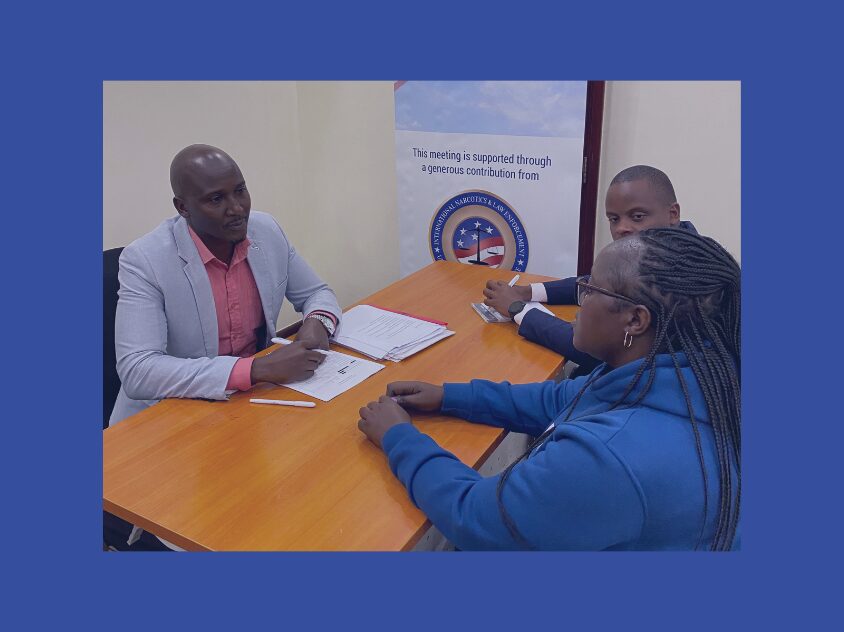
  • Kenyan Criminal Justice System – transformation.

    Kenyan Criminal Justice System – transformation.
    Davidhorn supports UN to transform Kenyan Criminal Justice System

    Davidhorn supports UN to transform Kenyan Criminal Justice System

    In a significant stride towards upholding human rights in Kenya, the United Nations Office on Drugs and Crime (UNODC) is leading an initiative to enhance the Kenyan Criminal Justice System.

    With a focus on elevating transparency, accountability, and fairness, this initiative includes the implementation of Digitally Recorded Interviewing (DIR) techniques, backed by advanced Interviewing Techniques Training for law enforcement officers. Davidhorn, a pioneering technology provider, proudly stands as a partner in this transformative effort.

    Summary

    • Partnership for justice: UNODC and Davidhorn are enhancing Kenya’s criminal justice system with Digitally Recorded Interviewing (DIR) techniques and advanced training for law enforcement, aiming for greater transparency and accountability.
    • Training and deployment: Experts like Jeff Horn and Jackie Vallack have trained Kenyan police across multiple units, equipping them with DIR devices to improve interview accuracy and reduce reliance on written accounts.
    • Protecting the vulnerable: The initiative supports Kenya’s Child Justice and SGBV Strategies, focusing on safeguarding vulnerable populations and combating wildlife crime in collaboration with the Kenya Wildlife Service (KWS).

    Davidhorn’s mission is to combine technological solutions with ethical interview practices to improve justice and human rights globally. This lines up with the UN’s Sustainable Development Goal 16: “Promote peaceful and inclusive societies for sustainable development, provide access to justice for all and build effective, accountable and inclusive institutions at all levels.” That’s why projects like training for Kenyan police officers in Digitally Recorded Suspect Interviews in Nairobi (July-August 2023) resonateed deeply with Davidhorn’s commitment to these ideals.

    Under the guidance of Marion Crepet, a Human Rights lawyer employed by the UNODC, the training marked a pivotal step in reshaping Kenya’s justice system. Jeff Horn from Davidhorn delivered a comprehensive presentation that encompassed three stages to succeed with Digital Interview Recording (DIR):

    1. Planning for success
    2. Administrator Introduction to Database setup and maintenance
    3. User training and practical application of equipment.

    Ten DIR devices now empower Kenyan police officers to capture interviews with witnesses and suspects, curbing the reliance on written accounts and fostering a more transparent and accountable process. Davidhorn’s technology not only ensures accurate evidence collection but also safeguards vulnerable witnesses and promotes transparency in suspect statement recordings.

    Jackie Vallack, an experienced former Derbyshire officer with specialised training in Interview Techniques, spearheaded the training and course and was supported by David Ward from Focused Conservation, an NGO dedicated to combating environmental crimes. The training reached various Kenyan Police Departments, including the Serious Crime Unit, Transnational Organized Crime Unit, Kenyan Wildlife Crime Unit, Anti Human Trafficking Unit, Child Protection Unit, and Environmental Crime Unit.

    Reflecting on the training, Jeff Horn of Davidhorn shared:


    “Witnessing the enthusiasm of Kenyan police officers to embrace Davidhorn’s solutions was truly inspiring. The comprehensive training in advanced interviewing techniques has been engaging and promising. While the journey towards a fairer justice system in Kenya and Eastern African countries is ongoing, the officers’ positive response is a hopeful sign.”

    Amidst challenges faced by Kenyan authorities in the criminal justice system, the UN’s support is paving the way for crucial improvements. Davidhorn’s technology holds immense potential to address these challenges. In particular, Kenya’s Child Justice and Sexual and Gender-Based Violence (SGBV) Strategies, supported by the UN, stand as a pivotal project aimed at protecting victims and creating a more inclusive justice system. By prioritizing victim-centred approaches, these strategies uphold the rights and dignity of all Kenyans, especially those vulnerable to abuse and exploitation.

    With approximately 60 percent of Africa’s population falling under the age of 25, the focus naturally turns to children and young adults who are particularly susceptible and exposed. Acknowledging their vulnerability, it becomes imperative to design distinct measures that guarantee their safety and well-being.


    “The initiatives are in line with the strategic focus of the Judiciary to transform the justice system into a people-centred one that upholds the dignity and rights of all Kenyans, especially victims of Sexual and Gender-Based Violence, child abuse and exploitation. We are in effect sending a clear message that our society will not tolerate those who prey upon the vulnerable” [1]

    said Hon. Martha Koome President of the Supreme Court of Kenya, and the first woman to occupy this position.

    Moreover, UNODC’s collaborative efforts in wildlife protection are reshaping the fight against wildlife crime in Kenya. Recognising the challenge of wildlife poaching, UNODC partners with the Kenya Wildlife Service (KWS) to enhance internal systems and mechanisms to prevent it. This comprehensive approach supports the entire criminal justice chain, from wildlife rangers to financial analysts, judges, and other practitioners, strengthening their capacity to prevent, investigate, prosecute, and resolve wildlife and forest crimes.

    In closing, these initiatives collectively herald a new era for Kenya’s criminal justice system. By embracing technology, advanced training, and international collaboration, Kenya is poised to build a more transparent, accountable, and fair justice system that upholds human rights, and protects the vulnerable. Davidhorn is proud to be a part of this journey.

    Written by:

    Chat GPT was used while creating this post

    [1] https://www.unodc.org/easternafrica/en/Stories/launch-of-the-child-justice-and-sexual-and-gender-based-violence-sbgv-strategies.html

    Related products

    • Fixed Recorder

      Fixed HD recorder for high security interview rooms.

    • Portable Recorder

      Lightweight, PACE-compliant interview recorder for any setting.

    • Capture

      Mobile app recorder for capturing evidence on the go.


    • Ark Interview Management

      Receive, monitor, and keep evidence throughout its lifetime.

    26 de junio de 2024
  • How to turn interrogation into investigative interviewing?

    How to turn interrogation into investigative interviewing?
    Turning interrogation into investigative interviewing

    Turning interrogation into investigative interviewing

    Investigative interviewing should not be confused with interrogation. Investigative interviewing is a crucial tool for law enforcement, journalists, and other professionals who need to gather accurate and reliable information from people.

    Investigative interviewing should not be confused with interrogation, which is a more confrontational and adversarial process that aims to obtain a confession or other incriminating information. Investigative interviewing is a conversation-based approach that aims to elicit truthful and complete accounts of events, as well as the thoughts, feelings, and motivations of those involved.  

    Summary

    • Investigative interviewing vs. interrogation: Investigative interviewing is a conversation-based approach focused on gathering complete information, while interrogation is confrontational, aiming to obtain confessions through psychological tactics and manipulation.
    • Critiques of interrogation methods: Traditional interrogation techniques are criticised for their potential to induce false confessions, lack of scientific foundation, violation of suspects’ rights, and negative impact on vulnerable populations. There is a growing advocacy for ethical and effective practices like the PEACE model.
    • Mindset and application: Investigative interviewing fosters a safe and supportive environment, encouraging voluntary and accurate disclosures. It is applicable not only in criminal investigations but also in workplace disputes, journalistic inquiries, and academic research.

    What is the difference between interrogation and investigative interviewing?

    The main difference between investigative interviewing and interrogation lies in their respective mindsets. Investigative interviewing is based on the premise that the interviewee is a potential source of information who may have valuable insights into a case or situation. The interviewer’s goal is to establish rapport and trust with the interviewee, and to encourage them to share what they know in a relaxed and non-threatening environment. This requires a curious and open-minded approach, where the interviewer listens carefully to what the interviewee says, asks follow-up questions to clarify and expand on their answers, and avoids making assumptions or judgments.

    In contrast, interrogation is based on the premise that the interviewee is a suspect who has committed a crime or knows critical information that they are withholding. The interrogator’s goal is to break down the interviewee’s resistance and get them to confess or reveal incriminating details. This often involves a confrontational and intimidating approach, where the interrogator uses psychological tactics to manipulate the interviewee’s emotions, perceptions, and beliefs. Common interrogation techniques include making false promises or threats, using physical or emotional stress, and creating a sense of isolation or fear.


    Listen to our podcast on Investigative interviewing

    Critiques of traditional interrogation methods

    The main critiques of traditional interrogation methods often revolve around the ethical, psychological, and legal implications of such practices. Numerous studies and reports from well-renowned sources support these critiques and have led to a growing consensus on the need for reform in interrogation practices, with a focus on techniques that are both effective and respectful of suspects’ rights and psychological well-being. The adoption of evidence-based practices is increasingly advocated within law enforcement communities around the world.

    The main criticism are focused around the following issues:

    1. Coerciveness and false confessions: Traditional interrogation techniques, such as the Reid technique, have been criticised for their potential to induce stress, anxiety, and psychological manipulation, which can lead to false confessions. Studies have shown that these techniques can be particularly coercive and misleading, resulting in innocent people admitting to crimes they did not commit.

    2. Lack of scientific foundation: Critics argue that some traditional interrogation methods lack a solid scientific foundation and rely more on the intuition and experience of the interrogator rather than empirical evidence and psychological research.

    3. Violation of rights: There is concern that aggressive interrogation tactics may violate the rights of suspects, particularly the right to remain silent and the right to legal counsel, as guaranteed by legal frameworks such as the Miranda rights in the United States.

    4. Impact on vulnerable populations: Certain groups, such as juveniles, the mentally ill, or those with cognitive impairments, are more susceptible to the pressures of interrogation and may not fully understand their rights or the implications of their statements, making them more vulnerable to coercion.

    5. Advocacy for reform and best practices: In response to these critiques, there has been a push toward more ethical and effective interviewing techniques, such as the PEACE model (Preparation and Planning, Engage and Explain, Account, Closure, and Evaluate), which emphasises communication, rapport building, and obtaining information without coercion.

    Mindset matters

    The mindset of investigative interviewing is more conducive to gathering accurate and reliable information than interrogation. By creating a safe and supportive environment, the interviewer can encourage the interviewee to share information voluntarily, without feeling coerced or intimidated. This, in turn, increases the likelihood that the information obtained is truthful and complete, and that the interviewee feels respected and heard. Moreover, investigative interviewing can be used not only in criminal investigations but also in other contexts, such as workplace disputes, journalistic investigations, or academic research.

    It’s one OR the other

    In conclusion, investigative interviewing and interrogation are two distinct approaches to gathering information from interviewees. While interrogation aims to obtain a confession or other incriminating information through confrontational and adversarial means, investigative interviewing aims to elicit truthful and complete accounts of events and feelings through a curious and open-minded approach. By understanding the differences between these two mindsets, professionals can choose the most appropriate approach for their needs and achieve their goals more effectively.

    Written by:

    Resources

    1. «Investigative Interviewing: Strategies and Techniques» by Michael E. Lamb, LaTonya S. Summers, and David J. La Rooy – a comprehensive textbook that covers the theoretical and practical aspects of investigative interviewing.
    2. «Interviewing and Interrogation for Law Enforcement» by John E. Hess – a guidebook that provides law enforcement officers with practical tips and techniques for conducting successful interviews and interrogations.
    3. «The Reid Technique of Interviewing and Interrogation» by John E. Reid and Joseph P. Buckley – a classic textbook that describes the Reid technique, a widely used approach to interrogation.
    4. «Investigative Interviewing: Psychology and Practice» by Rebecca Milne and Ray Bull – a book that examines the psychological principles and best practices of investigative interviewing.
    5. «The Innocence Project» – a nonprofit organisation that works to exonerate wrongfully convicted individuals and improve the criminal justice system. They provide resources and research on investigative techniques, including interrogation and eyewitness identification.
    6. «Police-induced confessions: Risk factors and recommendations.» Law and Human Behavior, 34(1), 3-38 by Kassin, S. M., Drizin, S. A., Grisso, T., Gudjonsson, G. H., Leo, R. A., & Redlich, A. D. (2010).
    7. «You’re guilty, now confess! Why are police permitted to use deceptive interrogation techniques?» by Meissner, C. A., & Kassin, S. M. (2004).  American Journal of Public Health, 94(6), 1078-1084.
    8. «Police interrogation and American justice.» Harvard University Press, by Leo, R. A. (2008)
    9. «Youth on trial: A developmental perspective on juvenile justice.» University of Chicago Press, by Grisso, T., & Schwartz, R. G. (Eds.). (2000).
    10. «National evaluation of the PEACE investigative interviewing course.» Police Research Award Scheme, Home Office, by Clarke, C., & Milne, R. (2001).
    11. ChatGPT was used in the creation of this article. Edited by domain experts within investigative interviewing. 

    Related products

    • Fixed Recorder

      Fixed HD recorder for high security interview rooms.

    • Portable Recorder

      Lightweight, PACE-compliant interview recorder for any setting.

    • Capture

      Mobile app recorder for capturing evidence on the go.


    • Ark Interview Management

      Receive, monitor, and keep evidence throughout its lifetime.

    26 de junio de 2024
Página anterior
1 2 3 4
Página siguiente
Logo

UK: +44 (0)1582 490300

Other regions: +47 370 76 460

Sales and Technical:
sales@davidhorn.com

Support:
support@davidhorn.com

  • wpml-ls-flag
    • wpml-ls-flag
    • wpml-ls-flag
    • wpml-ls-flag
    • wpml-ls-flag
    • wpml-ls-flag

Other pages

  • Contact
  • Support
  • Product training

Receive the latest news

Este campo es un campo de validación y debe quedar sin cambios.

Sign up for our newsletter and be the first to receive great offers and the latest news!


  • LinkedIn
  • Facebook
  • Instagram

Privacy Policy

Cookies

©Davidhorn. Code and Design Aptum